
REVIEW · TOKYO
5-Hour Tokyo & Edo Hidden Gem Bike Tour with Lunch
Tokyo reveals itself best at street level, and this small-group bike tour gives you five hours to connect several districts that feel very different from one another. You pedal from Asakusabashi toward anime landmarks, old temples, sumo country, Edo-era streets, and Ningyocho, with time to stop rather than simply watch the city slide past a bus window.
I like two things right away: the group is limited to six people, and the pace is designed for ordinary riders rather than racers. I also like the mix of stops, especially the chance to see a temple ceremony at Fukagawa Fudo-son and learn about daily life in old Edo. The main consideration is that you are riding on city streets, not isolated bike paths, and hot, humid weather can make the outing tiring.
Key points to know before you book
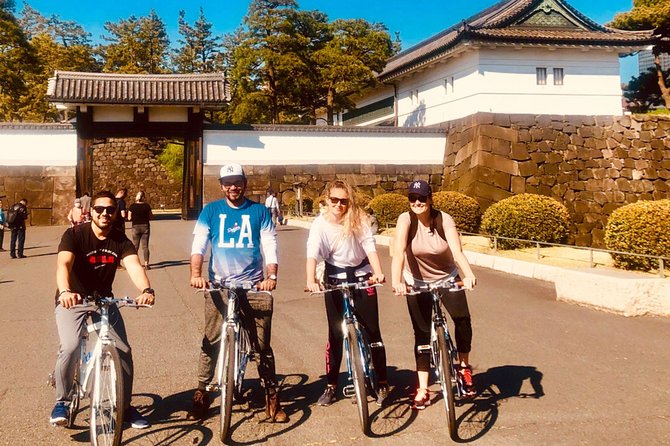
- Anime statues at Bandai headquarters: Start with photo opportunities featuring characters such as Dragon Ball, Doraemon, and Anpanman.
- A useful Tokyo overview by bicycle: Connect Asakusa, Ryogoku, Fukagawa, and Ningyocho in one morning and early afternoon.
- Lunch is included: The route includes a traditional Japanese meal, though the supplied details differ on whether the meal is at Tsukiji or in Ryogoku.
- A close look at worship: Watch the Goma-taki fire ritual at Fukagawa Fudo-son and see how people use the temple today.
- Edo life in a museum setting: Visit the Fukagawa Edo Museum, with admission included.
- Personal guiding: Shoto and Shogun are among the guides associated with this experience, and the small party makes route adjustments possible.
Why a bicycle is the right way to see these Tokyo neighborhoods
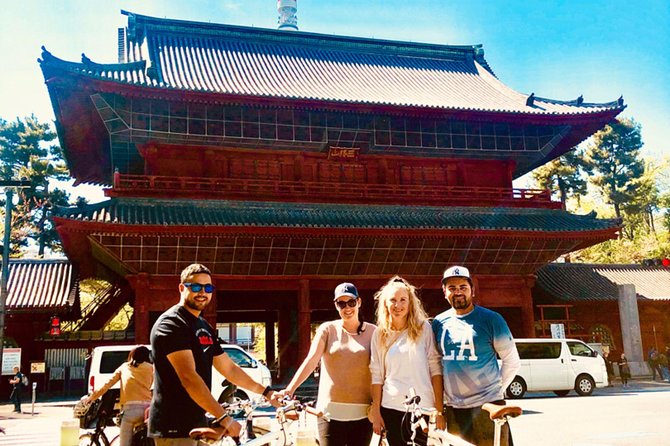
At $85.79 per person, this is not simply a bike rental with a guide attached. The price includes the bicycle, bottled water, lunch, a local guide for roughly five hours, and admission to the Fukagawa Edo Museum. You are paying for a route that links places spread across eastern Tokyo without making you work out every train connection.
The value is strongest if you want orientation. A bus can take you to Senso-ji, but it will not give you the same feel for the quieter streets between Asakusa and Ryogoku. On a bicycle, you can notice small temples, local storefronts, bridges, and the changing pace of each neighborhood.
The ride is described as comfortable and suitable for all experience levels, but that does not mean effortless. You need to be comfortable riding in an urban setting. The name Off-Street Cycling Tour can also be misleading: the route uses city streets, so expect normal traffic conditions and pay attention to your guide.
The group limit matters. With no more than six participants, the guide can explain a stop without shouting across a crowd. The route can also respond to reasonable interests. Shoto adjusted a ride for a family that did not eat sushi, and another small party spent less time at shrines and more time at the fish market. Those examples suggest that speaking up early about food and sightseeing priorities is worthwhile.
More Bike Tours with Lunch in Japan
- Bike Tour Exploring North Kyoto plus Lunch
★ 5.0 · 1,087 reviews - 5-Hour Osaka Highlights Bike Tour with Lunch
★ 4.8 · 146 reviews - 4.5-Hour Kyoto Bike Tour with Lunch and UNESCO Zen Temples
★ 5.0 · 122 reviews
Bandai headquarters and the city’s playful side
The first stop is the Bandai headquarters building, where statues of well-known Japanese characters offer an easy introduction to the country’s pop culture. Dragon Ball, Doraemon, and Anpanman are part of the display, so this is a good photo stop even if you are not an anime expert.
You have about 15 minutes here. That is enough for pictures and a short explanation, not a full museum visit. I like this opening because it avoids making Tokyo feel like one long parade of old temples. The city’s modern entertainment culture is just as important to its identity.
Kaminarimon and Senso-ji in Asakusa
From Bandai, you ride to Kaminarimon, the great gate associated with Senso-ji. The guide explains the gate before leading you toward the temple, giving you context before the crowds and souvenir shops begin.
Senso-ji is identified as Tokyo’s oldest temple, and the route enters from the north side. You get about 30 minutes here, including time along the approach lined with shops. This is one of the tour’s busiest sections, so a bicycle does not make Asakusa quiet. It does help you reach the temple without spending the entire morning navigating Tokyo’s rail system.
The historical detail about Tokugawa Ieyasu praying here helps place the temple in Japan’s political past, but the more useful part is seeing how the site functions now. You are not only looking at an old building. You are watching people pray, browse, take photos, and move through one of Tokyo’s best-known religious areas.
Do not expect a long private temple lecture. The stop is one part of a larger route, and the guide must keep the group moving. If you want an hour or more at Senso-ji, you may prefer to visit separately.
Crossing the Sumida River toward Ryogoku
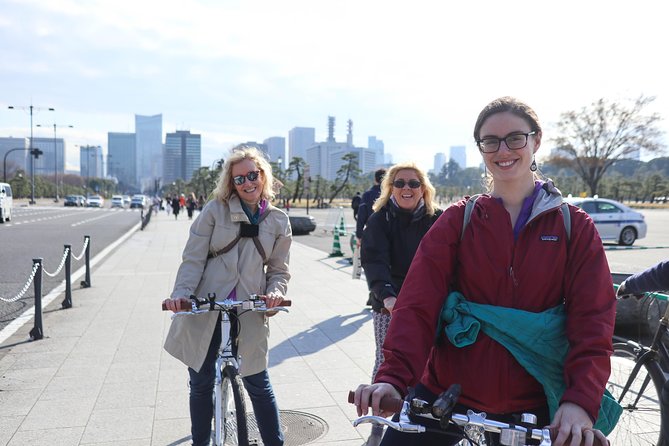
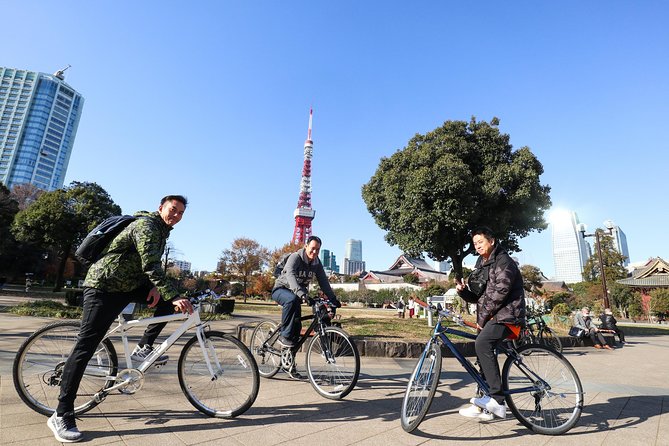
After Asakusa, the ride turns toward Ryogoku, the district associated with sumo. One of the route’s pleasant moments comes on a bridge, where you can see the Sumida River and Tokyo Skytree, which rises 634 meters.
This section gives you the physical sense of Tokyo. You are moving from the temple district into a neighborhood shaped by sumo, waterways, and older working-city traditions. The Skytree provides a clear modern reference point, while the river helps explain why eastern Tokyo developed around water and transport.
The route is not just a list of famous sights. The connections between them are the point. You see how close several major areas are by bike, even though they can feel separate when you visit them by train.
Same city, a different ride:
- Hidden Kyoto E-Biking tour
★ 5.0 · 1,843 reviews - Tokyo Guided Small-Group Biking Tour
★ 5.0 · 1,250 reviews - Tokyo Great Cycling Tour
★ 5.0 · 811 reviews - Tokyo Top Highlights 3h Guided E-bike Tour
★ 5.0 · 714 reviews
Ryogoku lunch and the question of Tsukiji
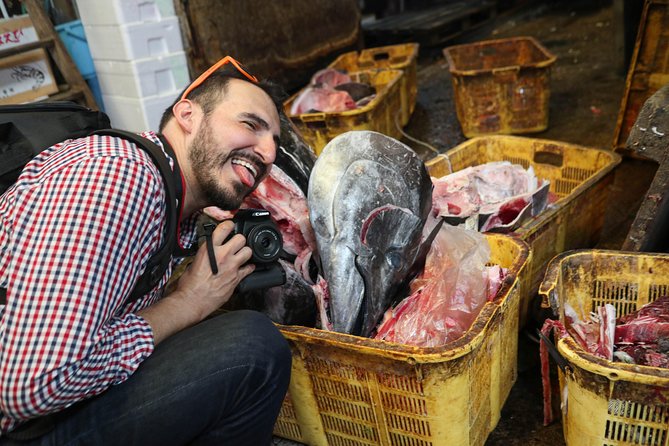
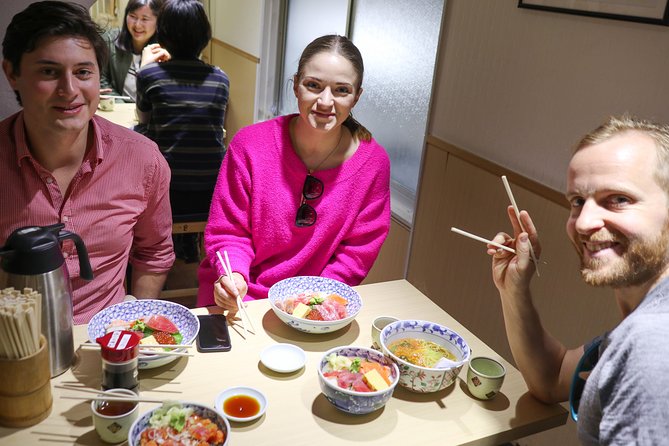
Lunch is included, and the detailed route places the meal in or near Ryogoku after a short walk through the sumo district. You are introduced to local food and the area’s sumo identity, with the experience described as a traditional Japanese lunch.
One especially memorable detail is the sumo wrestlers’ hot pot, known as chanko. The meal gives the stop a local connection instead of feeling like a generic break halfway through a paid activity. You should tell the operator in advance about any food you cannot eat. A past guide, Shoto, accommodated a family that did not eat sushi.
There is one point to clarify before booking. The general description refers to lunch at the famed Tsukiji Fish Market, while the detailed route places lunch in Ryogoku and the schedule also mentions the fish market in connection with a customized ride. Because those details do not line up perfectly, confirm the exact lunch location and menu when you reserve.
Additional food and drinks are not included. Lunch is covered, but anything beyond the planned meal is your responsibility.
Fukagawa Fudo-son and the Goma-taki fire ritual
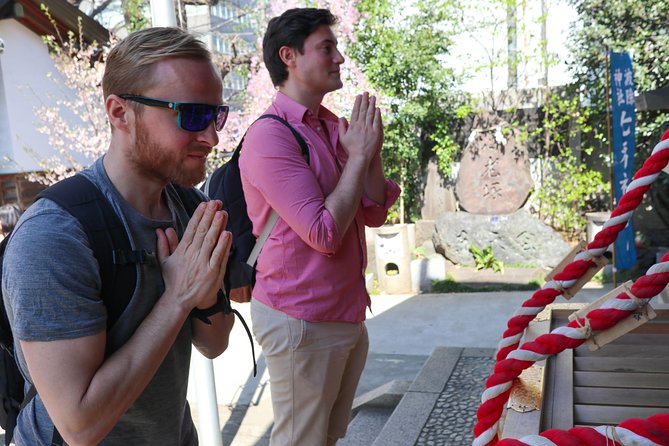
The next major stop is Fukagawa Fudo-son Temple, where you spend about 35 minutes. The purpose here is not only to admire architecture. You watch how Japanese people worship in daily life and may observe Goma-taki, a Buddhist fire ceremony.
This is one of the more distinctive parts of the route. Senso-ji is famous and often crowded, but Fukagawa Fudo-son offers a closer look at active religious practice. The fire ritual gives the visit a sense of movement and sound that a quick exterior photo cannot provide.
The schedule calls this a practice or observation of Goma-taki, so treat it as a chance to see the temple’s worship rather than a guaranteed private ceremony. Temple activity can vary by timing and circumstance.
The Fukagawa Edo Museum and old Tokyo brought indoors
The Fukagawa Edo Museum follows with about 35 minutes inside. Admission is included, which makes this more than a photo stop. The museum recreates streets from the Edo period, roughly 150 years ago according to the supplied description, so you can see how ordinary homes and neighborhood life were arranged.
I value this stop because famous Tokyo sights often tell you about rulers, temples, and grand buildings. A recreated street can tell you more about how people lived at ground level. It gives the earlier stops a useful frame, especially after seeing old religious centers and the traditional districts around Ryogoku and Fukagawa.
Thirty-five minutes is enough for an introduction, but not for a slow museum study. If you enjoy historical displays and want to read every panel, you may wish for more time. The trade-off is that the tour covers several districts rather than spending the whole morning inside one museum.
Ningyocho and a small Japanese sweet
The final listed stop is Ningyocho Street, where you can try ningyo-yaki, a small sponge cake filled with red bean paste and other ingredients. The schedule also identifies taiyaki in the stop title, so the exact snack may depend on the shop and day.
This is a fitting finish. After temples, a river crossing, sumo culture, and Edo history, you get a simple local treat rather than another major monument. Fifteen minutes is enough for a taste and a look around, but you should not expect a full food tour.
The activity returns to the original meeting point at Asakusabashi Station. That makes the end easy to plan, especially if you want to continue exploring Tokyo on your own.
Timing, weather, and what to wear
The start time is 10:00 a.m., and the full activity lasts about four and a half to five hours. Plan for the tour to occupy most of your morning and early afternoon. Wear comfortable clothes for cycling, and expect the weather to matter. The experience requires good weather, and poor conditions can lead to a rescheduled date or a full refund.
Hot, humid conditions are worth taking seriously. One outing was enjoyed despite oppressive weather, but heat can change a pleasant bike ride into hard work. Drink the provided water, dress for movement, and think carefully about your fitness on the day.
The minimum age is 15. The tour is near public transportation, and most people can participate, but the supplied information does not promise a particular bicycle type or adaptations. If you have mobility concerns or need a special bike, ask before booking.
Free cancellation is available up to 24 hours before the start time. Within 24 hours, changes and refunds are not accepted unless the operator cancels because of weather.
Who will get the most from this ride
I would choose this tour if you want a broad introduction to eastern Tokyo and prefer active sightseeing to a long series of train rides. It suits couples, families with teenagers aged 15 or older, and solo visitors who want a guide without joining a large group.
It is especially useful early in a Tokyo visit. The ride helps you see where Asakusa, Ryogoku, Fukagawa, and Ningyocho sit in relation to one another. Afterward, you can return to the places that caught your interest.
You may want another plan if you dislike city cycling, need a slow indoor morning, or want extended time at Senso-ji, Tsukiji, or the Edo Museum. This is a sampler with depth at selected stops, not a specialist tour devoted to one district.
Should you book it?
Book it if the combination of cycling, local food, temple life, sumo culture, and Edo history sounds better than ticking off Tokyo’s headline sights from a vehicle. The small group, included lunch, museum admission, and adaptable guiding give the $85.79 price real value.
Before paying, confirm the lunch location, tell the operator about dietary restrictions, and make sure you are comfortable riding on city streets. If you can handle those points, this is a smart way to see a less polished but more everyday side of Tokyo, with enough famous sights to keep the route satisfying.
FAQ
Where does the Tokyo bike tour begin?
It begins at Asakusabashi Station, at 1 Chome-18 Asakusabashi, Taito City, Tokyo 111-0053, Japan.
What time does the tour start?
The tour starts at 10:00 a.m.
How long does the experience last?
It lasts approximately four and a half to five hours.
What is included in the price?
The price includes a rental bicycle, bottled water, lunch, a local guide for five hours, use of the bicycle, and admission to the Fukagawa Edo Museum.
How many people can join the tour?
The maximum group size is six people.
Is there a minimum age?
Yes. Participants must be at least 15 years old.
What happens if the weather is bad?
The activity requires good weather. If it is canceled because of poor weather, you can choose a different date or receive a full refund.
More Tours with Lunch in Japan
- Half-day Himeji Castle Town Bike Tour with Lunch
★ 5.0 · 81 reviews - Electric Cycling Tour of Ubud with Free Hotel Transfer and Lunch
★ 5.0 · 1,397 reviews - Bangkok: Bike and Canal Boat Tour with Lunch
★ 4.9 · 1,350 reviews - Cat Ba: Lan Ha, HaLong bay full day- biking, kayaking, lunch
★ 4.8 · 1,166 reviews
Just added around Japan
- Kyoto: Afternoon Bamboo Forest and Monkey Park Bike Tour★ 4.9 · 83 reviews
- 4.5-hr Kyoto Historical Highlights Bike Tour with UNESCO★ 4.7 · 13 reviews
- Private-group Morning Cycling Tour in Hida-Furukawa★ 5.0 · 105 reviews
- Private Afternoon Cycling Tour in Hida-Furukawa★ 5.0 · 109 reviews
- 1-Day Private Rural E-Bike Tour in Hida★ 5.0 · 188 reviews
- 3-Hour Tokyo Private E-Bike Tour Starting from Your Hotel★ 5.0 · 117 reviews
- Eat, Drink & Cycle: Osaka Foodie Bike Tour★ 5.0 · 224 reviews
- One-Day Osaka Bike Adventure: 5–6 Hours★ 5.0 · 246 reviews
Tokyo Bike Tours, compared.
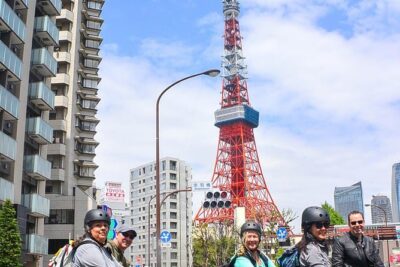
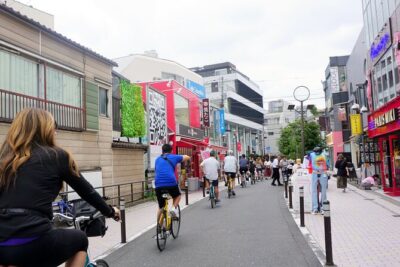
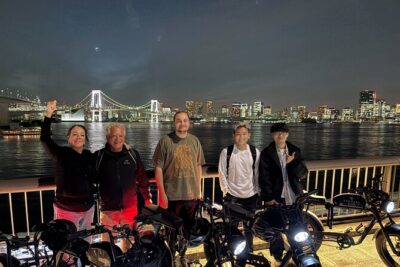
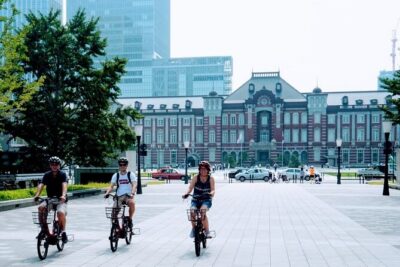
3h Tokyo E-Bike Tour: Hidden Gems, and Local Life with guide
Read our review →
3-Hour Tokyo Private E-Bike Tour Starting from Your Hotel
Read our review →Browse the lists this tour appears in