
REVIEW · TOKYO
Tokyo Bike Tour: Shibuya, Harajuku & Hidden Gems
Tokyo Bike Tour: Shibuya, Harajuku & Hidden Places
Tokyo can feel enormous on foot. This three-hour bike tour gives you a practical way to connect Shibuya, Harajuku, Omotesando, Aoyama, and Gaien without spending the whole morning underground. You move through famous sights, quiet lanes, and several unlisted stops with an English-speaking local guide.
I like the small six-person group, which makes it easier to ask questions and stay close to the guide. I also like the mix of major sights and ordinary streets, especially the chance to see Tokyo at street level rather than through a train window.
The catch is simple: you need to be comfortable riding in city traffic at about 15 kilometers per hour. There are narrow areas, crossings, crowds, and occasional uphill stretches. This is not a gentle park ride, and it is not suitable for children under 13, pregnant women, non-cyclists, riders under 155 centimeters or over 200 centimeters, or people over 75.
Key points to know before you book
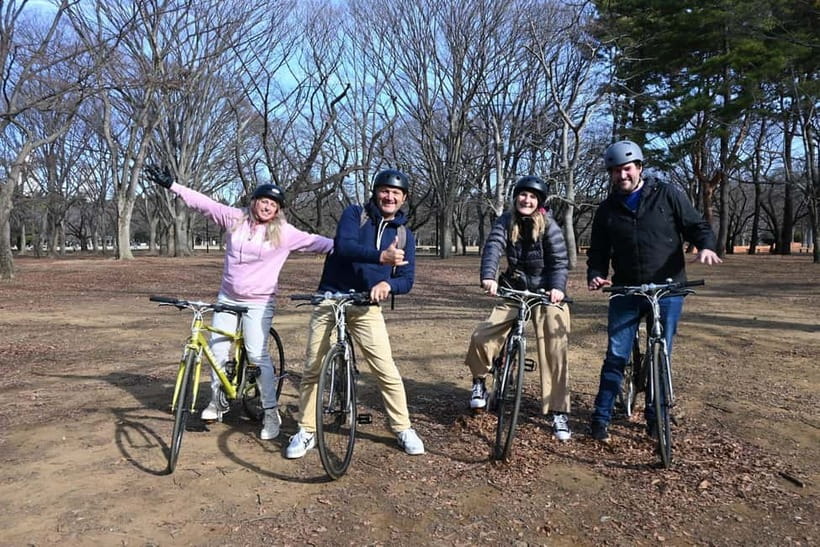
- Small groups of up to six: You get more direct help and a better chance to ask the guide about Tokyo life.
- A local cyclist leads the way: Taichi has guided in the area and knows how to manage city riding safely.
- More ground than a walking tour: You connect Shibuya, Harajuku, Aoyama, and Gaien in three hours.
- Famous sights and quiet streets: The route includes Shibuya Crossing and Hachiko, but also backstreets and lesser-known stops.
- City riding is part of the experience: Expect traffic lights, narrow sections, crowds, and a typical pace near 15 kilometers per hour.
- Good value at $63: A bike, helmet, guide, and three hours of sightseeing are included.
Why a bicycle works so well in western Tokyo
This part of Tokyo rewards you for moving slowly, but the distances between districts can make a walking day tiring. Shibuya, Harajuku, Omotesando, Aoyama, and Gaien are close enough to link by bicycle, yet spread out enough that walking between every stop takes time.
I like the way cycling changes your view of the city. You pass from a major road into a narrow lane, then reach a quiet green space or a small street with little warning. On foot, you might see one neighborhood at a time. By bicycle, you can connect several of them in one outing.
The ride also lets you avoid relying on public transport during the tour. That matters in Shibuya, where a short trip by train may involve finding the right exit, walking through a station, and then orienting yourself again. Here, the guide handles the route while you watch the streets around you.
The pace is not meant for racing. Still, you should be able to ride confidently and keep moving at roughly 15 kilometers per hour. If you are used only to relaxed cycling on a separated path, Tokyo traffic may take some adjustment.
A few more bike tours around Tokyo worth a look
- Tokyo Guided Small-Group Biking Tour
★ 5.0 · 1,250 reviews - Tokyo Great Cycling Tour
★ 5.0 · 811 reviews - Tokyo Top Highlights 3h Guided E-bike Tour
★ 5.0 · 714 reviews
Starting near Yoyogi and Shinjuku
The meeting point is Umayamichi Park, at the park next to Freshness Burger. It is about one minute on foot from Yoyogi Station and roughly ten minutes from Shinjuku Station, making it a useful starting point if you are staying in either area.
The first five minutes are for the safety briefing. You receive a bicycle and helmet, then get instructions about Japanese traffic rules and the guide’s signals. Pay attention here. Cycling rules in Japan may differ from what you are used to, and the tour expects you to follow traffic lights and the guide’s directions.
The bikes are reported to be in good condition, with working gears. That is welcome because the route is not completely flat. One rider specifically noted uphill sections, though the gears made them manageable.
Wear comfortable clothes and closed-toe shoes. Bring water or another drink. Sandals, flip-flops, open shoes, short skirts, large bags, umbrellas, headphones, and oversize luggage are not allowed. A small amount of practical packing makes the ride much easier.
Yoyogi Park and the first quiet streets
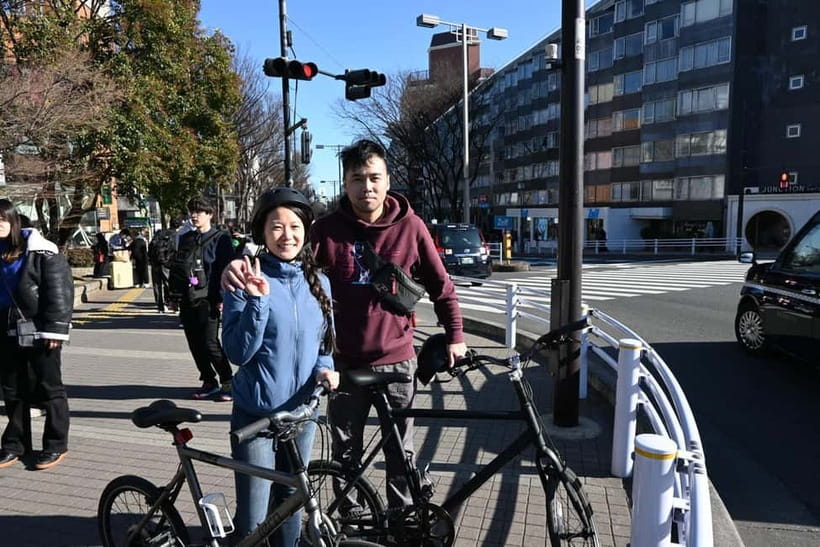
After the briefing, the route heads toward a secret stop with a scenic view. The exact stop is not specified in advance, which is part of the appeal. You are not simply following the standard sightseeing circuit.
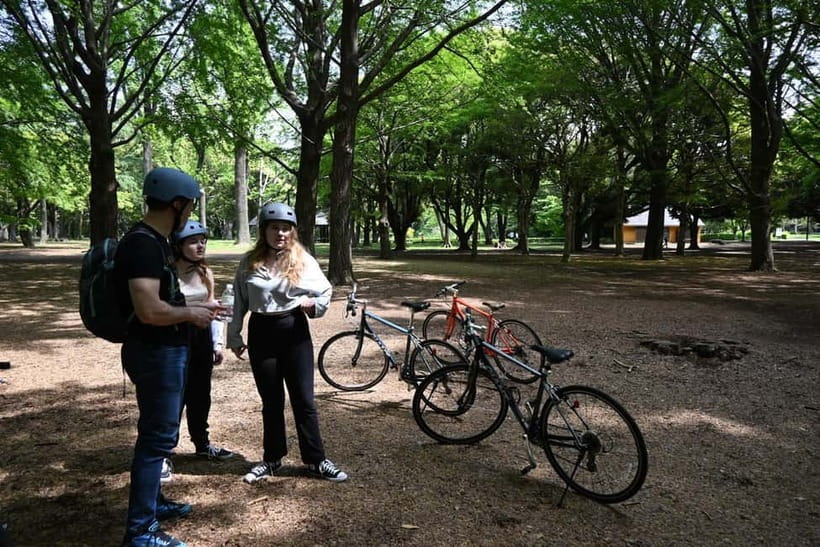
The ride then reaches Yoyogi Park, where you have about 15 minutes for photographs and views. The park gives you a break from the harder urban edges of Shibuya and lets you see one of the area’s open green spaces.
I would use this early stop to settle into the bike. You are still close to the start, so it is a good moment to adjust your pace, ask about the route, and make sure your saddle and gears feel right. Since the tour includes several riding sections, a small comfort problem is worth fixing early.
The route does not promise a long park ride. Yoyogi Park is one stop within a wider circuit, so you should not book this expecting hours on quiet paths. The value comes from the transition between park, street, landmark, and backstreet.
Shibuya Crossing without losing the local view
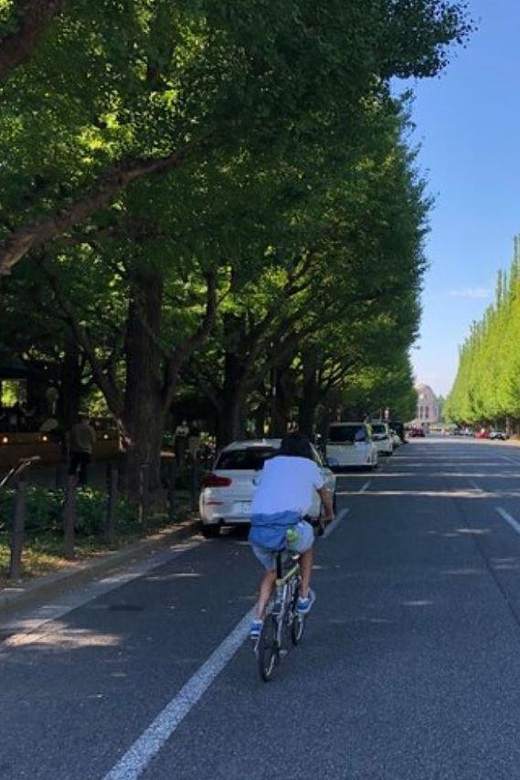
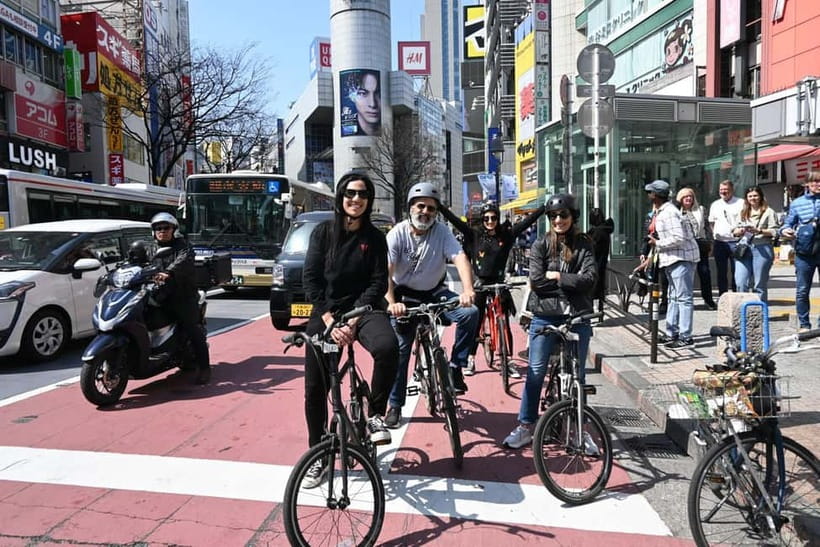
The route continues through Shibuya City before reaching Shibuya Crossing, one of Tokyo’s most recognizable sights. You have about ten minutes here for photographs, a guided look, and some walking.
The stop is short by design. You get the essential experience without allowing one famous intersection to take over the entire tour. The guide can help you understand where you are and answer questions before the group moves on.
After crossing, the route includes another secret stop with time for photographs, a guided explanation, and walking. This is where the tour’s local focus becomes more useful than a basic landmark checklist. The guide can point out details and streets that are easy to miss when you are focused only on the major crossing.
The next stop is the Hachiko Statue, with about ten minutes for photos and commentary. Hachiko is familiar to many visitors before they arrive, but seeing the statue in its real setting gives the story a place in the city rather than leaving it as a fact from a guidebook.
Crowds can make Shibuya feel hectic, and the bicycle itself may not be useful at every exact photo point. You will sometimes walk the bike or leave it in a suitable place while the guide leads you around. That is normal for this type of tour, but anyone looking for nonstop cycling should know that the itinerary includes several walking stops.
Same city, a different ride:
- 3h Tokyo E-Bike Tour: Hidden Gems, and Local Life with guide
★ 5.0 · 670 reviews - Tokyo: 3-Hour Bike or E-Bike City Highlights Tour
★ 4.8 · 435 reviews - Tokyo: 3-hour Guided E-Bike Tour of the City’s Hidden Gems
★ 4.8 · 251 reviews - Tokyo: Discover Traditional Tokyo Full-Day Bicycle Tour
★ 4.7 · 131 reviews
Harajuku and Omotesando at street level
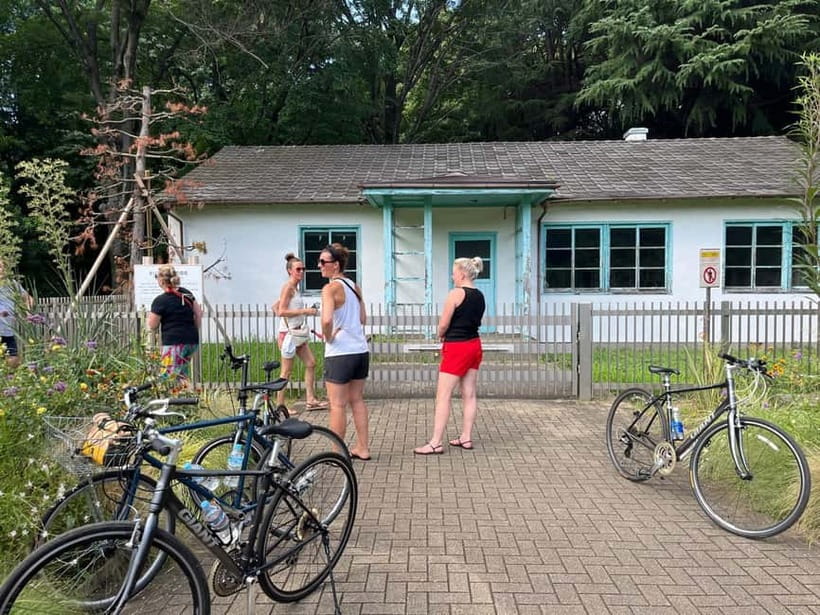
From Shibuya, you ride toward Harajuku, with about five minutes for a photo stop and views along the way. Harajuku is often associated with youth fashion and crowded shopping streets, but the bicycle gives you a way to approach the district through its surrounding roads rather than only its busiest commercial areas.
The route then reaches another lesser-known stop before continuing to Omotesando. This section also allows about five minutes for photographs and views. Omotesando is known for its broad avenue and major shops, yet the point of this tour is not simply to stop on the main road. You also get the chance to see how the area changes as you move into side streets.
The short timing at these stops means you should keep your expectations realistic. You will see and photograph the districts, but you will not have time for a full shopping session, a cafe visit, or an extended look inside a museum. I see this as a first orientation, not a substitute for returning later on your own.
That can be a strength. The tour helps you decide where you want to spend more time afterward. Your guide can also share local suggestions for cafes and restaurants, which may be more useful than a long list of standard attractions.
Aoyama and the quiet pause at the cemetery
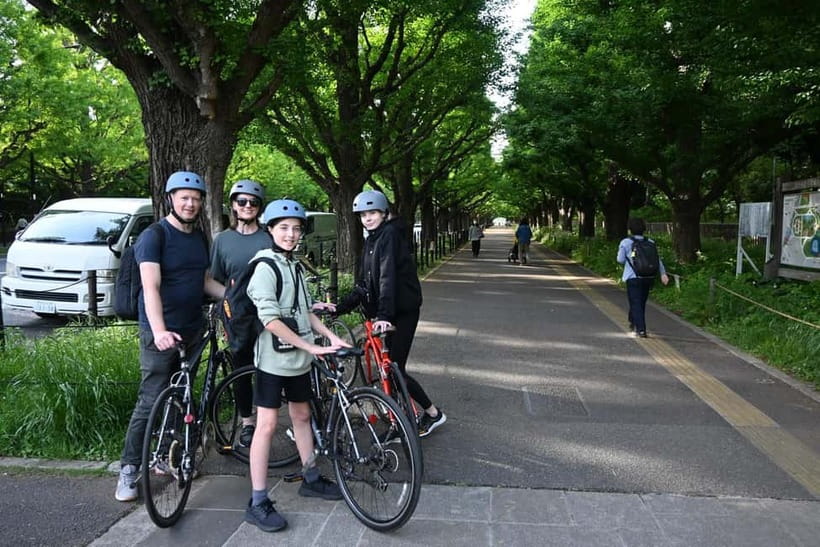
The route moves into Aoyama, where the schedule allows about 20 minutes for views and photographs. Aoyama changes the mood of the ride. You are still in central Tokyo, but the streets can feel less frantic than the core of Shibuya.
A local guide is particularly helpful here because the value is not limited to taking a picture at one famous object. The guide can explain the area, point out changes in the streets, and answer questions about daily life, food, and local places to stop.
The next stop is Aoyama Cemetery, with another 20 minutes for photographs, walking, and guided commentary. This is one of the longer pauses on the route, and it gives the day some breathing room after the busy Shibuya and Harajuku sections.
You should treat this as a respectful walking and listening stop, not a picnic or noisy photo session. The tour includes history and personal observations from the guide, but the precise stories can vary with the guide and the questions you ask. If you want more context, this is a good place to speak up.
The cemetery also highlights one of the tour’s best features: it takes you beyond the standard central Tokyo photo list. You still see the famous sights, but you also get a quieter setting that most short sightseeing routes skip.
Ginkgo Avenue and the National Stadium
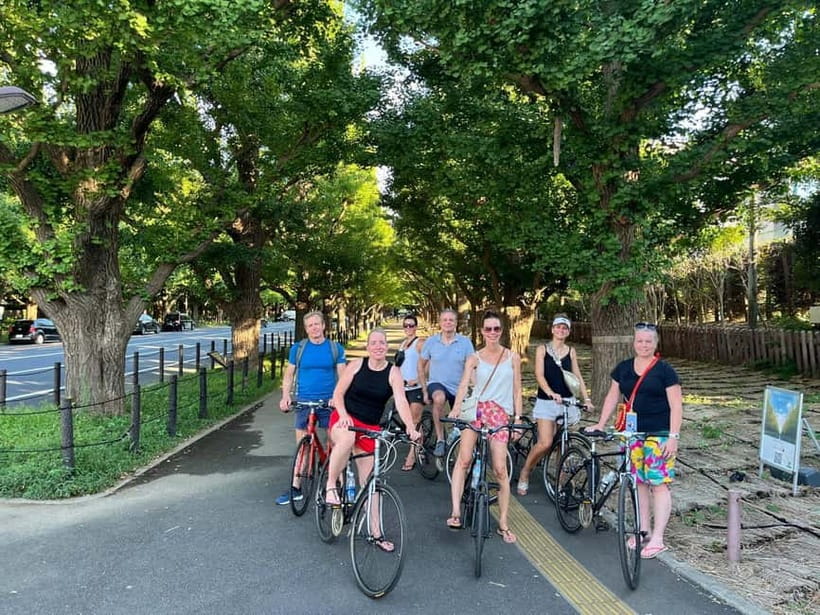
From Aoyama Cemetery, the ride continues to Meiji Jingu Gaien Ginkgo Avenue. The stop is listed for photographs and scenery, with about five minutes. The avenue is especially associated with its rows of ginkgo trees, though the exact appearance depends on the season.
This is a quick stop, so think of it as a visual pause rather than a long stroll. The bicycle makes it easy to connect the avenue with the surrounding Gaien area without spending extra time finding your way between each point.
The final major sight is the Japan National Stadium, with about five minutes for photographs. You do not get a full stadium tour, and the stop is not designed for a long visit inside. Instead, it rounds out the route with a modern Tokyo landmark before the group returns to Umayamichi Park.
The return to the park completes a loop through several districts. You finish where you started, which is convenient if you want to continue sightseeing from Yoyogi or Shinjuku afterward.
What the guide adds to the ride
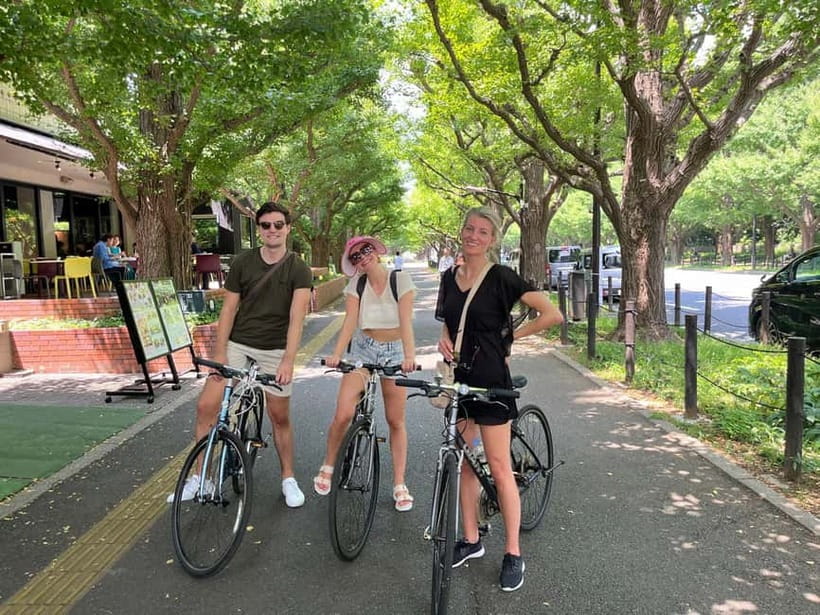
The guide is central to the experience. The information describes an experienced Shibuya-based cyclist who has led this type of outing since 2018. Taichi is named in several bookings, and his English communication, patience, and local perspective are useful qualities for this route.
One especially helpful point is that the guide can adjust the experience to the group. When two people felt uneasy riding in city traffic, the group continued as a walking tour instead. You should not assume this will always be possible, but it shows why a small group matters. The guide can see how people are coping and respond more easily than a large coach tour could.
Taichi also brings personal knowledge of the districts, including cafe and restaurant suggestions. That makes the tour more useful after the ride ends. You are not only collecting photos. You are building a better sense of where to return for food or further exploring.
The quality of your experience will still depend partly on your questions. Ask about the streets you pass, local eating spots, or how cycling rules work in Japan. A small group gives you room to do that.
Is $63 a fair price?
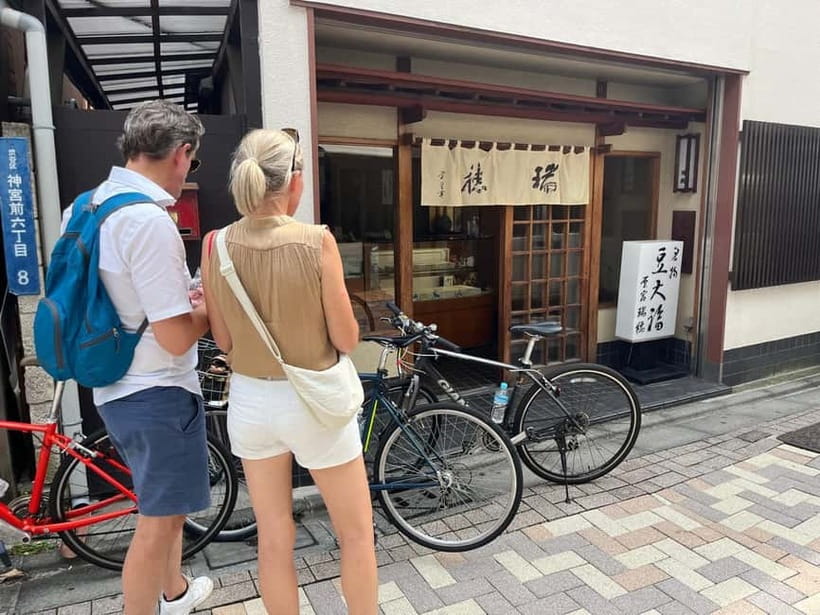
At $63 per person, the tour is fairly priced if you want a guided introduction to several central Tokyo neighborhoods. The fee includes the bicycle, helmet, English-speaking guide, and three hours of route planning and assistance.
You are paying for more than bicycle use. The guide chooses a route that links districts efficiently, manages traffic, and adds local explanation. Renting a bike alone might cost less, but it would not give you the same navigation help or access to the guide’s local recommendations.
The price is less attractive if you already know Shibuya and Harajuku well, dislike organized sightseeing, or want to stop for long periods at shops and cafes. The schedule is active, and the route keeps moving.
For a first Tokyo visit, I think the value is strongest. You can learn the shape of several neighborhoods in one morning, then return later to the places that interest you most.
Who should book, and who should skip it?
I would choose this tour if you are visiting Tokyo for the first time, enjoy active sightseeing, and want a local introduction before exploring independently. It also suits riders who are curious about city streets and do not mind following traffic rules at a steady pace.
It is a good match for adults and older teenagers who can ride confidently. Comfortable shoes matter, and you should be ready for occasional crowds, narrow sections, and uphill stretches.
I would skip it if you cannot ride a bike, feel anxious in urban traffic, or want a slow, fully relaxed ride. The tour proceeds in light rain, but sudden weather changes can lead to cancellation. If you book, keep some flexibility in your schedule.
The official limits also matter: children under 13, pregnant women, people under 155 centimeters or over 200 centimeters, and people over 75 cannot take part. Free cancellation is available up to 24 hours ahead, and you can reserve now and pay later, which helps if your Tokyo plans are still shifting.
FAQ
Where does the Tokyo bike tour start?
The meeting point is Umayamichi Park, at the park next to Freshness Burger. It is about one minute from Yoyogi Station and ten minutes on foot from Shinjuku Station.
How long does the tour last?
The tour lasts three hours, including the safety briefing, riding, photo stops, walking sections, and the return to Umayamichi Park.
How many people are in the group?
The group is limited to six participants, creating a small-group experience with more opportunity for direct questions and guidance.
Is the tour offered in English?
Yes. The live tour guide speaks English.
Are a bicycle and helmet included?
Yes. The bicycle and helmet are included in the price.
How fast do I need to ride?
You should feel comfortable riding city streets at a typical cycling speed of about 15 kilometers per hour, or 9.3 miles per hour. You must also follow Japanese traffic rules and the guide’s instructions.
What happens if it rains?
The tour can proceed in light rain, but sudden weather changes may cause cancellation for safety and comfort. You should bring comfortable clothing and suitable closed-toe shoes.
Should you book this Tokyo bike tour?
Book it if you want to cover Shibuya, Harajuku, Omotesando, Aoyama, and Gaien in one well-organized morning, and if city cycling feels natural to you. The strongest reasons are the six-person limit, the local guide, and the balance between famous sights and quieter streets.
Do not book it simply because you want a cheap bike rental or a leisurely path ride. You will be riding in real Tokyo traffic, keeping a steady pace, and stopping often rather than wandering freely.
For the right rider, $63 buys a useful first look at western Tokyo, plus local advice you can use for the rest of your stay. That makes it a smart choice for a confident cyclist who wants to get oriented quickly without spending the day underground.
Just added around Tokyo
- Tokyo: Private Cycling Tour with cute E-bike★ 5.0 · 11 reviews
- Tokyo: West-Side Cycling and Food Tour with Guide★ 5.0 · 37 reviews
- Tokyo: 3-hour Guided E-Bike Tour of the City’s Hidden Gems★ 4.8 · 251 reviews
- Tokyo: Rice Ball Making Class★ 5.0 · 14 reviews
- Tokyo: Hidden Gems Guided Bike Tour with Lunch★ 4.5 · 30 reviews
- Tokyo: Discover Traditional Tokyo Full-Day Bicycle Tour★ 4.7 · 131 reviews
- Tokyo: 3h Private E-bike Tours, Starting at Your Hotel★ 5.0 · 36 reviews
- Tokyo: 2-Hour Night Bike Tour of the City’s Hidden Gems★ 4.9 · 25 reviews
Tokyo Bike Tours, compared.
3h Tokyo E-Bike Tour: Hidden Gems, and Local Life with guide
Read our review →
3-hour Guided E-Bike Tour of the City’s Hidden Gems
Read our review →
Discover Traditional Tokyo Full-Day Bicycle Tour
Read our review →
3-Hour Tokyo Private E-Bike Tour Starting from Your Hotel
Read our review →Browse the lists this tour appears in