
REVIEW · TOKYO
Tokyo: Hidden Gems Guided Bike Tour with Lunch
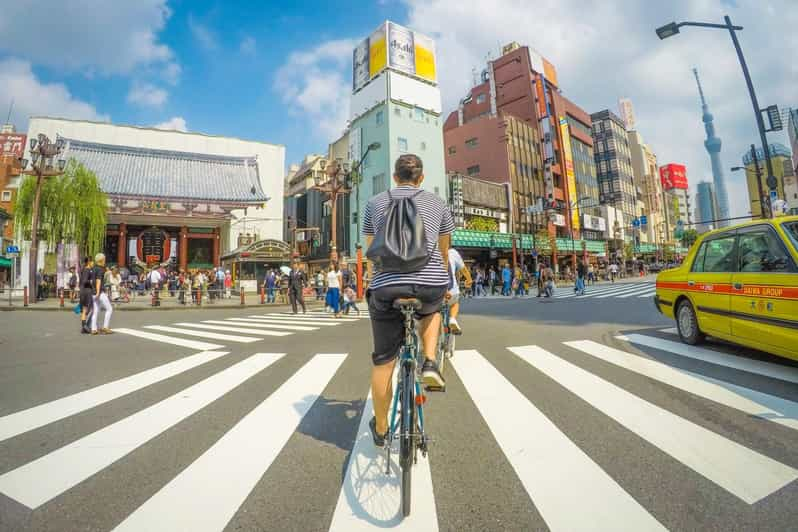
Tokyo’s old neighborhoods make more sense from a bicycle seat. This five-hour ride links Asakusa, Ryogoku, and Fukagawa, letting you move between famous sights and quieter streets without spending the day underground on trains. Along the way, you’ll see Edo-era customs, sumo landmarks, shrines, temples, and a museum built around daily life 150 years ago.
I like two things right away: lunch and bike rental are included, so the $96 price is easier to justify, and the small group is limited to five people. Guide Shogun has earned especially warm praise for keeping the ride moving while adding useful historical detail. The main drawback is that Tokyo cycling still means dealing with traffic, and the schedule is full, so this is not a slow, leisurely pedal.
Key points at a glance

- Start at Asakusabashi Station: Meet your English-speaking guide outside Exit A3 and begin with a short traffic-safety briefing.
- See Tokyo through several eras: The route moves from Bandai’s cartoon figures and modern Tokyo to Kaminarimon, Senso-ji, sumo country, and Edo-period streets.
- Ride beside the Sumida River: A bridge crossing gives you views of the river and Tokyo Skytree, which rises 634 meters.
- Eat lunch in Ryogoku: A local restaurant meal is included, though vegetarian choices are limited.
- Visit a working Buddhist temple: Fukagawa Fudo-do offers a look at everyday Japanese worship, not only a photo stop.
- Small, active group: The tour lasts five hours and welcomes riders over 150 centimeters tall, but children under 15 cannot join.
Why this bicycle route works in East Tokyo

Many first visits to Tokyo focus on Shibuya, Shinjuku, and the Imperial Palace. This tour takes a different line through the eastern side of the city, where old entertainment districts, temples, sumo culture, and riverside neighborhoods sit close together.
The bicycle is useful here because the experience is not built around one grand sight. It connects a series of smaller places that would feel scattered if you visited them separately. You get a taste of Asakusa, a glimpse of Ryogoku’s sumo identity, and time in Fukagawa, all in one half-day outing.
The tour begins with a short lesson about traffic rules in Japan. That is more than a formality. Tokyo’s roads and sidewalks can be busy, and you need to understand how the group will ride before setting off. You should arrive ready to listen, follow the guide, and keep a steady pace.
Guide Shogun is specifically praised for maintaining a good speed while still making the ride historical and informative. That balance matters. A guide who stops too often can make a five-hour bike tour feel stiff, while one who races ahead can leave you wondering what you are seeing.
More Bike Tours with Lunch in Japan
- 5-Hour Tokyo & Edo Hidden Gem Bike Tour with Lunch
★ 5.0 · 113 reviews - Bike Tour Exploring North Kyoto plus Lunch
★ 5.0 · 1,087 reviews - 5-Hour Osaka Highlights Bike Tour with Lunch
★ 4.8 · 146 reviews
Asakusabashi to Bandai: a playful start
You meet outside Exit A3 of Asakusabashi Station on the Toei Asakusa Line. The guide will be waiting outside the exit, so make sure you use the correct station and entrance. Arriving late is a serious problem here. If the group leaves without you, you cannot join later, receive a refund, or reschedule.
The first stop is the Bandai head office, where you can see large figures of familiar Japanese characters, including Dragon Ball and Doraemon. This is a quick photo stop, lasting about 20 minutes, and it gives the tour a light opening before the older sights begin.
I like this contrast. Tokyo’s past is a major theme of the morning, but the city is not a museum piece. Cartoon characters, consumer culture, temples, and old neighborhoods all sit within the same urban frame.
Kaminarimon and Senso-ji without a full-day commitment

The route continues toward Kaminarimon, the famous Thunder Gate of Asakusa. You have about 10 minutes here, enough to see the gate, take photos, and get your bearings before moving on.
Next comes Senso-ji, Tokyo’s best-known Buddhist temple, with roughly 30 minutes to look around. The stop is short compared with what the area offers, so you should think of it as an introduction rather than a complete Asakusa visit.
That is both a strength and a limitation. You get the major landmark without spending hours in the busiest part of Asakusa, but you will not have much free time for shopping or wandering. If you want a long look at Nakamise shopping street, extra temple buildings, or nearby food stalls, plan to return on your own another day.
The cycling format helps you see Asakusa as a district rather than a single gate. You arrive at the famous entrance, visit Senso-ji, then leave the crowds behind and continue toward the river.
Across the bridge with Tokyo Skytree overhead

After Asakusa, the route crosses a bridge with views of the Sumida River and Tokyo Skytree. At 634 meters, Skytree is the world’s tallest radio tower, and it is hard to miss from this part of the city.
This section may be one of the most enjoyable parts of the ride because it gives you a break from temple courtyards and city streets. You can see the river, the tower, and the changing shape of East Tokyo while continuing toward Ryogoku.
The tour information does not promise a long riverside stop, so do not expect a picnic or extended photography session. Still, the bridge crossing creates a useful visual link between Asakusa and the sumo district. You are not simply being driven between attractions. You are seeing how the neighborhoods connect.
More Bike Tours with Lunch in Tokyo:
- Versailles Full Day Bike Tour with Palace, Gardens, & Picnic
★ 5.0 · 2,217 reviews - Electric Cycling Tour of Ubud with Free Hotel Transfer and Lunch
★ 5.0 · 1,397 reviews - Bangkok: Bike and Canal Boat Tour with Lunch
★ 4.9 · 1,350 reviews - Cat Ba: Lan Ha, HaLong bay full day- biking, kayaking, lunch
★ 4.8 · 1,166 reviews
Ryogoku, sumo country, and a proper lunch stop

Ryogoku is known as Tokyo’s sumo town, and the group takes time to walk around and learn about the area. The tour does not include a sumo match, and it does not promise entry to a tournament venue. Instead, you get an introduction to the district’s role in Japan’s national sport.
Lunch follows at a local restaurant and lasts about 45 minutes. It is included in the price, which is important when comparing this experience with cheaper walking tours. You do not need to stop and find food during the ride, and the meal gives you a planned rest after several hours of cycling.
Vegetarian diners need to take note. Vegetarian choices are limited because many Japanese restaurants are not fully prepared with dedicated vegetarian menus. If you have strict dietary needs, ask about the available food before booking rather than assuming the meal can be adjusted.
The lunch stop also adds a local feel that a packaged sightseeing bus often misses. The information does not specify the restaurant or menu, so you should expect a straightforward local meal rather than a carefully selected tasting course. That is a fair trade for having food included and time built into the route.
Fukagawa Fudo-do and the everyday side of Buddhism

After lunch, you cycle toward Fukagawa and visit Naritasan Fukagawa Fudo-do, a Buddhist temple. The stop lasts about 35 minutes.
The value here is not only architectural. The tour aims to show how Japanese people worship in daily life, giving you a chance to see religious practice as part of the neighborhood rather than as a decorative backdrop. Your guide can help explain what you are seeing and how this form of Buddhism fits into Japanese life.
Compared with Senso-ji, this stop should feel less like a major sightseeing checkpoint and more like a look at local religious culture. You should dress and behave respectfully, follow the guide’s instructions, and remember that a temple is an active place of worship.
The route’s pairing of Senso-ji and Fukagawa Fudo-do is smart. One is a major Tokyo landmark, while the other helps you see a different scale of religious life. You get both the famous image and a quieter cultural setting.
The Fukagawa Edo Museum brings old Tokyo to life

The Fukagawa Edo Museum is the tour’s strongest stop for understanding the past. You spend about 45 minutes seeing how people lived in the Edo period, roughly 150 years ago.
Rather than only looking at isolated objects, the museum presents the form of old streets and daily surroundings. This makes the earlier parts of the tour easier to understand. As you ride through modern Tokyo, you may notice that the city’s history is not always visible. At the museum, the guide can connect that hidden past to ordinary housing, streets, and community life.
The stop is especially useful if you want context instead of a checklist of landmarks. Tokyo’s Edo period lasted from 1603 to 1868, and it shaped the city’s customs, neighborhoods, and identity. A museum focused on ordinary life helps explain that period from the ground up.
Entry is included, so you do not need to pay an extra admission charge. The museum visit is also a good reason to choose this tour on a hot or wet day, though the cycling portion can still be affected by weather.
A short café stop before returning

The schedule includes about 15 minutes at a local café before the group returns to Asakusabashi Station. This is a brief pause, not a full café experience, but it gives you a chance to rest and buy an additional drink or snack if needed.
Additional food and drinks are not included. Since lunch is provided, you may not need much else, but carrying some spending money is sensible.
The route then ends back at the starting point. That makes the tour easy to fit into a day of sightseeing because you do not need to arrange a separate return trip from Fukagawa.
What the $96 price really covers

At $96 per person, this is not the cheapest way to see Asakusa. You could visit Kaminarimon, Senso-ji, and the surrounding streets independently for far less money. The price makes more sense when you count the bike, guide, lunch, Fukagawa Edo Museum admission, and insurance.
You are also paying for route planning. The tour links several districts that would take more effort to combine on your own, especially if you want to include a temple, museum, river crossing, and lunch without wasting time on transfers.
The small group helps explain the price. With a maximum of five participants, the guide can keep the group together and answer questions more easily than on a large coach tour. The group may still include other participants, so do not expect a completely private ride unless your booking confirms that.
For me, the strongest value comes from the guide and the route. If you only want to photograph Senso-ji, this costs too much. If you want an organized introduction to East Tokyo with historical context and no need to arrange bikes or lunch, the figure is reasonable.
How demanding is the cycling?
All cycling levels are welcome, and anyone over 150 centimeters, or about 4 feet 11 inches, can join. The information does not give a precise distance or describe the bicycle model, so you should not assume a relaxed neighborhood spin or a high-performance cycling tour.
The guide’s pace appears to be an important part of the experience. Shogun was praised for moving quickly enough to cover the route and still provide historical information. That suggests you should be comfortable riding for much of the five-hour period, with stops for sightseeing, lunch, the museum, and the café.
Wear comfortable shoes. Cycling clothes are not required, and you can use ordinary travel clothing, but practical shoes will make the day easier. Do not bring luggage. The rental office cannot store it, so use station lockers before meeting the guide.
Bad weather can lead to cancellation for safety reasons. The order of stops may also change because of traffic, weather, or operating hours. If a place is closed, an alternate location may be used.
Who should book this tour?
I would choose this for a first or second Tokyo visit when you want more than the standard central-city circuit. It suits adults and older teenagers who can keep up with a group ride and who enjoy learning how neighborhoods developed.
It is particularly good for you if:
- You want to see East Tokyo without planning several separate train trips.
- You prefer a small group to a large sightseeing bus.
- You like mixing famous sights with temples, local streets, and a museum.
- You want lunch, bike rental, admission, and insurance handled in one booking.
- You are interested in Edo-period daily life rather than only modern Tokyo.
I would skip it if you want a slow morning, extensive free time at Senso-ji, or a food-focused tour. It is also not suitable for children under 15, vegetarians who need a wide range of meal choices, or anyone uncomfortable cycling in city traffic.
Book at least a day ahead if your plans may change, since cancellation is free up to 24 hours before the tour. Reserve-and-pay-later booking is available, which helps if you are still arranging your Tokyo schedule.
Should you book this East Tokyo bike tour?
Book it if you want a well-paced introduction to Asakusa, Ryogoku, and Fukagawa with real context and practical support. The strongest features are the small group, the included lunch and museum admission, and the way the route connects famous sights with less obvious corners of the city.
The tradeoff is pace. You will not linger everywhere, and the ride is not free from traffic, weather concerns, or dietary limits. Still, for $96, you receive five hours of guided sightseeing, a bicycle, lunch, museum entry, and insurance. If that combination matches your style, this is a useful and enjoyable way to see Tokyo beyond its headline districts.
FAQ
Where does the Tokyo bike tour start?
It starts outside Exit A3 of Asakusabashi Station on the Toei Asakusa Line. Your guide will be waiting outside the exit.
Where does the tour finish?
The tour ends back at the same meeting point at Asakusabashi Station.
How long does the bike tour last?
The activity lasts five hours. Starting times depend on availability.
Is lunch included?
Yes. Lunch at a local restaurant in the Ryogoku area is included. Additional food and drinks are not included.
Is the Fukagawa Edo Museum entry fee included?
Yes. Admission to the Fukagawa Edo Museum is included in the tour price.
Is bike rental included?
Yes. The rental bicycle is included, along with the guide and insurance.
What language does the guide speak?
The tour is conducted in English.
Can vegetarians join the tour?
Vegetarians can join, but choices are limited because many Japanese restaurants are not fully prepared to provide vegetarian menus.
Who can participate in the cycling tour?
All cycling levels are welcome, but participants must be over 150 centimeters tall. Children under 15 are not permitted. Comfortable shoes are recommended, and luggage cannot be stored at the bike rental office.
More Tours with Lunch in Tokyo
- Electric Bike Beach Adventure with Tequila Tasting and Lunch
★ 5.0 · 1,162 reviews - Appian Way Aqueducts Bike Tour (Catacombs & Lunch Option)
★ 5.0 · 975 reviews - Saint-Emilion Electric Bike Day Tour with Wine Tastings & Lunch
★ 5.0 · 696 reviews - Rome: Appian Way Aqueducts Bike Tour (UPG Catacombs & Lunch)
★ 4.9 · 692 reviews
Just added around Tokyo
- Tokyo: Private Cycling Tour with cute E-bike★ 5.0 · 11 reviews
- Tokyo: West-Side Cycling and Food Tour with Guide★ 5.0 · 37 reviews
- Tokyo: 3-hour Guided E-Bike Tour of the City’s Hidden Gems★ 4.8 · 251 reviews
- Tokyo: Rice Ball Making Class★ 5.0 · 14 reviews
- Tokyo Bike Tour: Shibuya, Harajuku & Hidden Gems★ 5.0 · 20 reviews
- Tokyo: Discover Traditional Tokyo Full-Day Bicycle Tour★ 4.7 · 131 reviews
- Tokyo: 3h Private E-bike Tours, Starting at Your Hotel★ 5.0 · 36 reviews
- Tokyo: 2-Hour Night Bike Tour of the City’s Hidden Gems★ 4.9 · 25 reviews
Tokyo Bike Tours, compared.
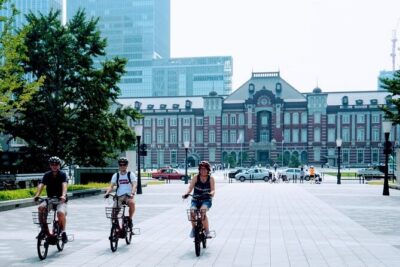
3h Tokyo E-Bike Tour: Hidden Gems, and Local Life with guide
Read our review →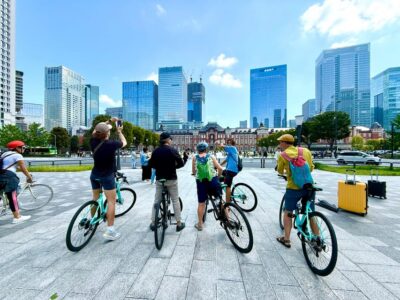
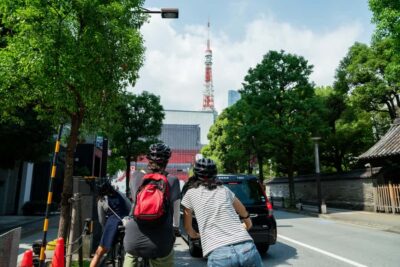
3-hour Guided E-Bike Tour of the City’s Hidden Gems
Read our review →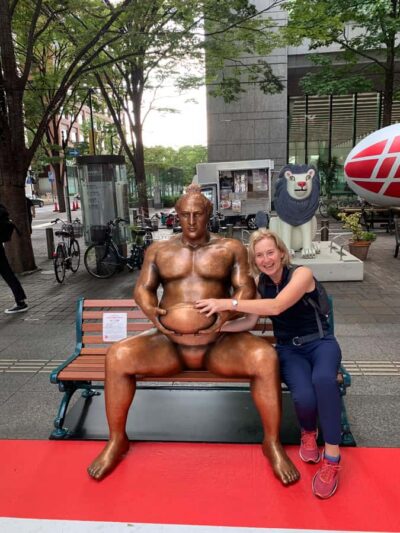
Discover Traditional Tokyo Full-Day Bicycle Tour
Read our review →
3-Hour Tokyo Private E-Bike Tour Starting from Your Hotel
Read our review →Browse the lists this tour appears in