
REVIEW · TOKYO
3h Tokyo E-Bike Tour: Hidden Gems, and Local Life with guide
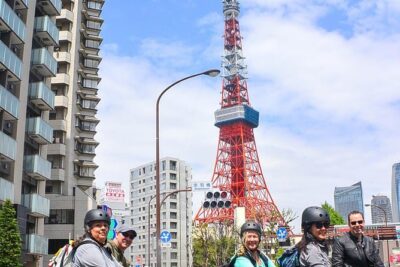
Tokyo reveals itself quickly from an electric bike. In three hours, you can move from office towers and palace moats to old food streets, sumo country, and quiet neighborhood lanes. The small group, capped at six, keeps the ride personal, while guides such as Yo, Ted, Jenny, Kazu, Take, and Ninja add local stories along the way.
I like two things right away: the e-bike lets you cover far more ground than walking, and the route includes ordinary streets where Tokyo life feels less polished for tourists. You also get a helmet, insurance, luggage storage, and a guide who keeps you on course.
The main catch is that this remains a city bike ride, not a gentle park cruise. You need to ride confidently, stay with the group, and handle traffic. Tokyo can also be hot and muggy, and rain or dangerous summer heat can cancel the tour.
Key points to know before you book
- Morning and afternoon routes differ: Morning rides center on Tokyo Station, the Imperial Palace, Ginza, Tsukiji, and Nihonbashi.
- The afternoon reaches old and modern Tokyo: Expect Akihabara, Kappabashi, Asakusa, Ryogoku, and Nihonbashi.
- The e-bike does the hard work: It helps you handle Tokyo’s distance and summer heat without arriving worn out.
- The group stays small: Up to six people per booking means more room for questions and route adjustments.
- The starting point is easy to reach: Cycling Holiday Tokyo sits one minute from the west exit of JR Kanda Station.
- You must be comfortable on a bicycle: The minimum age is 12, the minimum height is 147 centimeters, and non-riders cannot join.
Why an e-bike is a smart way to see Tokyo
Tokyo is huge, but many of its best-known areas sit within cycling range. The train system is fast and excellent, yet underground travel hides the connections between neighborhoods. On a bike, you see office workers, small bars, kitchen shops, temple approaches, apartment streets, and the sudden change from modern towers to older Tokyo.
The electric assist matters. You still pedal, but the motor takes much of the strain out of starts, hills, and long stretches. Several riders found the bikes easy to operate, with a front basket useful for a small bag or water bottle. You will still need to pedal and pay attention, but the bike makes a broad city tour realistic in three hours.
I especially like this format for your first day in Tokyo. It gives you a mental map. Afterward, you can return by train or on foot to the places that caught your eye. One rider used the tour to choose which neighborhoods to revisit later, a practical benefit that is easy to overlook.
The route is not fixed like a museum visit. Stops can shift with traffic, pedestrians, road conditions, season, and the difference between a weekday and a weekend. That flexibility is useful for safety, though it means you should not treat every named stop as a guaranteed long visit.
More E-Bike Tours in Japan
- Hidden Kyoto E-Biking tour
★ 5.0 · 1,843 reviews - Tokyo Top Highlights 3h Guided E-bike Tour
★ 5.0 · 714 reviews - 5 Top Highlights of Kyoto Full Day Bike Tour (E-bike option)
★ 5.0 · 511 reviews
Starting in Kanda, where office Tokyo loosens up
You meet at Cycling Holiday Tokyo, at 3-chome-8-6 Uchikanda, near JR Kanda Station. The shop is about a one-minute walk from the station’s west exit and has a restroom, waiting room, and luggage storage. You can leave luggage during the ride, but keep valuables with you.
Kanda is a good starting point because it is not just a transport hub. It is a small downtown area shaped by Japanese office life, with compact bars and local streets. Your guide may explain how the district changes during the workday, then get you fitted with a helmet and familiarized with the e-bike.
The mood here is more everyday than postcard Tokyo. That is part of the appeal. You begin by seeing a working neighborhood, not by being dropped straight in front of a major landmark.
Morning ride: Tokyo Station and the Imperial Palace
The morning route moves through Tokyo’s financial center, where modern buildings create some of the tour’s cleanest city views. This section gives you a quick sense of Tokyo’s scale and order before the route turns toward older sights.
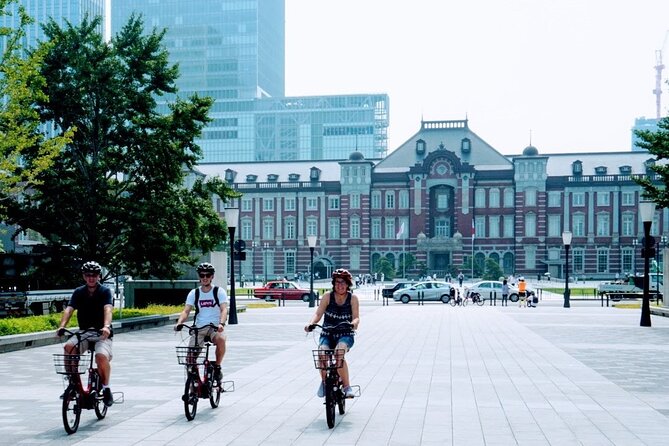
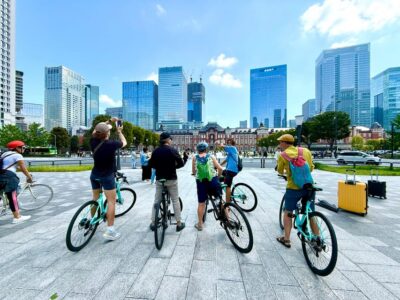
At Tokyo Station, the usual viewing point is Gyoko-dori Street, facing the Marunouchi station building. You stop for photographs while the guide explains the station’s history. The stop itself is brief, around five minutes, so think of it as an introduction rather than a full architectural visit.
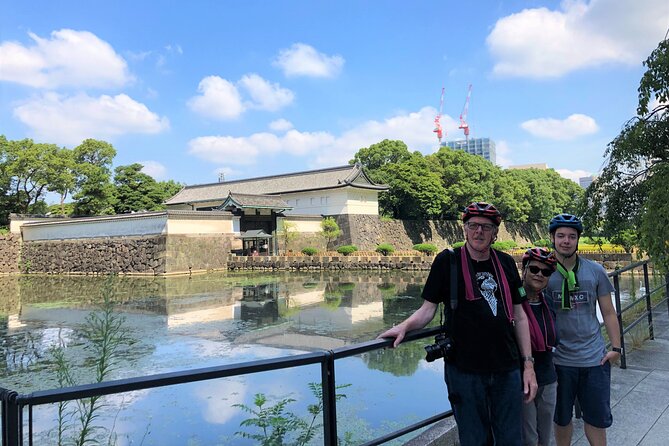
The Imperial Palace area brings a different mood. At Otemon Gate, you look across the moat toward the Fujimi-yagura tower. The stonework, water, and formal palace grounds offer one of the strongest visual contrasts with the surrounding business district.
You may also pass through the palace gardens and Sakuradamon, one of the traditional castle gates. The gardens cover a large open area in the middle of central Tokyo, giving your legs and eyes a break from buildings. Depending on the route and conditions, the guide may pause for flowers, history, or a photograph.
This portion is a strong reason to choose the morning departure. If imperial architecture, central Tokyo history, and broad city views matter most to you, the morning course gives you the better match.
Ginza back streets and the food life of Tsukiji
Ginza is famous for luxury shops and polished main streets, but the bike makes it possible to see another side. Your guide may use the larger avenues or slip into back streets, depending on traffic and the group’s pace.
That change of scale is one of the tour’s best features. A few minutes can take you from major brands and wide roads to smaller lanes with local restaurants and older buildings. You do not get a long shopping session, but you get useful orientation for returning later.
The morning ride continues toward Tsukiji Outer Market. The old-fashioned food shops here sell specialty ingredients, snacks, and kitchen-related goods. The scheduled stop is about ten minutes, so you should not expect a full market meal or a long browse.
Still, Tsukiji works well as a short stop. The guide can point out the difference between the outer market and the former wholesale market site, while you take in the narrow food lanes. Food is not included, so any snack or drink is your own expense. If you want to eat here, ask the guide what fits the timing.
Same city, a different ride:
- Tokyo Guided Small-Group Biking Tour
★ 5.0 · 1,250 reviews - Bike Tour Exploring North Kyoto plus Lunch
★ 5.0 · 1,087 reviews - Tokyo Great Cycling Tour
★ 5.0 · 811 reviews - Arashiyama Bamboo Forest & Hidden Gems Bike Tour (Early Bird)
★ 5.0 · 613 reviews
Back streets that only make sense from a bike
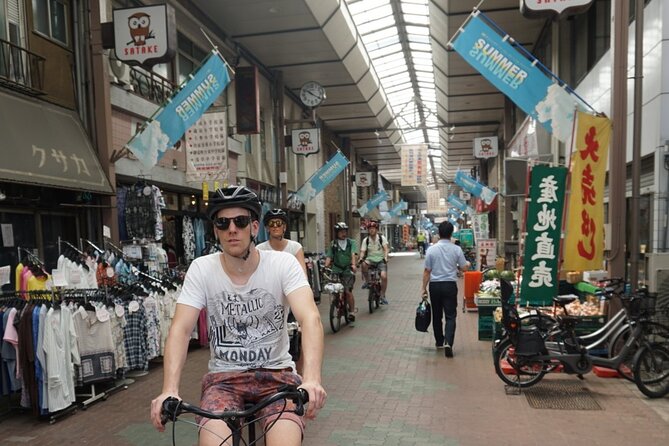
The quieter parts of the route may become your favorite. Tokyo’s local streets are often too far apart for a comfortable walking tour, yet too close together to justify a train ride. An e-bike handles that in-between distance neatly.
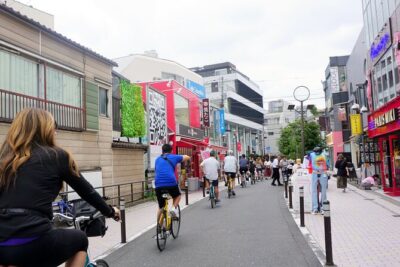
You may pass through residential lanes, local connecting roads, and passages that are practical for bicycles but not part of a standard sightseeing route. These stretches show the city as a place where people live and work, not only a collection of famous sights.
This is also where the guide matters most. A good guide keeps the group together, explains what you are seeing, and chooses safe roads. Take, Yo, Jenny, Ted, Kazu, and other guides have been singled out for patience, humor, safety awareness, and clear explanations. The exact guide is not guaranteed, but the company uses several English-speaking guides.
Do not assume you can stop whenever you like. The group needs to stay together, and one rider pointed out that it is easy to fall behind. Keep the guide in sight, follow instructions, and save longer shopping or photography for planned stops.
Afternoon ride: Akihabara, Kappabashi, and Asakusa
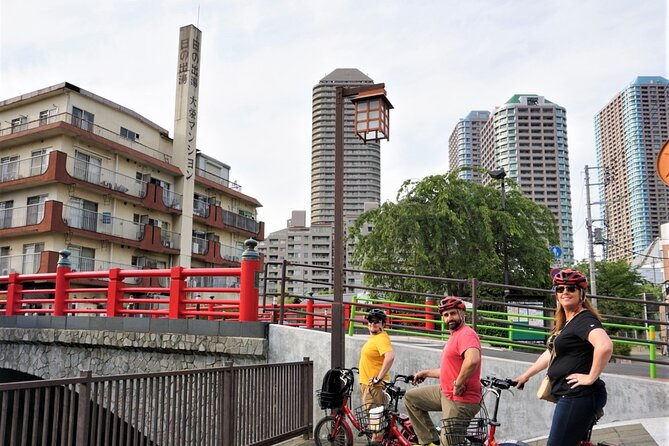
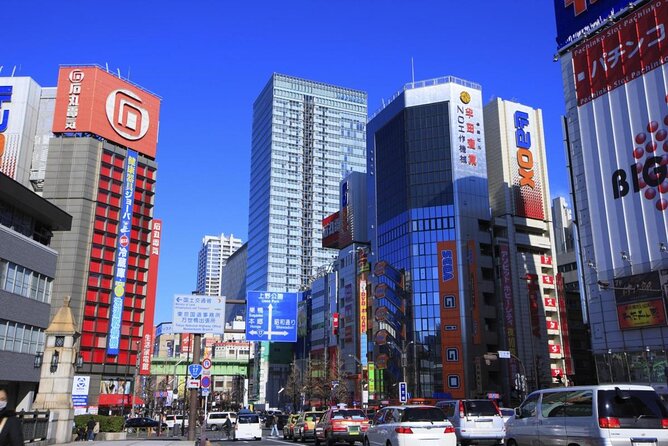
The afternoon route has a different personality. It begins with Akihabara, Tokyo’s center for youth culture, anime, games, electronics, and maid cafes. The stop is short, around five minutes, so you get an introduction and street-level look rather than a full shopping visit.
Akihabara is best understood as a district to observe from the saddle. The signs, storefronts, and crowds make it unlike the palace and financial areas on the morning route. If you want to shop, plan a separate visit after the tour.
Kappabashi Street follows with a more practical kind of Tokyo character. Shops here sell kitchen utensils, professional cooking tools, knives, restaurant supplies, and food-display items. You may have about ten minutes to look around or shop, though the exact timing depends on the group and road conditions.
This is an excellent stop for cooks and anyone looking for a useful souvenir. It also gives you a look at the businesses that support Tokyo’s restaurants, rather than only the restaurants themselves.
Asakusa is the afternoon route’s major landmark. The district is famous for its old temple, and the temple approach gives you a classic Tokyo setting after the more modern streets of Akihabara. The stop is roughly ten minutes, enough for orientation, photographs, and a quick explanation of temple customs.
One particularly useful part of the experience is learning how to behave at a Japanese temple. A guide can explain basic rituals and etiquette so you feel more comfortable during the rest of your Japan trip. You will not have time to explore every corner of Asakusa, so return later if the area catches your interest.
Ryogoku and Nihonbashi finish the city story
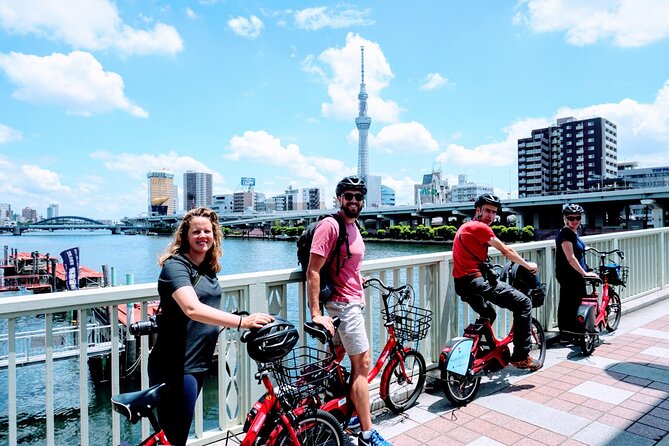
Ryogoku is associated with sumo wrestling. If you are lucky, you might see sumo wrestlers near the arena, but this is not promised. Even without that chance encounter, the district adds another layer to the afternoon route.
The ride ends through or near Nihonbashi, a historic bridge and an important reference point in Japan’s road system. Distances from Tokyo traditionally begin from Nihonbashi, making it more than a nice photo stop. The bridge helps explain how Tokyo developed as a national center.
The tour returns to the Kanda meeting point. Since the activity ends where it starts, you can collect your luggage and continue by train without arranging a second pickup.
What the guides add to the ride
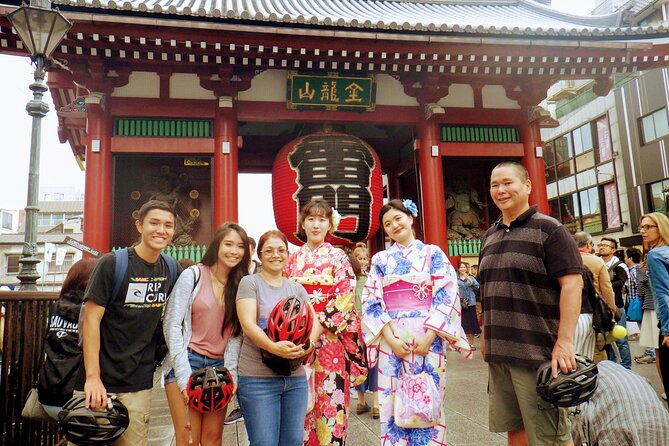
The guides are not just there to lead a line of bicycles. They explain neighborhood history, food culture, architecture, temple customs, and the small differences between districts. Yo is known for a friendly, easygoing approach, while Ted has handled questions well and paid close attention to safety. Jenny has offered a choice between a standard sightseeing route and a back-street version when conditions allow.
Take has been especially attentive to food and local details, and Ninja has led rides around the Imperial Palace and bay area. Kazu has guided groups through many stops while keeping the ride fun and informative. These names give you a sense of the company’s range, but your guide depends on the date and schedule.
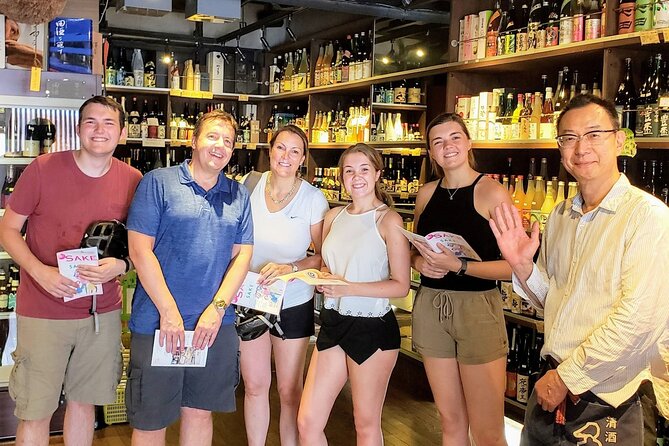
Because the group is limited to six, you have a fair chance to ask questions. That makes this more useful than a large bus tour, especially if you want help understanding where to eat or which neighborhood to revisit.
Heat, rain, traffic, and the real riding conditions
Tokyo’s weather can shape the experience. July and August are hot and humid, and the operator may cancel if the heat index reaches a dangerous level. If conditions become unsafe during the ride, the guide may end the tour and return to the start point. In that case, the tour fee is refunded.
Bring water, sunscreen, and a small towel in summer. An electrolyte drink is a sensible choice on a hot day. Cooling products are supplied in summer, but they do not replace good clothing and hydration.
Rain can also cancel the tour. The operator checks the forecast the day before, and simple rain gear is included when appropriate. Still, rain protection for glasses and hands may make you more comfortable. In winter, simple gloves are supplied, but you should bring warm clothing.
Traffic is the other concern. You are riding on city streets, not in a protected cycle park. You should be healthy enough for three hours of riding, able to control a bicycle, and comfortable following a guide through busy areas. The minimum age is 12, and the minimum height is 147 centimeters.
Is $63.01 a fair price?
At $63.01 per person, the tour is reasonably priced for three hours in central Tokyo. The cost includes the e-bike, helmet, English-speaking guide, insurance, simple weather gear, and luggage storage. Food and drinks cost extra.
The value comes from the distance covered and the local help. Hiring a bicycle on your own would not provide route planning, safety support, or explanations at the stops. Walking between these districts would take much longer, while using trains would skip the streets that make the ride distinctive.
It is less valuable if you want long visits at each landmark, extended shopping time, or a relaxed temple tour. The experience is about connecting many parts of Tokyo, not thoroughly touring one of them.
Free cancellation is available up to 24 hours before the start time. Cancellations later than that are not refunded, and weather or minimum-group cancellations offer a different date or a full refund.
Who should choose this Tokyo bike tour?
I would choose it for first-time visitors who want a quick city orientation, families with active teenagers, and repeat visitors who have already seen the major sights and want local streets. It also suits people who enjoy learning through conversation rather than simply checking off landmarks.
Families should note the age and height rules. A 12-year-old who rides confidently may fit the requirements, but every participant must be able to manage a bicycle.
I would not choose it if you dislike traffic, cannot ride confidently, need frequent unscheduled stops, or want a slow photography tour. The e-bike reduces physical effort, but it does not remove the need to pay attention.
Should you book it?
Book this tour if you want to see Tokyo as a connected city rather than a string of isolated attractions. Choose the morning route for Tokyo Station, the Imperial Palace, Ginza, Tsukiji, and quieter central streets. Choose the afternoon route for Akihabara, Kappabashi, Asakusa, Ryogoku, and Nihonbashi.
The strongest reason to go is the mix of major sights and ordinary streets. The main warning is simple: you need to be a capable city cyclist. If that describes you, $63.01 buys a useful three-hour introduction, plenty of local context, and a better sense of where you want to spend the rest of your Tokyo visit.
FAQ
Where does the Tokyo e-bike tour start?
It starts at Cycling Holiday Tokyo, 3-chome-8-6 Uchikanda, Chiyoda City. The shop is about a one-minute walk from the west exit of JR Kanda Station.
How long is the tour?
The experience lasts approximately three hours and ends back at the meeting point.
What is included in the price?
The price includes an electric-assist bicycle, helmet, English-speaking guide, insurance, simple rain gear, seasonal cooling products or winter gloves, and luggage storage for non-valuables.
Can I choose a morning or afternoon route?
Yes. Morning and afternoon departures use different routes. Morning focuses on Tokyo Station, the Imperial Palace, Ginza, Tsukiji, and Nihonbashi. Afternoon focuses on Akihabara, Kappabashi, Asakusa, Ryogoku, and Nihonbashi.
What are the age and height requirements?
The minimum age is 12, and the minimum height is 147 centimeters. You must be able to ride a bicycle to join.
What happens if it rains or becomes dangerously hot?
The tour may be canceled because of rain or unsafe summer heat. You will be offered another date or a full refund if the operator cancels. If conditions become dangerous during the ride, the guide may stop and return to the start point.
More Three-Hour Bike Tours in Japan
- Tokyo: 3-Hour Bike or E-Bike City Highlights Tour
★ 4.8 · 435 reviews - 3-Hour Tokyo Private E-Bike Tour Starting from Your Hotel
★ 5.0 · 117 reviews - 3-Hour Porto Highlights on a Electric Bike Guided Tour
★ 5.0 · 4,392 reviews - 3-hour Complete Prague Bike Tour
★ 5.0 · 3,674 reviews
Just added around Japan
- Kyoto: Afternoon Bamboo Forest and Monkey Park Bike Tour★ 4.9 · 83 reviews
- 4.5-hr Kyoto Historical Highlights Bike Tour with UNESCO★ 4.7 · 13 reviews
- 3-Hour Tokyo Private E-Bike Tour Starting from Your Hotel★ 5.0 · 117 reviews
- Private-group Morning Cycling Tour in Hida-Furukawa★ 5.0 · 105 reviews
- Private Afternoon Cycling Tour in Hida-Furukawa★ 5.0 · 109 reviews
- 1-Day Private Rural E-Bike Tour in Hida★ 5.0 · 188 reviews
- Eat, Drink & Cycle: Osaka Foodie Bike Tour★ 5.0 · 224 reviews
- One-Day Osaka Bike Adventure: 5–6 Hours★ 5.0 · 246 reviews
Tokyo Bike Tours, compared.
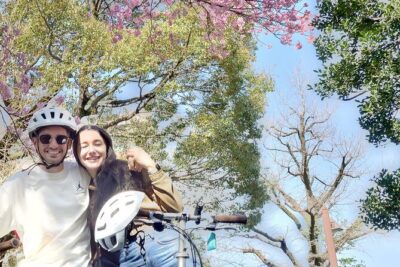
3-Hour Tokyo Private E-Bike Tour Starting from Your Hotel
Read our review →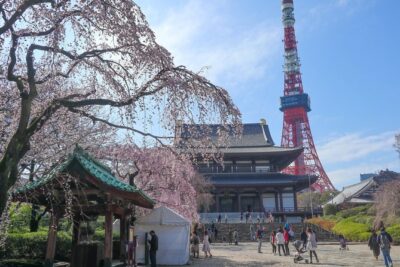
5-Hour Tokyo & Edo Hidden Gem Bike Tour with Lunch
Read our review →Browse the lists this tour appears in