
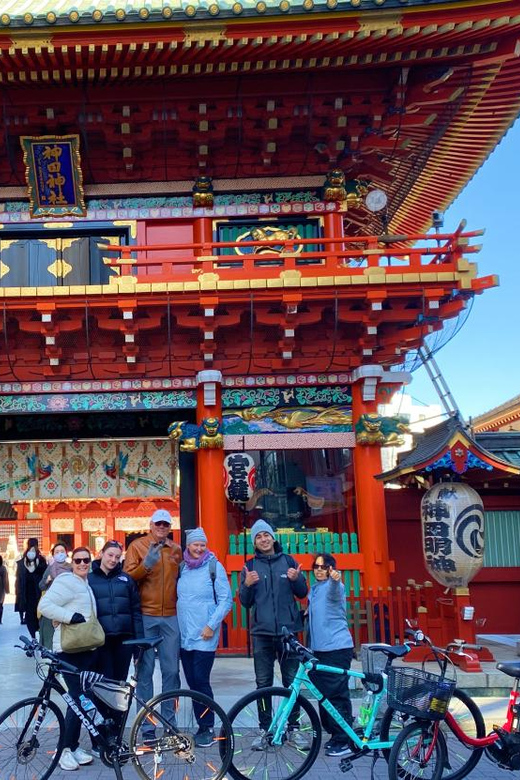
REVIEW · TOKYO
Tokyo: 3-Hour Bike or E-Bike Tour of City’s Hidden Gems
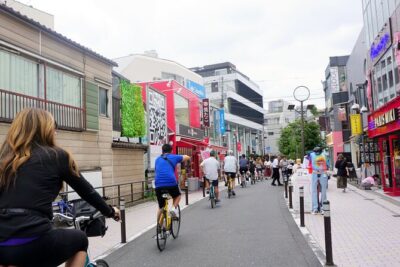
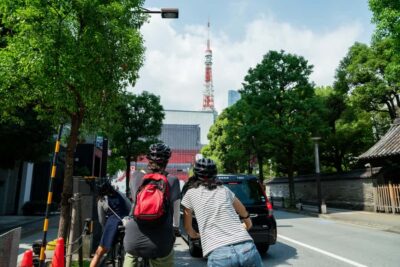
Tokyo reveals itself differently from a bike seat. In three hours, you can pedal from Zojo-ji Temple and Tokyo Tower country to the Imperial Palace, Akasaka, Aoyama, Harajuku, and Shibuya. The route mixes famous sights with quieter corners that are easy to miss from a train.
I like the quality Bianchi and Fuji bikes, and I like the way the guides keep the tour moving while stopping for photos and short walks. Guides including Shin, Casey, Naoki, Marika, and Miguel have been praised for clear explanations and friendly care. The main caution is simple: this is a real ride, not a bus tour, and the route can feel like a workout in Tokyo’s heat.
Key points to know before you pedal off
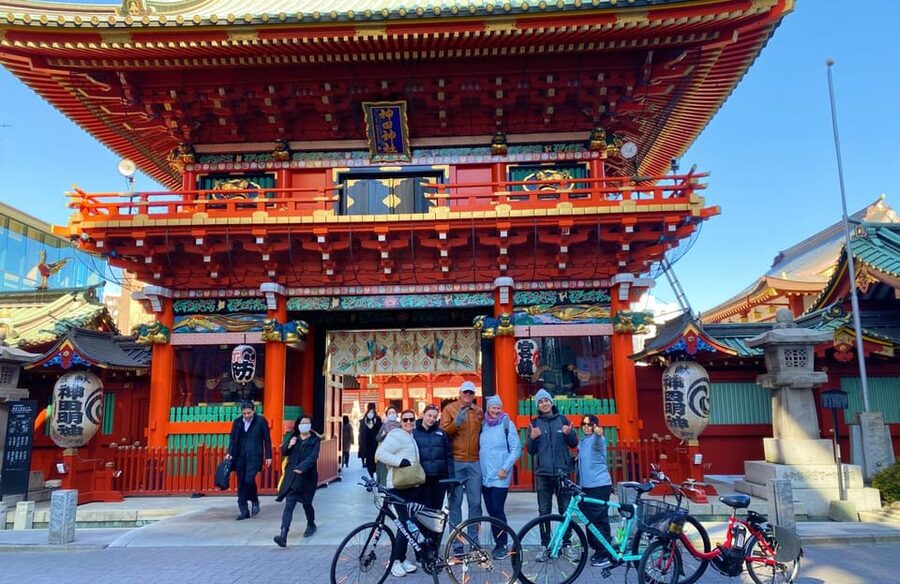
- A broad Tokyo sampler: Cover old temples, imperial sites, Olympic landmarks, Aoyama streets, Harajuku, and Shibuya in one outing.
- Good bikes matter here: Bianchi and Fuji bicycles are supplied, with an e-bike option for riders who do not cycle often.
- Guides add the meaning: English and Japanese-speaking guides explain local customs, history, and modern city life along the way.
- Expect steady cycling: You stop often, but you still cover a substantial distance through central Tokyo.
- Helmets cost extra: Bring ¥1,000 in cash per helmet if you want one.
- Best for adults and older children: Riders must be at least 12, able to cycle, and comfortable spending three hours on a bike.
A three-hour route that connects several Tokyos
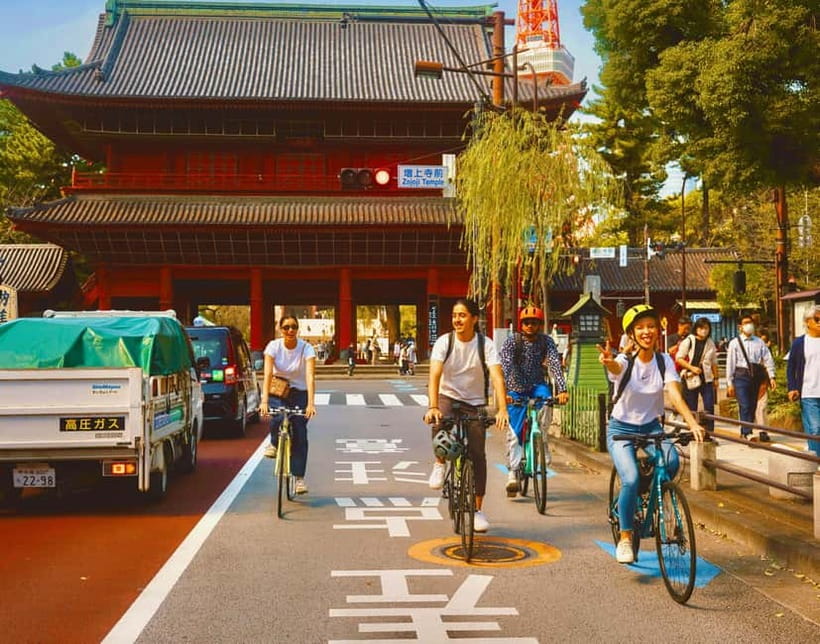
The strength of this ride is its range. You do not spend the whole morning in one district. Instead, the route links Tokyo’s old ceremonial spaces with its polished central neighborhoods and youth-oriented west side.
That makes the tour useful early in a Tokyo visit. You get a sense of how the city’s districts relate to one another, then you can return later by train or on foot to explore the places that caught your eye.
The stops are generally short. You may spend 15 minutes at Zojo-ji, 10 minutes at the Imperial Palace, and only a few minutes at places such as Ōte-mon Gate, Cat Street, and Miyashita Park. This is enough for orientation and photos, but not enough for a full temple visit or museum-style tour.
More E-Bike Tours in Japan
- Tokyo Top Highlights 3h Guided E-bike Tour
★ 5.0 · 714 reviews - 3h Tokyo E-Bike Tour: Hidden Gems, and Local Life with guide
★ 5.0 · 670 reviews - Tokyo: 3-Hour Bike or E-Bike City Highlights Tour
★ 4.8 · 435 reviews
Starting near Commodore Perry’s statue
The meeting point is around the Statue of Commodore Perry, about a three-minute walk from Daimon Station’s A6 exit. It is a useful location near Tokyo Tower and Zojo-ji, though one person found the meeting spot difficult to identify.
Give yourself extra time to find the guide. Look around the statue area rather than assuming the meeting point will be a large shop or obvious office. The tour provider is Tokyo Rental Bicycle, and the guide will be waiting nearby.
Before setting off, you will receive your bicycle. The supplied choices include Bianchi and Fuji bikes, high-quality cross bikes, and an e-bike option. The exact bike choice is important, so confirm it when booking if you specifically want an e-bike rather than a standard bicycle.
A small pouch attached to the bike gives you a place for a phone, wallet, or keys. Bike insurance is included. Helmets are not included in the price, and you need ¥1,000 in cash per helmet if you want one.
Zojo-ji Temple and the old Tokyo opening
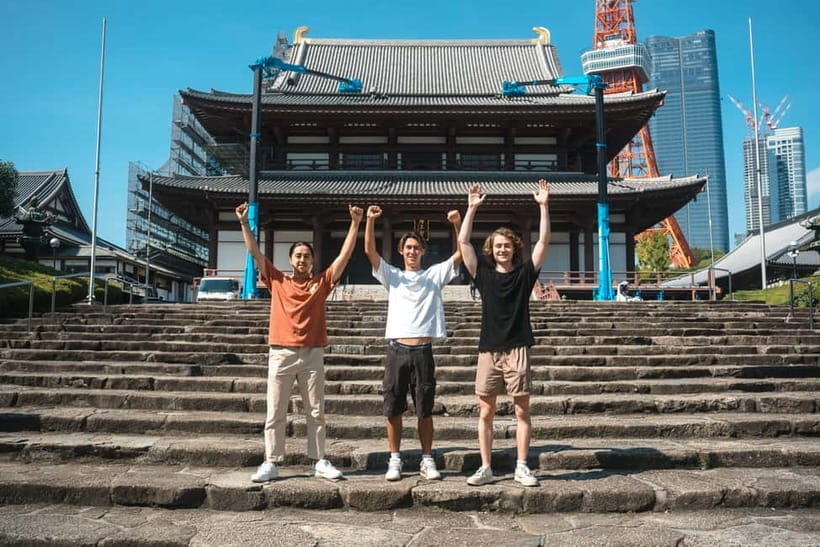
Zojo-ji is an excellent first stop because it gives the ride a strong sense of place. The temple sits near Tokyo Tower, creating one of Tokyo’s classic contrasts: a major Buddhist temple in front of a tall modern landmark.
You get about 15 minutes here with the guide. That is enough to take in the main approach, hear about the temple, and get photos. It is not a long religious-site visit, so keep your expectations in line. You are sampling the setting, not studying every building.
This early stop also helps show why a bicycle works well in Tokyo. You can move from a traditional temple district toward the government and imperial center without spending time changing trains.
The Imperial Palace and Ōte-mon Gate
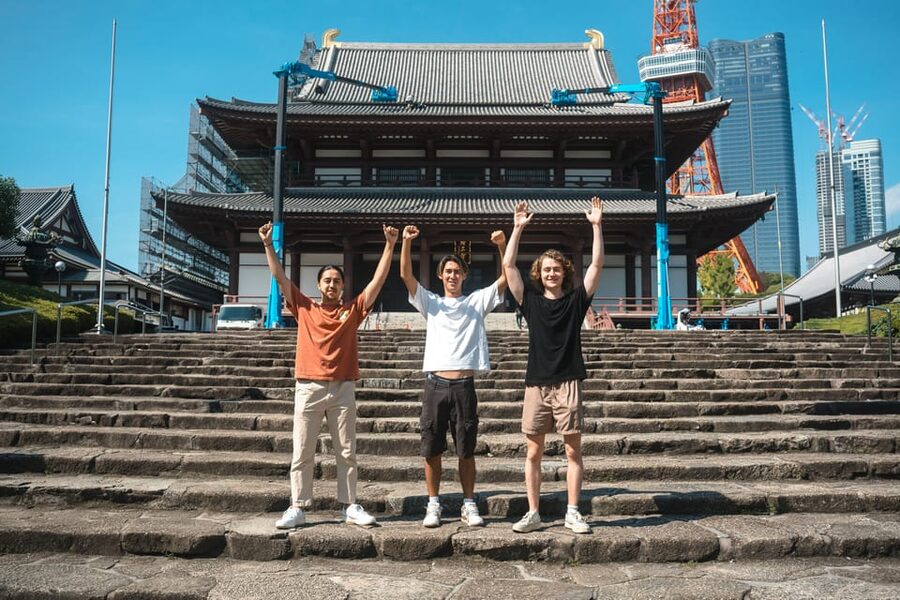
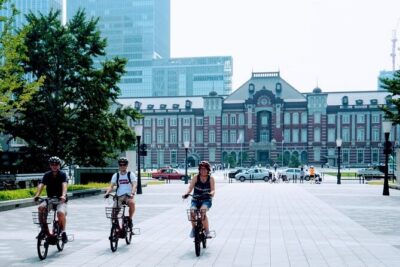
The route continues to the Imperial Palace for a short guided stop, followed by Ōte-mon Gate. The palace grounds are associated with Japan’s imperial household, and the gate gives you a clear visual reminder of the former castle town at the center of present-day Tokyo.
The Imperial Palace stop lasts around 10 minutes, with about five minutes at Ōte-mon Gate. These are photo and orientation stops rather than extended walks inside the grounds. You will likely get the most from them if you listen closely to the guide’s explanation, then take a few well-chosen photos instead of trying to see everything.
The route may also pass areas where official activity takes place. One participant was lucky enough to see the emperor, but that is not something you should expect or plan around.
More E-Bike Tours in Tokyo:
- Tokyo: 3-hour Guided E-Bike Tour of the City’s Hidden Gems
★ 4.8 · 251 reviews - 3-Hour Tokyo Private E-Bike Tour Starting from Your Hotel
★ 5.0 · 117 reviews - Tokyo: 3h Private E-bike Tours, Starting at Your Hotel
★ 5.0 · 36 reviews - Tokyo: Private Cycling Tour with cute E-bike
★ 5.0 · 11 reviews
Akasaka Palace and the New National Stadium
The State Guest House Akasaka Palace adds a different architectural note. Its formal appearance reflects Japan’s diplomatic role and gives the tour a change of pace after the temple and palace grounds.
The stop is listed at about 10 minutes, mainly for photos. Again, this is a quick look from the outside rather than a scheduled interior visit. If you enjoy grand civic buildings, it is a worthwhile pause. If your main interest is traditional Japan, it may feel less essential than Zojo-ji or the Imperial Palace.
The New National Stadium brings the route into modern Tokyo and connects the ride with the city’s Olympic-era identity. You stop for around 10 minutes. The value here is not a long stadium tour. It is the chance to see a major contemporary landmark as part of a wider city route.
The quieter stops between major sights
The itinerary includes a lesser-known stop for about 15 minutes, followed by a short visit around Minamiaoyama. These portions are part of what makes the ride more than a checklist of famous landmarks.
The precise lesser-known location is not specified, so you should not book expecting a particular named attraction. Instead, think of this as a flexible part of the route, where the guide can point out a corner of Tokyo that would be awkward to reach on a standard sightseeing circuit.
Minamiaoyama is a good transition area. It brings you into a more design-conscious, polished part of the city before the route reaches Harajuku and Shibuya. The guide’s local perspective matters here because the streets can look ordinary at first glance, while the stories about neighborhoods and daily life give them more character.
Cat Street, Miyashita Park, and Shibuya Crossing
Cat Street receives only about five minutes, but it is a useful glimpse of the pedestrian-friendly shopping and street-style culture around Harajuku and Aoyama. Do not expect time for shopping. The point is to see the area and understand how it differs from Tokyo’s older districts.
Miyashita Park is an even shorter stop, around three minutes. That sounds brief, but it works as a quick pause on the way toward Shibuya. You can take in the city’s newer public spaces and dense commercial setting before reaching the best-known crossing in Japan.
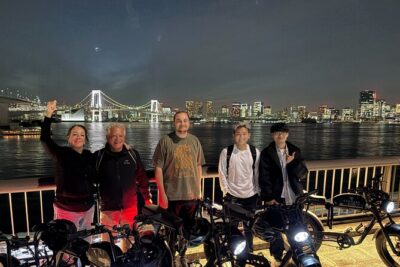
At Shibuya Crossing, you have about five minutes for photos and a short visit. The stop gives you a recognizable finish, though it will feel quick if you want time to cross repeatedly, shop, or explore the surrounding department stores.
The tour ends at the Bell of Peace. Since the route finishes in the Shibuya area, you can continue independently afterward, but the supplied information does not specify an onward transport plan. Ask your guide for the exact finishing point and the easiest station connection.
What the guides add to the ride
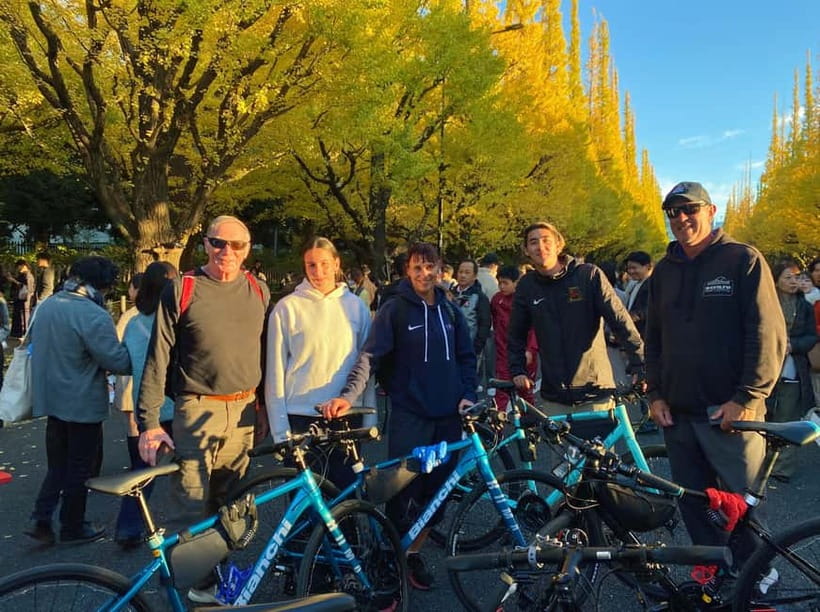
The guides speak English and Japanese, and the strongest part of their role is making the stops understandable without turning each pause into a lecture. Casey has been praised for explaining sights clearly and watching out for the group. Shin has been described as flexible and good at adjusting the route to match riders’ interests.
Naoki and Marika have also been praised for their hosting, while Miguel and KG are noted for humor and explanations about Japanese history, culture, and people. These names do not guarantee who will lead your particular outing, but they show the range of guide styles used by the provider.
A guide can also make the ride feel safer in busy streets. One participant specifically appreciated being guided through Tokyo traffic and having photos taken along the way. You should still ride attentively and follow instructions. A guide does not remove the need to watch intersections, pedestrians, and other cyclists.
Standard bike or e-bike?
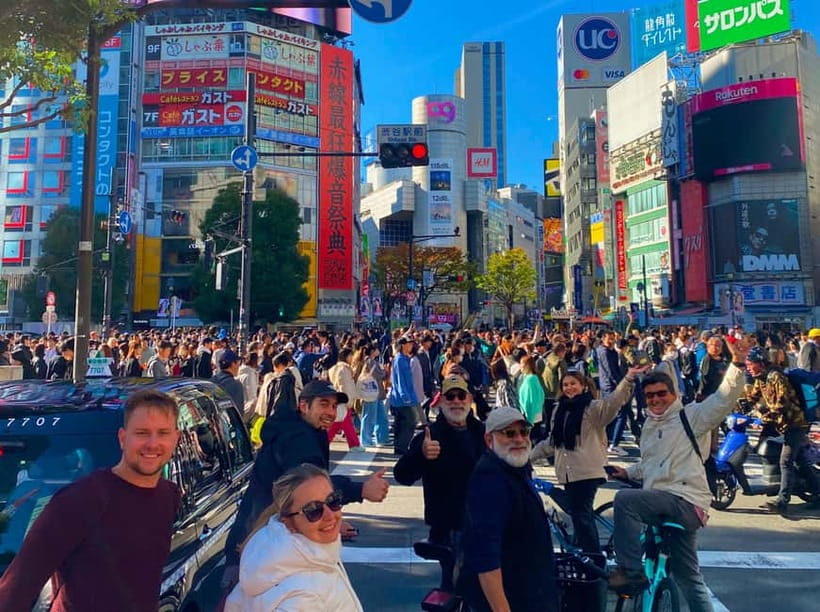
Choose the standard bike if you cycle with some regularity and like the idea of a genuine workout. The bicycles are described as Bianchi and Fuji models, and one rider specifically found a Bianchi cross bike easy to handle around the city.
Choose the e-bike if you rarely cycle, are unsure about your stamina, or expect Tokyo’s heat to affect you. The provider specifically recommends the e-bike for riders who are not comfortable with longer distances. That is useful advice, not an admission of weakness. An assisted bike lets you pay attention to the city instead of worrying about keeping up.
The route has frequent stops, but it still involves extended cycling. A four-star rating specifically noted that the tour was enjoyable but included more riding than expected. That is the clearest warning for anyone who sees this as a gentle sightseeing activity.
Wear comfortable shoes and clothes, and bring water. Summer can be especially demanding. One participant completed the route during record-breaking Tokyo heat and appreciated stops for refreshments, but you should not count on the weather being forgiving.
Is $60 a fair price?
At $60 per person, the value depends on what you want from a city tour. You are paying for three hours, a bicycle, a local English-speaking guide, bike insurance, the route planning, and the chance to cover districts that would take much longer on foot.
It is good value if you want an active introduction to Tokyo and would otherwise spend the same morning piecing together train rides and walking routes. The small-group or private format also gives the guide some room to respond to your interests.
It is less compelling if you want long visits inside temples, palaces, or museums. The stops are short, and the tour is built around movement. You are buying access to a broad city overview, not detailed entry to each attraction.
Remember the extra helmet charge of ¥1,000 per unit. Child seats cost ¥3,000 per unit, though children under 12 are not suitable for this activity according to the stated restrictions, so confirm the child-seat policy before booking for a family.
Who should book this ride?
I would recommend it to a first-time Tokyo visitor who wants to see several central districts quickly. It is also a good fit if you enjoy learning through conversation and prefer active sightseeing to sitting in a vehicle.
The tour suits riders who can handle three hours on a bicycle, including regular cycling with stops. An e-bike makes it more accessible for people with limited stamina, but it is not suitable for anyone who cannot ride a bike.
It is not suitable for children under 12, pregnant people, or those with back problems. Anyone with a serious concern about cycling should choose a different activity rather than hoping the short stops will make the ride easy.
The route may also appeal to repeat visitors. One participant used a guide’s flexibility to adjust the experience around personal interests, and that is where a private or small group can help. Ask in advance how much route adjustment is possible.
Booking details that affect your decision
The activity lasts three hours, with starting times available according to the date you choose. Free cancellation is offered up to 24 hours in advance for a full refund, and you can reserve now and pay later.
Private and small-group options are available. If you care about pace, want more time for photos, or prefer a quieter ride, a smaller group is worth considering.
The tour does not include smoking, alcohol, drugs, or littering. Those rules are basic, but they matter on a shared ride through public streets and temple areas.
Should you book the Tokyo bike tour?
Book it if you want range, local explanation, and active sightseeing in one compact morning or afternoon. The combination of Zojo-ji, the Imperial Palace, Akasaka, the National Stadium, Aoyama, Harajuku, and Shibuya is hard to reproduce on foot in three hours.
Choose the e-bike if you do not cycle often, and bring cash for a helmet. Allow time to find the Commodore Perry meeting point, carry water, and expect a workout rather than a relaxed roll.
Skip it if your priority is long temple visits, indoor attractions, or a slow neighborhood walk. For everyone else, the strong bikes, personable guides, and wide-ranging route make this a practical way to get your bearings fast.
FAQ
Where does the bike tour start?
The meeting point is around the Statue of Commodore Perry, about a three-minute walk from Daimon Station’s A6 exit.
How long does the tour last?
The tour lasts three hours.
Is an e-bike available?
Yes. An e-bike option is available and is recommended for people who do not cycle often or are concerned about stamina.
Are helmets included?
No. Helmets are available for ¥1,000 per unit, payable in cash at the location.
What languages do the guides speak?
The live guides speak English and Japanese.
Who should not take this tour?
The tour is not suitable for children under 12, pregnant women, people with back problems, or people who cannot ride a bike.
More Three-Hour Bike Tours in Tokyo
- 3-Hour Porto Highlights on a Electric Bike Guided Tour
★ 5.0 · 4,392 reviews - 3-hour Complete Prague Bike Tour
★ 5.0 · 3,674 reviews - Porto: City Highlights 3-Hour Guided Electric Bike Tour
★ 4.8 · 3,092 reviews - Copenhagen: Highlights 3 Hour Bike Tour with a Local Guide
★ 4.8 · 2,312 reviews
Just added around Tokyo
- Tokyo: Private Cycling Tour with cute E-bike★ 5.0 · 11 reviews
- Tokyo: West-Side Cycling and Food Tour with Guide★ 5.0 · 37 reviews
- Tokyo: 3-hour Guided E-Bike Tour of the City’s Hidden Gems★ 4.8 · 251 reviews
- Tokyo: Rice Ball Making Class★ 5.0 · 14 reviews
- Tokyo Bike Tour: Shibuya, Harajuku & Hidden Gems★ 5.0 · 20 reviews
- Tokyo: Hidden Gems Guided Bike Tour with Lunch★ 4.5 · 30 reviews
- Tokyo: Discover Traditional Tokyo Full-Day Bicycle Tour★ 4.7 · 131 reviews
- Tokyo: 3h Private E-bike Tours, Starting at Your Hotel★ 5.0 · 36 reviews
Tokyo Bike Tours, compared.
3h Tokyo E-Bike Tour: Hidden Gems, and Local Life with guide
Read our review →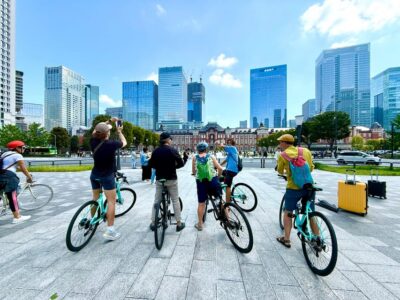
3-hour Guided E-Bike Tour of the City’s Hidden Gems
Read our review →
Discover Traditional Tokyo Full-Day Bicycle Tour
Read our review →
3-Hour Tokyo Private E-Bike Tour Starting from Your Hotel
Read our review →Browse the lists this tour appears in