
REVIEW · TOKYO
Tokyo: Rice Ball Making Class
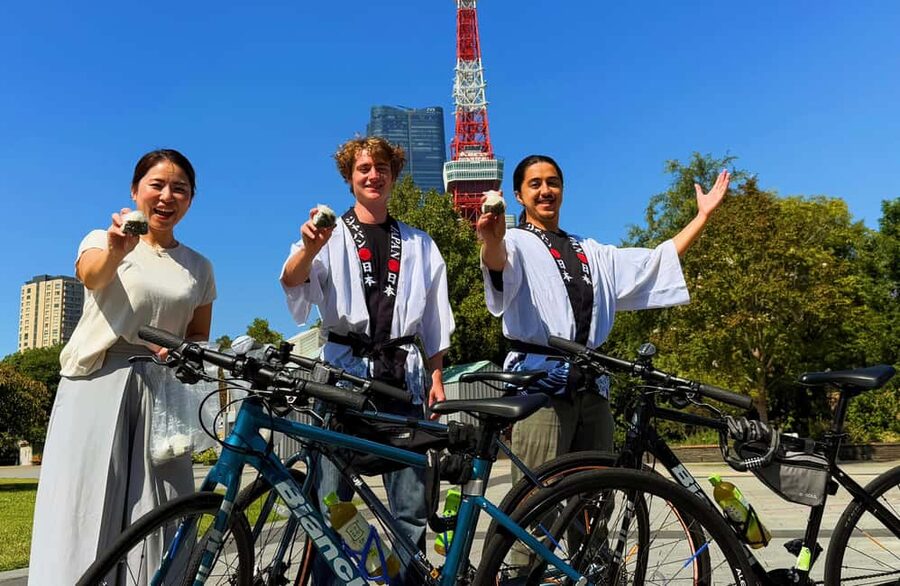
The best part of this Tokyo outing is the simple switch from rice-ball lesson to bicycle ride. You learn to make onigiri with a local expert, pack the warm snacks, then pedal to Hamarikyu Gardens for a picnic among ponds, teahouses, and city views. It feels more personal than a standard sightseeing loop.
I like the small group of six or fewer, which gives you room to ask questions and get help shaping the rice. I also like the mix of food, garden, and cycling: you are not just looking at Tokyo, you are making something and then moving through the city under your own power.
The main catch is that this is not a good fit if you cannot ride a bicycle, have a low fitness level, or need step-free access. The outing lasts from one to three hours depending on the schedule, but cycling, outdoor time, and garden paths still require a reasonable level of comfort.
Key points at a glance

- Make three classic onigiri fillings: Try savory salmon, pickled plum, and tuna-mayo with freshly steamed rice.
- Eat your own food at Hamarikyu Gardens: Your handmade lunch comes with historic ponds, teahouses, seasonal flowers, and Tokyo Bay scenery.
- Ride through less-touristed Tokyo: The route uses backstreets, riverside paths, and broad waterfront lanes.
- See major sights from a bicycle: Look for Tokyo Tower, the Imperial Palace, Zojoji Temple, and views toward the bay.
- Stay in a small English-speaking group: The group is limited to six participants, with a local guide and bicycle included.
Why onigiri makes a good Tokyo introduction

Onigiri is one of Japan’s most familiar everyday foods. It is a compact serving of seasoned rice, often shaped by hand and filled with something savory, salty, or sharp. You may have seen packaged onigiri in a convenience store, but making one yourself gives you a better sense of how simple ingredients become a useful Japanese snack.
I like this class because it is practical. You are not watching a chef prepare an elaborate dish while you stand back. You season rice, work with the fillings, and shape the pieces yourself. The process is approachable, but the rice can be sticky and the shape may take some practice. That small bit of trial and error is part of the fun.
The fillings listed for the class include salmon, pickled plum, and tuna-mayo. They give you three very different tastes. Salmon is familiar and savory, pickled plum is sharp and tangy, and tuna-mayo is soft and creamy. You get a quick lesson in how varied one humble rice snack can be.
The class is led in English by a local expert. A guide named Sho has led one particularly well-liked session, and the personal teaching style is a major part of the appeal. Expect help with the technique rather than a formal cooking lecture. The supplied ingredients and class are included in the price, so you do not need to shop for anything before arriving.
More Workshops in Tokyo:
- Cai Be Mekong Delta Tour: Cooking Class, Cycling & Craft Villages
★ 5.0 · 1,881 reviews - Rural Hoi An Cycling, Cooking Class at Organic Farm
★ 5.0 · 72 reviews - Paella Class, Winery & Bike Ride – Free Hotel Pickup from Sitges
★ 5.0 · 69 reviews
From warm rice to a garden picnic
Once your onigiri are shaped, they are packed for the next part of the outing. The plan is to take your handmade food to Hamarikyu Gardens, where you can eat it while enjoying one of Tokyo’s more unusual contrasts.
Hamarikyu sits where the city meets the bay. Inside, you find walking paths, saltwater ponds, seasonal flowers, and traditional teahouses. Outside the garden, Tokyo’s modern skyline rises around it. I find that contrast especially useful for first-time visitors because it gives you two versions of the city in one stop: quiet historic grounds and a dense urban center.
The onigiri should make the garden visit feel more like a real break than a quick photo stop. You can unwrap food you have just made, sit on the grass, and take in the surroundings at a slower pace. The experience information does not promise a formal seated picnic service, so think of this as a relaxed outdoor meal rather than a catered lunch.
Hamarikyu Gardens admission is included. Extra snacks and drinks at the shop are not, so bring water and budget a little more if you want something beyond the onigiri. Water is also the one item specifically recommended for you to bring, which matters on a bicycle ride even when the route is not described as strenuous.
What the bicycle section adds
The bicycle portion keeps the activity from becoming only a food workshop. After eating, your guide leads you through a route that uses local backstreets, riverside paths, and wider waterfront lanes. This changes the pace of sightseeing. Instead of crossing Tokyo by train and appearing at one famous address after another, you see the spaces between them.
The backstreets are likely to show a quieter side of the city. The supplied route description points to local neighborhoods where everyday life continues away from the main tourist paths. You should not expect every turn to be a major attraction. That is precisely the point: the ride gives you a look at ordinary Tokyo as well as its famous views.
The riverside and waterfront sections provide more open space. From those lanes, you can look toward Tokyo Bay and see how the city meets the water. The route also includes views of Tokyo Tower, Zojoji Temple, and the Imperial Palace. The exact order and visibility can depend on the route and conditions, so treat these as sights along the ride rather than guaranteed long stops at each one.
A bicycle also changes how Tokyo feels. You cover more ground than you would on foot, but you remain close to street level. You can notice small local details that are easy to miss from a vehicle. The tradeoff is that you must be comfortable sharing space with the city and following your guide’s route.
The pace, group size, and English guidance
This activity is listed at one to three hours. That is a wide range, so check the available start times and exact duration when booking. The food class, garden visit, picnic, and bicycle ride make up a full experience even at the shorter end, but the longer version should give you more time for the ride and scenery.
The group is limited to six people. I see that as one of the strongest practical features. A small group makes it easier to follow instructions during the onigiri class, ask questions in English, and stay together on a bicycle route. It should also feel less awkward when everyone is shaping rice at the same table.
The guide speaks English. That matters here because the class is hands-on and the cycling portion requires clear directions. The guide is not only showing you how to make food, but also leading you through unfamiliar city streets and paths.
The experience provider is Tokyo Rental Bicycle. A bicycle and local bike tour guide are included, along with the onigiri ingredients and Hamarikyu Gardens entrance. You meet at the onigiri-making class, not at the garden or a major transport hub, so read the meeting instructions carefully and allow enough time to find the class location.
Same city, a different ride:
- Tokyo Guided Small-Group Biking Tour
★ 5.0 · 1,250 reviews - Tokyo Great Cycling Tour
★ 5.0 · 811 reviews - Tokyo Top Highlights 3h Guided E-bike Tour
★ 5.0 · 714 reviews - 3h Tokyo E-Bike Tour: Hidden Gems, and Local Life with guide
★ 5.0 · 670 reviews
Is $51 a fair price?
At $51 per person, this is not the cheapest way to eat an onigiri in Tokyo. You can buy one at a convenience store for very little. That comparison misses the point, though. The price covers an English-language class, ingredients, a bicycle, a guide, and entrance to Hamarikyu Gardens.
I think the value is strongest if you want a compact activity that combines several things you might otherwise book separately. A casual cooking lesson gives you a hands-on memory. The garden visit adds a calm cultural stop. The bicycle tour gives you local streets and waterfront views. You are paying for the combination and the guidance, not simply for lunch.
The value is weaker if you already have your own bicycle, do not care about cooking, or prefer to explore Hamarikyu Gardens at your own pace. In that case, the organized format may feel restrictive. You also pay extra for drinks and snacks purchased at the shop, so bring water if you want to avoid adding to the cost.
The full refund policy allows cancellation up to 24 hours in advance, and you can reserve now and pay later. Those terms make it easier to hold a place while you settle your Tokyo plans, though you should still confirm the current availability and duration before booking.
Who should book this experience?

I would recommend it most to adults and older teenagers who want a local activity without committing to a full-day tour. It suits first-time visitors who want to see Tokyo beyond the biggest stations, as well as repeat visitors who have already covered the standard central sights.
Food lovers will get the most from the first half. You do not need advanced cooking skills, but you should enjoy taking part rather than simply being served. The activity also works well for people who like a few famous sights mixed with ordinary neighborhoods and open-air time.
Cyclists will appreciate the second half. You should wear comfortable clothes, as recommended, and be ready to ride outdoors. The experience is not suitable for children under 12, people who cannot ride a bike, wheelchair users, people with mobility impairments, or anyone with back problems. It is also listed as unsuitable for people with high blood pressure, low fitness levels, visual impairments, or people over 70.
Those restrictions are important, not a footnote. The cycling route and garden paths may be manageable for an active rider, but the provider has clearly set limits. If you are unsure about your fitness or mobility, choose a food-only class instead.
What the strongest feedback tells me
The experience holds a 5.0 rating from 14 reviews, with repeated praise for the friendly staff, the clear English, and the fun combination of food and cycling. I would give the most weight to the consistency of those points. Several people specifically enjoyed learning to shape the rice, eating the finished onigiri, and then continuing with the bicycle ride.
The teaching style appears to be a strength. One participant singled out the instructor’s friendliness and perfect English, while another described the staff as helpful during the shaping process. That is useful information because the class depends on simple, direct instruction.
The bicycle guide also receives strong praise for being informative and fun. That suggests the ride is not just transportation between the class and garden. You should expect commentary and guidance along the route, though the supplied details do not specify the exact sights where the bicycle will stop.
The personal tone comes through in the mention of Sho, a guide who made the class and ride especially enjoyable for one participant. Guides can vary by date, so do not assume Sho will lead your session. Still, the repeated emphasis on friendly hosts points to a welcoming format rather than a stiff, scripted lesson.
Practical details before you go
Wear clothes that let you pedal comfortably and move your arms freely during the food class. You should bring water. Drinks and extra snacks purchased at the shop are not included.
Baby strollers are not allowed. The experience is also not accessible for wheelchair users or people with mobility impairments. Because the activity combines food preparation, garden walking, and cycling, you should be ready to stay active for the full session.
The activity is offered in English and uses a small group format. Bikes, ingredients, the guide, and Hamarikyu Gardens admission are included. The meeting point is the onigiri class itself, so confirm the exact address and start time when you reserve.
Should you book the Tokyo onigiri and bicycle experience?

Book it if you want Tokyo in a compact, hands-on package. The appeal is not just eating onigiri. It is learning to make your own, carrying it into Hamarikyu Gardens, and then seeing the city by bicycle through backstreets, riverside paths, and waterfront lanes.
Skip it if cycling is uncomfortable, if you need accessible transport, or if you prefer a slow garden visit without a group schedule. For everyone else, $51 is a reasonable price for a small-group class, a guided ride, garden admission, and a memorable meal you made yourself.
FAQ
How much does the Tokyo rice-ball making experience cost?
The experience costs $51 per person.
How long does the activity last?
The listed duration is one to three hours. Check availability for the exact starting time and session length.
Is the activity conducted in English?
Yes. The tour has a live English-speaking guide.
How many people are in the group?
The activity is limited to six participants.
What food will I make?
You will make onigiri, Japanese rice balls, with fillings such as salmon, pickled plum, and tuna-mayo.
Do I eat the onigiri during the activity?
Yes. You take your handmade onigiri to Hamarikyu Gardens and enjoy it there.
Is the bicycle included?
Yes. A bicycle and local bike tour guide are included.
Is entrance to Hamarikyu Gardens included?
Yes. Admission to Hamarikyu Gardens is included.
What should I bring?
Bring water and wear comfortable clothes suitable for cycling.
Who cannot take part?
The activity is not suitable for children under 12, people who cannot ride a bike, wheelchair users, people with mobility impairments, people with back problems, people with visual impairments, people with high blood pressure, people with low fitness levels, or people over 70. Baby strollers are not allowed.
Just added around Tokyo
- Tokyo: Private Cycling Tour with cute E-bike★ 5.0 · 11 reviews
- Tokyo: West-Side Cycling and Food Tour with Guide★ 5.0 · 37 reviews
- Tokyo: 3-hour Guided E-Bike Tour of the City’s Hidden Gems★ 4.8 · 251 reviews
- Tokyo Bike Tour: Shibuya, Harajuku & Hidden Gems★ 5.0 · 20 reviews
- Tokyo: Hidden Gems Guided Bike Tour with Lunch★ 4.5 · 30 reviews
- Tokyo: Discover Traditional Tokyo Full-Day Bicycle Tour★ 4.7 · 131 reviews
- Tokyo: 3h Private E-bike Tours, Starting at Your Hotel★ 5.0 · 36 reviews
- Tokyo: 2-Hour Night Bike Tour of the City’s Hidden Gems★ 4.9 · 25 reviews
Tokyo Bike Tours, compared.
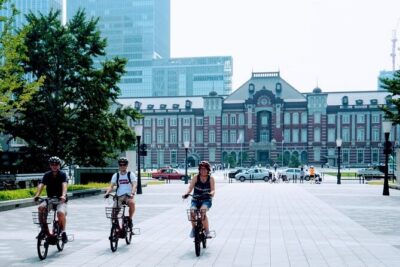
3h Tokyo E-Bike Tour: Hidden Gems, and Local Life with guide
Read our review →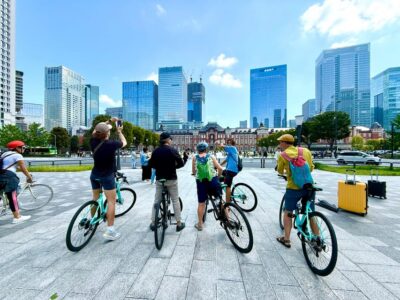
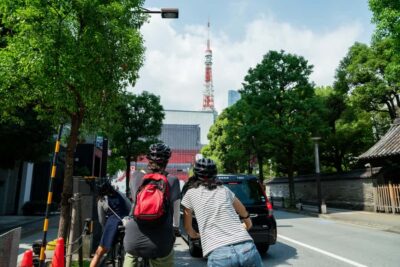
3-hour Guided E-Bike Tour of the City’s Hidden Gems
Read our review →
Discover Traditional Tokyo Full-Day Bicycle Tour
Read our review →
3-Hour Tokyo Private E-Bike Tour Starting from Your Hotel
Read our review →Browse the lists this tour appears in