
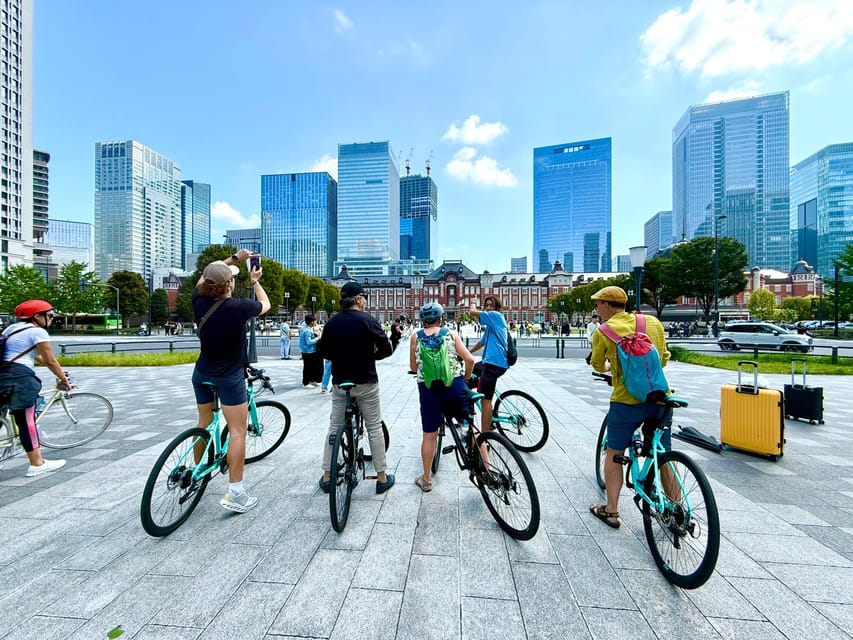
REVIEW · TOKYO
Tokyo: 3-Hour Bike or E-Bike City Highlights Tour
Tokyo reveals itself quickly from a bicycle. In three hours, you can move from Zojo-ji Temple and the Imperial Palace to Cat Street and Shibuya Crossing, seeing far more than you would on foot. Guides such as Naoki, Atsu, KJ, and Rinto add local stories, safety advice, and useful tips for the rest of your stay.
I like the route’s mix of grand landmarks and ordinary city corners. I also like the choice between a standard cross bike and an e-bike, especially since the ride can cover roughly 15 to 20 kilometers. The main catch is simple: you must be comfortable riding beside traffic, as the route can shift between sidewalks and roads.
Key points at a glance
- A 15 to 20 kilometer city sampler: Cover temple grounds, parks, palace views, Aoyama, Harajuku, and Shibuya in one morning or afternoon.
- E-bikes remove much of the strain: Choose electric assistance if you do not cycle often or worry about hills and stamina.
- The guides shape the experience: Naoki, KJ, Atsu, Keiji, Rinto, and others are praised for clear explanations, friendly conversation, and careful pacing.
- Small groups help in traffic: Groups may be split into smaller units, making city riding easier to manage.
- Helmets cost extra: Bring ¥1,000 in cash per helmet if you want one. Child seats cost ¥3,000.
- Best for a first Tokyo day: The broad route gives you a useful map of the city before you explore individual neighborhoods on your own.
Why cycling is a smart way to meet Tokyo
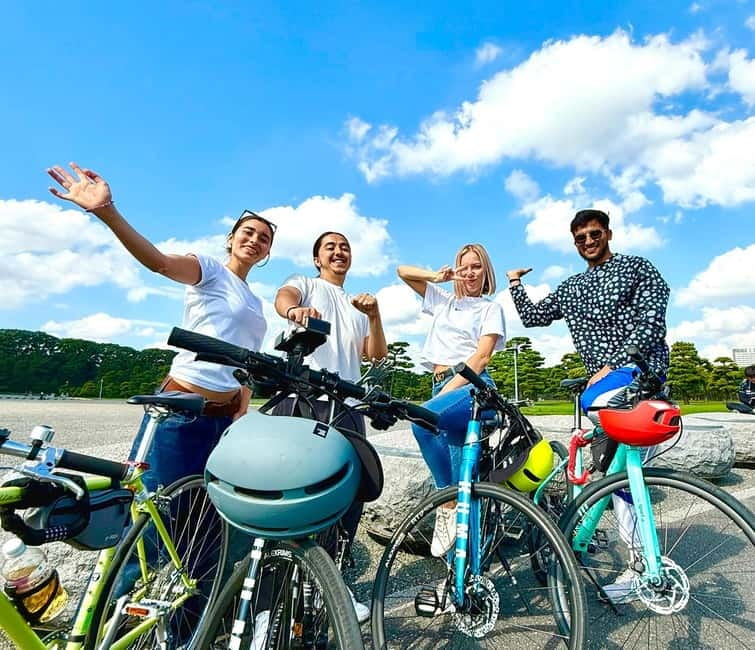
Tokyo is enormous, and its famous districts are spread across a wide area. Rail travel is quick, but a train keeps you underground or inside stations for much of the journey. A bicycle lets you see the transitions: the quiet road behind a temple, the office towers around the palace, and the change from formal Aoyama to youthful Shibuya.
This is not a slow countryside ride. It is an active sightseeing tour through central Tokyo, with regular stops for photographs, short visits, and explanations. You will spend much of the time moving, then pause long enough to understand where you are.
The route is also useful as an orientation lesson. By the end, you will have seen several areas that can feel disconnected on a Tokyo map. I would book it near the start of a stay, then return later to the places that caught your attention.
More City Bike Tours in Japan
- Tokyo Top Highlights 3h Guided E-bike Tour
★ 5.0 · 714 reviews - 5 Top Highlights of Kyoto Full Day Bike Tour (E-bike option)
★ 5.0 · 511 reviews - E-Bike Tours of the highlights of Kyoto!!!
★ 5.0 · 291 reviews
Meeting at Commodore Perry’s statue
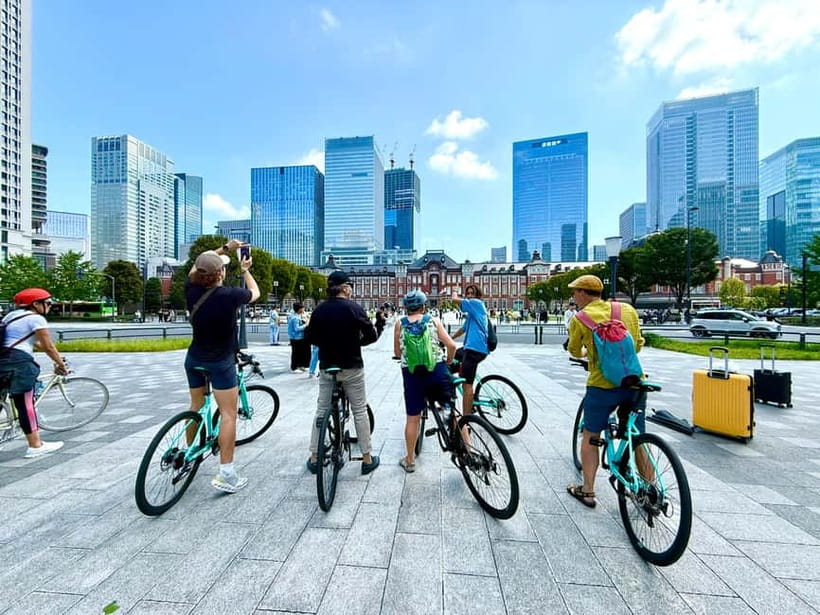
The starting point is the Statue of Commodore Perry, about a three-minute walk from Daimon Station’s A6 exit. This is a practical meeting place near Shiba Park and Zojo-ji Temple, though you should allow a few minutes to find the guide around the statue.
The tour uses high-quality Bianchi and Fuji cross bikes, or an e-bike if you select that option. A small pouch attached to the bike holds a phone, wallet, or keys. Bike insurance is included.
Helmets are not included in the base price. You can obtain one on site for ¥1,000 per unit in cash. That extra charge is easy to overlook, so bring the money if you want a helmet. Comfortable shoes, water, and clothing that allows easy movement are sensible choices.
Zojo-ji Temple and Shiba Park
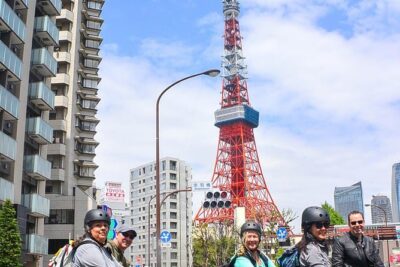
Zojo-ji is a strong opening stop. Its traditional Buddhist setting sits close to Tokyo Tower and the modern city, giving you an immediate look at the contrast that defines Tokyo. You get about 15 minutes for a guided visit and photographs.
The temple stop is more than a quick photo backdrop. Your guide can explain local customs and the place’s role in the city, giving context before the ride moves into newer districts. The nearby park also offers a welcome change from traffic and tall buildings.
You should not expect a long temple tour. The pace is designed to show you many parts of Tokyo, not to examine every building in detail. If temple architecture is your main interest, plan a separate visit later.
Hibiya Park and the Imperial Palace
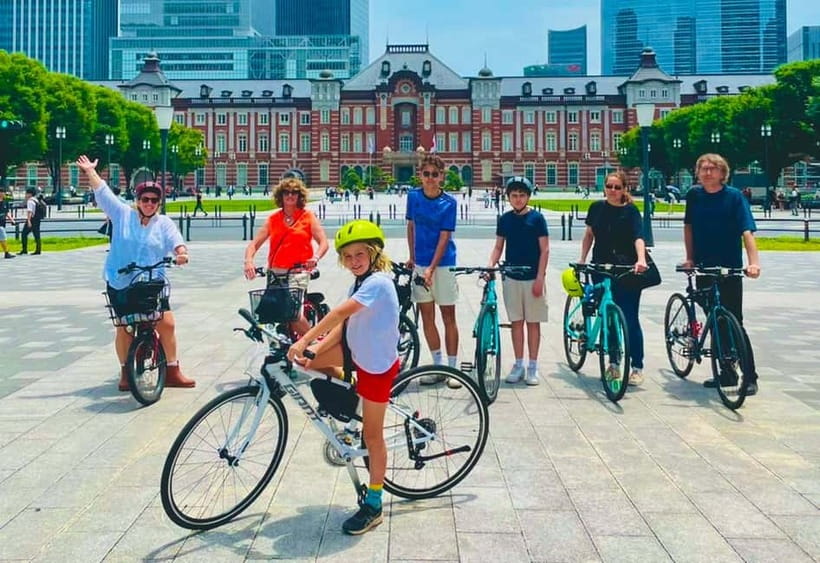
The route then reaches Hibiya Park for a brief visit. Three minutes is enough for a quick look and a breath, but not enough for a proper walk through the grounds. Think of it as a scenic pause between major stops.
The Imperial Palace receives more time, about 15 minutes for a guided visit and photographs. You will focus on the outer area and views rather than entering the palace itself. The broad open spaces and formal setting offer a useful contrast with the narrow streets and dense commercial areas elsewhere on the route.
This part of the ride can be especially helpful for first-time visitors. Tokyo’s center is not one continuous wall of buildings. Around the palace, the city opens up, and you can better understand how the government district relates to Tokyo Station and the surrounding offices.
More E-Bike Tours in Japan
- Hidden Kyoto E-Biking tour
★ 5.0 · 1,843 reviews - 3h Tokyo E-Bike Tour: Hidden Gems, and Local Life with guide
★ 5.0 · 670 reviews - Kyoto: Memory Kyoto E-Bike Tour
★ 4.8 · 297 reviews - 1-Day Private Rural E-Bike Tour in Hida
★ 5.0 · 188 reviews
Tokyo Station and Ote-mon Gate
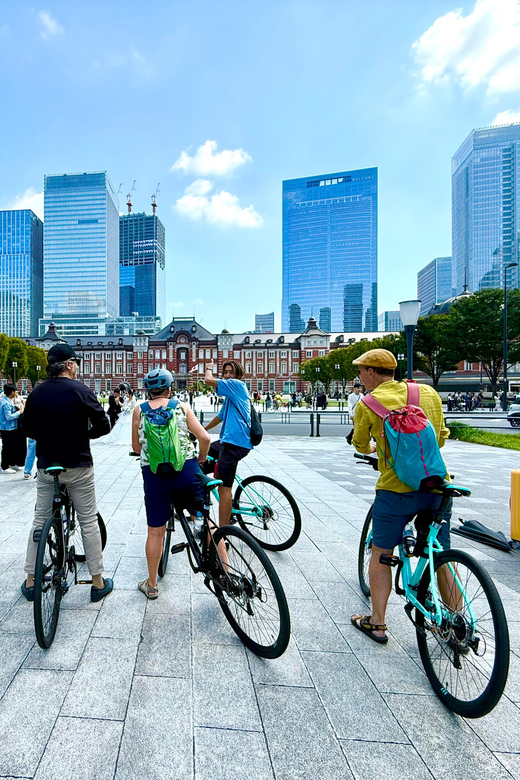
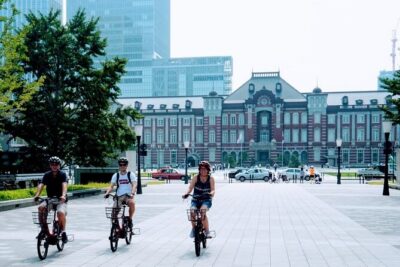
Tokyo Station is a quick 10-minute stop for photographs and sightseeing. Its grand facade makes a sharp visual change from the palace grounds. You may get a chance to hear about the station’s role in the city, but the schedule leaves little time for exploring the huge interior.
Ote-mon Gate follows with another short visit. It is one of the historic entrances connected with the palace area, and its scale makes more sense when seen by bicycle than rushed past from a train window.
These stops show the tour’s basic rhythm: ride, pause, listen, photograph, and move on. That rhythm works well if you want broad coverage. It will feel too quick if you prefer to linger at each location.
Chidorigafuchi and Akasaka Palace
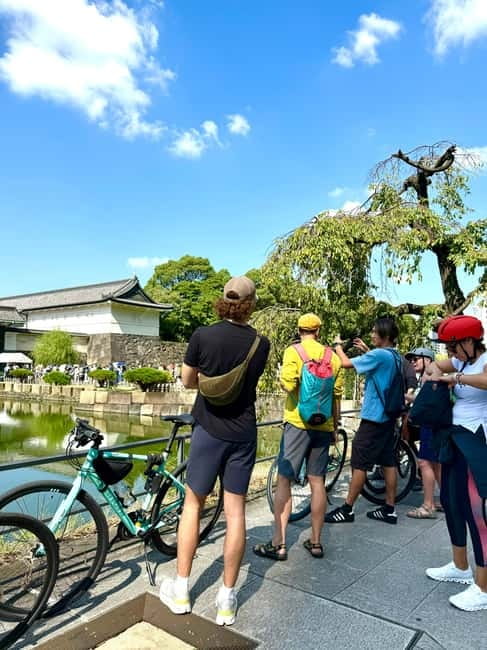
Chidorigafuchi provides a five-minute break and photo stop. The route’s timing may vary with traffic, weather, and group pace, but this section gives you another chance to slow down near the palace moat and surrounding greenery.
The State Guest House Akasaka Palace is allotted about 10 minutes for photographs. Its formal architecture brings a different flavor to the tour, with a grand, ceremonial feel that contrasts with Tokyo’s casual shopping streets later in the day.
You will not receive a full interior tour here. The value is in seeing the building as part of a wider ride that links several important central districts. Your guide’s explanation can help you understand why the area feels so different from Shibuya or Harajuku.
The National Stadium and a less obvious stop
The New National Stadium is a 10-minute visit and photo stop. It is one of the route’s modern landmarks, giving the tour a clear connection to contemporary Tokyo and its major sporting events.
A further stop is described as a lesser-known location, with about 15 minutes for a guided visit. The exact character of this stop may vary, and that flexibility is part of the appeal. It breaks up the major-sight checklist and gives the guide room to show you something you might not find on your own.
That is where a local guide adds real value. Naoki, KJ, Atsu, Keiji, and other guides are praised for answering questions, sharing neighborhood tips, and adjusting their explanations to the group. You may also receive suggestions for food or places to visit during the rest of your stay.
Aoyama, Cat Street, and the route toward Shibuya
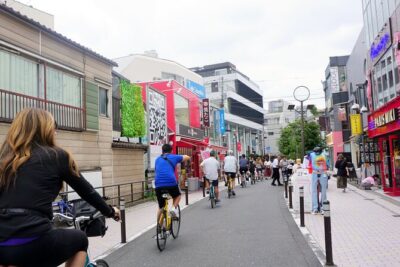
Aoyama St. Grace Cathedral is a quick three-minute sightseeing and photo stop. Cat Street follows with about five minutes to look around. These are short visits, but together they show Tokyo’s shift into fashion, design, youth culture, and independent shopping.
The cycling itself is as important here as the stops. You move through central neighborhoods instead of teleporting between them by train. That gives you a better sense of how Tokyo changes block by block.
You should still keep your expectations realistic. This is a highlights ride, not a shopping tour. If you want to browse Cat Street or explore Aoyama boutiques, note the location and return later on foot.
Shibuya Crossing and the Bell of Peace
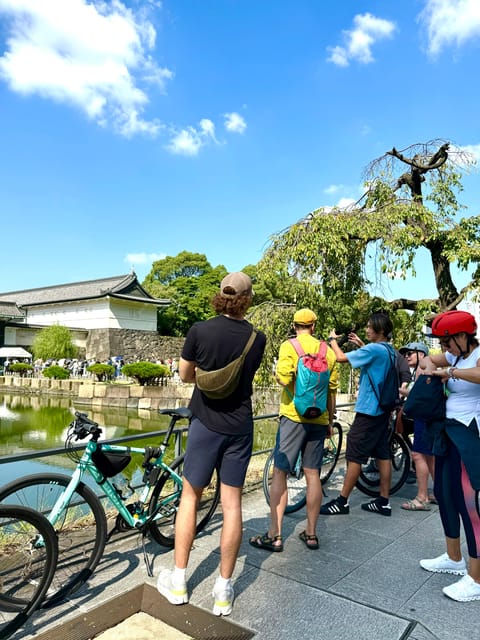
Shibuya Crossing is the final major sightseeing stop, with about 10 minutes for photographs and a guided explanation. The crossing is most impressive when you understand how it fits into the surrounding district, rather than treating it as an isolated photo point.
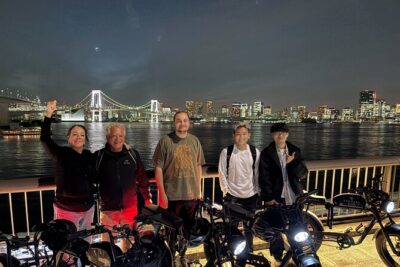
Tower Records Shibuya receives a short three-minute stop. It adds a pop-culture note before the tour finishes at the Bell of Peace. Depending on the departure time, Shibuya can feel very different. An evening ride may give you neon-lit streets, while a morning tour offers a calmer view of the area.
The finish is well placed for continuing your day. You can remain in Shibuya, find lunch, shop, or use the nearby transport network to reach another part of Tokyo.
Standard bike or e-bike?
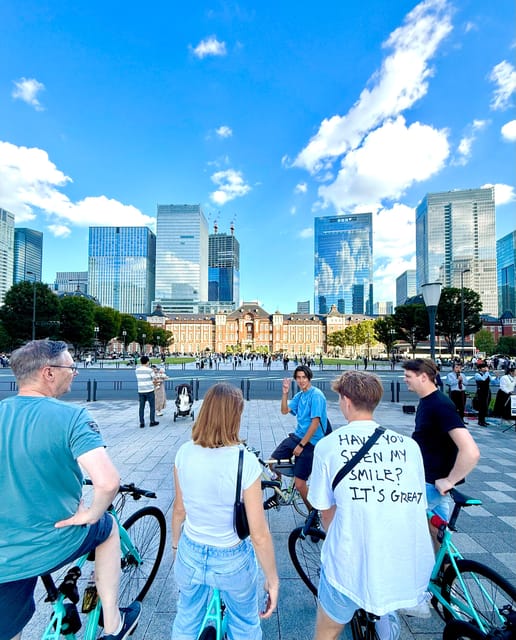
Choose the standard cross bike if you cycle regularly and like doing the work yourself. The route is not presented as an extreme athletic challenge, but the distance is substantial for a casual rider, and you may encounter roads, traffic, and a few hills.
Choose the e-bike if you do not cycle often, are unsure about your stamina, or want to focus on the sightseeing. Several riders specifically found the electric assistance useful on hills and after a late night. It can also help you keep up with the group without arriving at each stop tired.
The e-bike is not a way to avoid cycling altogether. You still need to steer, brake, balance, and ride safely in city conditions. If you cannot ride a bicycle, this experience is not suitable.
How difficult and safe is the ride?
The tour is described as suitable for different cycling levels, but that should not be confused with a traffic-free ride. You may move between sidewalks and roads, and one clear warning is that you should not book if riding in traffic makes you uncomfortable.
The guides receive strong praise for watching the group, checking on riders, and keeping the pace manageable. Groups may be divided into smaller units, which helps with maneuvering through the city. Still, Tokyo riding requires attention. Stay close to the guide, follow signals, and avoid treating the ride like a casual stroll.
The tour is not suitable for children under 12, pregnant women, people with back problems, or anyone unable to ride a bike. Children aged 12 and older may be able to join, but the traffic conditions and distance are worth considering carefully.
What the $45 price gets you
At $45 per person, the value is strongest if you want orientation and guided context rather than independent bike rental. You receive three hours of access to a quality bicycle or e-bike, an English or Japanese-speaking guide, local stories, a bike pouch, and bike insurance.
You also cover a lot of ground. Seeing Zojo-ji, the palace area, Tokyo Station, Akasaka, the National Stadium, Aoyama, and Shibuya independently would require several train trips and careful planning. The tour saves that planning time and gives you a route that links the districts in a logical way.
The price does not include a helmet, child seat, meals, or drinks. A helmet costs ¥1,000 in cash, and a child seat costs ¥3,000. A quick convenience-store stop may occur, but you should bring water and not count on a full meal during the ride.
The guides make the difference
The strongest part of this experience is the guide-led format. Guides such as Naoki, KJ, Atsu, Kosei, Rinto, Rikuu, Keiji, and Miguel are praised for being friendly, clear, and attentive. Some guides also make a point of asking about your home, which can make a small group feel more relaxed.
You should expect sightseeing first and extended lectures second. One useful description of the format is a moving city tour with explanations at key stops. That suits me because Tokyo rewards observation, but readers seeking long historical talks may find the commentary brief.
Guides also help with practical matters. They can take photographs, answer questions, suggest later stops, and help you feel less uncertain on unfamiliar streets. That is especially useful when you are traveling alone or arriving in Tokyo without a firm plan.
Weather, timing, and group size
Tokyo weather can change the feel of the ride. Summer may be hot, and rain can make the streets less comfortable. Bring water, dress for movement, and consider buying a poncho from FamilyMart or 7-Eleven if rain is forecast.
Autumn weather can be pleasant for cycling, and an evening departure may end with Shibuya’s lights. The exact experience depends on the start time, so check available times before booking if you have a strong preference for daylight or nighttime views.
Private and small-group options are available. A smaller group makes it easier to hear the guide, ask questions, and stay together in traffic. It may also make the pace feel more personal.
Free cancellation is available up to 24 hours ahead for a full refund, and you can reserve now and pay later. Those terms help if your Tokyo schedule is still shifting.
Who should book this Tokyo bike tour?
I would recommend it to active first-time visitors, couples, families with older children, solo visitors, and anyone who wants a quick sense of Tokyo’s layout. It is also a good choice if you enjoy mixing major sights with ordinary streets and do not want to spend every hour underground on trains.
The e-bike option widens the appeal, especially for casual cyclists. Standard-bike riders should feel comfortable with a longer ride and city traffic.
I would skip it if you dislike riding on roads, need lots of time at each attraction, or want a gentle park-only outing. The route covers ground, and the short stop times are designed for variety rather than close study.
Should you book it?
Book this tour if you want to get your bearings fast, see a large slice of central Tokyo, and learn where to return later. The $45 price is fair for the route, equipment, guide, and time saved on planning, with the e-bike offering extra value if stamina is a concern.
Choose an e-bike if you are an infrequent cyclist. Bring cash for a helmet, wear comfortable shoes, and book early in your stay. If you can handle city riding, this is one of the more efficient ways to meet Tokyo before settling into its neighborhoods one by one.
FAQ
Where does the Tokyo bike tour start?
Meet the guide near the Statue of Commodore Perry. It is about a three-minute walk from Daimon Station’s A6 exit.
How long is the tour?
The tour lasts three hours.
How much does the tour cost?
The listed price is $45 per person.
Is an e-bike available?
Yes. You can select an e-bike option when booking.
Which bike brands are available?
The tour uses Bianchi and Fuji cross bikes, or an e-bike depending on the option selected.
Are helmets included?
No. Helmets are available on site for ¥1,000 per unit, payable in cash.
Can I reserve a child seat?
Yes. Child seats are available for ¥3,000 per unit.
Is the tour offered in English?
Yes. English-speaking guides are available. Japanese is also offered.
Can children join the tour?
Children under 12 are not permitted. The rider must also be able to cycle and manage city riding conditions.
What should I bring?
Bring comfortable shoes, water, and comfortable clothing. If you want a helmet, bring ¥1,000 in cash.
Can I cancel the booking?
You can cancel up to 24 hours in advance for a full refund.
Is this a private tour?
Private and small-group options are available.
More Three-Hour Bike Tours in Japan
- 3-Hour Tokyo Private E-Bike Tour Starting from Your Hotel
★ 5.0 · 117 reviews - 3-hour Complete Prague Bike Tour
★ 5.0 · 3,674 reviews - Porto: City Highlights 3-Hour Guided Electric Bike Tour
★ 4.8 · 3,092 reviews - Copenhagen: Highlights 3 Hour Bike Tour with a Local Guide
★ 4.8 · 2,312 reviews
More City Highlights Bike Tours in Japan
- 5-Hour Osaka Highlights Bike Tour with Lunch
★ 4.8 · 146 reviews - 4.5-hr Kyoto Historical Highlights Bike Tour with UNESCO
★ 4.7 · 13 reviews - Lion City Bike Tour of Singapore
★ 5.0 · 6,211 reviews - 3-Hour Porto Highlights on a Electric Bike Guided Tour
★ 5.0 · 4,392 reviews
Just added around Japan
- Kyoto: Afternoon Bamboo Forest and Monkey Park Bike Tour★ 4.9 · 83 reviews
- 4.5-hr Kyoto Historical Highlights Bike Tour with UNESCO★ 4.7 · 13 reviews
- 3-Hour Tokyo Private E-Bike Tour Starting from Your Hotel★ 5.0 · 117 reviews
- Private-group Morning Cycling Tour in Hida-Furukawa★ 5.0 · 105 reviews
- Private Afternoon Cycling Tour in Hida-Furukawa★ 5.0 · 109 reviews
- 1-Day Private Rural E-Bike Tour in Hida★ 5.0 · 188 reviews
- Eat, Drink & Cycle: Osaka Foodie Bike Tour★ 5.0 · 224 reviews
- One-Day Osaka Bike Adventure: 5–6 Hours★ 5.0 · 246 reviews
Tokyo Bike Tours, compared.
3h Tokyo E-Bike Tour: Hidden Gems, and Local Life with guide
Read our review →
3-Hour Tokyo Private E-Bike Tour Starting from Your Hotel
Read our review →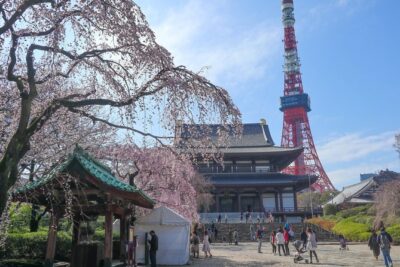
5-Hour Tokyo & Edo Hidden Gem Bike Tour with Lunch
Read our review →Browse the lists this tour appears in