
REVIEW · TOKYO
Tokyo: West-Side Cycling and Food Tour with Guide
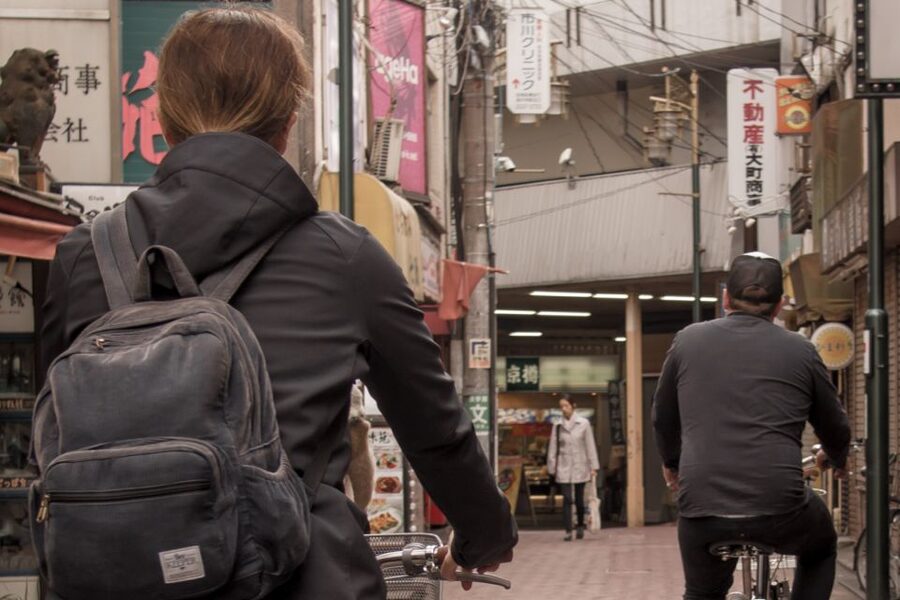
Tokyo reveals its everyday character on a mamachari bicycle, not from a tour bus. With guide Andy leading the way, you pedal through Nakano, Koenji, and Asagaya, using narrow back streets, riverside paths, and local activity hubs that most first-time visitors miss. I like the simple lunch and two street foods, and I like that the tour explains bicycle parking and ordinary Japanese customs rather than only showing famous sights.
The main consideration is the riding itself. You cover roughly 7.5 to 9.5 miles, sometimes on narrow or crowded streets and uneven surfaces. The tour can run in rain, and the food is not adjusted for vegans, allergies, or special diets, so this suits flexible eaters who are comfortable on a bike.
Key points to know before booking

- Ride three west Tokyo neighborhoods: Nakano, Koenji, and Asagaya offer a local side of the city away from the main sightseeing circuit.
- Use a classic mamachari: These practical Japanese bicycles have front baskets and are maintained despite their occasional creaks and squeaks.
- Eat as you go: The price includes two street food items, a simple Japanese lunch, and one bottled drink.
- Learn the small details: Andy explains local habits, vending machine drinks, bicycle parking, architecture, and daily customs.
- Prepare for real city riding: Expect 12 to 15 kilometers at an easy pace, with tight turns, crowded stretches, and rougher surfaces.
- Meet at Koenji Station: The guide waits outside the ticket gates in a baseball cap five minutes before departure, and the group leaves on time.
Why west Tokyo works so well by bicycle

Tokyo is often presented through giant crossings, neon shopping streets, temples, and department stores. Those places have their role, but they do not tell you much about how the city works on an ordinary weekday.
This tour takes you into the inner west side, where the experience comes from small streets and daily routines. You ride past neighborhood shops, local activity areas, residential lanes, and places where people eat because they live nearby, not because they are part of a sightseeing route.
A bicycle gives you a useful middle speed. You cover more ground than you would on foot, but you still notice details that disappear from a train window. You can stop to look at a shopfront, turn into a back street, or pause while Andy explains why a particular system or custom matters.
The three neighborhoods each add something different. Nakano has a lively local feel and is known to many visitors for its shopping and entertainment areas, but the tour focuses on more ordinary corners as well. Koenji has a strong neighborhood identity, with small businesses and busy local streets. Asagaya adds another residential and commercial district, giving you a wider sense of how west Tokyo changes from one station area to the next.
This is not a sightseeing checklist. You should book it to understand the city at street level.
More Food and Market Bike Tours in Tokyo:
- Versailles Palace Bike Tour with Market & Marie-Antoinette hamlet
★ 5.0 · 2,680 reviews - Madrid: 3 h. Guided Highlights Bike Tour with Optional Tapas
★ 4.9 · 1,623 reviews - Rome: Appian Way & Aqueducts E-Bike Tour (Catacombs & Food)
★ 4.9 · 1,498 reviews
Starting at Koenji Station
The meeting point is straightforward. Take the JR train to Koenji Station, then go outside the ticket gates. The guide waits there five minutes before the start, wearing a baseball cap.
Koenji is only about six minutes from Shinjuku by train and around 18 minutes from Shibuya, so the tour is easy to fit into a Tokyo schedule. Still, do not cut it close. The tour departs on time, and the group will not wait for a late arrival.
That strict start matters more here than on a walking tour. The route covers several neighborhoods, and the guide cannot reasonably turn back to collect someone who missed the departure. I would arrive at Koenji Station early enough to find the ticket gates, use the restroom, and settle in before meeting the guide.
English is the tour language. Andy, an Australian guide who has lived in Japan and knows the area well, brings an easy conversational style. His role is not just to point out places. He explains Japanese habits, food customs, local transport, vending machines, and the practical details of living in Tokyo.
Getting used to the mamachari bicycle

The bicycle is part of the experience. You ride a Japanese mamachari, the practical city bike often used for everyday errands. These bicycles have a front basket, an upright riding position, and a sturdy feel suited to local streets.
They are not racing bikes. You will not be asked to ride fast, and the pace is described as leisurely. That makes the tour approachable for ordinary cyclists, but you still need confidence on a bicycle. The route includes narrow lanes, crowded sections, sharp turns, and uneven surfaces.
The bicycles are maintained, even if some may feel a little creaky or squeaky. That character is part of the fun, and the front basket is genuinely useful for small personal items. The practical design also fits the neighborhoods better than a sleek sports bike would.
You should be at least 140 centimeters tall to ride comfortably. Children under 10 are not accepted, and the tour is not suitable for anyone who cannot manage a bicycle in city traffic. The distance is moderate, but the attention required can make it more tiring than a flat park ride.
The tour also introduces Tokyo’s bicycle culture. Bicycle parking is more organized than many visitors expect, and parking fees are included. This is a small detail, but it helps you understand how a dense city manages thousands of bicycles without allowing every sidewalk to become a storage area.
Cycling liability insurance is included too. That does not remove the need for care, but it is a useful practical inclusion.
Through Nakano, Koenji, and Asagaya

The route moves through a mixture of twisting side streets, riverside paths, and busier neighborhood centers. You are not simply following one long road. The changing surroundings are part of the lesson.
In Nakano, you get an introduction to a west Tokyo district that combines residential streets with local shopping and entertainment. Andy can explain how the area fits into the wider city, helping you see it as a place where people live and work rather than just another stop on a map.
Koenji brings more of the tour’s local personality. Its streets are a good setting for a bicycle because you can shift between busier activity areas and quieter lanes. The route may include sharp turns and tight passages, so keep your eyes ahead and follow Andy’s signals.
Asagaya rounds out the ride with another view of inner Tokyo. Moving between the three districts shows you that Tokyo is not one uniform city. Each station area has its own rhythm, shops, streets, and social habits.
You should not expect grand monuments at every turn. The reward is the ordinary city: how people move around, where they stop for food, how bicycles are parked, and what a neighborhood feels like beyond its main station.
Architecture also becomes part of the route. One past tour included local architectural details that would be easy to miss without explanation. Andy’s commentary gives these places context without turning the outing into a formal lecture.
More Food and Drink Tours in Tokyo:
- Tuscany Bike Tours Through the Chianti Hills with Wine Tasting
★ 5.0 · 1,300 reviews - Rome by Night – Ebike Small Group Tour – Food and Wine (Option)
★ 5.0 · 1,275 reviews - Classic Mike’s Bike Tour daily @ 11.30 incl Beer Garden & Surfers
★ 5.0 · 1,246 reviews - Rome by Night: E-bike Small Group Tour -Food & Wine (Option)
★ 4.9 · 1,233 reviews
Local snacks and a simple Japanese lunch
Food is built into the ride, not added as an afterthought. You receive two popular street food items, a simple Japanese lunch, and one bottled drink.
The exact food selection is not designed around personal preferences. That is important. The tour does not cater to vegan diets, food allergies, or individual dietary requirements, so you should not book it if you need ingredient control.
For flexible eaters, the food provides a useful window into everyday Tokyo. You may sample sweet treats along the way, then stop for a straightforward lunch where local workers also eat. A small noodle bar has been part of the experience, including the chance to share counter space with hungry salarymen.
That setting is valuable because the meal is not presented as a grand culinary event. You are eating the kind of food that fits a workday, a neighborhood errand, or a quick stop between tasks. Andy can explain what you are eating and how the setting works, which adds more value than simply being handed a dish.
The bottled drink is included, and Andy has also helped visitors make sense of the many vending machine choices. Japan’s vending machines can seem simple at first, but the labels, hot and cold options, and unfamiliar brands can make a quick drink purchase less obvious than expected.
Bring tissues or hand sanitizer, especially because the tour combines cycling with street food. You are also asked to bring a garbage bag. Tokyo is famously tidy, but public trash bins are not always easy to find, so carrying your own small bag is practical.
What Andy adds to the ride
The strongest part of this experience is the guide’s local explanation. Andy is not only leading a bike route. He answers questions about Japanese society, local habits, food, architecture, and customs.
That matters because the west side of Tokyo can otherwise look like a pleasant collection of streets without a clear story. Andy helps connect the details. A vending machine, a bicycle rack, a small restaurant, or a neighborhood building becomes a clue to how the city functions.
His Australian humor also gives the tour an informal tone. You can ask questions without feeling as if you are interrupting a formal presentation. The atmosphere suits people who want conversation and explanation rather than a memorized speech.
He has also provided follow-up recommendations by email after the tour. That can be useful if you want to continue exploring Koenji, Nakano, or Asagaya after the bicycles are returned.
Because private and small-group options are available, the experience may work well for people who prefer direct conversation. Check the selected booking option carefully, since group size can affect how easy it is to ask questions and keep the ride together.
Weather, comfort, and city riding
This is an outdoor activity in all seasons. Rain usually does not cancel the tour, so bring clothing that can get wet and consider a waterproof layer. Wet streets may also make riding less comfortable, especially on uneven surfaces.
The tour does not promise a protected cycling path for the full route. You may ride beside ordinary neighborhood traffic, through narrow lanes, and around pedestrians or other bicycles. You need to be alert and comfortable making occasional sharp turns.
The 210-minute duration includes cycling, walking, food stops, and explanations. It is long enough to give you a real sense of the area without taking the whole day. You should still allow extra time afterward if you plan another activity, since food stops and city riding can make the schedule feel full.
Wear comfortable clothes and shoes that work for both pedaling and walking. The supplied information does not specify a dress code or special equipment beyond the bicycle, so practical clothing is the safest choice.
Is the $110 price fair?

At $110 per person, this is not the cheapest way to spend three and a half hours in Tokyo. You could walk through a neighborhood or rent a bicycle for less.
The comparison is not quite fair, though. The price includes the bicycle, bicycle parking fees, liability insurance, a bottled drink, two street foods, lunch, and an English-speaking local guide. More important, it gives you a route and local context that would take time to build on your own.
The value is strongest if you want food and cultural explanation in the same outing. You are not paying only for transport. You are paying for access to neighborhoods you might not otherwise choose, plus someone who can explain the small things that make the ride worthwhile.
It is less good value if you are already an experienced Tokyo cyclist, need a tightly controlled diet, or only want famous sights. In those cases, a self-guided ride may offer more freedom for less money.
Free cancellation is available up to 24 hours before the start, and you can reserve now and pay later. Those terms make it easier to fit the tour into a changing Tokyo itinerary.
Who should book this Tokyo cycling tour?
I would recommend it to first-time Tokyo visitors who want more than Shinjuku and Shibuya. It is also a good early-trip activity because Andy’s explanations can help you understand customs, food, transport, and neighborhood life for the rest of your stay.
It suits adults and children aged 10 or older who are confident cyclists. You do not need to be athletic, but you should be comfortable riding 12 to 15 kilometers in city conditions.
The tour is a strong match for curious eaters, people who like small-group conversation, and anyone who prefers local streets to major attractions. It also works well for visitors who want an easy introduction to west Tokyo before returning later on their own.
Think twice if you have food allergies, follow a vegan diet, dislike riding in rain, or feel nervous around narrow streets and uneven surfaces. The tour is friendly and leisurely, but it is still real urban cycling, not a protected park loop.
FAQ
Where does the Tokyo cycling tour meet?
The tour meets directly outside the ticket gates at Koenji Station on the JR Train Network. The guide wears a baseball cap and waits five minutes before the scheduled start.
How long is the experience?
The tour lasts 210 minutes, or three and a half hours.
Which Tokyo neighborhoods does the route visit?
The route explores Nakano, Koenji, and Asagaya in west Tokyo.
How far do you ride?
You should expect to cycle roughly 7.5 to 9.5 miles, or 12 to 15 kilometers, at a leisurely pace.
What food and drinks are included?
The price includes a simple local lunch, two popular street food items, and one bottled drink.
Can vegans or people with food allergies join?
The tour is not suitable for vegans or people with food allergies. It does not cater to personal tastes, dietary requirements, or allergies.
What happens if it rains?
The tour generally proceeds in rainy weather, so you should be prepared to get wet. It is an outdoor activity and may be affected by weather conditions.
Should you book it?
Book this tour if you want to see Tokyo through neighborhood life, local food, and practical customs, not only through major sights. Andy’s guidance, the mamachari bicycles, and the stops in Nakano, Koenji, and Asagaya give the experience a clear sense of place.
Skip it if you need a special diet, dislike city cycling, or want a fully weatherproof activity. For everyone else, $110 is a fair price for a guided half-day that combines transport, food, insurance, and a useful introduction to a side of Tokyo you could easily miss.
More Food Tours in Tokyo
- Bangkok: Must-Try Hidden Bike & Food Experience
★ 4.9 · 613 reviews - Appian Way & Aqueducts small group e-bike tour(catacombs & food)
★ 5.0 · 531 reviews - Palermo: Guided Bike Tour with Street Food Tasting
★ 4.8 · 479 reviews - Must-Try: Hidden Bangkok Bike and Food Tour
★ 5.0 · 455 reviews
Just added around Tokyo
- Tokyo: Private Cycling Tour with cute E-bike★ 5.0 · 11 reviews
- Tokyo: 3-hour Guided E-Bike Tour of the City’s Hidden Gems★ 4.8 · 251 reviews
- Tokyo: Rice Ball Making Class★ 5.0 · 14 reviews
- Tokyo Bike Tour: Shibuya, Harajuku & Hidden Gems★ 5.0 · 20 reviews
- Tokyo: Hidden Gems Guided Bike Tour with Lunch★ 4.5 · 30 reviews
- Tokyo: Discover Traditional Tokyo Full-Day Bicycle Tour★ 4.7 · 131 reviews
- Tokyo: 3h Private E-bike Tours, Starting at Your Hotel★ 5.0 · 36 reviews
- Tokyo: 2-Hour Night Bike Tour of the City’s Hidden Gems★ 4.9 · 25 reviews
Tokyo Bike Tours, compared.
3h Tokyo E-Bike Tour: Hidden Gems, and Local Life with guide
Read our review →
3-hour Guided E-Bike Tour of the City’s Hidden Gems
Read our review →
Discover Traditional Tokyo Full-Day Bicycle Tour
Read our review →
3-Hour Tokyo Private E-Bike Tour Starting from Your Hotel
Read our review →Browse the lists this tour appears in