
REVIEW · UBUD
Electric Cycling Tour of Ubud with Free Hotel Transfer and Lunch
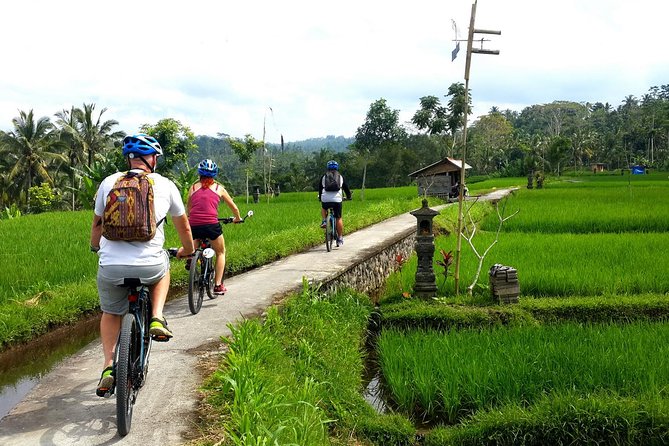
Ubud’s best countryside views are not all reached by car. This three-hour electric-bike ride takes you along rice-field paths, village roads, and narrow tracks where a minivan cannot go. I like the easy pace and the chance to see farming, temples, family compounds, and daily Balinese life rather than only stopping at photo points. I also like that guides such as Gusti, Gina, Putu, Wid, Anilya, and Ketut have been singled out for careful riding support and clear cultural explanations.
The bikes take the sting out of Ubud’s hills and heat, and the included meal adds real value at $41. The catch is that this is not a traffic-free pedal. You will ride on busy roads at times, and the narrow, uneven paths through the rice fields require steady bike control. If you are nervous on a bicycle, this may feel more demanding than the cheerful tour description suggests.
Key points at a glance
- Tegalalang views without a hard climb: The electric assist lets you enjoy the rice terraces without putting all the work on your legs.
- A real mix of riding: Expect quiet plantation paths, narrow tracks, village roads, and sections with cars, motorcycles, and pedestrians.
- Culture comes through the stops: Guides explain Balinese farming, temples, offerings, family compounds, and local traditions.
- The coffee stop needs thought: You may visit a coffee plantation and taste drinks, but the civet welfare concerns raised about luwak coffee are worth considering.
- Good value at $41: Bike, helmet, water, guide, air-conditioned transport, and a meal are included for a half-day outing.
- Best for confident riders: You need prior bicycle experience, a minimum height of 150 centimeters, and a maximum weight of 120 kilograms.
Why an e-bike is the right tool for Ubud’s hills
Ubud is often pictured as a place of rice terraces and quiet paths. The reality includes steep roads, tropical heat, rough tracks, and plenty of motor traffic. An ordinary bicycle can turn a scenic outing into a sweaty workout. The electric bike gives you control over the effort. Pedal more when you want exercise, or use the motor for an easier ride.
You still need to balance, steer, brake, and watch the road. This is not a motorized sightseeing ride where you simply sit back. But the electric assistance makes the hills far more manageable, especially in humid weather. Several riders have found the bikes easy to learn, including people who had not used an e-bike before.
The operator provides a bicycle, helmet, and bottled water. Guides generally ride at the front and rear of the group, helping everyone stay together. Some groups have also had a trailing vehicle available if a rider becomes tired or needs help. That arrangement matters on roads where traffic can feel intimidating.
The group limit is 20 people, though the actual size can vary. A smaller group should make stops and road crossings easier. The guides have been praised for stopping traffic when needed and keeping an eye on less confident riders, but you should still be comfortable riding in shared traffic before booking.
More Bike Tours with Lunch in Indonesia:
- Versailles Full Day Bike Tour with Palace, Gardens, & Picnic
★ 5.0 · 2,217 reviews - Bangkok: Bike and Canal Boat Tour with Lunch
★ 4.9 · 1,350 reviews - Cat Ba: Lan Ha, HaLong bay full day- biking, kayaking, lunch
★ 4.8 · 1,166 reviews
Leaving the Ubud streets for rice country
Pickup is offered from hotels in the Ubud area, followed by transport in an air-conditioned minivan to the eBikes Bali office on Jalan Tirta Tawar in Petulu. The office stop is listed as about 15 minutes and is mainly for fitting bikes, sorting safety matters, and learning how the electric assistance works.
Take this short briefing seriously. Test the brakes. Make sure the saddle feels right. Ask how to control the motor before setting off. If you have not ridden for years, use this time to regain your balance and get a feel for the bike in a safe spot.
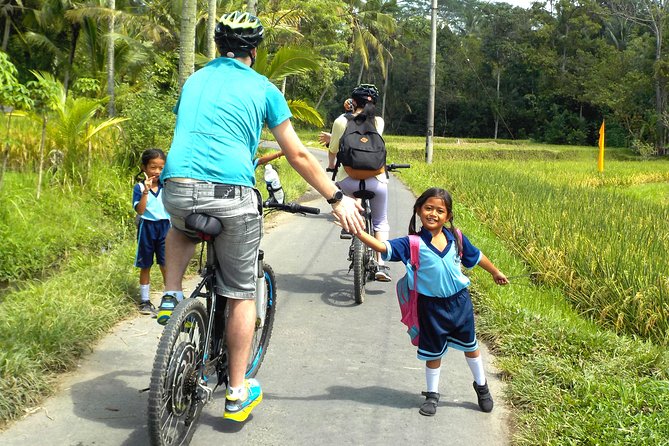
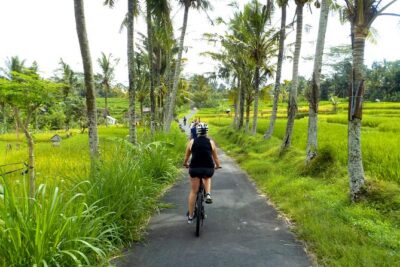
The route then moves through the countryside around Ubud. You may ride past plantations, rice paddies, local homes, and community areas. The appeal is the changing view: one moment you are on a paved road with everyday traffic, and soon after you may be on a narrow track between fields.
Your guides add context along the way. They can explain how rice is grown, how offerings are carried to temples, and how Balinese family compounds work. This turns the ride into more than a series of scenic pauses. You begin to understand how the countryside is used, not just how it photographs.
Tegalalang Rice Terrace, the main photo stop
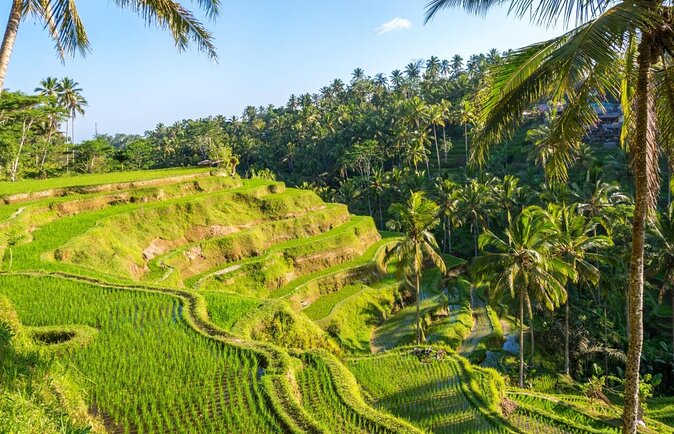
Tegalalang is the visual centerpiece. The terraces fold across the hills in bright green steps, with palms and small paths breaking up the view. You get about 30 minutes here, enough for photographs and a look around without turning the whole outing into a long stop.
The electric bike is especially useful before and after this section. The roads around the terraces can rise and fall, and the heat can make even a short climb feel longer. With the motor helping, you can save some energy for the views and the rougher sections later.
Do not expect every meter near the rice fields to be smooth. The paths can be narrow, uneven, and at times unpaved. You may need to slow down, keep your hands steady, and pay close attention to the edge of the track. Riders with decent bicycle control should manage, but this is not the place to learn basic cycling.
Tegalalang can also be busy at popular times, so the tour’s value is not only the stop itself. You get a guided ride through the surrounding countryside, with access to views and paths that a standard car tour cannot provide. The terrace stop works best as part of the larger route rather than as a standalone attraction.
Temples, homes, and the everyday side of Bali
The listed schedule highlights the rice terraces and jungle swing, but the ride can include cultural stops that make the half-day feel fuller. Depending on the route, you may visit a temple, a traditional Balinese home compound, or a community center.
At a temple, your guide may explain local ideas around death, ceremony, and the celebration of life. At a family compound, you can see how domestic and religious spaces fit together. These are useful stops because they connect the scenery to the people who live among it.
The exact cultural stops may vary. That is worth knowing before you book, especially if one particular site matters most to you. The consistent thread is local explanation while you ride through villages and farmland. Guides such as Gusti, Gina, and Putu have been praised for giving clear answers and sharing details about Balinese customs.
I would treat the cultural talk as one of the tour’s strongest features. You are not just looking at rice fields. You are learning why offerings appear at doorways, how farming supports the area, and how village life is organized.
More Private Drivers in Indonesia:
- Edinburgh Sky to Sea Bike or E-Bike Tour with Transfer by TBC
★ 5.0 · 427 reviews - Rome: Appian Way, Catacombs & Aqueducts by eBike + Transfer
★ 4.9 · 421 reviews - Rome: Appian Way E-bike Tour, Catacombs, Aqueducts & Transfer
★ 5.0 · 315 reviews - Bangkok Full-Day Bike Tour with Boat Transfer and Lunch
★ 4.7 · 83 reviews
The jungle swing and plantation stop
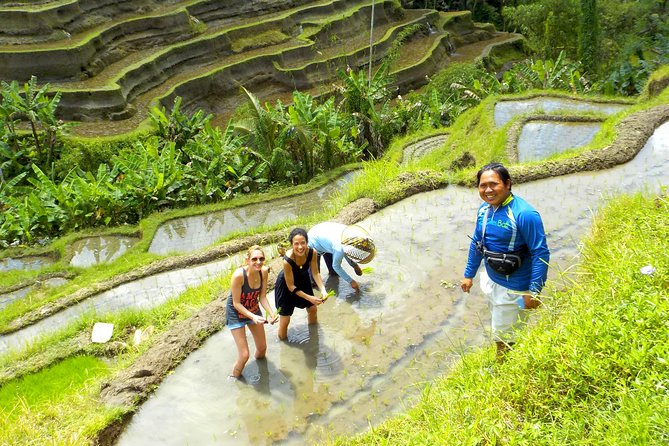
The jungle swing stop lasts about 30 minutes and combines a local plantation setting with the chance to use a large swing above the rice fields. For many people, this is the playful highlight. It gives you a dramatic photograph and a short break from the saddle.
The swing is also part of the tour’s commercial side. It is a familiar Bali photo activity, so you should not expect a quiet, untouched setting. Still, it fits naturally into a route through the countryside and gives families and younger riders something different from temples and farming explanations.
The plantation visit can include coffee and tea tasting. You may learn how local drinks are made and sample luwak coffee along with other teas. Some people enjoy this part, but I would not treat it as an essential reason to book.
There is a serious animal-welfare concern around civet coffee. One account specifically objected to the small cages used for civets at the plantation and felt pressured to buy coffee. If you are uncomfortable with luwak production or commercial tasting stops, ask if a traditional house option is available instead. The tour has included a choice between a coffee plantation and a traditional Balinese home on some departures, but you should confirm what choices apply on your date.
That caveat matters. The rice fields, riding, and cultural explanations are the core of the outing. You do not need to buy anything at the plantation to get value from the tour.
Road safety and the parts that require skill
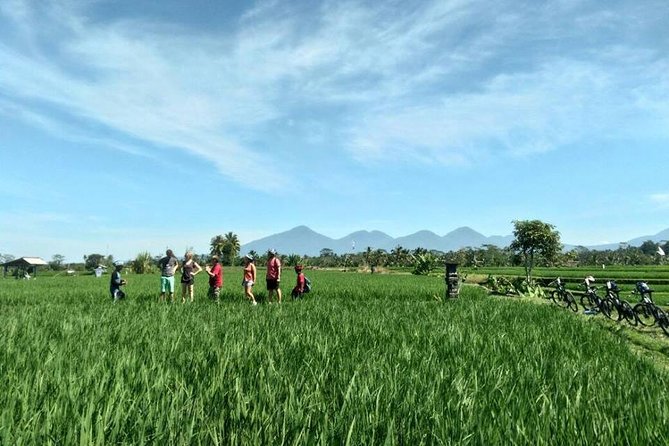
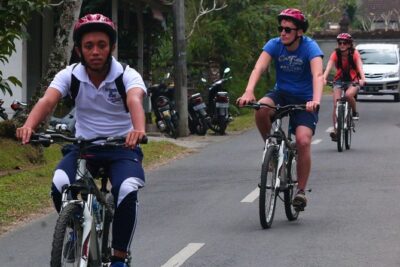
This is the section to read before booking. A good portion of the route can use public roads. You may share space with motorcycles, cars, pedestrians, and other bicycles. Guides help at intersections and may stop traffic for the group, but they cannot remove traffic from the route.
You need to be able to ride in a straight line, brake smoothly, steer around obstacles, and follow instructions. The narrow paths beside rice paddies demand more attention than the broad roads. Some riders found the route fun and easy with the motor assistance, while others found traffic and rough tracks daunting.
Covered shoes and sunscreen are recommended. The shoes give you a firmer footing on pedals and help protect your feet on uneven paths. Sunscreen is not optional in practice. The combination of tropical sun, reflected light from the fields, and steady riding can catch you quickly.
Children must be accompanied by an adult. The minimum height is 150 centimeters, and the maximum rider weight is 120 kilograms. Most people who can ride a bicycle should be able to participate, but the operator specifically requires bicycle riding experience. If you are a nervous rider, tell the guide at the start and ask for the easiest route options.
Morning lunch or afternoon dinner
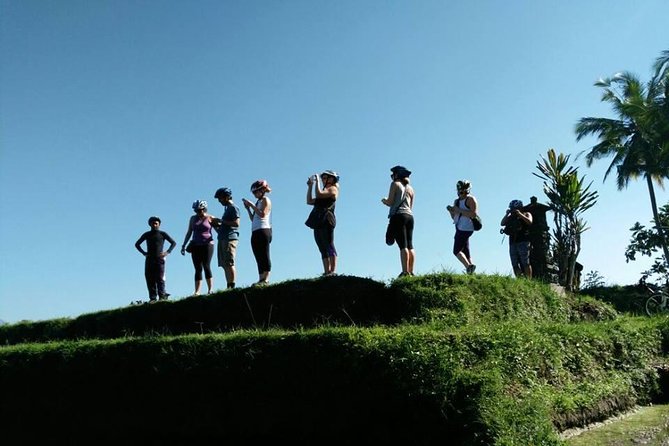
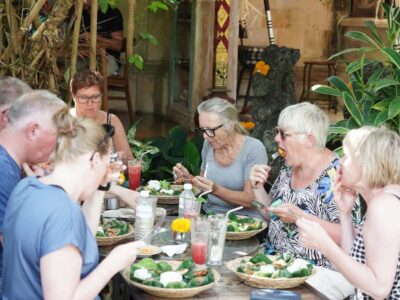
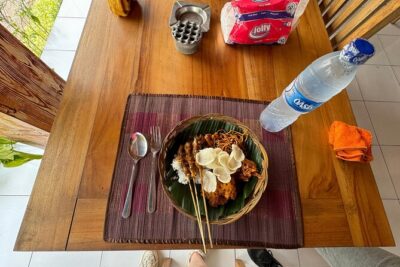
The tour runs in the morning or afternoon. The meal depends on the departure: morning riders receive lunch, while afternoon riders receive dinner. That is convenient because you do not need to find a restaurant immediately after returning from the countryside.
The meal is served at a venue connected with the route, with a jungle swing mentioned among the features. It is not presented as a fine-dining event. Think of it as a practical local meal after riding, with a range of choices available on at least some departures.
I like this timing because it keeps the outing compact. You can spend half a day outside Ubud without losing a full morning or evening. It also gives you a natural pause after the ride. You can cool down, eat, and talk with your guide before transport back.
If you are booking the afternoon departure, remember that the word dinner may mean an early evening meal rather than a late-night restaurant visit. The supplied schedule does not give an exact serving time, so check the departure details if you are coordinating other plans.
What the $41 price really covers
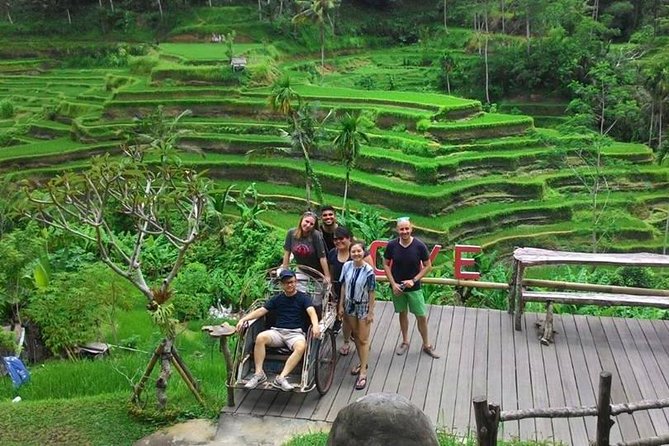
At $41 per person, the package offers solid value for an organized Ubud activity. You receive the e-bike, helmet, bottled water, local guide, air-conditioned minivan transport, central Ubud pickup and drop-off, and lunch or dinner.
A self-guided bike rental would not provide the same help with traffic, route finding, or cultural interpretation. Nor would it easily combine the terraces, village roads, plantation country, and meal in three hours. The guide is the main reason the price makes sense.
The value drops if you are staying far from Ubud. Pickup is aimed at the Ubud area. A long transfer from places such as Nusa Dua can turn a short cycling outing into a much longer day, with transport time taking a large share of the schedule. If you are based outside Ubud, check the pickup terms before paying.
The tour has had a 4.9 rating from 1,397 ratings and a 99 percent recommendation figure. Those numbers point to strong satisfaction, particularly with the guides, the easy-to-use bikes, the scenery, and the cultural side. They do not erase the road-traffic issue. The best decision comes from matching the ride to your cycling ability.
Who should book this Ubud ride
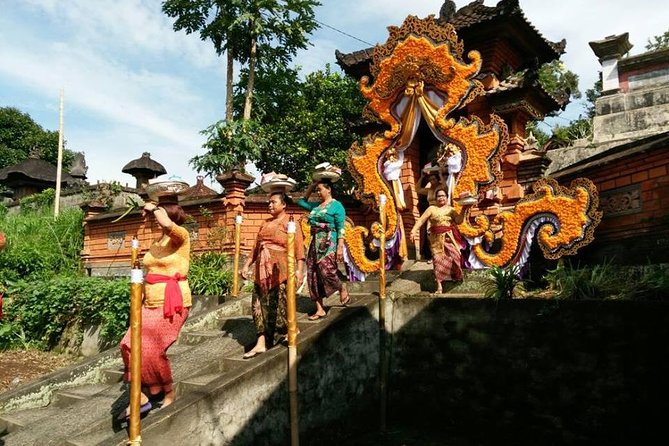
I would recommend it to you if you want countryside views but do not want a hard physical ride. It works well for active families with older children, couples, first-time e-bike users, and anyone who wants a quick introduction to the area outside central Ubud.
It is also a good first or second-day activity. You get a feel for the villages, farming areas, temples, and road conditions, which can help you understand Ubud for the rest of your stay. The guides can answer questions that a standard transfer driver may not.
I would be cautious if you have not ridden a bicycle in years, dislike traffic, or feel uneasy on narrow paths. The electric motor helps with effort, not balance or steering. You may enjoy the views, but only if you can stay focused while riding.
Bring sunscreen, covered shoes, and clothes suitable for warm weather. Arrive ready to listen to the safety briefing, and do not be shy about asking for help with the motor controls. If the coffee plantation concerns you, request the traditional-home option if it is available.
Should you book the e-bike tour?
Book it if you want a compact, active way to see beyond Ubud’s center, and if you are comfortable on a bicycle. The combination of rice terraces, village life, guides, transport, and a meal is hard to match at $41. The motor assistance makes the hills friendly, while the guide support adds a useful safety net.
Skip it if you want a quiet, traffic-free ride or have no cycling experience. Also think twice if you are staying well outside Ubud, since a long pickup can undermine the three-hour format. For confident riders who want scenery and local context without spending a full day on a bus, this is a strong choice.
FAQ
How long is the electric cycling tour?
The tour lasts about three hours, not including any additional pickup or drop-off travel time.
Where does the tour start?
The listed starting point is Ubud Cycling Tours, eBikes Bali, on Jalan Tirta Tawar in Petulu, Ubud, Bali.
Is hotel pickup included?
Yes. Pickup and drop-off are included for hotels in the Ubud area. The activity is also listed as ending back at the meeting point, so confirm the exact return arrangement when booking.
What is included in the price?
The price includes the electric bicycle, helmet, local guide, bottled water, air-conditioned minivan transport, Ubud-area hotel transport, and a meal.
Is lunch or dinner included?
Yes. Morning departures include lunch, and afternoon departures include dinner.
Do I need bicycle experience?
Yes. The operator requires bicycle riding experience. You should also be comfortable handling roads, traffic, and narrow uneven paths.
Are there rider size requirements?
The minimum height is 150 centimeters, and the maximum rider weight is 120 kilograms, or 260 pounds.
Can children join the tour?
Yes, children can participate, but they must be accompanied by an adult.
What happens if the weather is poor?
The tour requires good weather. If it is canceled because of poor conditions, you will be offered another date or a full refund. You can also cancel for a full refund if you do so at least 24 hours before the start time.
More Tours with Lunch in Indonesia
- Electric Bike Beach Adventure with Tequila Tasting and Lunch
★ 5.0 · 1,162 reviews - Bike Tour Exploring North Kyoto plus Lunch
★ 5.0 · 1,087 reviews - Appian Way Aqueducts Bike Tour (Catacombs & Lunch Option)
★ 5.0 · 975 reviews - Saint-Emilion Electric Bike Day Tour with Wine Tastings & Lunch
★ 5.0 · 696 reviews
Just added around Indonesia
- Ubud: Downhill Cycling with Volcano, Rice Terraces, and Meal★ 4.9 · 189 reviews
- Bali: Kintamani Downhill Bike Tour, Jungle and Waterfalls★ 4.9 · 20 reviews
- Bali Downhill Cultural Cycling Tour★ 4.8 · 42 reviews
- Kotagede Royal Route – Cycling Tour★ 5.0 · 207 reviews
- Authentic Yogya Bicycle Tour★ 5.0 · 232 reviews
- Authentic Yogya Bicycle Tour★ 4.9 · 230 reviews
- Bali Downhill Cultural Cycling Tour★ 5.0 · 224 reviews
- Sanur Village E-bike Tour: Family-Friendly Adventure★ 4.6 · 85 reviews
Ubud Bike Tours, compared.
Rice Terraces & Villages Half-Day Fat Tire E-Bike Tour
Read our review →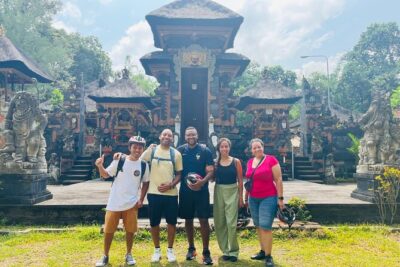
Half-Day Ubud Electric Cycling Tour to Tirta Empul Water Temple
Read our review →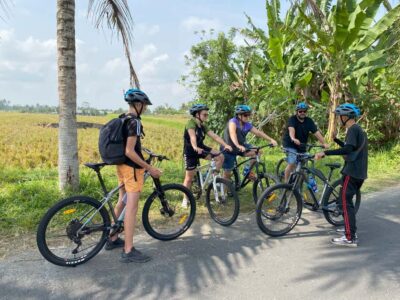
Downhill Bike Tour with Rice Fields, Volcano and Meal
Read our review →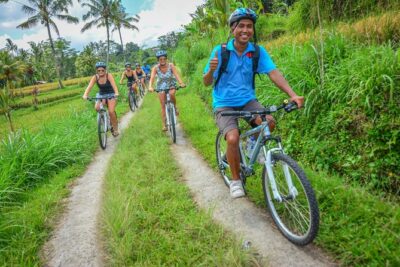
Downhill Cycling with Volcano, Rice Terraces, and Meal
Read our review →Browse the lists this tour appears in