
REVIEW · HIROSHIMA
Hiroshima Country Cycling: Explore Rural Life 1 HR from City
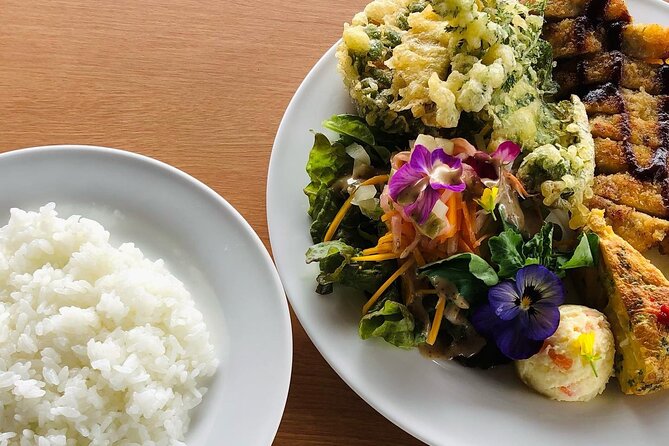
Rural Hiroshima is only about an hour from the city, but it feels like another Japan. This four-hour ride takes you through rice fields, streams, old farmhouses, and quiet village roads, with an electric bike doing the hard work on the hills. I like the small maximum of eight people and the included guide, who helps turn a pretty ride into a look at everyday rural life. I also like the lunch stop, especially the herb garden’s fresh vegetables and edible flowers.
The main catch is cost and planning. The advertised price is $85.39, but you still pay 3,560 JPY for the round-trip highway bus and 900 to 1,250 JPY for lunch, or 2,000 JPY for the seasonal sushi meal. You need moderate fitness, the ability to ride a bike alone, and a minimum height of 140 centimeters.
Key points to know before you book

- Electric bikes tame the hills: You can enjoy Kakeyama’s steep sections without treating the ride like a workout.
- Oasa shows rural Japan at a slower pace: Old buildings, rice paddies, streams, and a quiet former shopping street make this a clear change from Hiroshima city.
- Jonah guides the day: He provides help with transport details and local context, and a poncho was supplied to one rider during a rainy outing.
- Lunch is local but extra: Choose the herb garden meal, or seasonal sushi making from December through March.
- The group stays small: No more than eight people join, which suits anyone who wants room for questions and a calm pace.
- Plan the transport carefully: You meet at the Oasa I.C. Bus Stop at 10:00 am and return there after the ride.
Why this ride is worth leaving Hiroshima city
Hiroshima is rightly known for its Peace Memorial Park, museum, and nearby Miyajima. Those sights matter, but they show only one part of the region. This tour carries you into Kitahiroshima, where daily life is tied to farming, old roads, local shops, and the changing seasons.
I like the contrast. You are not simply pedaling past scenery from a bus window. You have time to stop, look, and hear your guide explain what makes the villages work. The route connects several small places, so the ride has a sense of progress without becoming a race.
The electric bike is important here. Kakeyama includes steep hills, and the bike lets you enjoy the route even if you are not used to long climbs. You still pedal, but the motor removes much of the strain. The tour is not a passive sightseeing trip, yet it should be manageable for anyone who can ride independently and has moderate fitness.
The quiet setting is also part of the appeal. Oasa’s former main street is no longer busy, and some buildings remain from its more active past. That quiet can feel refreshing after central Hiroshima. It can also surprise people who expect a packed schedule of attractions. This is a day for rural views, conversation, and small details rather than major monuments.
More Countryside Bike Tours in Japan:
- 1-Day Private Rural E-Bike Tour in Hida
★ 5.0 · 188 reviews - Cai Be Mekong Delta Tour: Cooking Class, Cycling & Craft Villages
★ 5.0 · 1,881 reviews - Countryside Bike Tour from Amsterdam: Cheese, Clogs & a Windmill
★ 5.0 · 1,485 reviews
Kakeyama: let the e-bike handle the first hills

The ride begins with Kakeyama, where the electric bicycle earns its keep. The route includes steep sections, and the motor gives you a boost as you climb. If you have never used an e-bike, your guide can help you get comfortable with its power before the ride gets serious.
I would not book this as a test of athletic ability. The appeal is the opposite: you can reach hilly countryside without exhausting yourself early in the day. You still need balance, control, and enough stamina to ride for several hours, but you do not need to be an experienced cyclist.
The first hour also sets the tone for the rest of the outing. You are moving through the countryside under your own power, with regular pauses and explanations along the way. The provided helmet and accident insurance add practical reassurance, though you should still ride within your ability.
Bring a water bottle. Water refill stations are available along the route, but the tour asks you to supply your own bottle. That small detail matters on a warm day, especially when you are cycling uphill.
Doitaya: rice fields and old village life
Doitaya gives you the clearest look at the rural character of the tour. The area has preserved its traditional appearance, with older houses, rice fields, and streams where wildlife can be found. You are seeing a community rather than a staged cultural display.
This is where a local guide adds real value. Jonah can explain what you are looking at and answer questions about the area as you go. The ride gives you a better chance to notice how homes, fields, waterways, and roads fit together than you would have from a standard sightseeing vehicle.
The pace is deliberately relaxed. You can take in the scenery without hurrying from one photo stop to the next. The route is also likely to appeal to photographers, though the supplied information does not promise specific photo stops or a fixed amount of time at each feature.
Doitaya may be less exciting if you want constant activity. There are no headline attractions here, and the pleasure comes from the setting itself. I see that as the point, but you should choose this tour only if an ordinary farming community sounds interesting to you.
Aino Sato Herb Garden: lunch with a local-food focus

Lunch takes place at Aino Sato Herb Garden. The restaurant serves vegetables and edible flowers grown locally without harmful pesticides, giving the meal a clear connection to the countryside you have just cycled through.
Lunch is not included in the tour price, so budget 900 to 1,250 JPY per person. A vegan meal is available if you request it at least three days in advance. That deadline is worth noting, since a last-minute request may not be possible.
From December through March, the food plan changes. Instead of lunch at the herb garden, you make sushi at a farmhouse for 2,000 JPY per person. This seasonal option adds a hands-on activity, but it also means the experience varies depending on the month you visit.
The meal stop breaks up the cycling at a useful point. You get time to rest, eat, and talk before setting out again. Since the tour is only about four hours, lunch is part of the main experience rather than a long independent restaurant stop.
More City Tours in Japan:
- Tokyo: 3-Hour Bike or E-Bike City Highlights Tour
★ 4.8 · 435 reviews - Tokyo: 3-hour Guided E-Bike Tour of the City’s Hidden Gems
★ 4.8 · 251 reviews - Kyoto: City Secrets eBike Tour
★ 4.9 · 196 reviews - Tokyo: 3-Hour Bike or E-Bike Tour of City’s Hidden Gems
★ 4.7 · 81 reviews
Oasa: a quiet main street with traces of the past

The final stop is Oasa itself. Its main street was once a busy center of shops and local activity, but now it is quiet and unhurried. Older buildings remain, along with a handful of shops.
I find this kind of place more revealing than a polished tourist district. The quiet street shows how towns change when commerce and population shift elsewhere. You can look at the buildings, notice the slower rhythm, and ask your guide about what you are seeing.
Do not expect a long list of open attractions. Oasa is not presented as a packed town tour. Its value is in the atmosphere and the chance to see a small Japanese community on its own terms.
One of the strongest impressions from the available feedback is the affection people developed for Oasa, even during rainy weather. That says something about the town’s character, but weather will shape your own experience. On a clear day, the ride should be more comfortable. On a wet day, the countryside may still be appealing, but you will need suitable clothing.
Jonah and the value of a small group

The guide named in the feedback is Jonah, who led one outing with his wife. His role goes beyond pointing out the route. He helps with practical details, local explanations, and the rhythm of the day.
That practical help begins before you ride. One rider specifically received clear information about the bus schedule and pickup arrangements. Since the meeting point is outside Hiroshima city, that support can reduce stress.
A maximum of eight people keeps the group manageable. You are less likely to feel lost in a crowd, and there is more room to ask questions or adjust the pace within the tour’s limits. Small groups also work well in quiet villages, where a large group could feel out of place.
The tour is not private, however. You will still share the outing with other people, and the guide controls the route and timing. If you want complete freedom to stop whenever you like, renting a bicycle on your own may suit you better. If you want structure without a large coach group, this format is a good middle ground.
Price, bus fare, and what you really pay

The listed price is $85.39 per person. That covers the bicycle, helmet, guide fee, accident insurance, and access to water refill points. It does not cover the bus from Hiroshima to Oasa, which costs 3,560 JPY round trip, or lunch.
Your final cost therefore depends on the meal you choose. The herb garden adds 900 to 1,250 JPY, while the seasonal farmhouse sushi lunch adds 2,000 JPY. You should also allow time and attention for the bus journey, since the tour begins at Oasa I.C. Bus Stop rather than in central Hiroshima.
For the right person, the price is reasonable because the tour combines transport guidance, equipment, a local guide, insurance, and a planned route through several rural areas. You are paying for access to a place that is not as easy to understand through a quick independent visit.
Still, it is not a bargain half-day outing once you add the bus and food. Compare the full cost with your priorities. If you mainly want cheap exercise, a city bike rental will cost less. If you want an organized introduction to rural Hiroshima and prefer not to plan the route yourself, the extra cost has a clearer purpose.
Who should book this experience

This ride suits you if you want to see a quieter side of Hiroshima and are comfortable spending several hours outdoors. It is especially good for people who enjoy local food, small communities, gentle exploration, and the freedom of moving by bicycle.
You need to ride a bike on your own, and the minimum height is 140 centimeters. The activity calls for moderate physical fitness. The e-bike reduces the difficulty of the hills, but it does not remove the need to pedal, balance, and stay alert.
The tour can work for vegetarians and vegans, provided you request the vegan lunch at least three days ahead. It is also a good choice for visitors who prefer a small group, with no more than eight people.
It is less suitable if you want a major Hiroshima history tour, a completely flat ride, or a flexible self-guided schedule. It also requires a willingness to travel beyond the city and pay separately for the bus and meal.
Weather, timing, and useful preparation
The meeting time is 10:00 am, and the activity returns to the same Oasa meeting point. Plan around the full four-hour duration, plus the time needed to reach Oasa by bus.
The tour requires good weather. If poor conditions cancel the ride, you can choose another date or receive a full refund. You can also cancel for a full refund up to 24 hours before the start time. Changes or cancellations made less than 24 hours ahead are not accepted for a refund.
Rain does not automatically make the countryside unappealing, but it can make cycling less comfortable. Jonah supplied a poncho to one rider on a rainy day, which is a useful sign of practical care, but you should still bring weather-ready clothing and shoes.
A few simple preparations will help:
- Bring your own refillable water bottle.
- Request vegan food at least three days ahead.
- Check the bus details carefully before leaving Hiroshima.
- Wear clothing suitable for four hours outdoors.
- Make sure every rider meets the 140-centimeter height rule and can ride independently.
Should you book the Oasa countryside ride?
Book it if you want a genuine change of pace from Hiroshima’s major sights. The strongest reasons are the e-bike support on steep roads, the small group, Jonah’s practical guidance, the old farming villages, and the chance to eat local produce or make seasonal sushi.
Think twice if your budget is tight, since bus fare and lunch come on top of the booking price. You should also skip it if you dislike cycling, need a fully flat route, or want a tightly packed schedule of famous attractions.
For me, the best reason to choose this experience is the balance. You get enough structure to avoid transport and route worries, but enough quiet time to notice rural life. It is not a substitute for Hiroshima’s central sights. It is a useful second chapter, showing you what lies beyond the city.
FAQ
Where does the tour start?
You meet at the Oasa I.C. Bus Stop, at 2310 Shinjō, Kitahiroshima, Yamagata District, Hiroshima 731-2103, Japan.
What time does the tour begin?
The start time is 10:00 am.
How long does the cycling experience last?
The activity lasts approximately four hours and finishes back at the meeting point.
Is transportation from Hiroshima included?
No. The highway bus between Hiroshima and Oasa costs 3,560 JPY round trip and is not included.
Is lunch included?
No. Lunch at the herb garden costs 900 to 1,250 JPY per person. From December through March, the farmhouse sushi lunch costs 2,000 JPY per person.
Can I request a vegan lunch?
Yes. A vegan lunch is available if you request it at least three days before the tour.
What fitness and cycling ability do I need?
You need moderate physical fitness and must be able to ride a bicycle on your own. The minimum height is 140 centimeters, and the e-bike helps with steep hills.
What happens if the weather is poor?
The activity requires good weather. If it is canceled because of poor conditions, you can choose another date or receive a full refund.
Just added around Japan
- Iya Valley BROMPTON Slow Cycling Tour★ 5.0 · 28 reviews
- eTour de Matsumoto – Electric Bike Tour★ 5.0 · 16 reviews
- ONLY YOU in the Bamboo Forest! 4 hours E-bike tour with a local★ 5.0 · 45 reviews
- Pedal Adventure Kyoto’s iconic landmarks on an e-bike tour★ 5.0 · 189 reviews
- South Kyoto in a Nutshell: Gentle Backstreet Bike Tour!★ 5.0 · 225 reviews
- The Beauty of Kyoto by Bike: Private Tour★ 5.0 · 47 reviews
- Explore Hidden Alleyway with a Local Expert (Afternoon Tour)★ 5.0 · 17 reviews
- Secret Eastern Kyoto Biking Adventure★ 5.0 · 44 reviews
Hiroshima Bike Tours, compared.
Hiroshima in a Nutshell: Morning Bike Adventure
Read our review →
Hiroshima 2hr Peace Cycling Tour with Local Guide
Read our review →

Hiroshima 3hr Peace Cycling Tour with Local Guide
Read our review →

Browse the lists this tour appears in