
REVIEW · HIROSHIMA
Hiroshima 2hr Peace Cycling Tour with Local Guide
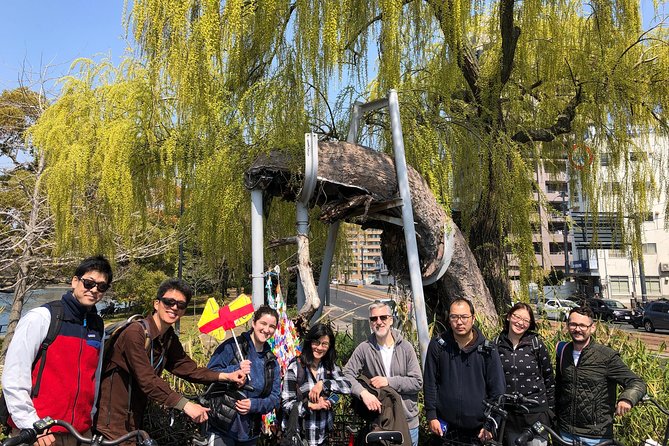
The most meaningful part of this tour is not simply seeing the A-Bomb Dome. It is hearing Hiroshima’s story from a guide raised in the city, then riding beyond the memorial grounds to see how ordinary life returned after the bombing. Guides such as Shin and Kana bring personal family memories, local stories, and a clear focus on peace.
I like two things especially: the electric bikes make a broad route easy, and a small group of no more than 10 people allows time for questions. The main consideration is the short two-hour schedule. You cover a lot, but you may wish for more time at the memorials or a longer ride through town.
Key points at a glance
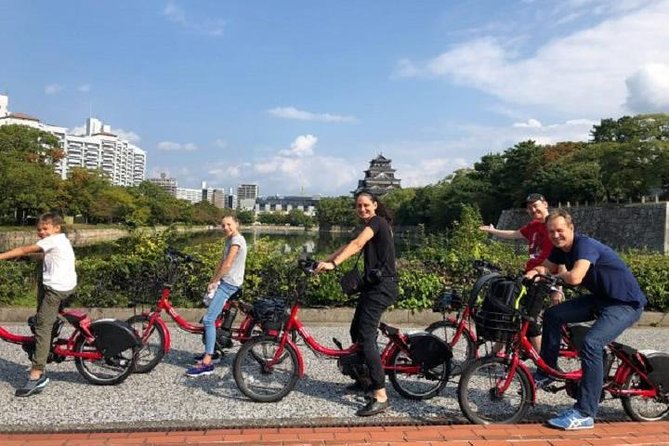
- Local voices: Guides including Shin and Kana share Hiroshima history alongside personal family connections and stories of survival.
- Easy electric cycling: The route is flat, and the electric bikes keep the physical effort modest even for casual cyclists.
- More than the main sights: You ride beyond Peace Memorial Park to see city streets, surviving streetcars, and less familiar viewpoints of the A-Bomb Dome.
- Small-group format: The tour accepts up to 10 people, with bicycle accident insurance included.
- Rain backup: Poor weather may bring a walking Peace Route, a different date, or a full refund.
- Practical timing: The tour runs at 11:00 or 15:00, lasts about two hours, and returns to the Rest House.
Why cycling changes your view of Hiroshima
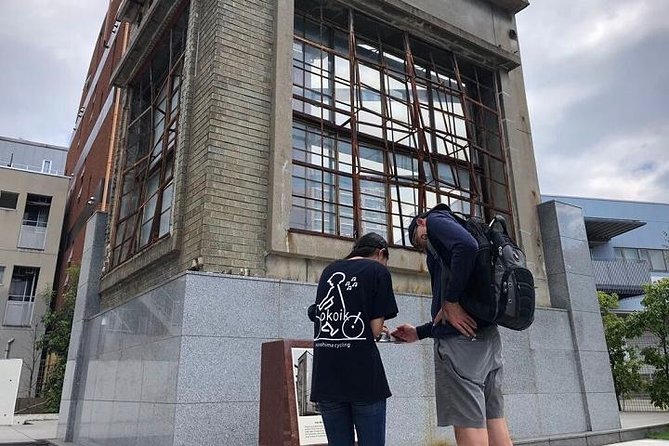
Hiroshima is easy to visit on foot, but the city spreads well beyond the Peace Memorial Park. A bicycle lets you connect the solemn memorials with the rebuilt streets around them. That contrast matters. You see a city that remembers the destruction while also functioning as a living, modern place.
The route is designed for steady sightseeing rather than athletic cycling. Electric bicycles do most of the hard work, and the city is broadly flat. You still need to pay attention to the group and the roads, but the ride is manageable for people who do not usually cycle. One 64-year-old participant found the route comfortable despite not being a regular cyclist.
I would not book this as a fast sightseeing ride. The guide stops to explain what you are seeing, and the pace may slow if someone in the group, especially a child, is less confident on a bicycle. That is a sensible trade-off for a shared tour.
The small group helps keep the experience personal. With a maximum of 10 people, you can hear the guide at the memorials and ask questions without being lost in a large crowd. The exact guide varies, but Shin, Kana, Bella, Mimi, Tomas, and Moet have led sessions. Shin is especially noted for family stories tied to the bombing, while Kana is praised for clear English, warmth, and detailed explanations.
More Guided Tours in Japan:
- Tokyo Guided Small-Group Biking Tour
★ 5.0 · 1,250 reviews - Tokyo Top Highlights 3h Guided E-bike Tour
★ 5.0 · 714 reviews - 3h Tokyo E-Bike Tour: Hidden Gems, and Local Life with guide
★ 5.0 · 670 reviews
Meeting at the Peace Park Rest House
You meet at the Hiroshima Peace Memorial Park Rest House at 11:00 for the morning departure or 15:00 for the afternoon departure. The tour finishes at the same place, which makes it easy to continue to the Peace Memorial Museum, find lunch, or connect with public transportation afterward.
Arrive early. The late-arrival rule is strict: if you miss the meeting time without notice, the tour can be canceled with a full same-day charge. Even contacting the operator in advance does not guarantee that a late start can be accommodated, since the group schedule may already be set.
There is no luggage storage at the Rest House. If you have large bags, use the coin lockers at the International Conference Center Hiroshima or the Hiroshima Peace Memorial Museum, both about a six-minute walk away. This is worth arranging before the start, since cycling with luggage would be awkward and unsafe.
The bikes are provided as part of the activity. Adult electric bikes require a height of at least 145 centimeters. Children from 110 to 145 centimeters may use one of two available children’s cross bikes per booking. Child seats are available for children under 22 kilograms and under 115 centimeters. Confirm the right setup when booking if your family needs a child bicycle or seat.
Peace Memorial Park, explained by bicycle
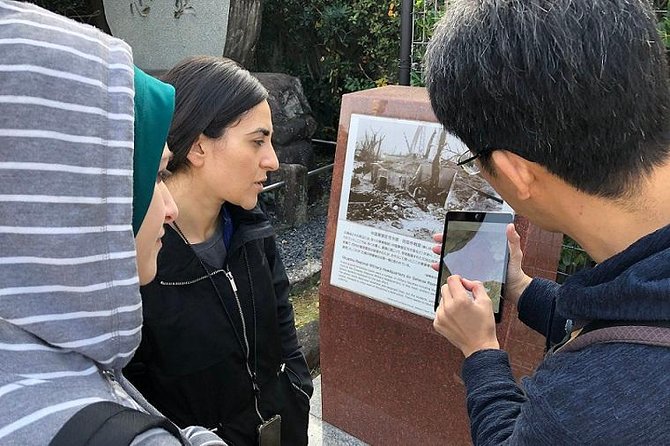
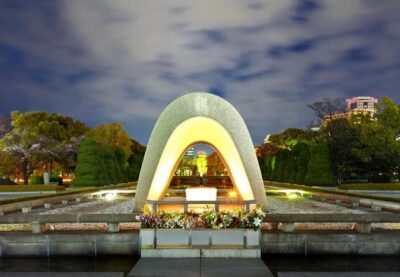
The first major portion of the tour takes place inside Hiroshima Peace Memorial Park. You visit the key memorials and learn how the park gathers the memory of the atomic bombing in one place.
The Atomic Bomb Dome is the most recognizable structure. Seeing it from the park is powerful, but the bicycle route also gives you city viewpoints away from the usual central approach. Those angles help you understand that the dome is not an isolated monument. It sits within a working city, surrounded by roads, offices, homes, and daily movement.
The guide also explains the Cenotaph for the A-Bomb Victims, the Children’s Peace Monument, and the Peace Bell. These sites are easy to pass quickly if you visit alone. A guide gives each one context, including the ideas behind its design and the memories it holds.
This portion is not just a list of memorials. The focus is on what happened to Hiroshima’s inhabitants, how the city dealt with the immediate destruction, and how the peace message developed over time. The tone is serious but not relentlessly grim. Several guides connect the history to their own families, which can make the subject feel immediate without turning the experience into a lecture.
You may still want to visit the Hiroshima Peace Memorial Museum separately. The cycling tour gives you a city-based introduction and personal interpretation, but two hours is not enough for the museum’s full exhibits. I see this tour as a strong companion to the museum, not a replacement for it.
Beyond the park: the rebuilt city and A-Bombed streetcars
After the memorial park, the ride moves into Hiroshima’s surrounding streets. This is where the tour earns its place beside a museum visit. You see the modern city rather than only the preserved memorial zone.
One detail highlighted along the way is Hiroshima’s A-Bombed streetcars. A train that survived the atomic bombing still runs today. The guide points out the surviving connection between wartime Hiroshima and the city’s present-day transport network. It is a small detail, but it gives the history a physical link to everyday life.
The route may also pass through suburban or downtown areas, depending on conditions and the guide’s pacing. You get a sense of Hiroshima’s reconstruction and present-day layout while hearing how the city changed after the war. This part is less formal than the memorial park and gives your legs a pleasant change after standing at monuments.
The city ride also explains why a bicycle works well here. You can cover more ground than on foot without the fixed route of a bus. You pause when needed, then continue through streets that most first-time visitors would not reach during a short walk between the dome and museum.
The drawback is that this is a shared route. If another person is unfamiliar with cycling, the guide adjusts the pace. Strong cyclists may find the ride gentle, but the point is access and conversation, not speed.
A few more bike tours around Japan worth a look
- Hidden Kyoto E-Biking tour
★ 5.0 · 1,843 reviews - Bike Tour Exploring North Kyoto plus Lunch
★ 5.0 · 1,087 reviews - Tokyo Great Cycling Tour
★ 5.0 · 811 reviews - Arashiyama Bamboo Forest & Hidden Gems Bike Tour (Early Bird)
★ 5.0 · 613 reviews
The guides make the history personal
The strongest part of the experience is the human voice guiding it. Hiroshima’s history can become abstract when reduced to dates and statistics. A local guide can explain how those events remain part of family memory and civic identity.
Shin has shared that his family has a direct connection to the bombing, including a parent who was in utero when the bomb fell and grandparents who survived. His stories add a personal layer to the memorials without replacing the wider history. The emphasis remains on Hiroshima’s suffering, survival, reconstruction, and commitment to peace.
Kana is another guide frequently associated with this experience. She is known for answering questions clearly, keeping the route moving, and adding practical local suggestions such as places to eat. Other guides, including Bella and Tomas, bring their own warmth and personal style. Since guide assignments can change, book this for the format and local perspective rather than expecting one particular person.
English communication is an important part of the tour. The guide explains the sites in English and makes room for questions. The best sessions balance facts with stories, so you can ask about the memorials, the modern city, or the way Hiroshima remembers the bombing today.
The emotional tone can be strong. People have cried during the tour, especially when hearing family accounts. That is not a flaw, but you should know that this is a reflective experience as much as a bike outing.
Two hours, and what you can realistically see
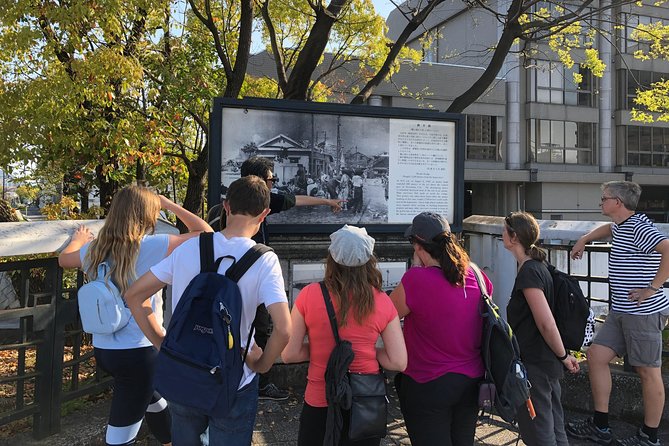
The schedule allows roughly 55 minutes in Peace Memorial Park and about an hour on the wider city route, with a short meeting period at the start. That is enough to see the principal memorials and gain a useful sense of Hiroshima beyond the park.
It is not enough for long, quiet stops at every site. If you like reading every plaque, taking many photographs, or spending a full afternoon at the museum, plan extra time before or after the ride. The tour gives you a framework, then you can return to the places that matter most.
Some people wish the tour lasted longer. The three-hour version adds Hiroshima Castle and further stops tied to the city’s prewar past and postwar recovery. Choose the longer option if you want more historical detail and more time with the guide. The two-hour version is better for a first orientation, a packed sightseeing day, or a family that may not want to cycle for half a day.
The start times are useful for planning. A morning ride ends around 13:00, while the afternoon version ends around 17:00. Because the schedule can change according to conditions, leave a little flexibility around other reservations.
Price, value, and the electric-bike advantage
At $59.69 per person, this is not the cheapest way to see Peace Memorial Park. You can walk through the park on your own at no cost, then pay separately for the museum if you choose to visit it.
The value comes from combining several services in one short outing: an electric bicycle, a local English-speaking guide, a planned route beyond the main park, personal interpretation, and bicycle accident insurance. You also save the time and effort of working out how to connect the memorial sites with the wider city.
I consider the price fair for someone who wants context and does not want a standard bus-style tour. It is less compelling if you only want photographs of the A-Bomb Dome or prefer to spend hours independently at the museum.
The electric bikes matter more than they may sound. They let casual cyclists keep up, make the flat route easy, and allow you to cover more ground without arriving exhausted. The bicycles are also useful in cold weather, when the ride can still be enjoyable but exposed streets make a longer route feel harder.
Rain plans and seasonal considerations
The bicycle route depends on safe weather. If rain or other conditions make cycling unsuitable, the operator may offer a rainy-day walking route, another date, or a refund.
The rainy route visits Peace Memorial Park, the A-Bomb Dome, the hypocenter, the Former Bank of Japan, Fukuromachi Elementary School, and the main street. It is planned to last the same general period, from 11:00 to 13:00 or 15:00 to 17:00.
The walking option focuses on the hypocenter, the area reduced to scorched ground in an instant, and sites within roughly 500 meters to 1 kilometer. This can be a serious but worthwhile alternative, especially because wet roads and bicycles are a poor mix.
Dress for the forecast. Cold winds and even snowfall have not prevented the tour from operating, but winter cycling requires warm clothing. In heavy rain, the walking route is the safer choice. If you do not want to switch from cycling to walking, a refund is offered when the bicycle plan cannot operate because of rain.
Free Wi-Fi is not provided by the tour, though Hiroshima Free Wi-Fi is available around the city. The operator provides data from photographs taken during the day, a thoughtful extra if you would rather stay focused on the ride than constantly handle your phone.
Who should book this Hiroshima bike tour?
I would recommend it to you if you want a human explanation of Hiroshima rather than a self-guided visit to the main monuments. It suits couples, families, first-time visitors, and people who want to see the city beyond the memorial park.
It is also a good choice if you are unsure about cycling in a Japanese city. The route is considered manageable, the bikes are electric, and Hiroshima is less congested than Tokyo or Osaka according to the experience of participants. Still, you should be comfortable riding a bicycle and following group instructions.
Families can take part, with child bicycles and child seats available within the stated height and weight limits. Remember that the group pace may be set by the least experienced cyclist.
You may prefer a walking tour if you dislike bikes, want long periods inside memorial buildings, or have limited mobility that does not fit the listed bicycle requirements. You should also choose the three-hour version if Hiroshima’s prewar history and Hiroshima Castle interest you as much as the atomic bombing and reconstruction.
Should you book the Hiroshima Peace Cycling Tour?
Book it if you want to connect Hiroshima’s memorials with its living streets. The electric bike removes much of the physical challenge, the group stays small, and guides such as Shin and Kana can add family memories that a museum label cannot provide.
The two-hour length is the chief limitation. You will see many important places, but you will not have unlimited time at each one. Plan a separate visit to the Peace Memorial Museum, arrive early with luggage already stored, and keep your schedule flexible for weather.
Free cancellation is available up to 24 hours before the start time. If poor weather cancels the ride, you can choose another date or a full refund. At $59.69, I would choose this tour for its local voice and wider city route, not simply for transportation. For a first look at Hiroshima that is active, personal, and thoughtfully paced, it is a strong choice.
FAQ
How long does the Hiroshima Peace Cycling Tour last?
The tour lasts about two hours. The morning schedule runs from 11:00 to 13:00, and the afternoon schedule runs from 15:00 to 17:00, though timing may change.
Where does the tour start and finish?
You meet at the Hiroshima Peace Memorial Park Rest House. The tour returns to the same meeting point at the end.
What places does the tour visit?
The route includes Peace Memorial Park, the A-Bomb Dome, the Cenotaph, the Children’s Peace Monument, and the Peace Bell. The wider city route includes views and sites beyond the park, including Hiroshima’s A-Bombed streetcars.
Are the bicycles electric?
Yes. Adult participants use electric bicycles, which are suited to the generally flat route and reduce the effort needed for cycling.
What height is required for an adult bicycle?
Adult bicycles are available for people at least 145 centimeters tall.
Are children’s bicycles or child seats available?
Two children’s cross bikes are available for one booking. Children from 110 to 145 centimeters can use children’s bicycles or adult bicycles at the child rate. Electric bicycles with child seats are available for children under 22 kilograms and under 115 centimeters.
How many people can join the tour?
The shared tour accepts a maximum of 10 people.
What happens if it rains?
The cycling plan may change to a walking Peace Route. This can include the Peace Memorial Park, A-Bomb Dome, hypocenter, Former Bank of Japan, Fukuromachi Elementary School, and the main street. You may instead choose another date or a refund if the bicycle tour is canceled because of rain.
Is luggage storage available at the meeting point?
There is no luggage storage at the Rest House. Coin lockers are available at the International Conference Center Hiroshima and Hiroshima Peace Memorial Museum, about a six-minute walk away.
Can I cancel for a refund?
You can cancel at least 24 hours before the start time for a full refund. Cancellations or changes made less than 24 hours before the start time are not accepted for a refund.
Just added around Japan
- Kyoto: Afternoon Bamboo Forest and Monkey Park Bike Tour★ 4.9 · 83 reviews
- 4.5-hr Kyoto Historical Highlights Bike Tour with UNESCO★ 4.7 · 13 reviews
- Private-group Morning Cycling Tour in Hida-Furukawa★ 5.0 · 105 reviews
- Private Afternoon Cycling Tour in Hida-Furukawa★ 5.0 · 109 reviews
- 1-Day Private Rural E-Bike Tour in Hida★ 5.0 · 188 reviews
- 3-Hour Tokyo Private E-Bike Tour Starting from Your Hotel★ 5.0 · 117 reviews
- Eat, Drink & Cycle: Osaka Foodie Bike Tour★ 5.0 · 224 reviews
- One-Day Osaka Bike Adventure: 5–6 Hours★ 5.0 · 246 reviews
Hiroshima Bike Tours, compared.
Hiroshima in a Nutshell: Morning Bike Adventure
Read our review →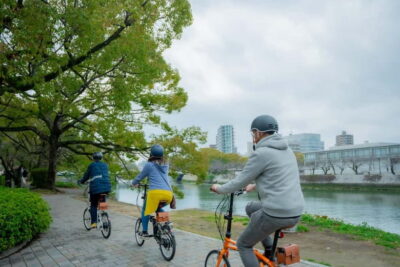
Browse the lists this tour appears in