

REVIEW · HIROSHIMA
Hiroshima Scenic Cycling Guided Tour
Hiroshima’s most moving sights are in the city center, but this tour keeps going. You’ll pedal from Peace Memorial Park to Hiroshima Castle, then climb toward Mitaki Temple, a quiet hillside sanctuary that many first-time visitors miss. The e-bike helps, but you still need to pedal uphill.
I like the small group of no more than eight, which gives the guide room to explain the city rather than simply lead a line of bikes. I also like the full-day bike use, since the guided ride lasts about three and a half hours but the bicycle stays with you afterward.
The main catch is fitness. You need to bend your knee to about 90 degrees, handle some uphill riding, and take care in hot weather. If heat affects you easily, summer may not be the right time for this outing.
Key points to know before you book
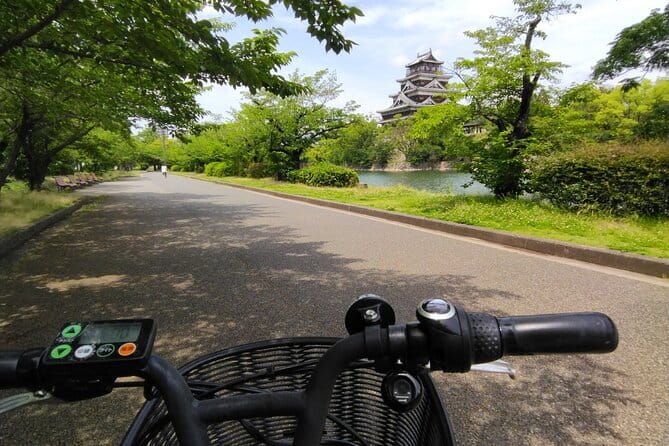
- Mitaki Temple is the unusual stop: The ride includes a peaceful temple visit that is not part of most basic Hiroshima sightseeing routes.
- The route joins memory with everyday Hiroshima: You’ll see Peace Memorial Park, then move into castle grounds, neighborhoods, and wooded temple surroundings.
- Joshua may be your guide: He is praised for clear explanations, local stories, and friendly help with families and groups.
- The electric bike reduces strain, not effort: You still pedal, especially on the climb toward Mitaki Temple.
- The bike is yours for the rest of the day: After the tour, you can continue exploring independently.
- The finish is useful for lunch and transport: The ride ends near JR Yokogawa Station, with trains, trams, buses, and okonomiyaki nearby.
Why this ride shows more than central Hiroshima
Many Hiroshima tours stay close to the Atomic Bomb Dome and Peace Memorial Park. That focus makes sense, but it can leave you with only one part of the city: the place where Hiroshima’s wartime past is remembered.
This cycling route gives you a wider view. You begin with the city’s most important memorial sites, then ride toward the castle and finally into the greener setting of Mitaki Temple. The changing scenery helps you understand Hiroshima as a living city, not only as a place of remembrance.
The electric-assisted bicycle matters here. You can cover more ground than on foot, without the pace and formality of a bus tour. You still have enough time to stop, listen, take photographs, and ask questions.
The group limit of eight is another real advantage. A guide can point out details that would be easy to miss from a larger group, and you can ask about the city’s past and present as you go. Joshua is specifically praised for telling interesting stories, answering questions, and making the ride work well for a family group.
More Guided Tours in Japan:
- Tokyo Guided Small-Group Biking Tour
★ 5.0 · 1,250 reviews - Tokyo Top Highlights 3h Guided E-bike Tour
★ 5.0 · 714 reviews - 3h Tokyo E-Bike Tour: Hidden Gems, and Local Life with guide
★ 5.0 · 670 reviews
Starting at Lucky Bakery at 10 a.m.
The tour begins at Lucky Bakery, at 5-5 Motomachi in Naka Ward. The 10 a.m. start gives you a practical morning schedule, especially if you want to see Peace Memorial Park before the strongest afternoon heat.
Your bicycle and guide are included in the price. Coffee, tea, snacks, pastries, and ice cream are not included, but you have a chance to stop and buy refreshments at your own cost.
Allow a little mental space for the first part of the ride. One person reported a minor bike problem at the beginning, though it was sorted out. That is a useful reminder to check your seat, brakes, and electric assistance before leaving the meeting point.
You should also arrive ready to ride, not dressed only for a slow walk around town. Comfortable clothing and shoes will make the route easier, particularly when the road rises toward Mitaki Temple.
Peace Memorial Park, where the ride begins with Hiroshima’s hardest story
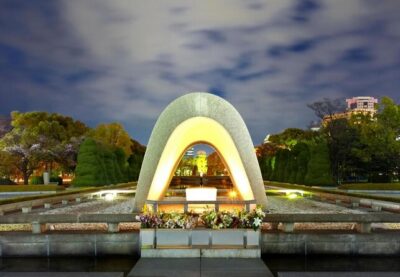
The first stop lasts about 45 minutes and covers Peace Memorial Park. You’ll see the Atomic Bomb Dome, several monuments, and bridges that survived the bombing.
This is a strong place to have a guide. A quiet ride through the park can show you the layout, but it cannot explain every monument or connect the surviving structures to the events that shaped Hiroshima. Your guide adds the stories and facts that turn a series of landmarks into a clearer picture of the area.
The stop is not designed as a long museum visit. Admission is free, and the focus is on moving through the park by bicycle and pausing at important points. If you want extensive time inside the Hiroshima Peace Memorial Museum, you should plan that separately.
That is not a flaw, but it is worth knowing. The tour gives you an efficient, guided look at the park, while a separate museum visit would require more time and a slower pace.
I like that the route does not treat Peace Memorial Park as the entire Hiroshima experience. You begin with the city’s painful past, but then keep riding into other parts of town. That shift gives the morning a more complete shape.
Hiroshima Castle and its moat
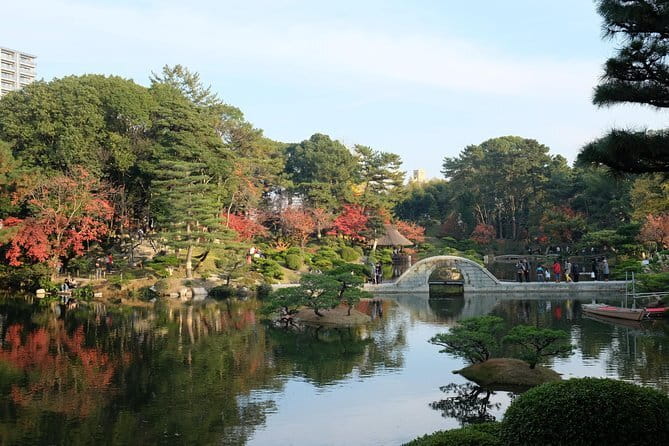
The second stop is Hiroshima Castle, with about 30 minutes to explore. The moat offers good photo opportunities, and the grounds give you a sense of a traditional Japanese fortress.
The castle area also includes Hiroshima’s largest temple, adding another layer to the stop. You can look beyond the main castle building and notice how water, walls, grounds, and religious sites fit together.
Thirty minutes is enough for a focused stop, but not enough for every corner or a lengthy interior visit. If castle architecture is your main reason for coming to Hiroshima, you may want to return later and give the site more time.
For most people, the value here is the contrast. Peace Memorial Park is open and reflective, while the castle grounds feel more enclosed and tied to older Japanese history. The bicycle makes this transition quick, without forcing you to spend the morning on public transport.
The moat is also a practical benefit for photographs. You can pause without turning the stop into a long formal tour. Your guide can add context, then keep the group moving toward the more secluded final stop.
A few more bike tours around Japan worth a look
- Hidden Kyoto E-Biking tour
★ 5.0 · 1,843 reviews - Bike Tour Exploring North Kyoto plus Lunch
★ 5.0 · 1,087 reviews - Tokyo Great Cycling Tour
★ 5.0 · 811 reviews - Arashiyama Bamboo Forest & Hidden Gems Bike Tour (Early Bird)
★ 5.0 · 613 reviews
Mitaki Temple is the route’s special reward
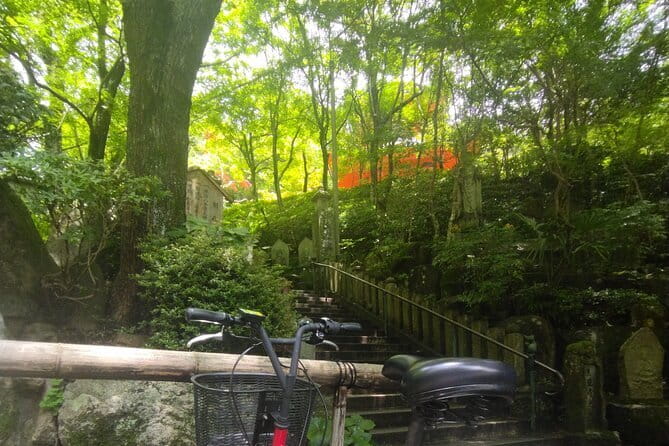
Mitaki Temple receives about an hour, making it the longest stop. Entrance is free, though a suggested donation is indicated. The temple is known as one of the most beautiful in the Chugoku region, and some people compare it favorably with famous Kyoto spots.
The important point for you is not the comparison. Mitaki offers a different setting from the city center, with a spiritual atmosphere and a more secluded feel. The ride here is what makes the tour unusual. The experience provider presents this as the only Hiroshima bike tour that visits the temple.
The approach requires more effort. Electric assistance helps, but you still need to pedal uphill. One strong piece of advice from the feedback is to take the fitness warning seriously. You do not need to be an athlete, but you should feel comfortable cycling for several hours and managing a climb.
The one-hour stop gives you time to slow down after the ride. You can take in the temple grounds, listen to the guide, and enjoy a calmer side of Hiroshima. This is the point where the route feels least like a standard city sightseeing loop.
Mitaki is also why I would not describe this as an effortless e-bike outing. The motor reduces the workload, but it does not remove it. If you are comfortable with moderate physical activity, the climb adds a sense of achievement. If hills are a serious concern, ask yourself if the temple is worth the effort before booking.
What the electric bike really changes
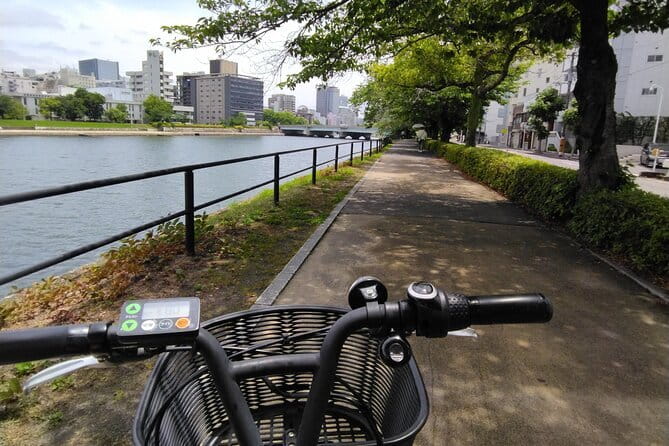
An electric-assisted bicycle is a smart choice for this route. Hiroshima is easier to cover by bike than on foot, and the motor helps you move between the three main stops without exhausting yourself too early.
Still, electric assistance is not the same as a motor scooter. You pedal throughout the ride, and the incline toward Mitaki Temple remains part of the experience. The tour information advises a moderate fitness level, and that is a fair expectation.
You also need to be able to bend your knee to about 90 degrees. Anyone prone to vertigo should use caution, as should anyone taking medicine that is not safe for driving.
Heat is another serious consideration. If you are prone to heat stroke, avoid this outing in summer. Hiroshima’s warmer months can make a bike ride much harder than the same route in mild weather.
The reward is speed and flexibility. You can reach places that would take longer on foot, while still traveling at a human pace. You have time to stop at bridges, moats, monuments, and temple grounds rather than watching the city through a vehicle window.
A small group makes the guide more useful
The maximum group size is eight people. That is small enough for direct conversation and basic coordination, but large enough to retain the social feel of a group outing.
The guide is central to the experience. Joshua receives especially strong praise for his explanations, local stories, and friendly manner. He has also led a family group of five, and the feedback suggests he handled questions well and helped make the day work for different ages.
You should expect interpretation rather than a silent escort. The guide explains what you are seeing, gives background on the sites, and points out details along the route. That is particularly valuable at Peace Memorial Park, where the meaning of the place deserves more than a quick photograph.
A small group also makes stops less cumbersome. You will not be waiting for a large crowd to gather at every monument or crossing. The tradeoff is that the tour depends on everyone keeping a reasonable pace, especially on the climb.
Keeping the bike after the guided ride

The tour lasts about three hours and 30 minutes, but you can keep the bicycle for the full day. This is one of the strongest practical benefits in the package.
The guided route ends just after lunchtime near JR Yokogawa Station, at the location listed as 1-chome-15-16 Misasamachi in Nishi Ward. From there, you can use the JR line, tram, or bus, or continue on the bicycle if you still have energy.
The area is also useful for lunch. You’ll find several restaurants with English menus and places serving okonomiyaki, Hiroshima’s famous savory pancake-style dish. Because you finish outside the main sightseeing core, you may have more choice than if you ended at one of the busiest central attractions.
The extra bike time lets you shape the afternoon around your own interests. You could return toward the center, look for more food, or simply use the available transport and leave the bicycle behind as directed by the tour arrangements.
Do not treat the full-day bike use as a reason to overpack your schedule. The guided ride already includes several hours of cycling and a hill. The best use of the extra time may be a short independent ride, not another demanding route.
Is the $73.57 price good value?
At $73.57 per person, the price is fair if you want transport, a guide, and a wider look at Hiroshima in one morning. You are paying for the bicycle, electric assistance, a small group, and guided access to three very different parts of the city.
The strongest value comes from combining the guided ride with the full-day bicycle. If you use the bike again afterward, the price works better than a short sightseeing loop with no added flexibility.
The cost is less attractive if you mainly want Peace Memorial Park. You can visit the park without an admission charge, and you may prefer to spend several hours at the memorial museum and surrounding monuments at your own pace.
I would also factor in the included guide. The route covers places where context matters, especially the memorial park and castle area. A self-guided bicycle rental may be cheaper, but it would not provide Joshua’s stories, route planning, or help connecting the sites.
Group discounts are available, which may improve the value for families or larger bookings. The tour has an average booking lead time of 22 days, so reserve ahead if your Hiroshima dates are fixed.
Who should book this Hiroshima bike tour?
I would recommend it to you if you:
- Want to see more than the central memorial sites
- Like learning through local stories and conversation
- Are comfortable with moderate cycling and a hill
- Prefer a small group over a large bus
- Want to use a bicycle again after the guided portion
- Have only one morning and want several major stops
I would think twice if you:
- Have difficulty bending your knees to about 90 degrees
- Are not comfortable pedaling uphill
- Are prone to heat stroke in summer
- Have vertigo or take medication that is unsafe for driving
- Want a long, detailed visit inside the Peace Memorial Museum or castle
- Prefer a completely relaxed walking tour
The tour is also a good fit for families who can manage the physical demands. The group size allows a guide to respond to questions, but every person needs to be comfortable on a bicycle.
Practical booking advice and cancellation terms
You receive confirmation when you book. The meeting point is near public transportation, and the finish near JR Yokogawa Station makes it easy to continue by JR train, tram, or bus.
Free cancellation is available up to 24 hours before the start time for a full refund. Changes or cancellations made less than 24 hours before the 10 a.m. start are not accepted for a refund.
The tour requires good weather. If poor weather causes cancellation, you can choose another date or receive a full refund. Since this is an outdoor ride, check the forecast and avoid treating the cancellation deadline as an afterthought.
Should you book it?
Book this tour if you want Hiroshima to feel larger than its central memorial district. The combination of Peace Memorial Park, Hiroshima Castle, and Mitaki Temple gives you three different views of the city in one well-paced morning.
The best reasons to go are the small group, Joshua’s strong guiding style, and the chance to keep the e-bike for the rest of the day. The main reason to skip it is physical, not cultural: you must pedal, climb, and manage the heat.
For an active first day in Hiroshima, I think this is a smart choice. You’ll leave with the city’s difficult past in view, but also with a sense of its temples, food, transport links, and ordinary daily life.
FAQ
How long does the Hiroshima cycling tour last?
The guided experience lasts approximately three hours and 30 minutes. It begins at 10 a.m. and ends just after lunchtime near JR Yokogawa Station.
What places does the tour visit?
The route includes Hiroshima Peace Memorial Park, Hiroshima Castle, and Mitaki Temple.
Is the bicycle included?
Yes. Use of the bicycle and a guide are included in the tour price.
Can I keep the bicycle after the guided tour?
Yes. You can keep the bike for the full day and continue exploring independently after the guided portion.
How many people can join the tour?
The maximum group size is eight people.
Is Mitaki Temple free to enter?
Entrance is free, with a suggested donation noted for the temple.
What fitness level do I need?
You should have a moderate physical fitness level. You need to pedal uphill, and you should be able to bend your knee to about 90 degrees.
What happens if the weather is bad?
The tour requires good weather. If it is canceled because of poor weather, you can choose a different date or receive a full refund.
Just added around Japan
- Iya Valley BROMPTON Slow Cycling Tour★ 5.0 · 28 reviews
- eTour de Matsumoto – Electric Bike Tour★ 5.0 · 16 reviews
- ONLY YOU in the Bamboo Forest! 4 hours E-bike tour with a local★ 5.0 · 45 reviews
- Pedal Adventure Kyoto’s iconic landmarks on an e-bike tour★ 5.0 · 189 reviews
- South Kyoto in a Nutshell: Gentle Backstreet Bike Tour!★ 5.0 · 225 reviews
- The Beauty of Kyoto by Bike: Private Tour★ 5.0 · 47 reviews
- Explore Hidden Alleyway with a Local Expert (Afternoon Tour)★ 5.0 · 17 reviews
- Secret Eastern Kyoto Biking Adventure★ 5.0 · 44 reviews
Hiroshima Bike Tours, compared.
Hiroshima in a Nutshell: Morning Bike Adventure
Read our review →
Hiroshima 2hr Peace Cycling Tour with Local Guide
Read our review →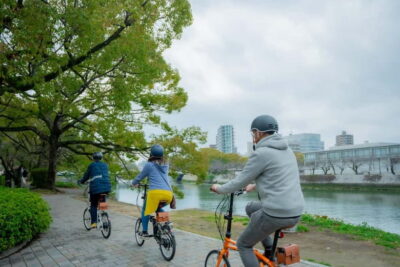

Hiroshima 3hr Peace Cycling Tour with Local Guide
Read our review →

Hiroshima Country Cycling: Explore Rural Life 1 HR from City
Read our review →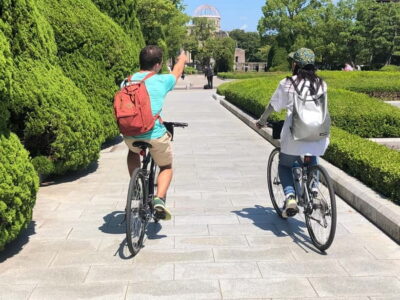
Browse the lists this tour appears in