
REVIEW · HIROSHIMA
Hiroshima: Peace Cycling Tour with Local Guide
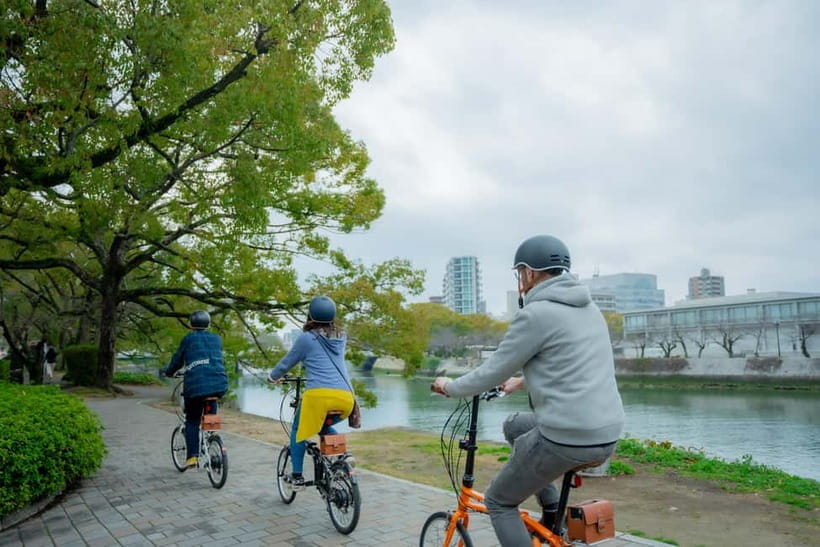
Hiroshima’s atomic bombing story changes when you leave the Peace Memorial Park and pedal through the neighborhoods beyond it. This small-group ride connects famous monuments with surviving streetcars, bridges, trees, hospitals, and parks that show how far the destruction reached and how the city rebuilt.
I like the personal local storytelling, often shared by guides such as Shin, Kana, Moe, and Bella, and I like the easy electric bikes, which let you cover more ground without turning the tour into a workout. The main drawback is that the subject is emotionally heavy, and the bikes may feel small for taller riders.
Key points at a glance
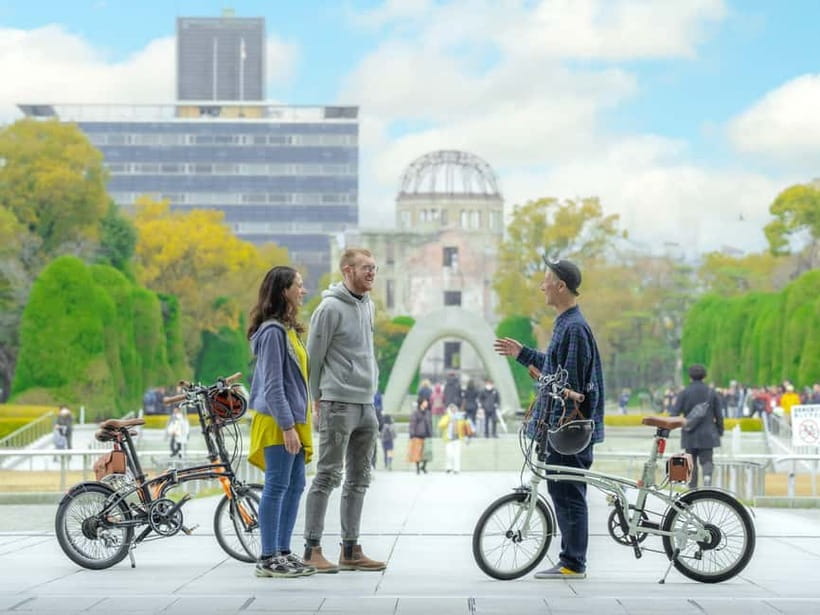
- Personal family connections: Guides may share stories passed down through parents and grandparents affected by August 6, 1945.
- Beyond the Peace Park: The route reaches suburban A-bomb sites that are easy to miss on foot.
- Two route lengths: Choose a two-hour ride focused on the park and surrounding city, or a three-hour route with more stops.
- Comfortable electric bicycles: The motor helps on a gentle, city-based ride, even if you are not especially fit.
- Small shared group: The tour takes up to 10 people, with the pace adjusted for children and less confident cyclists.
- Practical summer care: Guides have provided cold towels, salt candies, ice packs, and shade breaks in hot weather.
Why cycling gives Hiroshima a fuller story
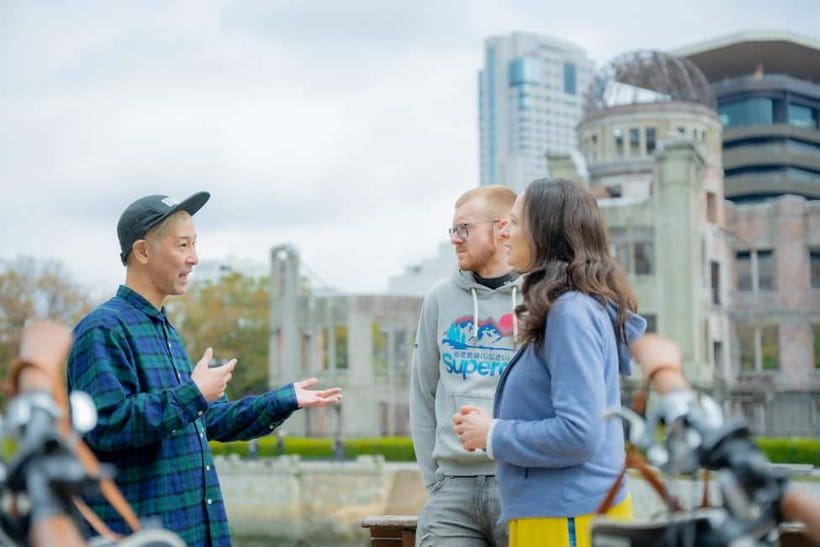
The Atomic Bomb Dome and Peace Memorial Park are essential stops, but they show only one part of Hiroshima’s story. The bomb caused severe damage within roughly 2.5 kilometers of the hypocenter. A bicycle lets you move from the central memorial area into ordinary streets where the scale of that destruction becomes easier to grasp.
You are not simply riding from monument to monument. You see how a city once devastated by the atomic bomb now functions as a modern Japanese city, with trams, parks, hospitals, bridges, homes, and daily routines. That contrast is one of the tour’s strongest features.
I also like the physical rhythm of the experience. You listen at a memorial site, ride quietly through the city, then stop again for another piece of the story. The movement gives you time to think between the more difficult sections.
The ride is not designed as a fast sightseeing circuit. The group stays together, and the guide may slow the pace if children or inexperienced riders need more time. That makes it suitable for families and mixed-ability groups, though strong cyclists looking for speed will find it deliberately gentle.
More Guided Tours in Japan:
- Tokyo Guided Small-Group Biking Tour
★ 5.0 · 1,250 reviews - Tokyo Top Highlights 3h Guided E-bike Tour
★ 5.0 · 714 reviews - 3h Tokyo E-Bike Tour: Hidden Gems, and Local Life with guide
★ 5.0 · 670 reviews
Starting at the Peace Memorial Park Rest House
The meeting point is the Rest House in Hiroshima Peace Park. From Hiroshima Station, take the Hiroshima Electric Railway tram to Atomic Bomb Dome Station. The ride takes about 20 minutes, followed by a walk of roughly five minutes.
Arrive early. If you are late without contacting the operator, the tour can be cancelled with a full same-day charge. That is a harsh policy, but it is especially important here because the group must depart together and the guide cannot leave people searching around the park.
At the start, the guide explains what the Peace Memorial Park represents and how its monuments relate to the bombing. You will hear about the Atomic Bomb Dome and the memories held in the park, rather than treating the area as a quick photo stop.
This opening works best if you have already decided to give the subject your full attention. The tour is not a light city ride with a little history added on. It asks you to consider what happened, how people experienced it, and how memories of the event continue to shape Hiroshima.
The two-hour route: a focused introduction
The two-hour course begins at either 11:00 or 15:00. The first hour centers on Peace Memorial Park and its monuments. After that, the guide takes you toward the suburbs, where the story continues away from the most familiar sights.
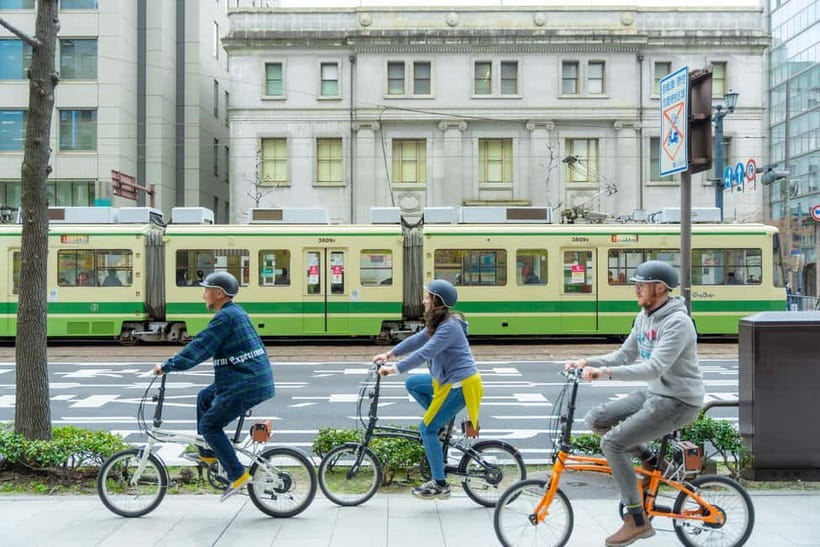
One memorable feature is the A-bombed streetcar system. Hiroshima still has a tram that survived the bombing and remains part of the city’s transport story. Seeing an actual working link to that time gives the history a physical presence that a museum label cannot provide.
The second half of the ride shows you a less polished, more ordinary side of Hiroshima. You pass through neighborhoods and visit A-bomb-related sites while the guide explains what happened there and how the area changed afterward. This is where the bicycle earns its place. On foot, you would cover less ground in the same time, and by taxi you would miss the gradual change from memorial district to residential city.
The two-hour route is a good choice if you have only one day in Hiroshima, want a clear introduction, or plan to visit the Peace Memorial Museum separately. It leaves you with time for the museum, lunch, or another city sight.
The tradeoff is simple: you get less time at the additional sites and fewer stops than on the three-hour route. If Hiroshima’s wartime history is the main reason for your visit, the longer course gives the subject more room.
The three-hour route: from castle grounds to Peace Boulevard
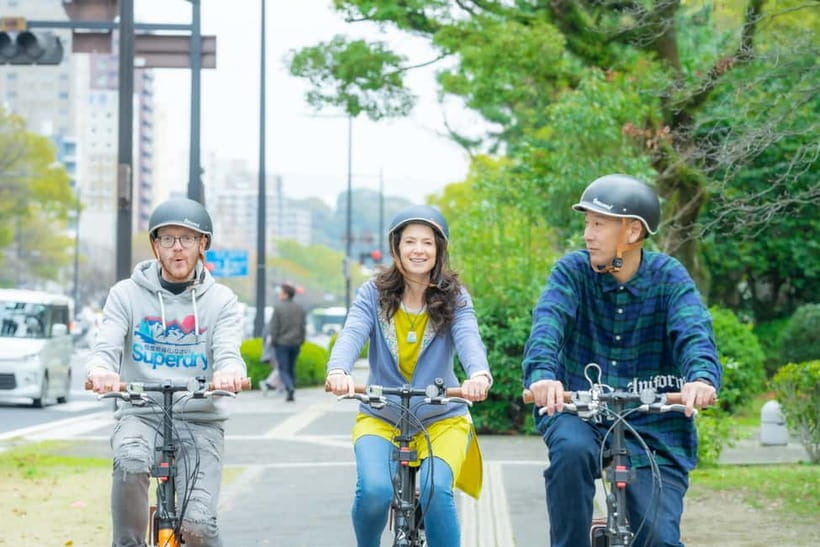
The three-hour course starts at either 10:00 or 14:00 and includes a longer circuit through the central city. It begins at Hiroshima Castle, then moves through Hiroshima Gokoku Shrine and its shrine gate before reaching Hiroshima Central Park.
These opening stops give you a sense of Hiroshima before the route reaches the central bombing memorials. The city’s political, religious, and public spaces are placed alongside the later story of destruction and reconstruction.
The route then reaches Aioi Bridge and the Atomic Bomb Dome. From there, you follow the Motoyasu River and cross or view Peace Bridge before continuing south toward Higashisenda Park.
The river and bridges matter because Hiroshima’s waterways shaped both the city and the bombing’s geography. The guide helps you connect the map to the event, rather than seeing each memorial as an isolated point.
The later stops include Hiroshima Red Cross Hospital, Hiroshima Railway, Miyuki Bridge, and Kobayashi River. You also visit a surviving weeping willow tree before riding along Peace Boulevard and returning to the meeting point.
Some of these places are not classic sightseeing attractions. That is precisely their value. A hospital, railway line, bridge, or tree can show how the bombing affected working parts of the city and how reminders survived outside the main memorial zone.
The three-hour route is the better pick if you want a wider look at Hiroshima’s A-bomb sites and prefer to let the guide build a connected story. It is still not a full city tour. You remain mainly in central Hiroshima and the areas directly linked to the bombing, so you should not expect a broad tour of the whole city.
A few more bike tours around Japan worth a look
- Hidden Kyoto E-Biking tour
★ 5.0 · 1,843 reviews - Bike Tour Exploring North Kyoto plus Lunch
★ 5.0 · 1,087 reviews - Tokyo Great Cycling Tour
★ 5.0 · 811 reviews - Arashiyama Bamboo Forest & Hidden Gems Bike Tour (Early Bird)
★ 5.0 · 613 reviews
The guides make the difficult subject approachable
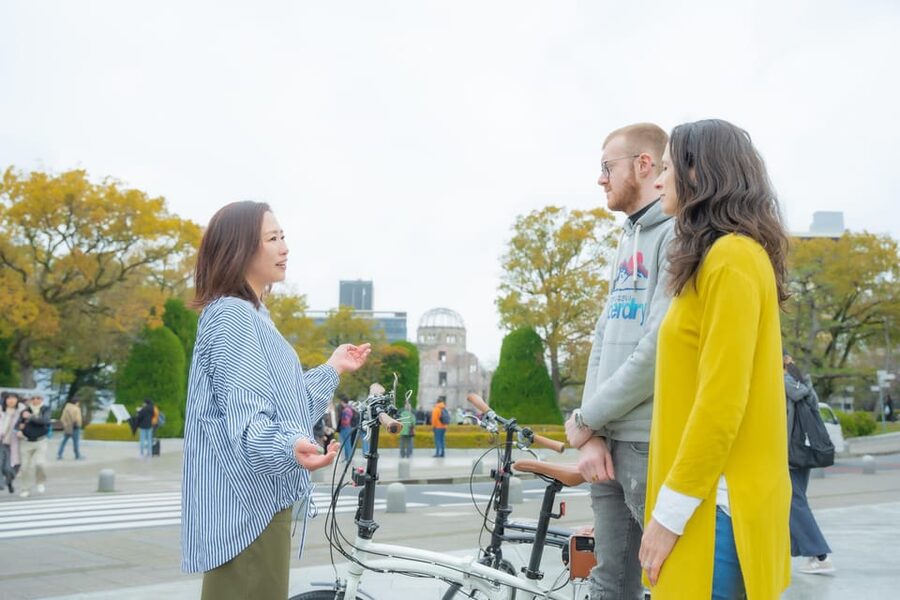
The guide can shape the entire experience. The names appearing most often in the supplied material are Shin, Kana, Moe, Bella, Mai, Hugo, Tomas, and Kena. You may be assigned someone else, but the strongest pattern is clear: the guides bring local knowledge, strong English, warmth, and personal connections to the subject.
Shin has spoken about family links to the bombing and about how the story was passed from grandparents to parents and then to him. Kana has shared family experiences while balancing sad material with messages of hope and courage. Moe and Bella have also been praised for combining local stories with careful attention to the group.
That personal element needs handling with care. You are not promised a direct survivor account, and the guide’s family connection may differ from one tour to another. Still, hearing how the event has been remembered within a Hiroshima family can add a human layer to dates and facts.
The tone is generally serious but not bleak. Guides use humor and friendly conversation at suitable moments, then return to the history without making light of it. That balance matters, especially for families and younger riders.
The English level has been described as strong across several guides. You should still expect differences in style and delivery because this is a shared tour with changing staff, not a private historian-led walk.
How hard is the cycling?
The ride covers city streets and short distances, and the electric bicycles are intended to make participation easier. You still need to know how to ride a bicycle and feel comfortable steering, braking, and riding in a group.
The tour is not suitable for anyone under 145 centimeters if using an adult bicycle. Children from 110 to 145 centimeters may use one of the limited children’s cross bikes, and children under 22 kilograms and 115 centimeters may use a bicycle with a child seat. Children under 15 can receive the child rate on either the children’s or adult bicycle.
Infant seats and children’s bicycles are limited, so contact the operator before booking if you need one. Children from age one can be booked, but the practical fit depends on the available equipment.
One useful warning comes from a taller rider who found the bicycle small. If you are tall, ask about the frame and riding position before committing. The bikes are described as comfortable and easy to operate, but comfort varies with body size.
Wear ordinary comfortable clothes and shoes. Bring water and a towel. High heels are not allowed, which makes sense on a bicycle but is worth remembering if you are combining this with a dressed-up evening plan.
Weather, pace, and group size
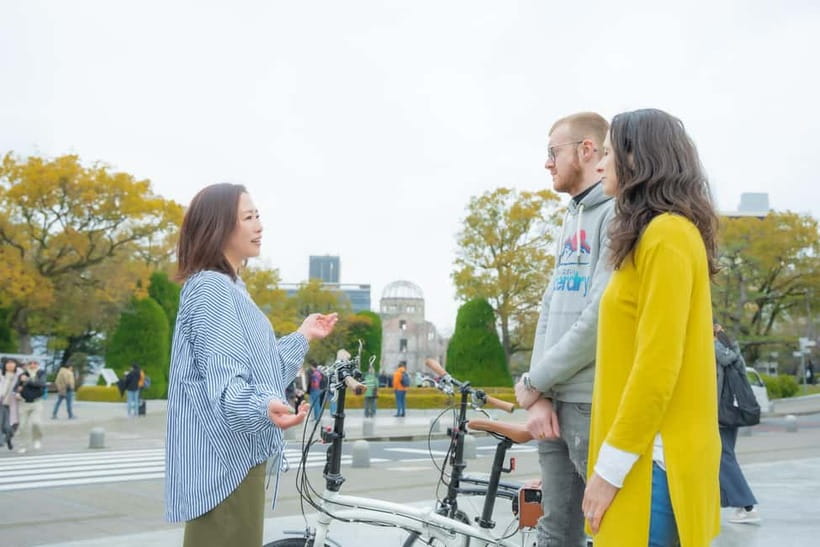
The tour runs as a shared experience for up to 10 people. That keeps the group small enough for questions and conversation, but it also means the pace is not completely yours.
If another participant, especially a child, is new to cycling, the guide may slow down. I see that as a fair trade for a family-friendly outing, though confident cyclists should not book this expecting a brisk ride.
Hiroshima can be hot, especially in summer. Guides have carried cold towels, salt candies, ice packs, wet wipes, and cooling supplies on difficult days. They have also looked for shade at traffic lights and stopped near convenience stores when someone needed water or a break.
Those details are not guaranteed on every departure, so bring your own drink and take the heat seriously. The electric motor reduces exertion, but it does not remove sun exposure or humidity.
Rain and other conditions may affect the timetable. The schedule can change on the day, and the group may need to adjust the route.
What the $52 price gets you
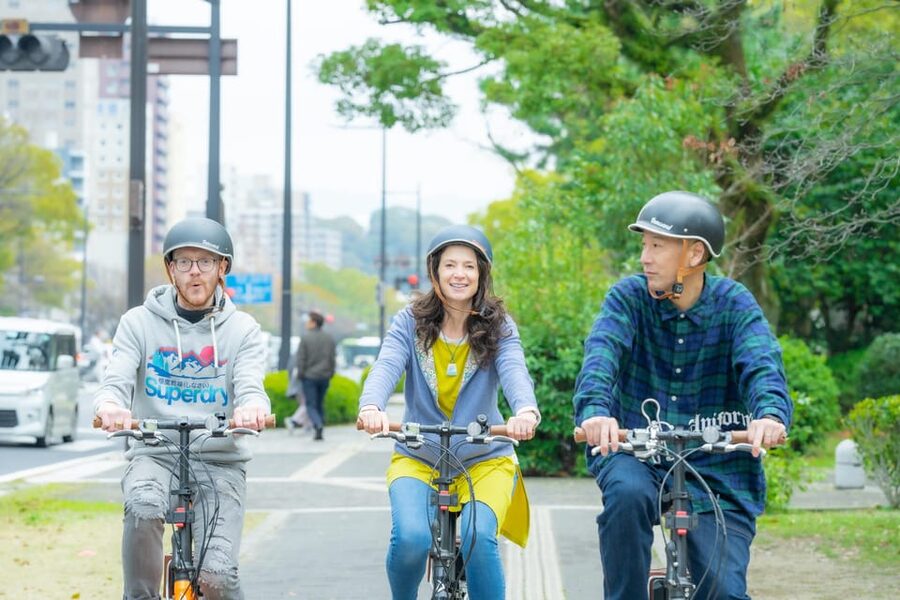
At $52 per person, the tour offers a useful combination of transport, guiding, and local interpretation. Your bicycle rental, English-speaking guide, and bicycle accident insurance are included. Food and drinks are not included.
The value is strongest if you have limited time in Hiroshima. In two or three hours, you cover the Peace Park plus several sites that would take longer to reach on foot. You also avoid arranging a bicycle rental, planning a route, and researching which less obvious locations matter.
The price is less compelling if you only want the Atomic Bomb Dome and the central park. Those sights are easy to reach independently, and the Peace Memorial Museum requires its own time and admission arrangements.
For me, the deciding factor is the guide. The bicycle is useful, but the interpretation turns a route into an experience. If you want context, local family stories, and access to places you might otherwise pass without noticing, $52 is reasonable. If you prefer to read at your own pace and explore alone, spend the money on a rental bike or museum visit instead.
Photos taken during the day are provided as data afterward, another small benefit for solo riders and families who want a record without stopping to set up their own camera.
Who should book this Hiroshima bike tour?
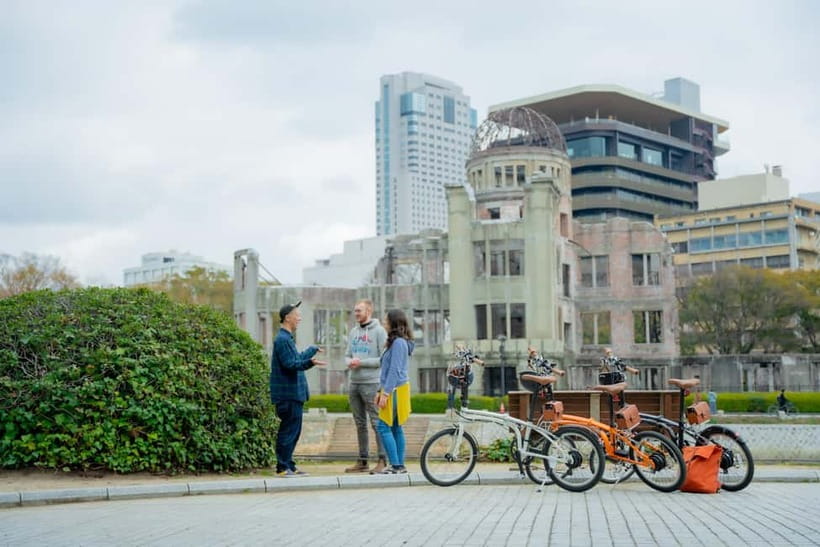
I would recommend it to first-time visitors who want a clear introduction to Hiroshima and to people who find a moving bicycle route easier to absorb than a long indoor tour.
It suits families particularly well, provided every child is fitted to the right bicycle or seat. The electric assistance helps, and the guides can adjust the pace. Teenagers may appreciate the change from a conventional museum visit, while adults still receive serious historical context.
Solo visitors can also fit in easily. The groups are small, and the ride creates a natural way to meet others without requiring a full-day commitment.
I would be more cautious if you dislike group pacing, struggle with bicycles, are very tall, or want a broad tour of Hiroshima beyond the bombing-related center. It is also not ideal if you want a cheerful sightseeing ride. The subject includes mass death, destruction, and family loss.
Should you book it?
Book this tour if you want to understand Hiroshima through both its memorials and its living streets. Choose the two-hour option for a compact introduction, or the three-hour route if you want the wider list of sites from Hiroshima Castle to Peace Boulevard.
I would book early if you need a child seat or children’s bicycle, since those are limited. Arrive at the Rest House in good time, bring water, wear comfortable shoes, and ask about bicycle size if you are tall.
The best reason to choose this experience is not simply that you can see more by bike. It is that a local guide can connect the Atomic Bomb Dome, a surviving tram, a hospital, a bridge, a tree, and an ordinary neighborhood into one human story of destruction and rebuilding.
FAQ
How long is the Hiroshima Peace Cycling Tour?
You can choose a two-hour or three-hour course. The two-hour route begins at 11:00 or 15:00, while the three-hour route begins at 10:00 or 14:00.
Where does the tour meet?
The meeting point is the Rest House in Hiroshima Peace Memorial Park. From Hiroshima Station, take the Hiroshima Electric Railway tram to Atomic Bomb Dome Station, then walk about five minutes.
Is the tour conducted in English?
Yes. The tour includes a live English-speaking guide.
How many people are in the group?
It is a shared small-group tour for up to 10 participants.
Are electric bicycles included?
Yes. Bicycle rental is included in the price, along with bicycle accident insurance.
Do I need to be an experienced cyclist?
You need to be able to ride a bicycle, but the electric bikes and generally gentle pace make the tour accessible to people who are not especially fit. The guide may adjust the pace for children or less experienced cyclists.
Can children join the tour?
Children from age one can be booked. Adult electric bicycles are for riders at least 145 centimeters tall. Children between 110 and 145 centimeters may use a limited number of children’s bicycles, and smaller children may use a child seat if they meet the stated weight and height limits.
What should I bring?
Bring comfortable shoes, comfortable clothes, a towel, and drinks. High-heeled shoes are not allowed.
Can I cancel for a full refund?
You can cancel up to 24 hours before the tour for a full refund. If you arrive late without prior notice, the tour may be cancelled and the same-day cancellation fee is non-refundable.
Just added around Japan
- Kyoto: Afternoon Bamboo Forest and Monkey Park Bike Tour★ 4.9 · 83 reviews
- 4.5-hr Kyoto Historical Highlights Bike Tour with UNESCO★ 4.7 · 13 reviews
- 3-Hour Tokyo Private E-Bike Tour Starting from Your Hotel★ 5.0 · 117 reviews
- Private-group Morning Cycling Tour in Hida-Furukawa★ 5.0 · 105 reviews
- Private Afternoon Cycling Tour in Hida-Furukawa★ 5.0 · 109 reviews
- 1-Day Private Rural E-Bike Tour in Hida★ 5.0 · 188 reviews
- Eat, Drink & Cycle: Osaka Foodie Bike Tour★ 5.0 · 224 reviews
- One-Day Osaka Bike Adventure: 5–6 Hours★ 5.0 · 246 reviews
Hiroshima Bike Tours, compared.
Hiroshima in a Nutshell: Morning Bike Adventure
Read our review →
Hiroshima 2hr Peace Cycling Tour with Local Guide
Read our review →
Browse the lists this tour appears in