
REVIEW · HIROSHIMA
Hiroshima: Best of Hiroshima Guided Bike Tour
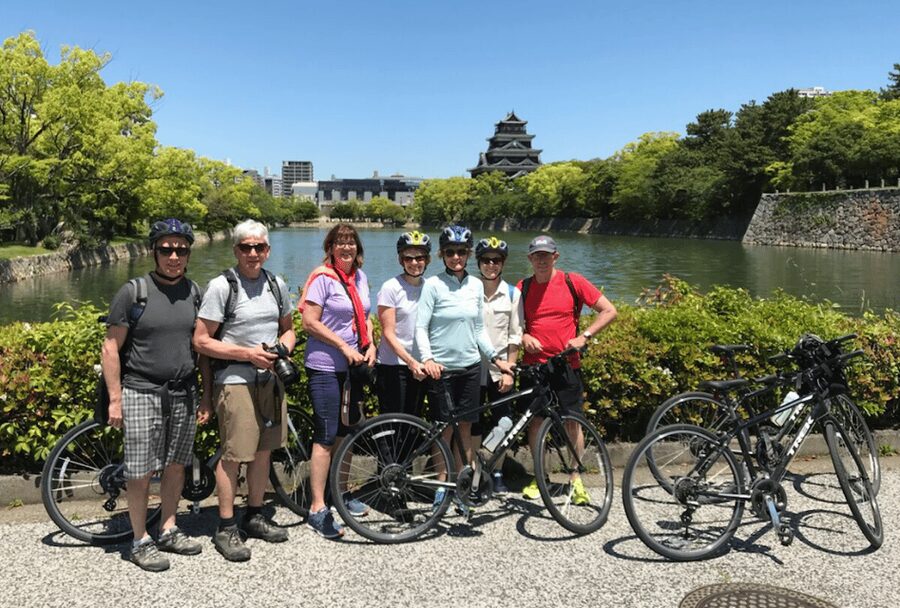
Hiroshima’s key sights sit close enough together for a bike, but far enough apart to make walking tiring. This flat, relaxed ride links the Atomic Bomb Dome, Peace Memorial Park, Hiroshima Castle, Gokoku Jinja, and Shukkei-en Garden in about three and a half hours. I like the personal storytelling from guides such as Awais, Aimee, Miyu, and James, and I like that the route reaches quiet paths and riverfront stretches that cars cannot use. The main drawback is that you need decent weather, and the ride is not suitable for children under 12 or anyone with certain medical conditions.
The small-group format, limited to eight people, gives you room to ask questions and stop for photos. Bikes are comfortable and well maintained, with step-through models, child-sized bikes, and e-bikes available. You should still arrive ready to ride in comfortable clothes and shoes, since this is an active history tour rather than a sightseeing bus.
Key points to know before booking
- A gentle 3.5-hour route: The course is almost entirely flat and suitable for anyone who can ride a bike.
- A thoughtful history lesson: Guides explain the atomic bombing, Hiroshima’s recovery, and personal stories connected to August 6, 1945.
- More than the Peace Park: You also visit Gokoku Jinja, Hiroshima Castle, and Shukkei-en Garden.
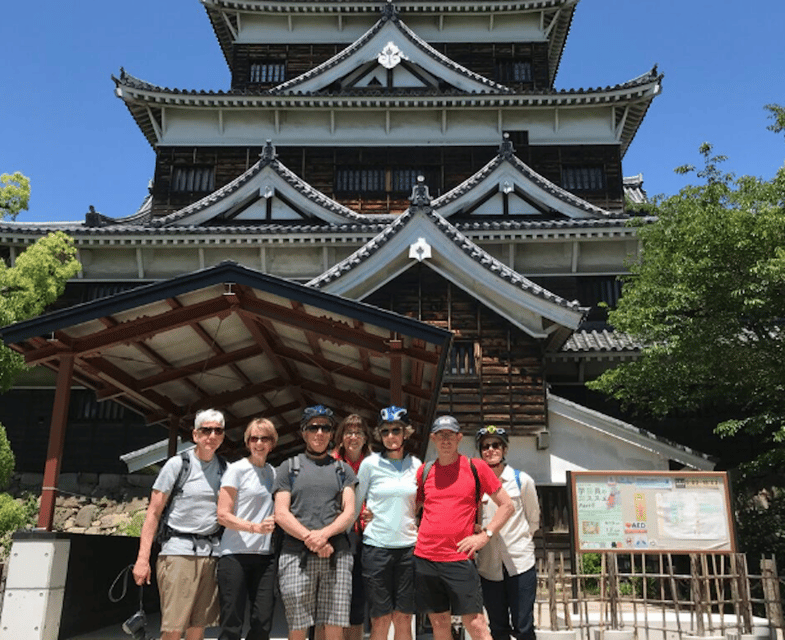
- Small groups matter: With no more than eight people, the guide can answer questions, adjust the pace, and take photos.
- Good bikes and useful choices: Trek bikes, step-through models, e-bikes, helmets, and bottled water are included.
- A smart use of half a day: At $70 per person, the tour combines transport, guiding, equipment, and garden admission.
Why a bicycle works so well in Hiroshima
The best thing about this tour is not speed. It is the way a bicycle joins the city’s separate pieces into one clear story.
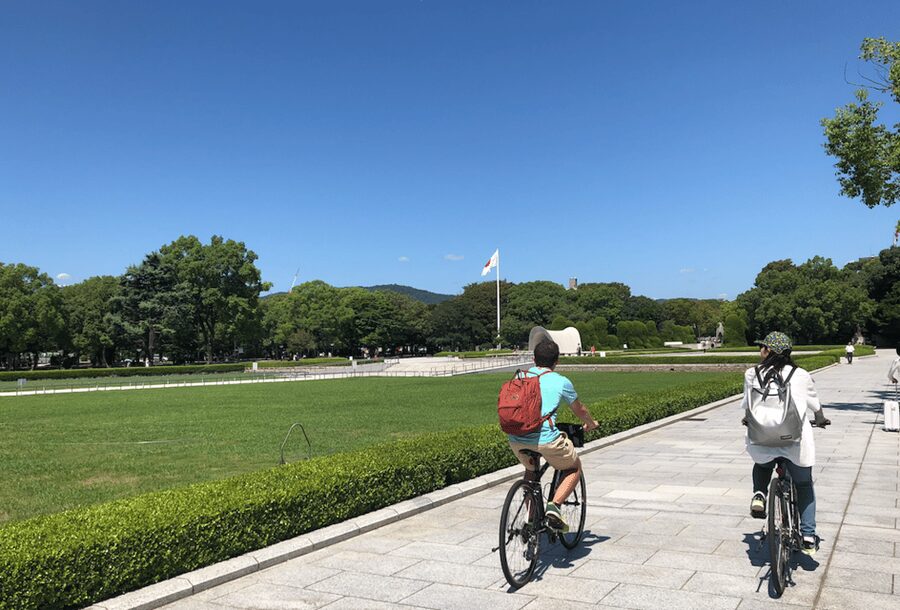
You begin with a riverside ride, then enter the Peace Memorial Park without needing to wait for buses or search for parking. Later, you pedal north toward the castle and shrine, then finish in a traditional garden. On foot, these stops are possible, but the distances can eat into your day. By bike, you cover roughly 10 kilometers at an easy pace, with frequent stops to listen, look around, and catch your breath.
I especially like the contrast between the route’s quiet physical rhythm and the weight of the history. You are not rushed from one monument to the next. The guide can pause beside a memorial, explain what happened, and give you time to take in the place before moving on.
The route is described as flat, and that matters. You do not need serious cycling experience or strong legs. Several people who had not ridden for years found the pace manageable, while e-bikes are available if you want extra help. On hot days, guides have added regular breaks, and on wet days they have kept the mood positive while maintaining the planned stops.
Still, this is not a passive tour. You need to pedal for much of the morning or afternoon, follow the guide, and stay aware of other people along the route. If you have back, heart, or other pre-existing medical problems, the operator says this activity is not suitable for you.
More Guided Tours in Japan:
- Tokyo Guided Small-Group Biking Tour
★ 5.0 · 1,250 reviews - Tokyo Top Highlights 3h Guided E-bike Tour
★ 5.0 · 714 reviews - 3h Tokyo E-Bike Tour: Hidden Gems, and Local Life with guide
★ 5.0 · 670 reviews
Starting at Cycle Hiroshima HQ
The meeting point is Cycle Hiroshima HQ, marked by a large Cycle Hiroshima sign at the front. You begin with a short orientation, bike fitting, and helmet setup before setting off. Arriving a little early is sensible, especially if you need a particular frame size or want time to adjust to the bike.
The fleet includes Trek bikes in different sizes, along with step-through bikes and e-bikes. Helmets and bottled water are included. The equipment earns steady praise for being comfortable and in good condition, which is important when you are riding for several hours rather than simply borrowing a bicycle for a quick spin.
Tell the staff if you prefer a lower step-through frame or need an e-bike. The route is almost completely flat, so an e-bike is not essential for most riders. It can still be useful if you are uneasy about cycling, dealing with heat, or traveling with someone who has different fitness levels.
The group size is capped at eight people. That is small enough for the guide to keep the group together without shouting every explanation across a street. It also makes it easier to ask about family stories, monuments, local customs, or practical questions about Hiroshima.
The riverside ride to Peace Memorial Park
The opening ride follows a relaxing riverside route toward the Peace Memorial Park. This gives you a gentle start and lets you settle into the bike before the more serious historical stops.
The river setting also helps you see Hiroshima as a living city, not only as a place defined by one terrible event. You pass through spaces used by residents and reach the park by bicycle, rather than arriving in a tour vehicle and immediately facing its most solemn monuments.
Your guide sets the pace and makes stops along the way. Guides including Aimee, Miyu, Awais, Ehsan, and James have been praised for balancing information with a friendly manner. Some guides also share family connections or personal stories, which can make the history feel less distant without turning the experience into a performance.
That balance is important. Hiroshima’s story calls for care and respect. The best moments here are likely to be quiet ones, when the guide gives you enough information to understand what happened and then allows you time to look for yourself.
Atomic Bomb Dome and the Peace Memorial Park
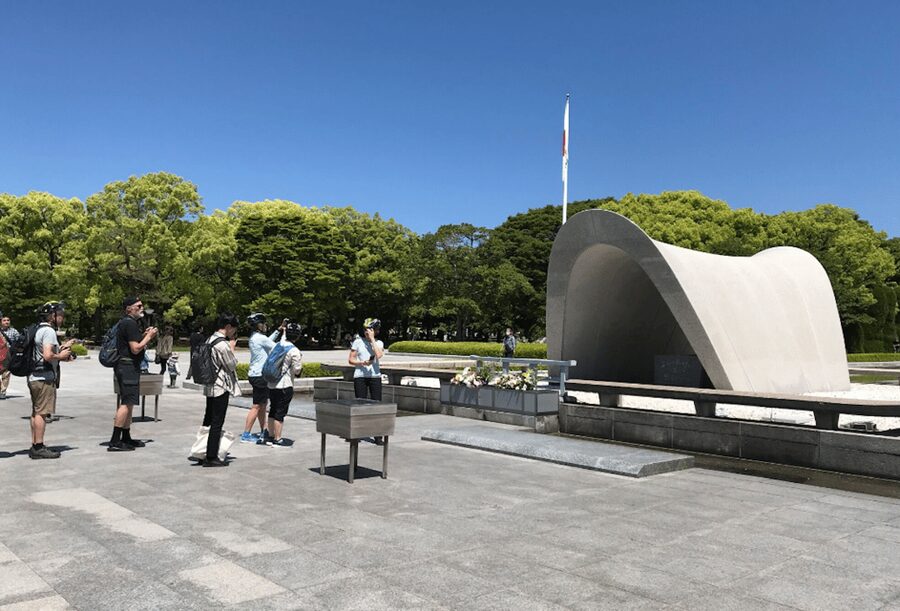
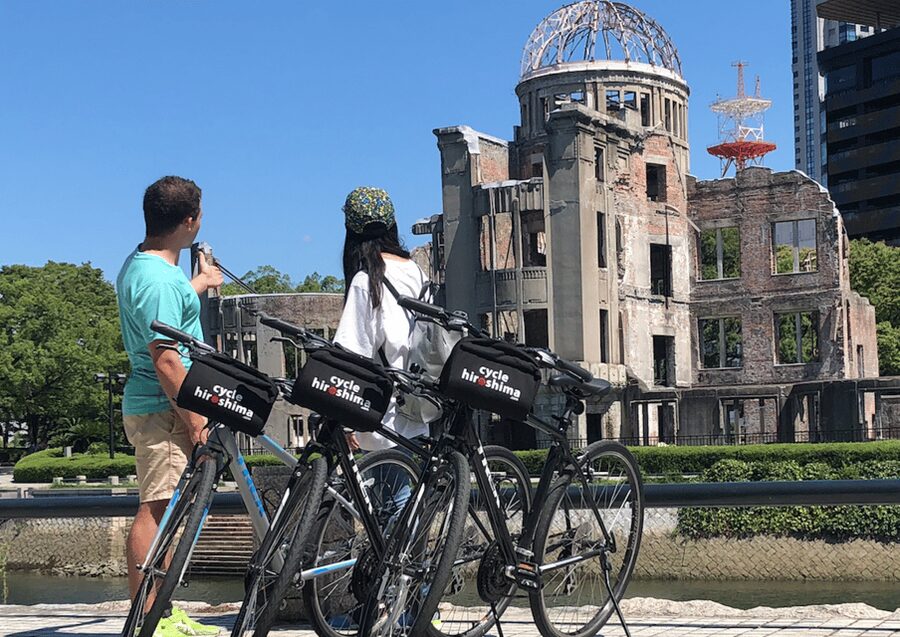
The Atomic Bomb Dome is the tour’s central historical stop. This UNESCO World Heritage Site is one of Hiroshima’s most recognizable buildings and one of the most difficult to see without reflection. Your guide explains the events of August 6, 1945, the destruction that followed, and the city’s later transformation into a City of Peace.
The value of a guided visit is the context. You see the structure, but you also learn why it was preserved and what it represents. The route includes other important monuments in and around the park, with time to ask questions and take photographs.
The experience can be especially useful if you have limited time in Hiroshima. You receive an introduction to the city’s wartime destruction, the lives lost, the people who survived, and the long process of recovery. Several guides also discuss Sadako and the paper cranes, a story that many people remember long after leaving the park.
I would not treat this ride as a replacement for every museum or memorial in Hiroshima. The tour gives you a strong framework, but you may want to visit the Hiroshima Peace Memorial Museum separately if you want a longer, more detailed examination of the bombing and its aftermath. The bicycle tour is better at connecting several places and ideas in one morning.
A few more bike tours around Japan worth a look
- Hidden Kyoto E-Biking tour
★ 5.0 · 1,843 reviews - Bike Tour Exploring North Kyoto plus Lunch
★ 5.0 · 1,087 reviews - Tokyo Great Cycling Tour
★ 5.0 · 811 reviews - Arashiyama Bamboo Forest & Hidden Gems Bike Tour (Early Bird)
★ 5.0 · 613 reviews
Gokoku Jinja and the route north
After the Peace Park, the ride continues north to Gokoku Jinja. This is described as the city’s most popular Shinto shrine, and it adds a different layer to the day.
The shrine gives you a chance to see a living place of worship rather than another memorial connected directly to the bombing. Your guide can explain what makes the shrine important and help you understand how it fits into Hiroshima today.
This change of tone is one of the route’s strengths. The tour does not keep you in one emotional register for three and a half hours. You move from remembrance to religious tradition, then on to samurai-era history and garden design.
You should expect stops to vary slightly with the guide and the group. Some guides have extended the tour when everyone had extra time, while others have kept the ride moving to make the most of the scheduled duration. If you have a hard departure deadline, tell your guide at the start.
Hiroshima Castle and a glimpse of samurai Japan
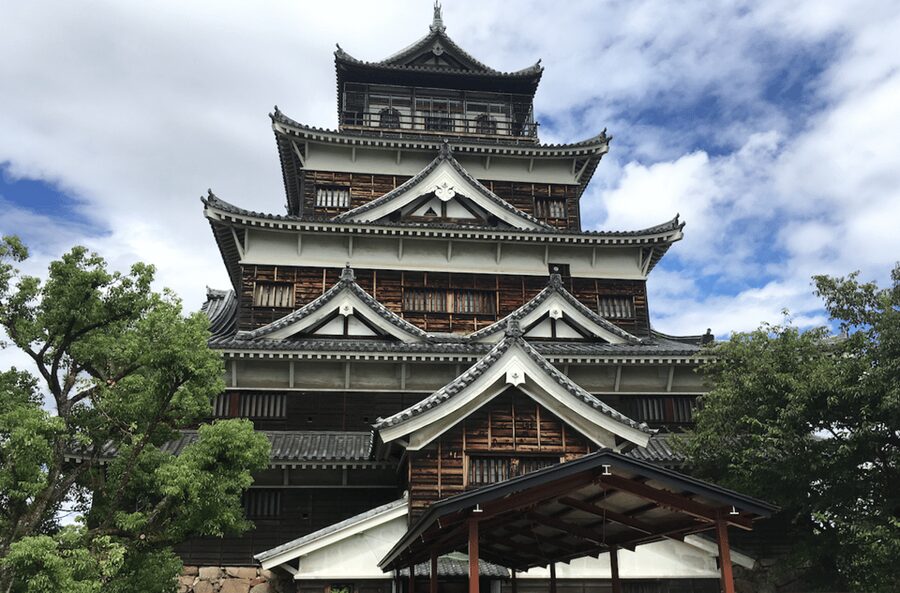
The next major stop is Hiroshima Castle. The grounds offer a look at the city before the modern era and before the events of 1945. Here, your attention shifts to samurai history and the role of the castle in Hiroshima’s earlier story.
The castle grounds are also a practical reason to choose a bike. You can reach them without a long walk from the Peace Park, and your bicycle keeps the route flowing. You get a sense of how the historic center fits together instead of visiting each attraction as an isolated stop.
The tour is designed as an overview, not an exhaustive castle visit. If you want to spend a long time inside exhibits or climb through every available section, you may need to return independently. The guided ride gives you orientation and historical background, then carries you onward to the final stop.
Shukkei-en Garden provides a quiet finish
Shukkei-en Garden is a fine place to end the ride. Built in the Edo Period, it is regarded as one of the most beautiful traditional gardens in Western Japan. The garden’s calm setting offers a sharp contrast to the earlier discussion of war and destruction.
Admission is included, so you do not need to make another payment at the entrance. You can walk through the garden, enjoy its carefully shaped views, and let the morning’s information settle in. Several guides have treated this final stop as more than a quick photo break, giving the group time to appreciate the setting.
I like this ending because it shows another side of Hiroshima. The city is not only a memorial destination. It also has older cultural traditions, gardens, shrines, rivers, and ordinary daily life. Finishing here leaves you with a broader picture of the place.
The only limitation is time. The garden is the last stop on a fixed-length tour, so you should not expect an extended private visit. If Shukkei-en is a top priority, ask your guide how much time is available and consider returning later.
How much value do you get for $70?
At $70 per person, this is not the cheapest way to rent a bicycle, but the comparison is not really bike rental versus bike rental. The price includes an English-speaking guide, a good-quality bike, helmet, bottled water, and entry to Shukkei-en Garden.
You are also paying for route planning and historical interpretation. The guide handles the sequence of sights, finds cycle-friendly paths, keeps the group together, and explains what you are seeing. For a first visit, that can save both time and mental effort.
The value is strongest if you have only one day in Hiroshima, want a guided introduction, or would rather pedal than walk between major sights. It is also useful if you want to ask questions as they arise. A self-guided bike ride may cost less, but it will not give you the same connected account of the city.
The value is weaker if you dislike group tours, already know Hiroshima well, or want to spend long stretches inside museums and individual sites. In that case, independent visits may give you more control.
The tour offers free cancellation up to 24 hours before departure and a reserve-now, pay-later option. Poor weather can lead to a new date or full refund. Those terms make it easier to book ahead while keeping your plans flexible.
Weather, clothing, and rider comfort
Bring comfortable shoes and clothes that let you pedal easily. Hiroshima can be hot, and guides have adjusted the number of breaks during very warm rides. In cooler months, the ride may feel brisk at first, especially before you get moving.
Rain does not always mean the outing will go ahead. The activity requires good weather, and the operator may cancel if conditions are poor. You will be offered another date or a full refund in that case.
The stated minimum height is 4 feet 6 inches, or 140 centimeters. Children under 12 are not permitted, and the tour is not suitable for pregnant women or people with back problems, heart problems, or other pre-existing medical conditions.
Although the route is easy by cycling standards, you should be comfortable riding a bike. The guide can help with bike setup and pace, but this is not a lesson for someone who cannot cycle.
Who will get the most from this ride?
I would choose this tour if I had one full day in Hiroshima and wanted to combine the Peace Park with the castle, shrine, and garden. It is especially well suited to people who find long city walks tiring but still want an active way to see the center.
Families with children over 12 may enjoy it, provided everyone meets the height and health requirements. The route has also worked well for solo visitors, since the small group creates an easy setting for meeting other people without the scale of a large coach tour.
It suits history-minded visitors who want a guide to explain the atomic bombing with care and answer questions. The personal stories shared by guides such as Miyu, Aimee, Awais, Ehsan, and James can add human context to the monuments.
I would think twice if your main goal is a long museum visit, private sightseeing, or a strenuous cycling workout. This is a gentle city ride with frequent stops, not an athletic excursion.
Should you book the Hiroshima bike tour?
Book it if you want an efficient, respectful introduction to Hiroshima and like the idea of moving between major sights under your own power. The flat route, small group, good bikes, and strong guide team make the $70 price reasonable for many first-time visitors.
The most useful planning choice is to pair this tour with extra time at the Peace Memorial Museum or another site of your choice. The bike ride gives you the city’s shape and a thoughtful account of its past, while an independent visit lets you slow down where your interest is strongest.
Skip it if poor weather is likely, if you cannot comfortably ride for several hours, or if you prefer to set your own pace at every stop. For the right rider, though, this is one of the clearest ways to connect Hiroshima’s memorials, older traditions, and peaceful present in one half-day outing.
FAQ
How long is the Hiroshima guided bike tour?
The tour lasts 210 minutes, or about three and a half hours.
How many people can join the tour?
The group is limited to a maximum of eight participants.
What sights does the bike tour visit?
The route includes Hiroshima’s Peace Memorial Park, the Atomic Bomb Dome, Gokoku Jinja, Hiroshima Castle, and Shukkei-en Garden.
Is the cycling route difficult?
The route is completely flat and is suitable for anyone who can ride a bike. The ride is described as relaxed, with regular stops.
What kind of bikes are available?
The operator provides Trek bikes in several sizes, plus step-through bikes, e-bikes, and child-sized bikes. Helmets and bottled water are included.
Is entry to Shukkei-en Garden included?
Yes. Admission to Shukkei-en Garden is included in the tour price.
What happens if the weather is poor?
The activity requires good weather. If it is canceled because of poor conditions, you can choose another date or receive a full refund.
Just added around Japan
- Iya Valley BROMPTON Slow Cycling Tour★ 5.0 · 28 reviews
- eTour de Matsumoto – Electric Bike Tour★ 5.0 · 16 reviews
- ONLY YOU in the Bamboo Forest! 4 hours E-bike tour with a local★ 5.0 · 45 reviews
- Pedal Adventure Kyoto’s iconic landmarks on an e-bike tour★ 5.0 · 189 reviews
- South Kyoto in a Nutshell: Gentle Backstreet Bike Tour!★ 5.0 · 225 reviews
- The Beauty of Kyoto by Bike: Private Tour★ 5.0 · 47 reviews
- Explore Hidden Alleyway with a Local Expert (Afternoon Tour)★ 5.0 · 17 reviews
- Secret Eastern Kyoto Biking Adventure★ 5.0 · 44 reviews
Hiroshima Bike Tours, compared.
Hiroshima in a Nutshell: Morning Bike Adventure
Read our review →
Hiroshima 2hr Peace Cycling Tour with Local Guide
Read our review →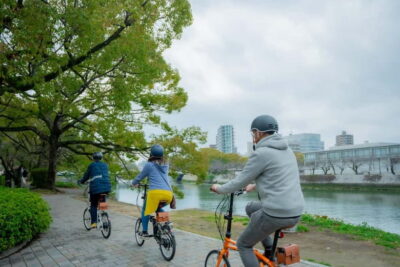

Hiroshima 3hr Peace Cycling Tour with Local Guide
Read our review →
Hiroshima Country Cycling: Explore Rural Life 1 HR from City
Read our review →

Browse the lists this tour appears in