
REVIEW · JAPAN
Nara: Bike Tour in Ancient Capital UNESCO World Heritage
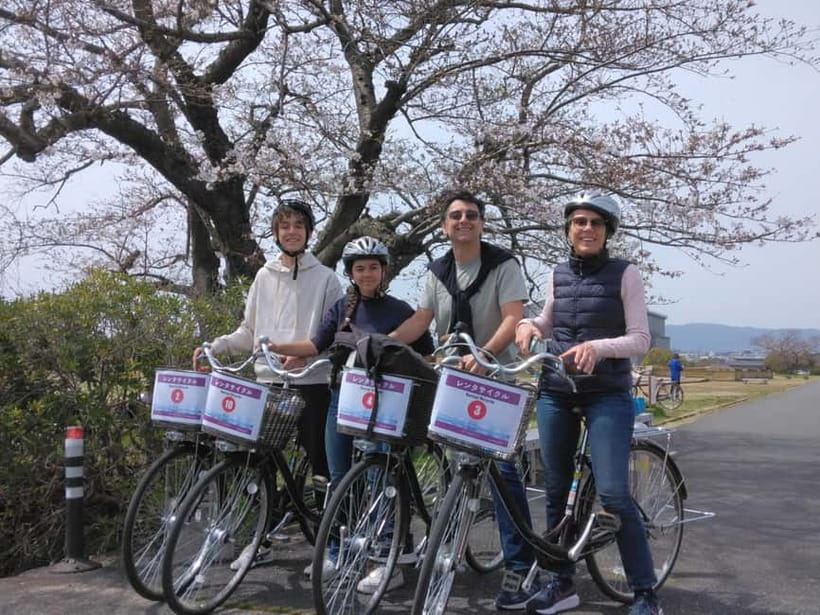
Heijo Palace is where Nara’s ancient capital makes the most sense. Instead of threading through crowds around the deer park, you pedal across a wide UNESCO World Heritage site, linking reconstructed gates, quiet gardens, excavation halls, and open palace grounds. Guide Kay brings the Nara period to life in clear English and keeps the pace comfortable.
I like the easy two-hour route and the chance to see several far-flung parts of the palace site without wearing out your shoes. I also like the small group, limited to eight, which leaves room for questions, photos, and a little flexibility. The main caution is simple: much of the site is open and exposed, and the August heat can be punishing. If you are not especially interested in early Japanese history, some reconstructed buildings and foundation remains may feel slow after the first hour.
Key points at a glance
- Suzaku Gate sets the scene: Begin at the grand entrance to Heijo Palace and get the story of Nara as Japan’s capital.
- Bicycles make the huge site manageable: You can reach the gardens, museums, tomb, palace halls, and pond in two hours.
- Kay is the guide to know: Her friendly English explanations, patience with children, and willingness to answer questions are major strengths.
- Toin Garden adds calm and beauty: Bridges, rocks, buildings, and water show how formal Japanese gardens developed.
- The archaeology is unusually direct: At the Excavation Site Exhibition Hall, remains stay preserved where they were found.
- Costume photos add a playful finish: The included Tenpyo clothing experience gives you a memorable Nara-period image.
Why a bicycle is the right way to see Heijo Palace
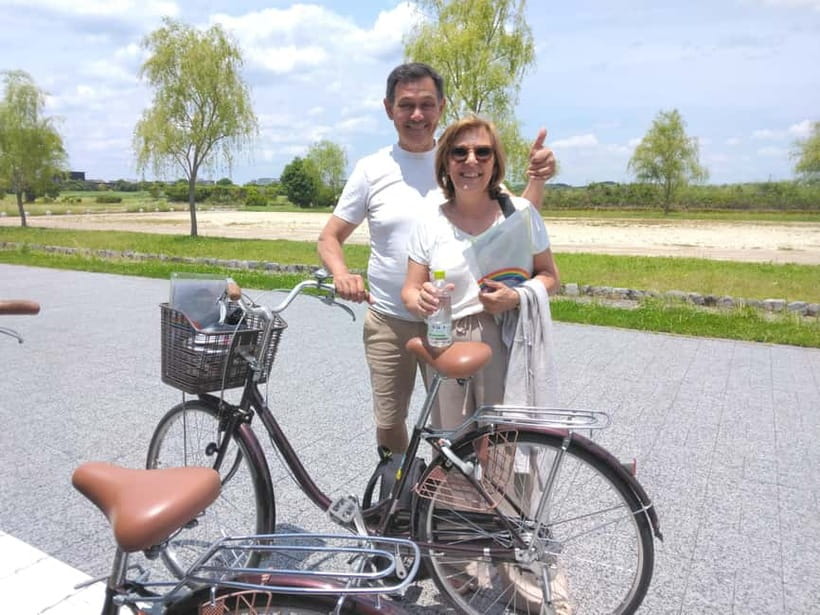
Heijo Palace is not a compact temple complex. It is a broad historic area with important sites spread across open ground. On foot, you would need to choose between moving slowly and skipping corners. The bicycle solves that problem without turning the outing into a race.
The route stays at a gentle pace, with regular stops for explanations and photos. You are not simply cycling past the monuments. You stop at the main gates, gardens, halls, museums, and ancient tomb, then ride between them while taking in the open views and natural setting.
I would call this an introduction to Nara’s political past rather than a deer-and-temple outing. The experience has little to do with Nara Park’s famous animals. It focuses on Heijyo Kyo, the eighth-century capital, and the way archaeologists and historians have reconstructed its layout.
That difference matters. If you want a quiet break from the busiest part of Nara, this is a smart choice. Several tour times may feel especially peaceful, with room to ride and very little traffic around the site. If you have already spent a full day visiting temples, the relaxed pace may be welcome.
More Historic Bike Tours in Japan
- 5-Hour Osaka Bike Tour to the Neighborhood of Osaka Castle
★ 5.0 · 319 reviews - Historical Kyoto E-Bike Tour
★ 5.0 · 181 reviews - Half-day Himeji Castle Town Bike Tour with Lunch
★ 5.0 · 81 reviews
Suzaku Gate: the proper beginning
The meeting point is the rental bike reception counter at Miharashi-Kan in Suzaku-Mon Square. Arrive 10 minutes before departure so you have time to check in, receive your bicycle and helmet, and meet the guide.
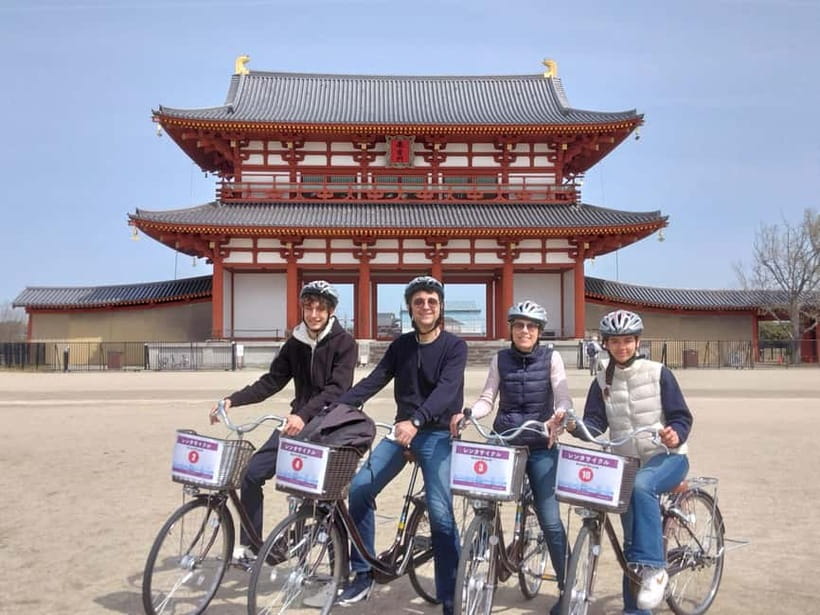
Suzaku Gate is the natural starting point. It was the main entrance to Heijo Palace, so it gives you an immediate sense of the palace’s scale and importance. The broad approach and open surroundings make it a strong place for photographs, especially if you want an image that shows the gate against the surrounding greenery.
This is also where the tour’s historical thread begins. You learn why Nara became the capital during the Nara period and how the palace functioned at the center of government. Kay is particularly good at giving enough context without turning the first stop into a lecture.
The 15-minute visit is well judged. You get the essential background, time to look around, and a chance to settle into the bicycle before moving on.
Toin Garden and the beginnings of Japanese garden design
Toin Garden, also called the East Palace Garden, provides a change of mood after the formal scale of Suzaku Gate. Here, the emphasis shifts to water, rocks, bridges, and carefully arranged buildings.
The garden was connected to the East Palace and served as a setting for state guests. That detail helps you see the space as more than a pleasant park. Its layout reflects how gardens supported court life, formal meetings, and the presentation of power.
You have about 10 minutes here, so expect a focused visit rather than a slow garden stroll. Look for the relationship between the bridges, water, rocks, and buildings. The short stop works because the garden is one part of a larger story, not the only attraction.
I especially like this section for photographers and anyone who needs a quiet pause. The water and structured views contrast with the wide palace grounds, and the stop shows an early stage in the development of Japanese garden design.
The museums reveal what the ruins cannot
The Nara Palace Site Museum and the Excavation Site Exhibition Hall help turn scattered foundations into something you can understand. A reconstructed gate is easy to picture, but archaeology explains how researchers know where buildings stood and what daily life left behind.
The Excavation Site Exhibition Hall is unusual because remains are preserved and displayed in the same condition and place where they were uncovered. You see the excavation itself rather than only polished objects behind glass. That direct connection between the ground and the museum is one of the tour’s strongest educational moments.
The Nara Palace Site Museum is the oldest museum at the Heijo Palace site. Inside, you can see ancient roof tiles, wooden tablets, and models that help explain the palace’s construction and administration. These smaller objects may seem modest, but they fill in details that large reconstructions cannot.
Allow yourself to ask questions here. Kay’s explanations are most useful when the objects need context. She can connect a tile, tablet, or model to the wider story of how the capital was built and run.
More Historic and Landmark Bike Tours in Japan:
- Kyoto: Fushimi Inari Shrine and Tofukuji Temple E-Bike Tour
★ 5.0 · 75 reviews - Shuri+Naha: Cycling Tour Explore Water Heritage with E-Bike
★ 4.9 · 22 reviews - Kyoto Early Morning E Biking Tour Fushimi Inari Kiyomizu Temple
★ 5.0 · 14 reviews - Kanazawa Ninja Temple Half Day E-bike tour
★ 5.0 · 14 reviews
Hishiage Ancient Tomb: a brief archaeological stop
Hishiage Kofun is a short stop, listed at about 10 minutes, but it adds another layer to the route. You see an ancient burial mound and grave goods, shifting the focus from the Nara-period palace to an older part of Japanese history.
The tomb helps show that the area was important long before Heijo Palace became the center of government. It also gives the ride more variety. You are not looking at gates and halls all morning. You are moving through different periods and types of archaeological evidence.
This is not a large museum visit, so keep your expectations in check. The value comes from the contrast with the palace buildings and from Kay’s explanation of what the tomb represents.
A peaceful ride around Mizukami Pond
The ride around Minakami Pond, also called Mizukami Pond, is one of the tour’s most pleasant stretches. You hear birds, feel the breeze, and may see ducks and turtles. The setting offers a welcome break from dates, architectural terms, and archaeological remains.
This is where the bicycle feels most rewarding. You can move through the site at a human pace while still covering enough ground to see the palace area as a connected place. The water also gives you a chance to slow down and notice local life rather than simply ticking off monuments.
The pond stop is especially appealing if you are traveling with a child. One family found the route a good fit for a six-year-old, with a gentle pace and extra interest from collecting stamps at local sites. The guide’s patience with children is worth noting, though every child needs to be comfortable riding a bicycle for the full outing.
Daiichiji Daigokuden and the South Gate
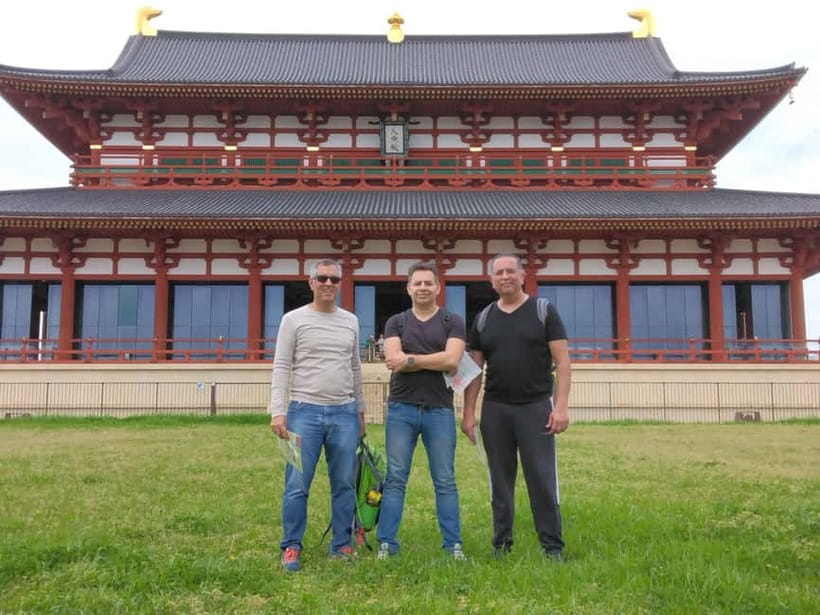
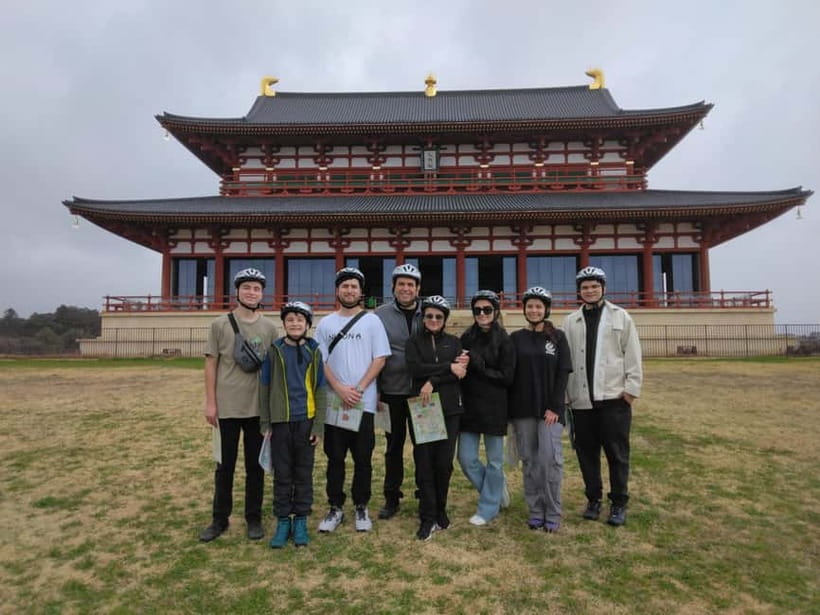
The First Imperial Audience Hall, Daiichiji Daigokuden, is one of the tour’s main architectural highlights. It is a reconstruction of a major Nara Palace building used for special ceremonies, not an everyday working hall.
Inside, look for the paintings, ornamental displays, and exhibits that explain how the building was used. The scale gives you a better idea of the ceremony and authority associated with the palace. From the grounds, you also get a broad view across the former palace site.
The tour spends about 15 minutes here, giving you enough time to see the hall without losing the route’s momentum. It is one of the places where a guide makes a real difference. Without context, a reconstructed hall can look like an attractive but isolated building. With an explanation of its ceremonial role, it becomes part of the capital’s political center.
The nearby Daigokumon, the south gate of the audience hall area, receives a shorter five-minute stop. Use it for photographs and for understanding how the gates and halls were arranged in relation to one another.
Costume time and a memorable photo
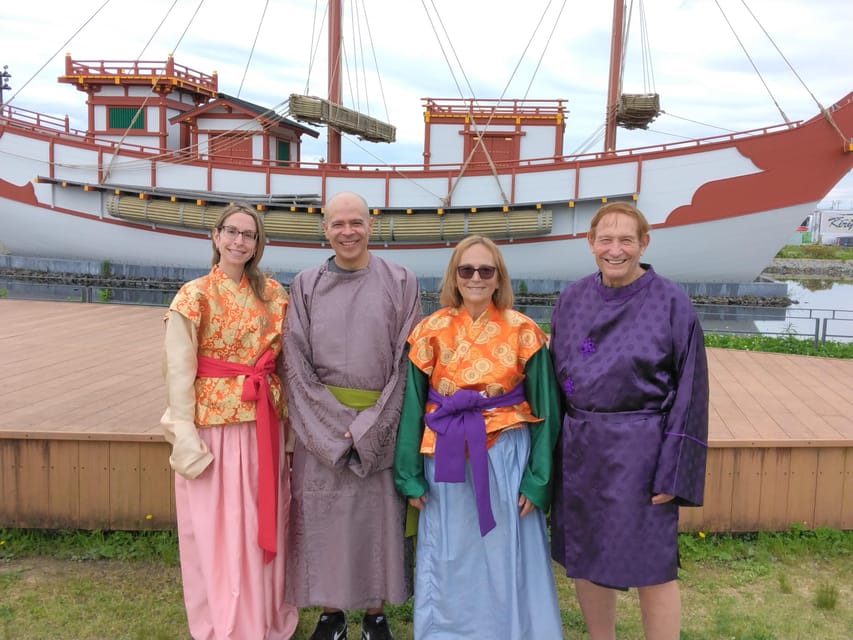
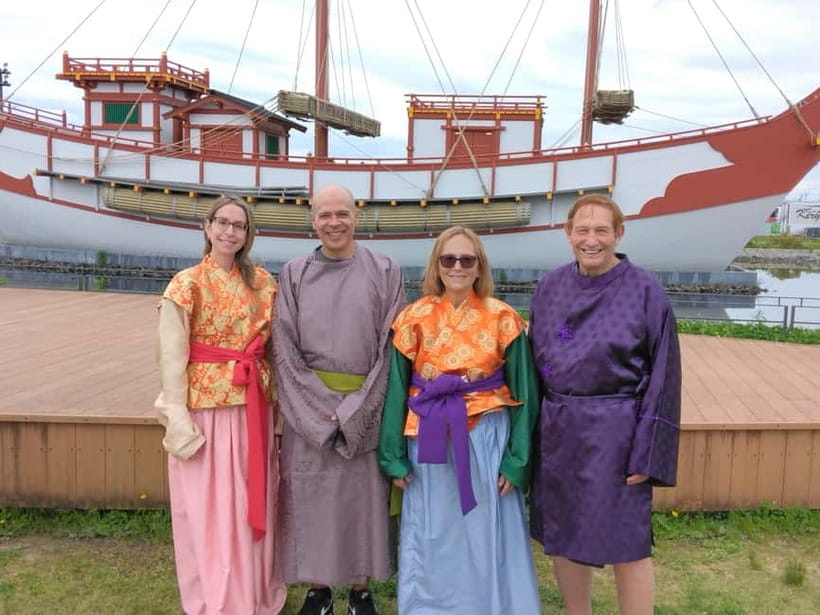
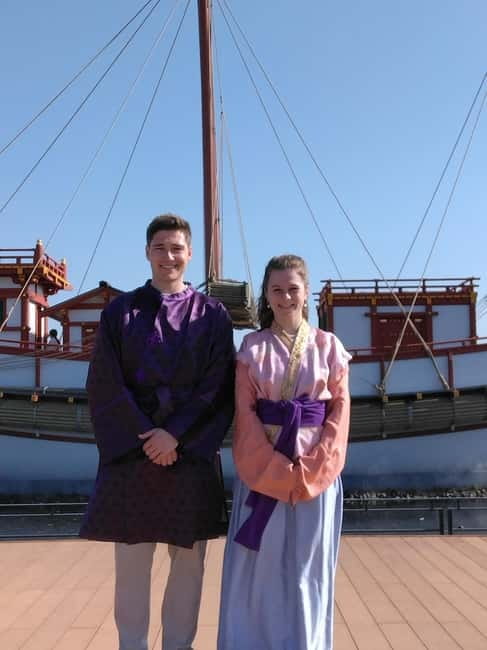
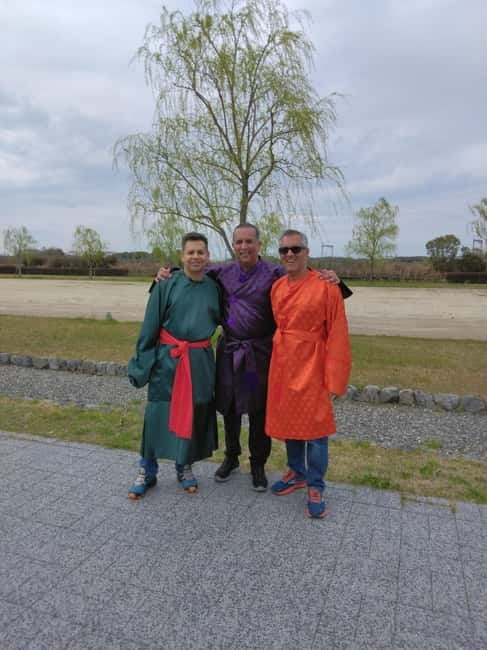
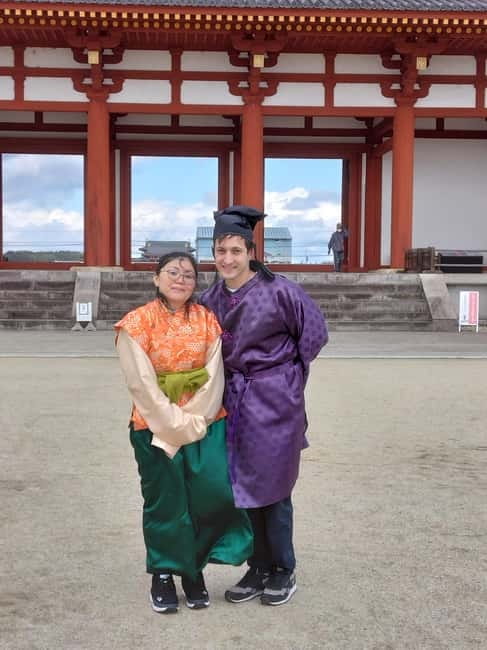
The included Tenpyo costume experience is a pleasant change from the archaeological material. You can put on traditional clothing associated with the Nara period and take photos. It is a simple activity, but it gives the tour a personal souvenir rather than leaving you with only pictures of buildings.
The costume stop is particularly useful for families and anyone who enjoys cultural photography. It also helps you imagine the people who once lived and worked at the capital, even if the experience is clearly a modern activity rather than a historical reenactment.
The supplied schedule does not assign a separate length to the costume experience, so your exact timing may depend on the day and group. If this matters to you, ask the guide when the photos will happen and allow a little flexibility.
What the two-hour timing really means
Two hours is enough for an overview, not a complete study of Heijo Palace. You visit eight named stops, with the longest individual visits around 15 minutes and several shorter photo and explanation stops. The bicycle makes that compact schedule possible.
I think the timing works best for a first visit. You get the main story, see the most important reconstructed structures, and leave with a clearer idea of the site’s scale. You can then decide if you want to return for a slower look at a museum or garden.
The main risk is feeling rushed if you want to read every display or linger at each building. The opposite risk is boredom if you have little interest in ancient Japanese culture. One hot-weather participant found the site somewhat underwhelming because many features are reconstructed buildings or foundation traces. That is a fair warning. This is an archaeology and history tour, not a sequence of intact medieval buildings.
Price, group size, and what is included
At $22 per person, the price is strong for what you receive. The fee includes the rental bicycle, helmet, guide, admissions, and traditional costume experience. You are paying for access and transport, but also for the ability to connect a large number of scattered sights in a short period.
A taxi or bus could move you to the area, but it would not give you the same easy movement inside the palace grounds. Walking would cost less if you were visiting only one or two locations, but the bicycle is better value when you want the full circuit.
The group is limited to eight people. That is small enough for questions and photo stops without requiring a private tour price. Kay has also been willing to adjust the pace and, in one case, continue slightly beyond two hours so the group could finish comfortably. Do not count on extra time, but it suggests a useful level of flexibility.
Food and drinks are not included, and there is no hotel pickup. Bike insurance is also excluded. You need to reach the meeting point on your own and be ready to ride.
Getting to Suzaku-Mon Square
The meeting point is at Miharashi-Kan in Suzaku-Mon Square, at coordinates 34.68628944048124, 135.7926401146025. The rental bike reception counter is the place to find the guide.
By bus, take the Nara Kotsu service to Suzakumon Hiroba Mae. From Kintetsu Nara Station, the ride takes about 16 minutes, followed by a five-minute walk north. From Kintetsu Yamato-Saidaiji Station’s south exit, the bus takes about 10 minutes, followed by the same five-minute walk.
From JR Nara Station’s west exit, the bus ride is about 10 minutes, then five minutes on foot. You can also walk about 20 minutes from Kintetsu Yamato-Saidaiji Station’s south exit or around 20 minutes from Shin-Omiya Station.
Plan to arrive 10 minutes early. Missing the tour is not refundable, so give yourself more time than the stated walking estimates if you are unfamiliar with the area.
Weather, riding ability, and family fit
You need to be able to ride a bicycle comfortably. The experience is not suitable for pregnant women, wheelchair users, people who cannot ride, or people with visual impairments.
Weather matters. The supplier can cancel for heavy rain, storms, or other bad conditions, with a full refund in that case. On hot days, the open site offers limited relief, so consider booking a cooler morning or a season with more comfortable riding temperatures. The route can feel wonderfully calm in mild weather and tiring in intense summer heat.
Families can do well here, especially with children who enjoy moving, animals at the pond, stamps, and costumes. Kay has shown patience with a six-year-old, but you should still judge your child’s cycling ability and attention span honestly.
The tour is also a good fit for history fans, photographers, first-time visitors to Nara, and anyone who has already seen the central temples and wants a different side of the city. It is less suitable if your main goal is deer, Buddhist sculpture, or grand intact temple interiors.
Should you book the Heijo Palace bike tour?
Book it if you want to understand Nara as Japan’s ancient capital rather than only as the home of friendly deer. The bicycle, small group, included admissions, and guide Kay’s clear English make this a good-value introduction to a large and sometimes confusing site.
Skip it if you dislike cycling, need a fully accessible outing, or expect every stop to be an original building. The palace area asks for some imagination. You will see reconstructions, excavation traces, models, and open grounds more often than perfectly preserved interiors.
For most visitors who can ride and have two free hours, I would choose it early in a Nara stay. It gives you the historical framework, gets you away from the densest crowds, and leaves you with a better sense of why this quiet stretch of open ground mattered so much.
FAQ
How long does the bike tour last?
The tour lasts two hours, with several guided stops around the Heijo Palace site.
What languages does the guide speak?
The tour is available with a live guide in English or Japanese. Guide Kay leads the English-language tours described here.
What is included in the price?
The price includes the bicycle, helmet, guide, admission fees, biking tour, and traditional Tenpyo costume experience.
Where does the tour meet?
Meet at the rental bike reception counter at Miharashi-Kan in Suzaku-Mon Square. The listed coordinates are 34.68628944048124, 135.7926401146025.
How early should I arrive?
Arrive at the rental bike reception 10 minutes before the scheduled starting time.
Can I cancel if my plans change?
You can cancel up to 24 hours in advance for a full refund. No-shows and missed tours are non-refundable. If heavy rain, storms, or other severe weather cause the supplier to cancel, you receive a full refund.
More History Tours in Japan
- 4.5-hr Kyoto Historical Highlights Bike Tour with UNESCO
★ 4.7 · 13 reviews - Kamakura Heritage Bike or Walk Tour with ex-Rickshaw guide
★ 5.0 · 11 reviews - Historical Singapore Bike Tour on Full-Sized Bicycles
★ 5.0 · 1,421 reviews - Barcelona: 2.5-Hour Bike or E-Bike Historical Tour
★ 4.5 · 1,262 reviews
Just added around Japan
- Iya Valley BROMPTON Slow Cycling Tour★ 5.0 · 28 reviews
- eTour de Matsumoto – Electric Bike Tour★ 5.0 · 16 reviews
- ONLY YOU in the Bamboo Forest! 4 hours E-bike tour with a local★ 5.0 · 45 reviews
- Pedal Adventure Kyoto’s iconic landmarks on an e-bike tour★ 5.0 · 189 reviews
- South Kyoto in a Nutshell: Gentle Backstreet Bike Tour!★ 5.0 · 225 reviews
- The Beauty of Kyoto by Bike: Private Tour★ 5.0 · 47 reviews
- Explore Hidden Alleyway with a Local Expert (Afternoon Tour)★ 5.0 · 17 reviews
- Secret Eastern Kyoto Biking Adventure★ 5.0 · 44 reviews
Japan Bike Tours, compared.
3h Tokyo E-Bike Tour: Hidden Gems, and Local Life with guide
Read our review →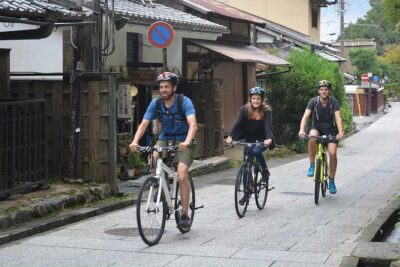
Arashiyama Bamboo Forest & Hidden Gems Bike Tour (Early Bird)
Read our review →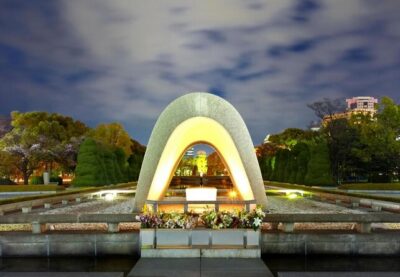
Hiroshima in a Nutshell: Morning Bike Adventure
Read our review →Browse the lists this tour appears in