
REVIEW · JAPAN
Naha: Guided E-Bike Tour of the 12 Zodiac Temples
Shuri’s small temples are easy to miss from a car or on foot. This three-hour e-bike tour links them through quiet lanes, hills, and old neighborhoods, with time for stories, photos, and short temple visits. You see a side of Naha that is easy to skip when you stick to the main sights.
I especially like the electric bikes for Shuri’s steep streets and the helmet intercom system, which lets you hear the guide while riding. The group is limited to five, and guides such as Maki, Maria, Hiro, and Reiji have been praised for clear explanations and careful attention. The main consideration is simple: you must already be able to ride a bike, and Okinawa’s sun can be strong.
Key points to know before booking
- The route reaches tucked-away temples in Shuri that are difficult to find without local help.
- Electric assistance matters on the hills and makes the ride manageable for most confident cyclists.
- Shureimon Gate provides the signature photo, with your bike adding a fun local touch.
- Helmet intercoms keep the group connected while moving through Naha traffic.
- A five-person limit allows personal attention, including help with cycling and extra suggestions at the end.
- The $95 price covers the e-bike, helmet, and guide, but not drinks, meals, or temple offerings.
Why an e-bike is the right way to see Shuri
Shuri is not flat. The former royal district rises and falls through southern Naha, and some temples sit above the main streets or behind ordinary residential lanes. Walking gives you time to look around, but covering several separate sites on foot would take more effort and leave less time for the temples themselves.
The electric bicycle solves that problem without turning the outing into a hard workout. You still pedal, but the motor helps on the climbs. I see this as the tour’s main practical advantage. You get the fresh-air feel of cycling and the range of a vehicle, without spending the whole morning managing hills.
The group size also matters. With no more than five people, the guide can check that everyone is comfortable, explain road movements, and pause when a gate, tree, or carving deserves a closer look. Several guides have been singled out for making riders feel safe and cared for, including checking hydration and adjusting the pace.
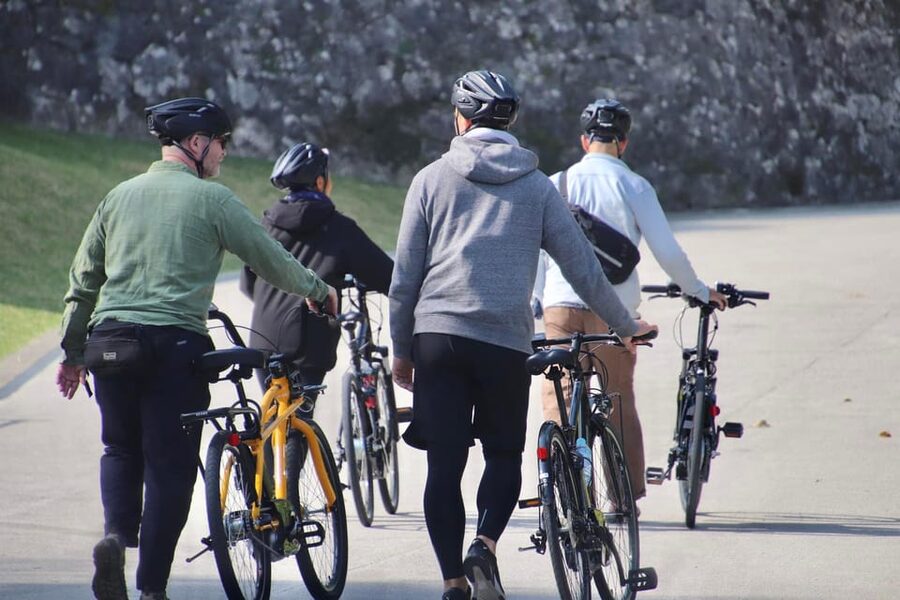
You will wear a helmet with an intercom system. That small detail is more useful than it sounds. Instead of stopping every few minutes so the guide can speak, you can hear directions and explanations while moving. It also helps the group stay together.
More E-Bike Tours in Japan
- Hidden Kyoto E-Biking tour
★ 5.0 · 1,843 reviews - Tokyo Top Highlights 3h Guided E-bike Tour
★ 5.0 · 714 reviews - 3h Tokyo E-Bike Tour: Hidden Gems, and Local Life with guide
★ 5.0 · 670 reviews
Starting near Makishi Station
The shop is about a five-minute walk from Monorail Makishi Station, next to the post office, at Daisho Building. This is a handy starting point if you are staying near Kokusai Street or arriving by monorail.
Allow a little time before departure for bike fitting and instructions. You will receive an electric bicycle and helmet, and the guide will explain how to ride with the group. Wear proper shoes and clothing that allow easy movement. Sandals and flip flops are not allowed, and you should bring water, sunscreen, and a hat.
The tour begins and ends at the same shop. That makes the outing easy to fit around other plans, since you do not need to arrange a pickup from Shuri or find your way back from a distant temple.
Shuri Kannon Temple and the first climb
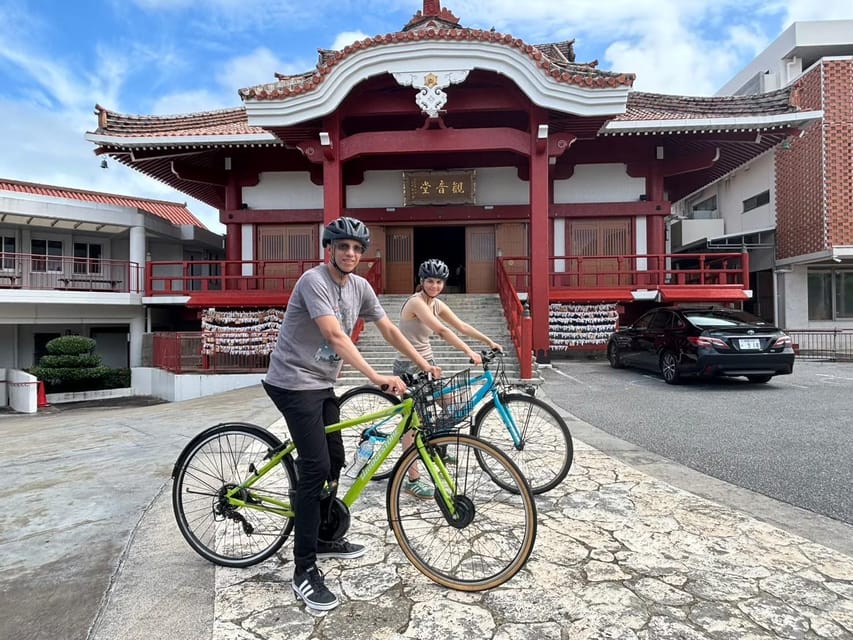
The first major stop is Shuri Kannon Temple, a guardian temple connected with the Ryukyu Kingdom. Its bright red building, decorative details, and carved work give you an early look at the visual character of Okinawan religious sites.
The temple also provides views across Shuri. That makes it a good first stop, since you begin to understand the shape of the district from above rather than seeing each site as an isolated photo stop. Your guide can explain the difference between Okinawan Buddhist and Shinto traditions as the route continues.
This is not a long museum visit. The value comes from the guide’s explanation and the setting. You see the structure, decorations, and surrounding streets, then continue by bike before the visit becomes tiring.
Ankokuji Temple and the old neighborhood feel
Ankokuji Temple is a shorter stop, listed at about five minutes, but it adds a different mood. Here you see an old gate, traditional houses, and a large gajumaru tree.
The tree is worth noticing. Gajumaru trees are a familiar sight in Okinawa, with thick trunks and spreading roots that give religious and historic sites a strong sense of age. You do not need a long visit to appreciate the contrast between the temple grounds and the nearby modern city.
This part of the route also shows why a guide is useful. The temple is not presented as a single grand attraction. It is part of the neighborhood, and the experience depends on knowing where to turn and what details deserve attention.
Same city, a different ride:
- Tokyo Guided Small-Group Biking Tour
★ 5.0 · 1,250 reviews - Bike Tour Exploring North Kyoto plus Lunch
★ 5.0 · 1,087 reviews - Tokyo Great Cycling Tour
★ 5.0 · 811 reviews - Arashiyama Bamboo Forest & Hidden Gems Bike Tour (Early Bird)
★ 5.0 · 613 reviews
Shureimon Gate, Okinawa’s best-known photo stop

Shureimon Gate is the most recognizable stop on the tour. Its red-and-gold design has become one of the symbols of Okinawa, and it gives you the classic Shuri photograph.
The planned photo with your bicycle is a nice touch. It records the way you saw the district rather than producing the same gate picture everyone takes from the same angle. The stop also breaks up the riding and gives you a clear landmark in the middle of the route.
Keep in mind that Shureimon Gate is a famous sight, so this will feel more public and familiar than the smaller temples. That is not a weakness. The tour works well because it combines the signature landmark with places you would be far less likely to find alone.
Daruma Temple and red prayer figures
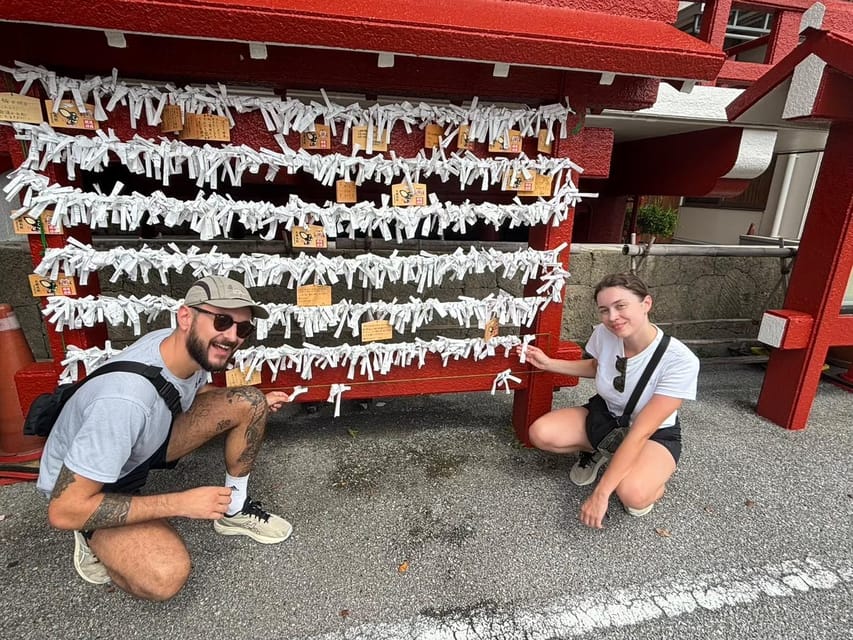
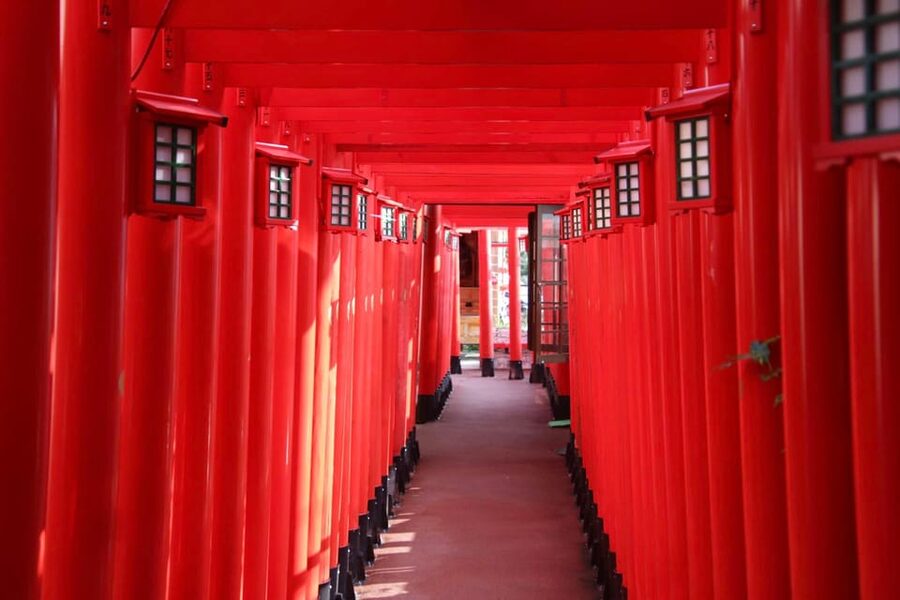
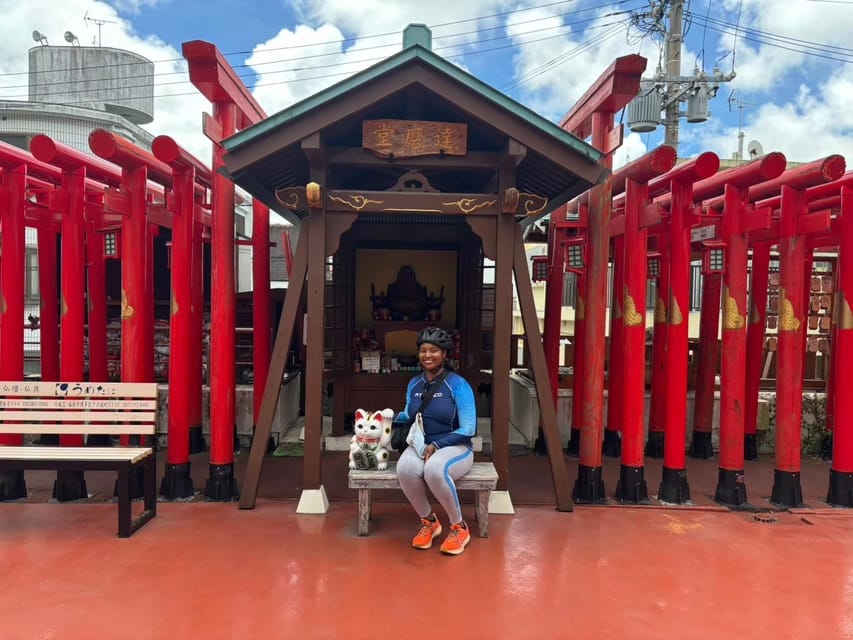
Daruma Temple is connected with prayers for health and pregnancy. Its red daruma dolls and torii gate create one of the route’s most colorful scenes.
The stop lasts about 20 minutes, enough time to look at the dolls, hear about the purpose of the temple, and take photographs without rushing through the grounds. Religious sites in Japan often have customs that are not obvious to first-time visitors, so the guide’s explanation is useful here.
Offerings are not included in the price. If you wish to give money at a temple or shrine, carry some Japanese currency separately. You are not required to make an offering, and the tour price does not cover one.
Seikoji Temple, Jizo statues, and a quieter pause
Seikoji Temple brings the pace down. It is described as a peaceful site with a sacred atmosphere, Jizo statues, and a modern building. The visit takes about 10 minutes.
The Jizo statues are a useful point of connection between religious tradition and everyday concerns. They are often associated with protection, but your guide will provide the local context for what you see at this temple. The modern structure also reminds you that religious life in Naha is not limited to old wooden buildings.
This is one of the shorter stops, so you should not expect a long formal visit. Its value is in the change of mood. After riding through streets and taking photos, you get a quiet place to slow down before continuing.
Saki Kasahigawa and the miracle spring
The route also reaches Saki Kasahigawa, a spring said to flow from the deep forest. The flowing water gives this stop a more natural feel than the temple grounds.
The spring is tied to local stories and a sense of wonder. You can pause, listen to the water, and consider how sources of fresh water shaped older communities. The tour information calls it a miracle spring, so this is best understood as a site of local belief and tradition rather than a formal attraction with extensive facilities.
Bring your own water for the ride. The spring is part of the sightseeing route, not a replacement for a drink bottle, and meals and beverages are not included.
Sogenji Temple and the former royal mausoleum
The final major sight is Sogenji Temple, a former royal mausoleum. The grounds include a gate and another large gajumaru tree, while the surrounding park is described as having clean, calm air.
This is a fitting closing stop because it brings together several themes from the ride: royal-era Okinawa, religious practice, old trees, and green pockets within Naha. You get a final chance to ask questions before cycling back to the shop.
The return ride completes the loop at Daisho Building. The supplied route details include riding sections of about 15 to 20 minutes between several stops, with visits generally lasting 5 to 20 minutes. That pattern keeps the tour moving without making it feel like a race.
What the guides add to the experience
The guide is central to the value here. The temples are not large attractions with extensive English signage, so a good explanation changes what you notice.
Guides named Maki, Maria, Hiro, Reiji, Jojo, Tiny, Sally, and Qwan have led this experience at different times. English, Chinese, and Japanese are offered. Maria has been praised for clear English and for suggesting extra places to see when time remained, while Hiro was noted for checking hydration and making sure riders were comfortable.
The guide also manages the road side of the tour. You will receive directions for riding in traffic, and the intercom helps the group stay in contact. That support is important in a city setting, though you still need to be a competent cyclist who can control a bike around other road users.
The small group format makes the experience feel more adjustable than a large coach tour. If only two people book, the route may feel especially personal. Guides have sometimes added a bakery stop or offered further sightseeing suggestions, but you should treat those as possible extras, not guaranteed parts of the tour.
Price, timing, and what you receive
At $95 per person, this is not a cheap bike rental. It is a guided cultural tour that combines equipment, route planning, local interpretation, and several hours of assistance on the road.
I think the price is reasonable if you want to see more than Shureimon Gate and do not want to work out the temple route yourself. The electric bicycle is important value, since hiring a regular bike would not give you the same help on Shuri’s hills. The helmet intercom, small group, and guide support add practical value too.
The price does not include food, drinks, or temple and shrine offerings. Plan to eat before or after the tour and carry water from the start. The activity lasts three hours, so it is long enough to feel substantial but short enough to combine with other Naha plans.
Free cancellation is available up to 24 hours before the start, and you can reserve without paying immediately. Check the available start times when booking. If the chance of rain is above 70 percent or severe weather is expected, the operator may change the plan and will contact you the day before.
Who should book this ride
I would choose this tour if you:
- Want Shuri history explained rather than simply photographed
- Are comfortable riding a bicycle in a city
- Prefer small temples and local streets to a large sightseeing bus
- Like combining light exercise with cultural stops
- Have already seen, or plan to see, the major central sights of Naha
- Want the help of a guide who can explain religious customs and local history
I would choose something else if you cannot ride a bike, dislike cycling in traffic, or want a completely passive tour. This is also not ideal for someone hoping to spend a long time at one temple. The route covers several sites, so each stop is focused and fairly brief.
Heat is another factor. Okinawa can be sunny and humid, and the tour instructions specifically recommend sunscreen, a hat, comfortable clothing, and water. The electric motor reduces the strain from hills, but it does not remove the effects of sun or cycling.
Should you book the Naha zodiac temple e-bike tour?
Book it if you want to understand Shuri as a living district rather than simply check off Shureimon Gate. The best parts are the hard-to-find temples, the electric assistance, and the guide’s ability to connect trees, gates, statues, springs, and royal sites into a readable story.
The $95 cost makes the most sense for riders who value local explanation and a carefully planned route. If you only want a quick photo at the red gate, it is more than you need. If you want three active hours, a small group, and access to corners of Shuri you might otherwise miss, this is a strong choice. Its 4.9 out of 5 score from 50 ratings fits the experience: well organized, personal, and especially rewarding for confident cyclists.
FAQ
How long does the e-bike tour last?
The tour lasts three hours, including the rides between stops and visits to temples, shrines, gates, and the spring.
Where does the tour start?
It starts at Daisho Building, at the bike shop about a five-minute walk from Monorail Makishi Station, next to the post office.
Does the tour return to the starting point?
Yes. The tour starts and ends at the same location.
What languages are available?
The live guide service is available in English, Chinese, and Japanese.
How many people can join the group?
The tour is limited to five participants.
Is an electric bicycle included?
Yes. Electric bicycle rental is included in the price.
Is a helmet provided?
Yes. A helmet with an intercom system is included.
Do I need to know how to ride a bike?
Yes. People who cannot ride a bike are not suitable for this activity.
What should I bring?
Bring comfortable shoes, water, sunscreen, and a hat. Wear clothing suitable for cycling.
Are meals, drinks, and temple offerings included?
No. Meals, drinks, and money offered at temples and shrines are not included.
Can I wear sandals or flip flops?
No. Sandals and flip flops are not allowed. Wear proper cycling shoes or other comfortable closed footwear.
What happens in bad weather?
If the chance of rain is above 70 percent or severe weather is expected, the operator may change the plan and will contact you the day before.
Just added around Japan
- Iya Valley BROMPTON Slow Cycling Tour★ 5.0 · 28 reviews
- eTour de Matsumoto – Electric Bike Tour★ 5.0 · 16 reviews
- ONLY YOU in the Bamboo Forest! 4 hours E-bike tour with a local★ 5.0 · 45 reviews
- Pedal Adventure Kyoto’s iconic landmarks on an e-bike tour★ 5.0 · 189 reviews
- South Kyoto in a Nutshell: Gentle Backstreet Bike Tour!★ 5.0 · 225 reviews
- The Beauty of Kyoto by Bike: Private Tour★ 5.0 · 47 reviews
- Explore Hidden Alleyway with a Local Expert (Afternoon Tour)★ 5.0 · 17 reviews
- Secret Eastern Kyoto Biking Adventure★ 5.0 · 44 reviews
Japan Bike Tours, compared.
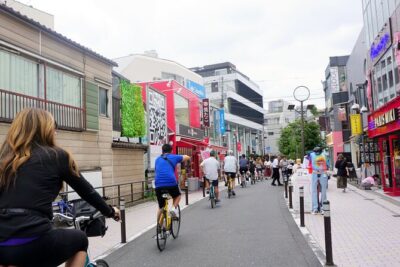

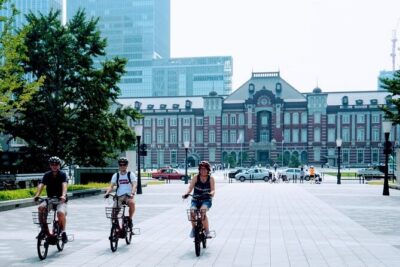
3h Tokyo E-Bike Tour: Hidden Gems, and Local Life with guide
Read our review →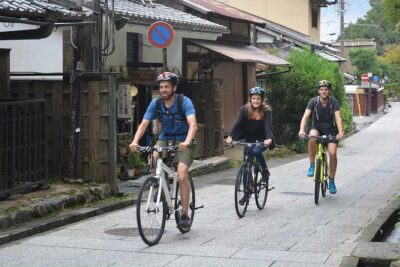
Arashiyama Bamboo Forest & Hidden Gems Bike Tour (Early Bird)
Read our review →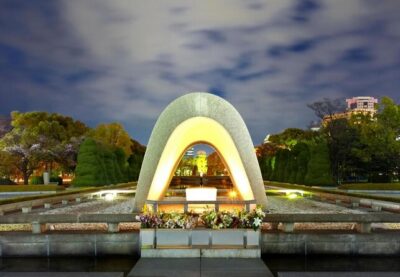
Hiroshima in a Nutshell: Morning Bike Adventure
Read our review →Browse the lists this tour appears in