
REVIEW · JAPAN
Kanazawa Half Day E-bike Tour
Kanazawa is compact enough to explore on foot, but its main sights are spread across several historic districts. This four-hour e-bike tour links them neatly, taking you from the grand Tsuzumi Gate at Kanazawa Station to geisha streets, feudal gardens, castle walls, and the old samurai quarter.
I like the way the tour combines famous places with quieter streets, and I especially like the local guidance. Guides such as Rina, Nicola, Liam, and Ti are praised for clear explanations, patient riding support, and useful restaurant advice. The main consideration is weather: rain, snow, strong winds, or unsafe roads can cancel the cycling portion, and the bikes are not recommended for riders under 145 centimeters.
Key points to know before booking
- A practical route through Kanazawa: Cover Higashi Chaya, Kenrokuen, Kanazawa Castle, Gyokusen’inmaru Garden, and Nagamachi in one outing.
- Small group size: The tour has a maximum of eight people, which gives you a better chance to ask questions and set a comfortable pace.
- Local guides make the difference: Rina, Nicola, Liam, and Ti have been singled out for their local knowledge, patience, and restaurant tips.
- A gentle ride rather than a race: The route is designed for sightseeing, with time for photos, explanations, and a tea break.
- Matcha and Wagashi are included: The traditional snack stop adds a cultural moment, not just another attraction.
- Weather matters: Poor conditions may lead to cancellation or a walking and public transportation alternative, depending on the situation.
Why an e-bike works so well in Kanazawa
Kanazawa rewards slow sightseeing, but walking between all its main districts takes time. An electric bicycle gives you more range without turning the day into an athletic test. You can move from the station area to Higashi Chaya, then across to Kenrokuen and the castle, before reaching Nagamachi later in the route.
The electric assistance is particularly useful if you have not cycled for years. One couple had not ridden for more than two decades, and their guide, Rina, let them practice before setting off. That detail matters. This is not presented as a demanding cycling expedition. It is a guided city ride with a relaxed pace.
You still need to be comfortable on a bicycle and able to manage city riding. The route uses quieter streets where possible, and one guide was praised for avoiding busy roads. Helmets are available upon request. If you are below 145 centimeters tall, the e-bike is not recommended, so check this before paying.
The group limit of eight is another practical advantage. A large bike group can feel awkward at crossings and make it hard to hear explanations. This smaller format should feel more personal, though the tour remains a shared activity and may include people you have not met.
More E-Bike Tours in Japan
- Hidden Kyoto E-Biking tour
★ 5.0 · 1,843 reviews - Tokyo Top Highlights 3h Guided E-bike Tour
★ 5.0 · 714 reviews - 3h Tokyo E-Bike Tour: Hidden Gems, and Local Life with guide
★ 5.0 · 670 reviews
Starting at Kanazawa Station and getting oriented
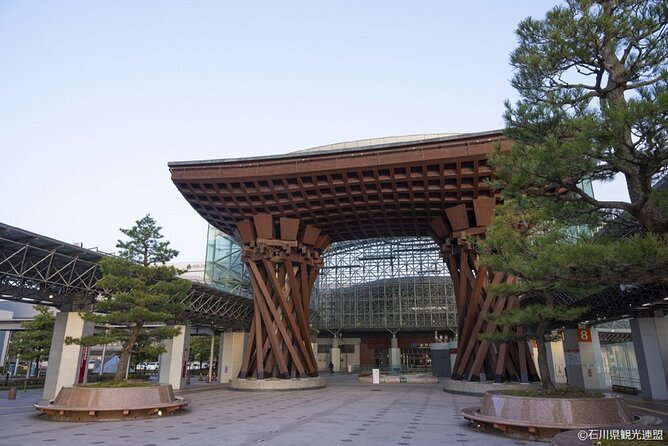
The meeting point is at the McDonald’s at 1-1-1 Kinoshinbomachi, close to Kanazawa Station. The station itself is worth a look before you ride. Its large Motenashi Dome shelters the entrance, while the wooden Tsuzumi Gate takes its shape from the drums used in traditional Japanese theater.
Beginning here gives you an immediate sense of modern Kanazawa. The station is a practical transport hub, but the gate adds a clear local identity. Your guide can also help you understand how the city’s central districts fit together before you begin covering them by bike.
Allow a little extra time to find the meeting point and settle in. Confirmation arrives when you book, but hotel pickup and drop-off are not included. The tour ends somewhere different from the starting point, so keep your plans flexible after the ride rather than arranging a tight connection directly back at the station.
Higashi Chaya and the world of the teahouses
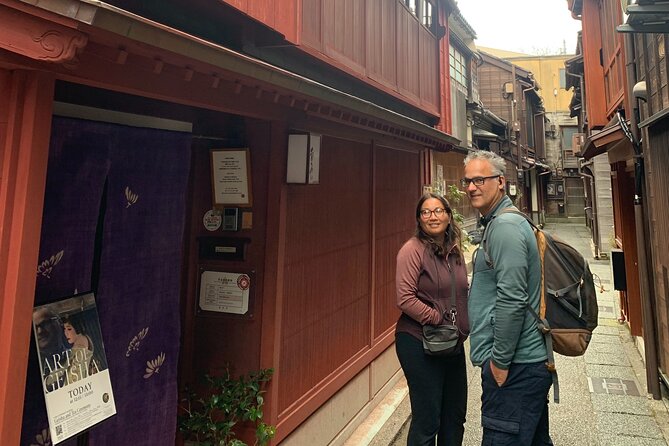
The ride to Higashi Chaya takes you into one of Kanazawa’s best-preserved historic districts. Its streets are associated with the chaya, or teahouses, where entertainment, music, and formal hospitality developed during the Edo period.
This is more than a pretty photo stop. The guide explains how the teahouse system worked, including the social structure around merchants, entertainers, and customers. Kanazawa’s commercial power helped support this culture, and the traditional facades make more sense once you understand why the district was built and maintained in this form.
I would pay attention to the contrast between the polished main streets and the smaller lanes nearby. The bicycle lets you reach the district without spending much of the morning walking from one sight to another, but you will still leave the bike for part of the visit. That is important, since the best details are found at walking speed.
Higashi Chaya can be busy, especially around its most photographed streets. Your guide’s value here is not simply pointing out the buildings. It is explaining what you are looking at and helping you see the district as a working part of Kanazawa’s past rather than a decorative film set.
Kenrokuen, Japan’s great garden of balance
Kenrokuen is one of Japan’s Three Great Gardens, and the tour gives it about an hour. That is enough for a meaningful walk, though not enough to see every path at leisure. You will want sensible shoes because the garden is best understood on foot.
The name Kenrokuen refers to the combination of six qualities valued in garden design: spaciousness, seclusion, artifice, antiquity, water, and fine views. Your guide explains the feudal thinking behind the layout, helping you notice how ponds, bridges, trees, paths, and borrowed scenery work together.
The garden changes with the seasons, but the tour is not limited to a particular time of year. The point is to understand how the Maeda rulers shaped a place that could offer both formal display and quiet retreat. I like this stop because the explanation gives structure to what could otherwise become a quick circuit of attractive views.
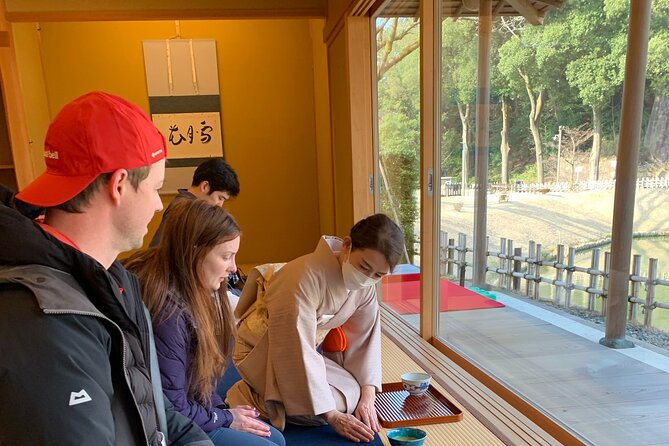
The included tea and Wagashi break is one of the strongest parts of the experience. Traditional Japanese sweets are often designed to balance the bitterness of matcha, and having both in the garden makes the pause feel connected to the setting. One guide-led visit used tea in Kenrokuen as its highlight, especially because of the view.
Do not expect a long tea ceremony unless your booking details say otherwise. The supplied information promises traditional Japanese snacks and matcha, plus a relaxing tea break. Treat it as a cultural pause within the tour, not as a formal ceremony course.
Same city, a different ride:
- Tokyo Guided Small-Group Biking Tour
★ 5.0 · 1,250 reviews - Bike Tour Exploring North Kyoto plus Lunch
★ 5.0 · 1,087 reviews - Tokyo Great Cycling Tour
★ 5.0 · 811 reviews - Arashiyama Bamboo Forest & Hidden Gems Bike Tour (Early Bird)
★ 5.0 · 613 reviews
Kanazawa Castle and the Maeda legacy
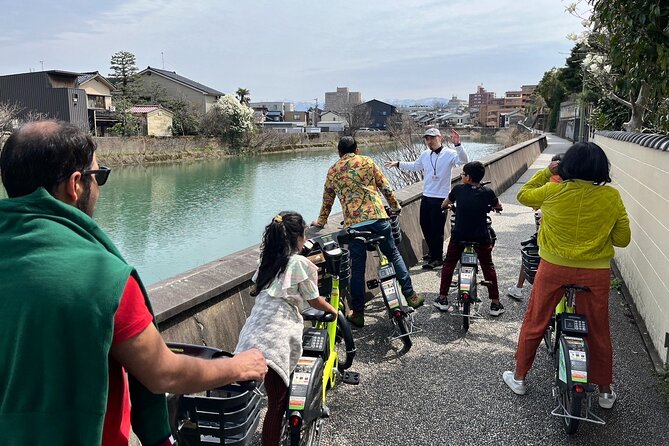
From Kenrokuen, the route continues to Kanazawa Castle, including the imposing Ishikawa Gate. The castle was the seat of the powerful Maeda clan for more than 280 years, and that long period shaped much of Kanazawa’s identity.
You will see white walls, defensive features, and carefully planned entrances. The guide explains practical details such as fire-resistant storehouses and maze-like defensive planning. These features are easy to miss if you only photograph the gate and move on.
The castle stop is relatively brief at about 30 minutes. That works well in a half-day tour because the castle grounds are close to Kenrokuen, but it also means you are getting an overview rather than a full castle visit. If you want to inspect every restored building or spend time inside exhibitions, plan a separate return visit.
Cycling between the garden and castle also helps you understand their relationship. Kenrokuen was tied to the ruling family, while the castle represented power, administration, and defense. Seeing both in one sequence gives the historical story more shape.
Gyokusen’inmaru Garden, a quieter stop
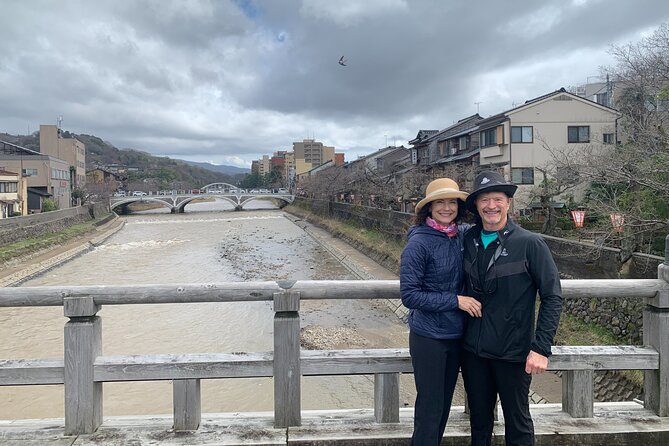
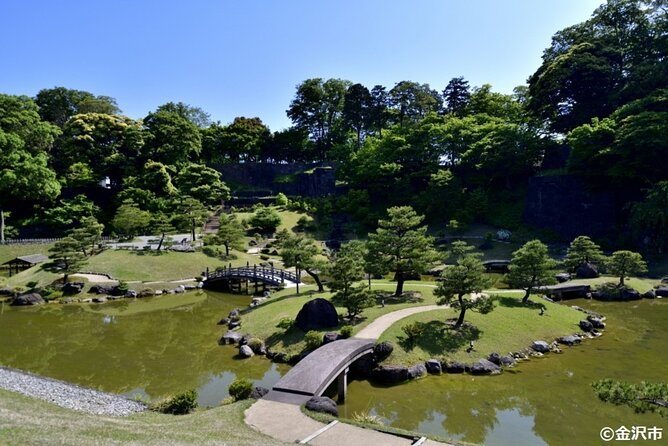
Gyokusen’inmaru Garden is set behind the castle grounds and was once a private garden for the feudal lord. It has been restored using historical records, giving you a chance to see a more intimate side of the same ruling world.
I like the contrast with Kenrokuen. Kenrokuen is the major garden, with broad recognition and a longer visit. Gyokusen’inmaru feels more contained and reflective. The stop lasts about 30 minutes, which is enough to slow down, look closely, and hear why the garden was restored.
This is exactly the sort of place where a guide adds value. Without context, it can seem like another carefully arranged garden. With an explanation of its private use and restoration, you can read it as a place shaped by status, taste, and daily life inside the castle precinct.
The entrance fee is included, as are the other stated admission charges. Still, do not assume every optional site or personal purchase during the day is covered. Extra food, drinks, and personal expenses are your responsibility.
Nagamachi and the lives of the samurai
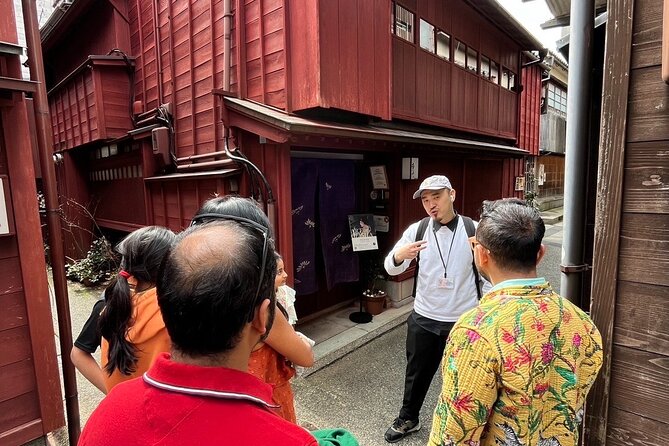
The final major district is Nagamachi, the former samurai quarter. Its stone-paved lanes, earthen walls, canals, and restrained streetscape offer a strong change from the decorative fronts of Higashi Chaya.
The district was home to Kanazawa’s elite warrior class. Your guide discusses how samurai families lived and how their role changed over time. That last point is useful because the samurai were not only battlefield figures. In a long period of peace, many became administrators, officials, and members of a structured social order.
The 30-minute stop gives you time to see the lanes and absorb the layout, but it is not a full tour of every samurai residence. If a particular house interests you, ask your guide which places are worth revisiting later.
Nagamachi is also a good final stop because it leaves you with a quieter impression of Kanazawa. The route has moved through entertainment, gardens, castle authority, and warrior life. You finish with ordinary streets and walls that still show how the city was organized.
The guides are a major part of the value
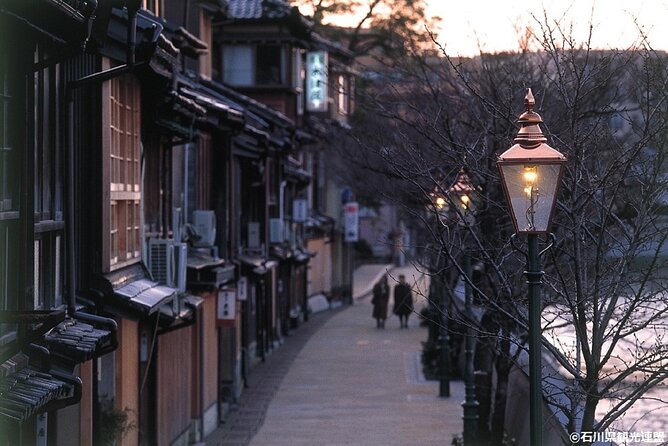
The best parts of this experience depend on who leads it. Rina is praised for patience, good communication, and a lively way of explaining the city. She has helped nervous or rusty riders get comfortable and has adjusted the route when useful.
Nicola is described as friendly and easy to follow, with strong explanations of the sites. Liam is praised for punctuality, route planning, and a calm, unhurried pace. Ti has adapted stops for a one-person weekday booking and offered advice about restaurants and later sightseeing.
That range of feedback suggests a tour culture built around personal attention rather than a fixed speech delivered at every corner. Your exact guide may differ, but you can reasonably expect local stories, answers to questions, and suggestions for food or the rest of your stay.
I would book this near the start of your time in Kanazawa if possible. The restaurant tips and orientation can help you plan later days. If you have only one full day, the tour also makes sense because it covers several major areas without requiring you to work out the transport yourself.
Weather, pace, price, and practical limits
The price is $125.50 per person. That is not a budget city tour, but it includes the electric bicycle, guide, entrance fees, matcha, and Wagashi. The value is strongest if you want an organized introduction and would otherwise pay for several admissions while piecing the route together on your own.
You are also paying for the bike and for the time saved between districts. A four-hour private rental without a guide would cost less in some destinations, but it would not give you the history, route planning, or local recommendations included here.
The main risk is the weather. Cycling tours may be canceled because of rain, snow, strong winds, or unsafe road conditions. In poor weather, the operator may offer another date or a full refund. On at least one rainy outing, the group continued by bus and on foot, so a non-cycling version may sometimes be possible, but you should not assume that every booking will operate this way.
Free cancellation is available if you cancel at least 24 hours before the start time. Changes or cancellations inside that window are not accepted for a refund. Most people can participate, but remember the height guidance and the basic need to ride an e-bike safely.
Who should book this Kanazawa ride?
I would choose this tour if you want a broad first look at Kanazawa and prefer explanation to simply checking off sights. It suits couples, families with suitable riders, and solo visitors who like a small group but do not need a private guide.
It is especially useful for anyone with one full day in the city. You can see the main districts, learn how they connect, and return later to the places that deserve more time.
I would think twice if you dislike bicycles, need a completely fixed route, or want long interior visits at the castle and samurai residences. The tour gives you a well-planned overview, not unlimited time at every site. Wet weather is another real concern, particularly if cycling is the main reason you are booking.
Should you book it?
Book it if you want to cover Kanazawa’s main historic districts in four hours, enjoy local stories, and like the freedom of an e-bike without planning the route yourself. The tea and Wagashi stop, the small group limit, and the guide’s food advice add value beyond simple transportation.
Skip it if you are uncomfortable riding, shorter than 145 centimeters, or determined to explore each garden and historic building at a slow, independent pace. For most first-time visitors with suitable weather, this is a practical and personable way to get your bearings and see how Kanazawa’s geisha, garden, castle, and samurai districts fit together.
FAQ
How long does the Kanazawa e-bike tour last?
The tour lasts approximately four hours.
What places are included?
The route includes Kanazawa Station, Higashi Chaya District, Kenrokuen Garden, Kanazawa Castle and Ishikawa Gate, Gyokusen’inmaru Garden, and the former samurai quarter of Nagamachi.
Is the electric bicycle included in the price?
Yes. Electric bicycle rental is included.
Is a guide included?
Yes. A local guide leads the tour. Guides named in the available tour information include Rina, Nicola, Liam, and Ti.
Are admission fees included?
Yes. The stated entrance fees are included, including admission for the gardens listed in the route.
Are matcha and Japanese sweets included?
Yes. Traditional Japanese snacks and matcha are included.
Where does the tour start?
The meeting point is at McDonald’s, 1-1-1 Kinoshinbomachi, Kanazawa, Ishikawa 920-0858, Japan.
Does the tour end at the starting point?
No. The activity ends at a different location, so check the end details before making plans afterward.
What happens if the weather is poor?
The tour may be canceled because of rain, snow, strong winds, or unsafe road conditions. If the operator cancels, you may be offered another date or a full refund. Some outings have operated with walking and public transportation instead of cycling.
Can children or shorter riders use the e-bikes?
The e-bike is not recommended for riders under 145 centimeters. The tour information also says most people can participate, but it remains a group cycling activity.
How many people can join the tour?
The maximum group size is eight people.
Can I cancel for a full refund?
Yes, if you cancel at least 24 hours before the start time. Cancellations or changes made less than 24 hours before the start time are not eligible for a refund.
Just added around Japan
- Iya Valley BROMPTON Slow Cycling Tour★ 5.0 · 28 reviews
- eTour de Matsumoto – Electric Bike Tour★ 5.0 · 16 reviews
- ONLY YOU in the Bamboo Forest! 4 hours E-bike tour with a local★ 5.0 · 45 reviews
- South Kyoto in a Nutshell: Gentle Backstreet Bike Tour!★ 5.0 · 225 reviews
- Pedal Adventure Kyoto’s iconic landmarks on an e-bike tour★ 5.0 · 189 reviews
- The Beauty of Kyoto by Bike: Private Tour★ 5.0 · 47 reviews
- Explore Hidden Alleyway with a Local Expert (Afternoon Tour)★ 5.0 · 17 reviews
- Secret Eastern Kyoto Biking Adventure★ 5.0 · 44 reviews
Japan Bike Tours, compared.

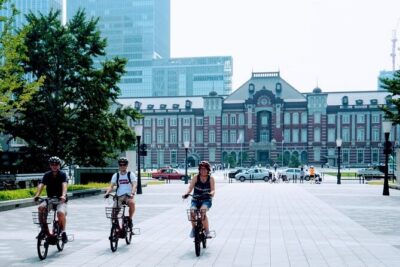
3h Tokyo E-Bike Tour: Hidden Gems, and Local Life with guide
Read our review →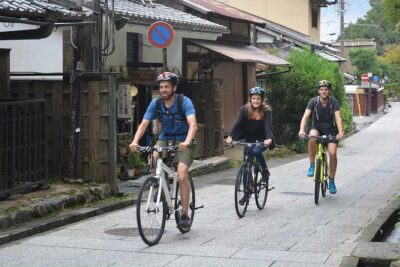
Arashiyama Bamboo Forest & Hidden Gems Bike Tour (Early Bird)
Read our review →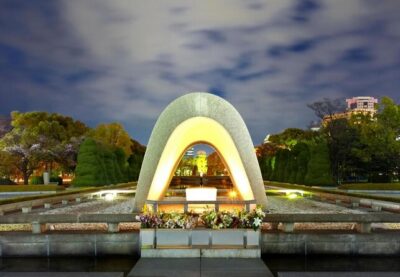
Hiroshima in a Nutshell: Morning Bike Adventure
Read our review →Browse the lists this tour appears in