
REVIEW · JAPAN
Sakurajima Century Lava Climb Journey with E-bike
Sakurajima is not just a dramatic cone across the bay from Kagoshima. It is a living volcano, a place where old lava, buried roads, orchards, ash, and daily island life sit side by side. This three-hour e-bike ride gives you a close look at that story, with a climb to Yunohira Observatory and several quiet stops along the way.
I like the small group of no more than six and the patient guiding style of Rento, who has adjusted the pace for first-time e-bike riders, hot weather, and different fitness levels. I also like the mix of volcano science and ordinary island details, including local agriculture, Taisho lava traces, and a Kagoshima snack with a drink at the viewpoint.
The main caution is the uphill ride. Electric assistance helps a lot, but this is still a workout, and wet black sand can make parts of the path slippery. You need to be comfortable on a bicycle, and riders must be at least 145 centimeters tall.
Key points
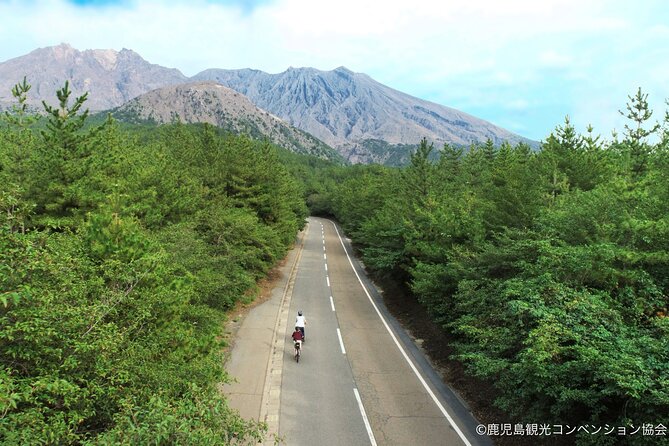
- Ride to Yunohira Observatory: Reach Sakurajima’s highest point on a pedal-assisted e-bike and take in broad views around Kagoshima.
- Learn the island’s eruption story: Follow traces of the major Taisho eruption and see how volcanoes have shaped the island.
- Small-group attention: With a maximum of six people, the guide can slow down for questions, photos, and rest stops.
- A good first e-bike outing: Rento has helped people who had never used an e-bike before, though the climb still takes effort.
- Quiet island details: The route includes scenic roads, orchards, agricultural sites, and two less-publicized stops.
- Useful weather planning: Sudden rain, wind, glare, and ash are all possible, so gloves, sunglasses, and weather-ready clothing matter.
Why an e-bike is a smart way to see Sakurajima
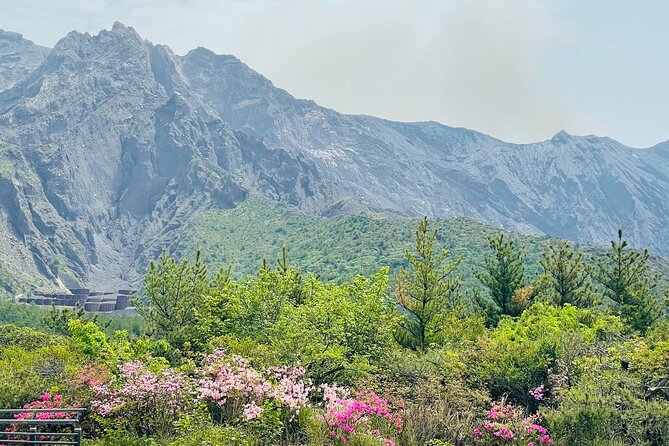
The e-bike changes the shape of this visit. A bus can get you to a viewpoint, but it does not give you the same sense of distance between the lava fields, orchards, roads, and slopes. Walking would offer even more time outside, but the uphill section would be much harder in a three-hour outing.
You still pedal, so do not treat the electric motor as a chauffeur. The climb can feel challenging, especially in warm weather, but the motor takes much of the sting out of the slope. Several people who had never ridden an e-bike before found it manageable after a short introduction and some practice.
I would call this a moderate active experience rather than a sightseeing ride with almost no effort. The way down is easier, but you should arrive ready to ride for much of the morning or afternoon. Comfortable shoes are essential, and water is worth carrying even though a drink is provided during the tour.
The guide uses regular pauses well. They are not simply breaks from pedaling. They give you time to hear about the volcano, ask questions, take pictures, and look at how the island is used. That rhythm makes the ride more approachable for mixed abilities, though a faster cyclist may need to accept a slower pace.
More E-Bike Tours in Japan
- Hidden Kyoto E-Biking tour
★ 5.0 · 1,843 reviews - Tokyo Top Highlights 3h Guided E-bike Tour
★ 5.0 · 714 reviews - 3h Tokyo E-Bike Tour: Hidden Gems, and Local Life with guide
★ 5.0 · 670 reviews
Starting near the Sakurajima Ferry Terminal
The meeting point is the Sakurajima Visitor Center, about an eight-minute walk from the Sakurajima Ferry Terminal. That makes the tour fairly easy to fit into a day based in Kagoshima, provided you allow time to reach the meeting point before the start.
The first twenty minutes are devoted to a safety briefing. You receive your e-bike and helmet, learn how the electric assistance works, and get oriented before setting off. This is especially useful if you have never used an assisted bicycle. A little practice at the beginning can make the uphill ride feel far less uncertain.
The tour is offered in English and Japanese. With only six places, the guide can explain the route without trying to manage a large crowd. Rento has been praised for being careful about safety, stopping when people need a rest, and taking time to explain the island rather than rushing from one photo stop to the next.
Bring your passport or another form of identification, along with travel insurance and weather-appropriate clothing. A small backpack is useful, and bags can be attached to the bicycles for carrying valuables. Alcohol and drugs are not permitted.
The first ride and Sakurajima’s volcanic story
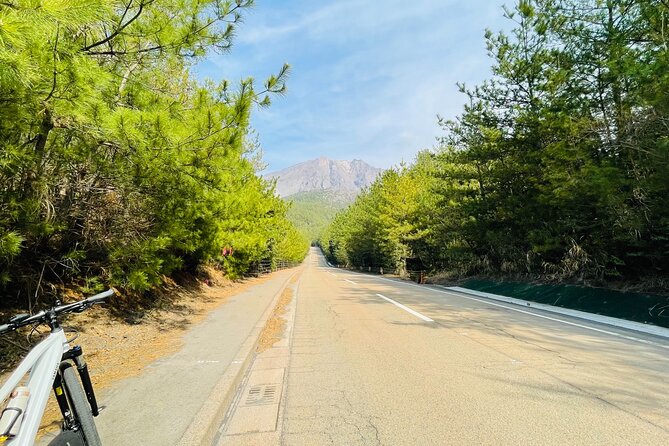
After the briefing, the initial guided ride lasts about ten minutes. It is a short opening section, but it serves an important purpose. You get used to the bike, the road, and the pace before the climb becomes more serious.
The subject here is not volcano trivia for its own sake. Sakurajima has a major eruption story that changed the shape and character of the island. The tour focuses on the impact of the major twentieth-century Taisho eruption and the traces still visible around the route.
That makes the ride more meaningful than a simple trip to a lookout. You are not only pointing a camera at a smoking volcano. You are learning how eruptions affect roads, farmland, settlements, and the way people understand their home.
The guide also connects the geology to what you see beside the road. Quiet agricultural sites and orchards help show that Sakurajima is not an empty volcanic monument. It is an inhabited place where people continue to work around the conditions created by the volcano.
Lava traces and the stops along the climb
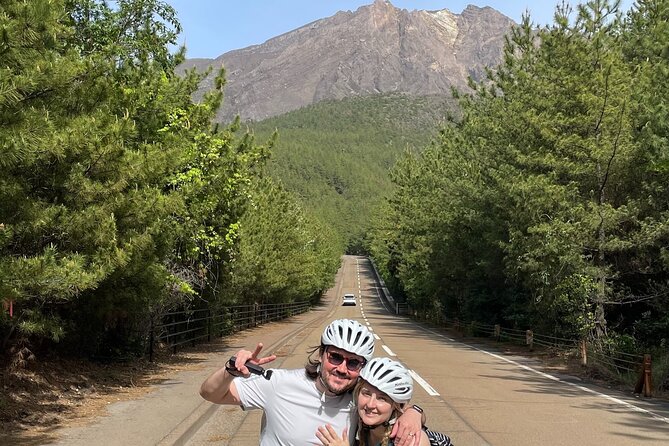
The route includes a guided stop of about ten minutes, followed by another viewpoint pause of similar length. The exact details of the less-publicized stops are not fully set out in advance, which is part of their appeal. They give the guide room to respond to the day’s conditions and point out places that a standard bus ride may pass without explanation.
You can expect photo opportunities and scenic views along the way. The value is in the pauses. Instead of trying to absorb every fact while pedaling uphill, you have time to look closely at volcanic ground, hear how the eruption affected Sakurajima, and ask about what you are seeing.
One of the strongest parts of the outing is the connection between lava and daily life. The route brings you past traces of Taisho lava and local agricultural areas, showing two sides of the island at once. The volcano is powerful, but it is also part of the setting for orchards, roads, and homes.
The ride does require care. Wet black sand has spread onto parts of a pathway, and it can cause a bicycle to skid. Even experienced cyclists may not expect that surface. Slow down near loose or wet material, follow the guide’s line, and ask for a warning before entering any section that looks unusual. This is the clearest safety concern to keep in mind.
Same city, a different ride:
- Tokyo Guided Small-Group Biking Tour
★ 5.0 · 1,250 reviews - Bike Tour Exploring North Kyoto plus Lunch
★ 5.0 · 1,087 reviews - Tokyo Great Cycling Tour
★ 5.0 · 811 reviews - Arashiyama Bamboo Forest & Hidden Gems Bike Tour (Early Bird)
★ 5.0 · 613 reviews
Reaching Yunohira Observatory
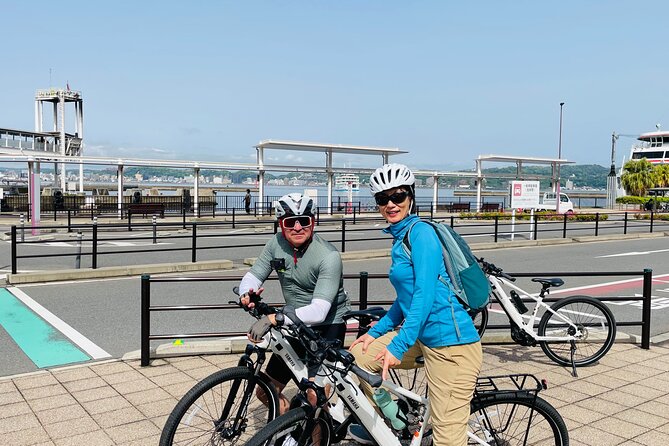
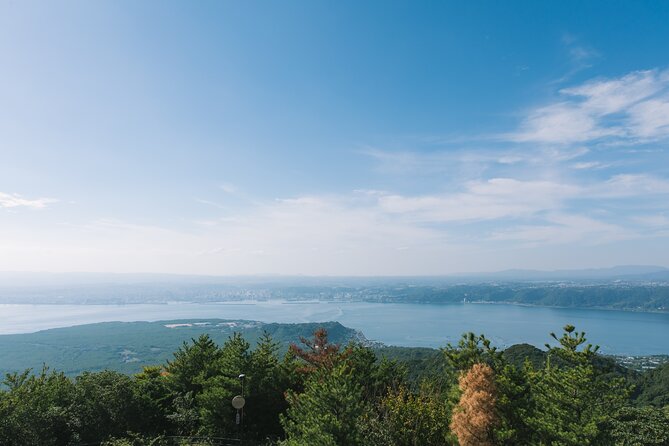
The main reward comes at Yunohira Observatory, reached after the uphill ride. You get around thirty minutes here for a guided visit, photos, free time, and a little shopping.
The lookout is described as the highest point on Sakurajima, so the views are a central reason to choose this route. From here, you can admire Kagoshima and the surrounding area from a high volcanic position rather than from sea level or a city street.
Visibility will depend on the weather, of course. On a clear day, the wide view gives the ride a strong payoff. On a hazier or ash-filled day, the volcanic setting still matters, but the panorama may not be as crisp as you hoped. This is an outdoor experience, not a guaranteed clear-view excursion.
The guide explains the view and the volcano’s eruption history at the lookout. You also receive a Kagoshima snack and drink, a small but welcome touch after the climb. Several people particularly appreciated this pause because it combines local flavor, shade or rest time, and a chance to let the legs recover.
You may see signs of volcanic activity during the ride. One outing included two eruptions viewed from the route, but that is a possibility, not something to book this tour expecting. Sakurajima’s character comes from its active setting, yet volcanic visibility and activity are naturally beyond the guide’s control.
The return through orchards and quieter roads
The return ride is much easier physically. The route includes two secret stops, each with about ten minutes for sightseeing and a break. Since these locations are not specified in detail, you should think of them as guide-led discoveries rather than fixed headline attractions.
This part of the experience helps balance the major viewpoint. On the way up, your attention is on the climb and the volcano. On the way down, you can look around more freely, notice the roads and farms, and talk with the guide about island life.
The route may include local orchards and agricultural sites. That detail is important because it gives the ride a more grounded feel. You are not simply circling a famous natural feature. You are seeing how people use volcanic land and how the island functions beyond its postcard views.
The tour ends back at the Sakurajima Visitor Center. The full experience lasts three hours, so you still have time afterward to explore more of Sakurajima, return toward Kagoshima, or visit the ferry area.
How good is the guiding?
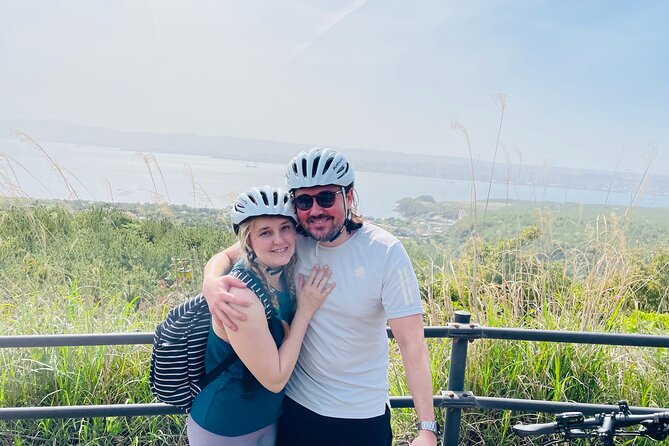
The guide is a major part of the value here. Rento is repeatedly described as friendly, patient, safety-conscious, and good at explaining volcanoes and Sakurajima’s past in clear terms. He has adjusted the pace for solo participants, waited for someone arriving by the island tourist bus, and planned extra pauses on hot days.
That flexibility matters more on a bicycle than on a standard walking tour. A guide who only talks at fixed stops cannot always see when you need water or a slower pace. Here, the repeated breaks make the ride less intimidating, especially for a first-time e-bike user.
The experience is also personal because the group is so small. With up to six people, you can ask questions without shouting across a crowd. If you are the only participant that day, the pace may be especially easy to tailor, although you should not assume every departure will be private.
The English and Japanese language options make the tour accessible to a wider range of visitors. The quality of the experience still depends on communication, your comfort asking questions, and the conditions on the day, but the format is designed for conversation rather than a scripted bus commentary.
Price, timing, and practical value
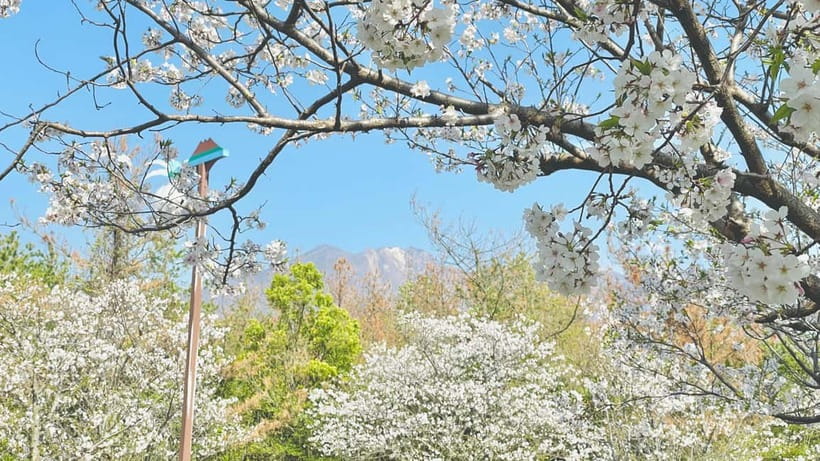
At $102 per person, this is not the cheapest way to see Sakurajima. The price includes the guide, e-bike, helmet, a Kagoshima snack, and a drink, but the bigger value is the combination of transport, interpretation, exercise, and access to a small-group experience.
I think the price is fair if you want more than a lookout photograph. You are paying for three hours of guided movement through the island, a climb that would be harder without electric assistance, and explanations that connect the lava traces to the island’s people and agriculture.
It is less compelling if you only want a quick view or do not enjoy cycling. A bus or independent visit may suit you better if your priority is comfort, flexibility, or minimal physical effort. This tour asks you to participate.
The booking terms reduce some of the risk. You can reserve now and pay later, and cancellation is free up to 24 hours before the activity for a full refund. In bad weather, the decision is made by the day before, and cancellation with a refund is provided when conditions make the experience unsuitable.
Sudden rain and wind are possible. A windbreaker or other rain protection, slip-resistant gloves, and sunglasses are useful. Sunglasses help with glare and may also protect your eyes if ash is falling. The tour provider specifically advises preparing for those conditions rather than assuming the weather will stay calm.
Who should book this ride?
I would choose this for an active visitor who wants to understand Sakurajima rather than simply photograph it. It is a good fit if you can ride a bicycle, are comfortable with an uphill effort, and like asking questions along the way.
First-time e-bike riders can manage it, especially with the safety briefing and regular stops. Still, you should not book it if you cannot ride a bike, and the minimum height is 145 centimeters. Children or shorter riders who do not meet that requirement are not suitable for this activity.
The tour also suits couples, solo visitors, and small groups who prefer a personal guide. It is particularly useful for someone who has limited time on Sakurajima but wants a stronger sense of the island’s eruption story than a short stop at a lookout would provide.
I would be more cautious about booking it if you have concerns about balance, slippery surfaces, intense heat, or sustained uphill riding. The electric motor helps, but it does not remove all physical demand. Ask yourself if you want an active morning with several pauses, not a relaxed vehicle excursion.
Should you book the Sakurajima Century Lava Climb?
Book it if your idea of a good volcano visit includes pedaling through the setting, stopping to understand what you see, and earning a broad view from Yunohira Observatory. The small group, patient guiding, local snack, and quiet agricultural sections make this more personal than a basic viewpoint transfer.
Skip it if you cannot ride, dislike hills, or want a guaranteed clear panorama. Also take the wet black sand warning seriously and bring suitable clothing for wind, rain, glare, and ash.
For the right person, $102 buys more than bike hire. It buys context, company, and a closer look at how Sakurajima’s eruptions continue to shape an inhabited island.
FAQ
Where does the Sakurajima e-bike tour begin?
The tour begins at the Sakurajima Visitor Center, about an eight-minute walk from the Sakurajima Ferry Terminal.
How long does the experience last?
The guided e-bike experience lasts three hours.
How high does the route climb?
The ride goes to Yunohira Observatory, described as the highest point on Sakurajima.
Is the tour available in English?
Yes. Live guiding is available in English and Japanese.
How many people can join the tour?
The group is limited to six participants.
Is an e-bike and helmet included?
Yes. The guided e-bike tour includes an e-bike rental and helmet.
What should I bring?
Bring your passport or another form of identification, comfortable shoes, water, travel insurance, and clothing suited to the weather. A windbreaker, slip-resistant gloves, sunglasses, and a small backpack are also recommended.
Can I cancel if the weather is bad?
You can cancel up to 24 hours in advance for a full refund. In bad weather, the decision is made by the day before, and a refund is provided if the experience is cancelled.
Just added around Japan
- Iya Valley BROMPTON Slow Cycling Tour★ 5.0 · 28 reviews
- eTour de Matsumoto – Electric Bike Tour★ 5.0 · 16 reviews
- ONLY YOU in the Bamboo Forest! 4 hours E-bike tour with a local★ 5.0 · 45 reviews
- Pedal Adventure Kyoto’s iconic landmarks on an e-bike tour★ 5.0 · 189 reviews
- South Kyoto in a Nutshell: Gentle Backstreet Bike Tour!★ 5.0 · 225 reviews
- The Beauty of Kyoto by Bike: Private Tour★ 5.0 · 47 reviews
- Explore Hidden Alleyway with a Local Expert (Afternoon Tour)★ 5.0 · 17 reviews
- Secret Eastern Kyoto Biking Adventure★ 5.0 · 44 reviews
Japan Bike Tours, compared.
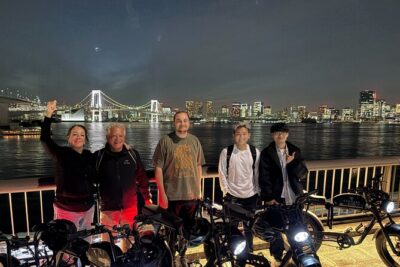
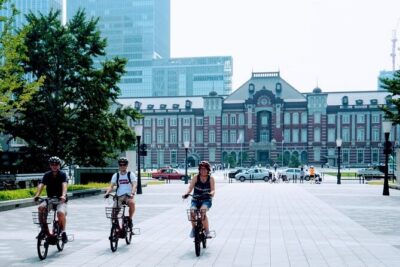
3h Tokyo E-Bike Tour: Hidden Gems, and Local Life with guide
Read our review →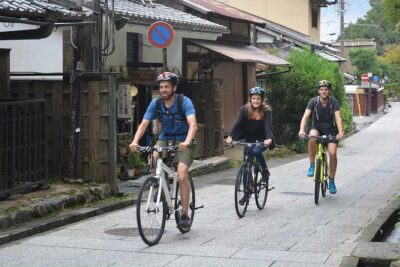
Arashiyama Bamboo Forest & Hidden Gems Bike Tour (Early Bird)
Read our review →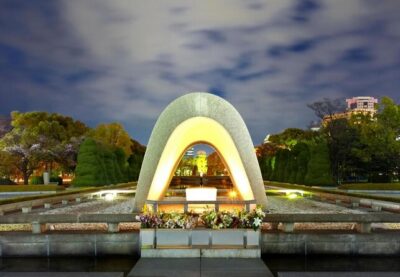
Hiroshima in a Nutshell: Morning Bike Adventure
Read our review →Browse the lists this tour appears in