
REVIEW · BERLIN
Berlin: Green City Guided Bike Tour
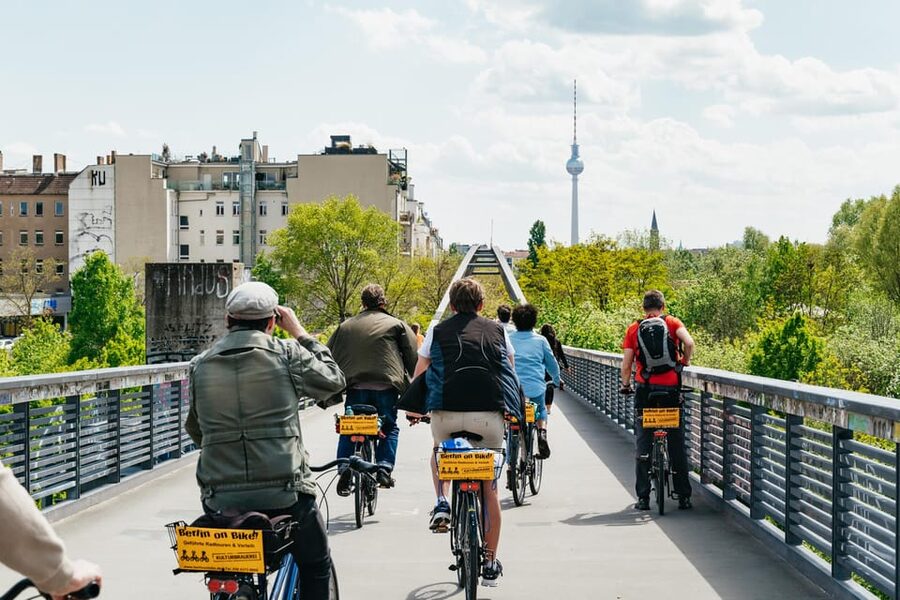
Berlin’s green side is easy to miss from a tour bus. This three-hour bike ride takes you from the old Kulturbrauerei through Mauerpark, along the Panke River, and into parks that feel far removed from central Berlin. You’ll see WWII bunkers, creative reuse of old factories, and parts of the former Wall story that are less polished than the usual sights.
I like the relaxed pace and the mix of nature with urban change. I also like that you can choose from a large fleet of bikes, with baskets, sunscreen, trouser clips, and rain ponchos available. The main drawback is that this is not a greatest-hits tour of Berlin. If you want the Brandenburg Gate, Museum Island, or Checkpoint Charlie, choose another ride.
- Panke River route: Follow a waterway tied to Berlin’s efforts to bring nature back into the city.
- Mauerpark and Humboldthain: See a lively public meeting place and a park with a WWII bunker and city views.
- Northern Berlin parks: Visit Bürgerpark Pankow and Schönholzer Heide for a quieter side of the capital.
- Urban change explained: Hear about sustainable building, reused factories, street art, gentrification, housing, culture, and green space.
- Easy bike setup: Select a suitable bicycle on arrival. Helmets and gloves are available on request.
- Useful flexibility: The $41 price includes the bicycle, and you can cancel up to 24 hours before departure for a full refund.
A greener route through Berlin’s northern neighborhoods
This tour begins at Kulturbrauerei in Prenzlauer Berg, a former brewery complex now used for culture and events. It is a fitting starting point. You are not simply leaving from a random bike shop. You begin in a part of Berlin where old industrial buildings, new businesses, apartments, nightlife, and public culture sit close together.
From here, the route heads northeast toward Gesundbrunnen. The ride is designed for seeing rather than racing. You will stop often enough to look around, take photos, and listen to your guide. That matters in Berlin, where the best stories often sit a little away from the main square.
The tour is offered in German or Dutch. The guide’s role is especially important here because the sights are not all self-explanatory. A river may look like an ordinary urban stream, and a park may seem like just a pleasant patch of grass. The commentary connects those places to Berlin’s past and to current arguments about housing, public space, culture, and nature.
Choosing your bike at Kulturbrauerei
The meeting point is at Knaackstraße 97, almost at the corner of Danziger Straße. Look for the yellow signs marked Berlin on Bike. The nearest metro station is Eberswalder Straße, only three stops from Alexanderplatz, so reaching the starting point is straightforward from the city center.
You can choose a bike from a large fleet when you arrive. This is a useful feature, since comfort matters more than style on a 210-minute ride. Bikes have baskets for a lightweight bag. Bring comfortable shoes and clothes, and avoid packing anything bulky.
Helmets and gloves are available on request. Sunscreen and trouser clips are supplied, and rain ponchos are available if the weather turns wet. The equipment is practical rather than fancy, which is exactly what you want for a city ride that includes streets, paths, and park routes.
The tour does not accept children under 10, and it is not suitable for people over 95. The supplied information does not give a detailed accessibility assessment, so you should ask the operator directly if you need a particular bicycle or have mobility concerns.
More Guided Tours in Berlin:
- Berlin: Sights and Highlights Bike Tour with a Local Guide
★ 4.8 · 2,698 reviews - Berlin: The Wall and Third Reich Guided Bike Tour
★ 4.8 · 578 reviews - Berlin: Guided Bike Tour to Explore the Highlights
★ 4.8 · 506 reviews
Following the Panke toward Gesundbrunnen
The first major stretch takes you along the Panke River. This small waterway gives the ride a different rhythm from the broad avenues of central Berlin. You will see how a city can use narrow green corridors to connect neighborhoods and offer residents a break from traffic.
The Panke is also a useful example of Berlin’s environmental work. The tour discusses efforts to restore or renaturalize parts of the river, making the waterway and its edges more useful for plants, wildlife, and people. You are not visiting a wild river in the countryside. You are seeing nature being adjusted and repaired inside a large city.
That distinction is worth keeping in mind. Berlin’s green spaces are not separate from city politics. Decisions about paths, housing, construction, old industrial sites, and public access all affect how these areas feel. The guide helps you read those choices instead of treating every park as decoration.
This section should suit you if you enjoy seeing how a city works. If you prefer grand buildings and famous monuments at regular intervals, the route may feel slow. One three-star assessment described the ride as less exciting than other European bike tours. That reaction makes sense if you expect constant visual drama. The reward here is the connection between smaller places.
Mauerpark and the unfinished Wall story
Mauerpark is one of the tour’s livelier stops. Its name refers to the former Berlin Wall, and the park occupies a space once divided by that border. Today it is a community gathering place, but its past remains part of the setting.
Your guide uses the area to explain Berlin’s Wall history in a less formal way. You may already know the familiar story of the Wall, its checkpoints, and its fall. This stop adds another layer: how former border land became public space, how residents use it, and how the city keeps negotiating what should be built, preserved, or left open.
The park also brings up the question of who gets to shape Berlin. Public spaces can support music, art, markets, sport, and everyday relaxation. They can also become desirable real estate. The tour discusses gentrification and the pressure between housing needs, cultural activity, and access to nature.
I like this part because it avoids treating history as something locked behind glass. The Wall’s effects still show up in Berlin’s neighborhoods and planning decisions. You are looking at a park, but you are also considering how a divided city decides what comes next.
Mauerpark can be busy and active, so it may not deliver a quiet pause. That is part of its character. You will have better luck here if you enjoy public places with a little noise and movement.
Humboldthain’s bunker and broad city views
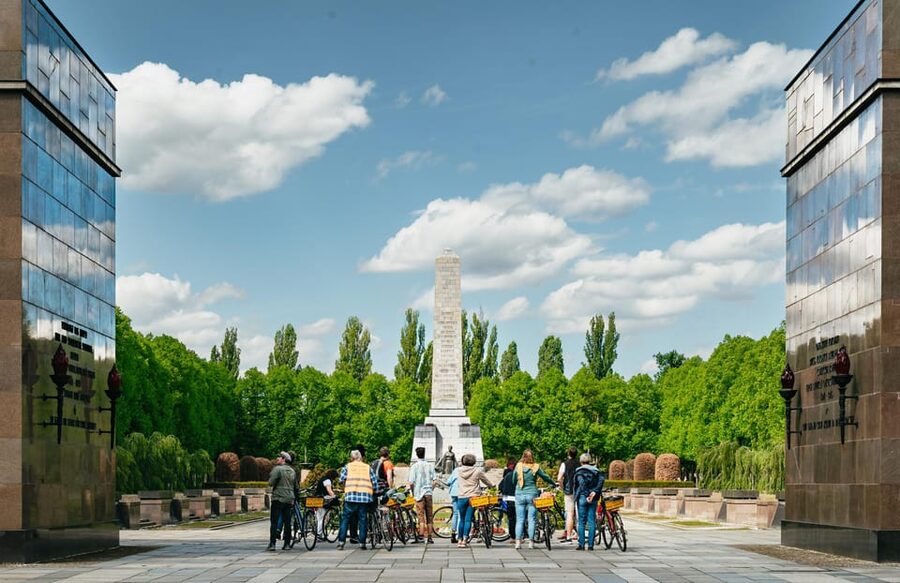
The route continues to Volkspark Humboldthain, a large public park with one of Berlin’s most striking reminders of the Second World War: a former bunker. The structure is not presented as a polished monument. It is a heavy wartime presence set within a much-used public park.
That contrast gives the stop its force. People come to walk, relax, and enjoy the open space, while the bunker points to the destruction and militarization that shaped Berlin. The park shows how the city can carry difficult history without turning every site into a formal museum.
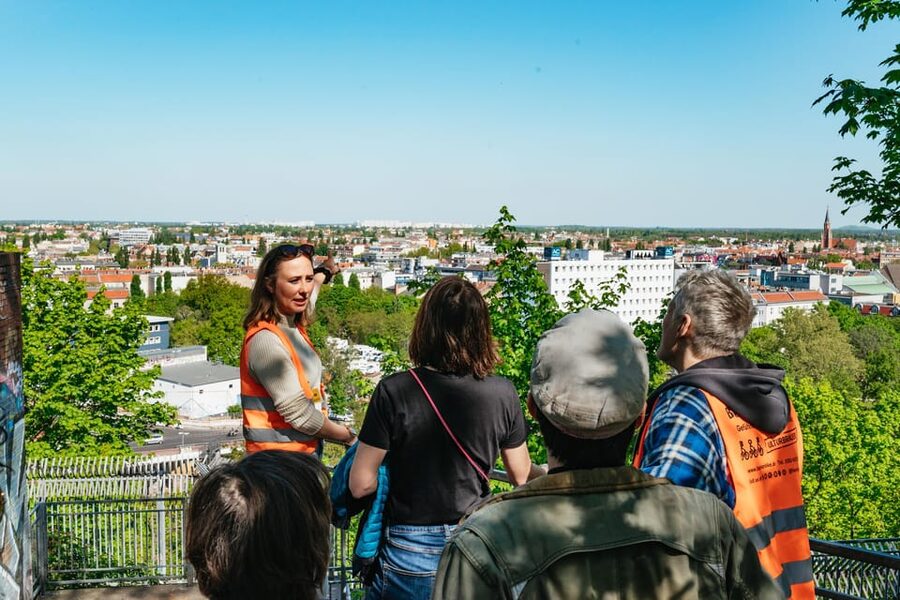
Humboldthain also offers views across the city. After riding through streets and along the river, this higher point gives you a chance to get your bearings. Bring your camera, but also take a moment to look at how the city’s old and new parts sit beside one another.
The stop is valuable for visitors who want more than a checklist of historic buildings. It gives you a physical sense of the city’s layers. You see public recreation, wartime remains, and modern Berlin from the same place.
More City Tours in Berlin:
- Berlin City Bike Tour with Beer Garden Stop
★ 5.0 · 917 reviews - Berlin: Top secret bike tour and hidden gems of the city
★ 4.8 · 411 reviews - Berlin City Bike Tour with Beer Garden Stop
★ 4.9 · 308 reviews - Berlin: Small Group Bike Tour Through City Center
★ 4.9 · 64 reviews
Bürgerpark Pankow and Schönholzer Heide
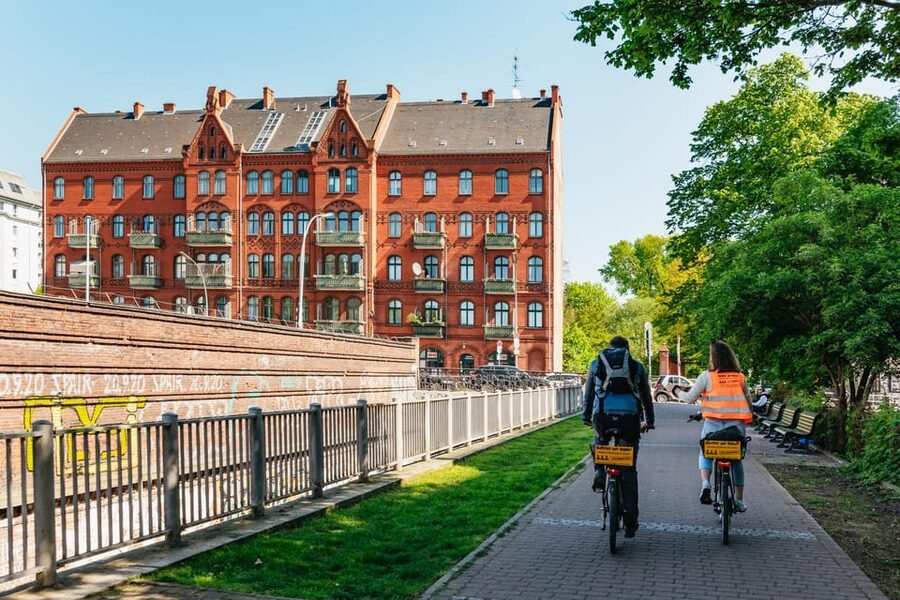
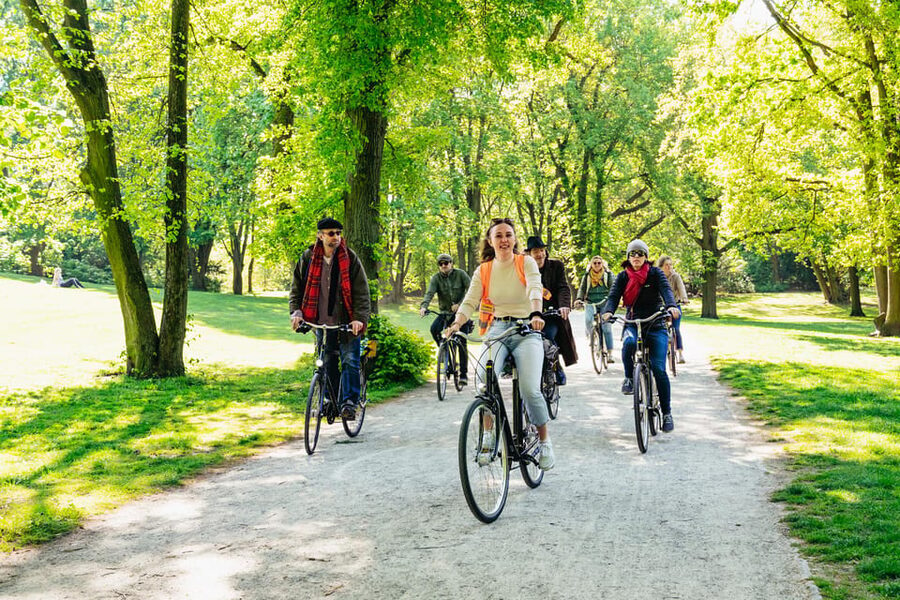
Bürgerpark Pankow brings another change in mood. It is a carefully maintained public park with a more peaceful feel than Mauerpark. Here, the tour gives you time to slow down and notice how Berlin’s green spaces serve ordinary daily life.
This is not just scenery between major stops. Parks such as this provide room for walking, rest, and local use. They also show that Berlin’s character is not limited to its central districts. Northern neighborhoods have their own public spaces and routines, and a bicycle lets you move between them without spending the whole day underground.
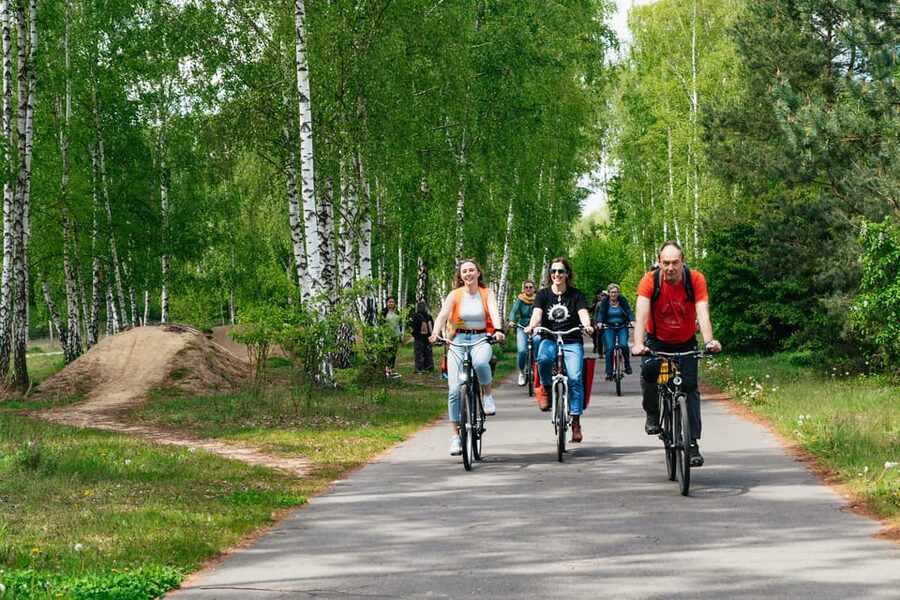
The ride then reaches Schönholzer Heide, another place to pause among trees and open ground. The tour’s appeal is strongest in this part of the route, where the city noise drops away and you can appreciate the amount of nature within Berlin’s boundaries.
You should keep your expectations realistic. This is still a guided city tour, not a forest excursion. The route combines paved streets, urban paths, and park areas. Its strength is the contrast between these settings, not a long period of complete wilderness.
Old factories, new culture, and Berlin’s next chapter
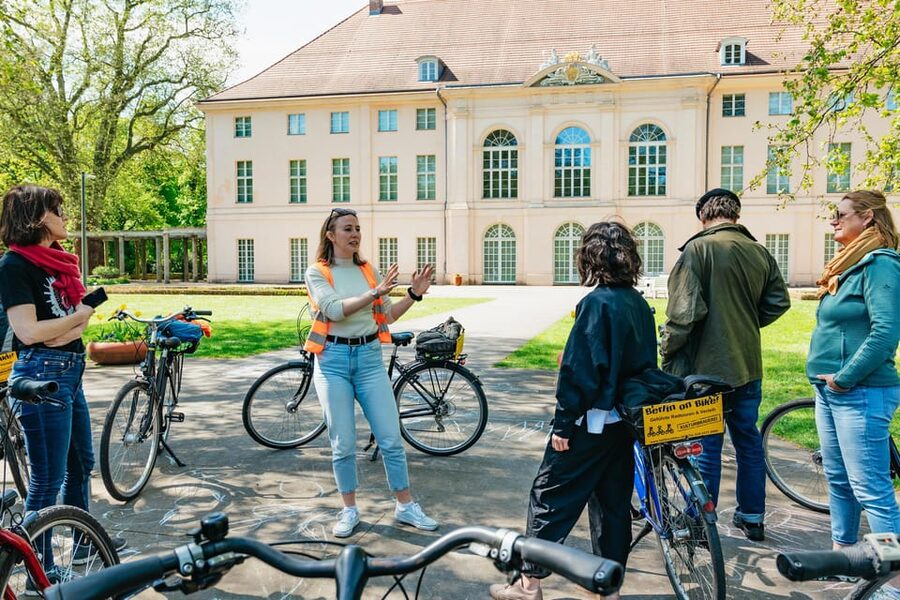
One of the more interesting themes is the reuse of old industrial buildings. Berlin has many former factories and work sites that now house cultural projects, studios, events, and other creative uses. The guide points out how these buildings can gain a second life instead of being cleared away.
That sounds simple, but it raises hard questions. Cultural spaces can make a neighborhood more attractive, which may bring investment and new housing costs. A project meant to support local creativity can eventually contribute to the pressure that pushes some residents or artists elsewhere.
The tour treats sustainability as more than recycling bins and bike lanes. It considers the balance between housing, culture, development, public access, and natural areas. You may not agree with every planning choice, but you will see why Berlin’s future is being argued street by street.
This is also where the tour differs from a standard sightseeing circuit. You are not only hearing what happened in Berlin. You are hearing how residents and planners think about what should happen next. That local point of view was especially appreciated on one outing that had only two participants and could be shaped around their interests. Group size can vary, so do not assume every departure will be that personal, but the format allows for a more flexible conversation than a large bus tour.
What $41 buys you
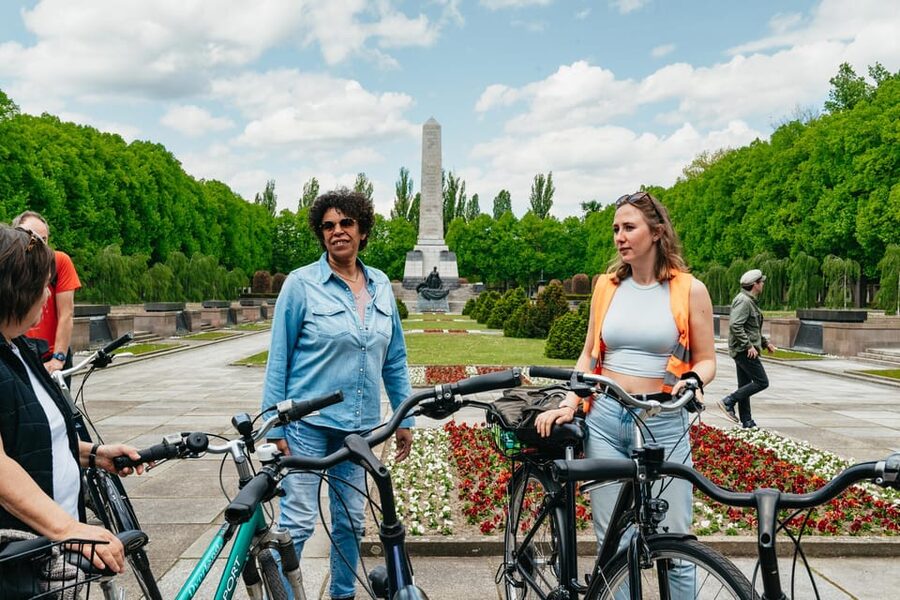
At $41 per person, the price is fair if you want a full outing rather than a short bicycle rental. You receive the bicycle, a live guide, and three and a half hours of organized routing through several districts and parks. The operator also supplies practical extras such as sunscreen, trouser clips, and rain ponchos when needed.
The value depends on your interests. If you want a quick introduction to Berlin’s famous sights, you may get more from a shorter central bike tour. This ride spends time on green corridors, public parks, environmental projects, and urban planning. Its value comes from the interpretation and the range of places, not from checking off major monuments.
A three-hour tour also means you should plan the rest of your day with some care. The listed duration is 210 minutes, and cycling, stops, and conversation all take time. You will have enough structure to see a lot, but not so much that the day feels like a race.
The free cancellation window is 24 hours before departure, and you can reserve without paying immediately. That helps if your Berlin schedule is still shifting. Check the available start times before booking, since departures depend on the date.
Who will enjoy this ride most
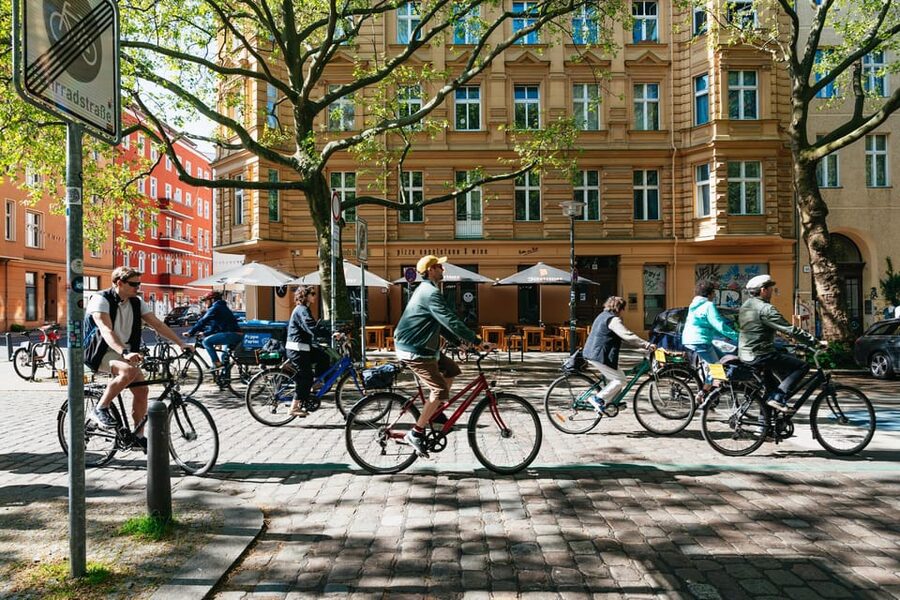
I would choose this tour if you have already seen some of central Berlin or if you want to understand the city beyond its postcard sights. It suits visitors who enjoy parks, urban design, recent history, street art, and thoughtful discussion about how cities change.
It is also a good fit if you want exercise without a competitive pace. The route is described as relaxed, with stops for photos and conversation. Comfortable clothing and shoes are more important than specialist cycling gear.
You may want another tour if this is your first and only activity in Berlin and you need the major landmarks explained in one sweep. You may also find it less satisfying if you want a fast ride or a heavy focus on dramatic historical sites. The ride’s quieter sections are intentional, but they will not appeal to everyone.
German and Dutch are the available guide languages. If you need an English-language tour, confirm before booking rather than assuming it will be offered.
Practical tips for a smoother ride
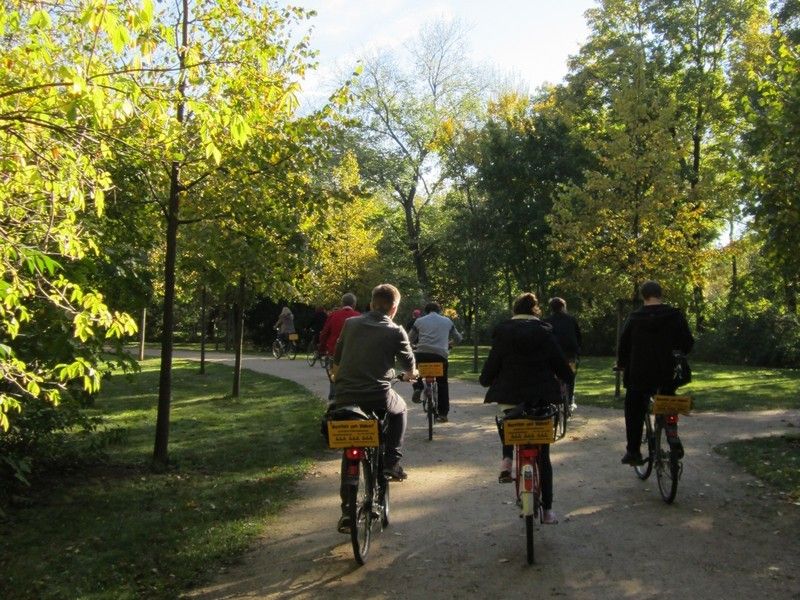
Arrive with enough time to choose a bike and adjust your belongings. The meeting point is easy to reach by metro, but Kulturbrauerei has several entrances, so use Knaackstraße 97 and follow the yellow Berlin on Bike signs.
Keep your bag light. The bicycle basket is meant for a small day bag, not large luggage. Wear shoes you can pedal in comfortably, and choose clothes that allow easy movement.
Ask for a helmet or gloves when you arrive if you want them. If rain is in the forecast, you do not necessarily need to cancel at once, since ponchos are available in bad weather. Still, a wet ride may change how long you want to linger at the park stops.
Finally, do not judge the tour only by how many famous sights appear. Its main subject is Berlin as a living city: how water is restored, how industrial buildings are reused, how public parks develop, and how the memory of division remains part of modern life.
Should you book the Green City Guided Bike Tour?
Book it if you want a relaxed ride through northern Berlin with real attention to parks, the Panke River, Mauerpark, Humboldthain, Bürgerpark Pankow, and Schönholzer Heide. The mix of WWII remains, Wall history, creative spaces, and environmental planning gives the tour a clear purpose.
Skip it if you want Berlin’s big-name monuments, a fast pace, or an English-language guide unless that language is confirmed. At $41, it is a sound buy for curious visitors who value local context and a different view of the city. It is less useful as a one-and-only introduction to Berlin.
FAQ
How long is the Green City Guided Bike Tour?
The tour lasts 3 hours, or 210 minutes.
How much does the tour cost?
The listed price is $41 per person.
Where does the tour meet?
It meets at Kulturbrauerei in Prenzlauer Berg. Use the entrance at Knaackstraße 97, near the corner of Danziger Straße, and follow the yellow Berlin on Bike signs.
How do I reach Kulturbrauerei?
The nearest metro station is Eberswalder Straße, which is three stops from Alexanderplatz.
Which languages are available?
The live tour guide is available in German and Dutch.
Is a bicycle included?
Yes. A reliable bicycle is included, and you can choose the bike that fits you best from a large fleet.
Are helmets and gloves provided?
Helmets and gloves are available upon request.
What should I bring?
Bring comfortable shoes and comfortable clothes. Bicycles have baskets for a lightweight bag.
Can I cancel or pay later?
You can cancel up to 24 hours in advance for a full refund. You can also reserve now and pay later.
Just added around Berlin
- From Berlin: Gardens & Palaces of Potsdam Bike Tour★ 5.0 · 61 reviews
- Berlin: Small Group Bike Tour Through City Center★ 4.9 · 64 reviews
- Berlin: From East to West & Wall Tour by Bike with a Guide★ 4.8 · 171 reviews
- Berlin: Illuminated Berlin by Bike Taxi★ 4.8 · 162 reviews
- Berlin: 48-Hour or 72-Hour Bike Rental★ 5.0 · 14 reviews
- Berlin (E)Bike Tour Historical Highlights in Small groups★ 4.5 · 24 reviews
- Berlin: BMW Motorrad Production – See How Bikes Are Built★ 4.7 · 179 reviews
- Berlin: 3-hour bike tour – A journey through time in the capital★ 4.8 · 24 reviews
Berlin Bike Tours, compared.
Sights and Highlights Bike Tour with a Local Guide
Read our review →
Berlin Highlights Sightseeing Bike Tour in Small Groups
Read our review →
Alternative Bike Tour of Kreuzberg & Friedrichshain
Read our review →
Browse the lists this tour appears in