
REVIEW · BERLIN
Berlin: Private Bike Tour of the Berlin Wall and Third Reich
Berlin’s past is spread across a large city, and this private bike tour lets you connect the sites without losing half the day to walking between them. In about three hours, you ride from Berlin’s old center to Wall memorials, Nazi bunkers, government buildings, and Cold War border points.
I like the flexible route, since your guide can give extra attention to the Wall, the Third Reich, or Berlin’s Jewish history. I also like the pace: you cover far more ground than on foot, yet stop often enough for short explanations. The main drawback is that three hours is tight, and several stops are brief. You need to be comfortable cycling in changing weather, and the English version is the one that includes Checkpoint Charlie.
Key points to know before you book
- The route links several eras: You move from medieval Berlin to Nazi Germany, the Holocaust, the Berlin Wall, and the divided city of the Cold War.
- Private means personal: Only your group takes part, and the guide can shape the route around your interests.
- You cover serious ground quickly: Bicycles make it practical to reach Mauerpark, Humboldthain, the Reichstag, the former bunker site, and other locations in one outing.
- The Wall Memorial is the strongest historical stop: This is the place where the border’s layout and human cost are easiest to understand.
- The tour begins and ends in central Berlin: Meet at Free Berlin Bike Tours & Rental, Poststraße 11, near Nikolaiviertel.
- Plan for the weather: The tour runs in all weather, and children can join with an infant seat requested in advance.
Why a bicycle works so well for Berlin’s difficult history
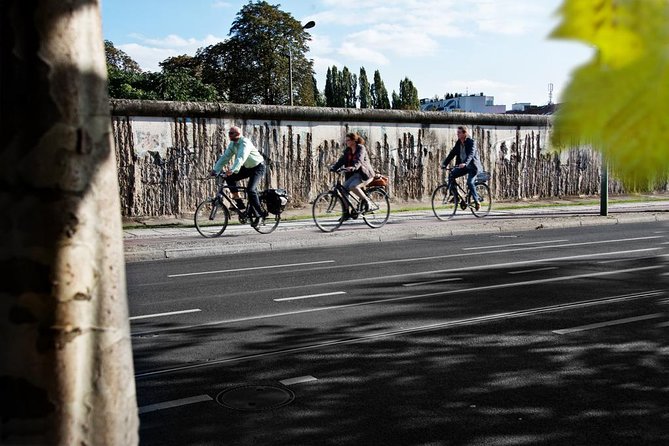
Berlin’s historic sites do not form one tidy walking district. The former Wall cut through neighborhoods, while Nazi-era structures and government buildings sit in different parts of the city. A bicycle gives you a useful middle ground: faster than walking, but slow enough to notice the streets and open spaces between the monuments.
This matters most when you move between the Wall Memorial, Mauerpark, Humboldthain, Invalidenfriedhof, and the government quarter. On foot, those distances would eat into your sightseeing time. By bike, the ride itself helps show how the border once divided ordinary streets, parks, cemeteries, and railway areas.
The tour is private and requires at least four people. That makes it a good fit for a family or a group of friends who want to set the pace themselves. You receive a bicycle and helmet, and a child seat can be provided on request. Food, drinks, and hotel transportation are not included, so arrive ready to ride from the meeting point.
The price is $107.42 per person. That is not the cheapest way to see Berlin, but the value improves if you are traveling in a group and want a private guide rather than a fixed public departure. You are paying for the bicycle, the guide’s route planning, and the ability to connect sites that would otherwise require several separate walks or transit rides.
More Private Bike Tours in Germany
- Private Berlin Street Food Tour by Bike
★ 5.0 · 87 reviews - The Beauty of Berlin by Bike: Private Tour
★ 5.0 · 59 reviews - Private Berlin Street Food Bike Tour
★ 4.9 · 42 reviews
Nikolaiviertel and the story of Berlin’s old center
The tour begins in Nikolaiviertel, described as Berlin’s only genuine old-town quarter. It is a useful starting point because it raises an immediate question: how much of old Berlin survived the bombing and destruction of the Second World War?
You get about ten minutes here, so do not expect a full architectural tour. Instead, this opening stop gives you a quick frame for the city’s repeated rebuilding. Berlin can look historic at first glance, yet much of what you see has been restored, reconstructed, or shaped by later political decisions.
From there, the route turns toward the Neue Synagoge and the Centrum Judaicum. The stop lasts only about five minutes, but the story is powerful. Your guide explains the act of civil courage that helped protect the synagogue during the November pogroms, often called the Night of Broken Glass.
That short pause works best as a reminder that Berlin’s history is not only about buildings and governments. Individual decisions mattered, too. Since the stop is brief and entry is not included, you should not expect to go inside or explore the full museum.
Wall memorials that make the border understandable
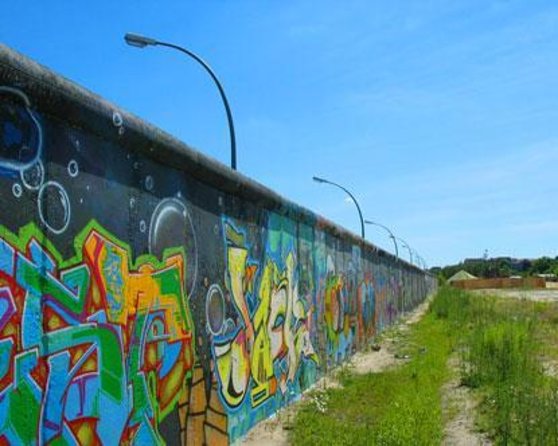
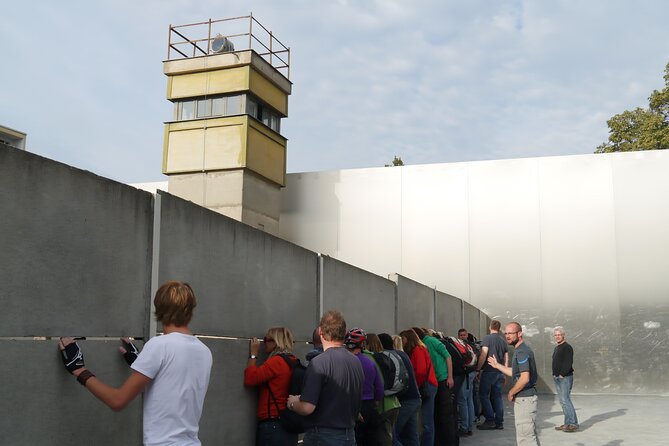
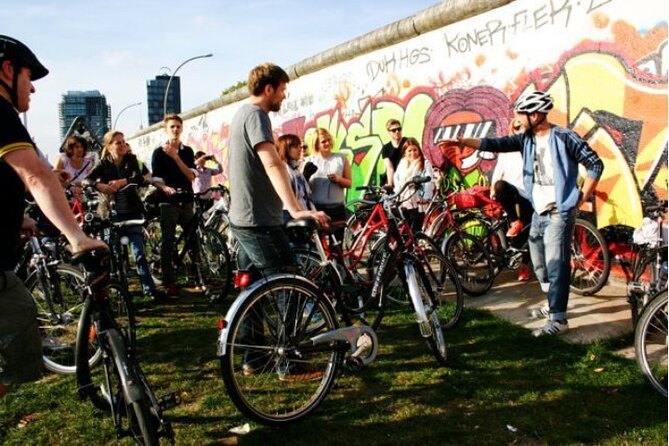
The Berlin Wall Memorial is the heart of the tour. The route includes one of the few remaining places where you can grasp how the Wall operated as a physical system, rather than viewing a single painted section as a souvenir backdrop.
You spend roughly ten minutes here. That may sound short, but the guide’s explanation helps you read the site: the barriers, the space between them, and the way the border controlled movement through the city. This is the point where the Wall becomes more than a line on a map.
The tour continues to Mauerpark, now known for its Sunday flea market. Its earlier role was much harsher. The park area formed part of the border zone, and the stop focuses on East Germany’s repeated efforts to create what its rulers considered the perfect frontier.
I like this pairing of stops. The Wall Memorial explains the system, while Mauerpark shows how that system occupied everyday urban space. If you visit on a Sunday, the market atmosphere may make the earlier purpose of the site harder to picture, so listen closely to the guide’s explanation.
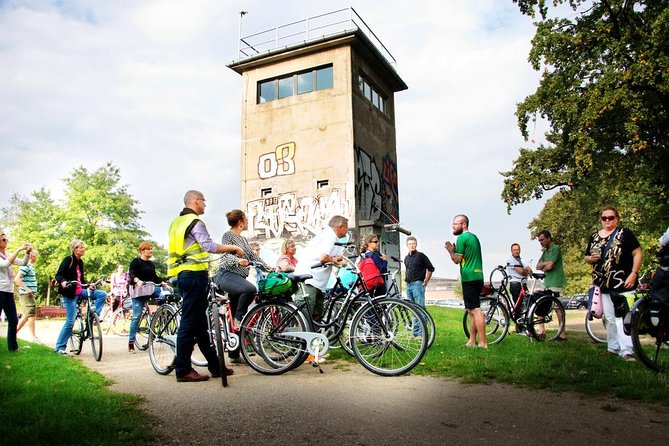
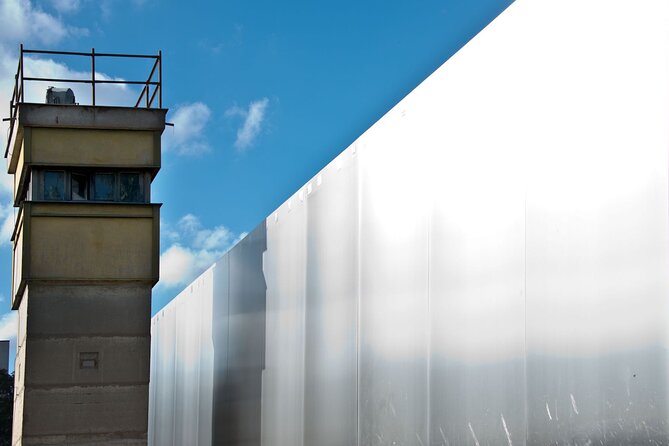
At the Günter Litfin Memorial, you see an original watchtower preserved in memory of Günter Litfin, identified here as the first person shot at the Wall. The stop lasts around ten minutes. It gives the history a human scale and shows how a surviving structure can carry more weight than a long stretch of generic wall.
Humboldthain’s flak tower and the burden of Nazi architecture
Humboldthain Flak Tower is one of the tour’s most unusual stops. The structure began as a giant fortress and air-raid shelter during the Nazi period. It also offers a panoramic view over Berlin, making it possible to connect military architecture with the city around it.
You spend about ten minutes here. The view is useful, but the real value is the discussion of how the regime used monumental construction and defensive buildings to project power. The tower is not a polished museum display. Its rough presence makes the subject feel more immediate.
This stop may appeal especially to you if you have already seen Berlin’s central monuments and want something less familiar. Access details and the time available are limited, so treat it as an exterior stop and viewpoint rather than a long visit inside a historic structure.
More Private Bike Tours in Berlin:
- Party and Beer Bike Private Sightseeing Tour Berlin with Pick-up
★ 4.5 · 32 reviews - Berlin : Guided Private Sightseeing Tours with Funbikes, Teambikes
★ 5.0 · 20 reviews - Private Highlights of Berlin Bike Tour
★ 5.0 · 13 reviews - Berlin: Guided Private Bike Tour to Explore the Highlights
★ 5.0 · 12 reviews
Invalidenfriedhof and the Wall’s cut through a cemetery
Invalidenfriedhof adds another layer to the Wall story. This burial ground was created for important figures in German military history, but the border later cut directly through it.
Your guide uses the cemetery to discuss how political division reshaped places that had nothing to do with the original conflict. Graves, paths, and memorials were affected by the border. The stop also invites a more careful look at whom Germany chose to honor and whom later generations have had reason to question.
This is one of the quieter portions of the route. You do not come for a grand monument or a famous photo. You come to see how the Wall reached into private memory and public commemoration.
Spreebogenpark and Hitler’s proposed Great Hall
At Spreebogenpark, the view opens toward Germany’s government district. The modern buildings are only part of the story. Your guide also explains Albert Speer’s plans, developed under Hitler, for a gigantic Great Hall that could have held 180,000 people.
The contrast is striking. You are looking at the seat of a modern democratic government while discussing an earlier plan for an enormous building meant to express dictatorship on an almost absurd scale. This stop helps you compare what Berlin became with what Nazi planners wanted it to be.
Allow about fifteen minutes here, the longest pause on the route. You will get more from it if you pay attention to the sightlines and the relationship between the river, the government quarter, and the proposed monumental axis. The tour does not present Nazi architecture as mere spectacle. It places the design within the regime’s political ambitions.
The Reichstag and Germany’s democratic struggle
At the Reichstag Building, the guide discusses Hitler’s rise to power and Germany’s democratic history. You stop outside for about five minutes, with no time to enter the building or visit its dome.
That limitation is worth knowing before you book. If you want an interior visit, you will need to arrange it separately. Still, the exterior stop works well within this tour because the Reichstag connects the political history of the Third Reich with the later return of parliamentary government to Berlin.
You are not simply looking at a famous facade. You are considering how a democratic institution was damaged, repurposed, and eventually became part of a reunified Germany’s political center.
Holocaust memorials and the missing traces of victims
The route includes several memorial locations connected with Holocaust victims, including a memorial for people deported from Berlin and the Memorial to the Murdered Jews of Europe near Brandenburg Gate.
The deportation memorial is described as a GDR-era memorial, offering a different visual and political approach from the better-known monument in central Berlin. That contrast matters. Memorials are shaped not only by the events they recall, but also by the era in which they were built and the government that commissioned them.
The large Holocaust Memorial receives about ten minutes. Its field of concrete blocks can be difficult to interpret on your own, especially if you arrive expecting a conventional statue or inscription. Your guide can provide the basic context and explain why its scale and design carry such weight.
The route also refers to memorials for three major victim groups of the Holocaust. The provided details do not identify every memorial by name, so you should view this part as a broader discussion of how Berlin remembers different groups persecuted under the Nazi regime.
Because these are serious places, the quick cycling format has both an advantage and a weakness. You can see several memorials without turning the whole day into a museum visit, but ten minutes is not enough for a full study of each site. If Holocaust history is your main reason for coming to Berlin, plan separate visits to the memorials and museums afterward.
The former Führerbunker and why a parking lot matters
The stop at the former Führerbunker is intentionally plain. The site is now a parking lot, and your guide explains why there is no dramatic bunker entrance or preserved monument to visit.
This is a useful lesson in historical presentation. The absence of a visible structure is part of the story. The location is tied to Hitler’s final weeks and suicide, yet modern Berlin has chosen not to turn it into a shrine or a spectacle.
You spend about ten minutes here. The guide’s explanation gives you the historical facts and the reasons for the site’s current appearance. Do not come expecting an underground tour. Come ready to think about how a city handles a place linked to dictatorship and mass murder.
Checkpoint Charlie and the Cold War edge
Checkpoint Charlie is included on the English version of the tour. It was the best-known Cold War border crossing and the only shared crossing point between the United States and the Soviet Union, according to the tour’s historical account.
The stop lasts about ten minutes. Your guide discusses the confrontation that brought the world close to a wider war in the center of Berlin. That context is more useful than a quick photograph at the checkpoint sign, since the modern display can feel theatrical and crowded.
If you book in German, confirm the route details before setting out, because Checkpoint Charlie is specifically included in the English version. This is one reason English speakers may find the route particularly appealing if Cold War history is high on their list.
Timing, language, weather, and family details
The tour lasts about three hours and offers several departure times. It is offered in English and German, with Dutch, French, and Spanish possible by request. The English version includes Checkpoint Charlie.
You meet at Free Berlin Bike Tours & Rental, Poststraße 11, 10178 Berlin, and return to the same meeting point. Hotel pickup and drop-off are not included, so build the meeting point into your plans.
The tour operates in all weather. Bring clothing suited to the forecast, since you will spend the whole outing outdoors and stop at open sites. A helmet is provided, and children are welcome if accompanied by an adult. An infant seat can be requested in advance.
The route is private, but the minimum booking is four people. That is important for solo visitors or couples, who may need to choose another activity if they cannot form a group of four. For a family or small group, the private format gives you more control over pace and questions.
Who should book this Berlin bike tour?
I would choose this tour if you want a broad historical framework in a short time. It is especially suitable for first-time visitors, history buffs, families with older children, and anyone who would rather ride between sites than spend a full day walking.
I would also choose it if you want a guide to connect subjects that are often treated separately: the Wall, Nazi architecture, Holocaust memorials, the Reichstag, and Berlin’s modern government district. The route has real variety, and the private format gives you room to ask questions.
I would hesitate if you want long visits inside museums, detailed architectural study, or quiet time at each memorial. The stops are often only five or ten minutes, and the tour stays outside. Cyclists should also be ready for weather changes and a busy city route.
Cancellation is free up to 24 hours before the start time. Changes or cancellations inside that window are not accepted for a refund.
Should you book it?
Book this tour if you want to cover Berlin’s major historical ground efficiently and prefer a personal guide to a large fixed group. The Wall Memorial, Mauerpark, Günter Litfin Memorial, Humboldthain, the Reichstag, the former bunker site, and Checkpoint Charlie create a strong three-hour overview.
The best reason to book is not any single monument. It is the way the bicycle links them. You see how Berlin’s political divisions affected streets, parks, cemeteries, government buildings, and memorial spaces.
Skip it if your priority is indoor access or long, reflective visits. In that case, use the tour as a first orientation and reserve separate time for museums and memorial interiors. At $107.42 per person, it offers solid value for a private group that wants speed, flexibility, and serious historical context without spending the whole day on foot.
FAQ
How long does the private bike tour last?
The tour lasts approximately three hours.
Where does the tour begin and end?
It begins at Free Berlin Bike Tours & Rental, Poststraße 11, 10178 Berlin, Germany, and ends back at the same meeting point.
Is Checkpoint Charlie included on every language version?
Checkpoint Charlie is included on the English version of the tour. German is also offered, while Dutch, French, and Spanish may be possible by request.
Are bicycles and helmets provided?
Yes. The tour includes use of a bicycle and helmet. An infant seat can be provided on request.
Can children join the tour?
Yes. Children are welcome, but they must be accompanied by an adult. The tour is described as family-friendly.
What is the cancellation policy?
You can cancel up to 24 hours before the experience starts for a full refund. Cancellations or changes made less than 24 hours before the start time are not accepted for a refund.
Just added around Berlin
- Jetbike Berlin fun bike beer bike★ 5.0 · 60 reviews
- Small-Group Historical Bike Tour in Berlin★ 4.5 · 103 reviews
- Alternative Berlin Bike Tour – Off the Beaten Tracks in Small Groups★ 5.0 · 99 reviews
- Berlin: Guided Private Bike Tour to Explore the Highlights★ 5.0 · 12 reviews
- Berlin Wall and Cold War Bike Tour in Small Groups★ 5.0 · 114 reviews
- Berlin : Guided Private Sightseeing Tours with Funbikes, Teambikes★ 5.0 · 20 reviews
- Berlin : The best bike tour with a Berlin guide and insider tips★ 5.0 · 14 reviews
- Potsdam Bike Tour with Rail Transport from Berlin★ 4.5 · 81 reviews
Berlin Bike Tours, compared.
Sights and Highlights Bike Tour with a Local Guide
Read our review →

Berlin Highlights Sightseeing Bike Tour in Small Groups
Read our review →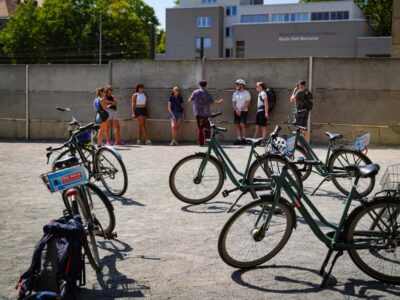

Alternative Bike Tour of Kreuzberg & Friedrichshain
Read our review →
Browse the lists this tour appears in