
REVIEW · BERLIN
Berlin: From East to West & Wall Tour by Bike with a Guide
Berlin becomes easier to understand when you ride from former East Berlin to former West Berlin in one long sweep. This flat, 21-kilometer route links the East Side Gallery, Berlin Palace, Brandenburg Gate, Reichstag, Victory Column, major parks, and quieter residential streets, so you see both the postcard city and the everyday one. I like the way the tour uses old and current pictures to show how quickly Berlin has changed.
I also like the small-group format and the practical care built into the ride. Michael, the local guide, has lived in Berlin for nearly 30 years and studied history and political science. Conventional bikes, helmets, water, children’s seats, and even cold-weather items are included. The main drawback is the distance: four hours and about 20 to 21 kilometers is a lot of pedaling, even on flat ground.
Key things to know before you ride
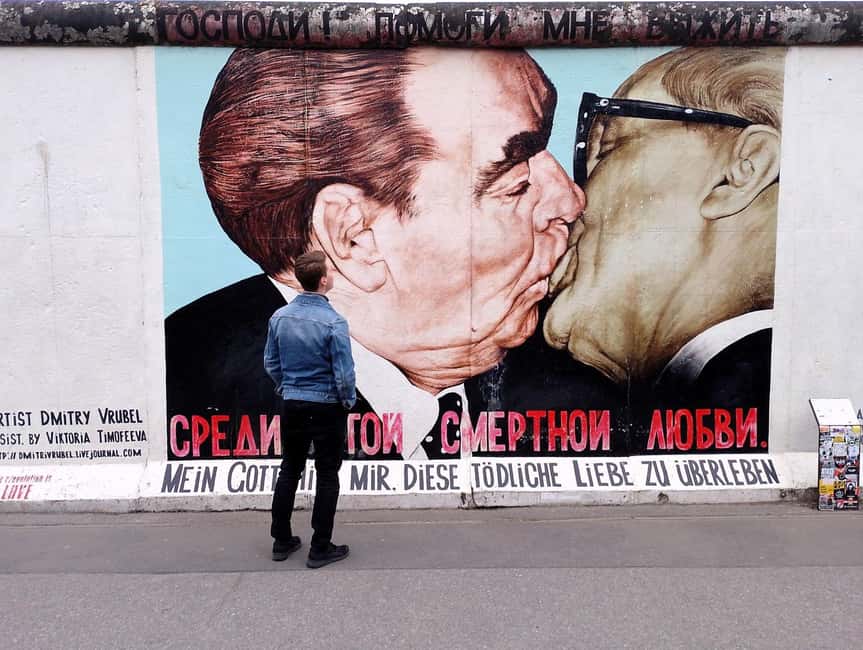
- You cover a remarkable stretch of Berlin: East Side Gallery, Museum Island, Brandenburg Gate, Reichstag, Victory Column, Friedrichshain, Tiergarten, and more.
- The route is about 21 kilometers: It is flat, but you should be comfortable riding for several hours.
- You ride mostly away from cars: The route uses bike lanes, park paths, and side streets where possible.
- The guide adds historical context: Before-and-now pictures help explain the Wall, reunification, and Berlin’s changing city center.
- Standard bikes are included: E-bikes cost an extra €10 and should be requested after booking.
- You finish with a Berlin-made souvenir: Designs are available for both adults and children.
Why this bike tour gives you a useful first look at Berlin
Berlin is spread out. Its important sights do not sit neatly around one compact old town, and the city’s story is divided among former East and West districts. A walking tour can explain one neighborhood well, but it cannot easily connect Friedrichshain, the Wall, Museum Island, the Brandenburg Gate, and Tiergarten in a single morning.
This ride solves that problem. You move quickly between districts, but you still stop often enough for photographs and short explanations. The result is less like checking off monuments and more like learning the shape of Berlin.
I especially like the contrast between grand landmarks and ordinary streets. You may be looking at the former Berlin Palace one moment, then pedaling through a residential neighborhood or along the River Spree a few minutes later. That change of scene helps you see Berlin as a living city, not just a collection of historic sites.
The guide’s local background matters here. Michael has spent almost three decades in Berlin, and the tour is designed around the city he knows rather than only its most famous addresses. He also uses visual comparisons to show how places looked before and after reunification. That is useful in Berlin, where new buildings, restored landmarks, leftover Soviet-era structures, and traces of the Wall often share the same block.
More Guided Tours in Berlin:
- Berlin: Sights and Highlights Bike Tour with a Local Guide
★ 4.8 · 2,698 reviews - Berlin: The Wall and Third Reich Guided Bike Tour
★ 4.8 · 578 reviews - Berlin: Guided Bike Tour to Explore the Highlights
★ 4.8 · 506 reviews
Starting in Friedrichshain, where the city feels local
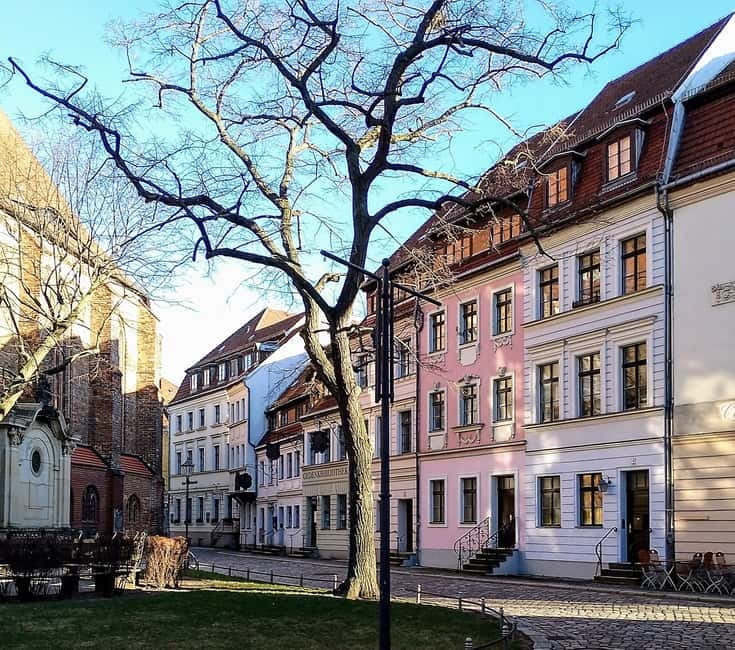
The meeting point is at Cotheniusstraße 8, about 3 kilometers east of Alexanderplatz and the TV Tower. The shop occupies a corner building with the Blaue Adria restaurant in the same building, making the location easier to identify.
This part of Berlin works well as a starting point. Friedrichshain is close to several public transport lines and gives you an early look at a residential district before the major sights begin. The closest rail stop is Landsberger Allee, served by S-Bahn lines S41, S42, S8, and S85. Trams M5, M6, M8, and M10 also stop nearby, as does bus 200 at Conrad-Blenkle-Straße.
You begin with a conventional bike included in the price. Bikes come in adult and children’s sizes, with children’s bikes available for riders at least 120 centimeters tall. Child and baby seats are free, as are helmets. German law does not require cyclists to wear helmets, but you can use one if you prefer.
Volkspark Friedrichshain and the Grimm fountain
The first major park stop is Volkspark Friedrichshain, one of the places where Berlin’s layers sit close together. The park contains two bunkers built by the Nazis, now covered and incorporated into the park’s terrain. You also see the Märchenbrunnen, or Grimm fairy tale fountain, with its storybook figures.
This is a good early pause because it gives you more than a quick photo. The park links difficult 20th-century history with a relaxed local setting where people come for a walk, a beer, or ice cream. It also shows how much open space Berlin has inside the city.
Do not expect a long museum visit here. The tour is a moving overview, with time to stop, listen, and take pictures. If you prefer very detailed explanations at every site, the brisk format may feel light. If you want context without spending the whole day indoors, it works well.
East Side Gallery and the remaining traces of the Wall
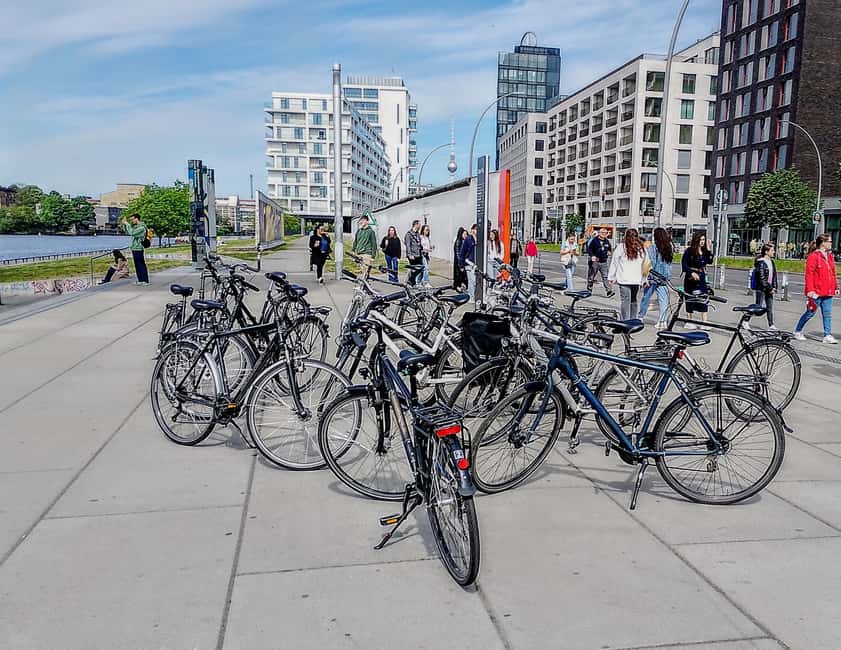
The route then heads toward the East Side Gallery, the best-known surviving section of the Berlin Wall. Artists painted this long stretch after the Wall fell, turning a symbol of division into an outdoor gallery.
The stop is important because it brings the Cold War story down to human scale. You can see the concrete barrier, the art, and the modern development along the Spree in one place. The setting also makes clear how much this part of Berlin has changed since reunification.
The Wall story is not limited to the East Side Gallery. The route connects this area with central Berlin, where the division once cut across streets and neighborhoods. That wider view is one reason I prefer this tour to a ride focused only on murals. You see the Wall as part of a city, not as an isolated monument.
You should also keep your expectations sensible. The East Side Gallery can be crowded, and this is an outdoor public site rather than a quiet exhibit. The tour gives you time for photographs and a guided explanation, but it does not replace a full museum visit about the Wall.
A few more bike tours around Berlin worth a look
- Berlin Highlights 3-Hour Bike Tour
★ 5.0 · 948 reviews - Berlin City Bike Tour with Beer Garden Stop
★ 5.0 · 917 reviews - Berlin Highlights: 3-Hour Bike Tour
★ 4.9 · 809 reviews - Berlin Highlights Sightseeing Bike Tour in Small Groups
★ 5.0 · 652 reviews
Along the Spree to Alte Münze and Nikolaiviertel
From Friedrichshain, you ride toward Mitte and central Berlin, often using bike lanes, side streets, parks, and paths near the River Spree. The route is mostly separated from car traffic, which makes the long distance more manageable, though you still need to pay attention in city riding conditions.
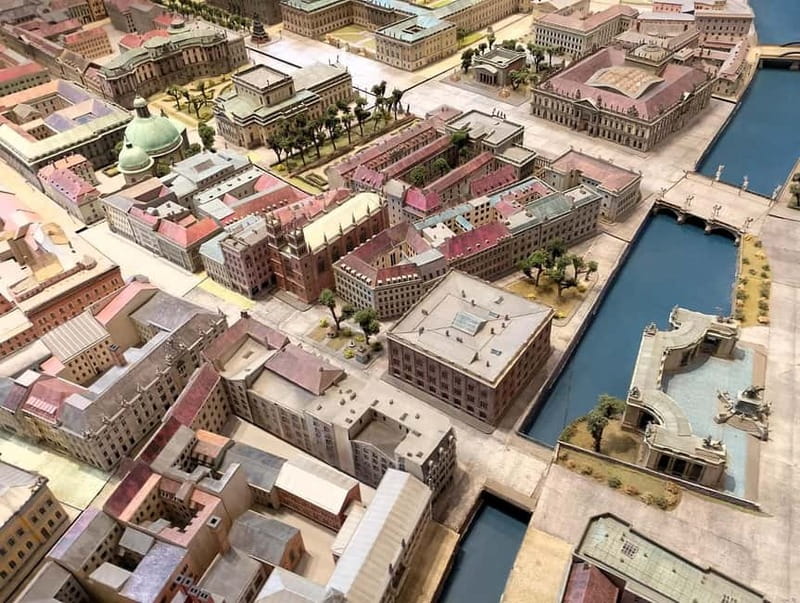
Alte Münze is one of the central stops. The former mint area sits close to the river and offers a different view of Berlin’s changing city center. It is less instantly recognizable than the Brandenburg Gate, but that is part of its value. You get a sense of the spaces between the headline sights.
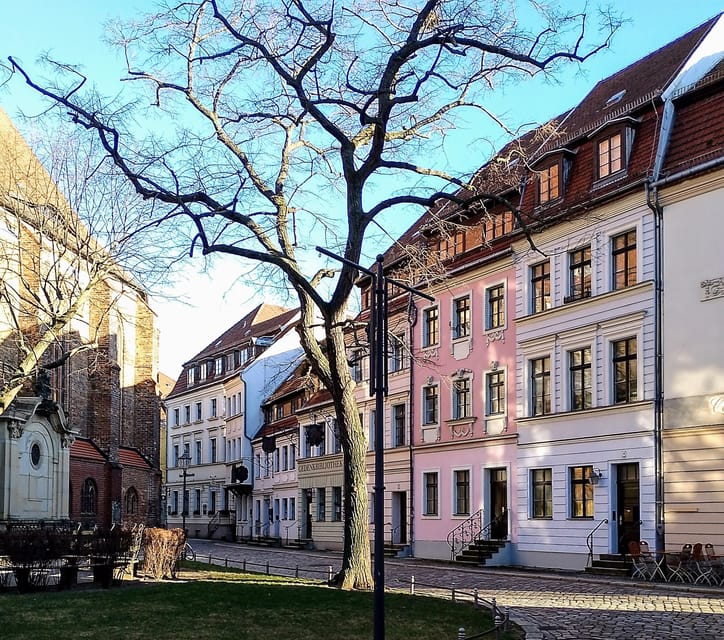
Next comes Nikolaiviertel, the quarter associated with Berlin’s oldest city center. Its streets and buildings provide a sharp contrast with the broad modern avenues and postwar architecture elsewhere in Mitte. This is the kind of stop that helps you understand how the city presents its past, including the difference between surviving historic fabric and later reconstruction.
The guide can explain those changes while you look around, but the stop remains short. Treat it as an introduction, not a full architectural tour.
Berlin Palace, Museum Island, and Unter den Linden
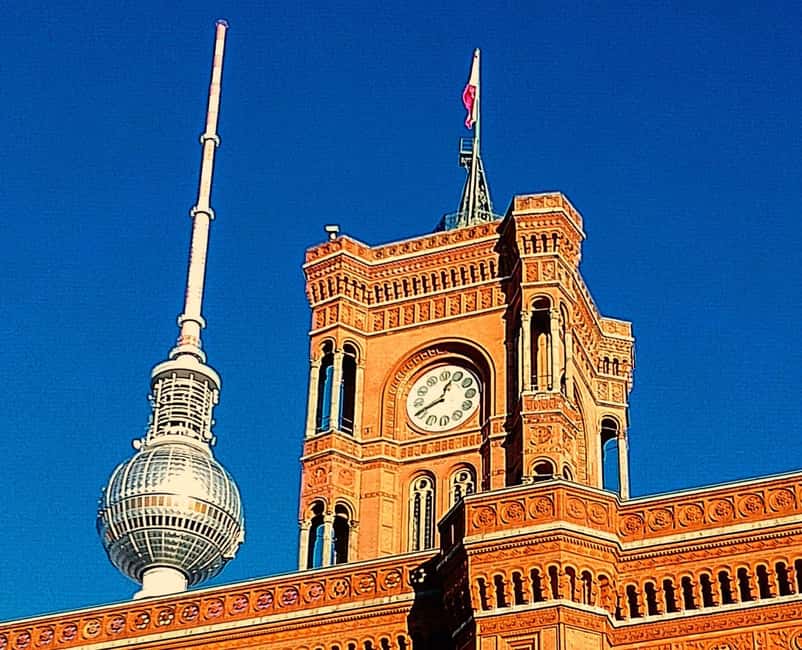
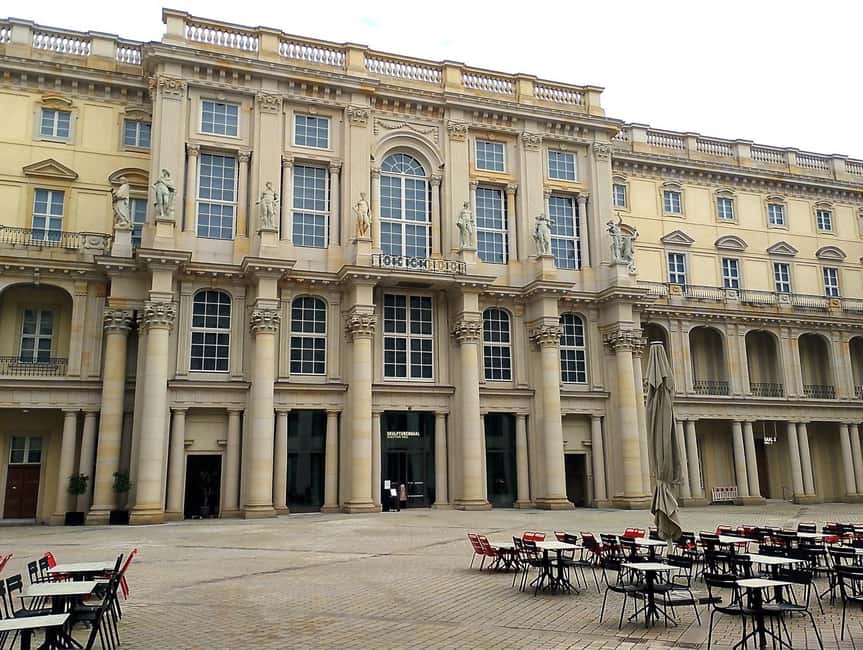
The former Berlin Palace now contains the Humboldt Forum, and the tour pauses here for photographs, a guided explanation, and some free time. The building raises an important Berlin question: how should a city rebuild a historic palace after war damage and decades of East German rule?
You do not need to settle that question during the tour. The useful part is seeing the building in its setting and hearing how the city’s center has been reshaped. From here, you can also connect the palace with Museum Island across the Spree.
Museum Island receives a photo stop rather than a museum visit. That distinction matters. The ride lets you see the island and its grand buildings, but museum entry is not part of this four-hour experience. If you want to visit the Pergamon Museum, Neues Museum, or another collection, plan a separate block of time.
You then ride along Unter den Linden, Berlin’s famous tree-lined boulevard. This is one of the best stretches for understanding the city’s formal center. The avenue leads you toward the Brandenburg Gate, passing major buildings and open spaces along the way.
Brandenburg Gate, Reichstag, and the heart of former West Berlin
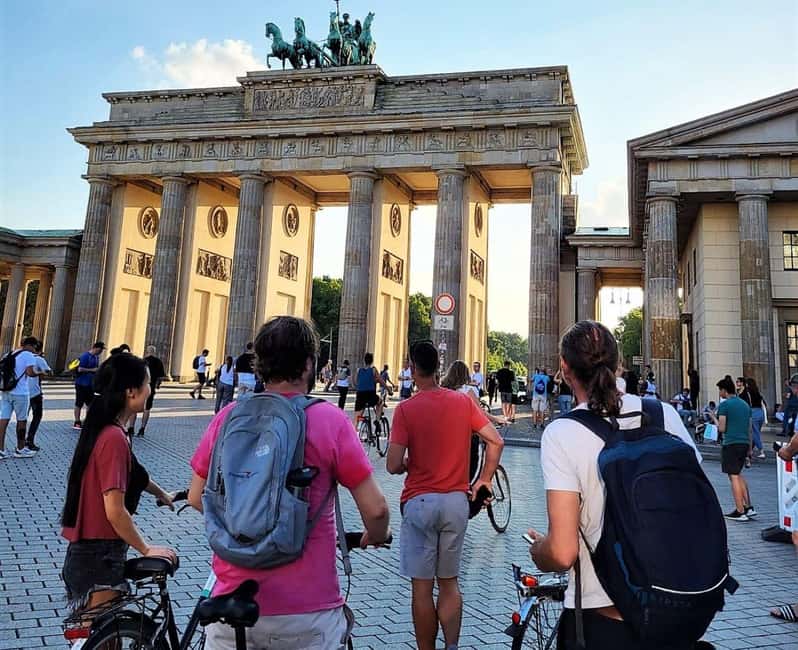
The Brandenburg Gate is one of the longer pauses. You have time for pictures, a break, and a guided explanation of why this neoclassical gate became such a powerful symbol of division and reunification.
It is also a sensible place to rest. The route has already covered a good portion of the city, and you still have more riding ahead. Bring a camera, but also use the pause to drink some water. Water is supplied, yet it is wise to take advantage of breaks instead of waiting until you feel tired.
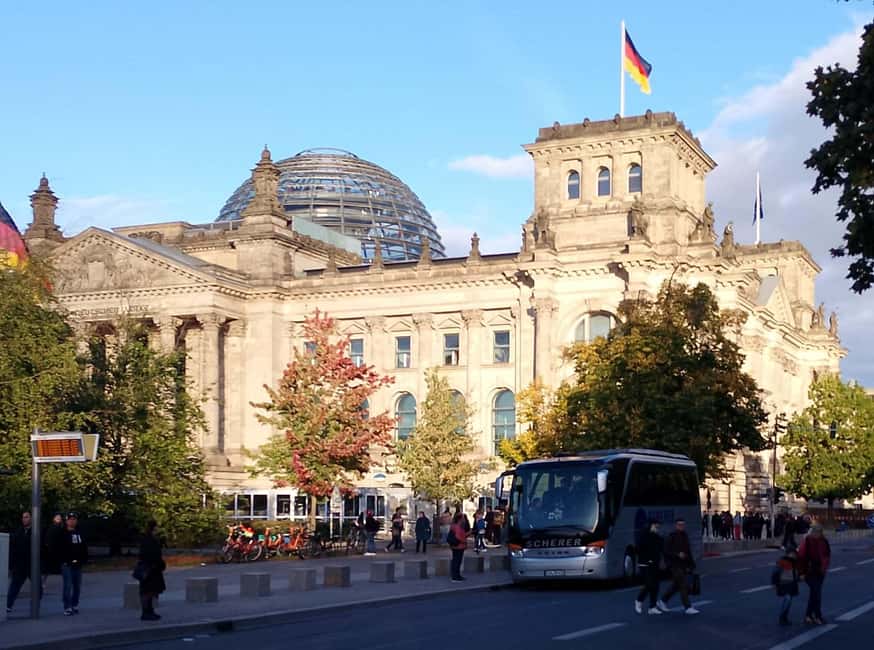
The Reichstag comes next. You view the building from outside and hear about its role in German politics and Berlin’s modern history. The tour does not include a visit to the dome or an interior parliamentary tour, so do not confuse this stop with a Reichstag admission.
From there, the route enters Tiergarten, Berlin’s large central park. This is where the bike becomes particularly useful. A bus or walking tour can show you the park’s edges, but cycling gives you a better sense of its size and wooded paths.
Victory Column and a ride through Tiergarten
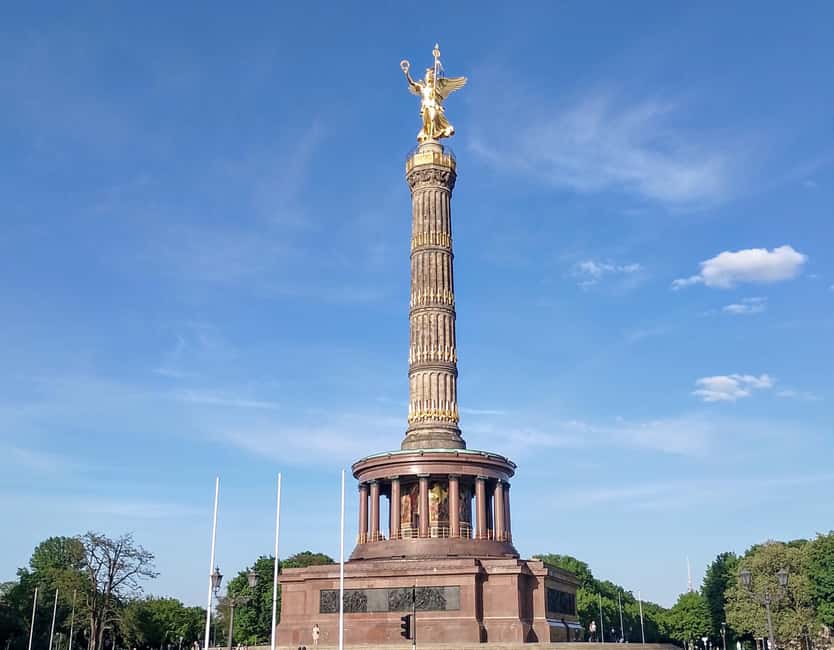
The Berlin Victory Column rises in the middle of Tiergarten and gives you another strong photo stop. Its golden figure is easy to spot from a distance, but seeing the monument from within the park helps explain its relationship to Berlin’s broad roads and ceremonial spaces.
The park section also provides a welcome change after the dense center. You trade stone facades and traffic for trees, open paths, and a quieter rhythm. Berlin’s reputation as a green city becomes clear here.
Still, do not mistake a flat route for an effortless one. The ride lasts around three and a half to four hours, with many stops and breaks. Most riders will find the pace manageable, but anyone unused to long city rides may prefer the €10 e-bike upgrade. Only a limited number of e-bikes are available, and you need to request one after booking. The fee can be paid in cash on the day.
Scheunenviertel and the return through everyday Berlin
The ride continues through Scheunenviertel, a central district with a strong connection to Berlin’s Jewish history and urban development. Here the experience shifts again from monumental Berlin to streets where people live, shop, and move about daily.
The route’s residential sections are among its most useful features. You get an overview of Berlin’s different districts rather than spending four hours on a parade of famous facades. For a first visit, that helps you decide where you may want to return on foot later.
The final stop is the Märchenbrunnen in Volkspark Friedrichshain, bringing you back near the starting area. The circular route is practical because you do not need to arrange transport from a distant ending point. You finish at Cotheniusstraße 8, where you can collect a free Berlin souvenir in a design suitable for an adult or child.
How much value do you get for $34?
At $34 per person, this is a strong value if you want both sightseeing and transport between distant parts of Berlin. The price includes the guide, a conventional bike, a helmet, water, child seats when needed, cold-weather items such as gloves or hats, and the souvenir.
The value is not only in the equipment. A public rental bike would give you freedom, but not the route planning, historical explanation, or reassurance of a local guide. A walking tour might cost a similar amount, but it would cover far less ground. A bus tour covers distance with less physical effort, but it gives you less contact with parks, side streets, and the rhythm of the city.
The main tradeoff is time. You are paying for a broad introduction rather than long visits inside museums or monuments. If your priority is one site in great detail, spend your money on an admission and a focused walking tour instead. If you want to understand how Berlin fits together on your first day, $34 buys a lot.
A 25 percent discount is also available if you decide to rent a bike during the rest of your stay. That can make the tour a useful first lesson in getting around Berlin, though the discount details should be confirmed when you book.
Who should book this ride?
I would choose this tour for a first or second day in Berlin, especially if you want a quick sense of the city before deciding which districts deserve more time. It suits solo visitors, couples, families, and small groups who are comfortable cycling for several hours.
The age range recorded by the operator runs from 7 to 77, which gives you a useful guide rather than a guarantee. Children need to meet the minimum height for a bike, and the route still requires stamina. Families should consider a child seat or the available children’s bikes when booking.
This is also a good match for photographers. The route includes parks, the Wall, the Spree, palaces, civic buildings, and residential streets. You get repeated chances to stop, though the schedule is not designed for a slow, carefully composed photograph at every location.
You may want another tour if you dislike bicycles, have trouble riding for four hours, or want a narrow subject such as only the Wall or the Third Reich. The bilingual setup can also affect the rhythm. English and German may both be used depending on the group, so ask about the language arrangement if that matters to you.
Should you book the East to West and Berlin Wall bike tour?
Book it if you want maximum city coverage with a real local guide and you are happy to trade detailed indoor visits for movement, context, and fresh air. The route joins Berlin’s main symbols with places you might otherwise miss, and the flat terrain keeps the ride accessible for many people.
I would skip it only if 21 kilometers sounds tiring or if your Berlin plans already include long bike rides. For most first-time visitors who can handle a steady, flat cycle, this is an efficient and unusually personal way to get your bearings. Reserve a standard bike for the best price, request an e-bike early if you want extra help, and leave room in your schedule to revisit the places that catch your attention.
FAQ
How long does the bike tour last?
The tour lasts about four hours, or roughly three and a half to four hours including stops and breaks.
How far do you ride?
The route covers about 20 to 21 kilometers, or approximately 12 to 13 miles. It is flat.
Where does the tour begin?
You meet in front of the bike shop at Cotheniusstraße 8, 10407 Berlin. It is in a corner building with the Blaue Adria restaurant in the same building.
Where does the tour finish?
The ride ends at the same place where it begins, at Cotheniusstraße 8.
Which languages are available?
The guide speaks English and German. Both languages may be used during the tour depending on the group.
Are bikes included in the price?
Yes. Conventional bikes in suitable adult and children’s sizes are included.
Can I use an e-bike?
A limited number of e-bikes are available for an additional €10. You should request one after booking, and the fee can be paid in cash.
Are helmets and children’s seats available?
Yes. Helmets, children’s seats, and baby seats are provided free of charge. Children’s bikes are available for riders at least 120 centimeters tall.
What sights does the route include?
The route includes Friedrichshain, Volkspark Friedrichshain, East Side Gallery, Alte Münze, Nikolaiviertel, Berlin Palace and the Humboldt Forum area, Museum Island, Unter den Linden, Brandenburg Gate, Tiergarten, the Victory Column, the Reichstag, Scheunenviertel, and Märchenbrunnen.
Can I cancel my booking?
You can cancel up to 24 hours before the activity for a full refund. The reserve-now-and-pay-later option lets you book without paying immediately.
Just added around Berlin
- From Berlin: Gardens & Palaces of Potsdam Bike Tour★ 5.0 · 61 reviews
- Berlin: Small Group Bike Tour Through City Center★ 4.9 · 64 reviews
- Berlin: Green City Guided Bike Tour★ 4.6 · 29 reviews
- Berlin: Illuminated Berlin by Bike Taxi★ 4.8 · 162 reviews
- Berlin: 48-Hour or 72-Hour Bike Rental★ 5.0 · 14 reviews
- Berlin (E)Bike Tour Historical Highlights in Small groups★ 4.5 · 24 reviews
- Berlin: BMW Motorrad Production – See How Bikes Are Built★ 4.7 · 179 reviews
- Berlin: 3-hour bike tour – A journey through time in the capital★ 4.8 · 24 reviews
Berlin Bike Tours, compared.
Sights and Highlights Bike Tour with a Local Guide
Read our review →

Berlin Highlights Sightseeing Bike Tour in Small Groups
Read our review →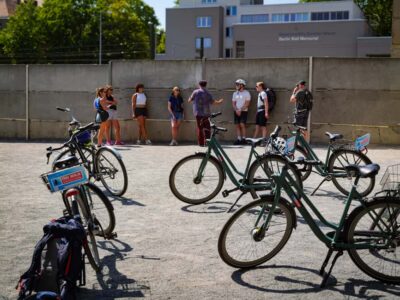
Alternative Bike Tour of Kreuzberg & Friedrichshain
Read our review →
Browse the lists this tour appears in