
REVIEW · KYOTO
Bike Tour Exploring North Kyoto plus Lunch
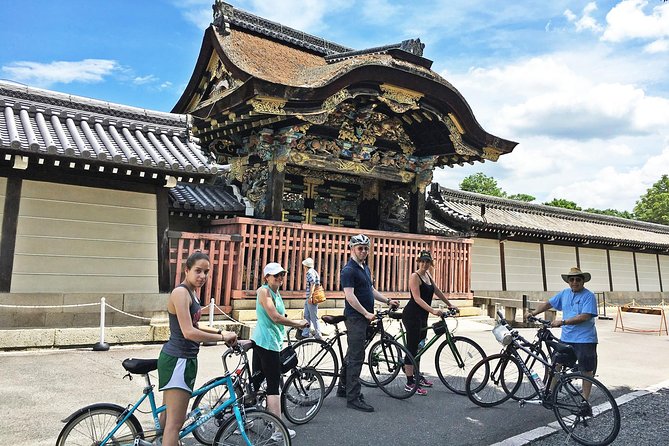
Kyoto makes more sense from a bicycle seat. You slip down quiet streets, reach places buses cannot, and cover enough ground to connect Nishi Honganji, Kitano Tenmangu, Kinkakuji, and Gion in one day. The small group, capped at eight people, keeps the ride personal, while guides such as Mayko, Quinn, Indra, and Julian add plenty of local context.
I like the comfortable Cannondale bikes and the easy pace, which includes regular stops, water, and time for photos. I also like that lunch and temple entry are covered in the price. The main consideration is physical effort: roughly 13 miles, or 24 kilometers, over five to six hours is manageable for most active riders, but it is still a full day on a bike, especially in Kyoto’s summer heat.
Key points to know before booking
- About 24 kilometers of cycling: The route is spread across the day, with breaks at temples, shrines, and city sights.
- Small groups of eight or fewer: Your guide can adjust the pace and answer questions without shouting over a crowd.
- Four major cultural stops: Nishi Honganji, Kitano Tenmangu, Kinkakuji, and Gion give you a broad look at Kyoto.
- Lunch is part of the experience: The meal may be served at a traditional noodle restaurant or a sushi venue, and dietary needs should be shared in advance.
- Comfortable, fitted bicycles: High-quality Cannondale bikes, seat padding, optional helmets, bottled water, and basic cycling equipment are included.
- Best for active visitors aged 13 and older: You need to be comfortable riding a bike and have a moderate level of fitness.
Why Kyoto works so well by bicycle
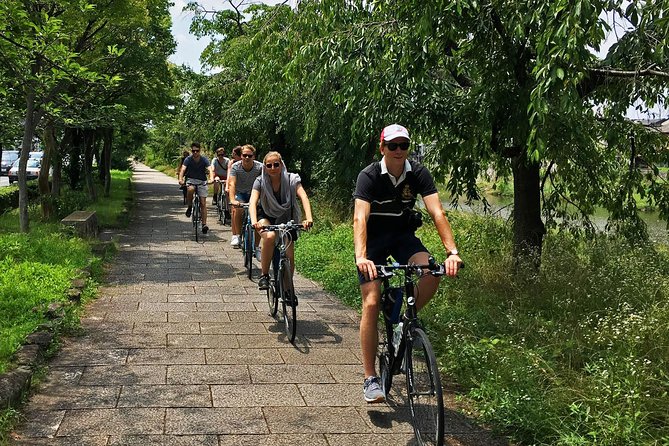
Kyoto’s famous sights are spread across a wide area. A bus can move you from one attraction to the next, but it also leaves you waiting at stops and looking at the city through glass. On this ride, the spaces between sights become part of the day.
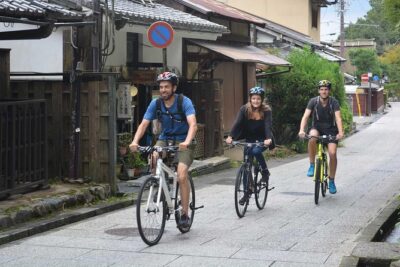
You cycle through ordinary streets, back lanes, and quieter corners that are easy to miss when you follow the main sightseeing routes. That matters in Kyoto. The city’s appeal is not only its polished temples, but also the contrast between old wooden buildings, local shrines, residential lanes, and busy commercial districts.
The route covers about 13 miles according to the published tour details and past route descriptions. One account puts the cycling distance at about 24 kilometers, with roughly two and a half hours spent actively riding and the rest divided between sightseeing, lunch, fitting the bikes, and short rests.
That makes the tour less punishing than a nonstop cycling trip. You are not expected to pedal hard for six hours. Still, you should be happy on a bicycle for a substantial part of the day.
More Bike Tours with Lunch in Japan
- 4.5-Hour Kyoto Bike Tour with Lunch and UNESCO Zen Temples
★ 5.0 · 122 reviews - 5-Hour Osaka Highlights Bike Tour with Lunch
★ 4.8 · 146 reviews - 5-Hour Tokyo & Edo Hidden Gem Bike Tour with Lunch
★ 5.0 · 113 reviews
Starting at 10:00 at Cycle Kyoto
The meeting point is Cycle Kyoto at 7 Higashikujō Nishisannōchō in Minami Ward. You meet the guide and the rest of the group, choose a properly sized bicycle, and get ready for the ride. The fitting and introduction take about 15 minutes.
The maximum group size is eight. That is one of the strongest practical features of this outing. A small group makes it easier to stay together on city streets, hear the guide at each stop, and adjust the pace if someone needs a slower ride.
The supplied bicycle is a high-quality Cannondale. Helmets are optional, and riders have reported that the bikes are selected by height and fitted with extra seat padding. Those details matter more than they may sound after several hours in the saddle.
Bottled water is included. Bring a little extra water in hot weather if you prefer to drink often, and expect the guide to pay close attention to hydration during warm days. Kyoto can be very hot, and even an easy pace becomes more tiring under strong sun.
Nishi Honganji and the scale of Kyoto’s wooden architecture
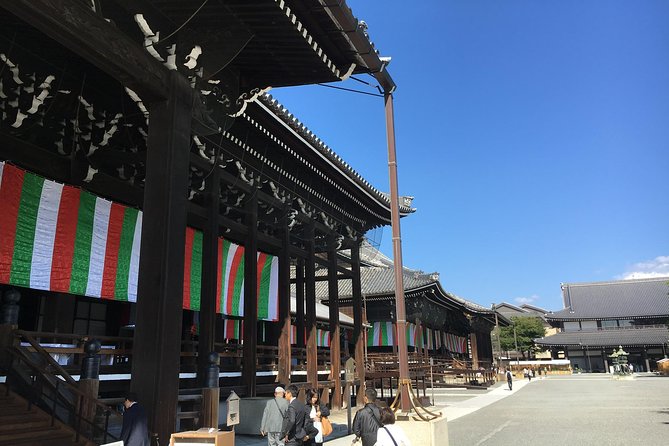
The first major stop is Nishi Honganji, one of Kyoto’s less visited religious sites and home to one of the world’s largest wooden buildings. The stop lasts about 15 minutes, so you will not have time for a long, unhurried exploration of every corner.
What makes it useful early in the day is the sense of scale. Nishi Honganji gives you a clear look at the size and presence of Kyoto’s religious architecture before the route moves toward more familiar sights. The guide also explains details you might pass without understanding on your own.
This is a good example of the tour’s balance. You get famous landmarks, but you also stop at places that can be overlooked by a first-time visitor focused only on the Golden Pavilion and Fushimi Inari.
Kitano Tenmangu, a shrine with a local feel
Next comes Kitano Tenmangu Shrine, with about 20 minutes to walk around and take in the atmosphere. You join local worshippers and see a religious site that feels active rather than preserved only for sightseeing.
The guide’s explanation is important here. Kyoto’s shrines can look quiet and beautiful, but their purpose and customs are not always obvious to someone seeing them for the first time. A good guide can explain what you are looking at, how the site fits into Japanese religious life, and why people continue to visit.
The stop is not long enough for deep independent wandering. If Kitano Tenmangu becomes a personal favorite, you may want to return later on your own. That is a common tradeoff with a sightseeing route that tries to cover a large part of Kyoto in one day.
More Bike Tours with Lunch in Kyoto:
- Versailles Full Day Bike Tour with Palace, Gardens, & Picnic
★ 5.0 · 2,217 reviews - Electric Cycling Tour of Ubud with Free Hotel Transfer and Lunch
★ 5.0 · 1,397 reviews - Bangkok: Bike and Canal Boat Tour with Lunch
★ 4.9 · 1,350 reviews - Cat Ba: Lan Ha, HaLong bay full day- biking, kayaking, lunch
★ 4.8 · 1,166 reviews
Kinkakuji, Kyoto’s famous Golden Pavilion
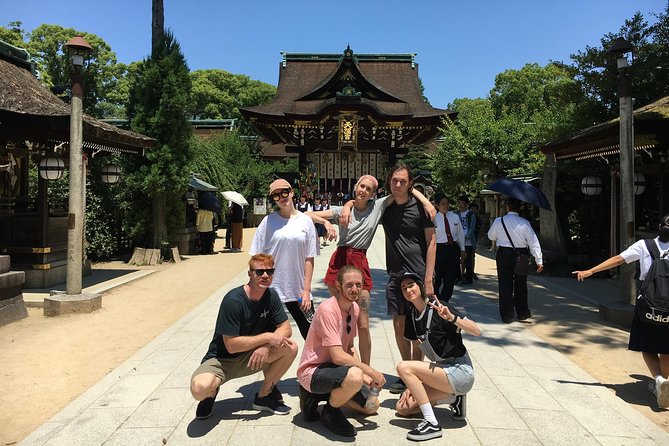
Kinkakuji is the headline stop. The Golden Pavilion is among Japan’s most visited attractions, and the tour includes the entrance fee, which keeps the day simple and avoids another ticket line.
You have about 30 minutes here. The guide provides commentary, then you have time to take photos, walk through the grounds, and perhaps stop for an ice cream. It is a short visit by Kyoto standards, but the route gives you enough time to see the pavilion and understand why it matters.
Kinkakuji is also where the cycling route includes a slight incline. It is not described as a major climb, and the rest of the ride is easier, but the hill is worth noting if you are out of practice. You do not need athletic cycling ability, but you should not book this expecting a completely flat city ride.
The pavilion can be crowded. A bicycle tour cannot change that, but arriving as part of a planned route saves you from working out transport between each northern sight. You see one of Kyoto’s essential landmarks without spending half the day navigating buses.
The former imperial grounds and the ride between sights
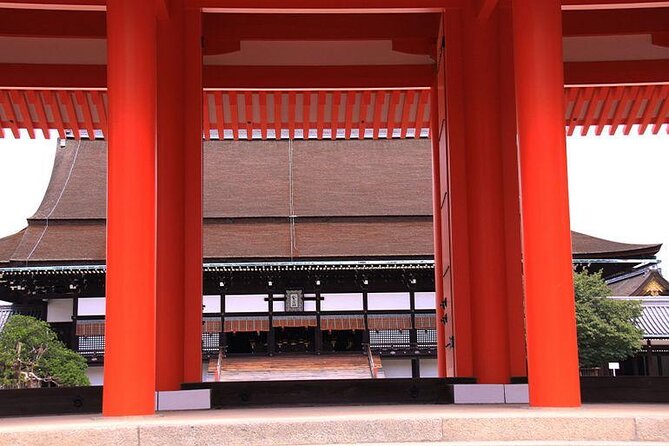
The route also passes through the grounds of the former seat of Japan’s imperial family. The itinerary gives this section less detail than the named temple and shrine stops, but it adds an important historical layer to the day.
This section is valuable because it breaks up the major-ticket-sight rhythm. Kyoto is not only a collection of temples. Its former imperial spaces help explain the city’s political importance and its long connection with Japan’s court culture.
The cycling itself is part of the attraction. The route links the sights through city streets rather than treating each stop as an isolated point. Guides have adjusted the speed and route for the group, and frequent short breaks keep the day from feeling like a race.
Even riders who do not cycle often have managed the route at an easy or moderate pace. If you have not ridden for years, tell the guide at the start. The ride is forgiving in pace, but it remains a city cycling experience, so you need to feel comfortable handling a bike around other road users.
Lunch at a traditional Japanese restaurant
Lunch is included, and it is more than a quick snack between attractions. Depending on the day, the meal may be at a noodle house, a traditional restaurant with several centuries of history, a sushi bar, or a sushi train venue.
That variation is worth understanding before you book. The exact restaurant is not fixed in the information provided, so you should expect Japanese food rather than one guaranteed menu or dining style. Past meals have included noodles and sushi, with vegetarian choices arranged when requested.
Tell the operator about dietary requirements ahead of time. Do not wait until the morning of the tour, since the meal arrangement may need advance planning.
Lunch also gives your legs a proper rest. After cycling and several temple visits, sitting down for a traditional meal is a welcome change of pace. Extra drinks are not included, so budget for those separately.
Gion, geisha culture, and the final stretch
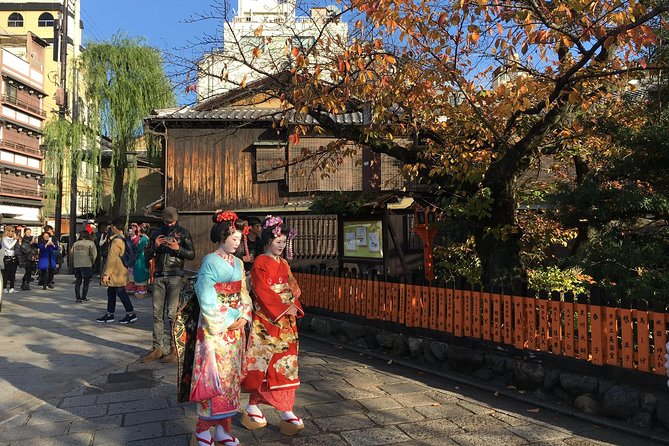
The tour finishes its sightseeing route with a short stop in Gion, Kyoto’s famous geisha district. The listed stop is about 10 minutes, so think of it as an orientation rather than a full tour of the neighborhood.
Your guide explains the district and the world of geisha, including the difference between public appearance and the private work behind it. You might catch a glimpse of an entertainer moving between appointments, but there is no guarantee, and respectful behavior is essential.
Gion is best appreciated as a living neighborhood, not a stage set. A brief cycling stop lets you see its streets and gives you enough background to return later on foot if you want more time. The tour then returns to the original meeting point.
Guide quality makes the day
The strongest part of this experience is the guide. Names assigned to the tour can vary, but guides including Mayko, Quinn, Indra, Julian, Karl, Jamie, and Jay have led this route.
The best guides do more than point toward a temple. They explain Japanese history, the difference between Buddhism and Shinto, the development of geisha culture, and how religious traditions still shape daily life. Quinn, for example, is described as a Shinto priest with a particularly strong understanding of the shrines and temples on the route.
Guides have also adjusted the ride for different abilities, learned names, added small stops, and spent extra time with groups when conditions allowed. That personal attention is easier with eight people than with 25.
You should not assume every guide has the same personality or background. But the structure of the tour gives a strong guide room to make the day feel like a shared ride rather than a scripted transfer between attractions.
Fitness, weather, and what to bring
The official requirement is a moderate physical fitness level, and riders must be at least 13 years old and comfortable riding a bike. The pace is generally easy to moderate, with few serious hills, but the total distance is still significant.
Hot weather is the biggest practical concern. Kyoto heat can make a gentle ride tiring. Wear light clothing, use sun protection, and drink regularly. The tour requires good weather, so rain can lead to a new date or a full refund rather than an unsafe ride.
The route has frequent sightseeing pauses, which helps. Several people have found the day comfortable even without a high level of fitness, while others found the cycling harder than expected. Your own comfort will depend on how often you ride and how well you handle warm weather.
You will want comfortable clothing, closed shoes, and a way to protect your phone or camera. The operator supplies the bicycle, cycling equipment, and bottled water, but extra drinks and optional gratuities are your responsibility.
Is $106.12 a good value?
At $106.12 per person, the price is fair for a five to six-hour small-group outing. You receive the Cannondale bike, guidance, bottled water, lunch, and entry to Kinkakuji. You also avoid piecing together buses, local directions, and separate temple tickets.
The value is strongest if this is your first full day in Kyoto. The route gives you a broad orientation, and the guide can suggest what deserves a return visit. Several stops are short, but that is how the tour covers so much ground without turning into a rushed bus circuit.
It is less useful for you if you want long, quiet visits at each temple or if you already know Kyoto well. Independent sightseeing gives you more control over timing. You also pay extra for drinks and may wish to budget for a gratuity.
The small group, lunch, and included entrance fee help justify the cost. More importantly, you are paying for the connections between places and for explanations that are hard to get while navigating the city alone.
Who should book this Kyoto bike tour?
I would choose this for an active first or second day in Kyoto. It works particularly well for couples, families with children aged 13 or older, solo visitors who want an easy social setting, and anyone who prefers streets and neighborhoods to enclosed transport.
It also suits riders who want cultural context without committing to a formal lecture. The route is active, but the stops and lunch keep it varied.
I would think twice if you dislike cycling in cities, need a slow walking pace, want a guaranteed specific lunch venue, or plan to spend several hours at each attraction. This is a broad introduction, not a deep visit to every site.
Should you book it?
Book it if you want to cover much of Kyoto in one energetic day and prefer local streets to bus windows. The route, included lunch, small group, fitted bikes, and strong guide focus make it a practical introduction to the city.
Skip it if you are uncomfortable riding 24 kilometers or want complete control over your schedule. For most reasonably active visitors, though, this is a smart way to connect Kyoto’s temples, shrines, former imperial spaces, and Gion without spending the day stuck in traffic.
Free cancellation is available up to 24 hours before the start time. Changes made later are not accepted, and poor weather or an insufficient number of bookings can lead to a rescheduled tour or full refund.
FAQ
How long does the bike tour last?
The experience lasts approximately five to six hours, including bicycle fitting, sightseeing stops, lunch, and cycling time.
Where does the tour start and finish?
It starts at Cycle Kyoto, 7 Higashikujō Nishisannōchō, Minami Ward, Kyoto. The tour ends back at the same meeting point.
What time does the tour start?
The scheduled start time is 10:00 am.
What sights are included?
The route includes Nishi Honganji, Kitano Tenmangu Shrine, Kinkakuji Temple, the grounds of the former seat of Japan’s imperial family, and Gion.
Is lunch included?
Yes. Lunch is included, though the exact venue may vary. Meals have included Japanese noodles and sushi.
Are bicycle and safety items provided?
A high-quality Cannondale bike, cycling equipment, guidance, and bottled water are included. Helmets are available as an option.
How fit do I need to be?
You should have a moderate level of physical fitness and be comfortable riding a bicycle. The route is about 13 miles, or 24 kilometers, with an easy to moderate pace and regular breaks.
What is the cancellation policy?
You can cancel up to 24 hours before the start time for a full refund. If poor weather or the minimum number of bookings causes the tour to be canceled, you will be offered another date or a full refund.
More Tours with Lunch in Kyoto
- Electric Bike Beach Adventure with Tequila Tasting and Lunch
★ 5.0 · 1,162 reviews - Appian Way Aqueducts Bike Tour (Catacombs & Lunch Option)
★ 5.0 · 975 reviews - Saint-Emilion Electric Bike Day Tour with Wine Tastings & Lunch
★ 5.0 · 696 reviews - Rome: Appian Way Aqueducts Bike Tour (UPG Catacombs & Lunch)
★ 4.9 · 692 reviews
Just added around Kyoto
- Kyoto: Afternoon Bamboo Forest and Monkey Park Bike Tour★ 4.9 · 83 reviews
- 4.5-hr Kyoto Historical Highlights Bike Tour with UNESCO★ 4.7 · 13 reviews
- Kyoto: Arashiyama Bamboo Forest Morning Tour by Bike★ 5.0 · 115 reviews
- Arashiyama Bamboo Forest E-Biking Tour★ 5.0 · 183 reviews
- Kyoto: Fushimi Inari Shrine and Tofukuji Temple E-Bike Tour★ 5.0 · 75 reviews
- Historical Kyoto E-Bike Tour★ 5.0 · 181 reviews
- 4.5-Hour Kyoto Bike Tour with Lunch and UNESCO Zen Temples★ 5.0 · 122 reviews
- Afternoon Kyoto Bike Tour: Bamboo Forest, Monkeys & Hidden Spots★ 5.0 · 283 reviews
Kyoto Bike Tours, compared.
Arashiyama Bamboo Forest & Hidden Gems Bike Tour (Early Bird)
Read our review →
5 Top Highlights of Kyoto Full Day Bike Tour (E-bike option)
Read our review →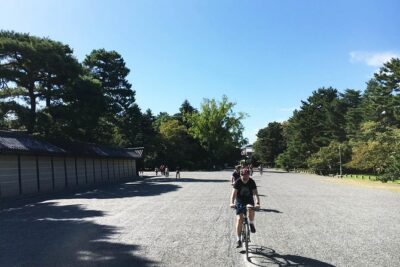
Full Day Biking Tour Exploring the Best of Kyoto
Read our review →
Afternoon Kyoto Bike Tour: Bamboo Forest, Monkeys & Hidden Spots
Read our review →
Browse the lists this tour appears in