
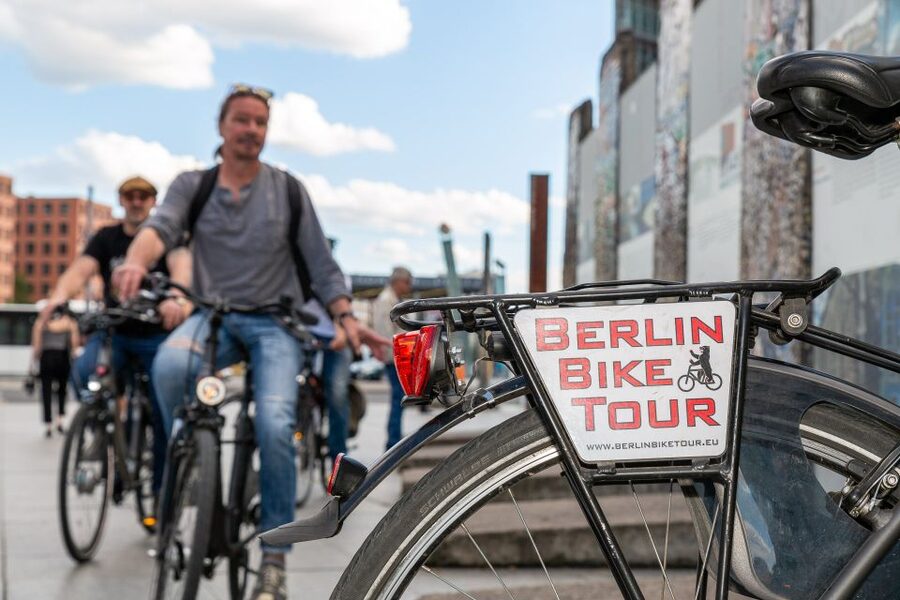
REVIEW · BERLIN
Berlin Wall History Small Group Cycling Tour
The Berlin Wall is easiest to understand when you follow its old path, stop at the places where people tried to cross, and see how quickly a border could cut through ordinary streets. This four-hour bike tour links the main sites from Bornholmer Straße, where the first East German citizens crossed on November 9, 1989, to Checkpoint Charlie and the Palace of Tears.
I like the small group size, limited to eight, and the route’s mix of major sights and quieter memorials. I also like the personal touch provided by guides such as Ferenz, whose account of the period around reunification adds a human voice to the dates and political facts. The main consideration is language: the tour is conducted in German, and you should be comfortable cycling for four hours in all weather.
Key points to know before booking
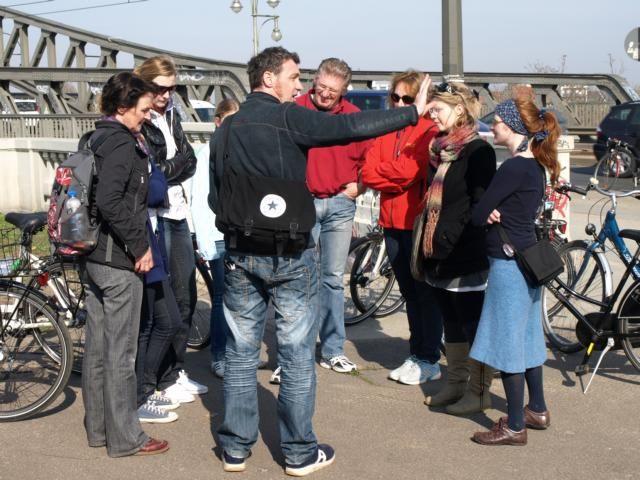
- Start at the first open crossing: The tour begins at Bornholmer Straße, the border point where East German citizens first crossed freely on November 9, 1989.
- See more than postcard sections: You’ll visit watchtowers, former Death Strip areas, memorials, cemeteries, and escape sites that are easy to miss alone.
- Ride with a small group: Groups range from three to eight people, allowing the guide to stop and explain without managing a large crowd.
- Follow the Wall through modern Berlin: The route connects Mauerpark, Bernauer Straße, Brandenburg Gate, Potsdamer Platz, and Checkpoint Charlie.
- Expect a German-language tour: The guide’s stories and explanations are in German.
- Pack light and dress for weather: Bicycles and fees are included, rain ponchos are supplied if needed, but food, drinks, and large bags are not.
Why a bicycle works so well for Berlin Wall history
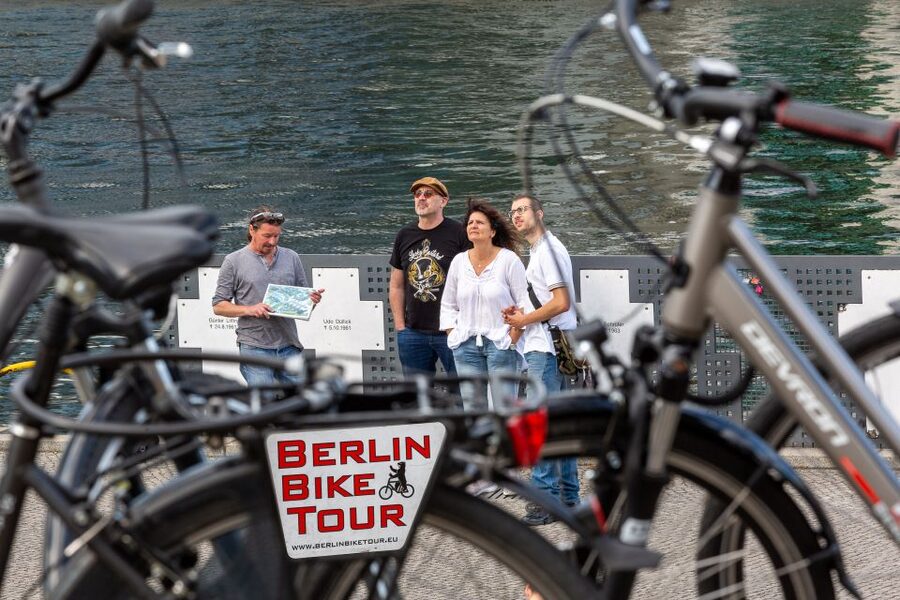
Berlin’s former border did not sit in one tidy museum. It cut across railway lines, apartment blocks, cemeteries, parks, government property, and busy city streets. A bicycle lets you connect those pieces in a way that walking rarely can within a single half-day.
You are not simply stopping at a preserved wall fragment, taking a photo, and moving on. The route shows how the border changed from one district to the next. At some points, you’ll see physical remains. At others, small markers, memorials, photographs, and changes in the street layout carry the story.
The four-hour duration is useful here. It gives the guide enough time to explain the setting at each stop while still covering a large section of central Berlin. You should expect regular stops rather than four hours of nonstop pedaling, though the precise pace depends on the group and the guide.
The small group matters. With three to eight people, it is easier to hear the guide, ask a question, and pause beside a memorial without creating a traffic jam. This is also a more personal format for a difficult subject. The history includes failed escapes, deaths, separation, and sudden political change, so a guide who can explain the human side is important.
More Historic Bike Tours in Germany
- Berlin: Cold War & Berlin Wall History Guided Bike Tour
★ 4.8 · 422 reviews - Neuschwanstein Castle by Bus Incl. Bike Ride or Hohenschwangau
★ 5.0 · 607 reviews - Munich: Neuschwanstein Castle by Bus with Alpine Bike Ride
★ 4.9 · 217 reviews
Bornholmer Straße and the night the border opened
The tour starts at 75 Bornholmer Straße, close to the tram stop Björnsonstraße and the S-Bahn station Bornholmer Straße. This is a particularly strong starting point because the tour begins where the Wall’s collapse first became real for ordinary East German citizens.
At the Square of November 9, 1989, the guide sets the scene for the evening when a confused announcement about new travel rules sent people toward the crossing. The border guards eventually opened the gates, and the first large breach in the Berlin Wall took place here.
You’ll also hear why cherry trees were planted along Bornholmer Straße. These trees are a reminder of the friendship and support that followed reunification, but the location itself remains tied to the tense final hours of the divided city.
This first stop gives the rest of the tour a clear purpose. You begin with the moment the border opened, then trace the barrier backward through the places where it controlled daily life and restricted escape.
Mauerpark, watchtowers, and the Death Strip
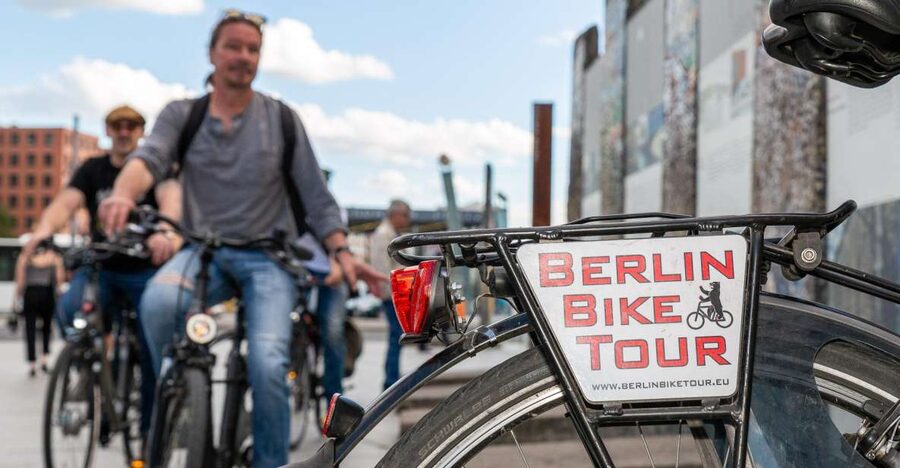
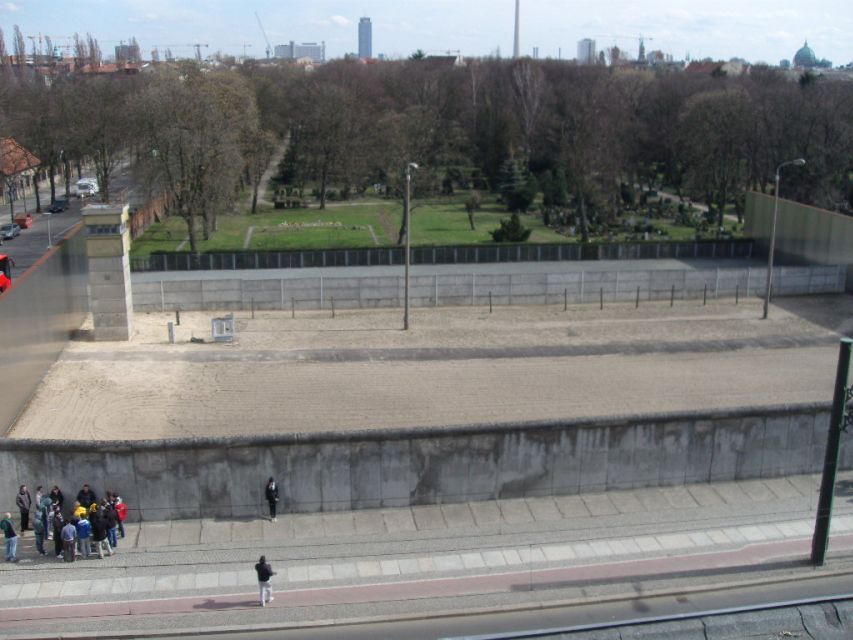
From Bornholmer Straße, the route continues through Mauerpark. The park occupies part of the former border zone, so its open setting can be misleading. Today it is a familiar Berlin recreation area, but its earlier role was far more severe.
You’ll see traces of the former Death Strip and one of the remaining watchtowers. Very little of the full Wall survives, which makes these fragments valuable. They help you picture the layered system that once included fences, patrol paths, lighting, guards, and controlled zones rather than a single concrete wall.
The guide also uses images of rabbits painted on the ground to lead the group along parts of the route. These rabbit symbols refer to the animals that lived in the restricted border area, a small and memorable detail that gives the site a human scale without making light of its purpose.
The drawback is that the surviving remains can look modest. If you expect long stretches of untouched Wall, you may be surprised. The value lies in the explanation and the setting, not in the size of any one remaining structure.
Bernauer Straße and the Chapel of Reconciliation
Bernauer Straße is one of the most important Wall memorial areas in Berlin. The border once ran directly beside residential buildings, creating scenes of people escaping through windows and families being separated by a barrier placed almost at their doorstep.
The memorial area helps you understand the Wall as a physical system and as a daily threat. You’ll encounter memorial markers, surviving border elements, and the Chapel of Reconciliation. The chapel occupies a site connected to a church that was trapped within the border strip and later destroyed.
This stop is especially useful if you want more than the political story of East and West Germany. The focus shifts to residents, escape attempts, and the practical effects of the border on a neighborhood. The guide can connect what you see on the ground with the people who tried to cross or were caught within the controlled zone.
You may find the memorial’s tone more serious than the famous central Berlin sights later in the tour. Allow yourself time to listen rather than treating it as a quick photo stop.
More Historic and Landmark Bike Tours in Berlin:
- Party Bike Private Party Up To 14 People in Old Town Scottsdale
★ 5.0 · 3,541 reviews - Guided Bike Tour of Old Town Key West
★ 5.0 · 2,611 reviews - Historical Singapore Bike Tour on Full-Sized Bicycles
★ 5.0 · 1,421 reviews - Barcelona: 2.5-Hour Bike or E-Bike Historical Tour
★ 4.5 · 1,262 reviews
Chausseestraße and Invaliden Cemetery
The route then moves toward the former Chausseestraße border crossing and Invaliden Cemetery. Chausseestraße was one of the crossing points through which people and vehicles passed under strict control. Its inclusion shows that the Wall was not only a barrier for escape attempts. It was also a regulated gateway that divided the city’s transport network.
Invaliden Cemetery adds another layer. The former border zone cut through the cemetery, and its location offers a quiet setting for understanding how the frontier disrupted old civic spaces. You’ll see how a place associated with burial and remembrance became entangled with surveillance and restricted movement.
This portion of the ride is valuable because it slows the story down. The famous scenes at Brandenburg Gate often dominate Berlin Wall history, but the cemetery and Chausseestraße show how the border reached into less obvious corners of the city.
The tour also visits the Memorial to Günter Litfin. Litfin was killed while attempting to cross the border, and the memorial keeps attention on the people who risked their lives to leave East Berlin. The story is difficult, but it gives a face and name to the human cost of the border.
The Government Bank and Parliament of the Trees
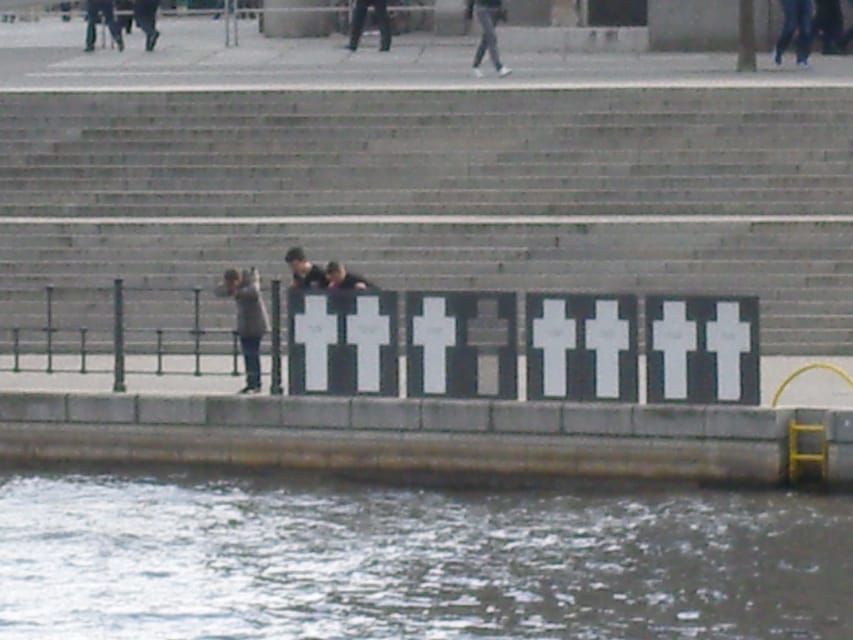
As you ride along the former government bank, the route reaches the Parliament of the Trees. This memorial uses trees and commemorative elements to mark people who died at the Berlin Wall.
The location is a good example of how Berlin remembers the Wall without preserving every meter of concrete. You’ll see a public space that carries historical meaning through names, symbols, and the arrangement of the site.
The Parliament of the Trees also creates a pause between the more concentrated memorial areas and the grand central sights. The ride remains tied to the former border, but the setting changes as you approach the government district and the heart of Berlin.
Brandenburg Gate and the route through central Berlin
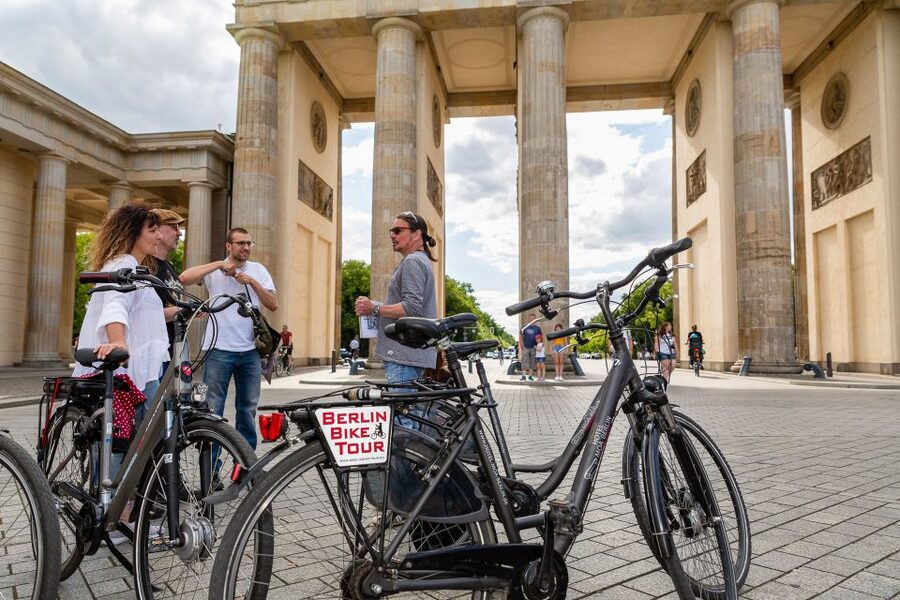
Brandenburg Gate is the most recognizable stop on the tour. During the division of Berlin, the gate sat within the restricted zone beside the Wall. It was not a normal city crossing, and its image became a symbol of separation and later reunification.
The tour takes you through the gate and onward toward the Tränenpalast on Friedrichstraße. Along the way, you pass the Friedrichstadt Palace, Museum Island, the New Synagogue, and the Old Berlin Post Office.
These sights broaden the tour beyond Wall memorials. You see how the former border route runs through Berlin’s cultural and political center, with grand buildings and ordinary city life now occupying spaces that were once controlled and divided.
The guide’s job here is to keep the history from becoming a blur of famous names. You’ll get more from the route if you pay attention to how the Wall affected access between districts, rather than viewing Brandenburg Gate only as a landmark.
Potsdamer Platz and Checkpoint Charlie
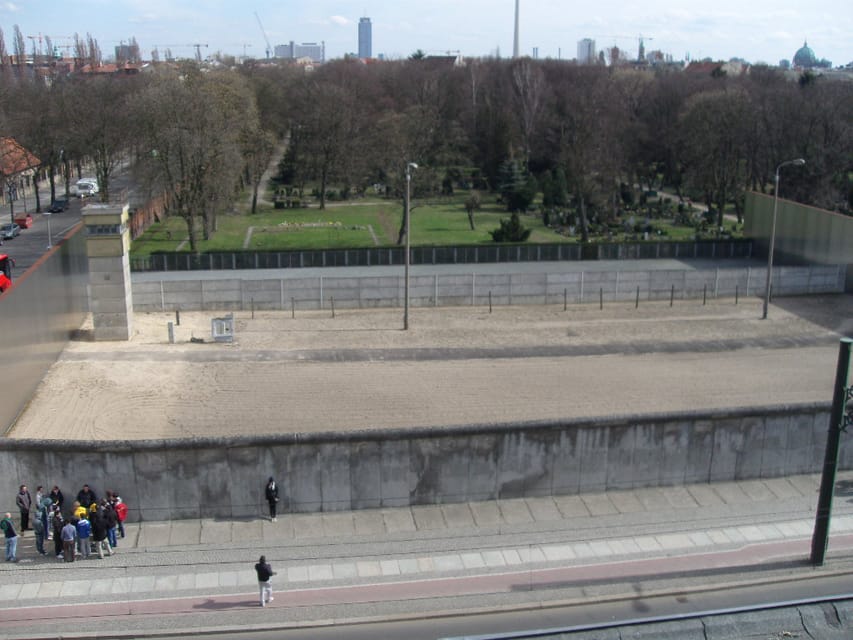
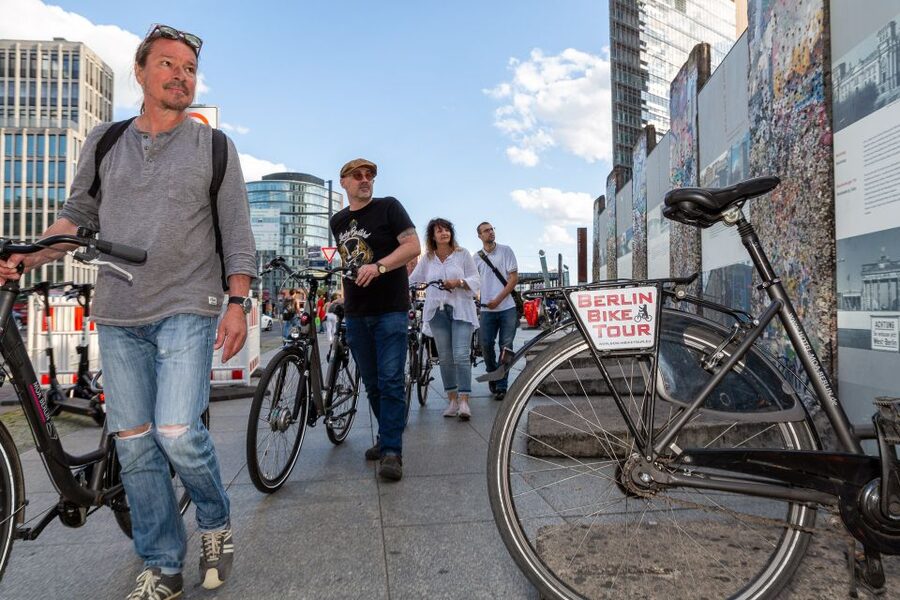
Potsdamer Platz gives you another sharp contrast between old and new Berlin. Before the Wall, this was a major city crossroads. During the division, the area was heavily affected by the border and became a broad, empty zone. Today, modern buildings fill the area, making it one of the clearest places to see how much the city changed after reunification.
Checkpoint Charlie is the tour’s best-known former border crossing. Its name carries a lot of weight, but the present-day site is also one of Berlin’s most commercialized historical areas. A guided visit helps place the checkpoint in context and separate its real role from the souvenir shops and photo opportunities around it.
That balance is useful. You’ll see the famous location, but the tour does not rely on Checkpoint Charlie alone to explain the Wall. The earlier memorials, watchtower, cemetery, and escape stories give the site a stronger historical framework.
The Palace of Tears and the ride back
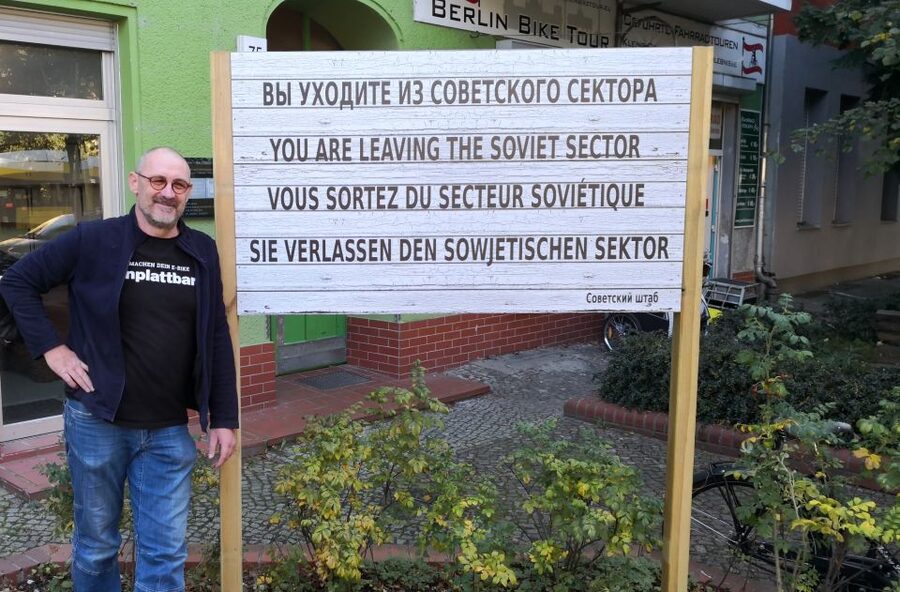
The Tränenpalast, or Palace of Tears, on Friedrichstraße was a departure hall for people leaving East Berlin. Its nickname comes from the farewells that took place there, often between family members who could not freely cross the border themselves.
This is a fitting final historical stop because it focuses on separation in a more intimate setting. The Wall was not only about physical escape. It shaped visits, departures, family contact, and the pain of saying goodbye under state control.
After the Tränenpalast, you return to the original bike shop at Bornholmer Straße. The route forms a broad historical loop, starting at the opening of the border and ending with a place associated with people leaving through it.
What the $40 price delivers
At $40 per person, the tour offers solid value if you want a guided overview of Berlin Wall history. The price includes the bicycle, guide, and fees, and the route covers a large number of meaningful sites in four hours.
A bicycle rental alone would not provide the route’s historical structure or the explanations at each stop. You might reach some of the major locations independently, but finding the less obvious watchtower, former Death Strip areas, cemetery, and escape memorials would take extra planning.
The strongest value comes from the guide. The experience is not built around polished displays or a large visitor center. It depends on connecting places with events and personal stories. Ferenz, one of the guides, has been praised for combining friendliness, clear explanations, and personal memories of the period around reunification.
There are limits. Food and drinks are not included, and you should not bring luggage or a large bag. You also need to accept the weather policy: the tour runs in all weather, with a rain poncho supplied when necessary.
Who will get the most from this tour
This is a good choice for anyone who wants a structured introduction to the Berlin Wall and prefers active sightseeing to a full morning indoors. It also works well for families with older children and teenagers, since the bicycle route keeps the day moving while the memorials provide clear points for discussion.
The tour suits you especially well if you want local context and less obvious locations. The personal explanations and smaller group can make the subject easier to follow than a self-guided ride using scattered plaques and phone maps.
You should think twice if you need an English-language tour. The stated tour language is German, and the main value comes from listening to detailed explanations. You should also reconsider if cycling for four hours in changing weather would make the day uncomfortable.
Meet at 75 Bornholmer Straße. It is one minute from the Björnsonstraße tram stop, two minutes from the Bornholmer Straße S-Bahn station, and about ten minutes from Schönhauser Allee station. Bring identification, sunglasses, a sun hat, and a camera, but leave large bags behind.
Should you book it?
Book this tour if you want to understand Berlin’s Wall through a connected route rather than a handful of famous landmarks. The combination of Bornholmer Straße, Bernauer Straße, Invaliden Cemetery, the Parliament of the Trees, Brandenburg Gate, Potsdamer Platz, Checkpoint Charlie, and the Palace of Tears gives you a well-shaped four-hour history lesson with wheels.
I would choose it for a first visit focused on twentieth-century Berlin, especially if you value a personal German-speaking guide and a small group. Skip it only if you require English, dislike cycling in bad weather, or want a short sightseeing ride with little historical detail.
FAQ
Where does the Berlin Wall cycling tour start?
The tour starts at BERLIN BIKE TOUR, 75 Bornholmer Straße, Berlin 10439.
How long does the tour last?
The tour lasts four hours.
How much does the tour cost?
The listed price is $40 per person.
How many people are in the group?
The group has a minimum of three and a maximum of eight participants.
Is the bicycle included?
Yes. A bicycle is included in the tour price.
What language is the tour conducted in?
The live tour guide speaks German, and the stated tour language is German.
Does the tour run in rainy weather?
Yes. The tour takes place in all weather. A rain poncho is provided on rainy days.
What places does the tour visit?
The route includes Bornholmer Straße, Mauerpark, Bernauer Straße, the Chapel of Reconciliation, Chausseestraße, Invaliden Cemetery, the Günter Litfin Memorial, the Parliament of the Trees, Brandenburg Gate, Potsdamer Platz, Checkpoint Charlie, and the Tränenpalast.
Is food or drink included?
No. Food and drinks are not included.
Can I bring luggage or a large bag?
No. Luggage and large bags are not allowed.
More History Tours in Berlin
- Asheville Historic Downtown Guided Electric Bike Tour with Scenic Views
★ 5.0 · 1,234 reviews - Historic Athens: Small Group Electric Bike Tour
★ 4.9 · 966 reviews - Bordeaux: Historic Center & Chartrons District Bike Tour
★ 4.8 · 709 reviews - Boston City View Bicycle Tour: History and Landmarks
★ 5.0 · 638 reviews
Just added around Berlin
- Private Berlin Street Food Bike Tour★ 4.9 · 42 reviews
- The Beauty of Berlin by Bike: Private Tour★ 5.0 · 59 reviews
- Party and Beer Bike Private Sightseeing Tour Berlin with Pick-up★ 4.5 · 32 reviews
- Private Berlin Street Food Tour by Bike★ 5.0 · 87 reviews
- Best of Berlin E-Bike Tour★ 5.0 · 77 reviews
- Best of Berlin E-Bike Tour★ 5.0 · 37 reviews
- Berlin: E-Bike Tour of the Berlin Wall and Mitte Highlights★ 4.7 · 60 reviews
- Berlin City Bike Tour with Beer Garden Stop★ 4.9 · 308 reviews
Berlin Bike Tours, compared.
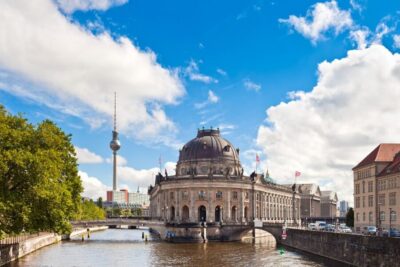
Sights and Highlights Bike Tour with a Local Guide
Read our review →

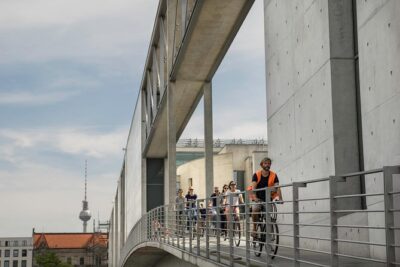
Berlin Highlights Sightseeing Bike Tour in Small Groups
Read our review →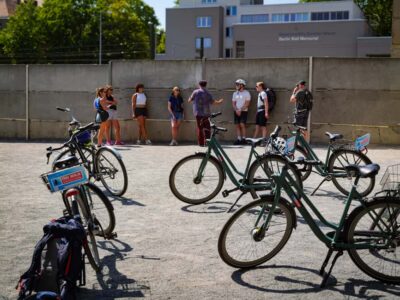
Alternative Bike Tour of Kreuzberg & Friedrichshain
Read our review →
Browse the lists this tour appears in