
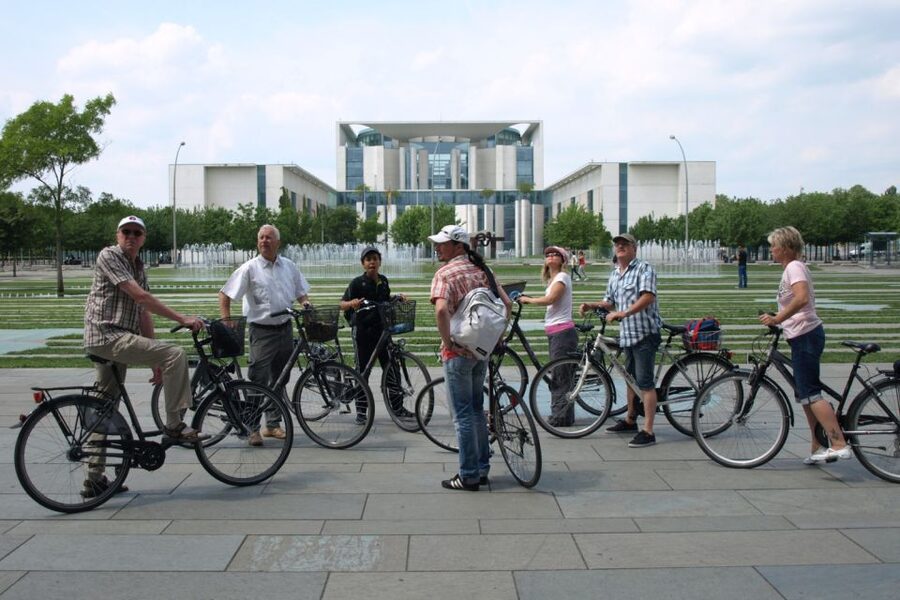
REVIEW · BERLIN
Berlin: Small Group Bike Tour Through City Center
Berlin’s story comes into focus from a bicycle seat. In 210 minutes, you’ll pedal from the former Bornholmer Straße border crossing, where East and West Berliners first met on November 9, 1989, to the Reichstag, Brandenburg Gate, Museum Island, and Alexanderplatz. The route ties together divided Berlin and today’s capital without making you spend the whole day underground or on a bus.
I like the small group of no more than eight, which gives a guide room to explain details and keep the ride personal. I also like the mix of famous sights and less obvious stops, including the New Synagogue, Charité, Marie-Elisabeth-Lüders-Haus, and the old post headquarters. The main drawback is the pace: there is a lot to cover, and one rider wished for another one or two hours, ideally with a short break.
Key points at a glance
- Bornholmer Straße begins the story: Start at the former border crossing where Berliners from East and West joined together when the Wall fell.
- A broad central Berlin route: Cover the Reichstag, Brandenburg Gate, Tiergarten, Holocaust Memorial, Potsdamer Platz, Museum Island, and Alexanderplatz.
- Small group cycling: The tour is limited to eight participants, a useful size for listening and keeping together.
- German-speaking guiding: The guide leads in German, with Richard named in one especially positive account.
- Good value at $40: Your bicycle, guide, and a rain poncho when needed are included.
- Bring water and pack light: Food and drinks are not included, large bags are not allowed, and the long ride has no listed meal stop.
A Berlin bike tour that starts where the Wall fell
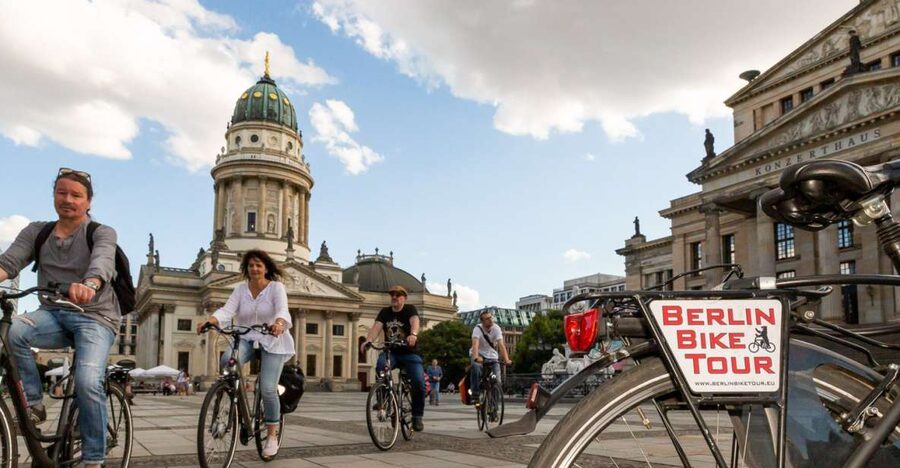
The meeting point is BBT Fahrradladen, Fahrradwerkstatt & Fahrradverleih at 75 Bornholmer Straße. You should arrive 20 minutes early, giving yourself time to check in, get a bicycle, and settle before the group rolls out.
The location is easy to reach. Tram stop Björnsonstraße is about a minute away on lines M1, M13, and M50. S-Bahn station Bornholmer Straße is roughly two minutes on foot, served by S1, S2, S8, S25, and S85. Schönhauser Allee, with S-Bahn, U-Bahn, and additional connections, is about 10 minutes away.
The opening stop is the Place of 9 November 1989, at the old Bornholmer Straße crossing. This is a smart place to begin because the tour does not treat Berlin’s division as a distant textbook subject. You are at one of the actual points where the Wall opened and people from both sides came together.
From there, the ride moves into central Berlin. The bicycle makes the city’s changes easier to read. You pass from older streets and surviving Jewish landmarks to grand government buildings, open parks, Cold War symbols, and the rebuilt center.
More City Tours in Berlin:
- Berlin City Bike Tour with Beer Garden Stop
★ 5.0 · 917 reviews - Berlin: Top secret bike tour and hidden gems of the city
★ 4.8 · 411 reviews - Berlin City Bike Tour with Beer Garden Stop
★ 4.9 · 308 reviews
The New Synagogue and Berlin’s changing Mitte
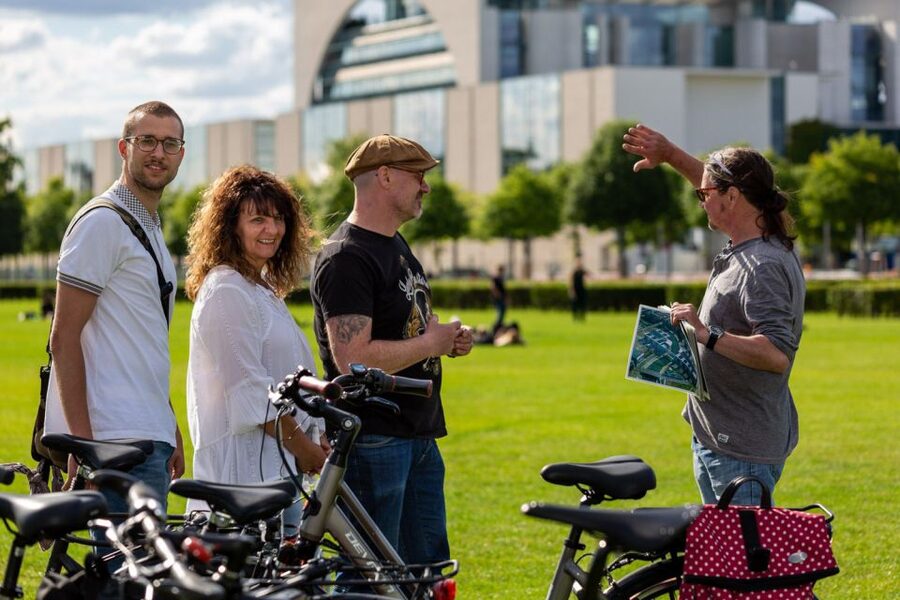
The New Synagogue Berlin, also called the Jewish Centre, gives the route an early architectural and cultural marker. Its ornate structure is one of the city’s most recognizable buildings, and the stop helps widen the tour beyond the standard Wall and Nazi-era story.
The Old Post Headquarters adds another piece of Berlin’s urban past. You will see how the central district mixes restored historic buildings with newer construction, a pattern repeated throughout Mitte.
The Friedrichstadt-Palast is another sight along the way. It is a reminder that Berlin’s city center is not only about monuments and political institutions. The route keeps moving through places tied to theater, public life, education, transport, and government.
This is one of the tour’s best qualities. Instead of giving you a single historical theme, it shows how Berlin operates as a layered city. The guide can connect buildings that you might otherwise pass without understanding.
Charité and Hauptbahnhof show modern Berlin
The route continues past the Charité, one of Berlin’s best-known medical institutions, and then to Berlin Hauptbahnhof. The main railway station is a sharp contrast to the older buildings around Mitte. Its glass-and-steel design, open interior, and major rail connections reflect the capital Berlin became after reunification.
I like this stretch because it gives the tour a useful change of scale. You are not looking only at statues and historic facades. You are also seeing the infrastructure of a current capital, with the Charité representing public medicine and Hauptbahnhof representing the city’s national transport role.
The station area can feel more open and modern than the older center. That contrast is part of the point, but it also means you should expect a steady ride rather than long stops at every location. The supplied route lists many sights, and the tour’s 210-minute length requires the guide to keep the group moving.
Reichstag and the Government Quarter
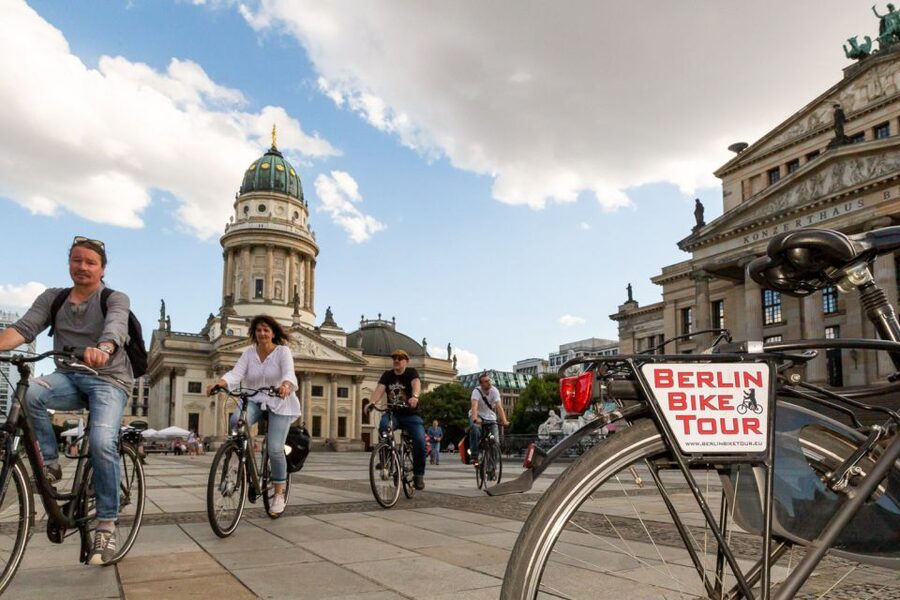
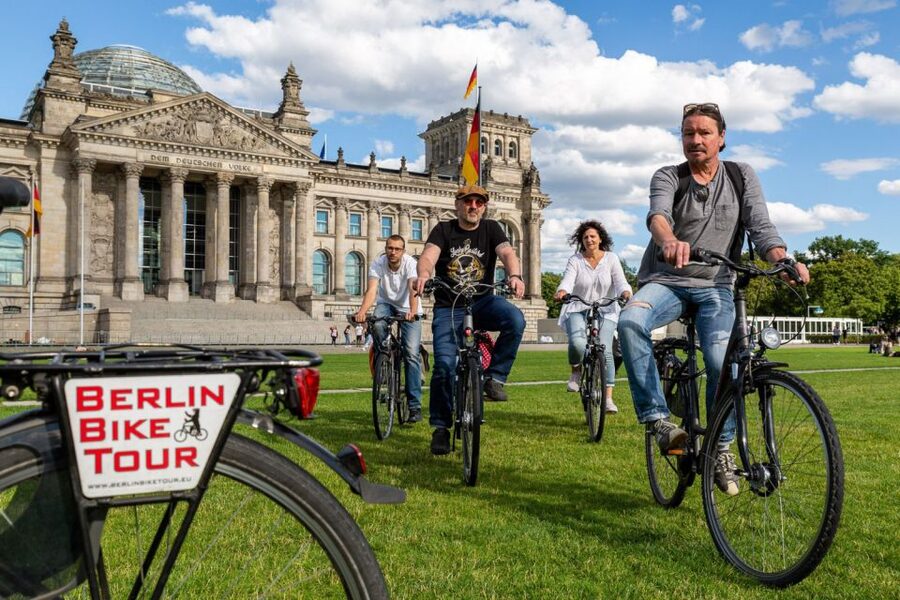
The Government District brings you to the Reichstag, one of the most important symbols of a united Berlin. The building’s political meaning is stronger when you arrive by bicycle from the former Wall crossing. The tour has already taken you from division to reunification, so the Reichstag fits naturally into the story.
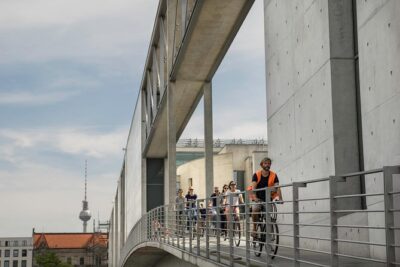
You will also see the Marie-Elisabeth-Lüders-Haus, part of the government complex along the Spree. Together, these buildings show how the post-reunification capital was planned around the river and the parliamentary district.
The government area is especially useful for first-time visitors because it can be hard to understand on foot. Buildings are spaced out, the river cuts through the district, and several large modern structures look similar at a glance. A guide can give you the basic purpose of the area while you keep a comfortable riding rhythm.
The tour does not include entrance visits. You are sightseeing from the bicycle, so book this experience for orientation and context rather than interior access to the Reichstag or other buildings.
A few more bike tours around Berlin worth a look
- Berlin: Sights and Highlights Bike Tour with a Local Guide
★ 4.8 · 2,698 reviews - Berlin Highlights 3-Hour Bike Tour
★ 5.0 · 948 reviews - Berlin Highlights: 3-Hour Bike Tour
★ 4.9 · 809 reviews - Berlin Highlights Sightseeing Bike Tour in Small Groups
★ 5.0 · 652 reviews
Tiergarten, Brandenburg Gate, and the Holocaust Memorial
After the Government Quarter, you ride through Tiergarten, Berlin’s large central park. The shift from institutional buildings to trees and open paths offers a welcome break. It also shows why Berlin is often easier to grasp when you move through it at street level.
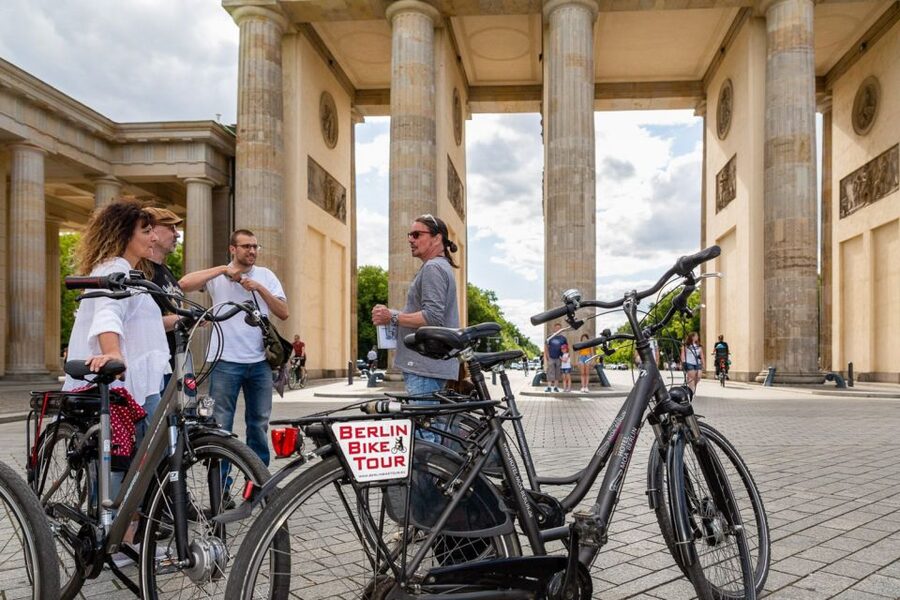
The park is followed by the Brandenburg Gate, the city’s most famous landmark. This is a major photo stop and a key point in Berlin’s political story. The gate once sat near the divided city’s border and now serves as a familiar symbol of a reunited capital.
Nearby, the Holocaust Memorial presents a very different mood. The field of concrete blocks is close to the main sightseeing route, but it asks for a quieter kind of attention. You will likely receive an explanation from the guide, though the schedule means this is not a long museum visit.
The sequence of Tiergarten, Brandenburg Gate, and the memorial works well. You get green space, a monumental city symbol, and a place of remembrance within a short stretch. At the same time, the number of stops means you should not expect extended time at each one.
Potsdamer Platz and the rebuilt center
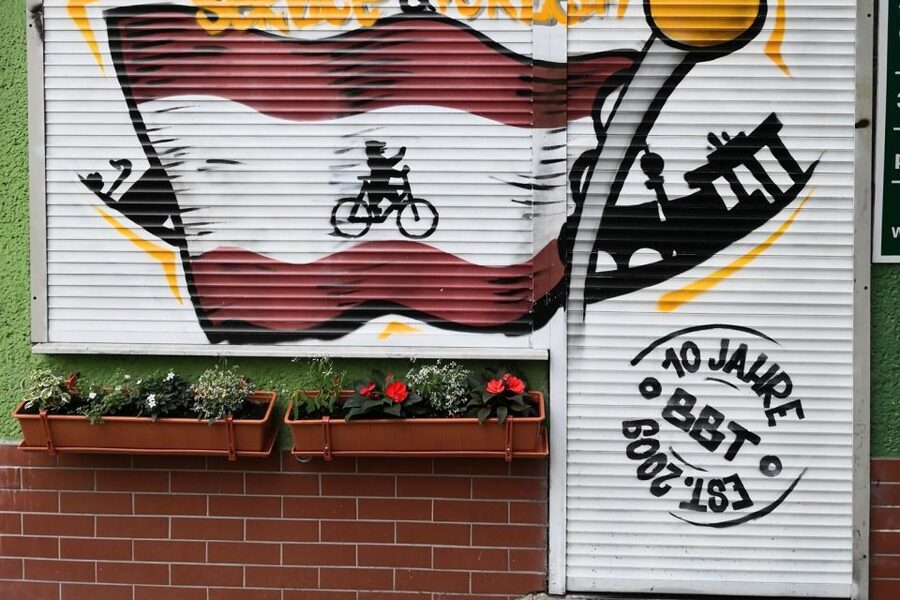
Potsdamer Platz gives you one of Berlin’s clearest examples of postwar change. Once cut by the Wall and left largely empty during the divided years, it became a major redevelopment area after reunification.
From a bicycle, you can see the contrast between old Berlin and the newer commercial center without spending time crossing broad roads or retracing your steps. This part of the route is useful if you want a quick sense of how much construction followed the city’s political reunification.
The tour then moves toward Gendarmenmarkt, one of the most handsome squares in central Berlin. The German Cathedral and French Cathedral face the square, while the surrounding buildings give the stop a more formal, imperial-era character.
Bebelplatz follows, along with Humboldt University. These locations add political, intellectual, and architectural context to the ride. Bebelplatz is also associated with one of the most painful episodes of Nazi-era book burning, so it deserves more than a quick photograph.
The guide’s commentary matters here. A bicycle tour can easily become a parade of names unless someone explains why the sites matter. The positive comments about the guide’s clear and engaging storytelling, including the account of Richard sharing personal experiences, suggest that the quality of the German narration is central to the experience.
Unter den Linden and Museum Island
You continue along Unter den Linden, Berlin’s grand historic boulevard. It connects several of the city’s most important institutions and landmarks, making it one of the most efficient sections of the tour.
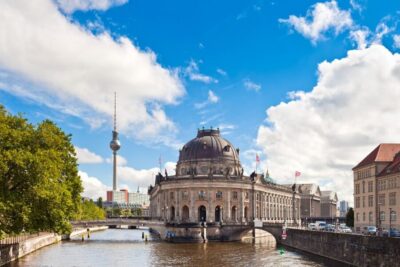
The route includes Humboldt University, Berlin Cathedral, Schlossplatz, and the wider Museum Island area. Berlin Cathedral is especially striking from the outside, with its large dome and formal position beside the Spree. Schlossplatz reflects the city’s long argument with itself over monarchy, war, division, and reconstruction.
This is sightseeing from the street, not a museum tour. You will not have time to visit the collections inside Museum Island during this ride, and the tour does not include entry fees. Still, cycling past the cathedral, palace area, and major museum buildings gives you a useful map of central Berlin for a later independent visit.
Nikolaiviertel offers a smaller-scale contrast. Its streets and historic character feel different from the broad avenues and monumental spaces nearby. The route’s ability to shift from major state architecture to an older neighborhood is one reason the tour feels more varied than a simple landmark circuit.
Alexanderplatz and the East German symbols
The final central section reaches Red Town Hall, Neptune Fountain, St. Mary’s Church, Alexanderplatz, the TV Tower, the World Clock, and the Park Inn by Radisson Berlin Alexanderplatz.
Alexanderplatz is one of the city’s clearest reminders of East Berlin. The TV Tower dominates the skyline, while the World Clock remains a distinctive symbol of the former German Democratic Republic. Neptune Fountain and St. Mary’s Church add older elements to the broad public square.
This part of the tour works best if you want to compare the city’s political eras in one place. The red-brick town hall, church, socialist-era clock, tower, and modern hotel all sit within the same large central zone.
Alexanderplatz can be crowded and visually busy. A bicycle gives you mobility, but you still need to pay attention to other riders and pedestrians. Stay close to the guide and follow instructions, particularly during the central-city sections.
The route eventually heads through Prenzlauer Berg on the return to the starting point. The neighborhood is described as the center of new Berlin, and it gives the ride a final change in tone. After the formal monuments of Mitte and the socialist scale of Alexanderplatz, Prenzlauer Berg provides a look at a more contemporary district before you return to Bornholmer Straße.
What $40 includes, and what it does not
At $40 per person, the tour offers solid value if you want a broad introduction to Berlin in one outing. The price includes the bicycle, a city guide, and a rain poncho if the weather turns wet. It does not include food, drinks, transport to the meeting point, or entrance tickets.
A normal city sightseeing tour can cover several of these locations, but the bicycle changes the amount of ground you can cover. You are not confined to a bus window, and you avoid spending much of the tour underground. The tradeoff is physical effort and a faster rhythm.
One account from an eight-person group said the bicycles were good and the ride was so enjoyable that another one or two hours would have been welcome, perhaps with a short break. That is useful guidance. The 210-minute duration is long enough to feel substantial, but there is no listed meal or rest stop.
Bring your own water. One rider specifically forgot a bottle, and food and drinks are not included. Sunglasses, a sun hat, and a camera are sensible additions, while a passport or ID card is listed among the items to bring.
Large bags and luggage are not allowed. Pack lightly and avoid arriving with airport-style baggage. The tour takes place in all weather, and rain ponchos are provided on wet days, but you should still dress for the forecast.
Group size, language, and the right level of effort
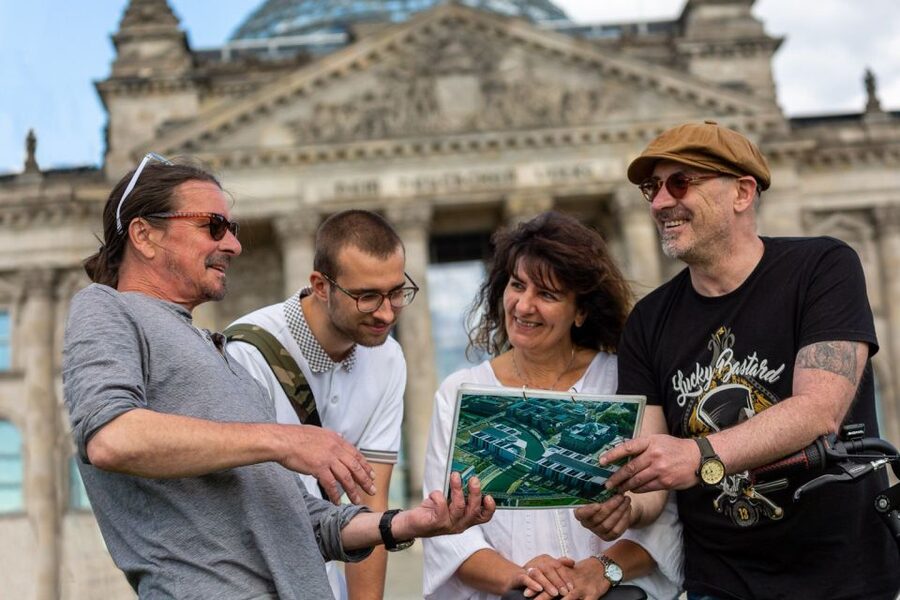
The maximum group size is eight people. That is small enough for a guide to speak directly to the group and for the ride to feel less like a procession. It also means a full group can include different cycling speeds, so you should be comfortable keeping pace with the guide.
The tour is conducted in German. This is an important booking point. If you understand German well, the experience can give you more natural commentary and personal detail than a heavily scripted multilingual tour. If you do not understand German, this is not the right choice based on the information provided.
The route is packed with sights but has no stated cycling difficulty rating. You should be prepared for a 210-minute ride through a large central area, with regular sightseeing stops. The tour is likely best for people who enjoy covering ground and can remain attentive while riding.
The high overall rating of 4.9 from 64 reviews fits the strongest pattern in the feedback: praise for the guide’s information, engaging delivery, friendly manner, and the fresh perspective created by seeing Berlin on a bicycle. The recurring positive point is not simply the equipment. It is the combination of personal guiding and a route that links many periods of the city’s past.
Booking details worth checking before you pay
Free cancellation is listed up to 24 hours before the tour for a full refund, but the information also gives a stricter deadline of three days before the scheduled tour for groups of three or more people. If you are booking for three or more, confirm which deadline applies before finalizing plans.
You can reserve now and pay later, which helps if your Berlin schedule is still changing. Starting times depend on availability, so check the date carefully.
The meeting point is outside the BBT bicycle shop at 75 Bornholmer Straße. Arriving 20 minutes early is not just a formality. You need time to locate the shop, collect the bike, and be ready for the opening explanation at the former border crossing.
Who should book this Berlin ride?
I would choose this tour if you want to understand Berlin as a connected city rather than collect isolated photographs. The route gives you the Wall, reunification, government, remembrance, monarchy, East Germany, modern redevelopment, and contemporary neighborhoods in one continuous ride.
It suits first-time visitors who want a strong orientation, people who enjoy guided history, and anyone who finds buses too passive. The small group is also useful if you prefer the possibility of asking questions and hearing a guide’s own experiences.
I would hesitate if you want long museum visits, lots of free time, or a relaxed ride with a scheduled café break. The route is ambitious, the language is German, and the weather will not cancel the outing automatically.
FAQ
How long does the bike tour last?
The tour lasts 210 minutes, or three and a half hours.
How many people can join the tour?
The group is limited to eight participants.
What language is the tour conducted in?
The live tour guide conducts the tour in German.
Where does the tour begin and end?
It begins and ends at BBT Fahrradladen, Fahrradwerkstatt & Fahrradverleih, at 75 Bornholmer Straße, Berlin 10439.
How early should I arrive?
You should arrive 20 minutes before the scheduled start time.
What is included in the price?
The price includes a bicycle, a city guide, and a rain poncho when necessary.
Can I take the tour in rainy weather?
Yes. The tour operates in all weather, and rain ponchos are provided on rainy days.
Are food and drinks included?
No. Food and drinks are not included, so bring your own water and any snacks you need.
Should you book it?
Book this ride if you want a fast, well-connected introduction to Berlin and you are comfortable cycling for three and a half hours in a German-speaking group. At $40, the bicycle, guide, small group, and wide route make good sense for a first or second day in the city. Skip it if your priority is museum interiors, leisurely stops, or a shorter outing.
Just added around Berlin
- From Berlin: Gardens & Palaces of Potsdam Bike Tour★ 5.0 · 61 reviews
- Berlin: Green City Guided Bike Tour★ 4.6 · 29 reviews
- Berlin: From East to West & Wall Tour by Bike with a Guide★ 4.8 · 171 reviews
- Berlin: Illuminated Berlin by Bike Taxi★ 4.8 · 162 reviews
- Berlin: 48-Hour or 72-Hour Bike Rental★ 5.0 · 14 reviews
- Berlin (E)Bike Tour Historical Highlights in Small groups★ 4.5 · 24 reviews
- Berlin: BMW Motorrad Production – See How Bikes Are Built★ 4.7 · 179 reviews
- Berlin: 3-hour bike tour – A journey through time in the capital★ 4.8 · 24 reviews
Berlin Bike Tours, compared.
Sights and Highlights Bike Tour with a Local Guide
Read our review →

Berlin Highlights Sightseeing Bike Tour in Small Groups
Read our review →
Alternative Bike Tour of Kreuzberg & Friedrichshain
Read our review →
Browse the lists this tour appears in