
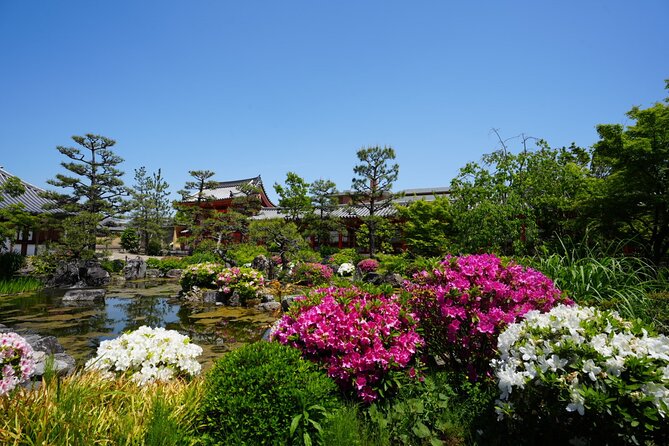
REVIEW · KYOTO
Kyoto Early Morning E Biking Tour Fushimi Inari Kiyomizu Temple
Kyoto’s famous shrines are much easier to enjoy before the city wakes up. This five-hour morning e-bike tour gets you to Fushimi Inari, Sanjusangendo, and Kiyomizu-dera without making you hunt down a bike or struggle up eastern Kyoto’s hills.
I like the small maximum of eight people, which should make it easier to hear the guide and keep the ride moving. I also like the practical route: you see three major sights in one morning, with an English-speaking guide adding context instead of leaving you to guess what you are looking at. The main concern is the unclear temple-fee wording. Admission is listed as included, yet one booking experience involved 3,300 yen in entry charges, so confirm this point before you pay.
Key points at a glance
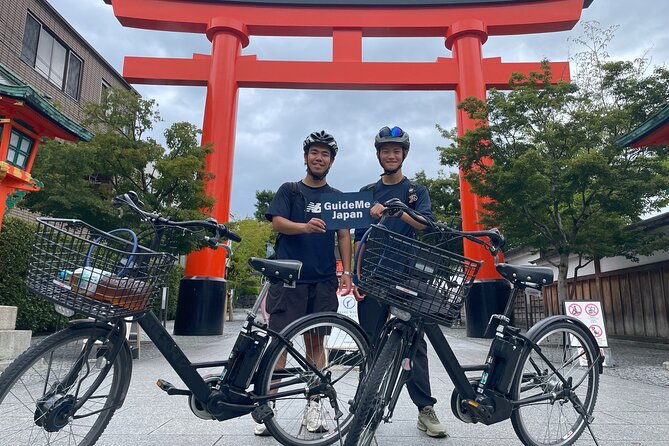
- Early start: Visit Kyoto’s best-known sites before the main afternoon crowds arrive.
- Three major stops: The route includes Fushimi Inari-taisha, Sanjusangendo, and Kiyomizu-dera.
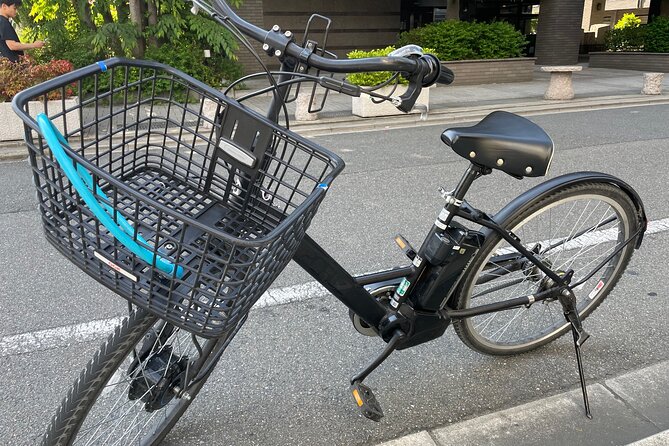
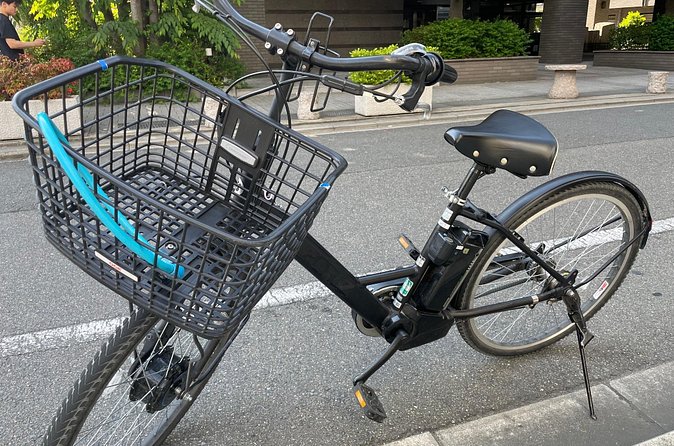
- E-bike included: You do not need to arrange a rental, and electric assistance helps with Kyoto’s hills.
- Small group size: The tour accepts no more than eight people.
- Guide-led sightseeing: English commentary brings meaning to the gates, statues, buildings, and views.
- Five-hour format: You get a focused morning rather than an entire day tied up in a tour.
Why an early e-bike start works in Kyoto
Kyoto’s most famous sights can feel very different at 7 or 8 in the morning than they do later in the day. Fushimi Inari is especially popular, and the red torii gates become harder to enjoy once large groups fill the approach and lower paths.
Starting early gives you the best chance of a calmer visit. It does not mean you will have every path to yourself, and the exact quietness will depend on the start time and season. Still, the timing is a real strength for anyone with limited time in Kyoto.
The bicycle also changes the pace of the morning. You are not waiting for several separate trains or buses, and you avoid the bother of finding a rental shop. An e-bike matters most around eastern Kyoto, where the ride to Kiyomizu-dera includes uphill sections. You still need to pedal and manage a bicycle, but electric assistance makes the route more approachable.
This is not a leisurely stroll with short transfers between attractions. You will ride between stops, walk around temple and shrine grounds, and remain active for much of the five hours. A moderate level of fitness is required, so I would not choose this for a completely passive sightseeing morning.
More Historic Bike Tours in Japan
- Historical Kyoto E-Bike Tour
★ 5.0 · 181 reviews - Kyoto: Fushimi Inari Shrine and Tofukuji Temple E-Bike Tour
★ 5.0 · 75 reviews - 4.5-hr Kyoto Historical Highlights Bike Tour with UNESCO
★ 4.7 · 13 reviews
Meeting at Kyoto Station and getting settled
The tour begins at the JR-Central Ticket Office by the Shinkansen Hachijo Entrance at Kyoto Station. The meeting point is on the first floor, at 83 Higashishiokoji Takakuracho in Kyoto’s Shimogyo Ward.
That location is useful if you arrive by bullet train or are staying near Kyoto Station. It is also close to public transportation, though you should allow enough time to locate the correct station entrance. Kyoto Station is large, and a rushed arrival can make an otherwise simple meeting feel needlessly stressful.
Your e-bike is supplied as part of the tour. The details do not specify the bicycle model, adjustment process, or helmet policy, so ask the guide about fit and equipment at the start. A properly adjusted bike matters more than it sounds, especially when you will ride and walk for about five hours.
The group limit is eight people. That is a good size for an urban cycling tour. You should have a better chance of staying together at crossings, hearing the English commentary, and asking questions than you would in a large coach group.
The tour ends back at the same meeting point. That makes planning easier, particularly if you have luggage stored near Kyoto Station or a train reservation later in the day.
Fushimi Inari and its thousands of red gates
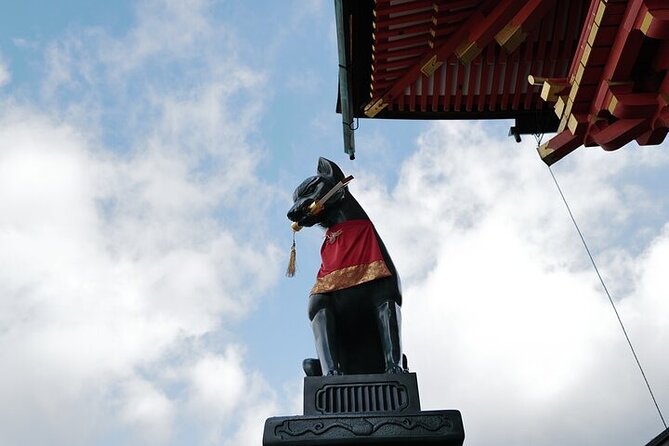
The first major stop is Fushimi Inari-taisha, one of Kyoto’s best-known Shinto shrines. Its signature feature is the long sequence of red torii gates, which create a striking corridor up the wooded mountain.
You will leave the bicycle to explore on foot. The listed time is about one hour, enough to see the most famous lower section and get a sense of the shrine’s scale. It is not enough for a full climb through every section of the mountain, so keep your expectations realistic.
The early timing is especially useful here. Fushimi Inari is a popular photo stop, and the narrow passages beneath the gates can feel crowded later in the morning. You should still expect other people, but an early visit gives you more room to pause and look up at the repeating gates.
Your guide can explain the meaning behind the shrine and its symbols, which adds more than simply walking through a photogenic tunnel. The experience is visual first, but the stories help you understand why this place matters in Japanese religious life.
Wear shoes suitable for walking. The tour includes cycling, but Fushimi Inari also involves paths and steps. You may find the shrine’s lower area manageable, while a longer climb becomes more demanding.
Sanjusangendo and the hall of 1,000 Kannon figures
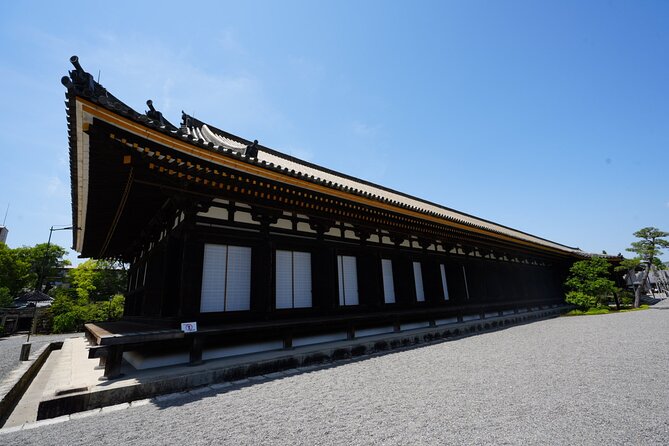
Sanjusangendo provides a sharp change of mood and setting. Instead of an outdoor route through red gates, you enter a temple known for its interior rows of 1,000 statues of Kannon, the goddess of mercy.
The statues are arranged in formation, creating a powerful sight even if you know little about Buddhist art. Each figure has its own expression and details, so the hall rewards a slower look. The one-hour stop gives your guide time to explain what you are seeing rather than reducing the visit to a quick photograph.
This is one of the most valuable parts of the route for someone who wants more than Kyoto’s most familiar postcard views. Fushimi Inari and Kiyomizu-dera are instantly recognizable, while Sanjusangendo offers a quieter and more focused encounter with religious art.
Temple behavior matters here. Follow the guide’s instructions about where to walk, where photography is allowed, and how to behave inside the hall. The supplied information does not specify photography rules, so do not assume you can photograph everything.
Admission details need special care at this stop. The tour information says temple admission is included, but one booking experience reported paying 3,300 yen for three entries across the two temples. Since the exact split was not explained, ask GuideMe Japan to confirm which fees are covered before departure. That small check can prevent an unpleasant surprise.
More Historic and Landmark Bike Tours in Kyoto:
- Party Bike Private Party Up To 14 People in Old Town Scottsdale
★ 5.0 · 3,541 reviews - Guided Bike Tour of Old Town Key West
★ 5.0 · 2,611 reviews - Historical Singapore Bike Tour on Full-Sized Bicycles
★ 5.0 · 1,421 reviews - Barcelona: 2.5-Hour Bike or E-Bike Historical Tour
★ 4.5 · 1,262 reviews
Kiyomizu-dera on Kyoto’s eastern hillside
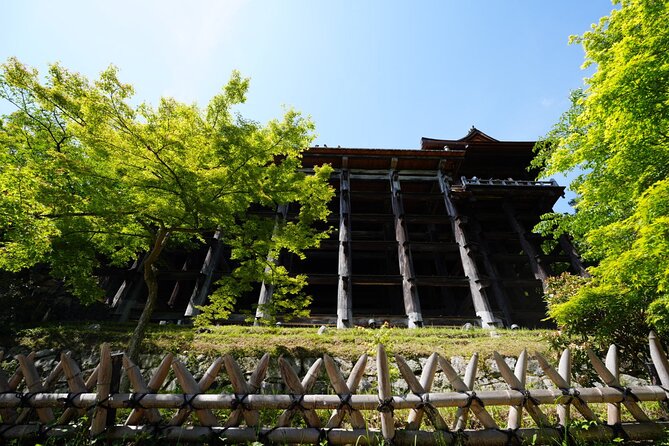
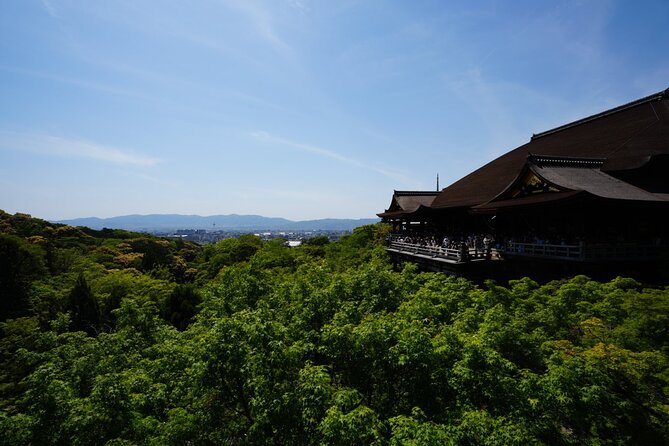
Kiyomizu-dera is the final major sight. Set on a hillside in eastern Kyoto, the temple is known for its impressive construction and broad views toward the city and nearby surroundings.
The approach makes the e-bike useful. Eastern Kyoto has hills, and cycling there without assistance could be tiring, particularly after two earlier stops. The electric motor does not remove the need for effort, but it should make the uphill ride more manageable for people with moderate fitness.
You will have about an hour at the temple. That allows time to see the main areas and hear the guide’s explanation of the site’s past. The broad views are an important part of the visit, but the temple itself is the main reason to stop. Look closely at the timber construction and the way the buildings sit above the hillside.
Kiyomizu-dera is one of Kyoto’s busiest attractions, which makes the early schedule useful again. The tour cannot guarantee an empty temple, but arriving earlier is generally a smarter choice than visiting during the busiest part of the afternoon.
The site may involve slopes and walking, even after you leave the bicycle. If you are comfortable with a moderate active morning, the pace should be reasonable. If you have difficulty walking or cycling, this is not the right format.
What the English-speaking guide adds
A guide is important on this route because the three stops represent different parts of Kyoto’s religious and artistic life. Without commentary, you would still see beautiful places, but you could miss why the gates at Fushimi Inari matter, what the Kannon figures represent, and how Kiyomizu-dera fits into Kyoto’s story.
The guide team has included Hiro and Rin. Hiro is described as personable and informative, while Rin has been praised for detailed explanations at Kiyomizu-dera, the torii gates, and Sanjusangendo. Rin also has strong photography skills, which may be useful if you want help getting good pictures of yourself at the major stops.
Do not book this expecting a formal lecture. The best use of a small group is to ask questions as you go. You can ask the guide to explain a symbol, clarify a temple custom, or point out details you might otherwise pass.
The quality of the morning will depend in part on your guide. The available feedback is highly positive, with a 4.9 rating and 100 percent recommendation rate from the published set of 14 ratings. That is encouraging, though the sample is small, so I would treat it as a good sign rather than a guarantee.
Is $67.41 a fair price?
At $67.41 per person, the tour is not the cheapest way to visit these sights. You are paying for the e-bike, the English-speaking guide, the route planning, and the convenience of covering three major locations in one morning.
The value is strongest if you have only a short stay in Kyoto. Arranging a bike yourself, planning the route, navigating between the sites, and learning the background on your own would take time. Here, the main work is handled for you, and the small group makes the experience more personal than a large bus tour.
The price is less compelling if you already have a bicycle, know Kyoto well, and prefer to visit each site at your own pace. You might also want more time at Fushimi Inari or Kiyomizu-dera than the one-hour windows allow.
The admission question affects the value. Temple admission is included in the listed inclusions, but the reported 3,300 yen charge creates a conflict. Before booking, confirm in writing whether all required temple admission fees are covered, which locations are included, and whether any payment is expected locally. Do not build your budget around a vague assumption.
Food and drinks are not included. Bring your own water and plan to eat after the tour, since no meal stop is promised. The tour ends at Kyoto Station, where you can continue sightseeing or find food.
Who should choose this morning ride?
I would recommend it to a first-time Kyoto visitor who wants to cover several headline sights without spending the whole day on public transportation. It also suits people who like having a guide explain what they are seeing but do not want a large group.
It is a good match for active couples, friends, and solo participants who are comfortable on a bicycle. The e-bike reduces the strain of Kyoto’s hills, but it does not turn the activity into a ride for everyone. You need moderate fitness and enough comfort to cycle in an urban setting.
It is less suitable if you want a slow temple morning, need extensive time at each site, or dislike switching between riding and walking. Families should consider the physical demands and the group’s bicycle requirements before booking, since the supplied details do not state age limits or child-bike arrangements.
The small group can also work well for solo visitors. One person had a particularly personal experience when other participants dropped out, allowing extended conversation with the guide. You cannot count on having a private tour, but a small maximum gives you a better chance of direct contact than a large group does.
Practical details before you reserve
The experience is confirmed at booking, uses a mobile ticket, and is offered near public transportation. The meeting point and return point are both at Kyoto Station, which simplifies the rest of your day.
The tour lasts approximately five hours. Set aside the full morning rather than assuming you will be free immediately after the final temple visit. Cycling, temple visits, and the return ride all form part of the schedule.
Free cancellation is available if you cancel at least 24 hours before the local start time. Changes or cancellations inside that window are not accepted for a refund. Since the activity depends on good weather, poor conditions may lead to a different date or a full refund.
I would also check three things before departure:
- Confirm the exact start time and meeting entrance.
- Confirm the temple admission arrangement, especially the reported 3,300 yen charge.
- Ask about bicycle fit and any equipment you need to use.
Should you book the Kyoto early morning e-bike tour?
Book this tour if you want an efficient, active introduction to Kyoto’s major sights and like the idea of seeing them before the afternoon rush. The route is well chosen: Fushimi Inari offers the famous gates, Sanjusangendo brings remarkable Buddhist art, and Kiyomizu-dera adds hillside views and grand architecture.
The guide is a major part of the value. Hiro and Rin have been associated with clear, personable explanations, and Rin may also help with photographs. The eight-person limit is another strong point.
I would hesitate only if you want a slow visit, have limited mobility, or cannot get a clear answer about admission fees. For most reasonably fit visitors with a short Kyoto stay, the $67.41 price is fair for the bike, guide, route, and time saved. Just confirm the temple-cost details before you commit.
FAQ
Where does the Kyoto e-bike tour begin?
It begins at the JR-Central Ticket Office at the Kyoto Station Shinkansen Hachijo Entrance, on the first floor.
Where does the tour finish?
The activity ends back at the meeting point at Kyoto Station.
How long does the experience last?
The tour lasts approximately five hours.
Which sights are included?
The route visits Fushimi Inari-taisha Shrine, Sanjusangendo Temple, and Kiyomizu-dera Temple.
Is an e-bike provided?
Yes. An e-bike is included in the tour.
Is a guide included?
Yes. An English-speaking guide is included.
How many people can join the tour?
The maximum group size is eight people.
Are temple admission fees included?
The tour information says temple admission is included, but one booking experience reported paying 3,300 yen for three entries. Confirm the exact admission arrangement with GuideMe Japan before booking.
Is food included?
No. Food and drinks are not included.
What happens if bad weather cancels the tour?
If poor weather causes cancellation, you will be offered another date or a full refund.
Can I cancel for a full refund?
Yes, if you cancel at least 24 hours before the experience start time. Cancellations made less than 24 hours in advance are not refunded.
More Morning Rides in Kyoto
- Kyoto: Arashiyama Bamboo Forest Morning Tour by Bike
★ 5.0 · 115 reviews - Explore Hidden Alleyway with a Local Expert (Morning tour)
★ 5.0 · 61 reviews - Start from Kyoto Station: Early Morning E-Bike Tour with Kyotoite
★ 5.0 · 15 reviews - 3-Hour Morning Bike Tour of Jaipur
★ 5.0 · 1,253 reviews
Just added around Kyoto
- ONLY YOU in the Bamboo Forest! 4 hours E-bike tour with a local★ 5.0 · 45 reviews
- Pedal Adventure Kyoto’s iconic landmarks on an e-bike tour★ 5.0 · 189 reviews
- South Kyoto in a Nutshell: Gentle Backstreet Bike Tour!★ 5.0 · 225 reviews
- The Beauty of Kyoto by Bike: Private Tour★ 5.0 · 47 reviews
- Explore Hidden Alleyway with a Local Expert (Afternoon Tour)★ 5.0 · 17 reviews
- Secret Eastern Kyoto Biking Adventure★ 5.0 · 44 reviews
- Explore Hidden Alleyway with a Local Expert (Morning tour)★ 5.0 · 61 reviews
- Kyoto Bamboo Forest & Golden Pavilion E-Bike Tour★ 5.0 · 50 reviews
Kyoto Bike Tours, compared.
Arashiyama Bamboo Forest & Hidden Gems Bike Tour (Early Bird)
Read our review →
5 Top Highlights of Kyoto Full Day Bike Tour (E-bike option)
Read our review →
Full Day Biking Tour Exploring the Best of Kyoto
Read our review →
Afternoon Kyoto Bike Tour: Bamboo Forest, Monkeys & Hidden Spots
Read our review →Browse the lists this tour appears in