
REVIEW · KYOTO
Start from Kyoto Station: Early Morning E-Bike Tour with Kyotoite
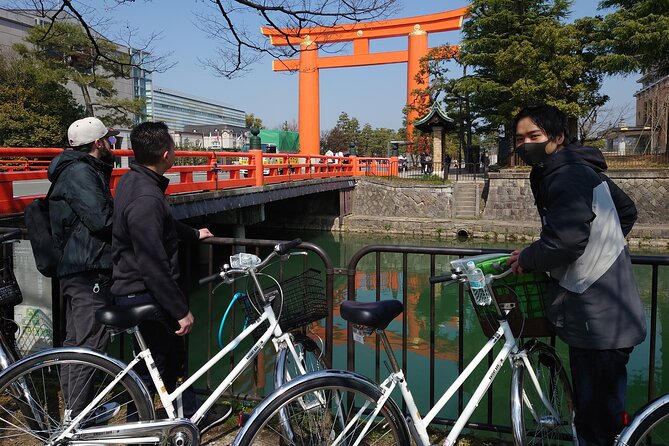
Kyoto is at its best early, before tour buses and packed sidewalks take over. This three-and-a-half-hour e-bike ride gives you a quick, appealing route through Fushimi Inari, Gion, Nanzen-ji, and Heian Shrine, while quieter streets and river paths keep the ride pleasant. I especially like the small maximum of six people and the way the route links major sights with corners you would likely miss on foot.
I also like that the bike, helmet, water, raincoat, and liability insurance are included, so you can simply show up near Kyoto Station and ride. Guides including Aki, Sato, and Ryuto have been praised for clear explanations, city navigation, family photos, and useful food suggestions. The trade-off is that this is still a bike tour: there are some hills, the pace includes ordinary Kyoto streets, and snacks are not provided.
Key points to know before booking
- Early start, quieter Kyoto: Tours begin at 7:30 a.m. from March through June, and at 8:30 a.m. from January through February.
- Small group by design: The tour accepts no more than six people, making it easier to hear the guide and stay together.
- Big sights with local streets: You visit Fushimi Inari, Sanjusangendo, Gion, Nanzen-ji, and Heian Shrine, with backstreets and river paths between them.
- A manageable ride with some hills: The route is not described as strenuous, but you should be comfortable cycling and handling occasional uphill sections.
- Useful equipment included: You receive an e-bike, helmet, bottled water, raincoat, and liability insurance.
- Good value for active sightseers: At $84.92 per person, the price covers equipment, guiding, and a concentrated morning route, but not food or temple extras.
Why an early e-bike ride works so well in Kyoto
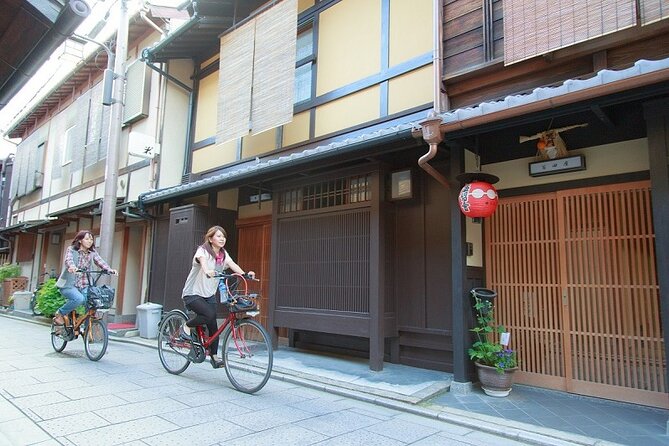
Kyoto’s famous sights are spread across the city. Walking between them takes time, while buses and subways can leave you underground or squeezed into a crowd just when you want to see the city. A bicycle gives you a better sense of how the neighborhoods fit together.
This tour begins at the Kyoto ECO Trip Flagship shop, at 58 Higashikujo Muromachi, a short distance from Kyoto Station. You get fitted with the bike and helmet, then set off with a guide and a group of no more than six. That limit matters. You are less likely to lose the guide at a crossing, and you can ask questions without shouting across a large group.
The early schedule is one of the tour’s strongest features. From March through June, departure is at 7:30 a.m. From January through February, it begins at 8:30 a.m. Either way, the ride is designed to put you at major sights before the busiest part of the day.
The tour takes about three and a half hours, including time spent cycling between stops. One person reported that the ride lasted nearly four and a half hours, so allow some flexibility if the guide spends extra time answering questions or taking photos. You return to the same bike shop, which makes it easy to continue sightseeing or head back to Kyoto Station.
More E-Bike Tours in Japan
- Hidden Kyoto E-Biking tour
★ 5.0 · 1,843 reviews - 5 Top Highlights of Kyoto Full Day Bike Tour (E-bike option)
★ 5.0 · 511 reviews - Kyoto: Memory Kyoto E-Bike Tour
★ 4.8 · 297 reviews
Fushimi Inari before the crowds arrive
Your first major stop is Fushimi Inari-taisha, about 20 minutes by bike from the shop. The shrine is famous for its thousands of orange torii gates, which climb the wooded slopes behind the main buildings.
The tour allows about 50 minutes here. That gives you time to see the main shrine area and walk into the torii-lined route without turning the morning into a full mountain hike. The supplied details also indicate that the guide takes you to less obvious parts of the shrine area, though the exact route can vary.
This early timing is especially useful at Fushimi Inari. The torii gates are one of Kyoto’s most photographed sights, and the narrow paths can feel crowded later in the day. Arriving early gives you a better chance to enjoy the color, repetition, and quiet atmosphere before the paths fill up.
Your bicycle will not take you through the shrine paths. You park it and explore on foot, so wear shoes that feel secure on uneven ground. The tour lists admission at no extra cost, but snacks are not included, so bring something small if you need food before lunch.
Sanjusangendo and the long hall of statues
After Fushimi Inari, it is about a 15-minute ride to Sanjusangendo Temple. The temple is known for its enormous interior display of 1,001 statues of Kannon, the Buddhist figure associated with mercy.
The itinerary presents Sanjusangendo as a pass-by visit rather than giving it the same scheduled stop length as Fushimi Inari, Nanzen-ji, or Heian Shrine. That distinction is important. If entering the temple and seeing the statues inside is a top priority for you, ask the guide how much time is available on the day. The tour is built around a moving route, not a long indoor temple visit.
Still, this stop adds welcome variety. Fushimi Inari is mostly an outdoor shrine experience, while Sanjusangendo offers a powerful interior setting and a different side of Kyoto’s religious art. You also avoid arranging separate transport between southern Kyoto and the central districts.
Gion by the Shirakawa River
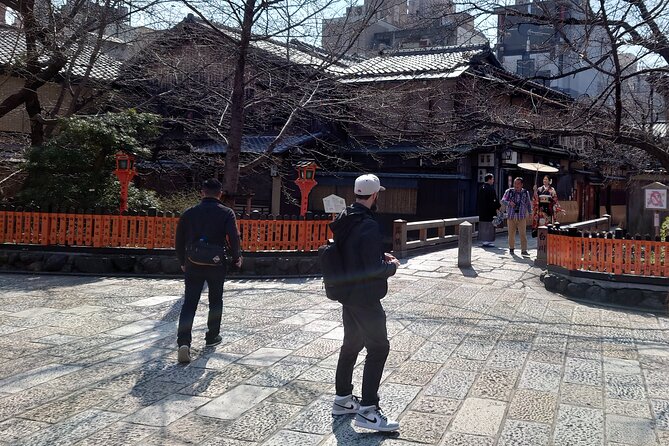
About 10 minutes after Sanjusangendo, the route follows the Shirakawa River and enters old backstreets leading toward Miyagawa-cho and Tatsumi Bridge in Gion.
This is one of the most appealing parts of the ride. Gion is famous for its geisha culture, but the district is more than a photo stop. Its narrow lanes, wooden buildings, small bridges, and river edges show the texture of old Kyoto better than a quick visit along a main road.
Cycling also lets you cover this area without spending the whole morning walking between scattered sights. The guide can point out the route and explain what you are seeing, while you get a moving view of the neighborhood rather than a series of isolated stops.
Use good street manners here. Keep your voice down, follow the guide’s instructions, and avoid treating private lanes or working neighborhoods as a stage set. The tour’s route is designed to reduce pedestrian traffic, but you still share the streets with residents and other cyclists.
More E-Bike Tours in Kyoto:
- E-Bike Tours of the highlights of Kyoto!!!
★ 5.0 · 291 reviews - Kyoto: City Secrets eBike Tour
★ 4.9 · 196 reviews - Pedal Adventure Kyoto’s iconic landmarks on an e-bike tour
★ 5.0 · 189 reviews - Kyoto: Hidden Gems E-Bike Tour with Local Japanese Guide
★ 4.9 · 189 reviews
Nanzen-ji, one of Kyoto’s major Zen temples
From Gion, it is roughly 15 minutes to Nanzen-ji. The temple is one of Kyoto’s most important Zen temples, and the tour allows about 20 minutes for the stop.
That is enough for a focused introduction to the temple grounds, but not a full study of every building and garden. Nanzen-ji has a broad layout, so a short visit works best if you let the guide direct your attention to the most important features.
The ride from Gion to Nanzen-ji also shifts the mood of the morning. You move from the intimate lanes around the Shirakawa River to a larger temple setting with more open space. This rhythm keeps the tour from feeling like a checklist of shrines.
The route does include some hills. One rider described the cycling as not too strenuous but noted several uphill sections. E-bikes help, but they do not remove the need to pedal, steer, and pay attention to traffic. If you rarely cycle, this is worth considering before you book.
Heian Shrine and the final city stretch
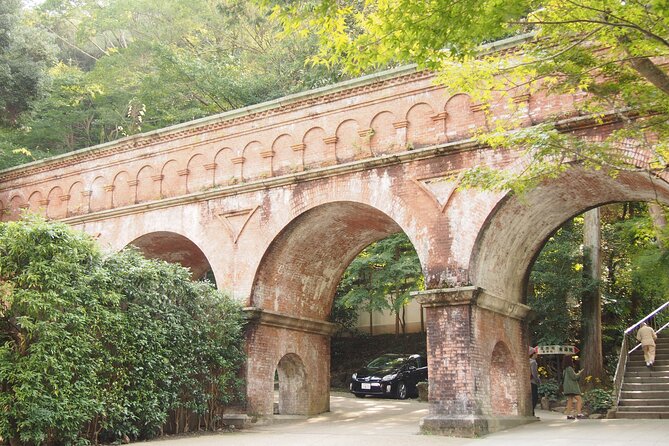
Heian Shrine is about 10 minutes by bike from Nanzen-ji and is the final scheduled sightseeing stop. The shrine is known for its large vermilion structures and for its connection to Kyoto’s role as Japan’s capital roughly 800 years ago.
The tour provides about 20 minutes here. That makes the stop a concise look rather than a long shrine visit. You can take in the scale and color, listen to the guide’s explanation, and get a final set of photos before the return ride.
This stop rounds out the route nicely. Fushimi Inari gives you hillside torii gates, Gion offers old streets and river scenery, Nanzen-ji provides a Zen temple setting, and Heian Shrine presents a grand Shinto landmark. You see several different faces of Kyoto in one morning.
Returning beside the Kamogawa River
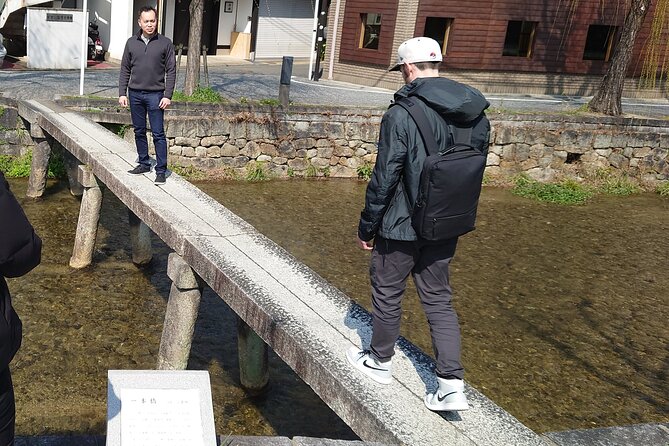
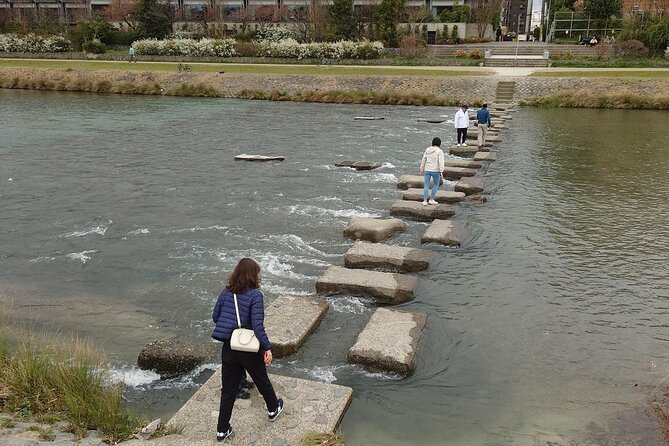
After Heian Shrine, you ride for about 10 minutes to the Kamogawa River. The return route follows the river for roughly 20 minutes before bringing you back to the Flagship shop.
This final section may be the most relaxing cycling of the day. The Kamogawa is one of Kyoto’s best-known rivers, and riding beside it gives you a break from intersections and busy streets. It also helps you understand the city’s layout: the river corridor links several central areas and gives Kyoto an easy-to-follow spine.
The route ends where it began. That is useful if you have luggage or plans near Kyoto Station. You will not need to arrange a separate pickup, and the included mobile ticket keeps the booking details on your phone.
Guides who add more than directions
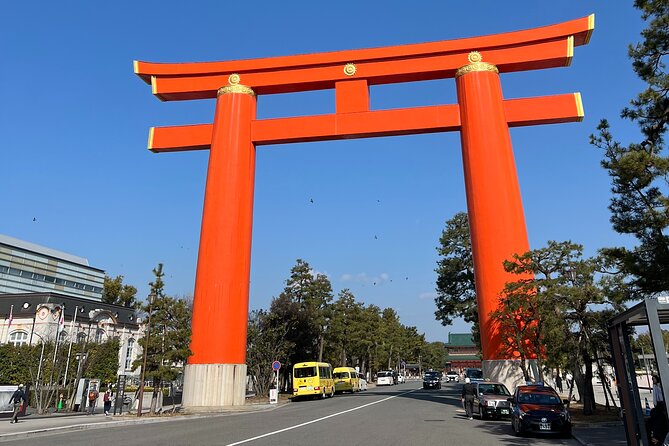
The guide can make or break a city bike tour. Here, Aki, Sato, and Ryuto are named in the supplied feedback, with different strengths worth noting.
Aki has been praised for explaining Kyoto clearly and taking family photos at several stops. That can be a real help if you are traveling with children or teens and want pictures of everyone together instead of a string of individual snapshots.
Sato was singled out for a friendly manner and food recommendations after the ride. Since snacks are not included, that kind of local suggestion can be useful when planning lunch.
Ryuto received especially strong praise for explaining Shinto, Buddhism, and Kyoto’s past, as well as for navigating the streets confidently. Another rider described him as a Kyoto-born English student. The language ability of the guide can vary by date, but the available information points to an experience built around conversation rather than silent following.
The tour is also a good fit for curious families. A family of five with three teenagers called it their favorite Kyoto activity, while another group said the ride was easy enough to enjoy but included some hills. That combination suggests a broad range of cycling ability can work, provided everyone is comfortable on a bike.
Bikes, weather, and what to bring
The supplied bikes are described as traditional-style e-bikes that are not too bulky. That matters in Kyoto, where you may need to stop, start, and maneuver through ordinary streets instead of cruising on a wide cycle path.
You receive the bicycle, helmet, bottled water, raincoat, and liability insurance. The raincoat is a useful inclusion because weather can change during a morning ride. Still, dress for cycling, not just sightseeing. Comfortable clothes and secure shoes will make the ride easier.
Bring any snack you need, since food is not included. The tour provides water, but you may want extra hydration on a warm day. The exact daily riding conditions can vary, and the route includes time outside at shrines and temples, so check the forecast before leaving your hotel.
This is not a private tour. The group can include up to six people, and the pace needs to suit the group as a whole. You will have more contact with the guide than on a large bus tour, but you will not control every stop or spend unlimited time at each temple.
Is $84.92 a fair price?
At $84.92 per person, this is not the cheapest way to see Kyoto. You are paying for more than a basic bicycle rental, though. The price includes an e-bike, helmet, water, rain protection, liability insurance, a guide, and a carefully connected route through several major districts.
The value is strongest if you want an early orientation to Kyoto and would otherwise need to rent a bike, plan the route, navigate traffic, and work out how to connect Fushimi Inari with central Kyoto. The guide saves planning time and adds cultural context.
It is less compelling if you prefer to spend an entire morning inside one temple, move at your own speed, or avoid cycling entirely. The tour also does not include snacks, and the Sanjusangendo portion appears shorter than the main scheduled stops.
The tour is booked about 15 days ahead on average, so advance planning makes sense during popular seasons. Free cancellation is available until 24 hours before the start time. Changes or cancellations inside that window are not accepted for a refund.
Who should book this Kyoto e-bike tour?
I would choose this ride if you have only a few days in Kyoto and want a broad first look at the city. It works especially well on your first full morning, when the guide can help you get oriented and suggest what to see next.
Families with older children and teens are a strong match, as are couples and small groups who like active sightseeing. You should be comfortable cycling on city streets and handling some hills. The ride is described as manageable, but it is not a motorized sightseeing tour.
You may want a different plan if you need step-free access, do not cycle, or want long visits inside the temples. The supplied information says most people can participate, but it does not provide detailed accessibility information, so ask the operator before booking if you have specific mobility needs.
Should you book it?
Book this tour if you want to cover a lot of Kyoto before the crowds build, prefer a small group, and like learning while you move. The strongest reasons are the early timing, the six-person limit, the mix of major sights and old backstreets, and the guides’ ability to explain local culture and help with photos or food ideas.
Skip it if you want a slow temple morning, need guaranteed time inside Sanjusangendo, or would rather avoid hills and city cycling. For an active visitor who wants an efficient introduction to Kyoto, $84.92 is a reasonable price for the equipment, guide, and route.
FAQ
Where does the Kyoto e-bike tour begin?
It begins at the Rental Bicycle KYOTO ECO TRIP Flagship shop, located at 58 Higashikujo Muromachi, Minami Ward, Kyoto, 601-8001, Japan.
Where does the tour end?
The ride ends back at the same meeting point where it began.
How long does the experience last?
The stated duration is approximately three hours and 30 minutes, including travel time between stops.
What time does the tour start?
From January 1 through February 28, 2026, the listed Monday start time is 8:30 a.m. From March 1 through June 30, 2026, the listed start time is 7:30 a.m. daily.
How many people can join?
The tour has a maximum of six participants.
What equipment is included?
The price includes use of an e-bike, a helmet, bottled water, a raincoat, and liability insurance.
Are snacks included?
No. Snacks are not included.
Which main sights are visited?
The route includes Fushimi Inari-taisha Shrine, Sanjusangendo Temple, the Gion area around Miyagawa-cho and Tatsumi Bridge, Nanzen-ji Temple, and Heian Shrine. The return route follows the Kamogawa River.
Can I cancel for a full refund?
Yes. You can cancel at least 24 hours before the experience start time for a full refund. Cancellations and changes made less than 24 hours before the start time are not accepted for a refund.
More Morning Rides in Kyoto
- Kyoto: Arashiyama Bamboo Forest Morning Tour by Bike
★ 5.0 · 115 reviews - Explore Hidden Alleyway with a Local Expert (Morning tour)
★ 5.0 · 61 reviews - Kyoto Early Morning E Biking Tour Fushimi Inari Kiyomizu Temple
★ 5.0 · 14 reviews - 3-Hour Morning Bike Tour of Jaipur
★ 5.0 · 1,253 reviews
Just added around Kyoto
- ONLY YOU in the Bamboo Forest! 4 hours E-bike tour with a local★ 5.0 · 45 reviews
- Pedal Adventure Kyoto’s iconic landmarks on an e-bike tour★ 5.0 · 189 reviews
- South Kyoto in a Nutshell: Gentle Backstreet Bike Tour!★ 5.0 · 225 reviews
- The Beauty of Kyoto by Bike: Private Tour★ 5.0 · 47 reviews
- Explore Hidden Alleyway with a Local Expert (Afternoon Tour)★ 5.0 · 17 reviews
- Secret Eastern Kyoto Biking Adventure★ 5.0 · 44 reviews
- Kyoto Bamboo Forest & Golden Pavilion E-Bike Tour★ 5.0 · 50 reviews
- Explore Hidden Alleyway with a Local Expert (Morning tour)★ 5.0 · 61 reviews
Kyoto Bike Tours, compared.
Arashiyama Bamboo Forest & Hidden Gems Bike Tour (Early Bird)
Read our review →
5 Top Highlights of Kyoto Full Day Bike Tour (E-bike option)
Read our review →
Full Day Biking Tour Exploring the Best of Kyoto
Read our review →
Afternoon Kyoto Bike Tour: Bamboo Forest, Monkeys & Hidden Spots
Read our review →Browse the lists this tour appears in