
REVIEW · BERLIN
Berlin: Sights and Highlights Bike Tour with a Local Guide
Berlin makes sense from a bicycle. Its major sights are spread across a broad city center, and this tour links them with enough riding to give you a real feel for Berlin, not just a string of quick photo stops. You begin at the restored Kulturbrauerei in Prenzlauer Berg, then pedal toward the Government District, Brandenburg Gate, Museum Island, and the Berlin Wall.
I like the small maximum of 15 people, which makes it easier to hear the guide and ask questions. I also like the practical setup: comfortable bikes in different sizes, baskets for light bags, optional helmets and gloves, seat adjustments along the way, and rain ponchos if the weather turns.
The main consideration is traffic. The ride is relaxed and has been described as safe, but you still need to watch traffic lights and judge crossings for yourself. The group waits on the other side, yet this is still a city ride, not a traffic-free park outing.
Key points before you book
- A useful first-day route: Cover Berlin’s central sights quickly, then return to the places that interest you most.
- History with a human voice: Guides including Brendan, Andy, Angus, Elisa, Ana, and Frey explain Prussian Berlin, Nazi rule, the Wall, and reunification.
- About six miles to 19 kilometers: The distance varies by group and route, but the pace is generally easy.
- A comfortable starting point: The tour begins at the Kulturbrauerei in Prenzlauer Berg for the described option, though your exact meeting place can vary.
- Good equipment for changing weather: Bikes, baskets, sunscreen, trouser clips, gloves on request, and ponchos in bad weather are provided.
- Strong value at $41: You get a bicycle, guide, and three hours of sightseeing for less than many standard walking tours with similar coverage.
Why a bicycle works so well in Berlin
Berlin is not a compact old town where every famous building sits around one square. Its sights spread across former East and West Berlin, along the Spree, and through districts shaped by very different eras.
On foot, you can certainly see Brandenburg Gate, the Holocaust Memorial, the Reichstag area, and Museum Island. But adding the Berlin Wall, Gendarmenmarkt, Berlin Central Station, and a few less obvious corners in the same outing takes more time and energy.
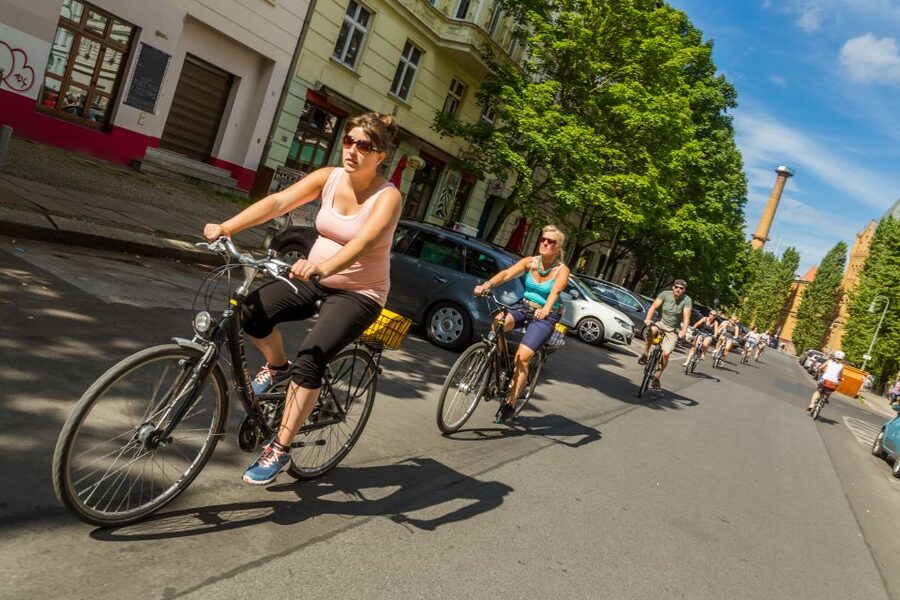
A bicycle gives you a practical middle ground. You cover more ground than on foot, but you move slowly enough to notice how the city changes around you. One moment you are beside government buildings, and soon after you are riding through a neighborhood with a more local feel.
The route is not meant to replace museum visits. Instead, it helps you understand where Berlin’s major stories happened and gives you a useful map in your head. If you take the tour early in your stay, you can use the guide’s suggestions to plan the rest of your visit.
More City Bike Tours in Germany
- Berlin Highlights 3-Hour Bike Tour
★ 5.0 · 948 reviews - Berlin City Bike Tour with Beer Garden Stop
★ 5.0 · 917 reviews - Berlin Highlights: 3-Hour Bike Tour
★ 4.9 · 809 reviews
Starting at the Kulturbrauerei in Prenzlauer Berg
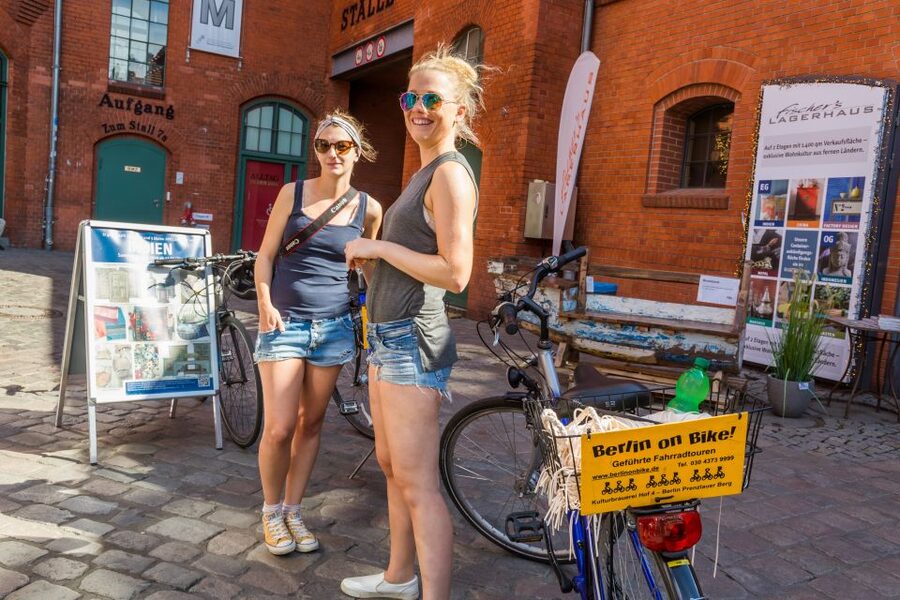
The meeting point for the described route is the Kulturbrauerei, a restored former brewery in Prenzlauer Berg. It is a practical place to begin because the complex is easy to recognize and the surrounding district gives you an immediate sense of modern Berlin outside the postcard center.
You choose a bicycle from a large fleet, with different sizes available. Bikes have baskets for lightweight bags, and the staff can adjust the seat. One rider specifically noted that the guide carried tools and changed the seat height at the first stop, a useful detail if the initial fit is not quite right.
Helmets and gloves are available on request. Sunscreen and trouser clips are also provided, and the starting point has a toilet. You may want to arrive in comfortable clothes and shoes, with your water and small personal items secured in the basket.
The route has covered just over six miles for some groups and about 19 kilometers for another. That sounds like a lot on paper, but the pace is designed for sightseeing rather than speed. You stop often, and the guide waits for the group at crossings.
Through Berlin’s Government District
The ride then moves toward the Government District, where contemporary German politics meets the remains of a divided capital. Berlin Central Station is part of this stretch, an enormous glass-and-steel transport hub that reflects the city’s newer face.
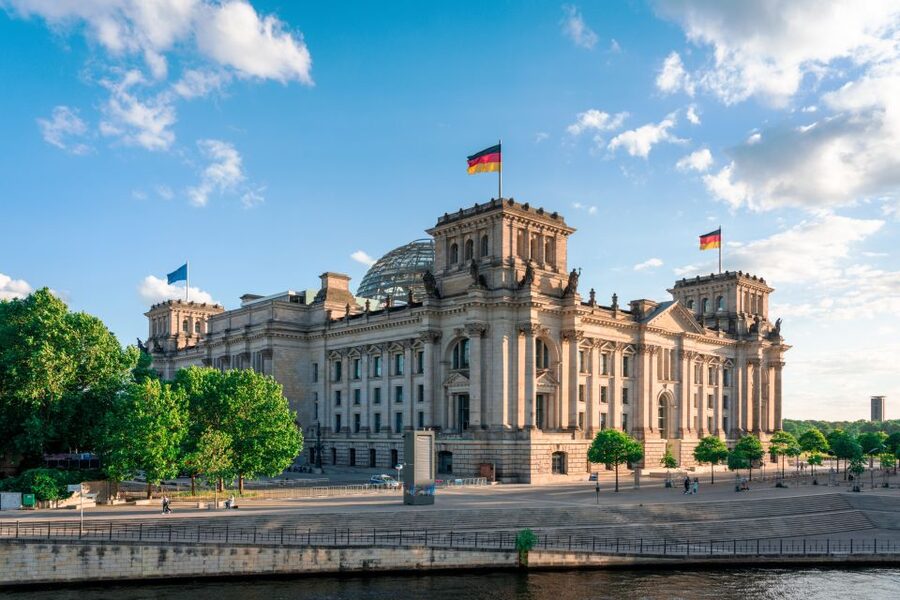
The Reichstag and nearby government buildings are among the key landmarks here. You may not go inside the Reichstag on this tour, so treat this as an orientation stop rather than a parliamentary visit. The value is hearing how the area fits into Berlin’s political story while seeing the buildings in their urban setting.
This part of the route also shows why cycling is useful. The district is spread out, and the bike lets you move between landmarks without spending the whole morning walking along broad roads.
Your guide usually pauses rather than talks continuously while riding. That is the right approach in a city. You can watch the road while moving, then listen properly when the group is stopped. Guides such as Andy, Brendan, Angus, and Elisa have been praised for making the explanations clear, lively, and easy to follow.
Brandenburg Gate and the Holocaust Memorial
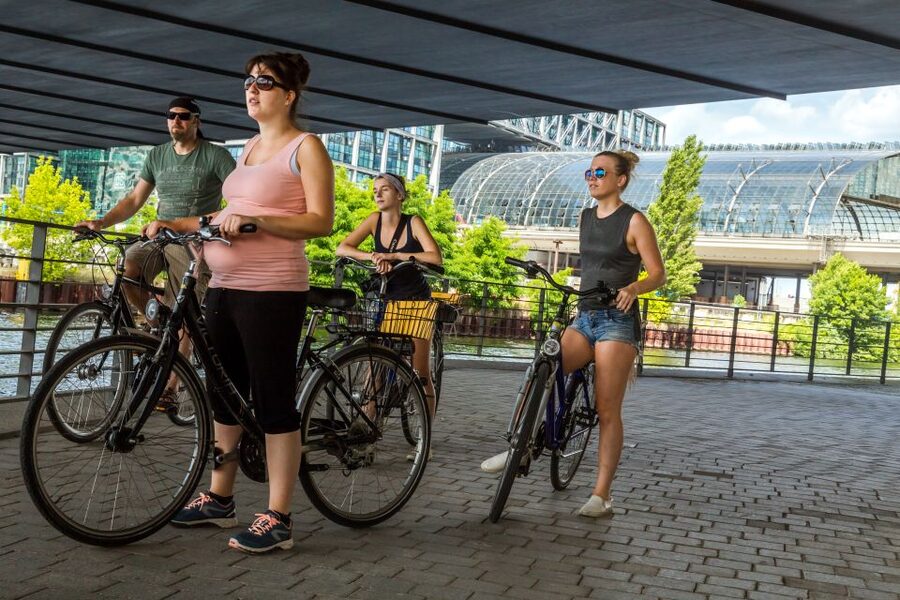
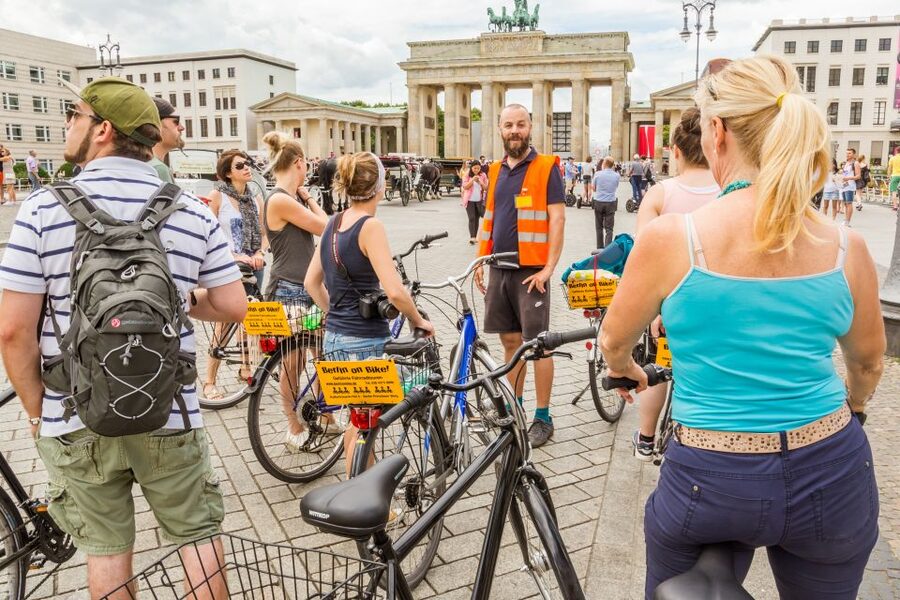
Brandenburg Gate is the tour’s most recognizable stop. It once marked a city boundary, later became a symbol of division, and now represents a reunited Berlin. Seeing it by bicycle gives you a good sense of its scale and its position at the edge of the government quarter.
This is a busy photo area, so do not expect a quiet visit. The advantage of arriving with a guide is that you get context without needing to read a long panel before moving on. You also have time for photographs.
Nearby, the Holocaust Memorial requires a different tone. The field of concrete slabs is deliberately spare and unsettling, and it is not a place for a rushed joke or a quick group snapshot. A good guide helps explain the memorial and the Nazi period with care, while allowing you time to take in the site.
Several guides use printed photographs to show how places looked during earlier periods. That can be especially helpful in central Berlin, where modern streets often conceal the wartime destruction and political changes that came before them.
More City Highlights Bike Tours in Berlin:
- Berlin Highlights Sightseeing Bike Tour in Small Groups
★ 5.0 · 652 reviews - Berlin: Guided Bike Tour to Explore the Highlights
★ 4.8 · 506 reviews - Berlin City Bike Tour with Beer Garden Stop
★ 4.9 · 308 reviews - Berlin: E-Bike Tour of the Berlin Wall and Mitte Highlights
★ 4.7 · 60 reviews
The Berlin Wall and the city’s divided past
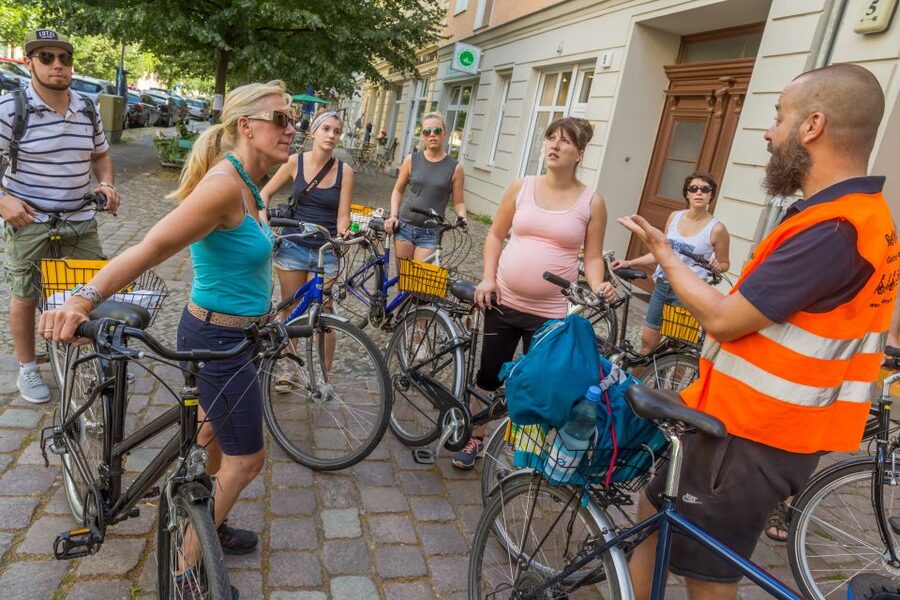
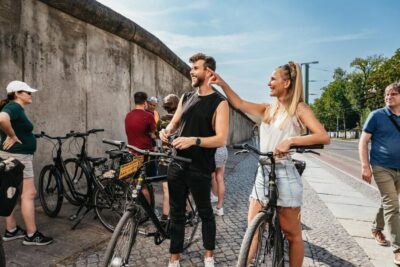
The Berlin Wall section is one of the strongest reasons to choose this tour. You do not simply hear about the Wall in a museum room. You ride through the city and see how the former border cut through ordinary neighborhoods.
The guide explains the Wall, the years of division, and the changes after its fall. The story becomes easier to grasp when you are physically moving through the former boundary instead of treating it as an isolated monument.
Do not expect a full museum visit or an extensive wall memorial walk. This is an overview, with a stop and explanation rather than a long, detailed study of every surviving section. If the subject matters greatly to you, use the tour to decide which Wall museum or memorial to visit later.
The route also helps connect the Wall to daily life. Berlin’s division was not only a political idea. It affected streets, families, transport, work, and entire districts. Cycling across the old divide gives the history a more concrete scale.
Gendarmenmarkt and Museum Island
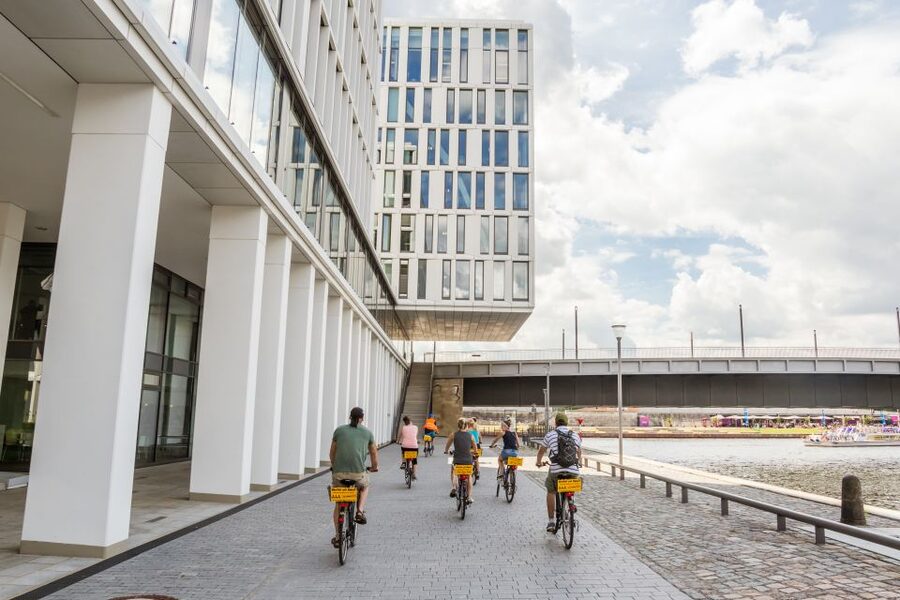
Gendarmenmarkt offers a change of mood. Its grand buildings and formal layout reflect Berlin’s Prussian taste for ceremony and order. The square is an excellent place to pause and compare the city’s older architectural ambitions with the more improvised feel of other neighborhoods.
The guide places this area within Berlin’s long timeline, moving from Prussian power to war, division, and reunification. That broad sweep is one of the tour’s strengths. You are not getting disconnected facts about buildings. You are seeing how different political periods left marks on the same city.
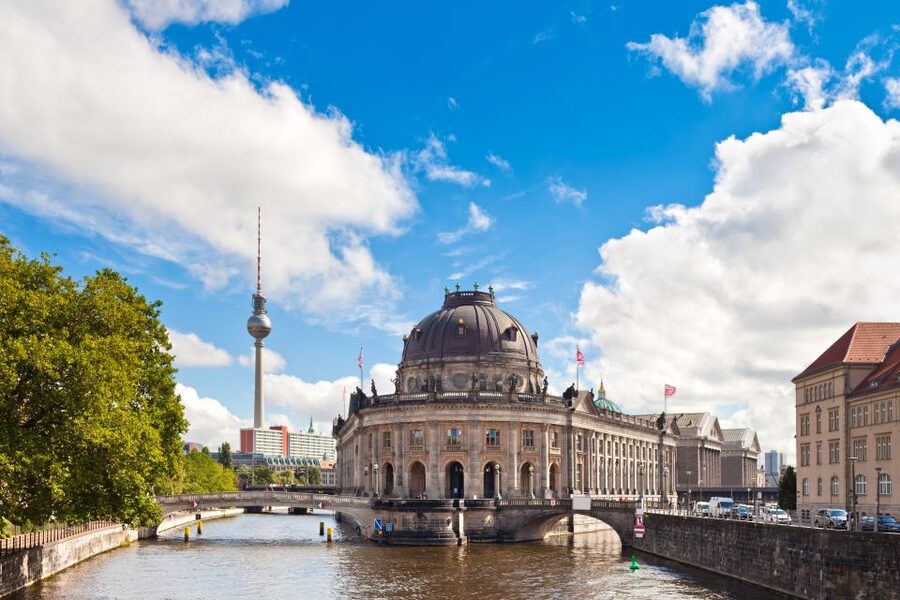
Museum Island brings Berlin’s cultural center into the route. The island is home to major museums, but entrance tickets are not part of this bicycle tour. You ride past and receive an introduction, then you can return later if you want a full museum visit.
This is a smart arrangement for a short stay. You get a visual preview of the museums without giving up several hours inside one collection. If you already know you want to visit Museum Island, note the museums that interest you and plan a separate half-day.
The guide makes the difference
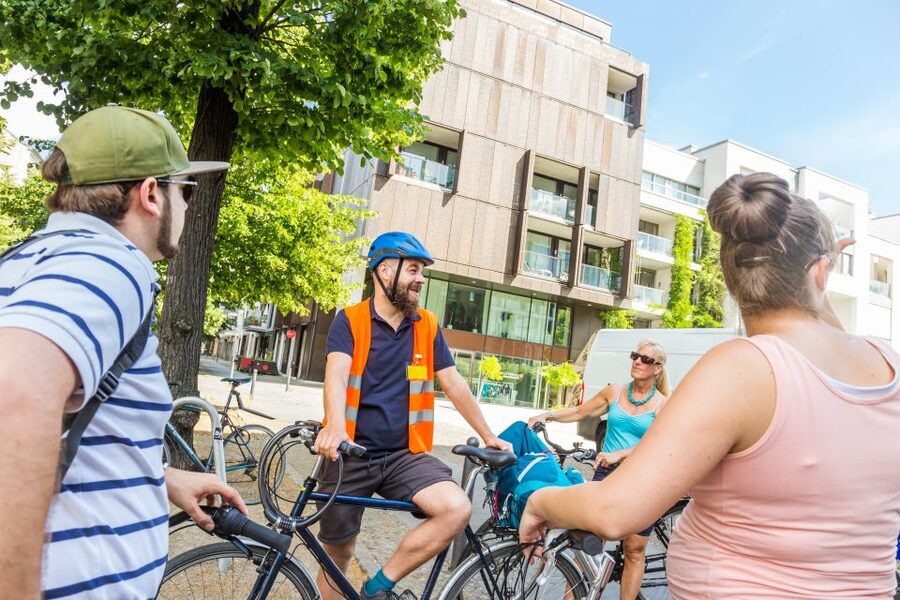
The route covers familiar landmarks, but the guide determines how much you take away. Brendan has been singled out repeatedly for clear explanations, humor, and useful suggestions for the rest of a Berlin visit. Andy, Angus, Elisa, Ana, Frey, Guy, and others have also led groups through the route.
The best guides adjust their approach to the people in front of them. They answer questions, ask what you are interested in, and change the emphasis when the group needs more time at a stop. One guide adapted the route during the Berlin Marathon when roads were closed, finding other worthwhile places instead.
That flexibility matters because Berlin events can affect traffic and access. A major race, parade, or road closure may change the exact path. The key sights and the historical focus remain, but the ride is not a rigid promise that every street will be used exactly as planned.
The commentary is generally strongest for first-time visitors. You get an outline of Berlin’s major periods: Prussian ceremony, Nazi rule, wartime destruction, the divided city, the fall of the Wall, and reunification. For an expert-level study of any one period, choose a specialist museum or walking tour. For a clear overview, this format works very well.
How difficult is the ride?
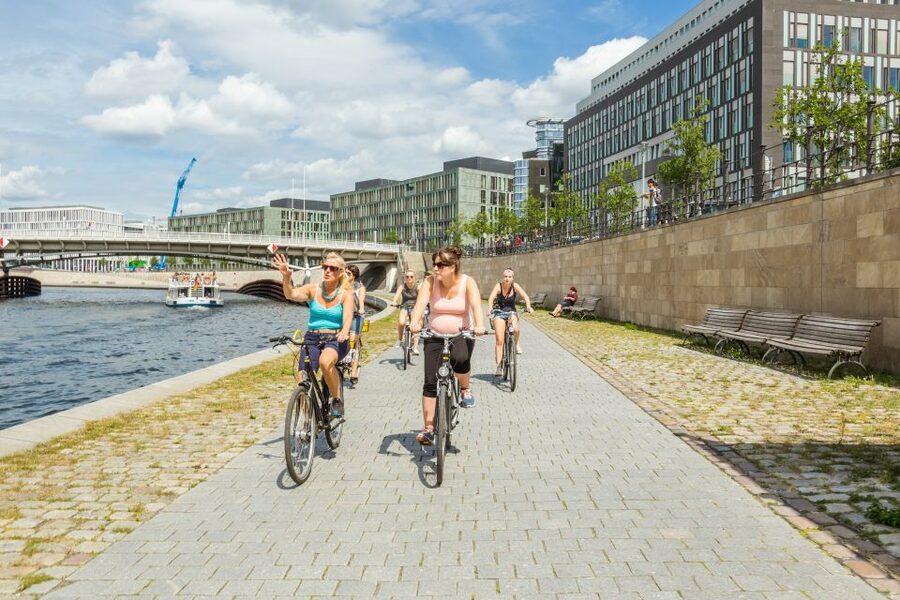
This is an easy-to-moderate city ride rather than a demanding cycling excursion. The pace is relaxed, and the route includes regular stops for explanations and photographs. Families with teenagers have enjoyed it, and solo riders can easily meet people in the group.
You still need basic confidence on a bicycle. Berlin streets include traffic lights, crossings, and other road users. Do not simply follow the bicycle ahead through an intersection. Check the signal and the road yourself, then regroup on the other side.
The group waits for riders who fall behind, which takes pressure off slower cyclists. It is still wise to tell the guide if you need a seat adjustment, a slower pace, or a short pause.
Comfort matters more than athletic ability. Wear shoes you can pedal in and clothing suited to the forecast. On hot days, shade breaks and water become important. On wet days, ponchos are available, though rain can still make city cycling less pleasant.
Bikes, weather, and the short break
The rental bikes are described as comfortable and available in several sizes. Baskets hold small, lightweight bags, but you should avoid bringing a large backpack or bulky luggage.
Gloves and helmets are optional. In colder weather, gloves can make a real difference, while a helmet is a sensible choice for anyone who feels less confident riding in city traffic. Trouser clips help keep loose clothing away from the chain.
Some tours include a short coffee stop, with time for a toilet break. Coffee, cake, snacks, and other purchases are not included in the $41 price, so bring a little money or a card if you want to stop.
The tour runs in rain with ponchos available, but a sunny day will make the ride more enjoyable. Berlin’s weather can change quickly, so check the forecast and dress in layers. The basic equipment helps, but it does not turn a wet day into a dry one.
Is $41 good value?
At $41 per person, this is good value if you want both transport and orientation. You receive a bicycle, a local guide, a helmet and gloves if requested, sunscreen, trouser clips, and roughly three hours of sightseeing.
A walking tour may cost less in some cities, but walking Berlin’s central sights can take longer and leave you with less energy for museums. A private vehicle can cover more distance, but it will not give you the same open-air feel or easy access to smaller streets.
The value is highest for a first visit, a short weekend, or a traveler who wants to see the city before choosing which places deserve a longer visit. It is also a good option for families with older children and teenagers who might lose interest on a long indoor history tour.
The price is less attractive if you already know Berlin well or plan to rent a bicycle independently. In that case, you may prefer to ride on your own and spend the $41 on a museum ticket. The guide’s historical explanations and route planning are what justify the cost.
Best time to take this Berlin bike tour
I would choose this tour near the start of your stay. It gives you a clear sense of direction and points out museums, neighborhoods, and landmarks to revisit. Several people have found that taking it on the first day helped shape the rest of their plans.
A morning ride can leave your afternoon open for Museum Island or another indoor sight. An afternoon tour gives you the chance to spend the morning at a museum first. Check the available departure time when booking, since the schedule varies.
Small groups help keep the experience personal. The maximum is 15 participants, though the exact number on your departure can be smaller. If you want the quietest and most flexible experience, a private option may be available depending on the booking choice.
The guides speak English, German, and Dutch. Be sure to select the language that suits you when you book.
Who should book it?
Book this tour if you want to cover Berlin’s main landmarks without spending the whole day on foot. It suits first-time visitors, families with teenagers, solo visitors, and anyone who learns best by seeing places in context.
It is especially useful if you have only a few days. In three hours, you get a working overview of the Government District, Brandenburg Gate, the Holocaust Memorial, the Berlin Wall, Gendarmenmarkt, Museum Island, and Berlin Central Station.
Think twice if you dislike riding near traffic, need a fully accessible sightseeing format, or want long visits inside museums. This is an active outdoor tour with brief stops, not a seated lecture or a museum tour.
The flexible cancellation policy also helps if your schedule is uncertain: you can cancel up to 24 hours ahead for a full refund, and the reserve-now, pay-later option lets you hold a place without paying immediately.
Should you book this Berlin bike tour?
I would book it early in a Berlin visit, especially for a first trip. The route covers the city’s major stories, the bikes keep the distance manageable, and the guides add the useful layer of explanation that you miss when simply riding past monuments.
The strongest reasons to go are the relaxed pace, the small group, the good equipment, and the chance to see both famous sights and less obvious corners. Just remember that the exact meeting point may vary by option, the route can change around city events, and you still need to ride responsibly in traffic.
At $41, it is a solid introduction to Berlin. Take the tour first, mark the places that catch your attention, then spend the rest of your visit returning to the museums, memorials, and neighborhoods you want to know better.
FAQ
How long is the Berlin bike tour?
The stated duration is 3 hours, or 210 minutes. Some individual outings may run longer if the group takes a longer route or includes a coffee stop.
Where does the tour start?
The described tour starts at the restored Kulturbrauerei in Prenzlauer Berg. The exact meeting point may vary depending on the option you book, so check your reservation details.
How many people can join the tour?
The tour has a maximum of 15 participants, creating a small-group setting.
Which languages are available?
Live guides are available in English, German, and Dutch.
Are bicycles included?
Yes. A rental bicycle is included, and you can choose from a large fleet with different sizes.
Are helmets and gloves provided?
Helmets and gloves are available upon request. The bikes also include baskets for lightweight bags.
What landmarks does the tour visit?
The route includes the Government District, Berlin Central Station, Brandenburg Gate, the Holocaust Memorial, the Berlin Wall, Gendarmenmarkt, and Museum Island. The described route begins in Prenzlauer Berg.
What should I bring?
Bring comfortable shoes and comfortable clothing. You may also want personal water and a small bag that fits in the bicycle basket.
Are food and drinks included?
No. Snacks, coffee, cake, and other expenses during the tour are not included.
What happens if it rains?
Rain ponchos are available in bad weather. The tour is still an outdoor bicycle experience, so dress for the forecast.
Can I cancel the booking?
Yes. You can cancel up to 24 hours in advance for a full refund. A reserve-now, pay-later option is also available.
Just added around Berlin
- The Beauty of Berlin by Bike: Private Tour★ 5.0 · 59 reviews
- Party and Beer Bike Private Sightseeing Tour Berlin with Pick-up★ 4.5 · 32 reviews
- Private Berlin Street Food Bike Tour★ 4.9 · 42 reviews
- Private Berlin Street Food Tour by Bike★ 5.0 · 87 reviews
- Berlin Wall History Small Group Cycling Tour★ 4.9 · 152 reviews
- Best of Berlin E-Bike Tour★ 5.0 · 77 reviews
- Best of Berlin E-Bike Tour★ 5.0 · 37 reviews
- Berlin: E-Bike Tour of the Berlin Wall and Mitte Highlights★ 4.7 · 60 reviews
Berlin Bike Tours, compared.


Berlin Highlights Sightseeing Bike Tour in Small Groups
Read our review →
Alternative Bike Tour of Kreuzberg & Friedrichshain
Read our review →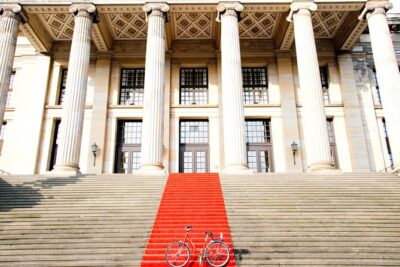
Cold War & Berlin Wall History Guided Bike Tour
Read our review →Browse the lists this tour appears in