
REVIEW · BERLIN
Berlin: Guided Bike Tour to Explore the Highlights
Berlin reveals itself quickly from a bicycle. In three hours, you can pedal from medieval Nikolaiviertel to the Brandenburg Gate, along the Spree, and through the former Cold War center without spending much time waiting for traffic or boarding a bus. The route covers a remarkable number of major sights, yet the pace stays gentle.
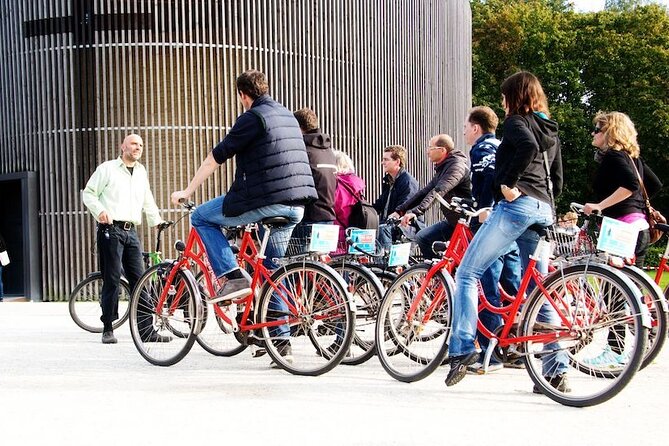
I like the wide choice of bikes and the fact that you can request a helmet, rain poncho, child seat, or even a pedal-brake bike. I also like the guides’ freedom to adjust the route and discussion, which lets people who have already seen the main monuments get more local stories. The main drawback is that the starting point sits in a courtyard, so first-time visitors should allow a few extra minutes to find the Free Berlin sign.
Key points at a glance
- Start near the TV Tower: Meet at Poststraße 11 in Nikolaiviertel, about five minutes on foot from the TV Tower.
- Cover a lot without rushing: The three-hour route links Museum Island, the Reichstag, Brandenburg Gate, Checkpoint Charlie, and other central sights.
- Expect an easy cycling pace: Guides stop often for short explanations, photos, and questions rather than keeping you moving nonstop.
- Hear more than textbook facts: Guides such as Julia, Simon, Jake, Juliet, and Christopher have been praised for adding humor, personal views, and quirky details.
- Useful for families: Children are welcome, and infant seats can be arranged in advance.
- Good rain planning: Bikes have baskets, helmets are available, and waterproof ponchos are supplied if the weather turns wet.
Why a bicycle works so well in central Berlin
Berlin’s main sights are spread across a broad central area. On foot, you can spend much of a morning moving from one monument to the next. On a bus, you see plenty, but the windows create distance. A bicycle gives you a better middle ground: you cover ground quickly, then stop close to the places that matter.
The ride is designed as an overview rather than a series of long museum visits. You will look at buildings from the outside, hear the story behind them, and keep moving. That makes this especially useful during a short first visit, or at the start of a longer stay when you want to understand how Berlin’s center fits together.
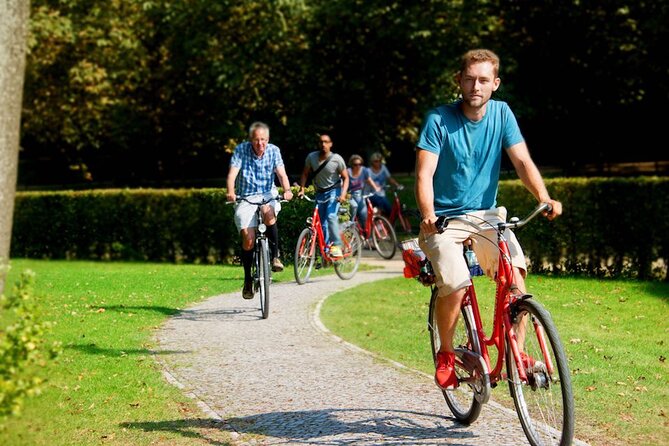
The pace is not presented as athletic. Guides stop roughly every few minutes for commentary, and one account describes the ride as steady and gentle. You still need to be comfortable riding a bicycle in a city, but this is not aimed at racers or serious cyclists.
Berlin’s cycle routes can make city riding feel less intimidating. One review specifically noted that many cycle lanes run on the pavement rather than in the road. Even so, you should pay attention at crossings and intersections, follow the guide’s road instructions, and tell the staff if you need a different bike style.
More City Bike Tours in Germany
- Berlin: Sights and Highlights Bike Tour with a Local Guide
★ 4.8 · 2,698 reviews - Berlin Highlights 3-Hour Bike Tour
★ 5.0 · 948 reviews - Berlin City Bike Tour with Beer Garden Stop
★ 5.0 · 917 reviews
Finding Free Berlin in Nikolaiviertel
The tour begins at Free Berlin Bike Tours and Rental, at the courtyard entrance of Poststraße 11. Look for the FREE BERLIN sign. The address is central, but the courtyard setting can be easy to miss if you hurry past the entrance.
This is a smart starting point. Nikolaiviertel sits close to the TV Tower and the Spree, placing you near Berlin’s oldest central streets and within easy reach of Museum Island. You select a bike from the available fleet, add a helmet if you want one, and can leave large baggage with the operator during the ride.
The bikes are fitted with baskets and regularly serviced by certified mechanics. A practical tip is to ask to try the bike before setting off. One rider found the bikes heavy but easy to ride, and recommended a frame with a slanted top tube because rear baskets can make mounting awkward. If you have children or prefer pedal brakes, mention that when choosing your bike.
The guide also goes over road rules before departure. That short briefing matters, especially if you are nervous about cycling in a large capital.
Nikolaiviertel, the TV Tower, and Hackescher Markt
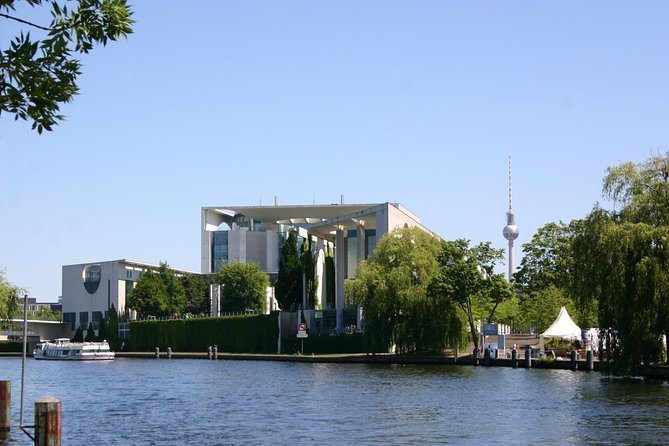
The first stops give you a quick sense of Berlin’s layers. Nikolaiviertel presents a carefully restored version of the old city center, while the nearby TV Tower points to the confident modernism of East Berlin.
The tower is mainly a photo stop on this tour. You will not be spending time inside it, but its presence helps you understand the scale of the city and the former East German center. The guide uses the surrounding streets to explain Berlin’s changing identity, rather than treating the tower as a stand-alone attraction.
At Hackescher Markt, the mood shifts again. This is a lively central district with old buildings, courtyards, shops, restaurants, and transport links. The value here is not just a quick look at a square. You get a sense of how Berlin mixes restored architecture with current city life.
Because each guide can shape the route around the group, the amount of time spent at these first stops may vary. The listed itinerary assigns short commentary periods to each place, but the tour is not meant to feel like a stopwatch exercise.
Museum Island and the Spree
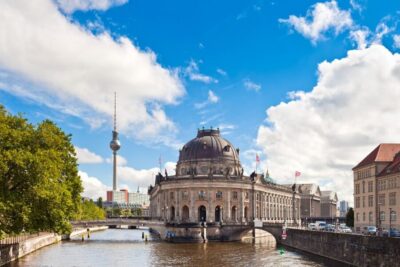
Museum Island is one of the essential sights in central Berlin, and the bike lets you approach it from several angles without committing to a museum visit. The guide can explain the island’s role in Berlin’s cultural center, point out the major buildings, and give you time for photographs.
This is also where cycling changes your view of the city. You are not simply moving from one famous facade to another. The route connects the museums, bridges, riverbanks, and public squares into one continuous picture.
The ride continues toward Schinkelplatz and Strandbar Mitte, then follows the Spree toward Spreebogenpark. These stops are useful because they break up the monument-heavy part of the tour. You get river views, open public space, and a look at how Berlin uses its waterfront.
The Spree section also supports one of the tour’s best promises: reaching places that many people miss. You may find that the most memorable part is not a grand monument, but the shift between formal historic buildings and ordinary city scenes along the water.
More City Highlights Bike Tours in Berlin:
- Berlin Highlights: 3-Hour Bike Tour
★ 4.9 · 809 reviews - Berlin Highlights Sightseeing Bike Tour in Small Groups
★ 5.0 · 652 reviews - Berlin City Bike Tour with Beer Garden Stop
★ 4.9 · 308 reviews - Berlin: E-Bike Tour of the Berlin Wall and Mitte Highlights
★ 4.7 · 60 reviews
Hauptbahnhof, the Reichstag, and the government quarter
Berlin Hauptbahnhof is a modern contrast to the older streets around Museum Island. The glass station is one of the city’s clearest examples of post-reunification construction, and the surrounding area shows how quickly Berlin has rebuilt and reorganized itself.
From there, the route moves toward the Reichstag. This is an important stop even if you are not entering the building. The guide can place the German parliament in the wider story of Berlin’s political past and present, while you see the surrounding government quarter from street level.
Spreebogenpark gives the ride some breathing room before or after the Reichstag area. You can expect a short explanation and a pause rather than a long formal lecture. That rhythm is one reason the tour works for families and people who do not want three straight hours of dense historical narration.
The guides receive strong praise for presentation. Simon is described as funny and articulate, while Jake is praised for mixing wit with useful facts. Those qualities matter on a bike tour because you are listening outdoors, often beside roads and public spaces. A lively guide is easier to follow than someone reading a prepared speech.
Bebelplatz, Brandenburg Gate, and the Holocaust Memorial
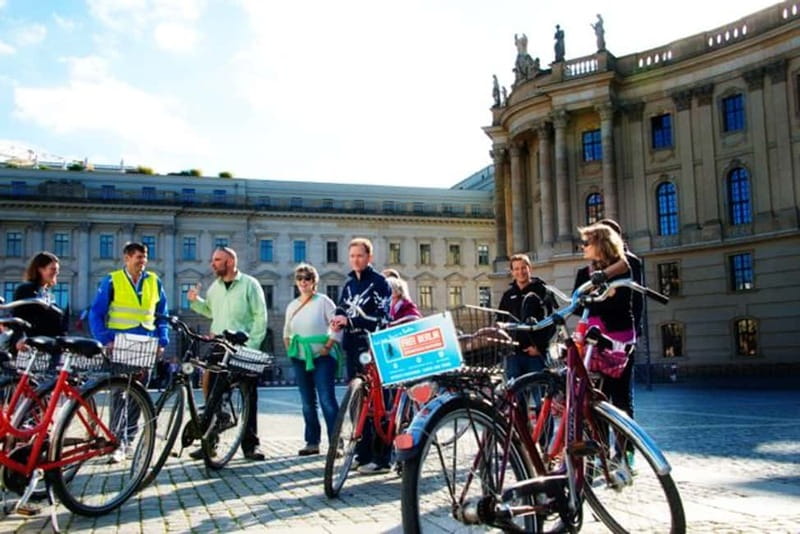
Bebelplatz is one of the tour’s key historical stops. The square is surrounded by major buildings and carries a serious memory of Nazi-era book burning. You will have a chance to stop, take photographs, and hear the guide explain why this seemingly formal square matters.
The Brandenburg Gate is the classic Berlin photo stop. Seeing it by bicycle gives you a practical advantage: you can arrive, pause, hear the story, and continue without dealing with a distant coach drop-off. The gate also connects naturally to the Reichstag and Holocaust Memorial, making this section feel like one coherent part of the city rather than isolated attractions.
At the Holocaust Memorial, expect a respectful explanation and time to look around. This is not a substitute for a longer visit or museum program, but it gives you essential context during a fast city overview. You should be prepared for a change in tone here. The tour includes humor and personal anecdotes at some stops, but serious places are treated more quietly.
The guides’ ability to answer questions is valuable in this section. One guide, described as both honest and flexible, adjusted the discussion to the group’s interests and answered questions beyond the standard facts. That is the sort of small-group benefit you do not always get on a large vehicle tour.
Potsdamer Platz, Topography of Terror, and Checkpoint Charlie
Potsdamer Platz shows Berlin’s modern rebuilding in a concentrated area. Its large contemporary buildings and open public spaces contrast sharply with the historic center. From a bicycle, you can take in the broad scale without walking several blocks between viewpoints.
The route then reaches the Topography of Terror, an important site connected to the Nazi police and security agencies. The tour normally gives you an outside orientation rather than a full museum visit. If this subject is a priority, plan separate time to return on foot and explore the exhibits properly.
Checkpoint Charlie follows as one of the best-known Cold War sites in Berlin. The area is visually busy and more commercial than many first-time visitors expect. That makes the guide’s context especially useful. You can separate the famous name from the larger story of the divided city and understand what you are seeing today.
This section is also where the tour can feel most efficient. You move through several major points in a relatively short distance, with the bicycle handling the gaps. It is a good example of the tour’s purpose: broad coverage, clear explanations, and enough pauses to keep the experience relaxed.
Gendarmenmarkt and the Humboldt Forum
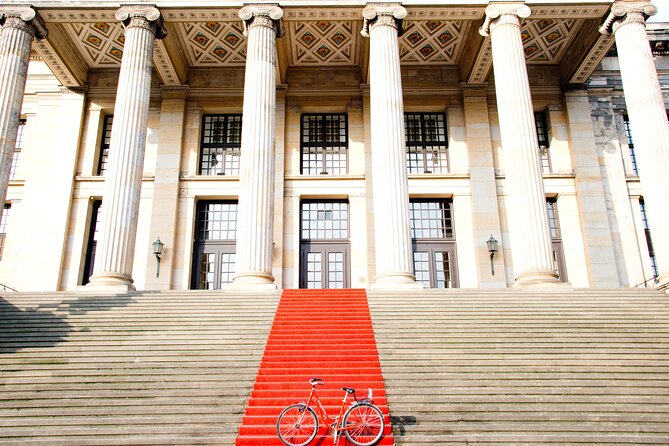
Gendarmenmarkt is one of central Berlin’s most impressive squares, with grand buildings arranged around a formal open space. It makes a strong photo stop near the end of the ride and gives the tour another architectural contrast after the Cold War sites.
The final major stop is the Humboldt Forum. Its modern facade and location opposite Museum Island raise questions about reconstruction, cultural collections, and how Berlin presents its past. The guide can offer a brief orientation, but you will need a separate visit if you want to see the interior exhibitions.
The route returns to the starting point in Nikolaiviertel. By then, you have crossed a large portion of the central city and seen how Berlin changes from one neighborhood to the next. The return is useful because you finish where you began, with no need to arrange transport from a distant endpoint.
Guides, language, and the personal touch
Tours are offered in English, French, and German. The strongest part of the experience depends on the individual guide, but the names praised in past bookings include Julia, Simon, Jake, Juliet, Christopher, Vincent, Fabian, Carl, Berndt, and Riko.
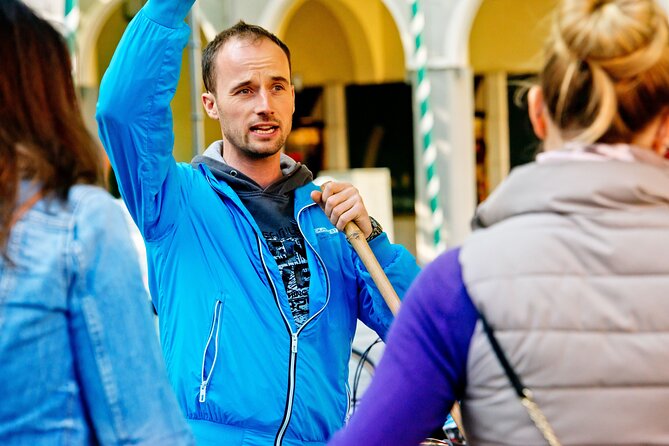
The common thread is not a single scripted style. Some guides focus on major political events, while others add personal observations, local jokes, and quirky facts. Julia is praised for adding her own thoughts. Christopher is described as energetic. Riko is noted for handling a family group well, and Berndt adapted his approach for children, including a five-year-old.
That variety fits the company’s Free Berlin concept. Guides can adjust the route to current events, group interests, and the day’s conditions. If you have already seen Brandenburg Gate or Checkpoint Charlie, say so. A private tour can be arranged with a personal start time and a route built around your priorities.
Families, weather, and practical comfort
This is one of the more family-friendly ways to see central Berlin, provided every child can ride safely or has an arranged infant seat. A family with children aged 11 and 13 found the historical commentary engaging, while another family of five included a five-year-old.
The pace helps. You stop often, and the tour does not require long walks between sights. Still, three hours on a bicycle may be tiring for very young children, so discuss seats and bike choices before booking.
Rain does not automatically cancel the plan. Waterproof ponchos are available, and one group completed the ride in heavy rain. Weather will affect how enjoyable the stops feel, though, especially at open squares and riverfront locations. Comfortable clothing and shoes are sensible.
The tour is not suitable for anyone who cannot ride a bike. Large baggage can be left with the operator, which is handy if you arrive before hotel check-in or are moving between accommodations.
Is $41 a fair price?
At $41 per person, the tour offers solid value if you want a guided introduction to central Berlin. The fee includes the bike of your choice and does not require you to arrange a separate rental. You also get a live guide, a route connecting roughly 19 points, and practical equipment such as baskets, optional helmets, and rain ponchos.
A bus tour may keep you drier and require less physical effort, but it cannot give you the same close contact with squares, river paths, and side streets. Walking can be cheaper, but you will cover less ground in three hours. A rental bike without a guide costs less in some cases, but you lose the historical context and the security of having someone lead you through the route.
The 4.8 rating from 506 bookings reflects especially strong praise for the guides, easy pace, bike condition, and amount of ground covered. The occasional concerns are useful too: the courtyard meeting point can be tricky, and some bikes feel heavy. Those are manageable issues if you arrive early and choose your bike carefully.
Free cancellation is available up to 24 hours before the tour, and you can reserve now and pay later. Private and small-group versions are also available.
Should you book this Berlin bike tour?
Book it if you want to understand Berlin quickly, prefer active sightseeing, and enjoy history delivered through stories rather than long indoor lectures. It is especially useful on a first visit, for families with riding-age children, and for anyone who wants a broad orientation before exploring museums alone.
I would also choose it if you have seen the headline sights already but want a guide who can adjust the route and add less obvious stops. Ask for a comfortable frame, arrive early at Poststraße 11, and tell the guide what you already know.
Skip it if you cannot ride, strongly dislike city cycling, or want extended time inside museums and memorial sites. For everyone else, $41 buys a practical, friendly introduction to Berlin with much more character than a simple checklist of monuments.
FAQ
Where does the Berlin bike tour start?
Meet at the Free Berlin office at the courtyard entrance of Poststraße 11. Look for the FREE BERLIN sign. The meeting point is in Nikolaiviertel, about a five-minute walk from the TV Tower.
How long does the tour last?
The guided bike tour lasts roughly three hours and returns to the Free Berlin Bike Tours and Rental office.
Which languages are available?
The tour is offered in English, French, and German.
Are bikes and helmets included?
Your bike rental is included. Helmets are available if requested, and the bikes have baskets. You can choose from a range of bikes, including pedal-brake bikes when available.
Can children join the tour?
Yes. Children are welcome, and infant seats can be provided on request. Every participant who rides must be able to ride a bicycle.
What happens if it rains?
Waterproof ponchos are available if rain begins during the tour. The tour has operated in rainy conditions, but you should still dress for the weather.
Just added around Berlin
- Private Berlin Street Food Bike Tour★ 4.9 · 42 reviews
- The Beauty of Berlin by Bike: Private Tour★ 5.0 · 59 reviews
- Party and Beer Bike Private Sightseeing Tour Berlin with Pick-up★ 4.5 · 32 reviews
- Private Berlin Street Food Tour by Bike★ 5.0 · 87 reviews
- Berlin Wall History Small Group Cycling Tour★ 4.9 · 152 reviews
- Best of Berlin E-Bike Tour★ 5.0 · 77 reviews
- Best of Berlin E-Bike Tour★ 5.0 · 37 reviews
- Berlin: E-Bike Tour of the Berlin Wall and Mitte Highlights★ 4.7 · 60 reviews
Berlin Bike Tours, compared.
Sights and Highlights Bike Tour with a Local Guide
Read our review →
Berlin Highlights Sightseeing Bike Tour in Small Groups
Read our review →
Alternative Bike Tour of Kreuzberg & Friedrichshain
Read our review →
Cold War & Berlin Wall History Guided Bike Tour
Read our review →Browse the lists this tour appears in