
REVIEW · BERLIN
Berlin: The Wall and Third Reich Guided Bike Tour
Berlin’s 20th-century past makes more sense when you see how close the sites are. On this 15-kilometer bike tour, you ride from Nikolaiviertel through former border zones, bunker sites, Nazi planning areas, and the remains of the Berlin Wall. The bicycle gets you beyond the usual central sights and into streets where buses cannot go.
I like the small-group feel and flexible route, which let guides such as Carl, Juliet, Jake, and Fabian adjust their explanations to your questions. I also like the personal angle: some guides are Berlin natives or former East Berliners who can connect the city’s political story with family experience. The main drawback is the pace. Three hours covers a lot, but several stops receive only a short explanation, and you will not enter Hitler’s bunker or the major bunkers.
Why this tour is worth your time
- Cycle 15 kilometers through quiet streets and paths: You cover far more ground than on foot while avoiding a purely bus-based sightseeing route.
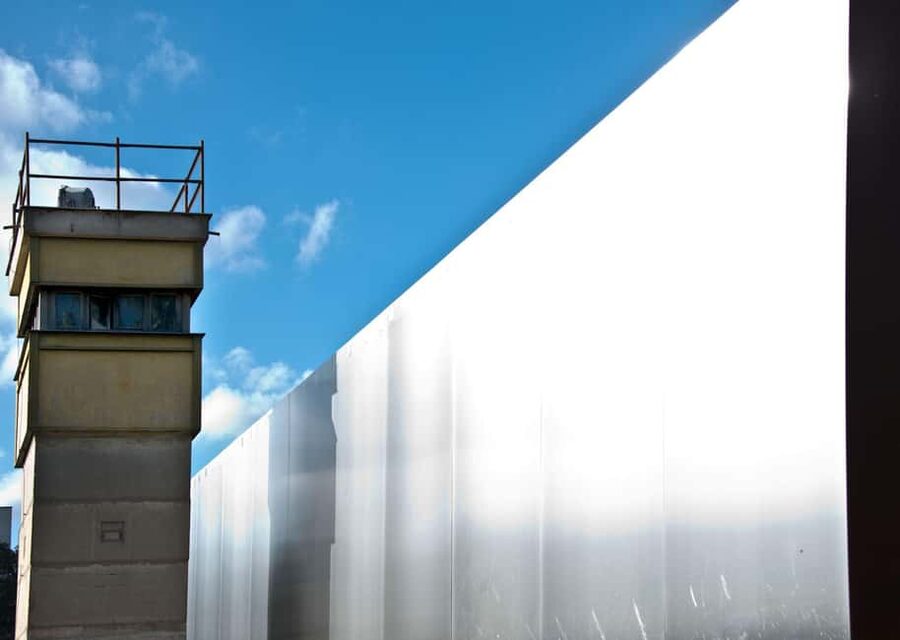
- See original Cold War sites: The Wall Memorial, an East German watchtower, the former border path, and the Günter Litfin Memorial bring the division of Berlin into focus.
- Visit Nazi-era remains: The route includes Flak Tower III in Humboldthain, the Boros Bunker, the Holocaust Memorial, and the site of Hitler’s bunker.
- Hear about daily life in divided Berlin: Your guide explains escape attempts, ghost stations, underground bunkers, and the practical reality of living beside a closed border.
- Expect a flexible presentation: Guides adapt the route and level of detail to the group, with private tours available for a more personal experience.
- Good value at $41: Bike rental, a guide, and rain ponchos are included, making this a useful first look at several major historical areas.
Starting in Nikolaiviertel, Berlin’s historic center
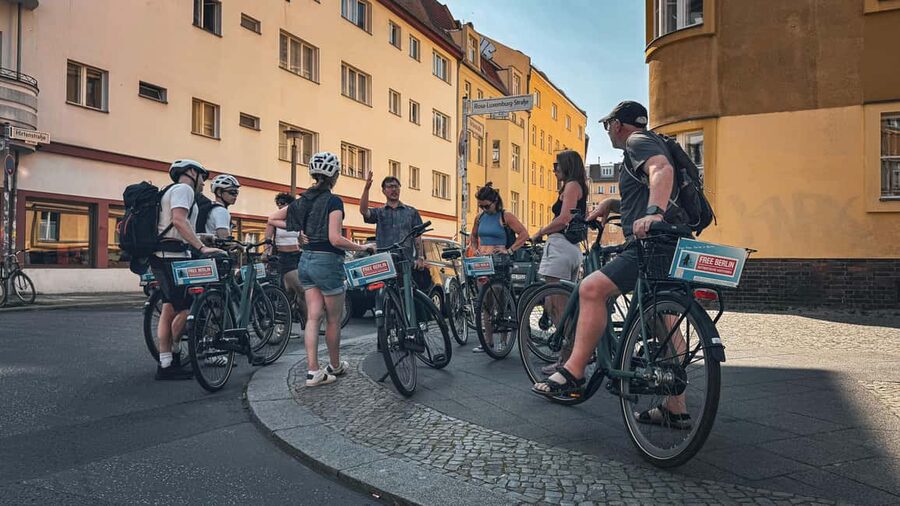
The tour begins at the Free Berlin Bike Tours and Rental office in the courtyard entrance at Poststraße 11. Look for the FREE BERLIN sign. The meeting point is in Nikolaiviertel, about five minutes from the TV Tower, so it is easy to reach if you are already sightseeing around Alexanderplatz.
You choose a rental bike before setting off. The bikes have baskets and are checked regularly by a certified mechanic. Helmets are available if you request one, and waterproof ponchos are provided if the weather turns wet. Large luggage can also be left with the operator during the ride if you arrange it in advance.
Nikolaiviertel is a useful starting point because it places you near the older heart of Berlin, yet the tour quickly moves into the city’s 20th-century story. A short introduction here helps set the scene before the group begins riding.
More Guided Tours in Berlin:
- Berlin: Sights and Highlights Bike Tour with a Local Guide
★ 4.8 · 2,698 reviews - Berlin: Guided Bike Tour to Explore the Highlights
★ 4.8 · 506 reviews - Berlin: Cold War & Berlin Wall History Guided Bike Tour
★ 4.8 · 422 reviews
New Synagogue and the city’s Jewish past
The New Synagogue Berlin, also known as the Jewish Centre, is one of the first brief stops. You should expect an outside explanation rather than an extended museum visit. The building gives the guide a chance to discuss Berlin’s Jewish community and the destruction and persecution of the Nazi period.
This stop is short, but it adds an important layer to the tour. The experience is not limited to Hitler, the Wall, and military structures. It also points toward the people and communities affected by the city’s political history.
Bernauer Straße and the Berlin Wall Memorial
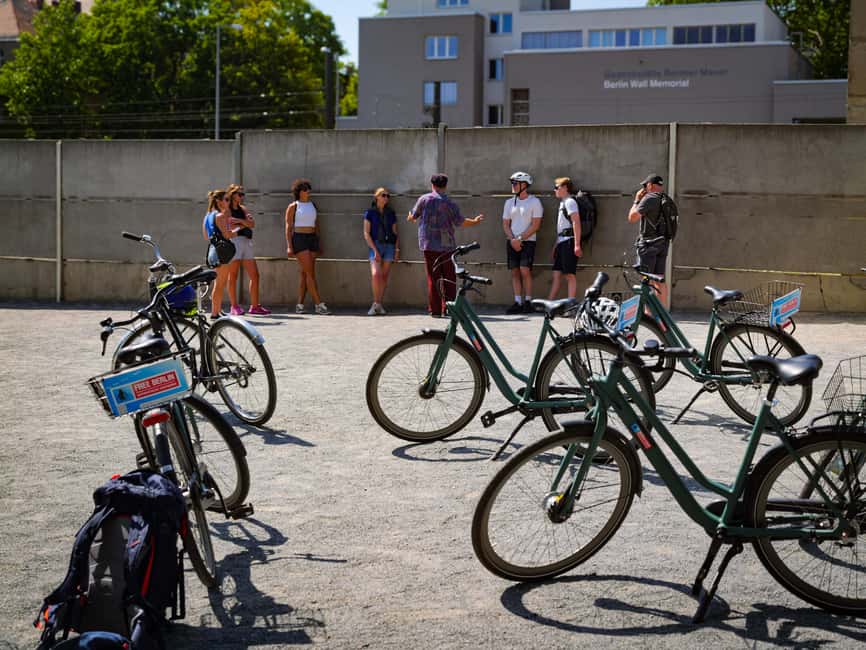
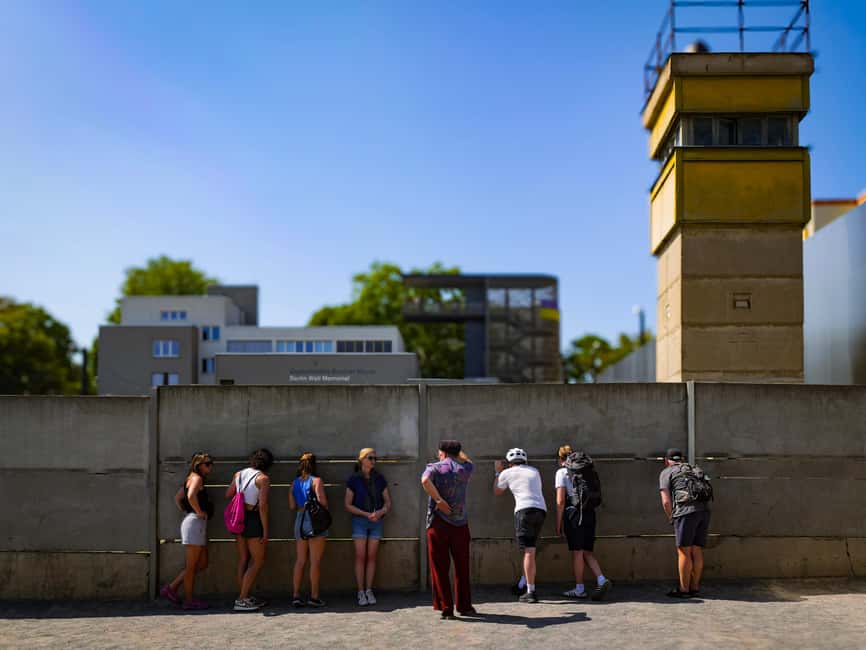
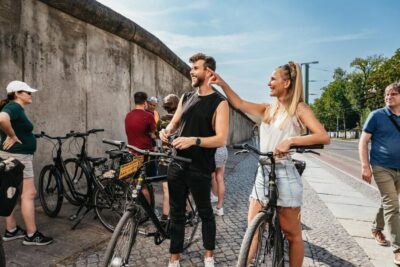
The Berlin Wall Memorial on Bernauer Straße is one of the strongest parts of the route. Here, the Wall was not simply a concrete barrier. The border included a wide strip of fences, patrol areas, watch points, and open ground. The memorial preserves enough of that arrangement to show how the border functioned.
Your guide can explain how the street divided families and neighbors, how people tried to escape, and why this section offers a clearer picture than a single surviving slab of concrete. You may also see photographs or comparisons that help connect today’s street with its earlier appearance.
The bicycle is particularly useful here. You can move along the former border rather than viewing one isolated monument, although you should not expect a long museum visit as part of this tour. If you want to study the memorial exhibition in detail, return separately.
Ruppiner Straße, Mauerpark, and the former border route
The ride continues through Ruppiner Straße and Mauerpark. Mauerpark occupies ground once associated with the Wall’s border zone. Today, it has a very different use, which makes the area a clear example of how Berlin has reused former division lines.
The guide then follows sections of the Berliner Mauerweg, the route marking the former Wall. This part of the ride helps you understand the sheer length of the border. Instead of hearing only about famous checkpoints, you see how the barrier cut through ordinary neighborhoods and transport routes.
Mauerpark can be lively at times, while other sections of the ride are quieter. Your guide will keep the group together and select streets or paths according to conditions and the interests of the group. The changing route is part of the appeal, but it also means the exact experience can vary from one departure to another.
A few more bike tours around Berlin worth a look
- Berlin Highlights 3-Hour Bike Tour
★ 5.0 · 948 reviews - Berlin City Bike Tour with Beer Garden Stop
★ 5.0 · 917 reviews - Berlin Highlights: 3-Hour Bike Tour
★ 4.9 · 809 reviews - Berlin Highlights Sightseeing Bike Tour in Small Groups
★ 5.0 · 652 reviews
Behmstraßenbrücke and the view across the old divide
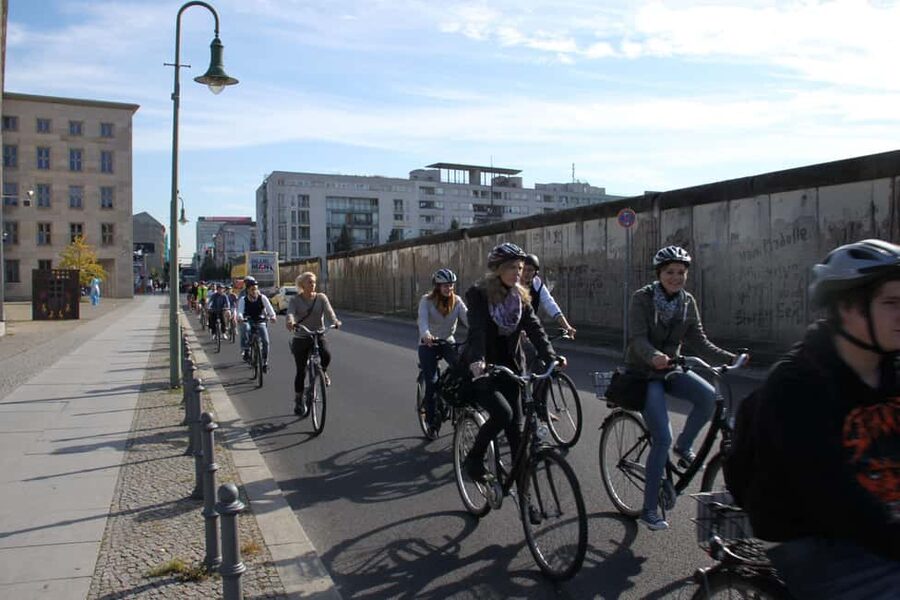
Behmstraßenbrücke gives the group another useful vantage point over the former border area. Bridges mattered in divided Berlin because they connected transport routes that were otherwise interrupted by walls, fences, and controlled crossings.
This is the kind of stop that can be easy to miss on your own. You might cycle across without realizing that the road, railway, or nearby open ground once formed part of a heavily guarded frontier. Your guide provides the political background, then ties it to the physical setting around you.
Flak Tower III in Humboldthain
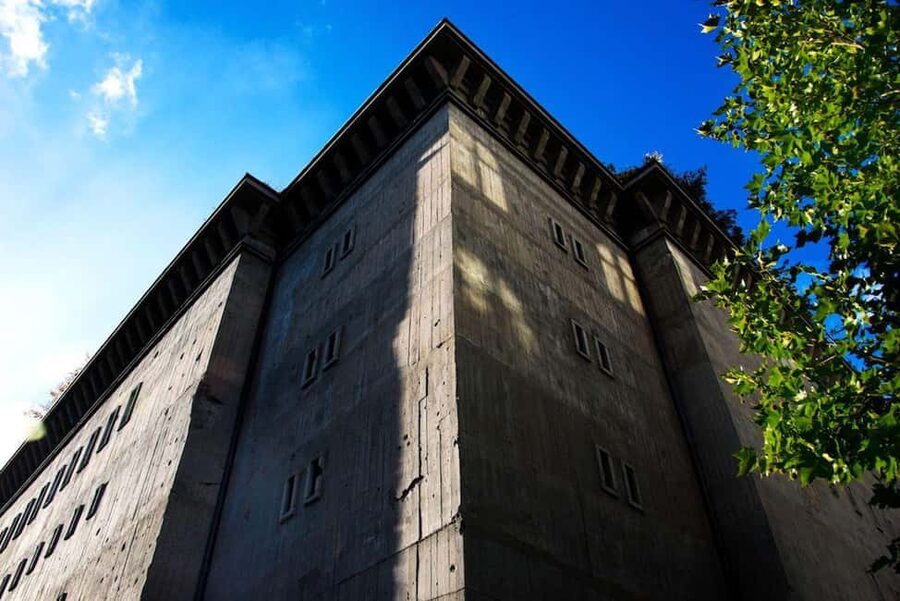
Flak Tower III in Volkspark Humboldthain is one of the tour’s most unusual Nazi-era sites. The remains of this huge wartime structure are partly integrated into the park’s high ground. From the outside, it can be difficult to grasp the original size and purpose, so the guide’s explanation matters.
The stop also shows how Berlin has reused and absorbed difficult structures. The former military installation now sits within a public park rather than a functioning Nazi complex. You will not tour the interior as part of this bike ride, but seeing the remains helps you understand the scale of wartime construction.
This is one of the places where a bicycle saves time. The route links a large park site with Wall locations and central monuments without forcing you to make several separate public transport trips.
A surviving Wall section and the Günter Litfin Memorial
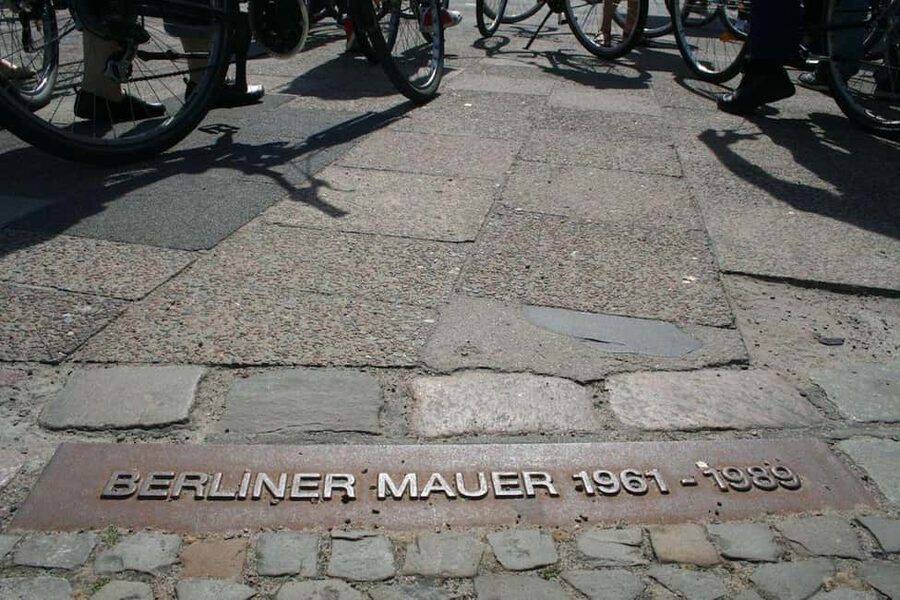
A piece of the Berlin Wall appears later in the route. A remaining slab can look modest compared with the idea of the Wall, so listen for the explanation of what once surrounded it. The concrete is only one part of the border system, and the guide helps fill in the missing fences, patrol routes, and restricted zones.
The Günter Litfin Memorial adds a human story. Günter Litfin was one of the first people killed while trying to cross from East Berlin. The memorial is located near the former border and makes the cost of the division personal rather than abstract.
This is also a good example of the tour’s approach. You are not only shown famous monuments. You are taken to places connected with individual lives, attempted escapes, and the daily risks of crossing or resisting the border.
Invalids’ Cemetery and the ghost-station story
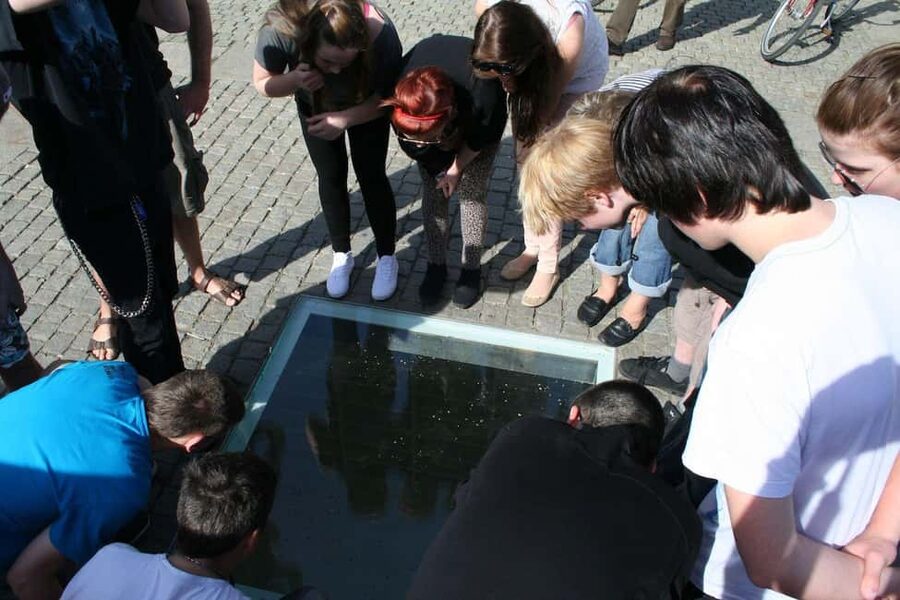
Invalids’ Cemetery offers another quieter stop. Its location near the former border lets the guide explain how cemeteries, streets, and public spaces were affected by the Wall. Some places became difficult to reach or were partly cut off from the surrounding city.
The tour also covers ghost stations, the stations beneath West Berlin through which trains passed without stopping during the division. You may not enter an underground station during the bike ride, but the subject helps explain how Berlin’s transport system reflected the political split.
This part works best if you are interested in everyday life. You learn not just where the Wall stood, but how it changed routes to work, family visits, shopping, and travel across the city.
The Boros Bunker and Berlin’s changing uses
The Boros Bunker, home to the Boros Collection, is included as a guided exterior stop. The bunker is another massive wartime structure, but its later use shows Berlin’s habit of giving old buildings new purposes.
The art collection itself is not part of this three-hour tour, so do not book the bike ride expecting museum admission. Still, the bunker adds variety to the route and gives the guide another chance to explain the practical and symbolic weight of Nazi-era construction.
You may find this stop especially useful if you want to see how Berlin deals with buildings that cannot simply be erased. The tour does not present the city’s past as a neat museum display. It shows old structures in modern streets, parks, and working neighborhoods.
The Holocaust Memorial and Hitler’s bunker site
The Holocaust Memorial is one of the most important stops, but the timing is brief. You can photograph and walk among the concrete blocks, while the guide explains the memorial’s place in Berlin’s center and its connection to the murder of Europe’s Jews.
Because the tour covers a large route, you will not have time for a full visit to the underground information center. If that exhibition matters to you, plan a separate visit. The bike tour gives you context and location, not a complete memorial museum experience.
Nearby, the route reaches the site of Hitler’s bunker. The bunker is not open to visitors, and the structure is no longer accessible. The site is now marked in an ordinary urban setting, which can feel surprising after the dramatic stories connected with it.
One older booking account specifically noted that the bunker stop was missed, so it is sensible to confirm the day’s route with your guide if this point matters to you. Even when included, you should expect an explanation of the site rather than an underground visit. The value is in understanding why the bunker was sealed and how the area was handled after the war, not in seeing an intact interior.
The planned Germania district and the Justice Ministry
The ride also touches areas linked to Germania, the enormous redesign of Berlin imagined by the Nazi regime. The plan was never completed, but its intended scale reveals how the dictatorship wanted to reshape the capital around power, ceremony, and monumental buildings.
Your guide connects these plans with surviving sites and empty spaces. This is one of the more thought-provoking parts of the tour because you see both what remains and what never came to pass.
The final listed stop is the Federal Ministry of Justice. Expect a short exterior explanation before the group returns to Poststraße 11. The route ends where it began, making it easy to continue sightseeing in central Berlin.
What the guides add to the ride
The strongest part of this experience is the guiding. The format allows for conversation rather than a fixed speech, and guides are encouraged to adjust the route and examples to the group.
Carl has been praised for making quiet parts of Berlin engaging and for helping history feel immediate. Juliet is noted for answering questions and adding detail, while Jake is known for an easy, humorous style. Fabian has been described as especially good at telling stories and responding to questions. Other guides, including Bjorn, Simone, Yasmin, Paul, and Vince, have also led rides with different emphases.
Several guides bring a personal Berlin connection. One guide is a Berlin native who could discuss family experiences of major historical events. Another guide was a former East Berliner, which added useful context about life before reunification. This does not mean every departure offers the same personal background, but it does explain why the flexible format works well.
The subject matter is serious, yet the tone is not stiff. You can ask questions, discuss different interpretations, and adjust the depth of the presentation. That is especially helpful if your group includes teenagers or people with different levels of prior knowledge.
Fitness, traffic, and weather
The ride covers about 15 kilometers over three hours. It is active but not presented as a hard athletic outing. The group stops often for explanations, photographs, and questions, and several people have found the cycling manageable even without much tour experience.
You still need to be comfortable riding in a city. Some streets are busier than others, and one account specifically noted that most of the route used quiet streets and cycle paths apart from a few busy roads. Guides keep the group together and pay attention to safety, but you should remain alert around traffic.
Weather matters. Rain can make some paths slippery, and the supplied ponchos help but do not turn a wet day into a dry one. Warm clothes, especially gloves, are sensible in winter. A sunny, dry day will give you the easiest ride, but the tour can still operate in poor weather.
Children are welcome, and infant seats can be provided on request. That makes this a practical family option, provided everyone can manage the distance and city cycling. Ask ahead about the infant seat rather than assuming one will be waiting.
Is $41 a fair price?
At $41 per person, the tour offers solid value if you want one organized outing to connect many Berlin sites. The price includes the bike, guide, and a helmet if requested, plus ponchos in wet weather. You are also paying for route planning and the local context that links scattered places into one story.
A walking tour may give you more time at central monuments, while a museum visit offers more detailed exhibits. This bike tour trades depth at individual stops for reach. In three hours, you can see Wall remains, a watchtower area, bunker sites, memorials, and Nazi planning locations without arranging separate transport.
Private and small-group options are available. A private ride costs more than the listed per-person price may suggest, but it makes sense if you have strong interests, limited time, or a family group that wants a slower pace. The standard experience is the better value for most people who want an overview.
Free cancellation up to 24 hours before departure and reserve-now, pay-later booking add useful flexibility. Check the starting time when booking, since availability changes.
Who should book this Berlin bike tour?
I would choose this tour early in a Berlin visit if you want a clear framework for the city’s Nazi and Cold War past. It suits curious families, first-time visitors, history fans, and anyone who finds three hours of walking too slow but a bus tour too distant.
You should book it if you like asking questions, seeing ordinary streets, and covering ground under your own power. You may want something else if you need long museum visits, indoor shelter, or a detailed examination of every memorial.
FAQ
Where does the Berlin bike tour start?
Meet at the Free Berlin Bike Tours and Rental office at the courtyard entrance of Poststraße 11. Look for the FREE BERLIN sign in Nikolaiviertel, about five minutes from the TV Tower.
How long is the tour?
The tour lasts three hours and covers about 15 kilometers by bicycle.
What is included in the price?
Bike rental and a guide are included. Helmets are available on request, and waterproof ponchos are provided if it rains.
Can children join the tour?
Yes. The tour is family-friendly, and infant seats can be provided on request.
Is Hitler’s bunker open to visitors?
No. The bunker is no longer accessible. The tour visits the site and explains its history from above ground.
What languages are available?
Guided tours are available in English, German, and French. Private and small-group options are also offered.
Should you book it?
Book this bike tour if you want Berlin’s Wall and Nazi-era sites explained as connected parts of one city, not as isolated monuments. The flexible guides, quiet routes, and personal stories are the main reasons to choose it.
Go in good weather, wear practical clothes, and keep your expectations clear: this is a fast-moving outdoor overview, not a museum tour. At $41, it is a strong choice for seeing a wide section of Berlin’s 20th-century past in one well-planned ride.
Just added around Berlin
- The Beauty of Berlin by Bike: Private Tour★ 5.0 · 59 reviews
- Party and Beer Bike Private Sightseeing Tour Berlin with Pick-up★ 4.5 · 32 reviews
- Private Berlin Street Food Bike Tour★ 4.9 · 42 reviews
- Private Berlin Street Food Tour by Bike★ 5.0 · 87 reviews
- Berlin Wall History Small Group Cycling Tour★ 4.9 · 152 reviews
- Best of Berlin E-Bike Tour★ 5.0 · 37 reviews
- Berlin: E-Bike Tour of the Berlin Wall and Mitte Highlights★ 4.7 · 60 reviews
- Best of Berlin E-Bike Tour★ 5.0 · 77 reviews
Berlin Bike Tours, compared.
Sights and Highlights Bike Tour with a Local Guide
Read our review →

Berlin Highlights Sightseeing Bike Tour in Small Groups
Read our review →
Alternative Bike Tour of Kreuzberg & Friedrichshain
Read our review →
Cold War & Berlin Wall History Guided Bike Tour
Read our review →Browse the lists this tour appears in