
REVIEW · BERLIN
Berlin: Alternative Bike Tour of Kreuzberg & Friedrichshain
Berlin changes quickly from one neighborhood to the next, and this 17-kilometer bike ride lets you see those shifts in a single afternoon. You pedal from Prenzlauer Berg through Friedrichshain and across Kreuzberg, passing former East German housing, nightlife districts, parks, street art, the East Side Gallery, and the River Spree.
I like the way the tour connects Berlin’s past with its present, rather than stopping at the usual grand monuments. I also like the personal feel: guides such as Anna, Patricia, Oli, and Andy have been praised for telling stories, learning names, and sharing practical food and nightlife tips. The main drawback is that a few city streets can feel tense beside traffic, and one rider found a two-gear bike hard to manage.
Key points at a glance
- Ride from Kulturbrauerei to Kreuzberg: Start near the former brewery complex in Prenzlauer Berg and cover several very different districts.
- See the East Side Gallery: Cycle beside the largest remaining section of the Berlin Wall, then cross the Oberbaumbrücke.
- Explore alternative Berlin: Boxhagener Platz, RAW Tempel, Görlitzer Park, back courtyards, and the SO36 district reveal the city’s creative side.
- Cover 17 kilometers at an easy pace: The tour lasts about three and a half hours, with time for photos and questions.
- Keep the group small: A maximum of 15 people makes it easier to hear the guide and stay together.
- Bring comfortable clothes: Bikes, baskets, helmets and gloves on request, sunscreen, trouser clips, and rain ponchos are supplied.
Why a bike is the right way to see eastern Berlin
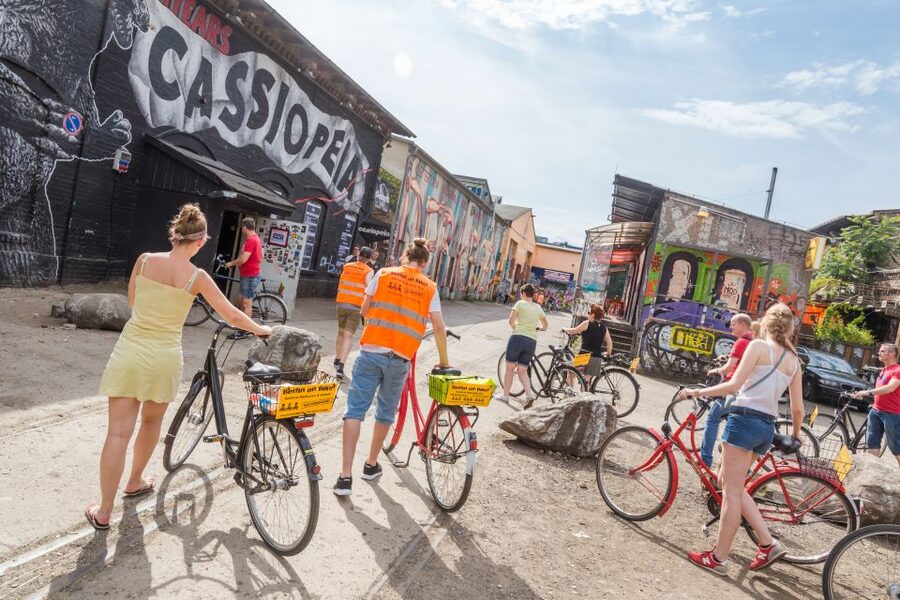
Berlin is spread out. You can walk through one district and enjoy it, but you will spend much of the day covering the gaps between neighborhoods. On a bicycle, those gaps become part of the story.
This route shows how the former East Berlin and West Berlin areas developed in different ways, then changed again after reunification. You pass monumental East German avenues, converted industrial spaces, occupied housing, parks, painted walls, and streets shaped by artists, musicians, nightlife, and newer development.
I especially like the scale of the ride. Seventeen kilometers sounds like a lot on paper, but the pace is described as relaxed, with regular time to stop, ask questions, and take photos. You are not racing from sight to sight. The bicycle simply lets you connect places that would be awkward to visit on foot.
The route generally uses bike paths and quieter roads. Still, Berlin does not offer a calm cycling surface at every point. One rider found some city sections a little nerve-racking beside cars, while another had trouble keeping up on a bike with only two gears. If you are comfortable cycling in an urban setting, this should be manageable, but it is not a traffic-free park ride.
A few more bike tours around Berlin worth a look
- Berlin: Sights and Highlights Bike Tour with a Local Guide
★ 4.8 · 2,698 reviews - Berlin Highlights 3-Hour Bike Tour
★ 5.0 · 948 reviews - Berlin City Bike Tour with Beer Garden Stop
★ 5.0 · 917 reviews
Starting at Kulturbrauerei in Prenzlauer Berg
The tour begins at Kulturbrauerei, a former brewery complex in Prenzlauer Berg. The starting point gives you an immediate taste of the district’s old industrial character and its later cultural use.
From here, you ride toward Volkspark Friedrichshain. This opening section helps you get used to the bike and the group before the route reaches the denser streets of Friedrichshain. Your guide sets the pace and keeps the group together, an important service when people have different levels of cycling experience.
The rental fleet includes comfortable bikes with baskets for small bags. You can choose a bike that fits you from the available selection. Helmets and gloves are offered on request, and trouser clips can keep loose clothing away from the chain. Comfortable clothes are the sensible choice, especially for a ride lasting roughly three and a half hours.
Volkspark Friedrichshain and Karl-Marx-Allee
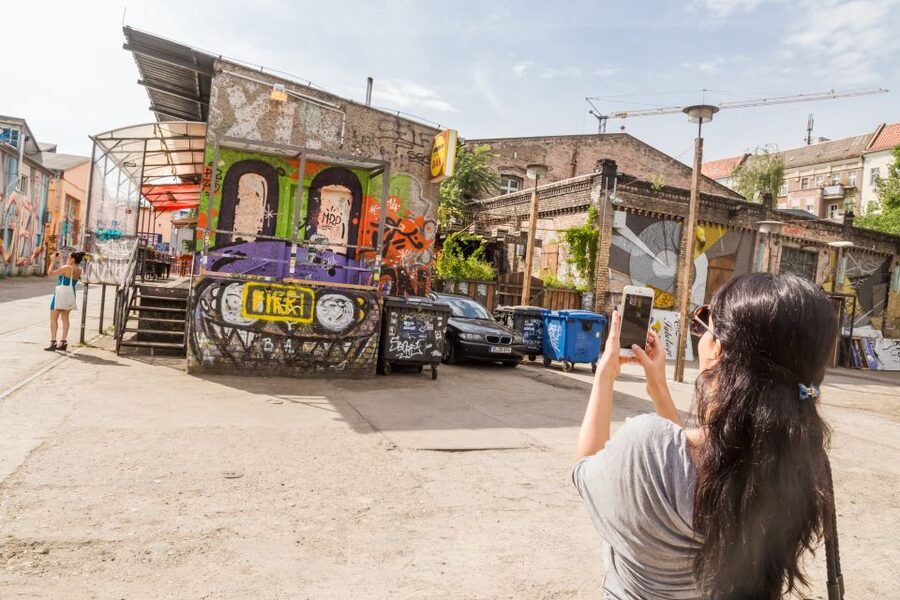
The route then moves through Volkspark Friedrichshain and toward Karl-Marx-Allee. These places show a more formal side of the city than the painted walls and club spaces that come later.
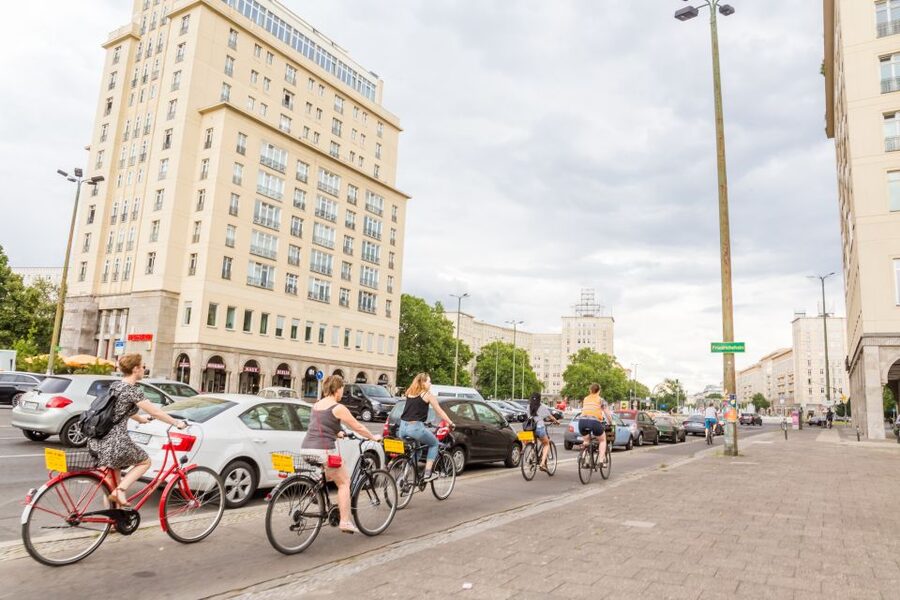
Karl-Marx-Allee is a major DDR boulevard, built on a grand scale with broad spaces and imposing apartment blocks. It offers useful context for understanding East German planning and public life. Your guide can help you read the architecture, rather than treating it as just a line of large buildings.
This is one reason I would book the tour early in your Berlin stay. It gives you a working map of the eastern districts. You begin to understand the difference between a planned boulevard, a former industrial quarter, a park, and a neighborhood shaped by artists and nightlife.
The route does not try to turn every stop into a long museum visit. Instead, you see the places in context and hear the stories while moving through the city. That keeps the afternoon active, though you should not expect lengthy indoor sightseeing or formal monument tours.
Boxhagener Platz and RAW Tempel
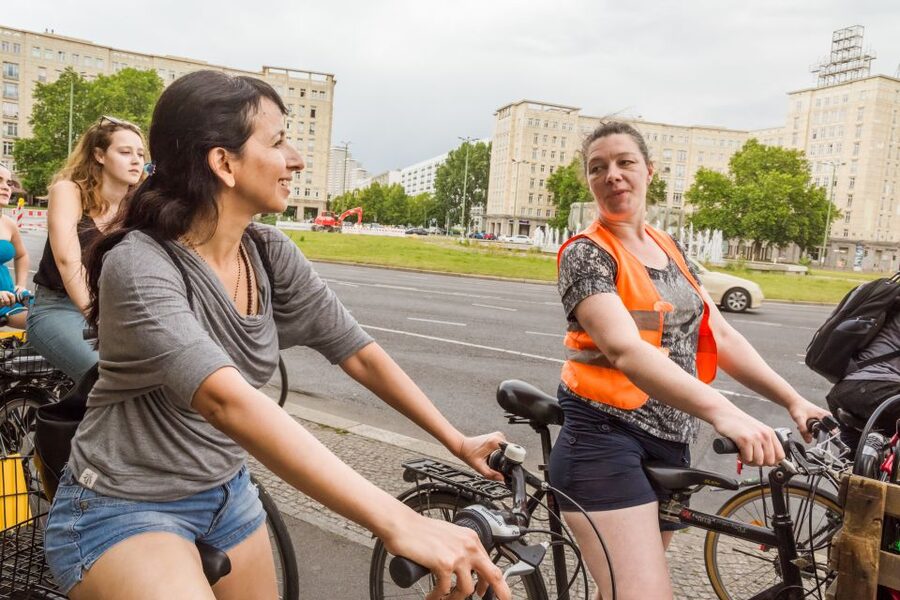
In Friedrichshain, the ride continues around Boxhagener Platz and RAW Tempel. This is where the city’s creative and social side becomes more visible.
Boxhagener Platz is surrounded by cafés, bars, shops, and residential streets. RAW Tempel occupies a former railway repair area and is associated with art, nightlife, and alternative culture. During the day, you can see the physical setting behind the district’s reputation, while your guide explains how these spaces fit into Berlin’s changing identity.
The area is known for nightlife, but the tour runs during the day, when you can look around without the noise and crowds of an evening out. That timing is useful if you want to decide which streets or venues to return to later.
The experience here is less about ticking off one famous attraction and more about seeing how people use old industrial sites. You may notice street art, repurposed buildings, and signs of the tension between low-cost creative spaces and rising demand for central housing. The tour introduces those changes without pretending the district has stayed frozen in its alternative past.
Same city, a different ride:
- Berlin Highlights: 3-Hour Bike Tour
★ 4.9 · 809 reviews - Berlin Highlights Sightseeing Bike Tour in Small Groups
★ 5.0 · 652 reviews - Berlin: The Wall and Third Reich Guided Bike Tour
★ 4.8 · 578 reviews - Berlin: Guided Bike Tour to Explore the Highlights
★ 4.8 · 506 reviews
The East Side Gallery and Oberbaumbrücke
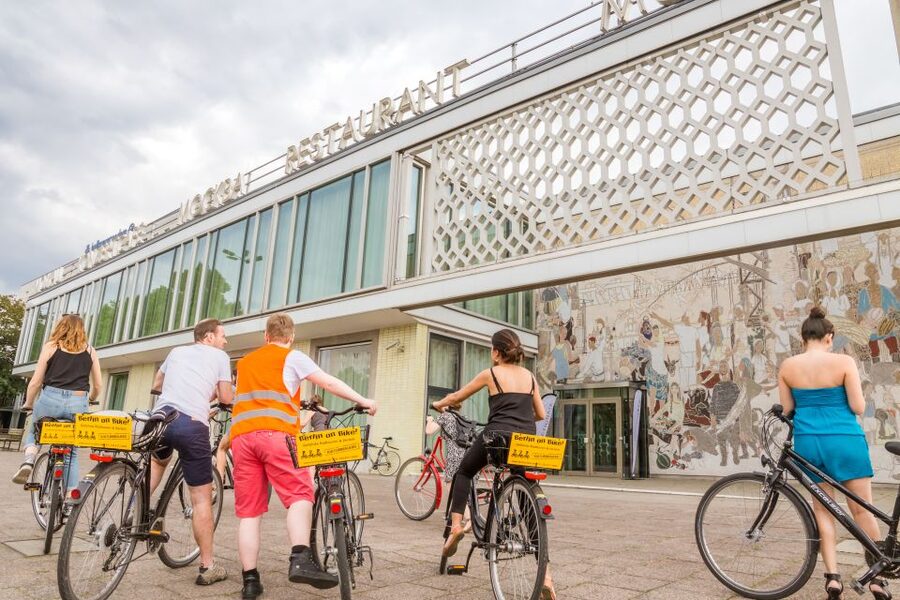
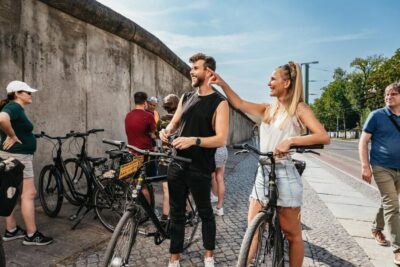
The route reaches the East Side Gallery, the longest remaining section of the Berlin Wall. This is the tour’s clearest historical stop and one of its most visually memorable stretches.
The wall is covered with large painted works, created after the border system lost its original purpose. You have time to look at the art and hear how the Wall shaped the city. Because you approach by bike, you see the barrier as part of the streets and neighborhoods around it, not only as an isolated display.
That context matters. Berlin’s Wall sites can sometimes feel like separate memorial stops, but here the ride links the Wall to housing, public spaces, transport routes, and the districts that grew on either side of it. You get a sense of how a physical border once cut through ordinary daily life.
After the East Side Gallery, you cross the Oberbaumbrücke into Kreuzberg. The bridge connects Friedrichshain and Kreuzberg and makes a natural turning point in the tour. It also gives you a good view of the River Spree and a strong visual reminder that two once-separated parts of the city now connect by an ordinary city route.
Kreuzberg, Görlitzer Park, and SO36
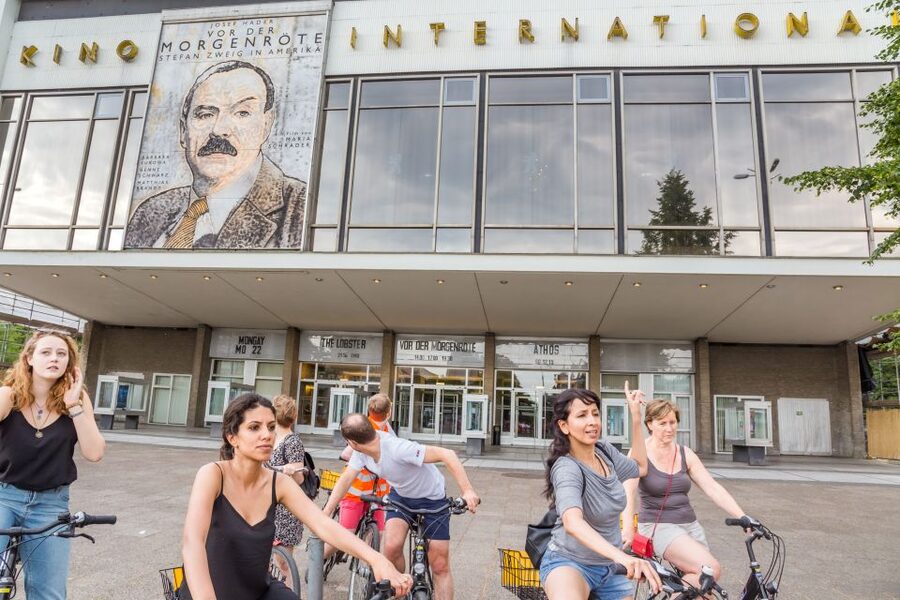
Kreuzberg is the heart of the alternative side of the ride. The tour takes you through back courtyards, parks, and streets associated with immigrant communities, political activism, music, art, and nightlife.
Görlitzer Park provides a break from the denser streets. Riding along the Spree adds another change of pace, with open views and room to pause. The water is not just scenery here. It helps you understand how Berlin’s old industrial and working districts developed around transport and commercial routes.
The SO36 district brings you into one of Kreuzberg’s best-known cultural areas. The name refers to the old postal district, and the area is associated with punk, clubs, street art, alternative housing, and a strong local identity. Your guide’s stories are especially useful here because the neighborhood is easy to reduce to a few clichés if you only pass through on your own.
The tour also points out occupied housing and other signs of Berlin’s housing struggles. This gives you a more honest view than a simple street-art tour. Kreuzberg can be fun, colorful, and full of places to eat or listen to music, but it is also a neighborhood shaped by disputes over rents, redevelopment, and who gets to remain.
Several guides have added personal touches. Anna, who lives in the area, has been praised for making the route feel connected to daily life rather than like a list of facts. Patricia has been singled out for her stories about alternative Berlin, while one guide showed the group a studio linked to a David Bowie recording. Specific stops can vary, so do not assume every departure includes exactly the same anecdotes.
Stories, music, and local tips
The tour works best when the guide adds the human details that a map cannot provide. Berlin’s recent past is full of sharp turns: war, division, the Wall, reunification, squatting, club culture, redevelopment, and gentrification.
The guides are available in English, Dutch, and German. Names praised across different departures include Anna, Patricia, Oli, Andy, Emma, Joost, Phillip, and others. The exact guide depends on the date, but the repeated strength is clear: good storytelling and a personal approach matter more here than a fixed script.
Some guides have shared tips on where to eat and drink after the ride. One rider wished for a quick beer stop during the tour, especially while passing people relaxing outside bars. That is a fair point. Snacks and drinks are not included, and the tour is designed as a continuous ride rather than a café crawl.
I would bring water and eat beforehand or plan a stop afterward. The guide can point you toward areas worth exploring later, but you should not expect a scheduled meal break.
Bikes, pace, and group size
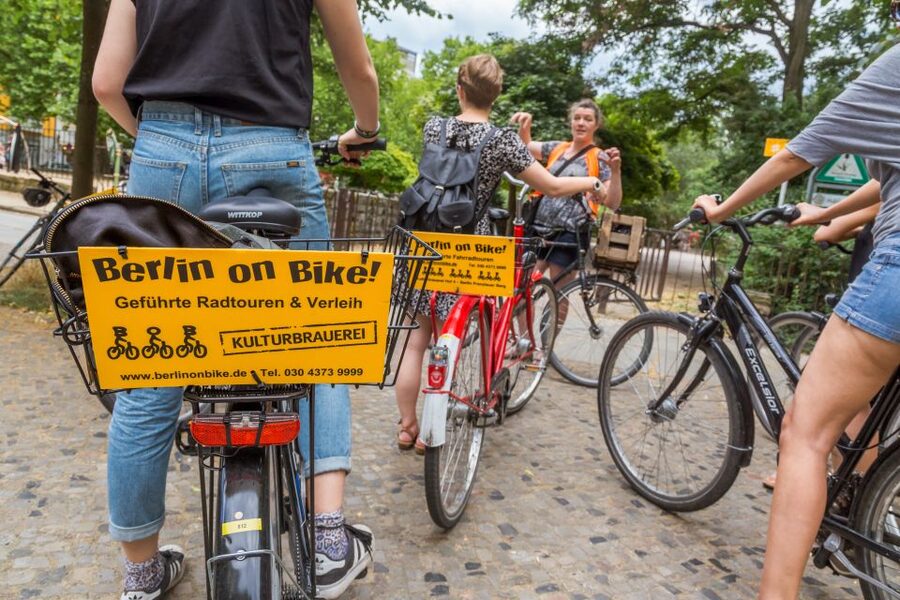
The maximum group size is 15 people. That is small enough for the guide to keep everyone together and answer questions, while still large enough to feel like a shared outing rather than a private ride.
The tour is suitable for a range of cycling abilities because the pace is relaxed and the route includes time for photos. It is also a good choice for families with older children. A family with children aged 9 and 11 found the bikes suitable, while another family with teenagers enjoyed the mix of history and culture.
Still, you should be honest about your comfort level. You need to cycle for about 17 kilometers and handle some urban roads. The route is not described as entirely separated from cars, and bike specifications may differ. If gears matter to you, ask about the available bike when you arrive.
Baskets hold lightweight bags, but I would avoid bringing a large backpack or heavy luggage. A helmet and gloves are available upon request. Sunscreen, trouser clips, and rain ponchos are supplied, which is useful in Berlin’s changeable weather.
Is $41 a fair price?
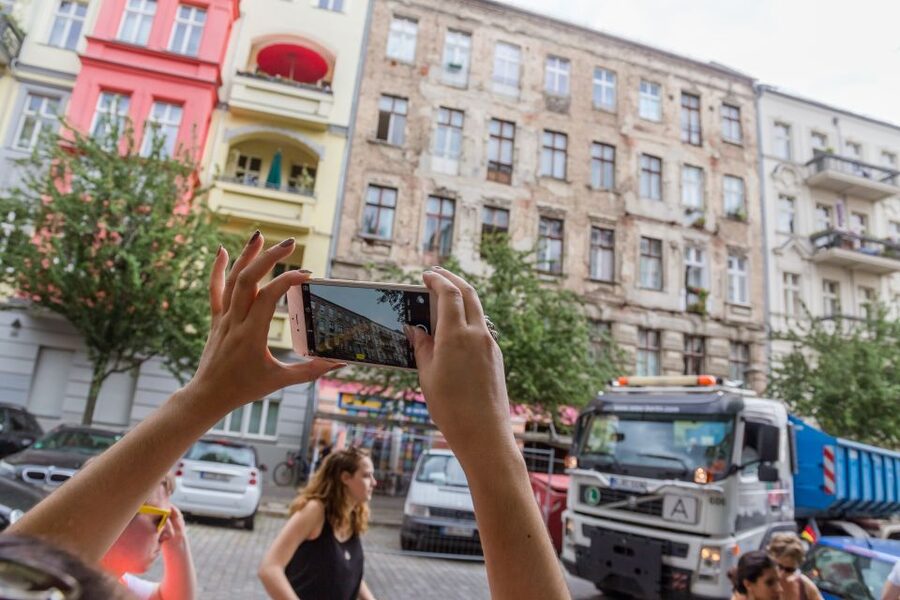
At $41 per person, this is not the cheapest way to rent a bicycle, but you are paying for more than the bike. The fee covers a guide, equipment, and roughly three and a half hours of organized sightseeing across several districts.
The value is strongest if you want historical context and local orientation. On your own, you could cycle to the East Side Gallery and Kreuzberg, but you might miss the connection between Karl-Marx-Allee, RAW Tempel, the Wall, and SO36. You would also need to plan the route, find a suitable bike, and manage the city traffic yourself.
The price is less attractive if you only want casual cycling or if you already know these neighborhoods well. The tour does not include food, drinks, or long visits inside attractions. It is a guided city ride, not a full-day excursion.
Free cancellation up to 24 hours before the start and the option to reserve now and pay later make booking less risky. Check the exact meeting point for your chosen departure, since it can vary by option. The listed route begins at Kulturbrauerei, but your booking details should take priority.
Who should book this Berlin bike tour?
I would choose this tour for a first or second day in Berlin. It gives you a broad sense of the eastern districts and helps you decide where to return for dinner, music, street art, or a slower walk.
It suits you especially well if you:
- Want Berlin’s recent history explained through real neighborhoods
- Prefer active sightseeing to long hours inside museums
- Enjoy street art, converted industrial spaces, parks, and local culture
- Want to see more than the main central monuments
- Are comfortable cycling 17 kilometers at a relaxed pace
- Prefer a small group with time for questions
It may not suit you if you dislike urban cycling, need a fully car-free route, or want a quiet nature ride. It is also not the right choice if you expect a food tasting tour or a stop at every major Berlin landmark.
FAQ
How long is the bike tour?
The tour lasts about three and a half hours, listed as 210 minutes. You cover approximately 17 kilometers at a relaxed pace.
Where does the tour start?
The route described begins at Kulturbrauerei in Prenzlauer Berg. The meeting point may vary depending on the option you book, so check your specific booking details.
Which neighborhoods does the tour visit?
The route includes Prenzlauer Berg, Friedrichshain, and Kreuzberg. Stops and riding areas include Volkspark Friedrichshain, Karl-Marx-Allee, Boxhagener Platz, RAW Tempel, the East Side Gallery, Oberbaumbrücke, Görlitzer Park, the River Spree, and the SO36 district.
Is the tour offered in English?
Yes. Live guides are available in English, Dutch, and German.
Are bicycles and safety equipment included?
A rental bicycle is included. Bikes have baskets for lightweight bags, and you can select a suitable bicycle from the available fleet. Helmets and gloves are available on request. Sunscreen, trouser clips, and rain ponchos are also provided.
Can I cancel the booking?
You can cancel up to 24 hours in advance for a full refund. The activity also offers a reserve-now, pay-later option.
Should you book it?
Book this tour if you want Berlin explained through its neighborhoods, not just its famous buildings. The strongest parts are the range of districts, the East Side Gallery, the personal stories from guides such as Anna and Patricia, and the chance to see how history, art, nightlife, and housing changes meet on the same streets.
You should be ready for a fairly long ride and a few city-traffic sections. If that sounds fine, $41 buys a useful first look at Kreuzberg and Friedrichshain, plus enough local detail to plan the rest of your Berlin stay.
Just added around Berlin
- Private Berlin Street Food Bike Tour★ 4.9 · 42 reviews
- The Beauty of Berlin by Bike: Private Tour★ 5.0 · 59 reviews
- Party and Beer Bike Private Sightseeing Tour Berlin with Pick-up★ 4.5 · 32 reviews
- Private Berlin Street Food Tour by Bike★ 5.0 · 87 reviews
- Berlin Wall History Small Group Cycling Tour★ 4.9 · 152 reviews
- Best of Berlin E-Bike Tour★ 5.0 · 77 reviews
- Best of Berlin E-Bike Tour★ 5.0 · 37 reviews
- Berlin: E-Bike Tour of the Berlin Wall and Mitte Highlights★ 4.7 · 60 reviews
Berlin Bike Tours, compared.
Sights and Highlights Bike Tour with a Local Guide
Read our review →
Berlin Highlights Sightseeing Bike Tour in Small Groups
Read our review →
Cold War & Berlin Wall History Guided Bike Tour
Read our review →Browse the lists this tour appears in