
REVIEW · BERLIN
Berlin Wall and Cold War Bike Tour in Small Groups
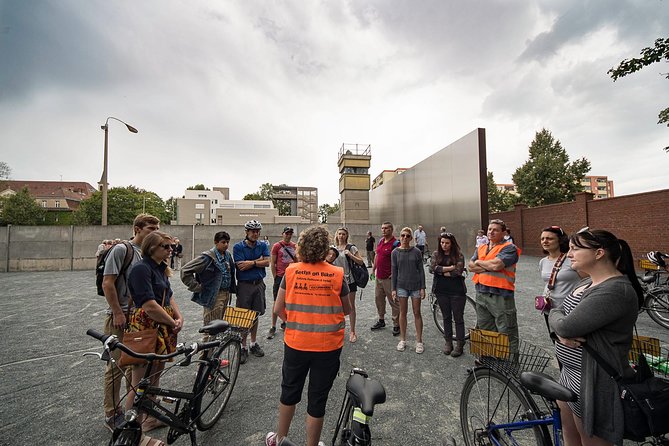
Berlin’s Cold War story makes more sense from a bicycle. You cover ground quickly, pause at places tied to the Wall, and see how the former border cut through ordinary neighborhoods. I especially like the small group capped at 15 and the chance to hear human stories from guides such as Peter, Giovanni, Gilles, and Pete.
I also like that the route goes beyond the famous photo stops, reaching the Wall Memorial, Mauerpark, a GDR watchtower, and the Palace of Tears. The main drawback is practical: this is about 20 kilometers of cycling in roughly three and a half hours, and poor weather can affect the operation. Bathroom and refreshment stops may also be limited.
Key points to know before you ride

- About 20 kilometers by bike: You see far more ground than on a walking tour, with frequent historical stops.
- A group of no more than 15: Small enough for questions and a more personal guide-led experience.
- A human view of the Cold War: Expect stories about daily life, division, escape attempts, and the Wall’s fall.
- A route beyond the headline sights: The tour links Brandenburg Gate and Checkpoint Charlie with less obvious sites such as Kieler Eck and Mauerpark.
- Bikes and helmets included: You only need to reach the Berlin on Bike depot at Kulturbrauerei.
- Weather matters: Dress for the forecast, and remember that poor conditions can lead to a new date or a refund.
Why a bike is a smart way to understand the Wall
The Berlin Wall was not one neat monument. It ran through streets, parks, railway areas, courtyards, and city neighborhoods. That makes a bicycle useful. You can connect places that feel scattered on a map and get a better sense of how the border divided Berlin.
This is not simply a ride past a surviving section of concrete. The guide explains how the Wall rose, how it shaped life on both sides, and how it eventually fell. The stories add meaning to otherwise ordinary-looking streets.
The route lasts about three and a half hours and covers around 20 kilometers. That works out to a steady pace rather than a race. You pedal between stops, listen for roughly five to ten minutes at many points, then continue. The format suits you if you want a broad picture of Berlin’s Cold War past in one morning or afternoon.
I would not choose this as a leisurely city ride with no historical focus. You need to be comfortable on a bike for several hours. The cycling is described as easy, but the distance still matters, especially for younger children or anyone unused to riding in a city.
A few more bike tours around Berlin worth a look
- Berlin: Sights and Highlights Bike Tour with a Local Guide
★ 4.8 · 2,698 reviews - Berlin Highlights 3-Hour Bike Tour
★ 5.0 · 948 reviews - Berlin City Bike Tour with Beer Garden Stop
★ 5.0 · 917 reviews
Starting at Kulturbrauerei in Prenzlauer Berg

The tour begins and ends at Berlin on Bike, located at Kulturbrauerei, Knaackstraße 97. Kulturbrauerei itself is worth noticing before you set off. The former industrial complex covers 25,000 square meters and is known for its courtyards and late nineteenth-century architecture.
The bike depot is also the practical center of the outing. Your bicycle and helmet are included, so you do not need to arrange a rental separately. The meeting point is near public transportation, which makes it a useful starting place if you are staying elsewhere in Berlin.
Allow a little time to arrive before the scheduled departure. You will want to find the depot, get set up, and be ready when the guide begins. Since the activity ends back at the same location, you are not left figuring out an unfamiliar final stop.
The maximum group size is 15. That is a useful middle ground. You get the energy of a shared outing without the feel of a large bike procession. It also gives you a fair chance to hear the guide and ask questions.
Brandenburg Gate: begin with Berlin’s best-known symbol
The first major stop is Brandenburg Gate, on Pariser Platz in Mitte. This early classicist gate is one of Berlin’s most recognizable sights, but its Cold War meaning matters just as much as its architecture.
The gate stood near the division between East and West Berlin. The tour uses it to set the scene before you move deeper into the story of separation. You get a familiar landmark, then a reminder that this was once a controlled and politically charged part of the city.
The stop is listed at about ten minutes. That is enough for an explanation and photographs, though not a long architectural visit. Admission is free, and the focus remains on the Wall and the city’s divided past rather than on a full survey of Berlin’s monuments.
The Wall Memorial and Mauerpark show the border as a place
The Berlin Wall Memorial is one of the most important stops because it commemorates both the division of Berlin and the people who died at the Wall. Here, the border becomes more than a line on a map. The guide can connect the remaining physical traces and memorial spaces to the people affected by them.
The visit is scheduled for about ten minutes. That may sound brief for such a serious site, but it keeps the full route moving. If you want a long, quiet visit to the memorial afterward, plan to return on your own.
Next comes Mauerpark. Its name refers directly to the Wall that once separated Prenzlauer Berg from Wedding, now Gesundbrunnen. Today it is a public park, but the name and location preserve the memory of the former border.
I like this pairing because it shows two sides of Berlin’s present-day relationship with the Wall. At the memorial, the mood is solemn and focused. At Mauerpark, the same former border line has become part of everyday city life. The short five-minute stop will not explain every detail, but it helps you see how the old division runs through places that now feel open and ordinary.
Same city, a different ride:
- Berlin Highlights: 3-Hour Bike Tour
★ 4.9 · 809 reviews - Berlin Highlights Sightseeing Bike Tour in Small Groups
★ 5.0 · 652 reviews - Berlin: The Wall and Third Reich Guided Bike Tour
★ 4.8 · 578 reviews - Berlin: Alternative Bike Tour of Kreuzberg & Friedrichshain
★ 4.7 · 548 reviews
A GDR watchtower at Kieler Eck

The old GDR watchtower at Kieler Eck offers a more direct physical link to the border system. A watchtower may seem plain compared with Brandenburg Gate, but it helps you picture the surveillance and control that shaped movement through divided Berlin.
The stop is short, about five minutes, and admission is included. The value here comes from context. On its own, an old tower can be easy to overlook. With a guide explaining its place in the former border arrangement, it becomes a useful piece of the larger story.
This is one reason the bike route works well. You are not confined to a single preserved section. You move between different kinds of evidence: memorials, streets, parks, checkpoints, and structures tied to the East German border system.
Checkpoint Charlie and the hard edge of divided Berlin
Checkpoint Charlie is the famous former crossing between the American and Soviet sectors. It connected East Berlin’s Mitte district with West Berlin’s Kreuzberg along Friedrichstraße, between Zimmerstraße and Kochstraße.
The name is familiar, and the site is one of Berlin’s standard stops. That familiarity can make it feel heavily photographed and less personal than quieter locations. Still, its role in the Cold War makes it essential. This was a place where movement across the divided city was controlled and where tension between the superpowers became visible on a city street.
The bike tour gives you the historical frame you need. Instead of treating Checkpoint Charlie as a quick picture stop, you can understand how it fit into the network of crossings and restrictions. Ask your guide questions here if you want to connect the site with the earlier stops.
The Palace of Tears and the emotional cost of crossing
The Palace of Tears is the informal name for the former exit hall at Bahnhof Friedrichstraße. During the years of division, it served the border crossing at the railway station. The name reflects the emotional scenes that took place there as people said goodbye or passed through a controlled crossing.
The site adds a personal layer to the political story. Checkpoint Charlie represents an international flashpoint. The Palace of Tears points to families, departures, and the painful mechanics of separation.
The supplied route information does not list a stop duration for the Palace of Tears, so do not assume you will get a long museum visit or interior tour. The tour focuses on seeing the location and hearing its place in Berlin’s divided-city story.
Guides who make dates and places easier to remember
The guide can make or break a history tour, and this experience has a strong record in that area. Peter is described as articulate and engaging, while Giovanni is praised for clear dates, facts, and stories about the struggles of East and West Berlin.
Pete, also known as Liverpool Pete, brings compassion and a broad view of the past. He encourages you to consider different perspectives, not just the familiar Western account. He has also helped with lunch suggestions, a small but useful touch if the tour fits around a meal.
Gilles led a group of seven on a ride described as about 20 kilometers. His personal connection to the fall of the Wall, which happened only five days before his own experience of it, adds a striking human detail. George is described as kind and helpful, even assisting with a video.
Guide assignments can change, so you should not book expecting one particular person. The useful point is the range of guide styles: clear explanation, personal stories, compassion, and practical help. The strongest aspect of the tour is not simply the number of sites. It is the way a good guide links those sites to real decisions and hardships.
Pace, breaks, and what to bring
The cycling is described as easy, but the route is still substantial. Around 20 kilometers over three and a half hours means you will be moving regularly, with stops to listen and look around. You do not need to carry food or drinks as part of the booking, since those are not included.
Plan your own water and consider eating before you start. One practical weakness is that refreshment and bathroom opportunities may be limited. A stop was made during one outing, but it was a fast-food-style place rather than a carefully chosen café.
Dress for the weather. The tour operates in all weather conditions when possible, but it also requires suitable weather and may be canceled in poor conditions. Wear clothes you can cycle in and bring an outer layer if the forecast is uncertain.
The helmet is included. Hotel pickup and drop-off are not, so you need to reach the Kulturbrauerei meeting point yourself and return there at the end.
Is $43.54 good value?
At $43.54 per person, the price is fair for a three-and-a-half-hour guided city ride that includes the bicycle, helmet, and local guide. You are paying for more than transport. The guide turns separate Berlin locations into one connected story, and that can save you considerable planning time.
The value is strongest if you want both sightseeing and history. A walking tour might feel slower across this distance, while public transportation would get you between sites without explaining the spaces between them. On a bike, you see more of the city’s geography and get a clearer idea of how the former border cut across Berlin.
The price is less attractive if you mainly want a relaxed ride or a detailed visit inside museums. Admission is free at the listed stops, and the outing does not include food, drinks, hotel transfers, or a long stop at each site. Think of it as a guided overview with human stories, not a museum program.
The 98 percent recommendation rate and 4.9 rating from 114 ratings suggest consistent satisfaction, especially with the guides and the route. I would still judge the purchase against your riding comfort and interest in Cold War history. Those two factors matter more than the rating.
Who should book this bike tour?
I would recommend it to first-time visitors who want a clear introduction to Berlin’s division. It also suits families, including those with older children. One family completed it with a 12-year-old, and the guide kept the subject approachable without removing its seriousness.
It is a good choice for a teenager who finds standard sightseeing dull. Cycling adds movement, while the stories give the route purpose. It also works well for couples, friends, and solo visitors who prefer a small shared activity to a large bus tour.
You may want another format if you have limited cycling ability, need frequent comfort stops, or want long periods at each memorial. The group can stop as needed, but the planned route has several sites to cover. The subject matter also includes death, separation, and political repression, so it is not a light sightseeing ride.
Book at least a day ahead if your schedule is fixed. This experience is booked on average 31 days in advance, which suggests that popular dates can fill well before arrival. You receive confirmation at booking, and free cancellation is available up to 24 hours before the start time. If the provider cancels because of poor weather or insufficient numbers, you are offered another date or a full refund.
Should you book the Berlin Wall bike tour?
Book this tour if you want Berlin’s Cold War story tied to real streets and landmarks rather than presented as a list of dates. The route covers the famous Brandenburg Gate and Checkpoint Charlie, but its better moments may come at the Wall Memorial, Mauerpark, Kieler Eck, and the Palace of Tears.
I especially recommend it if you value a strong guide. Names such as Giovanni, Peter, Pete, Gilles, and George appear in the guide team’s praise for clear facts, thoughtful stories, and a friendly manner. You get the best value when you listen closely and ask questions.
Skip it if you want a very slow museum visit, guaranteed sunshine, or a tour built around cafés and long breaks. For most reasonably comfortable cyclists, though, this is an efficient and meaningful way to understand how the Wall shaped Berlin and the people who lived with it.
FAQ
How long is the Berlin Wall and Cold War Bike Tour?
The tour lasts approximately three hours and 30 minutes.
How far do you cycle?
The route is about 20 kilometers, according to the experience details provided by the operator.
What is included in the price?
A local guide, bicycle, and helmet are included.
Where does the tour start?
It starts at Berlin on Bike, Kulturbrauerei, Knaackstraße 97, 10435 Berlin, Germany.
Where does the tour end?
The tour ends back at the meeting point at Berlin on Bike.
What language is the tour offered in?
The tour is offered in English.
How many people can join the group?
The group has a maximum of 15 participants.
Can I cancel the booking?
Yes. You can cancel for a full refund up to 24 hours before the experience start time. Changes or cancellations made less than 24 hours before the start are not accepted for a refund.
Just added around Berlin
- Jetbike Berlin fun bike beer bike★ 5.0 · 60 reviews
- Small-Group Historical Bike Tour in Berlin★ 4.5 · 103 reviews
- Berlin: Private Bike Tour of the Berlin Wall and Third Reich★ 5.0 · 23 reviews
- Alternative Berlin Bike Tour – Off the Beaten Tracks in Small Groups★ 5.0 · 99 reviews
- Berlin: Guided Private Bike Tour to Explore the Highlights★ 5.0 · 12 reviews
- Berlin : Guided Private Sightseeing Tours with Funbikes, Teambikes★ 5.0 · 20 reviews
- Berlin : The best bike tour with a Berlin guide and insider tips★ 5.0 · 14 reviews
- Potsdam Bike Tour with Rail Transport from Berlin★ 4.5 · 81 reviews
Berlin Bike Tours, compared.
Sights and Highlights Bike Tour with a Local Guide
Read our review →

Berlin Highlights Sightseeing Bike Tour in Small Groups
Read our review →
Alternative Bike Tour of Kreuzberg & Friedrichshain
Read our review →
Browse the lists this tour appears in