

REVIEW · BERLIN
Potsdam Bike Tour with Rail Transport from Berlin
Potsdam is best understood from a bicycle seat. The royal parks spread too far for a quick walk, and the route links Frederick the Great’s palaces with Cold War sites, Russian homes, and the old Dutch Quarter. This 6.5-hour small-group tour handles the train, bike, and route, so you can focus on the views and stories.
I especially like the flat, relaxed riding pace and the way the day joins very different chapters of German history. The lunch stop gives you time to wander and eat at your own cost. The tradeoff is simple: you ride about 17 kilometers over roughly 4.5 hours, so this is not the right pick if cycling for most of a day sounds tiring.
Key points to know before booking

- Royal Potsdam by bike: See Sanssouci Palace, the New Palace, the Orangery, the Chinese House, and broad park paths without relying on taxis or long walks.
- Cold War landmarks: Hear the story of Glienicke Bridge, the site of spy exchanges, and ride near the former Berlin Wall and its death strip.
- A real city tour: The route includes the Dutch Quarter, Alexandrowka, Old Market Square, St. Nicholas Church, and Potsdam’s Brandenburg Gate.
- Train and bicycle included: Meet at Alexanderplatz, travel together to Potsdam, and use a city-cruiser bike and optional helmet.
- Lunch is separate: You get about 45 minutes in the old town and Dutch Quarter, but food and drinks are not included.
- Guide quality matters: Guides including Maggi, Simon, Nick, Marco, Peter, and Alicia have been praised for clear storytelling and careful group pacing.
Why Potsdam works so well on two wheels
Potsdam lies close to Berlin, but it feels like a different chapter of the city. It was a royal residence, a military town, a garden city, and a Cold War frontier. Those pieces are scattered across parks, lakeside roads, palace grounds, and old neighborhoods.
A bicycle makes the connections clear. You are not simply taken from one palace entrance to another. You pass gardens, gates, water, former border zones, and ordinary streets between the grand sights. That helps you understand Potsdam as a whole place rather than a string of isolated monuments.
The tour begins at 9:30 a.m. near the entrance to Berlin’s TV Tower at Alexanderplatz. This is a practical meeting point, since Alexanderplatz is a major transport hub. After meeting the English-speaking guide and group, you get fitted with a city-cruiser bike and helmet. The helmet is provided but optional.
The maximum group size is 18 people. That is large enough to create a social ride, but still manageable on a guided route. The strongest guide comments focus on keeping everyone together, waiting at turns, and setting a pace that works for different cycling abilities.
A few more bike tours around Berlin worth a look
- Berlin: Sights and Highlights Bike Tour with a Local Guide
★ 4.8 · 2,698 reviews - Berlin Highlights 3-Hour Bike Tour
★ 5.0 · 948 reviews - Berlin City Bike Tour with Beer Garden Stop
★ 5.0 · 917 reviews
The train ride from Alexanderplatz to Potsdam

The rail journey is brief, but it saves you from arranging a separate day trip. The guide manages the group movement and gets you to Potsdam before the cycling begins. That matters because the day already covers a lot of ground.
Once in Potsdam, there is a short introduction before the ride starts. You then cover about 10.5 miles, or 17 kilometers, over approximately 4.5 hours, with frequent stops for explanation and photos. This is not a racing tour. The route is described as fairly flat, and the comfortable bikes suit casual riding more than athletic cycling.
You should still arrive ready for a full active day. The ride includes streets, paths, parks, and areas that can become crowded. One person noted that sidewalks and streets were busy at times, so you need to pay attention when the group moves through the central areas.
Sanssouci Park and the palaces of Frederick the Great
The first major part of the route explores the royal world of Prussia. Sanssouci Palace is the star, but the surrounding park contains several different buildings and moods.
You see Sanssouci Palace from outside and hear about Frederick the Great’s early life. The stop lasts about 15 minutes, enough for photographs and an introduction, but not a palace interior visit. If you want a detailed look at the rooms, you would need separate time and admission arrangements.
The Orangery and its gardens follow. The building uses High Renaissance forms and was commissioned by Frederick William IV. The route also passes the windmill and a rebuilt mill memorial. These details show how the park was designed as more than a palace lawn. It is a series of views, garden buildings, working structures, and carefully placed features.
The Chinese House is another short stop. Frederick the Great built this garden pavilion as a decorative retreat, and its unusual design makes it one of the easiest places to remember. You receive a historical explanation and time for photos, but again, the focus is on the exterior.
The New Palace gives the route its grandest scale. Frederick the Great built it after the Seven Years War, and it was meant to display Prussia’s success. You see the palace and its large ensemble from outside. The stop helps explain the difference between Sanssouci, which feels more personal, and the New Palace, which was made for ceremony and display.
The route also includes the larger Orangery Palace, built under Frederick William IV. Its greenhouse once allowed exotic fruit such as oranges and lemons to grow in Potsdam. You will not be touring every interior on this ride, but the guide’s explanations give the buildings a purpose beyond their decorative façades.
Gates, squares, and the old center of Potsdam

Potsdam is not only a collection of palaces. The ride cuts through the historic center, where Prussian power appears in more civic forms.
At Brandenburg Gate in Potsdam, the guide discusses the city as a garrison town and explains the beginnings of Prussia’s powerful army. This is not Berlin’s famous Brandenburg Gate, so listen for the local context. The stop gives you a useful reminder that Potsdam’s identity was tied closely to soldiers, royal government, and military planning.
Luisenplatz is named for Queen Louise, one of Prussia’s best-known queens. The route then continues into the Old Market Square, the historic center of Potsdam. Here you hear about the Prussian royal family and the buildings around St. Nicholas Church.
The square includes the Obelisk, once decorated with the faces of Prussian electors and early Hohenzollern kings. You also see the Old Town Hall and the area modeled in part on Italian architecture. Some of these stops are short, often five to ten minutes, so the guide gives you the story while you look around rather than treating each place as a long visit.
This is a strength if you want broad coverage. It is a limitation if you prefer to sit inside one monument for an hour. The tour is designed as an overview by bicycle, not as a series of full museum visits.
Same city, a different ride:
- Berlin Highlights: 3-Hour Bike Tour
★ 4.9 · 809 reviews - Berlin Highlights Sightseeing Bike Tour in Small Groups
★ 5.0 · 652 reviews - Berlin: The Wall and Third Reich Guided Bike Tour
★ 4.8 · 578 reviews - Berlin: Alternative Bike Tour of Kreuzberg & Friedrichshain
★ 4.7 · 548 reviews
Cecilienhof and the politics of the twentieth century
Cecilienhof changes the tone of the day. The building is associated with the Potsdam Conference, where Churchill, Truman, and Stalin met after the Second World War to discuss the future division of Germany.
The tour views the palace exterior and explains its role. Admission to the site is not included, and the stop is short, about ten minutes. That is enough to understand why the location matters, but not enough for a detailed interior visit.
This part of the route works especially well if you are interested in the political history of the twentieth century. The royal palaces show how rulers presented power. Cecilienhof shows how the victorious Allies dealt with the consequences of war. Moving between those places by bicycle makes the change in time period feel remarkably direct.
The ride also follows areas connected with the former Berlin Wall, including the old no man’s land and death strip. Potsdam was right on the edge between East and West, and the route helps you picture how restricted this once-open area became.
Glienicke Bridge, the Bridge of Spies

Glienicke Bridge is one of the tour’s most memorable stops. It connects Potsdam and Berlin and became famous during the Cold War for spy exchanges. The guide discusses the 1962 exchange involving Rudolf Abel and Gary Powers.
The bridge is a working transport link, not a preserved museum set. That makes the story feel grounded in the present city. You stand in a place that once symbolized a divided world, then continue by bicycle along the water and through the surrounding area.
The route also follows the Havel River and Jungfernsee, or Virgin Lake. These stretches provide a welcome change after the palace explanations and city streets. You get open water, park paths, and a slower rhythm before returning to the built-up center.
Alexandrowka and the Dutch Quarter lunch break
The Russian colony Alexandrowka adds another layer to Potsdam’s story. It was created in the 1820s on the orders of Frederick William, and the wooden houses reflect the city’s ties with Russia. You hear about the colony while riding through the area rather than visiting it as a separate museum stop.
The Dutch Quarter is one of the most practical and pleasant parts of the day. Frederick William I had 134 Dutch-style houses built to attract Dutch craftsmen, along with stone workers and linen weavers. The quarter survived the war in its original form, and its brick buildings give you a strong contrast with the palace grounds.
The lunch break lasts about 45 minutes. Food and drinks are not included, so bring money and expect to choose your own meal. One useful improvement would be to have a clear set of lunch suggestions, since the quarter offers several choices and you do not want to spend the whole break wandering.
This pause also gives you time away from the group. You can eat, stroll, and look at the old buildings before meeting up again. For many people, that break is important because the cycling and sightseeing continue after lunch.
What is included, and what you still pay for

The price is about $102.58 per person. That includes the guide, bicycle, rail transport to and from Potsdam, and helmet provision. Lunch, drinks, palace admissions, and hotel pickup are not included.
I consider the price fair if you want a guided day trip rather than a self-planned visit. Train tickets, bike rental, route planning, and navigation are bundled together. You also get a guide who provides context at stops that can otherwise look like attractive buildings without much meaning.
The value is lower if your main goal is to tour palace interiors. The ride mostly views the major buildings from outside, and admission tickets are separate. You may prefer an indoor palace tour on another day, then use this outing for the parks, neighborhoods, lakes, and Cold War sites.
The activity has free cancellation up to 24 hours before the start time. The meeting point is near public transport, and the tour returns to the same place in Berlin.
The pace, bikes, and guide experience
The strongest part of the experience is the guide-led rhythm. Maggi, Simon, Nick, Marco, Peter, Alicia, Thor, Bindi, Jeff, and others have been praised for friendly explanations, good stories, and making sure no one is left behind. Simon in particular has been noted for a relaxed style and for bringing LGBTQ+ history into the discussion of Frederick the Great.
That last detail matters because the tour is not limited to dates and building names. A good guide can connect royal life, military history, migration, war, division, and personal stories. The best stops become conversations rather than photo pauses.
The bikes are city-cruiser style, with comfortable seats and an easy riding position. Several people with modest cycling ability found the pace manageable. Still, you should be comfortable riding for several hours. The tour description calls for moderate physical fitness, and the total day runs about six and a half hours.
Rain is possible, and one outing continued through morning drizzle. The tour can still work in damp weather, but the parks and palace grounds are more enjoyable on a dry day. Dress for cycling and bring money for lunch.
Who should book this Potsdam tour?
I would choose this outing if you want a broad first look at Potsdam and like learning while moving. It suits couples, families with active teenagers, solo visitors who enjoy small groups, and anyone who wants more than a palace-only day.
It is particularly good for people interested in Prussian history, the Second World War, the Cold War, architecture, gardens, and local neighborhoods. The route gives each subject a place on the ground, which makes the timeline easier to follow.
I would hesitate if you dislike bicycles, need a slow indoor sightseeing day, or want extensive time inside Sanssouci and Cecilienhof. The tour covers a lot, but the stops are often short. You trade depth at individual monuments for a wide view of Potsdam.
Final verdict: a strong active day trip from Berlin
You should book this tour if you want Potsdam’s palaces, parks, Dutch Quarter, Russian colony, and Cold War border sites in one organized day. The train and bike arrangements remove much of the hassle, while the flat route keeps the ride approachable for casual cyclists.
Go in knowing that lunch and admissions cost extra, and that the day is active. If you are comfortable on a bicycle and value clear stories over long interior visits, this is one of the most useful ways to see Potsdam from Berlin. A 4.7 rating from 81 reviews and a 94 percent recommendation fit the experience: strong guides, a thoughtful route, and a practical mix of history and fresh air.
FAQ
Where does the Potsdam bike tour start?
It starts at Unlimited Biking, formerly Fat Tire Tours, at Panoramastraße 1A near the entrance to the TV Tower in Alexanderplatz, Berlin.
What time does the tour begin?
The tour starts at 9:30 a.m.
How long does the tour last?
The full experience lasts about six hours and 30 minutes, including the train journey, cycling, sightseeing stops, and lunch break.
How far do you ride?
You ride approximately 10.5 miles, or 17 kilometers, over about 4.5 hours, with stops along the way.
Is transportation from Berlin included?
Yes. Rail transportation to Potsdam and back to Berlin is included in the tour price.
Is a bicycle included?
Yes. A city-cruiser style bicycle is included, along with a helmet that you may choose to wear.
Is lunch included?
No. The tour provides time for lunch in or near the Dutch Quarter, but food and drinks are at your own expense.
Does the tour enter the palaces?
The route mainly views Sanssouci Palace, Cecilienhof, the New Palace, the Orangery, and other sights from outside. Palace admission is not included.
Just added around Berlin
- Jetbike Berlin fun bike beer bike★ 5.0 · 60 reviews
- Small-Group Historical Bike Tour in Berlin★ 4.5 · 103 reviews
- Berlin: Private Bike Tour of the Berlin Wall and Third Reich★ 5.0 · 23 reviews
- Alternative Berlin Bike Tour – Off the Beaten Tracks in Small Groups★ 5.0 · 99 reviews
- Berlin: Guided Private Bike Tour to Explore the Highlights★ 5.0 · 12 reviews
- Berlin Wall and Cold War Bike Tour in Small Groups★ 5.0 · 114 reviews
- Berlin : Guided Private Sightseeing Tours with Funbikes, Teambikes★ 5.0 · 20 reviews
- Berlin : The best bike tour with a Berlin guide and insider tips★ 5.0 · 14 reviews
Berlin Bike Tours, compared.
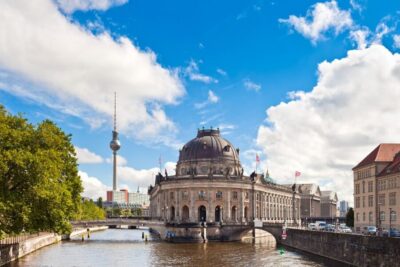
Sights and Highlights Bike Tour with a Local Guide
Read our review →
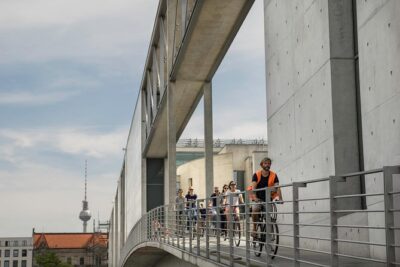
Berlin Highlights Sightseeing Bike Tour in Small Groups
Read our review →
Alternative Bike Tour of Kreuzberg & Friedrichshain
Read our review →
Browse the lists this tour appears in