
REVIEW · BERLIN
Best of Berlin E-Bike Tour
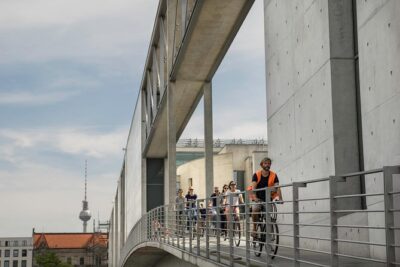
Berlin’s historic center is spread out, and this three-hour e-bike tour lets you cover far more ground than a walking tour. You ride from Alexanderplatz to the Reichstag, Brandenburg Gate, Bebelplatz, the Holocaust Memorial, Gendarmenmarkt, and Checkpoint Charlie, with time to stop and listen at each place.
I like the small maximum group of 15 and the relaxed pace. I also like that the guides, including Sam, Thor, Michelle, and Neil, have been praised for making difficult subjects clear, adding useful anecdotes, and keeping riders safe in city traffic. The main drawback is that stops are brief, so this is an introduction to Berlin rather than a tour with time to enter museums or study each memorial at length.
Key points to know before you book
- See central Berlin without wearing out your legs: The electric assist helps you cover a wide route on mostly easy, flat riding.
- Cold War history gets special attention: Checkpoint Charlie and Berlin’s divided past are central themes.
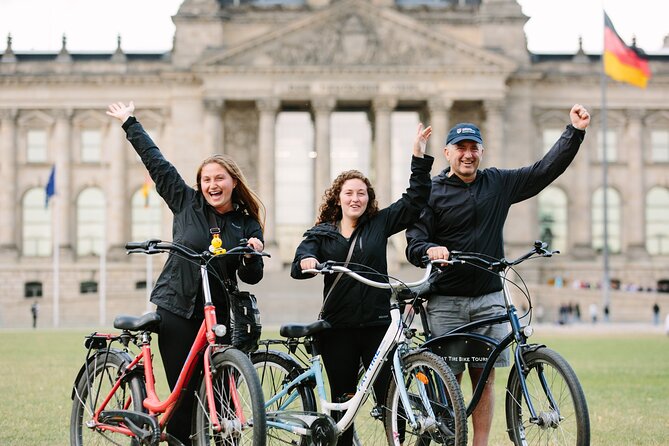
- The route packs in major landmarks: You stop at the Reichstag, Brandenburg Gate, Gendarmenmarkt, Bebelplatz, Alexanderplatz, and the Holocaust Memorial.
- Guides make a real difference: Sam, Thor, Michelle, Neil, Carlo, Binti, Tom, and others have been praised for clear storytelling, humor, and careful group leadership.
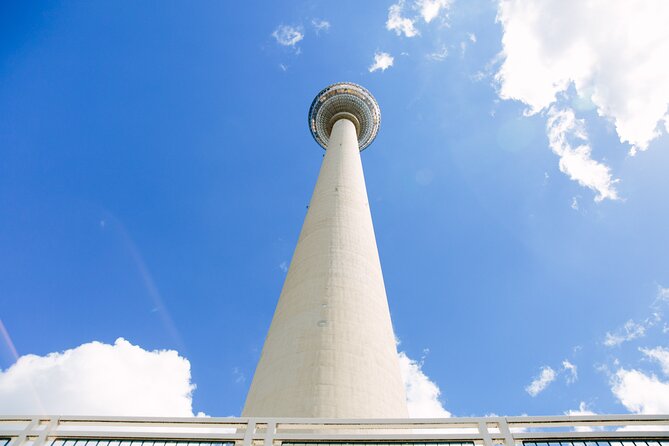
- It starts and ends beside the TV Tower: The meeting point is the Unlimited Biking shop at Alexanderplatz, making the tour easy to fit into a day in Mitte.
- You must ride independently: Bikes and helmets are included, but no child seats or tag-alongs are available.
Why an e-bike works so well in Berlin
Berlin is not a compact old town where every major sight sits around one square. Its important places are spread across Mitte, along broad avenues, beside parks, and near former sections of the Wall. A bicycle gives you a better sense of the city’s size and lets you move between landmarks without spending much of the tour waiting for transport.
The electric motor is useful even on a mostly flat route. You still pedal, but the bike takes the strain out of longer stretches and makes it easier to keep up with the group. Several guides have been praised for setting a comfortable pace, and first-time e-bike riders have found the controls easy to handle.
I would not book this as a workout. It is a sightseeing ride with plenty of stops, not a fast cycling excursion. One rider in their sixties found the bike easy to maneuver, while another who rented an e-bike felt the assistance was not always needed. That is a fair point: if you are a strong cyclist, a regular bike may be enough, but the e-bike offers a useful cushion if the weather is poor, your legs are tired, or you simply want to arrive at each stop fresh.
You receive a helmet and an electric bike. Bring a bottle of water, since food and drinks are not included. All participants need to ride a bike alone, so this option is not suitable for a child who needs a seat or a youngster who cannot manage a bike independently.
More E-Bike Tours in Germany
- Best of Berlin E-Bike Tour
★ 5.0 · 77 reviews - Berlin: E-Bike Tour of the Berlin Wall and Mitte Highlights
★ 4.7 · 60 reviews - Best of Munich Electric Bike Tour
★ 5.0 · 38 reviews
Starting at Alexanderplatz beneath the TV Tower
The tour begins at the Unlimited Biking shop on Panoramastraße 1A, at the base of the Berlin TV Tower. Alexanderplatz is a practical starting point because it is in central Mitte and close to public transportation. You can arrive by transit, find the shop, get set up, and begin the ride without a hotel transfer.
Alexanderplatz also makes a useful opening lesson. The square has traces of several periods of Berlin’s past, from its role in East Berlin to the modern city around it. The TV Tower gives the area its unmistakable profile, while the broad open space helps you understand the scale of the former East German capital.
The tour ends back at the same shop. That simple arrangement matters. You do not need to arrange a pickup, find a new station across town, or worry about leaving a rental bike somewhere else. After three hours, you are back in a part of Berlin with plenty of transport and dining choices.
The Reichstag and Brandenburg Gate
The Reichstag is one of the most useful early stops because it brings together several layers of German history. The guide explains Hitler’s rise to power and how modern Berlin handles the memory of the Nazi period. The stop is listed at about five minutes, so expect a focused explanation outside rather than a visit inside the building.
The Reichstag is also a good reminder that Berlin does not hide its difficult past. You will not get a full lesson in Nazi Germany during this tour, but you will hear how the period is discussed in present-day Berlin. That framing is valuable for first-time visitors who might otherwise see the building only as a grand government landmark.
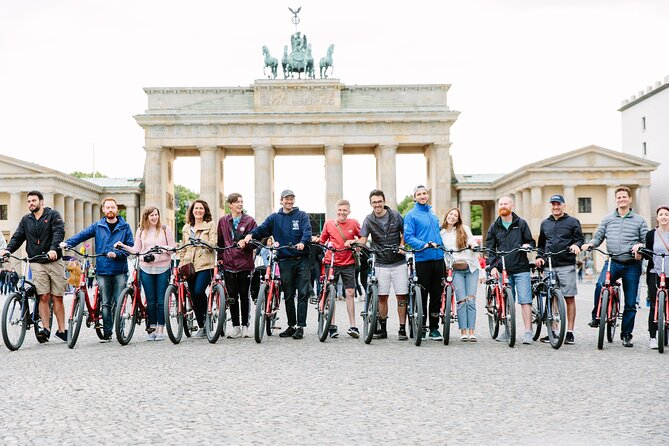
From there, you ride to the Brandenburg Gate. This former Prussian monument, topped by the figure of Victoria, has become one of the city’s best-known symbols. The guide places it in the story of Berlin’s resilience and political change.
Again, the stop is short. You will have time to look, take photographs, and hear the main explanation, but not to linger for a long architectural study. I see that as a strength if you want an overview of Berlin in one morning, but a limitation if you prefer one or two sites explored at length.
Gendarmenmarkt and Bebelplatz
Gendarmenmarkt provides a change of mood. It is one of Berlin’s most elegant squares, and its story reaches back to the effort to rebuild the city after the Thirty Years’ War. French Protestant Huguenot refugees were invited to settle here, adding another layer to Berlin’s history of migration and reconstruction.
The guide’s five-minute explanation gives you the basic story while you take in the square. It is a quick look, not a formal architectural tour, but the stop breaks up the heavier political material and shows you a more refined side of central Berlin.
Bebelplatz brings the tone back to Nazi Germany. Originally shaped under Frederick the Great, the square is linked with the university and one of Berlin’s opera houses. It also contains a stark memorial to the Nazi book burning, a reminder of how propaganda and state power attacked free thought.
You spend about ten minutes here, which gives the guide more time to explain the meaning of the memorial. I especially like this stop because it connects a beautiful royal square with a troubling event, rather than treating Berlin’s architecture as separate from its politics.
More E-Bike Tours in Berlin:
- 3-Hour Porto Highlights on a Electric Bike Guided Tour
★ 5.0 · 4,392 reviews - Lisbon: Hills, Alfama, and Mouraria Tour by Electric Bike
★ 4.8 · 3,438 reviews - Athens Scenic Electric Bike Tour with optional Acropolis visit
★ 5.0 · 3,350 reviews - Porto: City Highlights 3-Hour Guided Electric Bike Tour
★ 4.8 · 3,092 reviews
The Holocaust Memorial and the work of memory
The Memorial to the Murdered Jews of Europe is one of the most powerful stops on the route. Its field of concrete slabs is deliberately open to interpretation, and the experience changes as you walk or look between the blocks. The tour does not simply treat it as a photo stop. The guide discusses the Holocaust and the ways Berlin and Germany continue to remember it in the 21st century.
You have about ten minutes here. That is enough for a serious introduction, but not enough to visit every part of the underground information center or spend long periods in quiet reflection. If the memorial is especially important to you, consider returning independently after the bike tour.
That is one of the tour’s strengths: it gives you a map of Berlin’s major historical sites and helps you decide where to return. The guide’s explanation can add context before you explore the memorial on your own, rather than leaving you to guess what you are seeing.
This part of the tour also calls for a respectful attitude. The memorial is not simply another landmark on a sightseeing checklist. Listen carefully, keep the group together, and save casual photo-taking for an appropriate moment.
Checkpoint Charlie and the Cold War story
Checkpoint Charlie is the tour’s clearest Cold War stop. This was the former crossing point between the Soviet and American sectors, and it became one of the most recognizable symbols of a divided Berlin.
The guide explains how Berlin was split and why this particular crossing became a focus of tension between East and West. The stop lasts about ten minutes, giving you enough time to understand the basic geography and political meaning.
The present-day site can feel theatrical and commercial, with souvenir shops and photo opportunities around the famous guardhouse replica. That makes the guide’s context especially useful. You need the historical background to separate the original checkpoint from the modern presentation built around it.
This is also where the e-bike format earns its keep. You can reach Checkpoint Charlie after covering several major central sights, then return toward Alexanderplatz without spending your energy on a long walk. The route links places that make much more sense together than as isolated stops.
Alexanderplatz closes the historical loop
The final Alexanderplatz stop ties the route together. The square is not just a starting point and transport hub. It helps explain East Berlin, the postwar city, and the way different eras sit side by side in modern Mitte.
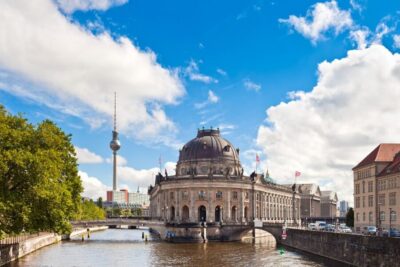
Because you begin and end here, you get a useful sense of orientation. After the tour, you should have a clearer idea of where the Brandenburg Gate, Reichstag, Museum Island area, Bebelplatz, Checkpoint Charlie, and other central sights fit on the map.
The tour finishes at the shop after roughly three hours. You will not have entered the Reichstag, museums, or memorial information center, and you will not have had a full meal stop. That is intentional. The value lies in covering ground, hearing the main stories, and identifying places worth a longer return visit.
Some longer bike outings in Berlin include areas such as the former Tempelhof airport. Do not assume that is part of this three-hour route. If riding at Tempelhof is important to you, ask the operator about the exact version you are booking.
The guides and the feel of the ride
The guide can make or break a history tour, and this experience has earned strong praise for its leaders. Sam is noted for a calm manner and patience with questions. Thor is described as entertaining and particularly strong on history, while Michelle has been praised for setting a comfortable pace for beginners.
Neil is another guide who has made a strong impression through clear explanations and careful road leadership. Carlo has been praised for detailed historical context, and Binti for bringing humor and energy to the ride. These names do not guarantee who will lead your departure, but they show the kind of guiding style the company aims for.
Safety is a recurring strength. The guide leads the group through Berlin traffic, watches the riders, and keeps everyone together. That matters if you have not cycled in a large city recently. The route is described as easy, and the city’s flat terrain helps, but you should still feel comfortable braking, steering, and riding independently.
The tour is offered in English. If you do not understand English well enough to follow safety instructions and historical explanations, choose another format. The maximum group size is 15, which is small enough for questions without promising a private tour.
Is $65.90 a fair price?
At $65.90 per person, the price is reasonable if you want an active orientation to central Berlin. The bike, helmet, and professional guide are included, and the tour covers several locations that would take much longer to connect on foot.
You are not paying for entry to museums or an extended visit at one attraction. You are paying for the equipment, route planning, group leadership, and historical explanation. If you would rather spend three hours inside one or two museums, this tour may not be the best use of your budget.
For a first visit, I think the value is strongest when you take it early in your stay. You get a working map of the center, hear the major historical themes, and can then return to the Reichstag area, Holocaust Memorial, Bebelplatz, or Checkpoint Charlie on your own.
The tour is also useful if you have limited time in Berlin. You can see a broad selection of key places in one morning, then use the rest of the day for a museum, meal, or neighborhood walk. The route is more efficient than trying to connect all these sites on foot.
Weather, timing, and practical limits
The tour requires decent weather. If poor weather causes a cancellation, you are offered another date or a full refund. You can cancel for a full refund up to 24 hours before the start time, but cancellations or changes made less than 24 hours ahead are not accepted.
Morning departures are helpful in two ways. You begin sightseeing before the day gets away from you, and you finish near Alexanderplatz with time left for lunch or another attraction. The tour does not include food or drinks, so plan to carry water and arrange your own meal afterward.
Wear clothes suited to cycling and changing weather. The operator supplies a helmet, but you should expect to pedal and remain outdoors for the full outing. Most people who can ride a bicycle alone can take part, though no child seats or tag-alongs are available.
Who should book this Berlin e-bike tour?
I would choose this tour if you want a broad first look at Berlin, enjoy history, and would rather move under your own power than sit on a bus. It suits first-time visitors, couples, families with independent-riding older children, and anyone who wants help understanding the city’s Nazi and Cold War past.
It is especially useful for people who find long walking tours tiring. The e-bike lets you travel farther while keeping the ride manageable. Beginners should not be put off by the electric bike, but you do need basic cycling confidence.
I would skip it if you dislike cycling in city traffic, need long quiet periods at memorials, or want to go inside every major building. It is a fast-moving overview, with short stops and a strong emphasis on the guide’s explanations.
For most visitors, I would book it near the start of a Berlin stay. The combination of easy riding, serious history, and efficient coverage gives you a useful foundation for the rest of the city.
FAQ
Where does the Best of Berlin E-Bike Tour begin?
It begins at Unlimited Biking, formerly Fat Tire Tours, at Panoramastraße 1A in Berlin. The shop is at the base of the TV Tower in Alexanderplatz.
Where does the tour end?
The tour ends back at the Alexanderplatz meeting point where it began.
How long does the tour last?
The tour lasts approximately three hours.
What is included in the price?
The price includes use of an electric bike, a helmet, and a professional guide.
Is the tour offered in English?
Yes. The tour is offered in English.
Can children use a seat or tag-along?
No. All participants must be able to ride a bike alone, and child seats or tag-alongs are not available.
Just added around Berlin
- The Beauty of Berlin by Bike: Private Tour★ 5.0 · 59 reviews
- Party and Beer Bike Private Sightseeing Tour Berlin with Pick-up★ 4.5 · 32 reviews
- Private Berlin Street Food Bike Tour★ 4.9 · 42 reviews
- Private Berlin Street Food Tour by Bike★ 5.0 · 87 reviews
- Berlin Wall History Small Group Cycling Tour★ 4.9 · 152 reviews
- Berlin: E-Bike Tour of the Berlin Wall and Mitte Highlights★ 4.7 · 60 reviews
- Best of Berlin E-Bike Tour★ 5.0 · 77 reviews
- Berlin City Bike Tour with Beer Garden Stop★ 4.9 · 308 reviews
Berlin Bike Tours, compared.
Sights and Highlights Bike Tour with a Local Guide
Read our review →

Berlin Highlights Sightseeing Bike Tour in Small Groups
Read our review →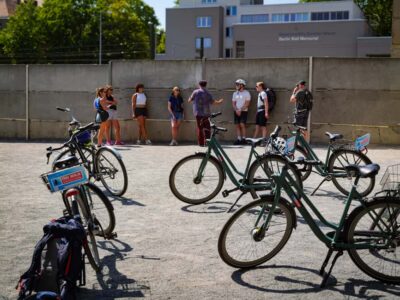

Alternative Bike Tour of Kreuzberg & Friedrichshain
Read our review →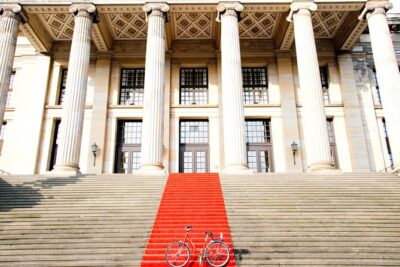
Browse the lists this tour appears in