
REVIEW · BERLIN
Berlin: Guided Bike Tour to Explore the Highlights
Berlin makes an excellent city for a three-hour bike tour. Its major sights are spread across a broad central area, yet many are connected by reasonably easy streets and open public spaces. In one ride, you can pass from medieval Nikolaiviertel to Cold War Checkpoint Charlie, the Holocaust Memorial, Brandenburg Gate, the Reichstag, and Museum Island.
I like the comfortable pace and the way cycling lets you cover more ground than a walking tour without turning the outing into hard exercise. I also like the range of guides, including Jake, Simone, Marius, Reiko, and Simon, who bring different strengths, from humor to political history. The main consideration is that the experience depends heavily on the guide and route. One English-language departure received criticism for unclear English, and some riders wanted more time for photos.
Key points to know before you book
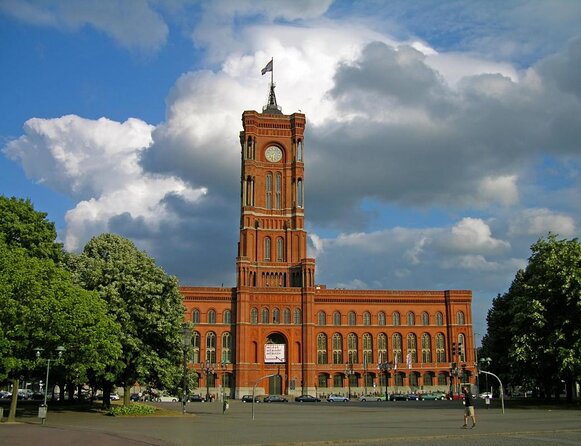
- The route connects Berlin’s biggest sights: Expect central landmarks such as Brandenburg Gate, the Reichstag, Museum Island, Checkpoint Charlie, Potsdamer Platz, and the Holocaust Memorial.
- The pace is relaxed rather than athletic: The ride is suitable for most people who can comfortably cycle for three hours.
- Every guide shapes the route: Free Berlin allows guides to design their own tours, so the exact order, commentary, and emphasis can vary.
- The English route includes Checkpoint Charlie: Prenzlauer Berg is listed for the German version, not the English version.
- The group stays fairly small: The tour requires at least four participants and has a maximum of 15.
- It is a history-heavy introduction: You will hear about Nazi Germany, the Berlin Wall, Prussia, reunification, and modern Berlin, with less attention to art than some people expect.
Why Berlin works so well on two wheels
Berlin is not a city you understand from one square or one grand avenue. Its story is scattered across neighborhoods, memorials, former border crossings, government buildings, and rebuilt districts. A bike helps you connect those pieces.
You can see how the city changes from one block to the next. Nikolaiviertel offers a carefully recreated old-town feel. Potsdamer Platz shows the scale of post-reunification construction. The Reichstag and government quarter present a modern, open image of Germany. The route is not just a checklist of monuments. It is a quick lesson in how Berlin was damaged, divided, rebuilt, and still reinvented.
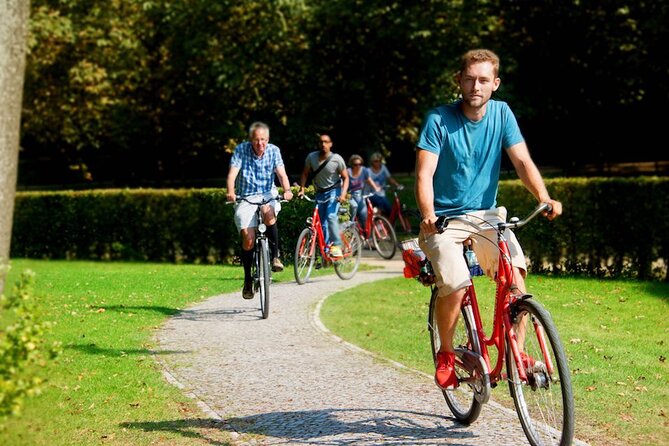
The bikes are described as light and sturdy, and the pace is generally easy. Several guides have been praised for making the three hours pass quickly, while still leaving enough time to look around each stop. You should still expect regular city cycling, traffic, and the need to follow your guide closely.
The group size matters. With four to 15 riders, the guide can usually keep the group together without the feel of a large bus excursion. The tradeoff is that you may not stop for long at every sight. This is an orientation tour, not a full museum visit or a detailed walking tour of each monument.
More City Bike Tours in Germany
- Berlin: Sights and Highlights Bike Tour with a Local Guide
★ 4.8 · 2,698 reviews - Berlin Highlights 3-Hour Bike Tour
★ 5.0 · 948 reviews - Berlin City Bike Tour with Beer Garden Stop
★ 5.0 · 917 reviews
Starting in Nikolaiviertel, Berlin’s old-town showcase
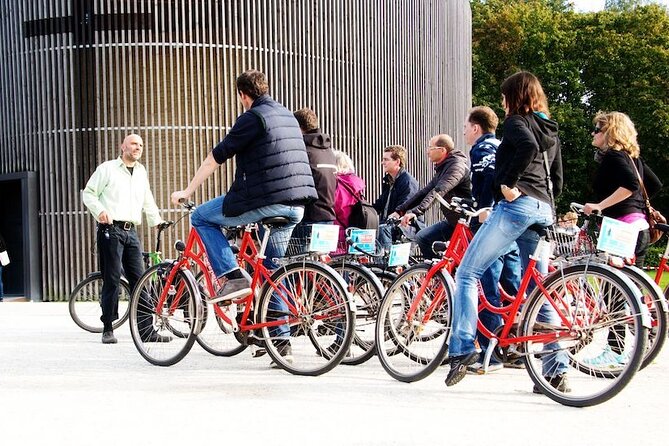
The tour begins at Free Berlin Bike Tours & Rental on Poststraße 11, in central Berlin. From there, the first stop is Nikolaiviertel, a small district near the Spree with an old-town atmosphere.
Nikolaiviertel is useful as an opening stop because it gives you a sense of Berlin before the tour moves into the city’s heavier twentieth-century story. Its appearance is not an untouched medieval quarter. Much of what you see was created or reconstructed in the late 1980s, so it is best understood as a modern recreation of an older Berlin setting.
You get about 10 minutes here. That is enough to orient yourself, hear the basic story, and notice the contrast between the intimate streets of Nikolaiviertel and the large public spaces coming later.
The Berlin TV Tower is also part of the early city view. Opened in 1969, it was the second-tallest building in the world at the time. It remains one of Berlin’s clearest visual markers, especially when you are moving through the historic center.
Bebelplatz and the warning beneath the square
Bebelplatz brings together several layers of Berlin in one open space. Around it are the old university, the former opera house, St. Hedwig’s Cathedral, and other grand buildings from the city’s royal and intellectual past.
The square is also the site of the Book Burning Memorial. In 1933, Nazi-organized book burnings took place here, with thousands of books destroyed in public. The memorial is set below ground level, where empty bookshelves can be viewed through a glass panel in the pavement.
This is one of the tour’s most serious stops. You get about 10 minutes, so the guide’s explanation carries much of the meaning. It is a good example of Berlin’s approach to remembrance: the city keeps difficult places visible rather than smoothing them over.
The stop may appeal to adults and older children more than very young children. A family with children aged 12 and 15 found the detailed historical commentary rewarding, but the tour can spend substantial time discussing serious subjects. If your group wants a light sightseeing ride with minimal historical detail, this may feel heavy.
Checkpoint Charlie and the Cold War city
The English version includes Checkpoint Charlie, the best-known former crossing point between East and West Berlin. The name came from the Allied checkpoint system, and the site became a major symbol of the Cold War division.
Today, the setting is surrounded by shops, traffic, and visitors taking photographs. The recreated guardhouse and famous sign help explain the location, but the present-day scene can feel more commercial than historical. That is exactly why a guide is useful here. You need context to picture the tense border that once cut through the city.
Allow about 10 minutes at the stop. You will likely hear about the Berlin Wall, escape attempts, Allied control, and the eventual collapse of the border. Several guides have been praised for connecting the physical sights with the larger political story.
If you choose the German version, the route includes Prenzlauer Berg instead of Checkpoint Charlie. That district offers a different look at Berlin, with a bohemian and residential character shaped by the changes after reunification. Check the language option carefully if a particular stop matters to you.
More City Highlights Bike Tours in Berlin:
- Berlin Highlights: 3-Hour Bike Tour
★ 4.9 · 809 reviews - Berlin Highlights Sightseeing Bike Tour in Small Groups
★ 5.0 · 652 reviews - Berlin: Guided Bike Tour to Explore the Highlights
★ 4.8 · 506 reviews - Berlin City Bike Tour with Beer Garden Stop
★ 4.9 · 308 reviews
Potsdamer Platz, from no-man’s-land to modern Berlin
Potsdamer Platz is one of the clearest places to see Berlin’s dramatic changes. Before World War II, it was a major traffic junction and a fashionable meeting place. During the city’s division, it became part of the empty zone near the Berlin Wall.
After reunification, the area turned into one of Europe’s largest construction sites. The high-rise buildings and broad public spaces now present a polished, modern face of Berlin. Yet the stop works best when you remember what was missing here for decades.
The tour allows about 10 minutes. That is enough to understand the basic transformation and look at the architecture, but not enough for a detailed architectural study. If you enjoy contemporary design, you may want to return later on foot.
This is also a good point to judge the tour’s balance. The route gives strong attention to war, dictatorship, division, and reunification. One rider felt that the advertised focus on Berlin’s best sights left too little room for art and urban culture. That criticism is fair. The tour is strongest as a political and historical introduction, not as an art-focused survey.
The Holocaust Memorial and Berlin’s difficult memory
The Memorial to the Murdered Jews of Europe is one of Berlin’s most powerful modern sites. Its field of concrete stelae creates a changing sense of height, space, and uncertainty as you walk among them.
You can see the memorial from the outside on the bike tour, with time to hear why Germany built it and how the country addresses the crimes of Nazi Germany. The stop lasts about 10 minutes. You should not expect a full visit to the underground information center or a long period of quiet reflection.
This part of the route asks for attention and respect. It is not a photo prop or a quick box to tick. The guide’s tone matters, and the strongest tours use the site to explain how Berlin remembers the Holocaust without pretending that a monument can fully represent the scale of the crimes.
The subject matter makes this tour better suited to people who want serious context. It also explains why some children may lose interest, while teenagers and adults may find the stop especially important.
Tiergarten and the open space between monuments
After the dense central sights, the route passes through or near Tiergarten, Berlin’s large central park. The name means animal garden, a reminder of its earlier use as a hunting ground, not a reference to a modern zoo.
This stretch gives your legs a break from stopping and starting. It also shows that Berlin is not only grand buildings and memorials. The city has broad green space woven into its center.
You will not spend a long formal stop here, but the ride through the park helps set the pace. It is one reason the experience can cover so much ground without feeling like a race. You keep moving, then pause when the next major sight appears.
Brandenburg Gate, Berlin’s essential photograph
Brandenburg Gate is the tour’s star landmark. The neoclassical gate once marked the edge of the city, later became associated with Prussian power, and eventually turned into a symbol of division and reunification.
It is easy to see why the stop is central to a first visit. The gate sits at the meeting point of major stories: the old Prussian capital, Nazi-era Berlin, the Cold War border, and the reunified German state.
The tour gives you around 10 minutes here. That is enough to take photographs and hear the main context, but the area can be crowded and active. If you want quiet pictures or a close look at the details, return at another time.
The practical value is simple: you see Brandenburg Gate early in your visit, learn why it matters, and can later decide if you want to come back for a longer visit.
The Reichstag and Germany’s modern government quarter
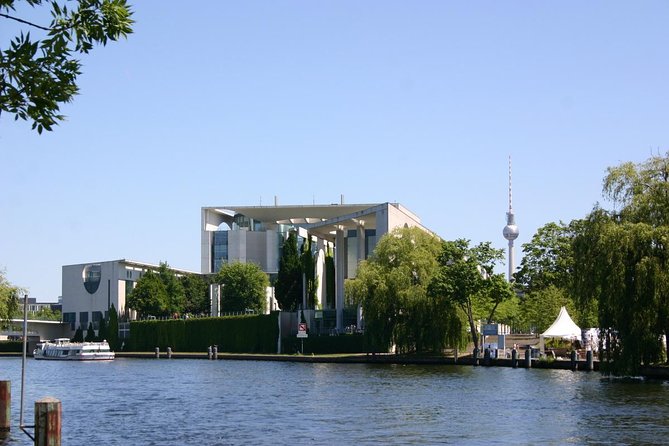
The Reichstag is Germany’s parliament, topped by its famous glass dome. The transparent design is meant to suggest openness and public oversight, making the building an especially fitting stop after the city’s history of dictatorship and division.
The bike tour stops outside for about 10 minutes. You should not expect entry to the dome or an interior visit. The guide will focus on the building’s role and the surrounding government quarter.
The area also invites a little humor. The Reichstag is sometimes called Germany’s White House, though the comparison is loose and not always accurate. A good guide can use the nickname to explain the building without letting the joke take over.
This is a strong place to connect Berlin’s past with its present. The city you have been reading through memorials and former borders is also the working capital of a modern democracy.
Museum Island and the final return to the center
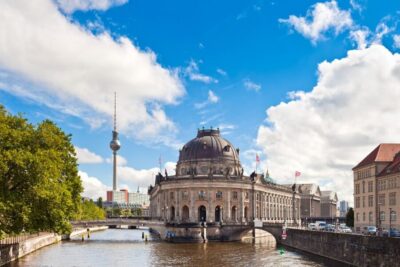
Museum Island brings the tour back toward the Spree and the historic core. Its grand museums and monumental buildings explain the old nickname Spree Athens, a reference to Berlin’s ambitions as a center of art, learning, and culture.
You get about 10 minutes here. The stop is best treated as an introduction, not a museum visit. The bike tour cannot replace time inside the Pergamon Museum, Neues Museum, or the other institutions on the island, and admission is not included.
Still, seeing the buildings from outside helps you understand their scale and setting. You can mark Museum Island for a later visit, when you have several hours and want to explore properly.
The tour ends back at the original meeting point. That makes it easy to continue sightseeing in central Berlin, though food and drinks are not included.
The guides make the largest difference
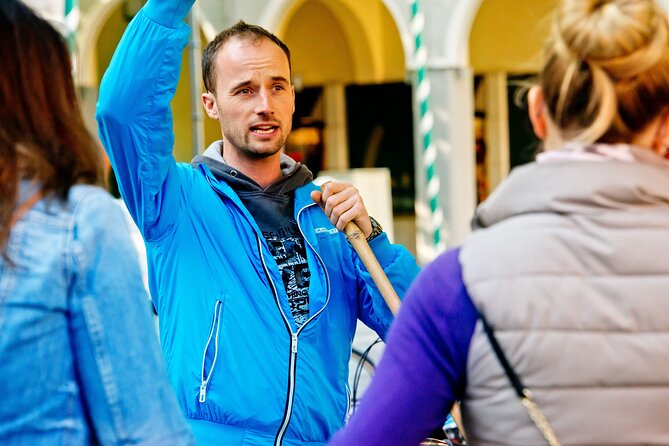
The Free Berlin concept lets each guide design a personal route. That gives the experience character, but it also means you should not expect identical commentary every day.
Guides such as Jake have been praised for humor, clear explanations, and practical suggestions for what to see afterward. Simone has been described as enthusiastic and especially strong on German history. Marius, Reiko, Luka, Rufus, and Simon have also been singled out for thoughtful commentary, good pacing, or a friendly manner.
The best guides do more than name buildings. They explain why a vacant area mattered, how the Wall changed daily life, or why a memorial looks the way it does. Some have adapted an extra stop to match the group’s interests, which is a real benefit on a small tour.
There are limits. One English-language experience was affected by unclear spoken English, and another rider felt the guide lacked some factual depth. A separate complaint concerned smoking during the ride, while another rider found unnecessary strong language distracting. These issues do not define the overall experience, but they show why the individual guide matters.
Price, group size, and practical value
At about $42.34 per person, the tour is fairly priced for three hours of bike use, a helmet, a professional guide, and a route linking many central sights. You are paying less for admission, since nearly all the stops are viewed from public spaces, and more for orientation, transportation, and interpretation.
The value is highest at the beginning of a Berlin stay. You can cover a wide area, learn the city’s basic shape, and then choose which places deserve a longer return visit. It is also useful if you have only a short stay and want to see the main central landmarks without using public transport between each one.
The minimum group size is four and the maximum is 15. Children are welcome, infant seats can be provided on request, and children must ride with an adult. The tour operates in all weather, so bring clothing suited to rain, wind, or cool temperatures.
It is offered in English, German, and French depending on the option selected. The average booking lead time is 19 days, so I would not leave it until the final morning of your trip if your schedule is tight.
Free cancellation is available up to 24 hours before the start time for a full refund. If the minimum number is not reached and the tour is canceled, you are offered another date or experience, or a full refund.
Who should book this Berlin bike tour?
I would choose it for a first visit, especially if you want to understand Berlin’s geography quickly. It suits adults, older children, and anyone who enjoys history presented outdoors rather than in a lecture hall.
You should book it if you value:
- A relaxed ride rather than a demanding cycling workout
- Berlin’s major political and historical sights
- A small group with room for questions
- Practical suggestions for what to see after the tour
- A fast orientation at the start of your stay
I would hesitate if your priority is art, museums, nightlife, or long photography stops. You may also prefer a walking tour if cycling in city traffic makes you uneasy. The English route is particularly history-focused, and the exact commentary depends on the guide assigned that day.
Final verdict
This is a strong way to get your bearings in Berlin. For roughly $42.34, you see a remarkable number of central landmarks, hear the stories that connect them, and leave with a useful plan for the rest of your visit.
The main strength is the combination of easy cycling and serious historical context. The main weakness is the uneven nature of a guide-led experience: one guide may be witty and highly informed, while another may communicate less clearly or allow too little time for pictures.
Book it early in your stay, wear weather-ready clothes, and treat it as a city introduction rather than a complete tour of every sight. If Brandenburg Gate, the Reichstag, the Wall, Museum Island, and Berlin’s twentieth-century story are your priorities, this ride is a sensible choice.
FAQ
How long does the Berlin guided bike tour last?
The tour lasts approximately three hours.
What is included in the price?
The price includes use of a bicycle, a helmet, and a professional guide.
Where does the tour begin and end?
It begins at Free Berlin Bike Tours & Rental, Poststraße 11, 10178 Berlin, and ends back at the same meeting point.
Which language options are available?
The experience operates in English, German, and French, depending on the option selected.
Does the English version include Checkpoint Charlie?
Yes. Checkpoint Charlie is specifically included in the English version.
Is Prenzlauer Berg included in every language option?
No. Prenzlauer Berg is specifically listed for the German version of the tour.
Are children allowed to join?
Yes. Children are welcome, but they must be accompanied by an adult. Infant seats can be provided on request.
Does the tour operate in bad weather?
Yes. It operates in all weather conditions, so you should dress appropriately.
Can I cancel for a full refund?
Yes. You can cancel at least 24 hours before the experience start time for a full refund. Changes or cancellations made less than 24 hours in advance are not accepted for a refund.
Just added around Berlin
- Jetbike Berlin fun bike beer bike★ 5.0 · 60 reviews
- Small-Group Historical Bike Tour in Berlin★ 4.5 · 103 reviews
- Berlin: Private Bike Tour of the Berlin Wall and Third Reich★ 5.0 · 23 reviews
- Alternative Berlin Bike Tour – Off the Beaten Tracks in Small Groups★ 5.0 · 99 reviews
- Berlin Wall and Cold War Bike Tour in Small Groups★ 5.0 · 114 reviews
- Berlin: Guided Private Bike Tour to Explore the Highlights★ 5.0 · 12 reviews
- Berlin : Guided Private Sightseeing Tours with Funbikes, Teambikes★ 5.0 · 20 reviews
- Berlin : The best bike tour with a Berlin guide and insider tips★ 5.0 · 14 reviews
Berlin Bike Tours, compared.
Sights and Highlights Bike Tour with a Local Guide
Read our review →

Berlin Highlights Sightseeing Bike Tour in Small Groups
Read our review →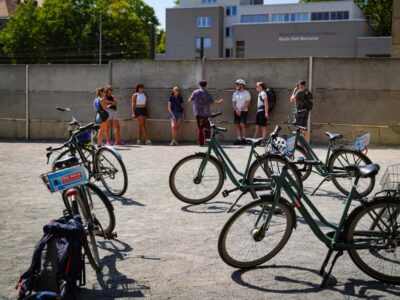
Alternative Bike Tour of Kreuzberg & Friedrichshain
Read our review →
Browse the lists this tour appears in