
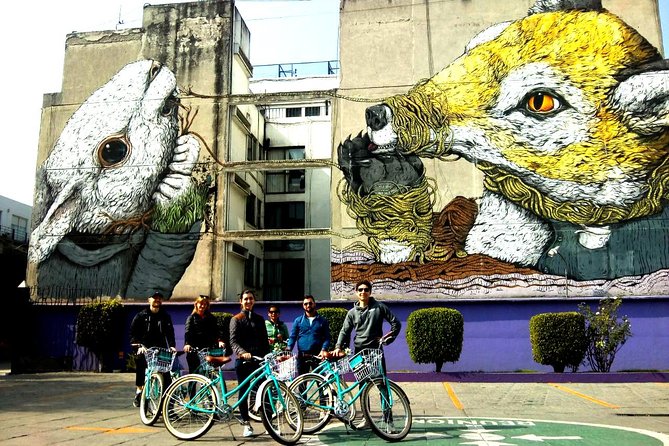
REVIEW · MEXICO CITY
Mexico City: Art Naco, murals & street art bike tour
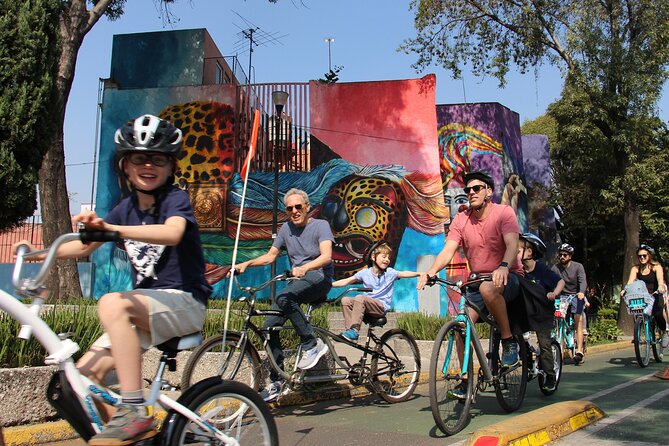
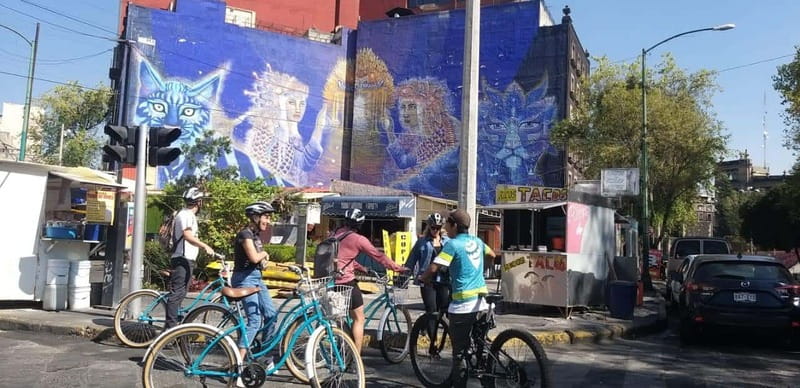
Mexico City’s street art makes the city’s stories visible, and this bike tour takes you well beyond the usual visitor circuit. You might ride through Guerrero, Tlatelolco, Obrera, Doctores, or Coyoacán, stopping at murals, artist spaces, libraries, ruins, and neighborhood corners that are easy to miss by car.
I especially like the local neighborhoods and the way guides such as Iván, Alberto, Gabi, and Oscar connect art to Mexican history. I also like the street-food stop, which has included tacos, tlacoyos, gorditas, and agua de jamaica, with vegetarian and vegan choices available. The main consideration is city cycling: the route is manageable, but some taller riders have found the bikes small, so ask about frame size before setting out.
Key points at a glance
- Three different routes: Choose the North, Downtown, or South route, each with its own neighborhoods and sights.
- Art with context: Murals and graffiti are explained through Mexico City’s history, politics, culture, and daily life.
- Careful traffic support: A second guide often rides along to help at intersections and keep the group together.
- Real neighborhood food: A snack stop can include tacos, tlacoyos, gorditas, and drinks, with dietary needs accommodated.
- Small groups: The tour is limited to 10 people, making it easier to ask questions and adjust the pace.
- Useful orientation: The ride can help you decide which parts of Mexico City to visit later in your trip.
Why This Bike Ride Shows You More Than the Historic Center
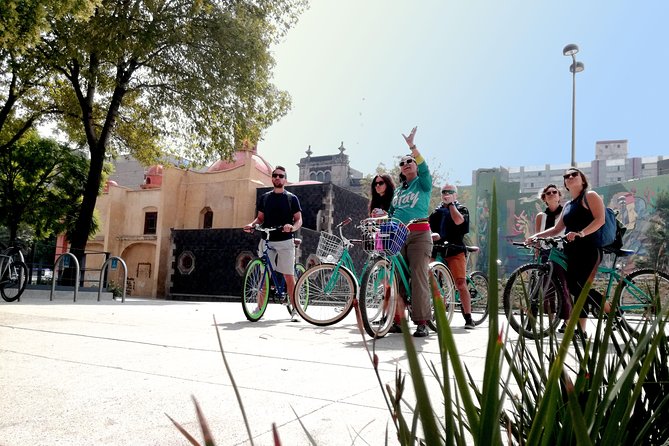
At $52 per person for three hours, this is not simply a bicycle rental with a guide. You are paying for a route through parts of Mexico City that require local knowledge, plus an explanation of the art and help navigating traffic.
I like this format because a mural has more impact when you understand its setting. A painted wall in Guerrero may tell a different story from graffiti in Obrera or a public artwork near Tlatelolco. Your guide can link those images to neighborhood identity, Mexican traditions, social change, and the city’s layered past.
The bike also lets you cover more ground than you would on foot. You can move between streets, public spaces, workshops, and cultural landmarks without spending much of the three hours waiting for a taxi. The pace is generally easy, and several riders who do not cycle often have found the ride comfortable.
Still, this is a city ride, not a quiet park circuit. You will cycle through Mexico City streets, and you need to be comfortable following instructions, watching your surroundings, and riding in a group. The guides take safety seriously, but no urban bike tour removes traffic entirely.
More Street Art Bike Tours in Mexico:
- Mexico City; ART NACO : Murals & Street Art Bike Tour
★ 5.0 · 284 reviews - London Bike Tour: Landmarks, Secret Gems, Pub Stop & Street Art
★ 5.0 · 943 reviews - Barcelona Street Art and Graffitti Bicycle Tour
★ 5.0 · 361 reviews
Choosing Between the North, Downtown, and South Routes
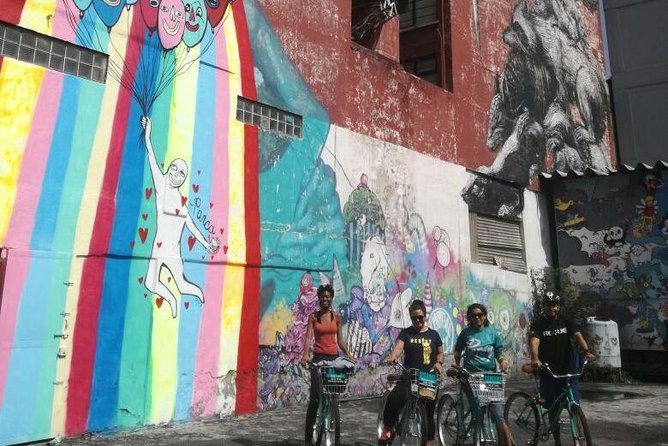
The tour offers three routes. The exact choice matters because each one gives you a different picture of Mexico City.
The North Route passes through Buenavista, Guerrero, and Tlatelolco. It is a strong choice if you want murals tied to Mexican stories and traditions, along with major cultural and historical sites.
The Downtown Route moves through the city center and the Obrera and Doctores neighborhoods. Here, urban art appears beside colonial buildings, modern structures, workshops, and ordinary city streets.
The South Route focuses on Coyoacán and the area associated with Frida Kahlo. If you choose it, you need to tell the operator because the starting point is south of the city rather than at the usual meeting point.
I would choose the North Route for public art and history, the Downtown Route for a broad mix of architecture and street art, and the South Route if Coyoacán and Frida Kahlo are high on your list. Check the route details when booking, since the starting arrangements differ.
The North Route: Libraries, Murals, and Tlatelolco
The North Route begins around Buenavista and Guerrero, two areas that feel more local than the polished neighborhoods many visitors first see. The art is not presented as decoration alone. Your guide explains the stories and traditions represented on the walls, giving you a better sense of how public art works in Mexico City.
The Vasconcelos Library is one of the route’s most memorable stops. Its architecture and public role give the ride a change of pace from outdoor murals. Several riders have especially liked seeing the library as more than a place for books, with its connection to community life and public culture.
The route also includes the 8A Workshop. Artist workshops can be a highlight because they show how creative work is made, not only how it looks once finished. Access can depend on the day and route conditions, but the workshop visit has been a particularly distinctive part of the experience.
Tlatelolco adds historical weight. At Three Cultures Square, you encounter a place where different periods of Mexico’s past meet. The surrounding murals and public spaces help your guide explain how the city’s story has changed over time.
I would choose this route if you want the strongest combination of art, history, public architecture, and neighborhood riding. It also gives you some of the most unusual stops, including spaces you might not think to visit on your own.
The Downtown Route: Urban Art Beside Old and New Mexico City
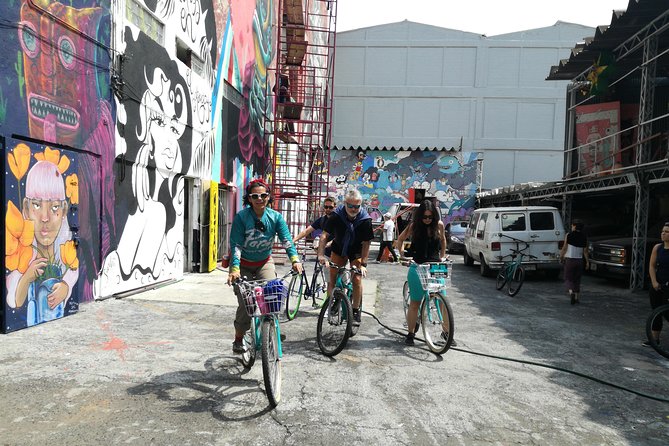
The Downtown Route takes you into central Mexico City and then through Obrera and Doctores. This creates a useful contrast: grand central sights on one side, working neighborhoods and local street life on the other.
The Zócalo provides the obvious landmark, but the route’s appeal lies in what comes after. Regina Alley adds a more intimate setting for art, food, and city life. You then encounter murals and graffiti by both well-known artists and amateurs, often placed beside colonial architecture and newer buildings.
The 75 Degrees Workshop offers another look at the city’s art scene. MUJAM, the Museum of Ancient Mexican Toys, adds a different cultural angle. It is a reminder that this tour is not limited to painted walls. The guide uses art as a doorway into Mexico City’s habits, memory, design, and popular culture.
Obrera and Doctores may not be on every first-time visitor’s list, which is precisely why this route can work well. You get a sense of how public art sits within ordinary neighborhoods rather than viewing it only in a designated art district.
For a first day in Mexico City, I find this route especially useful because it can help you get your bearings. You may leave with ideas for places to revisit on foot, by Metrobus, or by taxi later in your stay.
More Street Art Tours in Mexico:
- London: Landmarks & Secrets Bike Tour with Pub & Street Art
★ 4.9 · 314 reviews - Cologne: Ehrenfeld Street Art Bike Tour
★ 4.9 · 105 reviews - Munich: Street Art Bike Tour
★ 4.6 · 66 reviews - Barcelona: 3.5-Hour Street Art Tour by Bamboo Bike
★ 5.0 · 56 reviews
The South Route: Coyoacán and Frida Kahlo’s Neighborhood
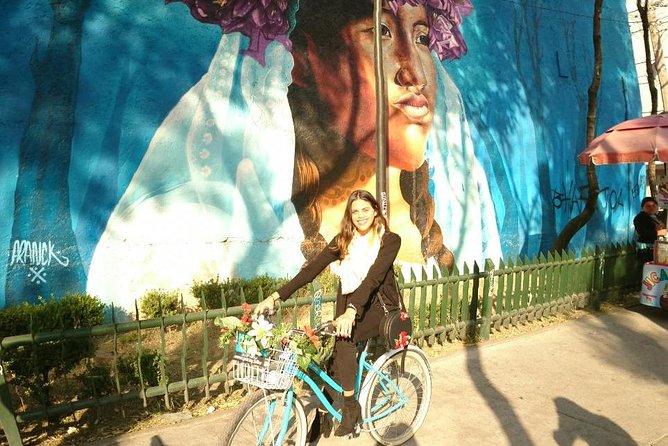
The South Route focuses on Coyoacán, one of Mexico City’s best-known cultural areas. You ride through the neighborhood while looking for murals and other works of art, with the Frida Kahlo connection adding a clear theme to the route.
This option is a good fit if you are already planning time in the south. It reduces the need to combine a separate Coyoacán visit with a different part of the city on the same day.
The practical catch is the meeting point. For this route, the starting location is south of the city, so you need to tell Poray in advance. Do not assume that every route begins at the central Poray shop near Hidalgo.
The South Route is likely the least useful choice if your main aim is to see the North Route’s library and Tlatelolco sites or the Downtown Route’s mix of Obrera, Doctores, and central architecture. Choose by neighborhood, not simply by the word art in the title.
The Guides Make the Art Easier to Read
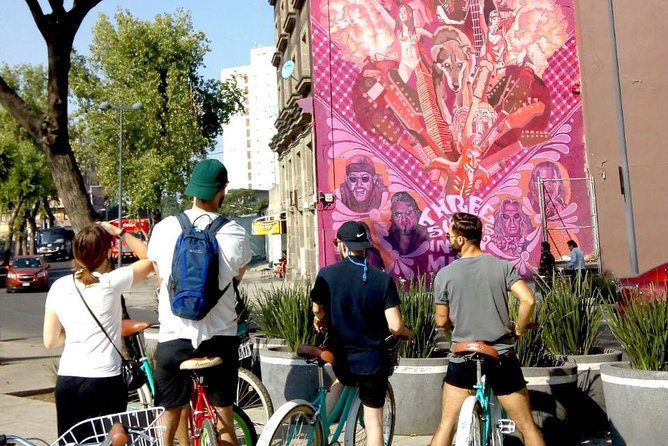
The guide can make or break an art tour, and this one has earned strong praise for its personal approach. Iván is often singled out for his clear English, interest in both art and city history, and willingness to shape the ride around the group.
Alberto is another guide who brings a strong sense of place. He has been praised for explaining food, history, and neighborhood life, as well as for making photo stops and helping people feel at ease in unfamiliar areas.
Gabi has led the ride at a relaxed pace and has helped less experienced cyclists feel secure. Oscar and other Poray team members have also guided groups, with a second person often helping at intersections.
The languages offered are English, Spanish, and German. If you have a preference, select it when booking or confirm it with the operator. The small-group limit of 10 means you can ask questions without holding up a large crowd.
What I value most is the connection between the art and the rest of the city. A guide who only names artists would leave the experience thin. Here, the better guides explain the streets, buildings, food, and history around the work, so you understand why the art is there.
How Safe and Manageable Is the Cycling?
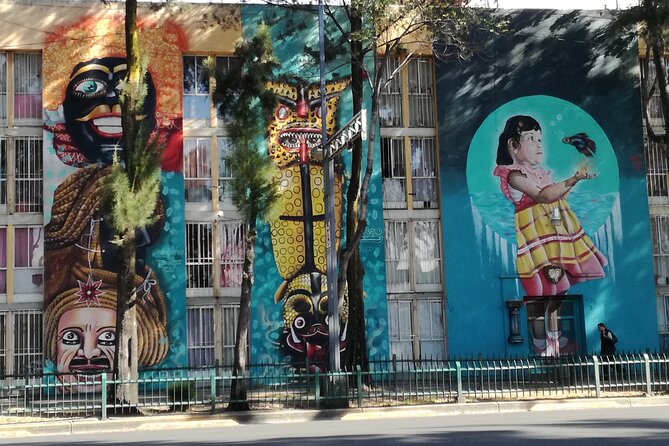
Traffic is the main concern for many people considering this activity. The tour team addresses it by using two guides when needed. One leads the group while another can position themselves at intersections, help riders cross, and make sure nobody is left behind.
That support has made a difference for people who do not cycle regularly. Riders have described the pace as easy and the route as manageable, with bike lanes or mainly pedestrian streets used where possible. You are also covered by personal-injury insurance, and helmets can be requested.
I would still treat the ride as active sightseeing. Wear comfortable shoes, sunglasses, a sun hat, and sunscreen. Bring a relaxed attitude toward city traffic and pay attention to the guide’s directions.
Bike fit is worth checking. One taller couple, measuring six feet and six feet four inches, found the bikes a little small. That does not mean the bikes will be uncomfortable for everyone, but if you are tall, contact Poray before the tour and ask about larger frames.
The experience is listed as wheelchair accessible, but the activity itself involves riding a bicycle. If you need a particular arrangement, confirm the details before booking rather than relying on the general accessibility label.
Street Food Is Part of the Point
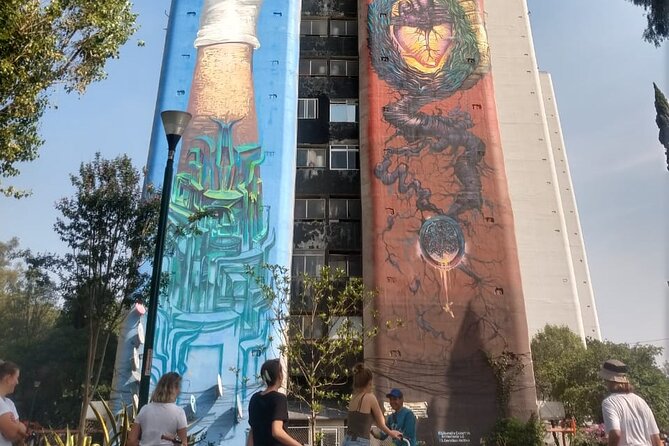
The food stop gives the tour a welcome local break. Depending on the route and day, you might try tacos, tlacoyos, gorditas, snacks, or a drink such as agua de jamaica.
I like that the food is treated as part of the city lesson rather than a decorative extra. A family-run street stall can tell you as much about daily Mexico City as a formal museum, especially when your guide explains what you are eating and how locals order it.
Vegetarians and vegans have been accommodated, so tell the operator about dietary needs ahead of time. The included snack or street food is part of the $52 price, while additional drinks are not included.
If you are cautious about street food, start with a small portion and follow your guide’s recommendation. One rider who had a sensitive stomach decided to try the tacos and had no trouble, but you should make your own call based on your health and comfort.
What the Three Hours Feel Like
The tour begins and ends at the Poray Bike Rental Shop, next to the Fontan Hotel and across from the Hidalgo Metrobus Station. That central location makes the standard route easy to reach by public transport.
You spend roughly three hours cycling, stopping for photographs, explanations, art, and food. The tour is not a race, and the stops break up the riding. The exact rhythm changes with the route, group size, traffic, and the guide.
A typical outing may include a briefing, bike setup, neighborhood riding, several art or cultural stops, a food break, and a return to the shop. Some groups have also had an unexpected art-space visit or a rooftop view, but those extras are not guaranteed and should not be the reason you book.
The small group helps keep the ride social without making it unwieldy. If only a few people book, the guide may have more freedom to answer questions or adjust the route, but the core sights still depend on the selected option.
Is $52 a Fair Price?
I consider $52 reasonable for this experience because the fee covers the bicycle, local guide, bottled water, street food or snacks, and personal-injury insurance. You are also paying for traffic support and route planning, two things that are difficult to reproduce with a rental bike and a map.
The value is strongest if you want context and access to neighborhoods you would not visit on a standard sightseeing walk. It is less compelling if you only want a quick mural photo session or already know Mexico City well.
The three-hour length is another advantage. It fits neatly into a morning or afternoon and leaves you time for museums, markets, or dinner. I would book it early in your stay if you want the guide’s suggestions to shape the rest of your trip.
Free cancellation up to 24 hours ahead and the option to reserve without paying immediately make planning easier. Still, confirm the route, language, meeting point, and bike size before the cancellation deadline.
Who Should Book This Ride?
I recommend it to first-time visitors who want a practical introduction to Mexico City beyond the main sights. It also suits repeat visitors who have already seen the historic center and want a different view of the city.
Art lovers will appreciate the murals, graffiti, workshops, and public buildings. Food-focused visitors will enjoy the included snack. History-minded riders will get more from the route because the guides connect present-day neighborhoods to older layers of the city.
You do not need to be a serious cyclist. The pace is generally gentle, and the guides provide support. You should, however, be comfortable riding for three hours with stops and following a group through an urban setting.
I would think twice if you dislike bicycles, strongly prefer private tours, or need a guaranteed larger bike. This is also not the best fit if your schedule leaves no room for route flexibility, since the South Route uses a different starting area.
Should You Book the Art Naco Bike Tour?
Yes, if you want Mexico City to feel like a living city rather than a checklist of monuments. The strongest reasons to book are the thoughtful guides, the care at intersections, the choice of three distinct routes, and the chance to pair murals with street food and ordinary neighborhood life.
Choose the North Route for the library, workshops, and Tlatelolco. Pick Downtown for central sights mixed with Obrera and Doctores. Choose South for Coyoacán and Frida Kahlo’s neighborhood, but confirm the different starting point.
Ask about bike size if you are tall, mention dietary needs, request your preferred language, and wear sun protection. With those details handled, this is a lively, useful three-hour introduction to the parts of Mexico City that many visitors miss.
FAQ
How long is the Mexico City art bike tour?
The tour lasts three hours, including cycling, art and cultural stops, photo opportunities, and a street-food or snack stop.
How much does the tour cost?
The listed price is $52 per person.
Where does the standard tour meet?
The standard meeting point is Poray Bike Rental Shop, next to the Fontan Hotel and across from the Hidalgo Metrobus Station.
Where does the tour finish?
The tour returns to Poray Bike Rental Shop.
Which neighborhoods can I visit?
The available routes cover different areas. The North Route includes Buenavista, Guerrero, and Tlatelolco. The Downtown Route includes central Mexico City, Obrera, and Doctores. The South Route focuses on Coyoacán and the area associated with Frida Kahlo.
Can I choose a specific route?
Yes. You can choose the North, Downtown, or South route. If you select the South Route, inform the operator because its starting point is south of the city.
What languages are available?
The live guides speak English, Spanish, and German.
Is food included?
Yes. Street food or snacks and bottled water are included. Additional drinks are not included.
Is the tour suitable for a small group?
Yes. The group is limited to 10 participants.
What should I bring?
Bring comfortable shoes, sunglasses, a sun hat, and sunscreen.
Can I cancel the booking?
You can cancel up to 24 hours in advance for a full refund. The reserve-now, pay-later option is also available.
Just added around Mexico
- Puerto Vallarta: Bikes and Bites Tour★ 5.0 · 27 reviews
- Oaxaca: Guided Bike Tour to the Largest Tree in the World★ 5.0 · 16 reviews
- Oaxaca City: Bike Tour with Professional Guide+Art workshop★ 4.8 · 23 reviews
- Mexico City: Guided Bike Tour of Culture and Local Taste★ 5.0 · 14 reviews
- 🟢Street Food Bike Tour Mexico City🟢★ 5.0 · 15 reviews
- Mexico City: Private Chapultepec Park Bike Tour★ 4.8 · 16 reviews
- Electric Bike City Tour with a taco stop.★ 4.9 · 58 reviews
- Mexico City: Chapultepec & Reforma Historic Bike Experience★ 4.5 · 30 reviews
Mexico City Bike Tours, compared.
![Frida Kahlo VIP [Museum Tickets Included] Bike, Markets & Churros](https://7.thebiketraveler.com/wp-content/uploads/frida-kahlo-vip-museum-tickets-included-bike-markets-churros-400x267.jpg)
Frida Kahlo VIP [Museum Tickets Included] Bike, Markets & Churros
Read our review →
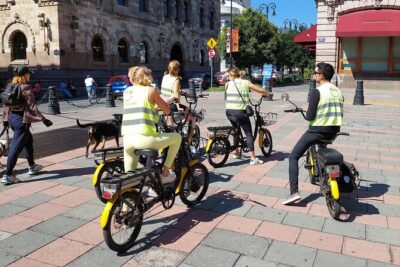
Mexico City E-Bike Tour with a taco and churros stop
Read our review →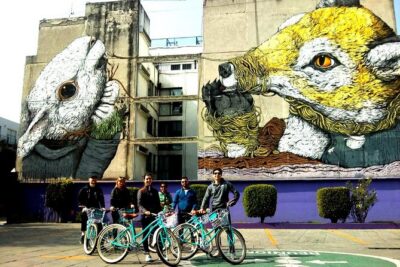
Mexico City; ART NACO : Murals & Street Art Bike Tour
Read our review →
Mexico City Highlights E-Bike Tour With Foodie Stops
Read our review →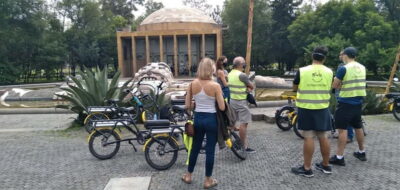
Browse the lists this tour appears in