
REVIEW · MUNICH
Munich: Street Art Bike Tour
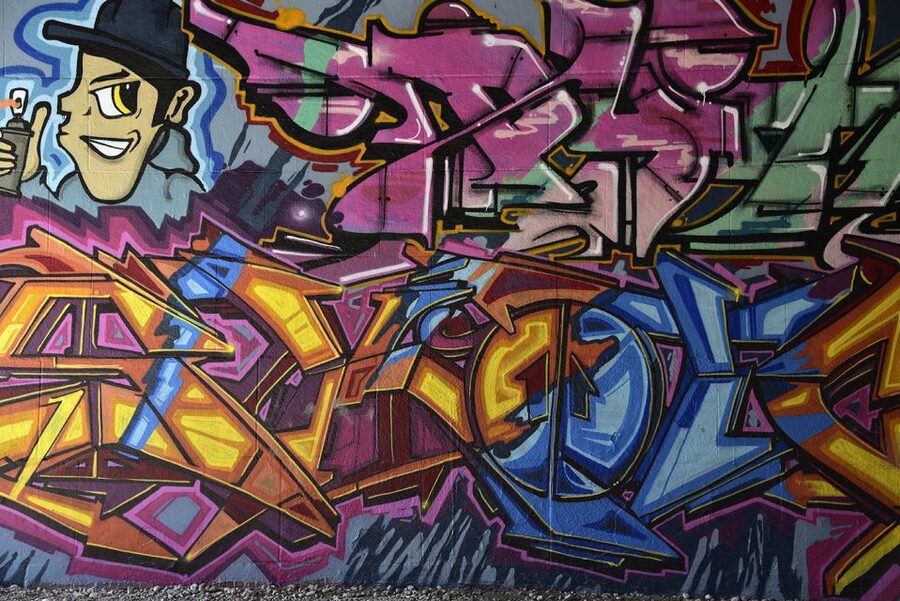
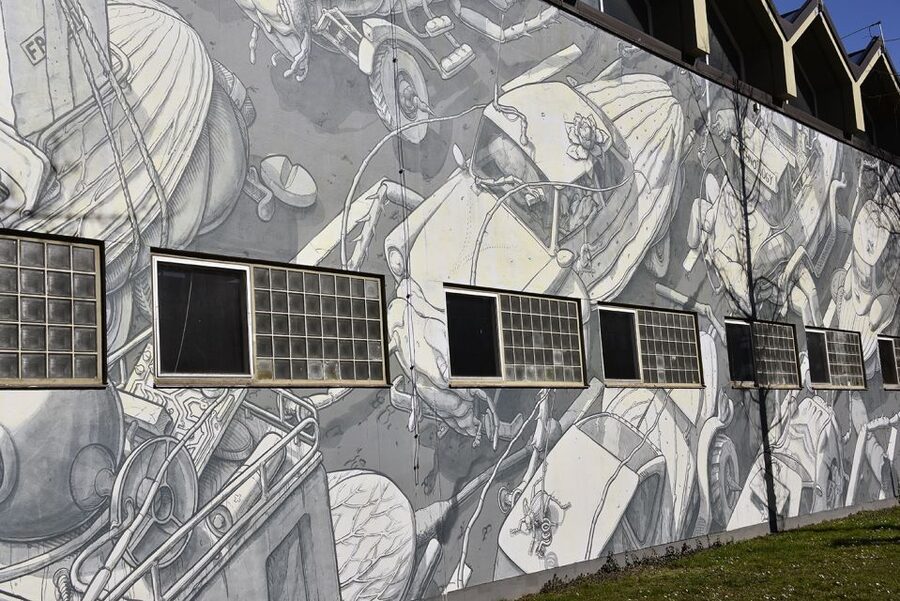
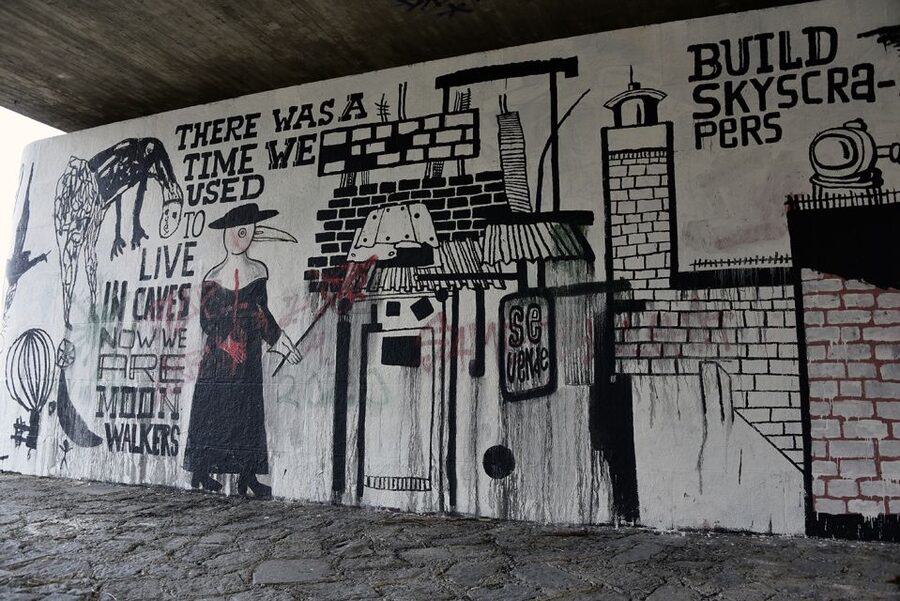
Munich helped launch Germany’s graffiti movement in the 1980s, a surprising fact in a city better known for polished squares, grand churches, and tidy streets. This 3.5-hour bike tour follows that less formal side of Munich along the Isar, through Giesing, and into the old slaughterhouse district.
I like the ride for two clear reasons: it takes you well beyond the usual center, and it connects old-school graffiti pioneers with newer artists. The main consideration is language. The tour is officially in German, and the distance and length may feel tiring for younger children, even though one family found it worked well for ages 10 and 12.
Key points to know before you book
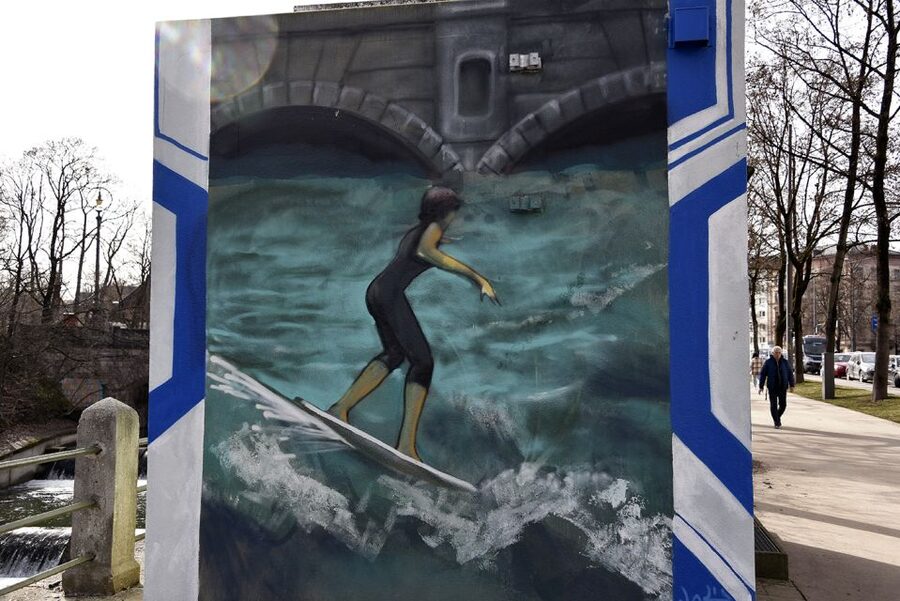
- Munich’s graffiti roots: Learn how the city became an important European center for graffiti in the 1980s, alongside New York.
- A real bike outing: Rental bikes are included, and the route reaches the Isar, Giesing, and the slaughterhouse district.
- A break beside the railway bridge: The tour includes time to stop on a boat near a railway bridge.
- A different side of Munich: Giesing offers a former working-class neighborhood far from the polished old town.
- German-language guiding: The regular live tour is in German, though guide Ulrike has made the experience work for English-speaking families.
- Strong overall feedback: The experience has a 4.6 rating from 66 bookings, with special praise for the guides, route, and range of art.
Why Munich is an important graffiti city
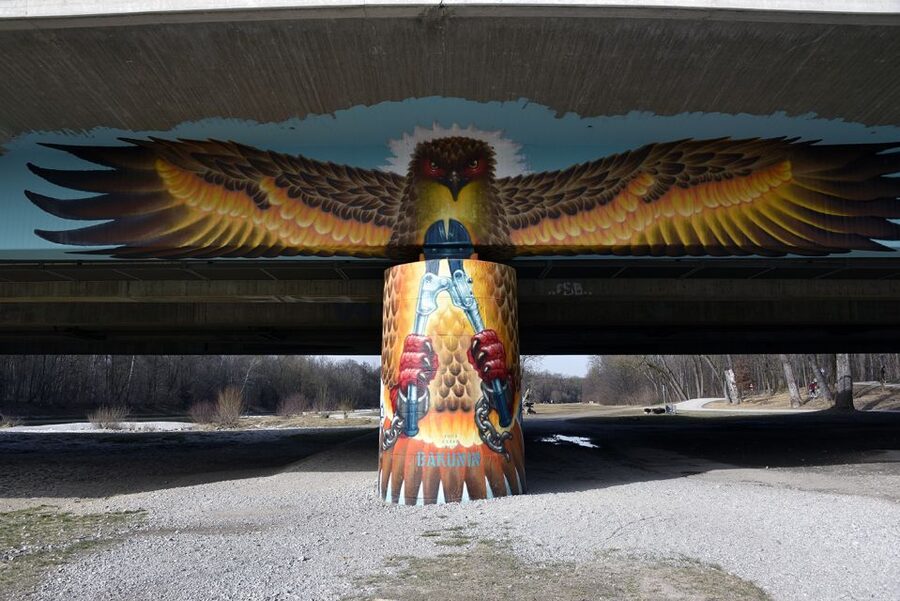
Munich may seem an unlikely place for a graffiti tour. The city center is clean, orderly, and dressed in a very traditional Bavarian style. Yet in the 1980s, Munich became one of Germany’s key points for graffiti culture.
That contrast gives the tour its spark. You are not simply cycling past colorful walls. You are seeing how an art form that was once treated as illegal marking became part of the city’s cultural story. The guide explains the movement’s development and points out work by artists who helped shape it.
I find this context especially useful because street art can be easy to skim past. Without an explanation, you may notice only the colors and large letters. With a guide, you begin to look for style, age, technique, and the difference between work by established artists and newer contributors.
The tour also gives you a wider view of Munich. Instead of staying near Marienplatz and the main shopping streets, you ride toward neighborhoods and industrial areas that most short city visits miss.
More Street Art Bike Tours in Munich:
- London Bike Tour: Landmarks, Secret Gems, Pub Stop & Street Art
★ 5.0 · 943 reviews - Barcelona Street Art and Graffitti Bicycle Tour
★ 5.0 · 361 reviews - London: Landmarks & Secrets Bike Tour with Pub & Street Art
★ 4.9 · 314 reviews
Starting at Marienplatz and leaving the center
You meet the guide in front of the Tourist Information Office at Marienplatz. Look for a yellow street art tour sign with red letters. This is a busy meeting point, so allow yourself enough time to locate the exact spot before the tour begins.
Marienplatz is an efficient starting place because it is easy to reach and familiar to most people in Munich. The interesting part comes next: you quickly leave the postcard center behind and begin looking at the city through its walls, underpasses, riverside spaces, and working districts.
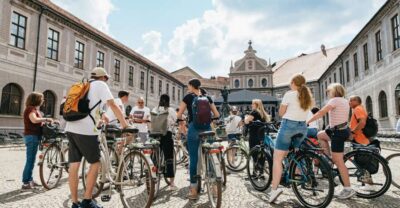
Rental bikes are included in the price. That matters here. You do not need to arrange a bike separately or work out a route through unfamiliar streets. The bike also allows the tour to cover several parts of Munich in a single outing.
Still, this is not a short stop-and-look activity. You will be riding for much of the 210-minute tour, with pauses to view and discuss artworks. Wear clothes suited to the weather and choose shoes that feel comfortable on a bike. The experience is not suitable for wheelchair users, and children must be at least 10 years old.
Following the Isar’s painted edges
The route heads toward the Isar, one of the most useful parts of the experience for anyone who wants to see Munich away from its formal center. Along the river, artists have left their mark in places where the city feels more open and less staged.
The river section gives the tour a pleasant change of pace. You are not moving from one major monument to another. Instead, you are riding through a part of daily Munich and stopping to study artwork in its setting.
Your guide uses the route to explain graffiti’s past and present. You can expect to see work associated with artists who helped establish Munich’s reputation, along with pieces by newer names. The point is not only to collect photographs. It is to understand how different generations have used public space.
The guide makes a real difference here. A good explanation can help you notice why one piece matters, how a style developed, or how a location fits into Munich’s graffiti story. Guide Ulrike received particularly warm praise for being friendly, patient, and willing to explain the subject carefully.
Giesing, the former working-class neighborhood
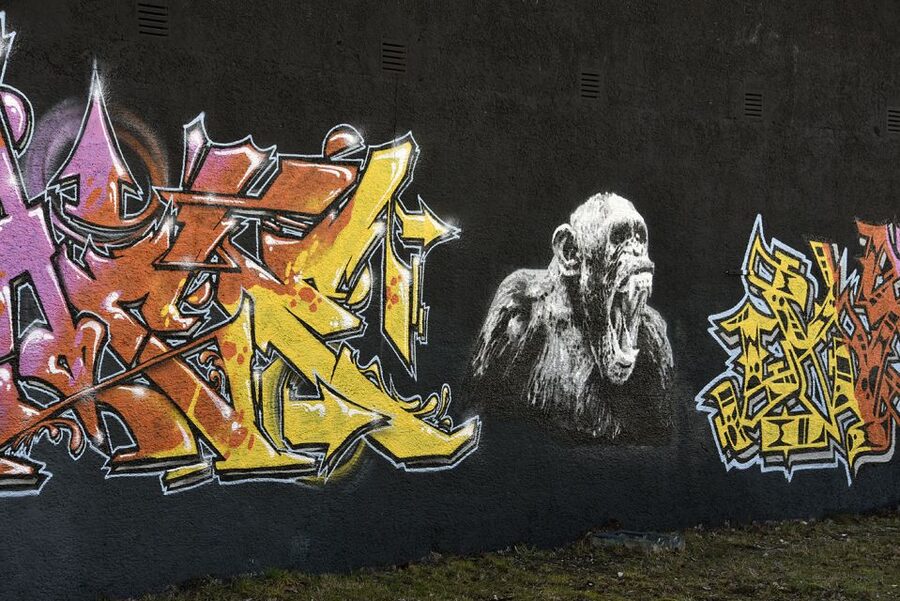
From the river, the tour continues toward Giesing. This former working-class neighborhood is one of the places that gives the outing its off-center character.
Giesing is useful for understanding how street art lives in a real neighborhood rather than inside a museum. You see a part of Munich that has a different feel from Marienplatz, and the bike makes it easier to connect several painted locations without spending the whole afternoon on public transport.
This section is also a good reason to book the tour even if you have already seen Munich’s main sights. The route takes you to areas you might not choose on your own, especially if your visit is short. One English-speaking family said the tour showed them parts of Munich they would never have found independently.
Do not expect every stop to be a grand mural. Street art tours work best when you accept a mix of large works, smaller pieces, changing walls, and places where the art fits into the surrounding district. The guide’s commentary gives these stops their meaning.
More Street Art Tours in Munich:
- Mexico City; ART NACO : Murals & Street Art Bike Tour
★ 5.0 · 284 reviews - Mexico City: Art Naco, murals & street art bike tour
★ 4.7 · 166 reviews - Cologne: Ehrenfeld Street Art Bike Tour
★ 4.9 · 105 reviews - Barcelona: 3.5-Hour Street Art Tour by Bamboo Bike
★ 5.0 · 56 reviews
The slaughterhouse district and its industrial feel
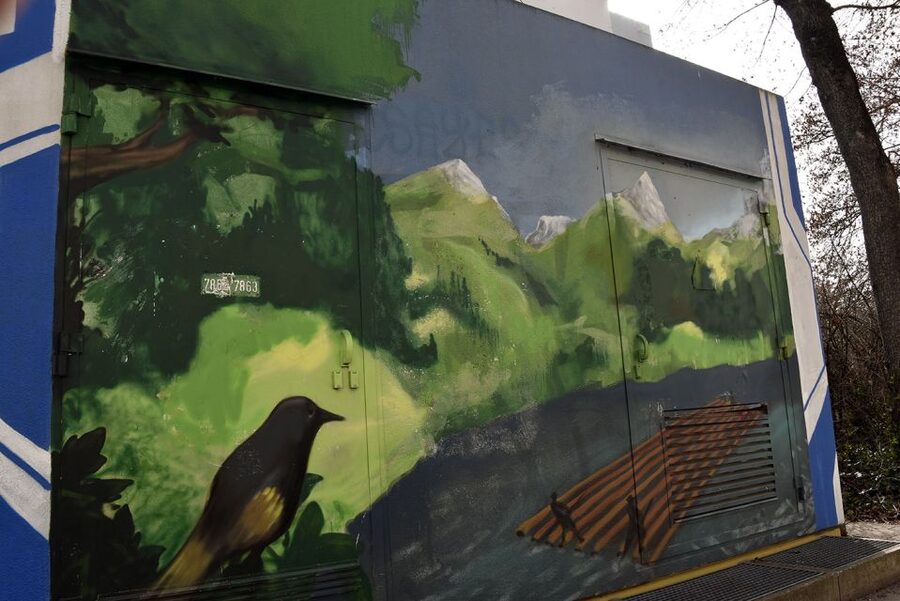
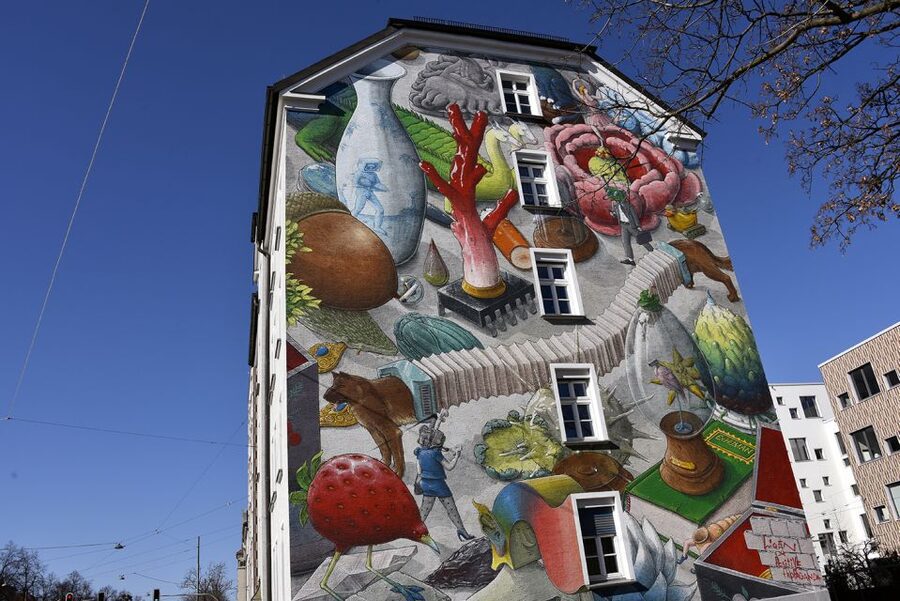
The next major area is Munich’s slaughterhouse district. This former industrial setting suits graffiti particularly well. Large working buildings, rail infrastructure, and rougher urban surfaces create a very different backdrop from the ornamental architecture around the old town.
The district helps explain why artists were drawn to parts of Munich outside the historic center. Here, the surroundings are more practical and utilitarian. The art feels connected to the city’s working side rather than placed in a carefully presented cultural quarter.
You will pass works by both established artists and newer figures. The guide points out the pieces worth your attention and adds facts about the people and movement behind them. That balance is valuable: you get the names and dates, but also a sense of how the scene changed over time.
For me, this is where the tour feels most distinct from a standard sightseeing ride. You are not simply using a bicycle to move between famous sights. The route is built around a subject that reveals a less familiar Munich.
A pause on a boat near the railway bridge
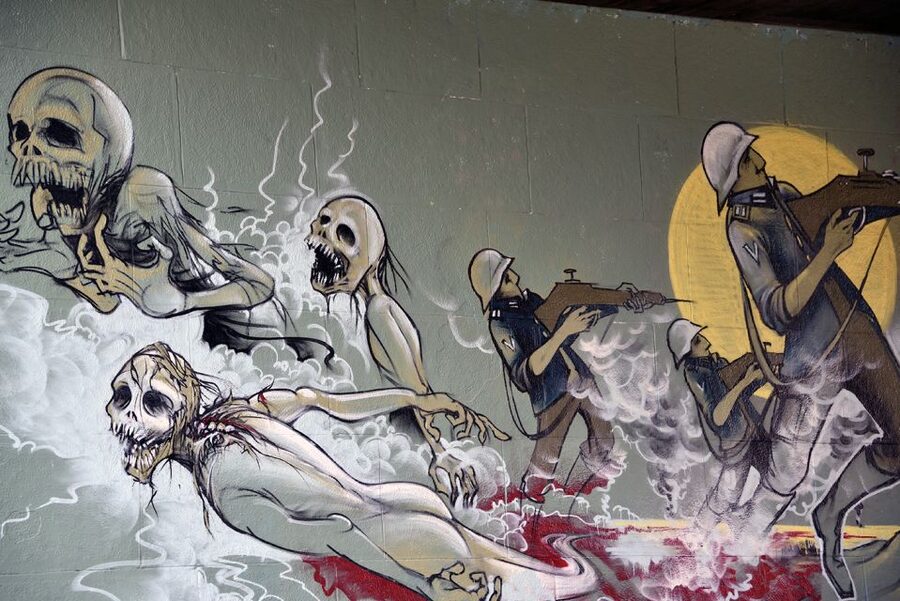
The tour includes a break on a boat near a railway bridge. It is a small but memorable detail, giving you time to stop riding and take in the surroundings from a different position.
The break also divides the long outing into manageable sections. Three and a half hours is a substantial amount of time, especially for children, so a pause matters. One family found the tour a little long for their 12-year-old, while another family with children aged 10 and 12 said the boys stayed interested for the full outing.
This is a useful reminder about the tour’s pace. The experience is not a quick introduction lasting an hour or two. You need to be comfortable with a longer ride, repeated stops, and a steady flow of information.
The boat stop near the railway bridge also suits the character of the tour. Instead of stopping only at a cafe or conventional viewpoint, you pause in a setting tied to Munich’s transport and industrial fabric.
The guides and the language question
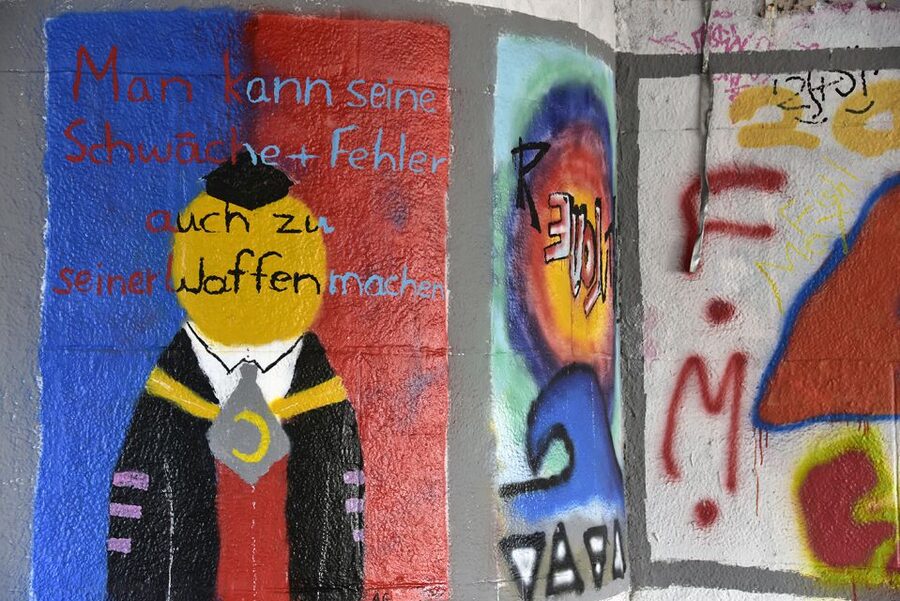
The official guiding language is German. If you understand German, you should get the fullest version of the commentary, including the explanations about graffiti’s development and the artists connected with Munich.
If you speak English, check your comfort level before booking. Guide Ulrike has shown that the tour can work well for English-speaking visitors. She made an effort to explain the subject to one English-speaking family and was described as friendly, helpful, patient, and well informed about the local scene.
That should not be taken as a promise that every departure will be bilingual. The published language is German, so English speakers should be prepared for some limits. You can contact the provider before booking if language is important to your group.
The guide is central to the value of this tour. The bikes get you from place to place, but the commentary turns painted surfaces into a story about Munich, artistic movements, public space, and changing neighborhoods.
Is $40 a fair price?
At $40 per person, the tour is reasonably priced for a 210-minute guided outing that includes a rental bike. You are paying for more than a route through the city. The price covers the guide, the equipment, and access to a planned itinerary that reaches several districts.
I see the strongest value in the combination of transport and interpretation. You could search for street art on your own, but you would need to find the locations, arrange a bike, and research the background yourself. The tour puts those pieces together in one half-day.
The value is better if you are curious about urban culture and want to see more than Munich’s headline sights. It is less compelling if you want a relaxed, short activity with little physical effort. Three and a half hours on a bike is a commitment.
Private groups are available, which may make the cost more worthwhile for families or friends who want a more personal outing. The experience also allows you to reserve now and pay later, and you can cancel up to 24 hours ahead for a full refund. Those policies are useful if your plans are still shifting.
Who will enjoy this bike tour most?
I would choose this experience for adults, older children, and anyone who has already seen the main sights and wants a new angle on Munich. It suits people who enjoy public art, city neighborhoods, and stories about how culture develops outside official institutions.
It is also a good choice for families with children who like bikes and visual art. The age minimum is 10, and the feedback gives a mixed but helpful picture: children aged 10 and 12 enjoyed the activity, while another 12-year-old found the length demanding.
You should think twice if your group dislikes cycling, struggles with long activities, or needs wheelchair access. The tour includes a lot of movement, and the published information says it is not suitable for wheelchair users.
The German-language format is another deciding factor. German speakers have a clear advantage. English speakers may still manage well with a guide such as Ulrike, but you should not assume full English commentary at every departure.
Practical tips for a smoother outing
Arrive at Marienplatz early enough to find the Tourist Information Office and identify the yellow sign with red letters. The meeting point is central, but the square can be crowded and confusing if you are rushing.
Bring weather-appropriate clothing. The route is outdoors for several hours, and the experience continues along the river and through open urban areas. A water bottle is sensible for a long bike ride.
Keep your expectations focused on discovery rather than a fixed collection of famous murals. Street art changes, and the appeal lies partly in seeing how the work fits the neighborhood. Listen to the guide before deciding which pieces deserve the most attention.
If you are booking for children, consider the full 210-minute length honestly. The art may keep an interested child engaged, but this is still a long outing. A private group could be useful if your family needs a slower pace or more questions.
The rules are simple: alcohol and drugs are not allowed. The tour provider also offers free cancellation up to 24 hours before the start, which gives you some flexibility when building a Munich itinerary.
Should you book the Munich Street Art Bike Tour?
Book it if you want to see Munich beyond its elegant center and you like the idea of linking art with neighborhoods, riverside spaces, and industrial areas. The route to Giesing and the slaughterhouse district is the real prize, while the Isar ride and railway bridge break keep the outing varied.
I especially recommend it to German speakers, repeat visitors, and families with children aged 10 or older who enjoy cycling. English speakers can have a good experience with a patient guide such as Ulrike, but the official language remains German.
Skip it if you want a short activity, dislike bikes, or need wheelchair access. For everyone else, $40 buys a well-planned half-day that shows you a side of Munich most sightseeing routes leave out.
FAQ
Where does the Munich Street Art Bike Tour meet?
Meet your guide in front of the Tourist Information Office at Marienplatz. The guide will hold a yellow street art tour sign with red letters.
How long does the tour last?
The tour lasts 210 minutes, or three and a half hours.
What is included in the price?
The tour includes a live tour guide and rental bikes.
What language is the tour conducted in?
The published tour language is German. Guide Ulrike has also helped English-speaking visitors by explaining the subject during the ride.
Is the tour suitable for children?
Children under 10 are not permitted. The length may be demanding for some younger participants, although children aged 10 and 12 have enjoyed the experience.
Is the tour wheelchair accessible?
No. The activity is not suitable for wheelchair users.
Can I cancel the booking?
Yes. You can cancel up to 24 hours in advance for a full refund. You can also reserve your place and pay later.
Just added around Munich
- Munich: Mini Classic Bike Tour with Beer Garden Stop at 4 PM★ 4.8 · 28 reviews
- Best of Munich Electric Bike Tour★ 4.7 · 23 reviews
- Munich: Neuschwanstein Castle by Bus with Alpine Bike Ride★ 4.9 · 217 reviews
- Best of Munich Electric Bike Tour★ 5.0 · 38 reviews
- Munich City Bike Tour + Beer Garden Lunch Stop★ 5.0 · 283 reviews
- Munich: Bike Tour with Beer Garden Break★ 4.9 · 391 reviews
- Munich Essentials Bike Tour★ 4.9 · 401 reviews
- Munich by Bike: Half-Day Tour with Local Guide★ 4.7 · 417 reviews
Munich Bike Tours, compared.
Classic Mike’s Bike Tour daily @ 11.30 incl Beer Garden & Surfers
Read our review →
Neuschwanstein Castle by Bus Incl. Bike Ride or Hohenschwangau
Read our review →
Browse the lists this tour appears in