
REVIEW · MEXICO CITY
Mexico City E-Bike Tour with a taco and churros stop
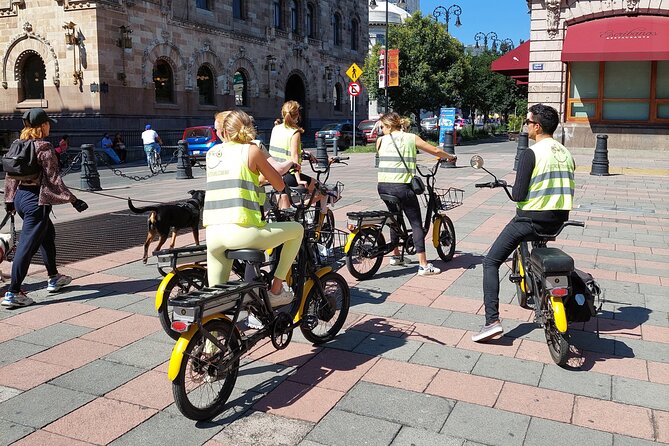
Mexico City reveals itself quickly from an e-bike. In four hours, you can move from Roma Norte’s old mansions to Reforma’s grand monuments, the Zócalo, Chapultepec Park, Polanco, and Condesa. That range is the main reason to book: you get a useful first look at a huge city without spending half the day in a taxi.
I like the small group size, capped at nine, and the way the electric assistance helps you cover ground without turning the ride into a workout. I also like the food stops. The tacos and churros give the tour a local flavor, even though this is mainly a sightseeing ride rather than a dedicated food tour.
The main consideration is traffic. Some sections use separated bike paths, but you may also ride close to cars. You should feel comfortable on a bicycle, follow your guide closely, and expect the quality of the commentary to depend partly on the guide and the day’s road conditions.
Key points at a glance
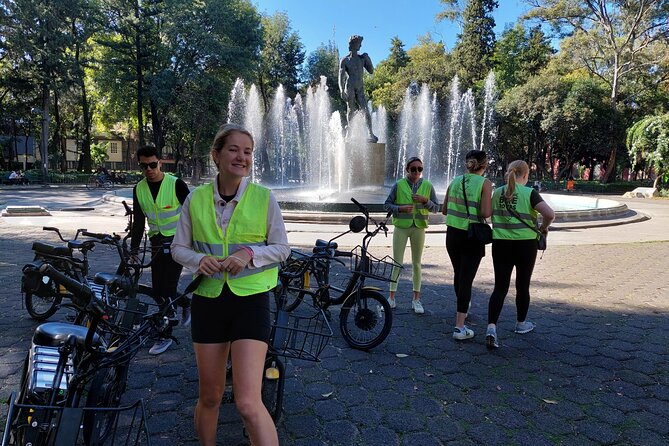
- Ride across several distinct neighborhoods: Roma Norte, Condesa, Polanco, the historic center, Reforma, and Chapultepec fit into one morning.
- Small groups make city riding easier: With no more than nine people, your guide can keep an eye on the group and answer questions.
- Electric assistance matters at altitude: Mexico City sits high above sea level, and the motor takes the strain out of long streets and repeated starts.
- The food is a bonus, not the main event: Plan on taco stops and a churro or pastry stop, but choose this for the city overview first.
- Sunday can be the best day to ride: Some major roads, including Reforma, may be closed to cars for cycling and walking.
- Guide quality shapes the experience: Eduardo, Sergio, Adriana, Jose, and Sebastian have all led tours, with especially strong praise for Eduardo’s history, safety focus, and restaurant suggestions.
Why this e-bike route works so well
Mexico City is too large for a normal walking tour to cover much beyond one district. This ride solves that problem. You get the close-up feel of a bicycle, but the electric motor lets you move between districts quickly.
The route also has a useful rhythm. You ride for a while, stop at a landmark, hear some background, take photos, and continue. It is not a museum-heavy outing. You will see the outside of important buildings rather than spend time inside them.
That makes this a strong first-day activity. You can use it to decide where to return later. Roma Norte and Condesa may call for a longer meal, the historic center deserves a full day on foot, and Chapultepec could easily take several hours on its own.
The group limit of nine is important in Mexico City traffic. A huge cycling group would make stops awkward and crossings stressful. Here, your guide can usually keep the pace manageable and adjust when someone needs extra time.
More E-Bike Tours in Mexico
- Electric Bike Beach Adventure with Tequila Tasting and Lunch
★ 5.0 · 1,162 reviews - Mexico City Highlights E-Bike Tour With Foodie Stops
★ 5.0 · 226 reviews - E-Bike City Tour though Cozumel & Taco Tasting Tour
★ 4.5 · 155 reviews
Starting in Roma Norte at 9:30
The meeting point is at Zacatecas 3 in Roma Norte. The tour begins at 9:30 am and returns to the same place after about four hours.
Roma Norte is a good starting point because it introduces you to a side of Mexico City that feels different from the grand monuments downtown. The neighborhood was developed during the final years of Porfirio Díaz’s government, when it attracted wealthy residents and large homes.
Today, the appeal is the mix of architecture. Older mansions, apartment buildings, cafés, restaurants, and bars sit along broad streets with mature trees. Roma also became known internationally through Alfonso Cuarón’s film Roma, though you should not expect a movie-location tour.
The opening stop lasts about 20 minutes. That is enough time for an introduction, a few photographs, and some context, but not enough for a full architectural walk. Keep your expectations in the right place: this is a brief orientation before the cycling begins in earnest.
Reforma and the Monument to the Revolution
Paseo de la Reforma is one of the city’s grandest avenues. It carries major monuments and links several important areas, so riding along it gives you a fast lesson in Mexico City’s scale.
One of the key stops is the Monumento a la Revolución Mexicana. The monument is a striking photographic backdrop and an important reminder of the country’s revolutionary period. The stop is short, around five minutes, and you do not enter the museum inside.
That short timing is typical of the tour. You will see a lot, but you will not get long inside explanations at every place. The guide’s ability to give clear context while keeping the group moving matters here.
If you can choose your date, Sunday deserves special attention. On some Sundays, parts of Reforma close to motor traffic for cyclists and pedestrians. Riding on a broad avenue with fewer cars can make the route feel much more relaxed. This is not guaranteed every day, but it is a useful scheduling tip.
Alameda Central, Bellas Artes, and the Zócalo
The route continues toward Alameda Central, the oldest public park in the Americas. Its fountains, statues, and tree-lined paths offer a welcome pause from traffic and concrete.
Nearby, you see the Palacio de Bellas Artes. This is Mexico City’s grand opera house and one of its most recognizable buildings. Commissioned under Porfirio Díaz, it combines several architectural influences and remains a major center for music, theater, dance, and the arts.
You do not enter Bellas Artes on this tour. The value is in the exterior view and the guide’s explanation. If you want to see the murals and interior spaces, plan a separate visit.
The ride then reaches the historic center and the Zócalo, officially Plaza de la Constitución. This is the symbolic heart of Mexico City and one of the largest public squares in the world. The area was once described as the city of palaces, and the surrounding buildings reflect the layers of colonial and modern Mexican history.
The description of the route also refers to the first city square and the origins of Mexico City. That matters because this is not simply a pretty plaza. The area connects the modern capital with the earlier city built on the site of Tenochtitlan.
Expect to admire the square from outside rather than receive an extended walking tour. Barriers, events, ceremonies, and crowds can affect where bikes may stop. One difficult day even led to very limited commentary because road barriers made stopping hard. That is a real limitation of an urban cycling tour, not necessarily a failure of the route.
Same city, a different ride:
- Frida Kahlo VIP [Museum Tickets Included] Bike, Markets & Churros
★ 5.0 · 1,072 reviews - UTV Adventure with Free Camel Ride and Sky Bikes
★ 4.5 · 435 reviews - Mexico City: 19 City Highlights Bicycle Tour
★ 5.0 · 425 reviews - Mexico bike tour
★ 5.0 · 407 reviews
El Ángel and Mexico’s patriotic symbol
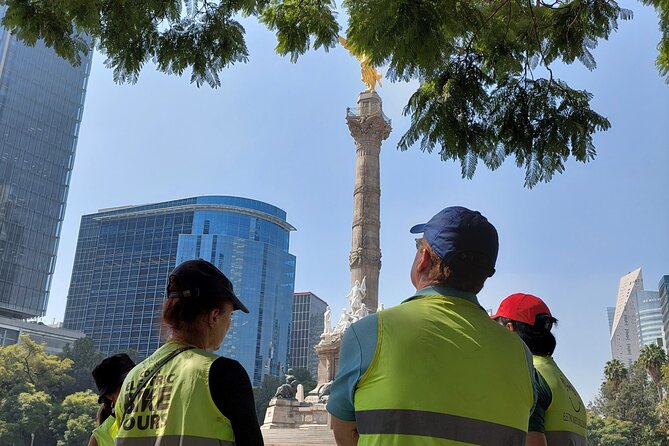
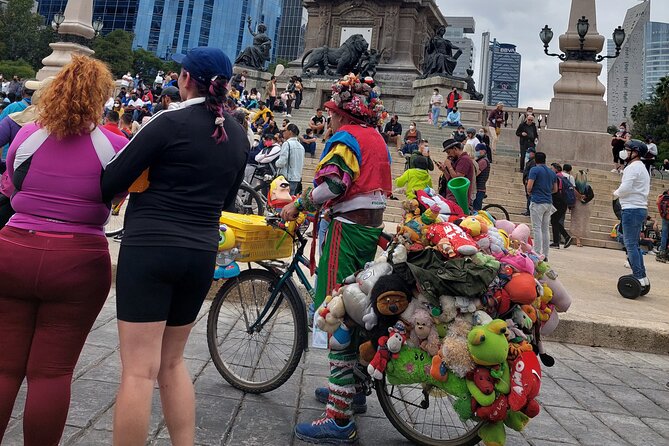
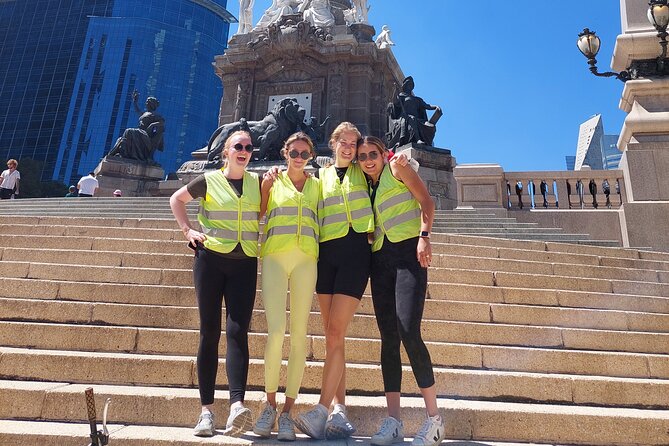
El Ángel de la Independencia is one of Mexico City’s most familiar landmarks. The golden-winged figure sits atop a tall column on Reforma and represents Mexican independence and national pride.
The stop lasts about 15 minutes. That gives you time to look up, take photographs, and hear why the monument matters. It is also a useful place to understand how the avenue functions in public life. National celebrations often gather here, especially after major victories by Mexico’s football team.
This is one of the tour’s stronger photo stops, but the surrounding road can be busy. Stay close to the guide and avoid treating the stop like a relaxed plaza visit. You are still in a working city with traffic moving around you.
Chapultepec and the flying dancers
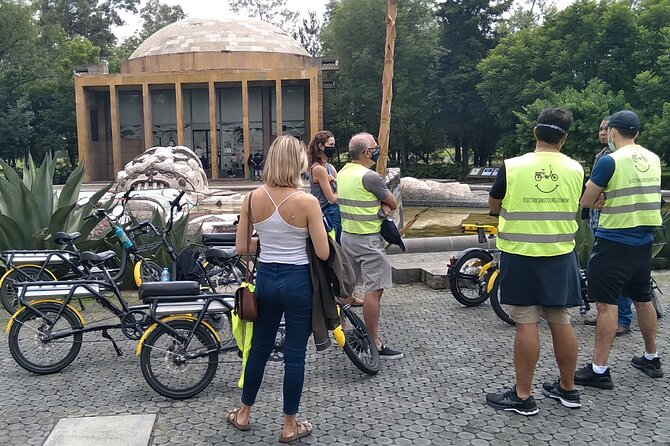
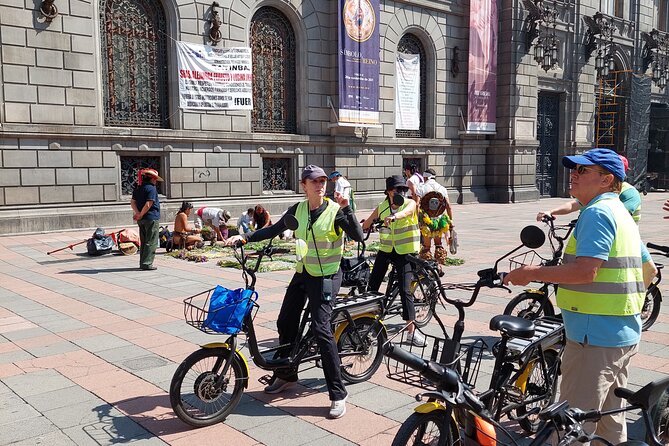
The tour includes a stop near the National Museum of Anthropology to watch the voladores de Papantla. These performers climb a tall pole and descend while rotating around it, creating one of Mexico’s most memorable traditional spectacles.
The stop is listed at about 15 minutes. The performance schedule can affect what you see, so consider it a planned cultural stop rather than a private show arranged just for the group.
The ride then enters Bosque de Chapultepec, one of the city’s major green spaces. The park gives you a striking change of scene. After grand avenues and dense blocks, you are cycling beneath trees in a large forest within the capital.
You pass close to Chapultepec Castle and leave through the Puerta de los Leones near Reforma. The route does not include entry to the castle or the National Museum of Anthropology, so plan another visit if either is high on your list.
The park is also where the e-bike makes the most practical sense. Mexico City’s altitude can make sustained riding feel harder than expected. Electric assistance lets you enjoy the park and keep up with the group without treating every incline as a test.
Polanco, tacos, and the food stops
Polanco is one of Mexico City’s most polished districts, with upscale restaurants, shops, galleries, and broad streets. It gives you a look at the city’s wealthier, more cosmopolitan side.
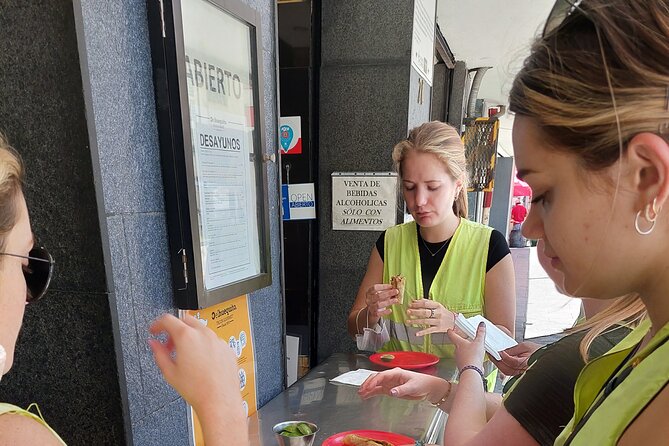
A planned food stop is Taquería El Turix, known for Yucatecan-style tacos. Other outings have included places such as Los Cocuyos, along with a churro or pastry stop at El Toro. The exact food sequence can vary, so think of these as examples of the route’s eating style rather than a fixed tasting menu.
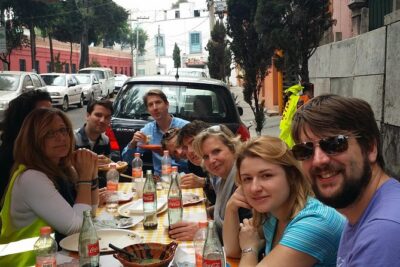
The taco stops are a genuine strength. They break up the ride, give you a chance to taste something local, and turn a sightseeing route into a more personal experience. You may try different taco styles and add toppings at the counter.
Still, do not book this expecting a full food crawl. The main purpose is to see Mexico City. The food is included as part of the morning, not a long series of restaurant visits. One pastry stop received mixed reactions, and the quality of any food stop can depend on the shop open that day.
The practical detail is that several stops have been reported on some outings, including two taco stops, a bakery, and a coffee shop. The stated route specifically highlights a taco stop and the tour title includes tacos and churros. Come hungry enough for a snack, but not expecting all your meals to be covered.
Condesa brings the route back to neighborhood life
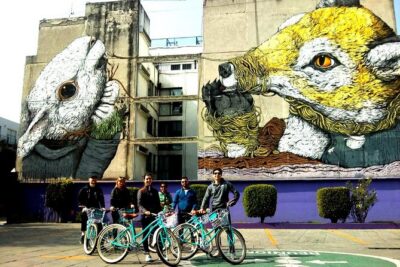
La Condesa is another leafy, stylish district with cafés, boutiques, restaurants, parks, gardens, street art, and an easygoing feel. Riding through it helps connect the polished public landmarks with the places where residents spend ordinary afternoons.
This is one of the best parts of the route for seeing how Mexico City neighborhoods change block by block. Roma Norte, Condesa, and Polanco each have their own look, and an e-bike lets you compare them in one morning.
You may also notice how much tree cover the city has in these districts. Several riders have particularly enjoyed the cool air under the trees and the chance to move through local streets rather than remain on major roads.
What the guide adds to the morning
The strongest guide reports name Eduardo, Sergio, Adriana, Jose, and Sebastian. Eduardo receives especially strong praise for his warmth, safety focus, history explanations, music from his bike, and restaurant suggestions. Sergio has been praised for safe riding and for leading the group on Reforma when streets were closed to cars.
Adriana has led shorter outings of about three hours and has been described as kind and well informed. Jose has been flexible with dietary requests and photo stops, while Sebastian has been praised for giving useful background without slowing the ride too much.
That range also points to the tour’s main variable. One poor experience described very little commentary and basic stop information. The operator explained that barriers made it difficult to stop that day and offered compensation.
I would treat this as a guided city ride whose depth depends on the guide, the traffic, and the day’s conditions. If you want a detailed academic history lesson, book a specialist walking tour or museum visit as well. If you want useful orientation, safety help, neighborhood context, and a few good stories while moving through the city, this format works better.
Safety, fitness, and the realities of city cycling
You do not need to be an expert cyclist, but you should be comfortable riding near traffic. Some sections use separated cycling space, while others put you close to cars. The guide leads the way, but you remain responsible for controlling the bike and staying alert.
The e-bike reduces physical effort, not traffic awareness. Mexico City is busy, and you may need to start, stop, turn, and ride in a line with the group. Follow instructions carefully, especially at intersections.
Water matters. One person reported that the water allocation felt too small for four hours at Mexico City’s altitude. Bring extra water if you tend to drink a lot, and use the restroom whenever a clean opportunity appears. A reported toilet stop was unpleasant, so do not assume every facility will meet your usual standard.
The activity is listed as suitable for most people, but cycling confidence matters more than athletic ability. The motor helps with effort. It does not remove the need to balance, steer, and ride around vehicles.
Is $70 a fair price?
At $70 per person, the tour costs more than a standard walking tour but covers far more ground. You are paying for the e-bike, guide, small group, several hours of route planning, and included food stops.
I think the price is reasonable for a first visit if you value time. Seeing Roma Norte, Reforma, the historic center, Polanco, Chapultepec, and Condesa independently would require careful planning and several types of transport.
The value falls if you mainly want long visits inside museums or monuments. None of the major museums or Bellas Artes is entered, and some landmark stops are brief. You are buying a broad city introduction, not a series of full admissions.
With a 4.9 rating from 292 ratings and 98 percent recommendation, the experience has a strong record. Still, the mixed comments about commentary, water, toilets, and traffic are useful warnings. The tour is best judged as an active orientation ride, not a polished luxury excursion.
Who should book it
I would choose this for a first morning in Mexico City, especially if you want to learn the shape of the city before deciding where to spend the rest of your trip.
It suits couples, friends, and families with confident cyclists. It also works well for people who want to sample several neighborhoods, eat a few tacos, and avoid spending the whole day underground or in taxis.
You may want another kind of tour if you dislike riding near cars, need long unhurried stops, or want detailed museum access. A Sunday departure may offer a calmer ride on some major roads, but road closures and access can change.
Book at least 24 hours ahead if your plans are firm, since the experience is often reserved several weeks before the date. Free cancellation is available up to 24 hours before the start time. Poor weather can lead to a new date or a full refund.
Should you book this Mexico City e-bike tour?
Book it if you want breadth, movement, and a quick feel for the capital. The combination of electric assistance, a nine-person limit, neighborhood streets, famous monuments, Chapultepec Park, tacos, and churros gives you a lot in four hours.
Go in expecting a lively urban ride, not a slow history seminar. Stay alert in traffic, bring water, and choose Sunday if the possibility of car-free Reforma appeals to you. For first-time visitors who want to get their bearings fast, this is one of the more efficient ways to begin Mexico City.
FAQ
How long is the Mexico City e-bike tour?
The tour lasts approximately four hours.
What time does the tour start?
The stated start time is 9:30 am.
Where does the tour begin?
It begins at Zacatecas 3 in Roma Norte, Mexico City.
Where does the tour end?
The activity ends back at the meeting point in Roma Norte.
How many people can join the tour?
The group is limited to a maximum of nine participants.
Is the tour offered in English?
Yes. The tour is offered in English.
Are tacos and churros included?
The experience includes taco and churro stops. The exact food sequence may vary, and the tour is primarily a sightseeing ride rather than a dedicated food tour.
Does the tour enter the museums or Palacio de Bellas Artes?
No. The route includes exterior visits to places such as the Monument to the Revolution, Palacio de Bellas Artes, Chapultepec Castle, and the National Museum of Anthropology area. Museum entry is not included in the stated itinerary.
Is the tour suitable for people who are not strong cyclists?
Most people can participate, and the electric assistance reduces physical effort. You should still feel comfortable riding a bicycle and operating near traffic.
Can I cancel for a full refund?
Yes, if you cancel at least 24 hours before the experience start time. Cancellations or changes made less than 24 hours in advance are not refunded. If poor weather causes the operator to cancel, you can receive a different date or a full refund.
Just added around Mexico
- Private Historical Tour in the Sierra Santa Rosa by Bicycle★ 5.0 · 28 reviews
- Neon Bike Party – Private Bike Tour★ 4.5 · 34 reviews
- Private Tour: Coba Ruins by Bike, Tulum Ruins by Boat and Swim in a Cenote★ 5.0 · 85 reviews
- Private Tour in El Malecon Boardwalk Bike Ride★ 5.0 · 69 reviews
- Tulum: Cenote Trail Bike Tour★ 4.8 · 142 reviews
- Jungle Bike Tour from Playa del Carmen with Bath in a Cenote★ 5.0 · 70 reviews
- Rio Secreto Nature Reserve: Bicycle, Rappel & Ziplines Tour★ 4.3 · 46 reviews
- Cenotes trail jungle bike tour in Tulum with lunch★ 5.0 · 157 reviews
Mexico City Bike Tours, compared.
![Frida Kahlo VIP [Museum Tickets Included] Bike, Markets & Churros](https://7.thebiketraveler.com/wp-content/uploads/frida-kahlo-vip-museum-tickets-included-bike-markets-churros-400x267.jpg)
Frida Kahlo VIP [Museum Tickets Included] Bike, Markets & Churros
Read our review →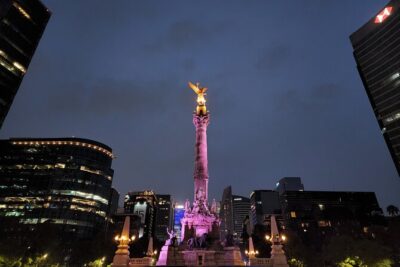
Mexico City; ART NACO : Murals & Street Art Bike Tour
Read our review →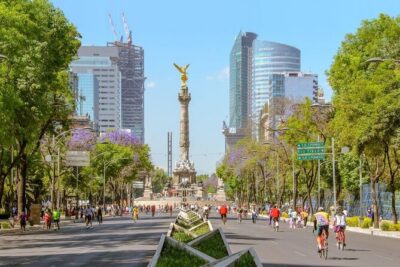
Mexico City Highlights E-Bike Tour With Foodie Stops
Read our review →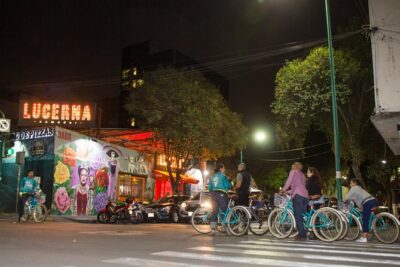
Browse the lists this tour appears in