
REVIEW · KYOTO
Kyoto: Full Day Bike Tour
Kyoto’s best feature for cyclists is its mix of grand sights and ordinary streets. This full-day ride links Toji, Kinkaku-ji, Gion, and Fushimi Inari with shopping arcades, river paths, temple lanes, and neighbourhood roads that are easy to miss from a taxi.
I like the small group of no more than nine and the practical route, which covers a remarkable amount of Kyoto without making you change trains all day. I also like the personal touch: guides such as Jay, Juan, Karl, and Shawn add stories, food suggestions, and useful ideas for the rest of your stay. The main drawback is simple: this is a long, active day, with roughly 18 miles of cycling reported by one participant, so you should already feel comfortable on a bike.
Key points to know before booking
- You cover a large slice of Kyoto in one day: The route connects famous temples, shrines, Gion, the Imperial Palace, and the Kamo River.
- The back streets are part of the reward: You are not simply pedaling from one major entrance to another.
- Kinkaku-ji admission and lunch are included: That helps the $116 price feel more straightforward.
- The bikes are practical cross bikes: Giant and Trek models are used, with e-bikes available if requested.
- The group stays small: Nine participants or fewer allows the guide to manage the streets and answer questions.
- You need stamina, not racing ability: The city is described as fairly flat, but this remains a full day of riding and walking.
A full day on two wheels
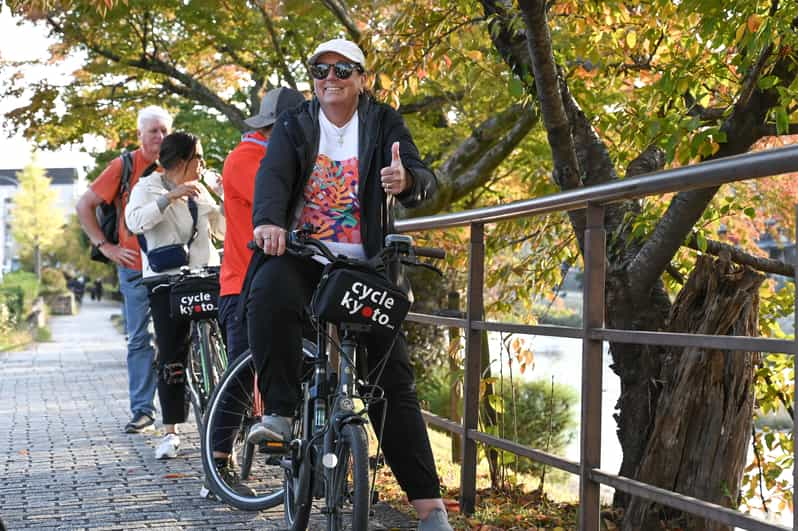
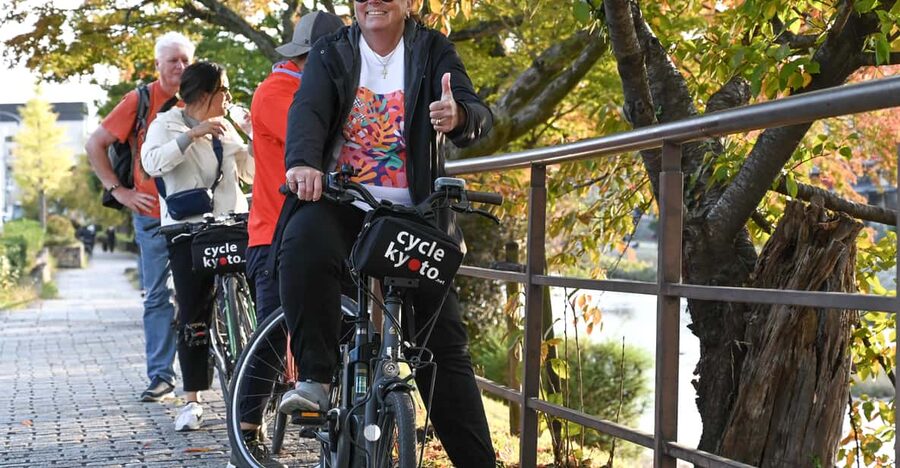
This tour is designed for visitors who want to see a lot of Kyoto quickly, but do not want to spend the day underground or in traffic. You meet at Cycle Kyoto at 9:30 AM sharp, with arrival requested 15 minutes early. The morning begins with bike fitting and a 25-minute safety briefing at Toji.
That start matters. Kyoto cycling is not presented as a race, and the route uses generally low-traffic roads according to the tour feedback, but you still need to be alert. You will ride in a city, cross streets, share paths, and leave the bike to walk around temple and shrine grounds.
The guides speak English and have lived in Japan for considerable time. Their role is more than pointing toward the next gate. Jay was praised for his humor and enthusiasm, Juan for patience and helpful suggestions for later sightseeing, and Karl for taking the group to an appealing lunch spot. Guide assignments can vary, so you should not book on the assumption that one particular person will lead your group.
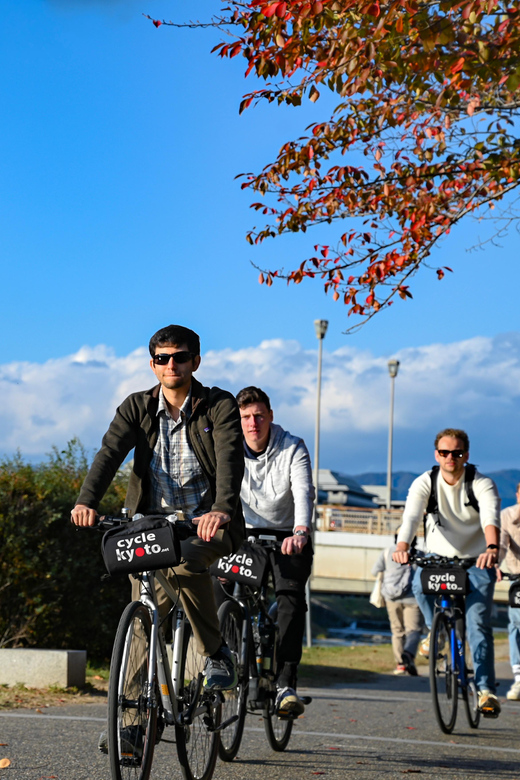
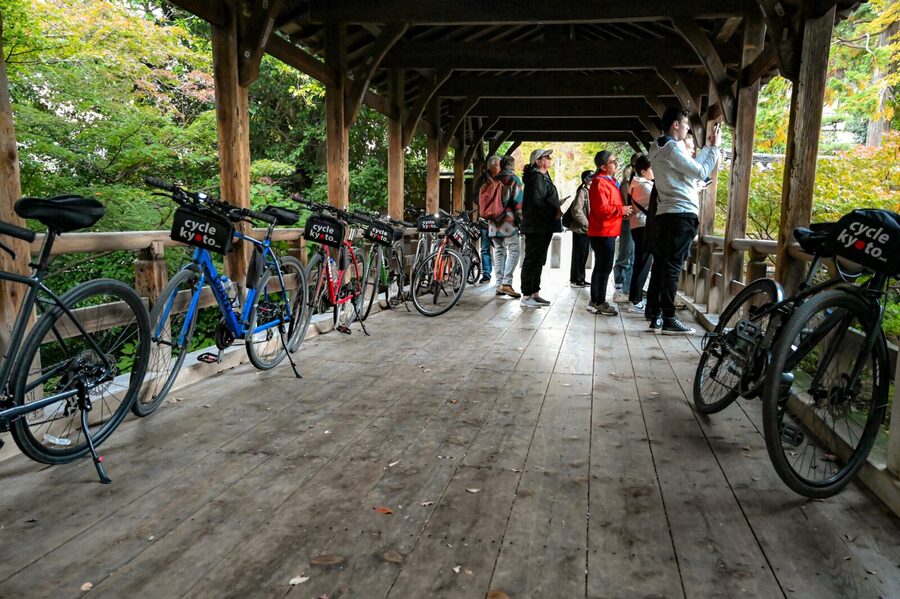
The bikes are maintained Giant and Trek cross bikes. They are a sensible choice for a long day because you get a more practical riding position than on a tiny city bicycle. E-bikes are available upon request, which is worth arranging before the tour if you are worried about distance, heat, or keeping pace.
More Full-Day Rides in Kyoto:
- 5 Top Highlights of Kyoto Full Day Bike Tour (E-bike option)
★ 5.0 · 511 reviews - Full Day Biking Tour Exploring the Best of Kyoto
★ 5.0 · 498 reviews - Kyoto: Full-Day City Highlights Bike Tour with Light Lunch
★ 5.0 · 52 reviews
Toji and Nishi Honganji: an easy cultural opening
Toji is the first proper stop after the safety talk. It is known as Kyoto’s oldest temple, and its grounds provide a strong introduction to the city’s religious architecture without asking you to begin the day with a rushed sprint. You have about 30 minutes to look around.
From Toji, it is roughly a 10-minute ride to Nishi Honganji. The change from cycling to a guided temple visit is useful. You get a short, manageable ride first, then a longer 50-minute look at one of Kyoto’s important Buddhist sites.
These early stops also help you settle into the rhythm of the day. You ride, park, walk, listen, and ride again. That pattern repeats throughout the tour, so wear shoes that are comfortable both on pedals and temple grounds.
Sanjo Arcade and Shinsen-en: Kyoto between the famous sights
The route then heads north through the Sanjo Shopping arcade. This is one of the places where the bike gives you a better sense of Kyoto as a living city. Instead of seeing only monumental gates and manicured grounds, you pass through a commercial area and then continue toward Shinsen-en gardens.
Shinsen-en is a quick stop, described as picturesque rather than a major block of sightseeing. That is part of its appeal. The tour does not treat Kyoto as a checklist of only its most photographed places. Smaller pauses break up the day and give you a look at the city’s quieter side.
You should expect the pace to be active. A short stop may mean time for a look and a photo rather than a long, unhurried visit. If every temple deserves an hour in your personal plan, this tour will feel brisk.
Kitano Tenmangu and Kinkaku-ji
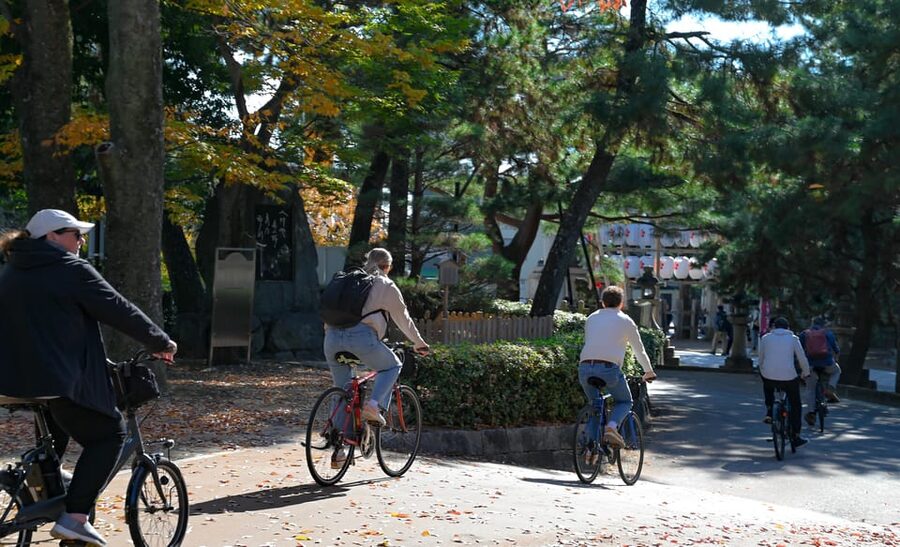
Kitano Tenmangu Shrine receives about an hour of guided time. The group walks the grounds, giving you a chance to leave the bike behind and focus on the shrine’s details. It is a good point in the route to learn how Kyoto’s Shinto sites differ from its Buddhist temples.
Next comes Kinkaku-ji, the Golden Pavilion, one of Kyoto’s essential sights. Admission is included, and the visit lasts about an hour in the stated schedule, with roughly 25 minutes specifically described for exploring the pavilion. That distinction is useful because Kinkaku-ji is not a place where you wander freely through every building. You follow the established viewing route, take in the gold-covered structure beside the pond, and continue through the grounds.
The pavilion can be crowded, especially at popular times of day. A bicycle tour cannot remove that reality, but it does connect the visit to several less crowded portions of Kyoto rather than making the entire day about one famous photograph.
Kinkaku-ji is also one of the tour’s clearest value points. The entrance fee is included, and the guide provides context before or during the visit. You still need to accept that the stop is relatively controlled and compact. If you want a quiet, meditative temple visit, this may not be the one. If you want to see the famous pavilion without arranging separate transport, it works well.
A few more bike tours around Kyoto worth a look
- Hidden Kyoto E-Biking tour
★ 5.0 · 1,843 reviews - Bike Tour Exploring North Kyoto plus Lunch
★ 5.0 · 1,087 reviews - Arashiyama Bamboo Forest & Hidden Gems Bike Tour (Early Bird)
★ 5.0 · 613 reviews - Kyoto: Memory Kyoto E-Bike Tour
★ 4.8 · 297 reviews
Lunch and the ride toward the Imperial Palace
After the Golden Pavilion, you stop for a traditional Japanese lunch. The exact restaurant can change according to availability, so do not book expecting one fixed menu or location. The meal is included, which is helpful on a long cycling day when you do not want to spend time choosing and paying at the busiest point of the route.
The lunch descriptions from the tour’s recent feedback show why this part can be memorable. One guide led the group to ramen with a duck broth, while another took the group to a restaurant that would be difficult to find without local help. Those details suggest a meal with a local angle rather than a generic stop selected only for speed.
You receive about an hour for the break. That is important. You need time to eat, rest, and refill your energy before the afternoon riding. Still, keep your expectations practical: this is a sightseeing tour with lunch, not a food-focused excursion. The meal is one part of a very full route.
The Imperial Palace follows lunch, with about an hour for the visit. This gives the day a useful change of scale. After temples, shrines, and shopping streets, the palace grounds offer broad paths and a different view of Kyoto’s former political center.
The Kamo River and Gion’s back streets
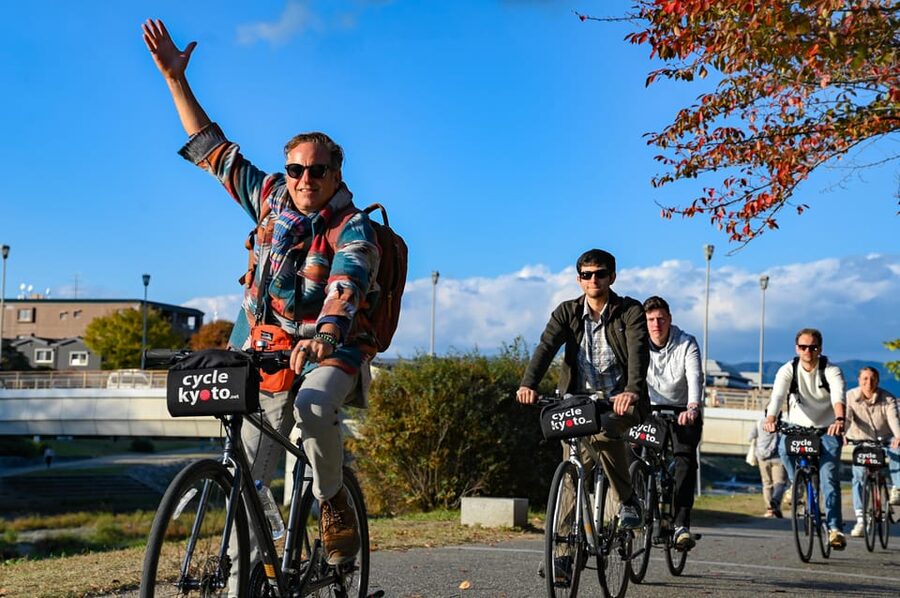
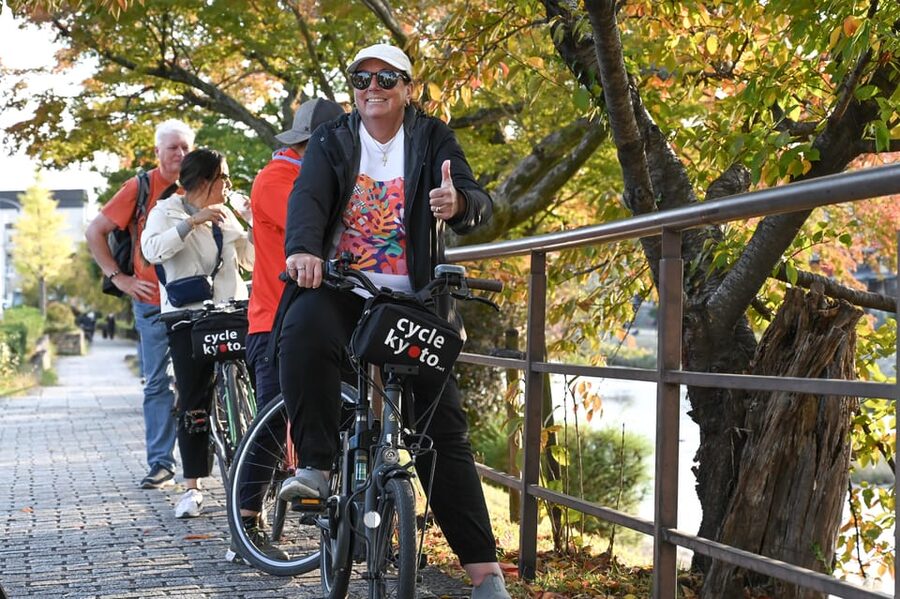
The ride then picks up the Kamo River and heads south. A 40-minute photo stop gives you a chance to slow down and enjoy one of Kyoto’s most recognizable natural corridors. The river section also provides a welcome change after several structured temple visits.
The cycling route is one of the tour’s strongest ideas. You can see major sights independently, but linking them by bike gives the day a more connected feel. You notice the distance between districts, the shift from commercial streets to residential lanes, and the way Kyoto opens and closes around the river.
Gion comes next, with about an hour of guided touring. This is Kyoto’s famous geisha district, but it is also a working neighbourhood. You should treat the area respectfully, keep your camera under control, and remember that people live and work in these narrow streets.
The tour’s back-street focus is especially useful here. A guide can explain what you are seeing without turning Gion into a stage set. One participant reported seeing a geisha during the day, but that should be treated as a possibility rather than a promise. The real value is learning how to look at the district without reducing it to costumes and photographs.
Tofukuji and the final approach to Fushimi Inari
The final leg heads south through Tofukuji Temple. This is listed as a 30-minute photo stop, so it is not the same kind of extended visit as Kitano Tenmangu or Kinkaku-ji. The shorter pause helps keep the schedule moving, but it also means you should not expect a detailed tour of every part of the temple complex.
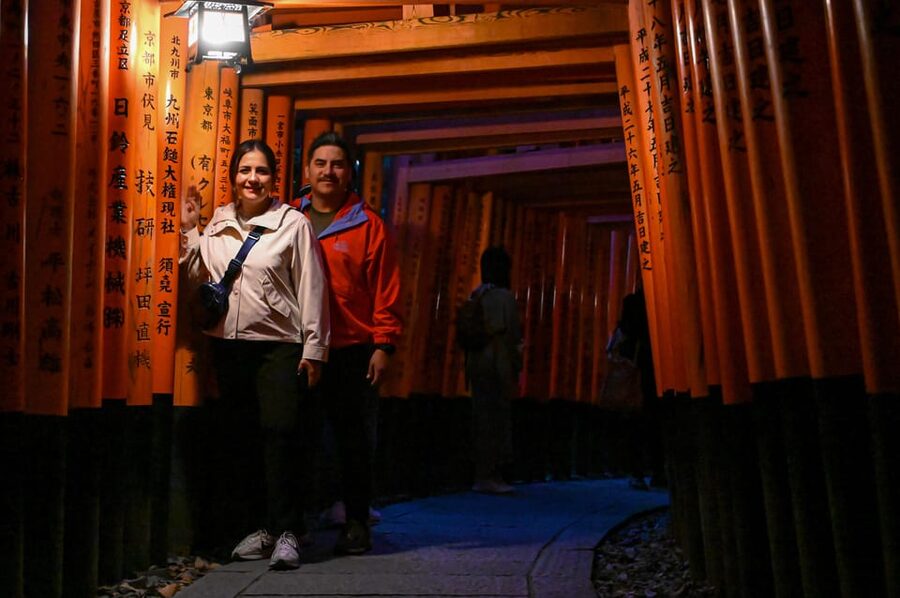
Fushimi Inari Taisha provides the grand finish. The tour focuses on the Senbon Torii, the famous corridor of vermilion gates. You receive about an hour of guided time, walking through one of Kyoto’s most recognizable religious sites after spending much of the day reaching it by bicycle.
This ending is memorable, but it is also where tired legs may make themselves known. Fushimi Inari involves walking, steps, and crowds in addition to the day’s riding. Comfortable shoes, water, and a sensible attitude toward the pace are essential.
After Fushimi Inari, you return to Cycle Kyoto. The day is scheduled for 450 minutes, but the route includes many stops and active transitions. One detailed account put the riding distance at a little over 18 miles, along with walking at the sites. Think of this as a genuine full-day outing, not a gentle two-hour city spin.
What the $116 price includes
At $116 per person, this tour is not the cheapest way to see Kyoto’s temples. Its value comes from combining several costs and practical decisions into one day:
- A well-maintained Giant or Trek bike
- Helmet rental
- English-speaking guide
- Small group service
- Kinkaku-ji entrance fee
- Traditional Japanese lunch
- Bike fitting and route planning
You are also paying for the ability to move between districts without repeatedly figuring out buses, trains, or taxi drop-off points. Kyoto’s major sights are spread out, and the bike turns the transfers into part of the experience.
The price makes the most sense if you plan to spend only a few days in Kyoto and want a broad first look. It is less compelling if you prefer to linger at one or two temples, dislike group schedules, or already have easy access to a bicycle and know the city well.
How demanding is the ride?
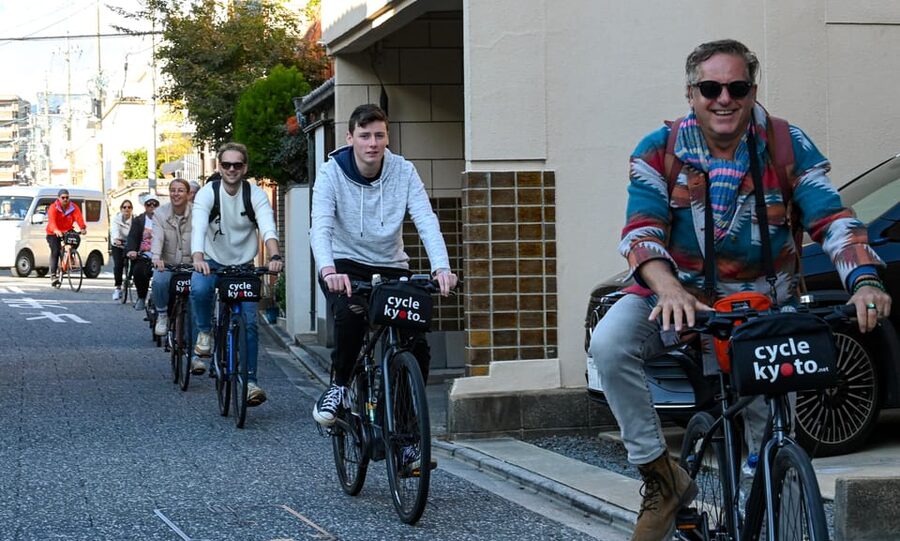
You do not need to be a serious cyclist, but you do need to be comfortable riding for much of a day. The route is described as generally flat and manageable on a regular bike. One participant who had worried about not using an e-bike found the standard bicycle easy to handle.
That does not mean the tour is effortless. The day includes riding, temple walks, photo stops, street awareness, and the final visit to Fushimi Inari. Warm weather can make the same distance feel harder, so bring water, sunscreen, a hat, and comfortable clothing.
E-bikes are available on request. Ask in advance rather than assuming one will be waiting on the morning of the tour. Children under 12, pregnant women, and people who cannot ride a bike should not book this experience.
Storage on the bikes is limited. Leave larger luggage at the secure shop space and carry only what you need for the day. High heels are not allowed, and smoking is not permitted.
Weather, timing, and group size
The tour begins at 9:30 AM sharp, and you should arrive by 9:15. A late arrival could affect the whole group because the route has many timed stops.
The tour does not operate in all weather conditions. In heavy rain, it is cancelled and refunds are provided. You should still dress appropriately for changing conditions, since a light shower or cooler morning may not lead to cancellation.
A group limit of nine is a useful middle ground. You get more guidance than on a large bus outing, but you are not receiving a private tour. The small size also matters on bikes, where keeping people together and safely parked is easier.
Cancellation is free up to 24 hours before departure for a full refund, and you can reserve now and pay later. Those policies help if your Kyoto plans are still shifting, but the key decision is your energy level. Do not book this simply because it covers many sights. Book it because you want to spend a full day moving between them.
Who should book this Kyoto bike tour?
I would choose this tour for a first visit, especially if you have limited time and want an overview of Kyoto’s major districts. It suits active couples, friends, and families with children aged 12 or older who can comfortably ride for several hours.
It is also a good fit if you want cultural explanation without a lecture-heavy format. The best parts are the transitions: cycling past ordinary streets, stopping at a small garden, eating at a local restaurant, then arriving at a famous shrine by bike rather than by another crowded bus.
I would hesitate if you want complete control over your day. The schedule is tight, and some stops are short. You should also think twice if you are uncomfortable cycling in an urban setting, though the route is described as safe and generally low traffic.
Should you book it?
Book this tour if you want to see Kyoto’s major sights while also getting into neighbourhoods and back streets that are easy to skip. The included lunch, Kinkaku-ji admission, bike, helmet, and small group help justify the $116 cost.
Skip it if your ideal Kyoto day means slow temple visits, long café breaks, or no physical exertion. For everyone else, this is a smart high-energy introduction, especially with an e-bike requested in advance if distance is a concern. Arrive early, pack lightly, wear proper shoes, and save some energy for Fushimi Inari.
FAQ
Where does the Kyoto bike tour start and finish?
The tour starts and ends at Cycle Kyoto.
What time does the tour start?
The tour starts at 9:30 AM sharp. You should arrive 15 minutes early.
How long does the tour last?
The listed duration is 450 minutes, or about seven and a half hours.
What language is the tour conducted in?
The live tour guide speaks English.
How many people are in the group?
The group is limited to nine participants.
What kind of bikes are provided?
The tour provides well-maintained cross bikes made by Giant and Trek.
Can I request an e-bike?
Yes. E-bikes are available upon request.
Is lunch included?
Yes. A traditional Japanese lunch is included, though the restaurant may vary based on availability.
Is the Golden Pavilion entrance fee included?
Yes. Admission to Kinkaku-ji, also called the Golden Pavilion, is included.
What happens in heavy rain?
The tour is cancelled in heavy rain, and refunds are provided. It does not operate in all weather conditions.
Can I bring large luggage?
Storage space on the bikes is limited, but larger luggage can be left in the secure shop space during the tour.
Who should not take this tour?
The tour is not suitable for children under 12, pregnant women, or people who cannot ride a bike.
Just added around Kyoto
- ONLY YOU in the Bamboo Forest! 4 hours E-bike tour with a local★ 5.0 · 45 reviews
- Pedal Adventure Kyoto’s iconic landmarks on an e-bike tour★ 5.0 · 189 reviews
- South Kyoto in a Nutshell: Gentle Backstreet Bike Tour!★ 5.0 · 225 reviews
- Explore Hidden Alleyway with a Local Expert (Afternoon Tour)★ 5.0 · 17 reviews
- The Beauty of Kyoto by Bike: Private Tour★ 5.0 · 47 reviews
- Secret Eastern Kyoto Biking Adventure★ 5.0 · 44 reviews
- Explore Hidden Alleyway with a Local Expert (Morning tour)★ 5.0 · 61 reviews
- Kyoto Bamboo Forest & Golden Pavilion E-Bike Tour★ 5.0 · 50 reviews
Kyoto Bike Tours, compared.
Arashiyama Bamboo Forest & Hidden Gems Bike Tour (Early Bird)
Read our review →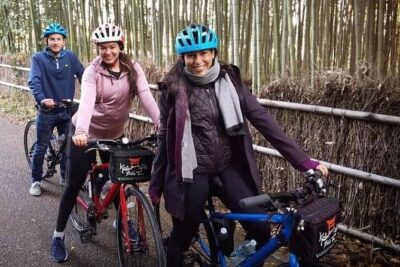
5 Top Highlights of Kyoto Full Day Bike Tour (E-bike option)
Read our review →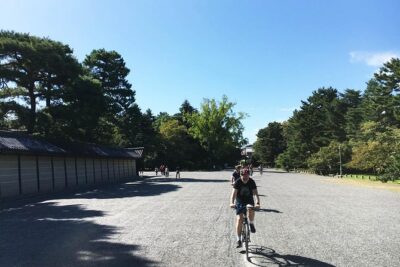
Full Day Biking Tour Exploring the Best of Kyoto
Read our review →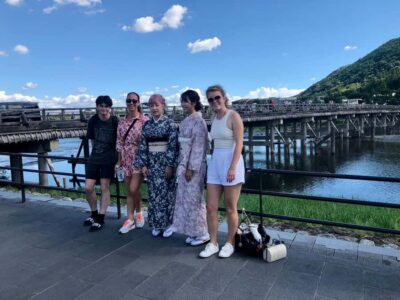
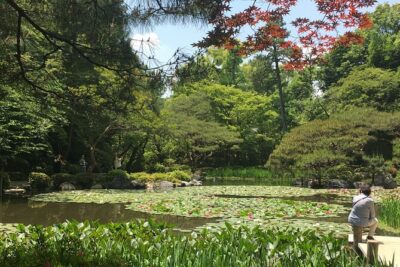
Afternoon Kyoto Bike Tour: Bamboo Forest, Monkeys & Hidden Spots
Read our review →Browse the lists this tour appears in