
REVIEW · INDONESIA
Bali: Kintamani Downhill Bike Tour, Jungle and Waterfalls
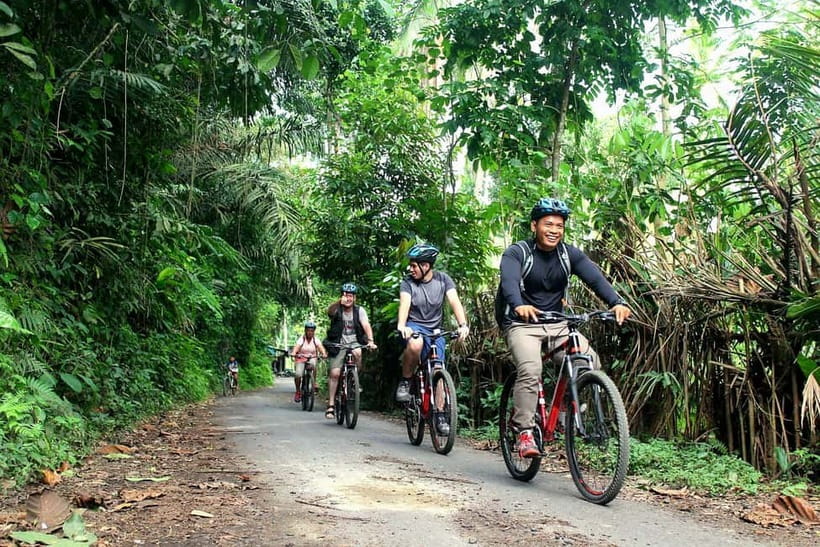
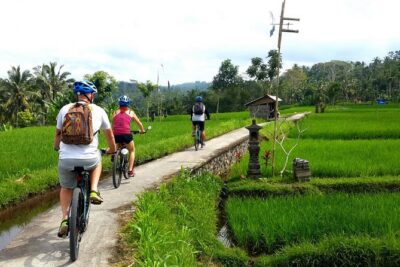
Kintamani gives you one of Bali’s best mountain views, but the real pleasure begins after you leave the volcano behind. You’ll roll downhill through bamboo forests, rice terraces, and quiet villages, stopping to see how Balinese families live and work. It is a soft-adventure day with plenty of culture built into the route.
I like the combination of easy cycling and genuine local contact. You visit a family compound, taste coffee and herbal tea, see traditional village customs, and finish with a fresh coconut and Balinese lunch. Guides such as Komang Oyik, Tonic, and Made have been praised for making the ride both friendly and informative.
The main thing to consider is that downhill does not mean effortless. You still need to ride a bicycle confidently, control your speed, and manage rural roads. Bike gloves are not listed as included, and one rider found that hands became uncomfortable after a while, so bringing your own pair is sensible.
Key points before you book
- Mount Batur starts the day: Take in views of the volcano, black lava fields, and crater lake before cycling.
- The route is mostly downhill: It suits most fitness levels, but you must be comfortable on a bicycle.
- Culture is part of the ride: Visit a family compound, see village temples, and learn about Hindu customs.
- Coffee and local produce add flavor: Stop for Balinese coffee, herbal teas, seasonal fruit, and fresh coconut water.
- Lunch comes in Taro: Finish among rice fields and jungle views with a traditional Balinese meal.
- Ubud pickup is included: Transfers from outside Ubud can be arranged for an added cost.
From Mount Batur views to the Taro countryside
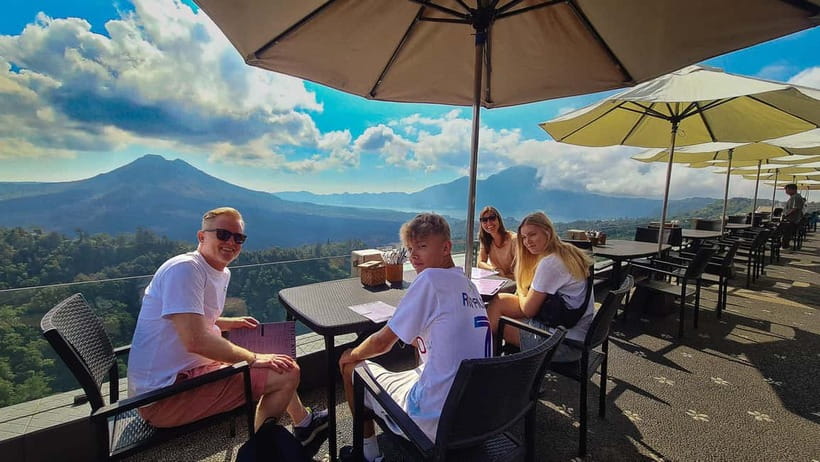
The day begins with pickup from your Ubud-area hotel or a designated meeting point. From there, you ride by vehicle toward Kintamani, a highland area known for Mount Batur, its crater lake, and broad views over black lava fields.
This opening stop matters because it gives you the volcanic setting behind Bali’s rural interior. Kintamani can be cool and cloudy compared with Ubud, so bring a light layer if you are sensitive to morning chill. An optional restaurant stop may be available for photos and a closer look at the view, but it is not presented as part of the included meal.
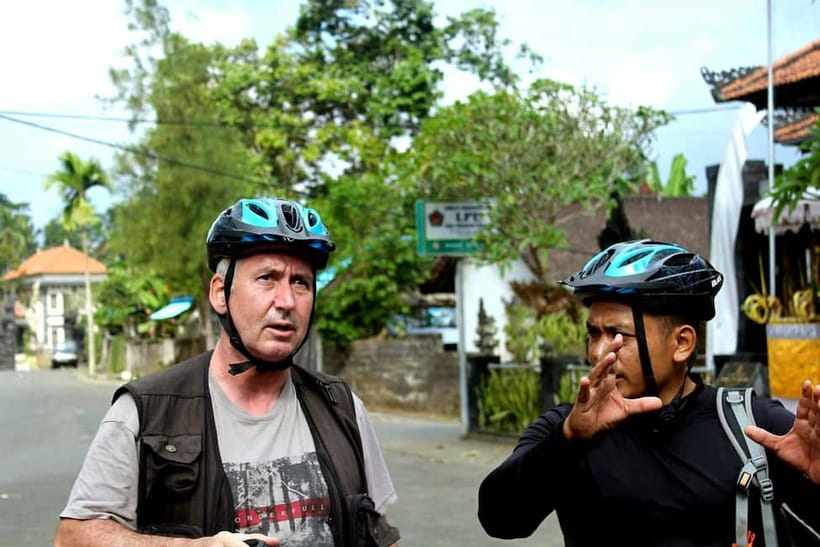
After reaching the bike starting point, your guide gives a short safety briefing and helps you get settled on a well-maintained mountain bike. The route then heads downhill toward Taro. You are not facing a long uphill cycling challenge, but you should still be ready for braking, turning, and changing road surfaces.
The pace is meant to be relaxed rather than athletic. You stop often, and the guide’s role is not only to lead the ride but also to explain the places along the way. That makes this a good option if you want to be active without spending the day on a demanding mountain route.
More Mountain Bike Tours in Indonesia
- From Ubud: Downhill Bike Tour with Rice Terraces and Meal
★ 4.9 · 664 reviews - Ubud: Downhill Cycling with Volcano, Rice Terraces and Meal
★ 5.0 · 536 reviews - Ubud: Downhill Bike Tour with Rice Fields, Volcano and Meal
★ 5.0 · 267 reviews
Coffee, bamboo, and the quieter side of Bali
One of the first useful stops is a local coffee plantation. You can taste several coffees and herbal teas while learning how Balinese coffee is prepared. This is more than a quick drink break: it gives you a simple introduction to local farming and to ingredients that are part of daily life in the highlands.
The tasting is included, but keep the usual commercial stop in mind. If you enjoy what you try, you may find products available to buy, so do not feel obliged to purchase anything. The value here is the chance to pause, ask questions, and try flavors you may not encounter at a standard café in Ubud.
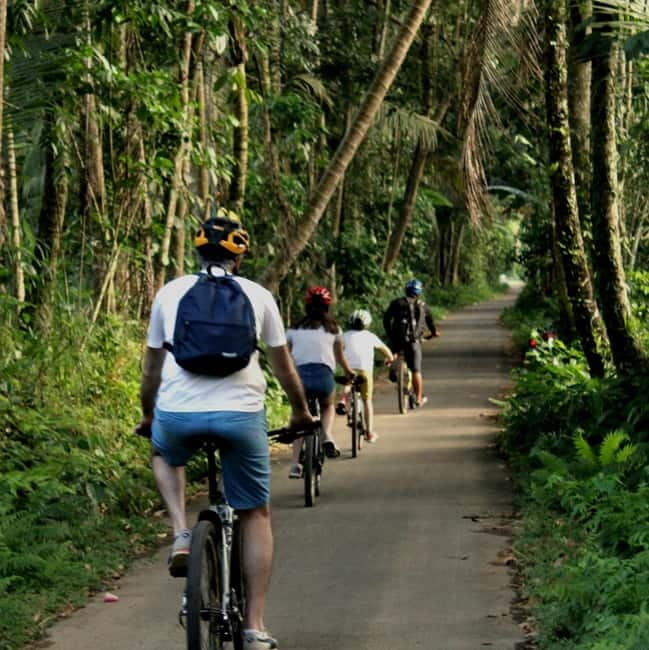
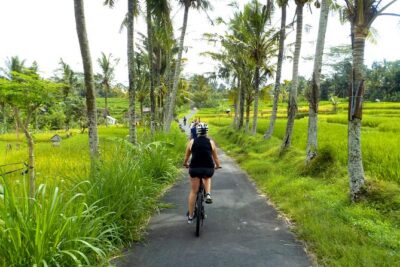
From there, the route passes through bamboo forest and jungle trails. Bamboo changes the feel of the ride. Instead of open roads and tourist traffic, you move through narrow green corridors with a strong sense of shade and quiet. It is one of the more pleasant parts of the trip for anyone who wants a break from Ubud’s busy streets.
The roads and trails are rural, so conditions may vary. You might encounter uneven surfaces, bends, or stretches where you need to use your brakes more often. Comfortable clothing, closed shoes, sunscreen, and insect repellent are practical choices. A camera is worth bringing, but keep it secure while riding.
Sacred cows and Balinese Hindu customs
The stop at the Holy White Cow Conservation Area adds an unusual detail to the day. These white cows are considered sacred and have a role in Balinese Hindu rituals. Your guide can explain why they matter, which is useful because the visit connects a visible part of village life with the island’s religious practices.
Bali’s Hindu traditions are woven into ordinary places. Temples, family shrines, offerings, ceremonies, and rules about sacred spaces are not separate from daily life here. A guide who knows the villages can explain these customs in plain terms, helping you understand what you are seeing instead of simply passing it on a bicycle.
The tour is conducted in English or Indonesian. Several guides have been praised for clear English and for taking care with individual riders. Made, in particular, has been described as someone closely connected with the community along the route. If you are interested in how traditional customs continue today, ask questions as you go. This is the part of the tour that gives the cycling a stronger purpose.
You should still be respectful around religious sites and family spaces. Follow the guide’s instructions, avoid touching objects unless invited, and dress comfortably but modestly. The supplied information does not list a formal dress code, so your guide is the best source for any site-specific guidance.
Inside a traditional Balinese family compound
The visit to a local family compound is one of the most valuable stops. You are shown the layout of a traditional Balinese home and given a sense of how architecture reflects family life, religious practice, and community structure.
This is not just a photo stop. A family compound can include several spaces with different uses, and the arrangement helps explain why Balinese homes look different from many houses you may see elsewhere in Southeast Asia. The guide can point out features and customs that would be easy to miss if you cycled past on your own.
The visit also gives the day a personal scale. Volcano views are impressive, but meeting people in their home environment tells you more about the island than a string of viewpoints. You may see daily rituals, traditional building details, or family areas that are not designed for mass sightseeing.
The experience depends on respectful interaction. This is a working home, not a museum, so listen carefully and avoid treating the visit as a staged performance. The cultural value comes from the exchange and the explanation, not from rushing through for a photograph.
Same city, a different ride:
- Electric Cycling Tour of Ubud with Free Hotel Transfer and Lunch
★ 5.0 · 1,397 reviews - Menoreh Village Cycling
★ 5.0 · 611 reviews - Ubud: Rice Terraces & Villages Half-Day Fat Tire E-Bike Tour
★ 4.9 · 602 reviews - Ubud eBikes Tour to Tegallalang Rice Terrace
★ 5.0 · 507 reviews
Rice fields, village artisans, and seasonal fruit
As you continue toward Taro, the ride moves through rice fields, plantations, and small settlements. You may see farmers tending the fields and local artisans working in their village setting. These scenes show a side of Bali that is easy to miss when you stay near beach resorts or spend all your time around central Ubud.
The route is especially good for seeing how close village life remains to agriculture. Rice fields are not simply pretty scenery. They support households, require careful water management, and shape the rhythm of work in the countryside. Your guide’s explanations help connect what you see to the customs and community life of the area.
There are also opportunities to try seasonal fruit. What is available can change, so do not expect one fixed tasting menu. That uncertainty is part of the appeal: you are sampling what is local and in season rather than receiving a standard snack chosen months in advance.
The artisan stop can be meaningful if you enjoy seeing practical skills up close. It is not described as a long workshop or guaranteed hands-on class, so think of it as a chance to watch and learn rather than a craft course. If you want more time at a particular stop, tell your guide early, since the group still needs to keep moving toward lunch.
Lunch in Taro, with fresh coconut water
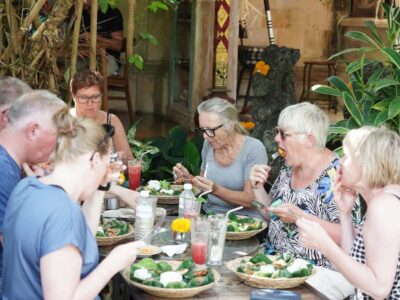
The ride ends in Taro, one of Bali’s oldest settlements. Here you sit down to a Balinese lunch in a peaceful natural setting, with rice fields and jungle views nearby. Fresh coconut water is included, which is a welcome finish after time on the bike.
Lunch is one of the strongest parts of the value. The tour costs $33 per person and includes the bike, helmet, Ubud-area transfers, entry to Kintamani, the guide, tastings, coconut water, and the meal. You are getting more than a short bike rental, especially when you add the transport and cultural visits.
The meal is served at a local warung or similar setting, based on the experience described. It is not a luxury restaurant outing, and that is the point. You are eating a traditional Indonesian meal in a quiet rural location rather than returning to a polished dining room in town.
If food is a major concern for you, ask about the meal when booking. The provided details call it a Balinese lunch but do not specify individual dishes or dietary options. Personal expenses are not included, so budget separately for anything you choose to buy along the way.
The optional fireflies add-on
Afternoon departures may offer an extension to see fireflies at twilight. This option gives the day a slower ending, shifting the focus from cycling and village visits to the natural setting after sunset.
The firefly add-on is not described as part of every departure, so confirm availability before you book. It also changes the timing of the day. If you choose it, you will need to be comfortable with a later finish and should plan your transport accordingly.
This is best viewed as a quiet extra rather than the main reason to choose the tour. The core experience already includes the volcano view, downhill ride, cultural stops, and lunch. The fireflies are a nice fit if you want a gentle end and are not in a hurry to return to Ubud.
What the $33 price really includes
At $33, this is strong value for a full cultural and cycling day, especially if you are staying in Ubud. The included pickup and drop-off remove the need to arrange a separate driver, and the package also covers Kintamani entry, equipment, food, and guide service.
The value is less straightforward if you are staying far from Ubud. Transport from outside the Ubud area costs extra, and one especially positive experience involved a pickup from Kuta with a separate driver arrangement. Confirm the additional cost for your area before paying, since the base price is tied to Ubud-area transport.
You should also remember that this is not a private luxury tour by definition. Group size is not stated, and individual experiences can vary depending on the number of participants and the guide assigned. Still, the route can work well for solo riders. One person received a one-on-one outing even though no other guests had booked that day.
The guide makes a large difference. Komang Oyik, Tonic, and Made are names associated with particularly strong guide experiences, though you should not assume one of them will lead your departure. The important quality to look for is a local guide who can explain village customs clearly and keep the cycling pace comfortable.
Fitness, equipment, and what to bring
The tour is described as suitable for most fitness levels because the route is downhill. That should not be confused with being suitable for non-riders. You must be able to ride a bicycle, steer, brake, and stay comfortable on rural roads.
Included equipment is a mountain bike and helmet. Bike gloves are not listed, and one rider found that some bike grips became uncomfortable after a while. If you have sensitive hands, bring padded cycling gloves. Comfortable clothing is also important, since you will spend a good part of the day outside.
Pack the following:
- Sunscreen
- Insect repellent
- Comfortable clothes
- A camera
- Bike gloves if you prefer extra hand support
Do not bring weapons or sharp objects, alcohol, or drugs. Personal expenses are separate from the tour price. Since the route includes stops at homes, religious places, and working villages, keep your belongings compact and easy to carry.
Who will enjoy this ride most?
I would recommend this tour to you if you want a first look at rural Bali without committing to a hard cycling challenge. It suits couples, active families, solo riders, and anyone staying in Ubud who wants a day away from traffic and café streets.
It is also a good fit if culture matters as much as scenery. The family compound, sacred cows, village artisans, rice fields, and guide commentary give the day more substance than a simple downhill ride.
You may want a different activity if you cannot ride a bicycle, dislike uneven rural roads, or want a tightly scheduled sightseeing tour with little free movement. This is an outdoor day, and weather, road conditions, group pace, and the exact timing of stops can affect how it feels.
The trip is also not the best choice if your main goal is serious mountain biking. The focus is gentle cycling and cultural contact, not technical descents, speed, or difficult trails.
Should you book the Kintamani downhill bike tour?
Book it if you want Mount Batur views at the start, a manageable ride through the countryside, and real contact with Balinese village life. The strongest reasons are the well-rounded route, the local guide, the family compound visit, and the lunch in Taro.
Before booking, confirm your pickup location, ask about the guide and group size if those details matter to you, and bring gloves if your hands tire easily. Also check the afternoon firefly option if that sounds appealing.
At $33 from Ubud, the tour offers a lot: transport, equipment, food, cultural stops, and a full day outside the town. It is not a pure cycling excursion and not a luxury food tour. It is a friendly, practical way to see Bali at a slower pace, with the bicycle carrying you from volcano country into village life.
FAQ
Where does the Kintamani downhill bike tour take place?
The tour begins in the Kintamani highlands and continues downhill toward Taro Village in Bali.
What can I see at Kintamani?
You can see Mount Batur, its crater lake, and black lava fields. An optional stop at a local restaurant may also provide time for photos and views.
Is hotel pickup included?
Free pickup and drop-off are included for hotels in the Ubud area or from a designated meeting point. Pickup from outside Ubud can be arranged for an additional cost.
Do I need to be an experienced cyclist?
No advanced cycling experience is stated as necessary, and the route is described as suitable for most fitness levels. You must be comfortable riding a bicycle.
What equipment is provided?
The tour includes a well-maintained mountain bike and helmet. Bike gloves are not listed as included.
Is lunch included?
Yes. A Balinese lunch and fresh coconut water are included at the end of the ride in the Taro area.
What languages are available?
The tour is available in English and Indonesian.
Can I see fireflies?
Afternoon tours may offer an optional extension to see fireflies at twilight. Availability should be confirmed when booking.
Can I cancel for a full refund?
Yes. You can cancel up to 24 hours in advance for a full refund.
More Downhill Runs in Indonesia
- Bali Downhill Cultural Cycling Tour
★ 5.0 · 224 reviews - Ubud: Downhill Cycling with Volcano, Rice Terraces, and Meal
★ 4.9 · 189 reviews - Bali Downhill Cultural Cycling Tour
★ 4.8 · 42 reviews - Waimea Canyon Downhill Bike Ride
★ 5.0 · 650 reviews
More Park and Nature Bike Tours in Indonesia
- NYC: Central Park Bike Rentals
★ 4.2 · 2,528 reviews - NYC: Central Park Bike Rental
★ 4.1 · 1,651 reviews - Central Park Bike Rental
★ 4.7 · 1,509 reviews - New York City: Highlights of Central Park Bike or eBike Tour
★ 4.6 · 800 reviews
Just added around Indonesia
- Ubud: Downhill Cycling with Volcano, Rice Terraces, and Meal★ 4.9 · 189 reviews
- Bali Downhill Cultural Cycling Tour★ 4.8 · 42 reviews
- Authentic Yogya Bicycle Tour★ 4.9 · 230 reviews
- Kotagede Royal Route – Cycling Tour★ 5.0 · 207 reviews
- Authentic Yogya Bicycle Tour★ 5.0 · 232 reviews
- Bali Downhill Cultural Cycling Tour★ 5.0 · 224 reviews
- Sanur Village E-bike Tour: Family-Friendly Adventure★ 4.6 · 85 reviews
- Electric Bike Tour in Ubud★ 5.0 · 281 reviews
Indonesia Bike Tours, compared.
Electric Cycling Tour of Ubud with Free Hotel Transfer and Lunch
Read our review →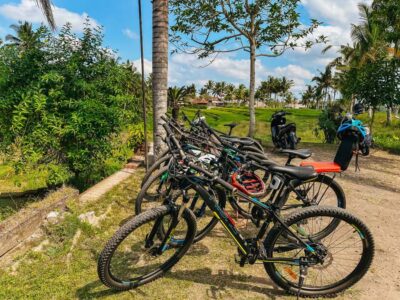

Rice Terraces & Villages Half-Day Fat Tire E-Bike Tour
Read our review →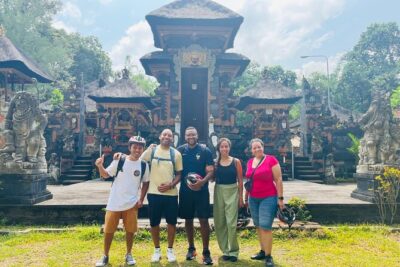
Half-Day Ubud Electric Cycling Tour to Tirta Empul Water Temple
Read our review →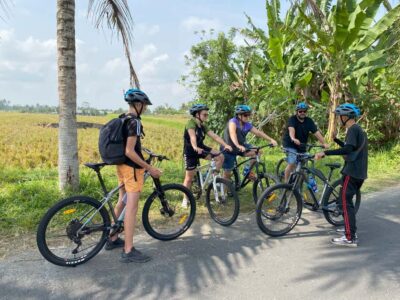
Downhill Bike Tour with Rice Fields, Volcano and Meal
Read our review →Browse the lists this tour appears in