
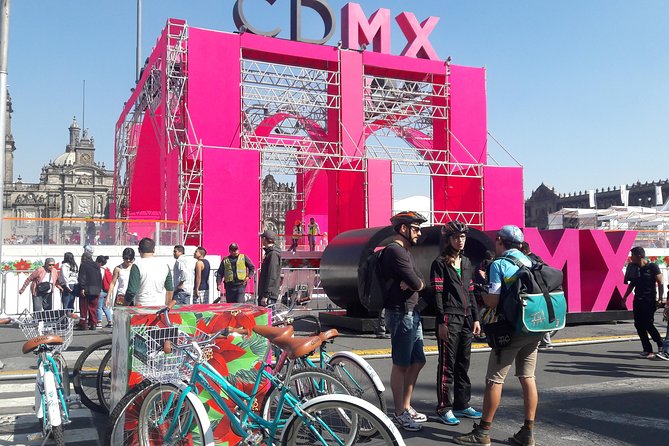
REVIEW · MEXICO CITY
Aztec Tlan – Heritage Bike Tour CDMX
Mexico City reveals itself quickly from a bicycle. This four-hour ride links Aztec origins with the Spanish cathedral, grand public buildings, markets, churches, and modern city life, giving you a useful first look at the historic center without spending the whole morning on foot. I like the small group limit of 10 and the guides’ local touch, especially guides such as Gabi and Pablo, who add stories, urban legends, and personal context.
I also like that the tour includes a bicycle, helmet, bottled water, and a proper street-food lunch. You can try tacos, quesadillas, tlacoyos, gorditas, or chilaquiles, with choices for dietary needs. The main drawback is the traffic and crowds. Some streets can feel tricky on a bicycle, even though the pace is generally easy and much of the route is flat.
Key points to know before you book

- You begin beside a bike lane near Alameda Central, so there is little fuss between fitting your bicycle and starting the ride.
- The route connects several eras of Mexico City, from pre-Hispanic temple ruins to the cathedral, historic markets, and ornate civic buildings.
- The maximum group size is 10, making it easier to ask questions and stay close to your guide.
- The ride is generally flat and relaxed, but crowded streets can still demand attention and confidence.
- Street food is part of the experience, with tacos, quekas, tlacoyos, gorditas, chilaquiles, and other choices included.
- There is no hotel pickup, and the tour starts and ends at Av. Paseo de la Reforma 24 in Centro.
Why a bicycle is a smart way to see central Mexico City

The historic center is compact enough to explore on foot, but it is also packed with details. A short walk might take you from a grand palace to a market entrance, a church, a modern storefront, and a surviving piece of pre-Hispanic Mexico. On a bicycle, you cover more ground and see how those places fit together.
That connection is the real value here. You are not simply stopping for photos at the Zócalo, then moving on to a cathedral. You are following the city’s layers through streets that still serve as commercial routes, meeting places, and working neighborhoods.
You start at Downtown Poray, at Av. Paseo de la Reforma 24. The team helps you choose a bicycle and get comfortable in the saddle. Step outside, and you are close to a bike lane leading toward Alameda Central, so the ride begins with a practical introduction rather than a long transfer.
Your guide gives safety advice before the group sets off. That matters in Mexico City, where a bicycle can be a wonderful tool but also requires awareness. The group is kept small, with no more than 10 people, and guides are used to helping riders move through changing street conditions.
More Historic and Landmark Bike Tours in Mexico:
- Mérida: Montejo Boulevard and Historic Center bike tour
★ 4.7 · 43 reviews - Mérida: The E-bike tour with history and culture
★ 4.9 · 36 reviews - Mexico City: Chapultepec & Reforma Historic Bike Experience
★ 4.5 · 30 reviews
Alameda Central and the first view of the old city
Alameda Central is described as the first urban park in the Americas, and it gives the tour a fitting opening. You get green space, open views, and a pause from the tight streets of Centro before reaching the grandest civic spaces.
This is also where the tour starts to show its method. Your guide does not simply point at a monument. The aim is to explain how public space, government, religion, and commerce shaped Mexico City over time.
The park is close to major landmarks, so you are soon riding into the heart of the historic center. The distance between sights is short, but the visual change is strong. One moment you have room to maneuver, and the next you are among pedestrians, vendors, facades, and traffic.
If you are not used to city cycling, pay close attention here and throughout the ride. The tour is described as an easy-paced, relatively flat outing, but that does not mean every street is effortless. One guide-led ride can feel calm and protected, while a crowded market area may require more concentration.
The Zócalo is more than a postcard
The Zócalo is one of the tour’s main anchors. It is not a small town square where you can take one quick photo and move on. Its scale is the point. The open plaza and surrounding buildings make it easier to understand the center as a political, economic, and religious core.
The Metropolitan Cathedral dominates one side. Its construction took three centuries, which helps explain the mix of architectural styles. As you look at it, you are seeing a building shaped by different periods rather than one clean design plan.
I find this kind of explanation far more useful than memorizing dates. You learn to look for changes in stonework, proportions, and ornament. The building becomes evidence of a long process, not just a backdrop for a selfie.
The Zócalo can also be crowded, so this is one place where your guide’s route choices matter. You may not linger in a single spot for long if conditions are busy. Still, the bicycle lets you approach the area efficiently and then continue to nearby streets that many first-time visitors miss.
Pre-Hispanic ruins and the Aztec foundation

The tour’s focus on Aztec origins gives the ride a clear purpose. Mexico City was built over the former Aztec capital, and the route brings that earlier city into the story through pre-Hispanic temple ruins.
The ruins are important because they prevent the historic center from becoming a purely Spanish colonial story. You see that the city did not begin with the cathedral or the grand government buildings. Those later structures occupy a place with an older identity and older foundations.
A guide can make this connection easier to grasp while you are moving through modern streets. The ride is not limited to one archaeological stop. Instead, the Aztec foundation becomes part of a larger story that includes Spanish rule, religious buildings, public architecture, markets, and present-day city life.
The exact amount of time at each stop depends on the group and street conditions. If ancient history is your main interest, ask questions early and tell your guide you would like extra context at the ruins. Guides such as Pablo have been praised for taking history seriously and for explaining the city in a way that suits people who want more than a quick overview.
More History Tours in Mexico:
- Private Historical Tour in the Sierra Santa Rosa by Bicycle
★ 5.0 · 28 reviews - Historical Singapore Bike Tour on Full-Sized Bicycles
★ 5.0 · 1,421 reviews - Barcelona: 2.5-Hour Bike or E-Bike Historical Tour
★ 4.5 · 1,262 reviews - Asheville Historic Downtown Guided Electric Bike Tour with Scenic Views
★ 5.0 · 1,234 reviews
Bellas Artes, Palacio Postal, and MUNAL

After the major plaza, the route moves through streets lined with some of Mexico City’s most recognizable buildings. Bellas Artes, Palacio Postal, and the MUNAL each bring a different architectural mood.
Bellas Artes is a natural stop for discussing the city’s arts scene and grand civic design. Palacio Postal draws attention through its detailed facade and ornate finish. MUNAL adds another layer because the building itself and the art inside it both contribute to Mexico City’s cultural importance.
You may not have time to tour the interiors during this bicycle outing. That is not a flaw so much as a matter of scope. The tour is designed to connect many sites in one morning, while a separate museum visit gives you time to study the collections.
I like this part of the route because it teaches you to read the city from the outside. Your guide can help identify architectural styles and point out details that are easy to miss from street level. You also get a better sense of why Mexico City is known for having an unusually large range of museums and cultural institutions.
Markets, churches, and streets beyond the standard route

The ride goes beyond the usual central plaza photo stop. Streets shaped by trade and local commerce give the tour a more everyday feel, and busy markets bring a different kind of history into view.
This part can be the most unpredictable. Market streets may be crowded, and one review described some sections as treacherous. At the same time, that close contact with working city streets is part of what makes a bicycle useful. You are not sealed inside a vehicle or confined to a single monument district.
The guides have also taken groups to churches, monasteries, and less familiar plazas. One rider was surprised by a synagogue from the 1940s, though you should treat such additions as possible extras rather than fixed promises. The route can change with traffic, time, and the guide’s judgment.
That flexibility is useful. A local guide may notice an opening, a quieter street, or an architectural detail that does not appear in a standard sightseeing plan. Ask questions as you ride. Gabi, Pablo, and Dany have each been singled out for clear explanations, local stories, and a strong interest in the city.
The guides are central to the experience

This is not a ride where the bicycle does all the work. The guide shapes the morning. You need someone who can explain the past, manage a group, and keep riders comfortable around traffic.
Gabi has led family outings and has been praised for allowing time for questions instead of rushing from stop to stop. Pablo is especially suited to people who enjoy history and want to connect the Aztec period with later churches, markets, and buildings. Dany has been described as bringing obvious enthusiasm to the city and sharing details that even some residents may not know.
The provider describes its guides as multilingual, but the tour is offered in English. That makes it a practical choice for English-speaking visitors who want a local perspective without arranging a private guide.
A small group helps here. With up to 10 people, you can usually hear the explanations and ask for clarification. It also gives the guide a better chance to notice if someone is having trouble with the route or needs a slower pace.
What the cycling feels like in practice

The ride is generally flat and conducted at an easy pace. That makes it suitable for many people who can participate in ordinary sightseeing, including families and solo visitors. You do not need to treat it as a fitness outing.
Still, city cycling is different from riding on a quiet path. Streets may be crowded, and conditions can change quickly around markets and central landmarks. Follow the safety instructions, keep your attention on the group, and do not assume that a bike lane removes every concern.
The bicycle and helmet are included, and the staff helps you feel comfortable before leaving the shop. That fitting process is worth taking seriously. A poor saddle position or unfamiliar bicycle can make four hours feel much longer.
The ride also gives you more sensory contact with the city. You hear street activity, pass storefronts at a human pace, and can stop near places that would be awkward to reach by car. The tradeoff is that you are exposed to the weather and street conditions. The supplied information does not specify rain arrangements or a clothing list, so check the forecast and dress for several hours outdoors.
Street food makes the finish more satisfying
Lunch is included, and it is not an afterthought. You can choose among Mexican street-food staples such as tacos, quesadillas, tlacoyos, gorditas, and chilaquiles.
That variety is useful if your group has different tastes. It is also helpful for dietary restrictions, since the tour specifically offers options intended for different needs. One rider noted that an onion allergy was handled well, but you should still tell the guide about your restriction before ordering.
The food adds context to the route. After seeing markets and commercial streets, you get to taste the everyday cooking that gives those areas their character. It also saves you from having to find a restaurant immediately after four hours of cycling.
Bottled water is included as well. Since the ride lasts about four hours, take advantage of it and ask for clarification about the food choices before settling in. The exact lunch stop and menu can vary, so do not book this expecting one fixed dish.
Price, timing, and practical details
At $78.81 per person, this is not the cheapest way to see central Mexico City. The price becomes easier to justify if you want several services bundled together: a bicycle, helmet, guide, bottled water, a small group, and lunch.
A self-guided ride would cost less, but it would not give you the historical explanations, route planning, or local anecdotes. You would also need to handle navigation and food on your own. For a first morning in Mexico City, the guided structure can be worth paying for.
The tour starts at 9:00 a.m. and lasts about four hours. A morning departure is useful because it gives you the afternoon for a museum, a longer meal, or another neighborhood. It also places you in the center early in the day, though market streets and public spaces may still become crowded.
The tour starts and ends at Av. Paseo de la Reforma 24, Colonia Centro. There is no hotel pickup or drop-off, so plan your own way to the meeting point. The location is near public transportation, which helps, but the tour does not include transport from your hotel.
Confirmation is provided when you book, and free cancellation is available if you cancel at least 24 hours before the start time. Cancellations inside that window are not refunded, and changes made within 24 hours are not accepted.
Who should book the Aztec Tlan ride
I would choose this tour if you want a broad introduction to central Mexico City and prefer movement to a long walking tour. It suits solo visitors, couples, families, and anyone who likes to ask questions while seeing a lot in one morning.
It is especially useful for first-time visitors who want to understand how Aztec, Spanish, and modern Mexico City fit together. It also works well for history fans, since the guides can go beyond the basic monument facts.
You should think twice if you dislike riding in traffic, have trouble balancing on a bicycle, or want extended indoor time at museums. The route is mostly easy and flat, but it is still an urban ride, not a quiet recreational path.
FAQ
How long does the Aztec Tlan Heritage Bike Tour last?
The experience lasts approximately four hours.
What time does the tour start?
The listed start time is 9:00 a.m.
Where does the tour begin and end?
It begins at Av. Paseo de la Reforma 24, Colonia Centro, Cuauhtémoc, Mexico City. The activity ends back at the same meeting point.
Is a bicycle provided?
Yes. Use of a bicycle and helmet is included.
Is lunch included?
Yes. Street-food lunch is included, with choices such as tacos, quesadillas, tlacoyos, gorditas, and chilaquiles. Options are available for different dietary restrictions.
How many people can join the tour?
The tour has a maximum of 10 travelers per booking and is operated as a small-group experience.
Should you book it?
Book it if you want a lively, efficient introduction to Mexico City’s historic center, with real street life between the major landmarks. The combination of Aztec ruins, the Zócalo, the cathedral, ornate buildings, markets, local stories, and street food gives you more context than a simple monument-to-monument ride.
The strongest reason to choose it is the guide. Gabi, Pablo, and Dany bring different personalities, but the useful pattern is the same: local knowledge, time for questions, and care with city cycling. Just arrive ready for crowds, pay attention to safety advice, and remember that the route is an urban ride. For many visitors, $78.81 is a fair price for four hours of history, food, and practical orientation by bicycle.
Just added around Mexico
- Bike tour in the Chapultepec Forest and Roma Condesa★ 4.5 · 20 reviews
- Michelin Taco Bike Tour: Roma Norte & Condesa /All-Inclusive.★ 5.0 · 100 reviews
- The best of Mexico City Bike Experience EXPRESS★ 5.0 · 22 reviews
- Bike Tour in Mexico City★ 5.0 · 45 reviews
- Teotihuacán plus Bike Tour★ 5.0 · 114 reviews
- Teotihuacan Hot Air Balloon Ride with Optional Bike or Walking Tour★ 5.0 · 144 reviews
- Mexico Off the Beaten Track: Street Food & Bikes — All Inclusive★ 5.0 · 14 reviews
- Private Ebike Tour in Chapultepec Forest in CDMX★ 5.0 · 14 reviews
Mexico City Bike Tours, compared.
Frida Kahlo VIP [Museum Tickets Included] Bike, Markets & Churros
Read our review →
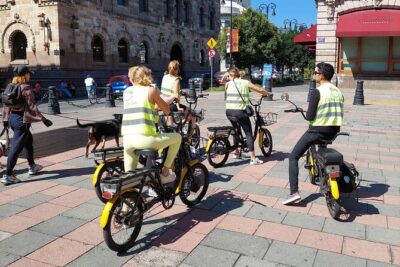
Mexico City E-Bike Tour with a taco and churros stop
Read our review →
Mexico City; ART NACO : Murals & Street Art Bike Tour
Read our review →
Mexico City Highlights E-Bike Tour With Foodie Stops
Read our review →
Street Food Bike Tour / Mexico is not only Tacos / All Inclusive
Read our review →Browse the lists this tour appears in