
REVIEW · MEXICO
Mérida: Montejo Boulevard and Historic Center bike tour
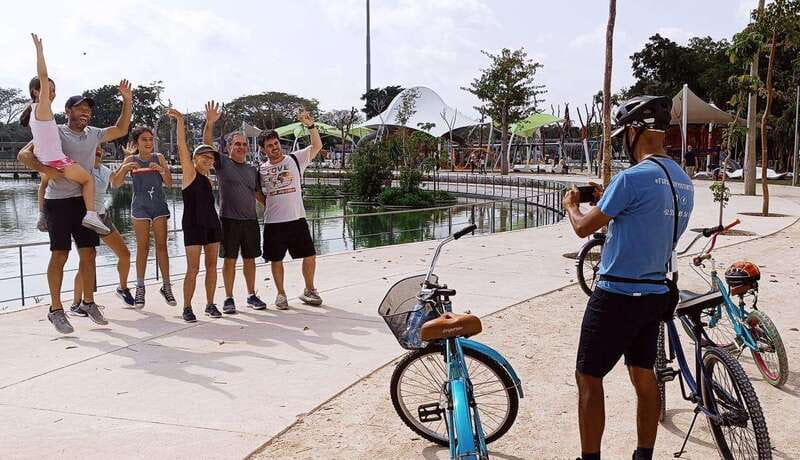
Mérida is spread out enough that walking can turn sightseeing into a sweaty march. This 2.5-hour bicycle tour fixes that neatly, taking you from the tree-lined Paseo de Montejo to the colonial center, with stops at grand mansions, the Monument to the Homeland, Plaza Grande, and La Plancha. I like the easy, flat route and the chance to hear useful restaurant and cultural tips from Ivan, a guide who clearly enjoys explaining his city.
I also like the small-group feel, the shaded stopping points, and the cold fruit drink included at a local market. The main caution is the equipment: most riders praise the gentle pace and safety, but two people found the bicycles worn and below the standard of other city bike tours.
Key points to know before you book
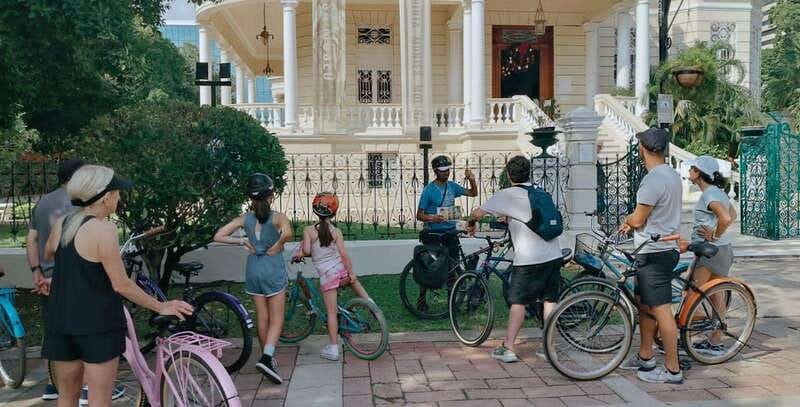
- A flat 4-mile route: You cover about 7 kilometers without hills, using bike lanes for much of the first half.
- Ivan brings the history to life: He explains Mérida’s Maya, colonial, and Yucatecan past in English or Spanish and answers questions in detail.
- The tour links two very different Méridas: Paseo de Montejo brings grand 19th-century mansions, while the center brings the cathedral, Casa Montejo, parks, and busy streets.
- A drink is included: You stop for a non-alcoholic fruit drink or similar refreshment at a colorful local market.
- Family equipment is available: Children’s bikes, child seats, adult tricycles, and tandem bikes are offered, subject to the group’s needs.
- Bike quality may vary: Check your brakes, seat height, and tires before setting off.
Why a bicycle works so well in Mérida
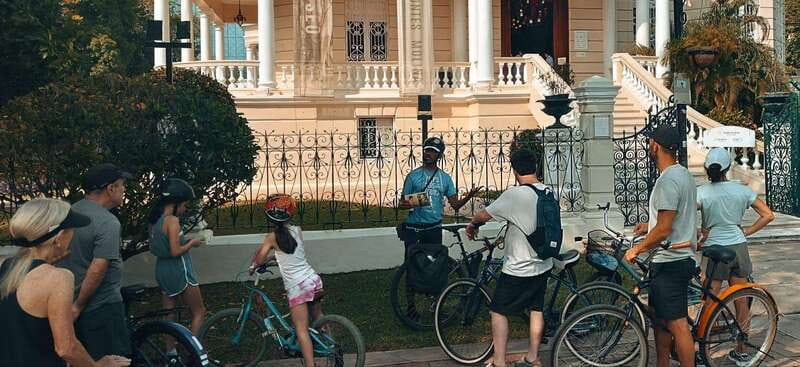
Mérida’s main sights are not all clustered around one square. Paseo de Montejo begins north of the historic center, and the ride between the two areas gives you a useful sense of the city’s scale. By bicycle, you can cover the distance without spending your energy on hot sidewalks.
The route is about 4 miles, or 7 kilometers, and the ground is entirely flat. That makes this a gentle ride rather than a fitness challenge. You will still be outside in Yucatán heat, so bring water, wear light clothing, and use the shade whenever the guide stops to talk.
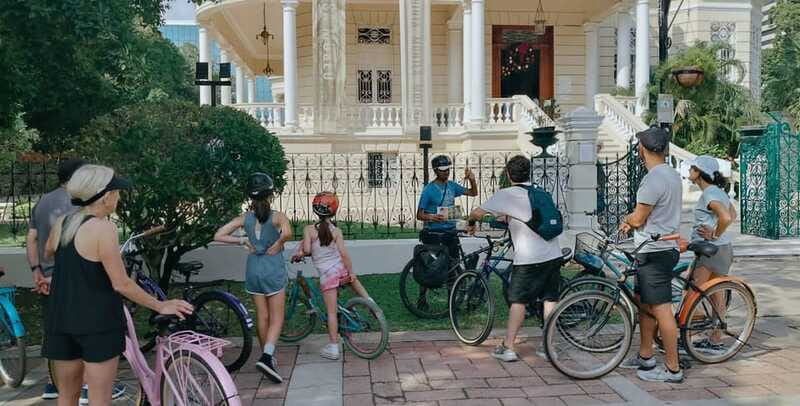
The first section follows bicycle lanes along an avenue lined with trees and palms. The shade is not constant, but it helps. The guide rides at the front and uses a speaker so you can hear explanations while moving. One useful detail from the ride is the handheld laser pointer used to indicate details on buildings and monuments from a distance.
You should still pay attention to the group. One rider noted that the group sometimes spread out, making it harder to hear or regroup. If you fall behind, let the guide know rather than trying to catch up quickly in traffic.
More Historic and Landmark Bike Tours in Mexico:
- Mérida: The E-bike tour with history and culture
★ 4.9 · 36 reviews - Mexico City: Chapultepec & Reforma Historic Bike Experience
★ 4.5 · 30 reviews - Private Historical Tour in the Sierra Santa Rosa by Bicycle
★ 5.0 · 28 reviews
Meeting outside Palacio Cantón
The meeting point is the corner of Calle 43 and Paseo de Montejo, outside the Museo Regional de Antropología, Palacio Cantón. The bikes are not necessarily lined up directly at the museum entrance, so wait at the stated corner for the guide rather than wandering around looking for a rental shop.
The guide sorts out the bikes before departure. Different sizes and colors are available, and the seat can be adjusted to your height. Helmets are provided, according to one rider who needed a larger frame for someone over 6 feet tall.
The equipment list is unusually broad. Children’s bicycles are available, along with seats for small children aged two and five. There are also adult tricycles, with two passengers riding in the back and one person pedaling and steering from the front, plus tandem bicycles.
That range can make the outing workable for families and mixed-ability groups, but you should not treat it as suitable for every rider. It is not designed for people who cannot ride a bicycle, wheelchair users, people with epilepsy, or those with a low level of fitness. The supplied information also lists weight limits of 309, 331, and 350 pounds in different places, so confirm the applicable limit before booking.
Before you leave, test the brakes and make sure the seat is comfortable. Most of the ride is relaxed, but a poorly adjusted bicycle will make even a short route unpleasant.
Paseo Montejo and the Monument to the Homeland
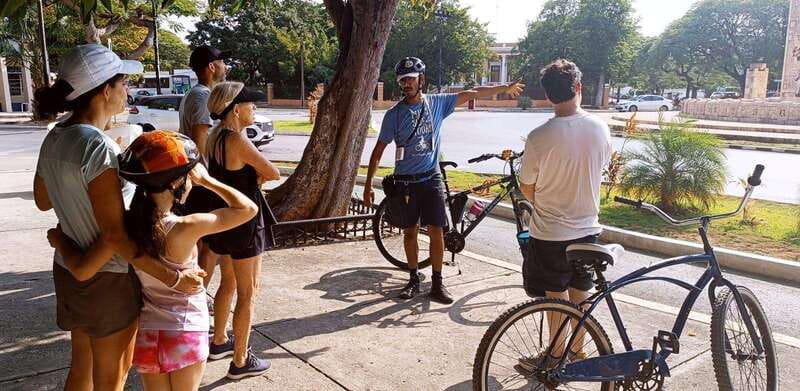
Paseo de Montejo is the grand opening section of the tour. Trees and palms line the avenue, and the bicycle lanes make this the easiest part of the ride. The boulevard reflects Mérida’s prosperous 19th-century period, when henequen, often called green gold, made local landowners wealthy.
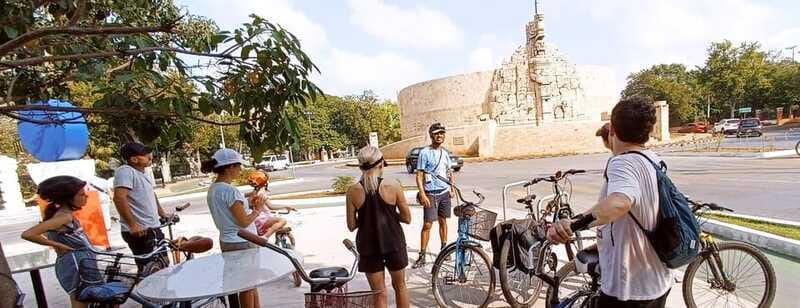
The first major stop is the Monument to the Homeland. You have about 15 minutes for an explanation and photographs. This is not just a quick statue stop. The monument is packed with carved scenes and figures tied to Mexico’s story, so a guide helps you understand what you are looking at instead of leaving you with a large stone wall and a camera.
The stop also gives you a chance to cool down in the shade. Expect a short talk, then time to look closely and take pictures. Since the monument is presented as a unique site in Mexico, it is one of the tour’s better photo opportunities.
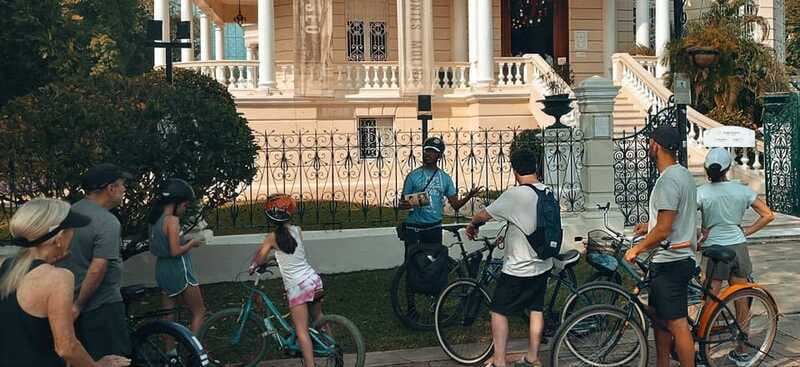
Afterward, you ride back along Paseo de Montejo and pause at four mansions. These houses are part of what makes the boulevard special. Their scale and decoration show how much money flowed through Mérida during the henequen era, but the guide also explains who lived in them and how those families connected to the city’s economic high point.
This is where Ivan’s historical focus matters. The houses can look like a string of handsome façades if you pass them alone. With context about their owners and the period that produced them, the avenue becomes a record of Yucatán’s social and commercial past.
The advertised stop includes around 20 minutes of break time along Paseo de Montejo. Use it for photos, water, and questions. You do not spend the entire tour pedaling, and that is a good thing in Mérida’s heat.
From the boulevard to Plaza Grande
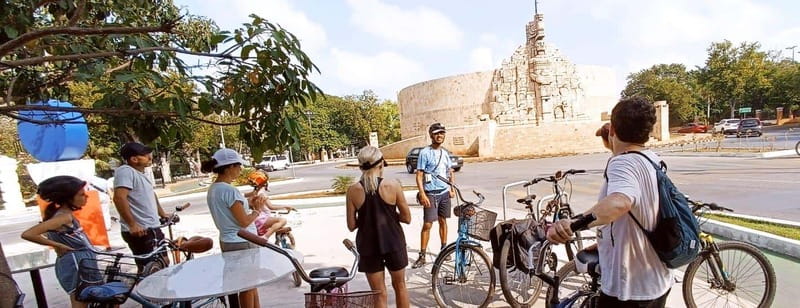
The second half uses a safe street toward Mérida’s historic center. Conditions can change with traffic, weather, and the day’s route, but the tour is designed to keep the pace manageable. The guide gives directions and points out landmarks through the speaker while riding at the front.
Arriving at Plaza Grande changes the mood. Paseo de Montejo is broad and formal. The central square feels more compact, with colonial buildings, public parks, and daily city life gathered close together. The tour gives you about 15 minutes of guided explanation here.
You will see the Cathedral of Mérida and the buildings around the square, including Casa Montejo, the former home of the conquistador Francisco de Montejo and his family. The exact amount of time spent at each façade is short, so this is an introduction rather than a full interior visit.
That distinction matters. If you want to spend an hour inside a museum or cathedral, this tour will move too quickly for that. If you want a clear first look at the city’s main landmarks, the bicycle format works well. You can return later on foot to explore whichever building catches your attention.
More History Tours in Mexico:
- Historical Singapore Bike Tour on Full-Sized Bicycles
★ 5.0 · 1,421 reviews - Barcelona: 2.5-Hour Bike or E-Bike Historical Tour
★ 4.5 · 1,262 reviews - Asheville Historic Downtown Guided Electric Bike Tour with Scenic Views
★ 5.0 · 1,234 reviews - Historic Athens: Small Group Electric Bike Tour
★ 4.9 · 966 reviews
Casa Montejo and Mérida Cathedral
Casa Montejo receives roughly 10 minutes of guided attention. Its façade is among the most memorable colonial sights around Plaza Grande, with elaborate stone carving and imagery connected to the conquest. Ivan’s explanation helps separate the architectural details from the complicated story behind them.
The Cathedral receives a shorter stop of about five minutes. That is enough for an exterior introduction and a few photographs, but not a full architectural study. The brief timing keeps the tour moving, yet it also means you should plan a separate visit if you want to go inside and look carefully.
I like this balance for a first day in Mérida. You get a map of the central sights without giving up the boulevard, neighborhood streets, and market stop. The ride is best understood as an orientation tour with substance, not as a museum replacement.
The central streets can also be the least relaxed part of the route. Traffic is described as light on the streets used by the group, and drivers have generally been patient around cyclists, but you should remain alert. Keep close to the group and follow the guide’s hand signals and directions.
La Plancha and the local refreshment stop
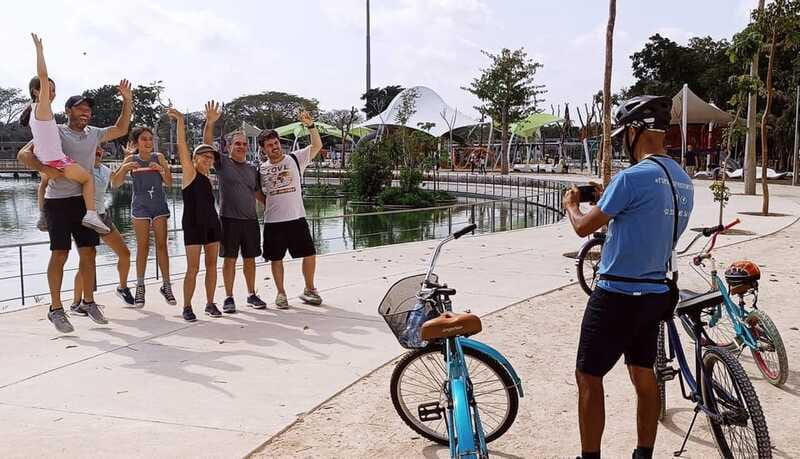
The itinerary includes a 25-minute visit to La Plancha, with time for photographs and explanation. This gives you a look beyond the most obvious colonial monuments and adds a more modern public-space stop to the day.
The experience also includes a non-alcoholic drink at a market in a historic neighborhood, either halfway through or near the end. The description identifies Santa Anna market as the refreshment stop, where you can choose a fruit drink. Past riders have also enjoyed fresh coconut or cold juice, but your exact choice can vary.
This short pause is more useful than it may sound. A cold drink gives you a break from the sun, and the market setting adds color and ordinary local activity to a route otherwise focused on monuments and mansions. You can ask Ivan for restaurant, bar, and cultural recommendations while you cool off.
The market stop is not a full food tour. Do not book this expecting a long tasting session or a sit-down meal. Think of it as a practical refreshment and a chance to see a neighborhood that many first-time visitors might skip.
What Ivan adds to the ride
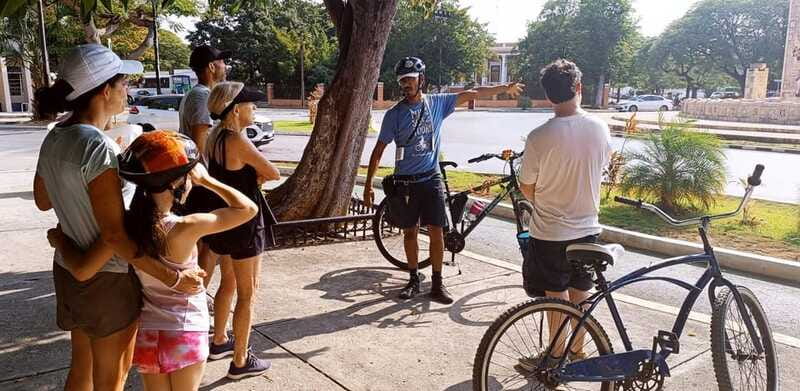
The strongest part of this experience is the guide-led storytelling. Ivan explains Mérida’s colonial past, Maya culture, Mexican history, and the people connected to the buildings along the route. His English is described as clear, and the tour is also offered in Spanish.
He makes a point of learning names and asking where people are from, which helps a small group feel less anonymous. He also answers questions at length, so you will get more from the ride if you arrive with a few things you want to understand.
His practical advice is just as useful as the formal history. Ask about restaurants, bars, later sightseeing, and places to visit in your next destination. The guide has also followed up with restaurant and lodging suggestions after the tour, although you should regard that as a personal touch rather than a guaranteed service.
Safety is another repeated strength. Ivan watches the group, keeps the pace gentle, and stops when people need a break. The speaker means he does not have to shout while riding, though you should stay close enough to hear clearly.
The only notable guide-related caution is group spacing. If riders spread out, a moving explanation becomes harder to follow. Stay toward the middle of the group, signal if you need to stop, and ask for a repeat at the next shade break.
Price, pace, and practical value
At $40 per person, the tour is priced above a basic bicycle rental but includes far more than the wheels. You get a guide, a planned 7-kilometer route, historical interpretation, bike-lane riding, several stops, and a non-alcoholic drink.
I consider that fair value if you want orientation and context in one outing. A rental bike could be cheaper, but you would need to plan the route, find the landmarks, judge the safest streets, and research the mansions and monuments yourself. The tour also saves you from walking the full distance between Paseo de Montejo and the center in the heat.
The value is less clear if you already know Mérida well or prefer to stop for long periods at each site. The cathedral stop is brief, the main buildings are mostly seen from outside, and the tour keeps moving. It is a strong introduction, not a slow architectural study.
The standard duration is 2.5 hours. High heat or rain may change the route for safety, but not the stated duration. Starting times vary, so check availability when booking. Free cancellation is available up to 24 hours before the tour, and you can reserve now and pay later.
Who should book this Mérida bike tour?
I would choose this for a first or second day in Mérida, especially if you want to understand how Paseo de Montejo relates to the historic center. It suits adults and families who can ride at an easy pace and want history mixed with practical local advice.
The child seats, tandems, tricycles, and smaller bikes make it more flexible than many urban bike tours. Still, ask about the exact equipment when booking if your child needs a special setup. The stated restrictions exclude wheelchair users and people unable to ride, and the heat can be demanding for anyone with low fitness.
Bring comfortable clothes, water, and a hat. Wear shoes that stay secure on the pedals. Alcohol and drugs are not allowed, and the included drink is non-alcoholic.
Should you book it?
Book this tour if you want a relaxed way to see a large section of Mérida, hear clear historical explanations, and collect restaurant ideas for the rest of your stay. The flat route, shaded stops, small-group format, and guide Ivan’s attention to safety give it a lot going for it.
Skip it if you want premium rental equipment, long interior visits, or a strenuous ride. The bicycle quality can vary, and the central stops are introductions rather than extended tours. For most first-time visitors who can ride comfortably, $40 buys a useful city orientation with real local context and a welcome cold drink at the end.
FAQ
Where does the Mérida bike tour begin?
It begins at the corner of Calle 43 and Paseo de Montejo, outside the Museo Regional de Antropología, Palacio Cantón.
How long is the tour?
The tour lasts 2.5 hours and covers about 4 miles, or 7 kilometers.
Is the route difficult?
The entire route is flat. The pace is described as gentle, but you still need to be able to ride a bicycle and manage warm outdoor conditions.
Which languages are available?
The tour is offered in English and Spanish.
Are bicycles included?
Yes. Bicycles are included, with different sizes and adjustable seats. Children’s bikes, child seats, adult tricycles, and tandem bikes are also available.
What sights will I see?
The route includes the Monument to the Homeland, Paseo de Montejo mansions, Plaza Grande, Casa Montejo, Mérida Cathedral, La Plancha, and other historic buildings and parks.
Is a drink included?
Yes. You receive one non-alcoholic drink, generally a fruit drink or similar refreshment at a local market.
Just added around Mexico
- Puerto Vallarta: Bikes and Bites Tour★ 5.0 · 27 reviews
- Oaxaca: Guided Bike Tour to the Largest Tree in the World★ 5.0 · 16 reviews
- Oaxaca City: Bike Tour with Professional Guide+Art workshop★ 4.8 · 23 reviews
- Mexico City: Guided Bike Tour of Culture and Local Taste★ 5.0 · 14 reviews
- 🟢Street Food Bike Tour Mexico City🟢★ 5.0 · 15 reviews
- Mexico City: Private Chapultepec Park Bike Tour★ 4.8 · 16 reviews
- Electric Bike City Tour with a taco stop.★ 4.9 · 58 reviews
- Mexico City: Chapultepec & Reforma Historic Bike Experience★ 4.5 · 30 reviews
Mexico Bike Tours, compared.

Electric Bike Beach Adventure with Tequila Tasting and Lunch
Read our review →![Frida Kahlo VIP [Museum Tickets Included] Bike, Markets & Churros](https://7.thebiketraveler.com/wp-content/uploads/frida-kahlo-vip-museum-tickets-included-bike-markets-churros-400x267.jpg)
Frida Kahlo VIP [Museum Tickets Included] Bike, Markets & Churros
Read our review →
UTV Adventure with Free Camel Ride and Sky Bikes
Read our review →
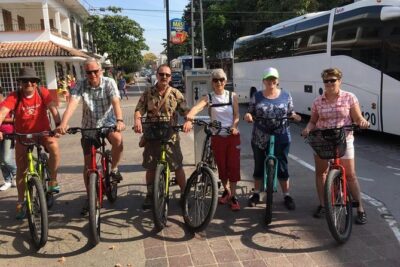
Bikes and Bites: Taco Bicycle Tour in Puerto Vallarta
Read our review →
UTV, Free Horseback Ride, and Sky Bike Adventure Combo
Read our review →Browse the lists this tour appears in