
REVIEW · KYOTO
South Kyoto in a Nutshell: Gentle Backstreet Bike Tour!
South Kyoto’s best moments often come between the famous sights. This small-group bike ride uses narrow lanes and quiet backstreets to connect Nishi Honganji, Gion, Tofukuji Temple, Takase Canal, and Fushimi Inari Shrine without making you follow a map or spend the morning waiting for buses.
I like the maximum group size of eight, which makes it easier to hear the guide and stay together. I also like the practical setup: a Cannondale bike, helmet, and bottled water are included, and guides such as Jay, Kevin, Indra, Juan, and others bring plenty of local color to the ride.
The main caution is pace. You cover a lot in three to four hours, so some stops are brief. If you want long temple visits or extended photo time in Gion, this tour may feel rushed.
Key points to know before booking

- Ride through Kyoto’s quieter lanes: You see parts of the city that buses cannot reach and cover more ground than you would on foot.
- Visit five distinct Kyoto sights: The route includes Nishi Honganji, Takase Canal, Gion, Tofukuji Temple, and Fushimi Inari Shrine.
- Keep the group small: A maximum of eight people allows for clearer instructions and a more personal outing.
- Expect a gentle but active morning: The terrain is described as manageable, but you must be comfortable riding a bicycle.
- Bring your camera, but watch the clock: Gion and Fushimi Inari offer fine photo opportunities, though the schedule keeps moving.
- Pay for convenience, not just transportation: At $79.59, the price covers equipment, route planning, and a guide who connects the sights with stories.
Why a bike is a smart way to see South Kyoto

Kyoto is easy to admire and surprisingly easy to lose time in. A temple may look close on a map, yet a walk between sights can take longer than expected, and buses can be crowded or slowed by city traffic. A bicycle gives you another option.
This route is especially useful because it links places that feel quite different. You move from a major Buddhist temple to a canal, then into Gion, across to a Zen temple, and finally to one of Kyoto’s most famous Shinto shrines. On foot, that combination can consume much of a day. By bike, you get a broad first look in about half a day.
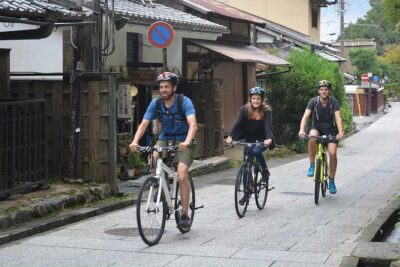
The ride also takes you through narrow side streets. That matters in Kyoto. The main roads can be noisy and busy, while the back lanes show a quieter side of the city, with traditional buildings, small waterways, and ordinary residential streets. You are not simply ticking off monuments. You are seeing how the monuments fit into the city around them.
The group size helps here. With no more than eight riders, the guide can give traffic instructions, adjust the route around crowds, and answer questions without shouting to a large pack. Several guides named in the feedback, including Jay, Kevin, Indra, Juan, Sam, Jaime, Carl, Shaun, Thierry, Julian, Paul, and Quin, were praised for combining sightseeing with cultural explanation. The exact guide depends on the departure, but the experience is clearly designed around the person leading the ride.
A few more bike tours around Kyoto worth a look
- Hidden Kyoto E-Biking tour
★ 5.0 · 1,843 reviews - Bike Tour Exploring North Kyoto plus Lunch
★ 5.0 · 1,087 reviews - Arashiyama Bamboo Forest & Hidden Gems Bike Tour (Early Bird)
★ 5.0 · 613 reviews
Starting at Cycle Kyoto at 9:00 a.m.
You meet at Cycle Kyoto, located at 7 Higashikujō Nishisannōchō in Kyoto’s Minami Ward. The activity begins at 9:00 a.m. and finishes back at the same meeting point.
The opening 15 minutes are used to meet the guide and the rest of the group, fit the bike, and get ready. This is not wasted time. A properly adjusted saddle and a helmet that fits well make a noticeable difference over several hours.
The supplied bike is a high-quality Cannondale, and bottled water is included. You need to be at least 13 years old and comfortable riding a bike. The tour is described as gentle, and one rider called the terrain manageable, but this is still an active outing. You should be happy riding near other cyclists, pedestrians, and city traffic.
Listen closely to the opening safety instructions. One guide was specifically praised for explaining how to interact with pedestrians and traffic, and that guidance is part of what makes a guided city ride more comfortable. Stay alert, keep your distance, and do not treat the ride as a race.
Nishi Honganji: a grand first stop

The first major stop is Nishi Honganji, one of Kyoto’s less-visited religious sites and home to one of the largest wooden buildings in the world. You have about 15 minutes here.
That short visit works well as an introduction to Kyoto’s religious architecture. The scale of the wooden buildings gives you an immediate sense of the city’s long Buddhist tradition, without the crush that can surround its most famous temples.
There is a tradeoff. Fifteen minutes is enough to enter, look around, hear the guide’s explanation, and take a few pictures. It is not enough for a slow architectural study or a long period of quiet reflection. Think of this as a carefully chosen stop that adds depth to the day, not a full temple visit.
I like that Nishi Honganji comes early. It gets you beyond the standard list of Kyoto’s most crowded attractions and shows that the city’s important religious sites are not limited to the places printed on every postcard.
Along Takase Canal by bicycle

From Nishi Honganji, the route follows the peaceful Takase Canal. The guide explains the canal’s place in Kyoto’s past, and you get time for photographs along the water.
This is one of the tour’s most appealing transitions. Instead of jumping from one major attraction to another on a main road, you ride beside a narrow waterway and let the city unfold at a slower pace. The canal section also gives you a break from temple courtyards and shrine crowds.
The ride along the canal is a good example of why this experience costs more than simply renting a bicycle. You could find the waterway yourself, but you would need to work out the route, understand what you are seeing, and manage the connections between stops. Here, the guide handles that work while you concentrate on the ride and the view.
Photo stops can vary according to the group and the day. If you see something worth capturing, speak up early rather than waiting until the group has moved on.
Same city, a different ride:
- 5 Top Highlights of Kyoto Full Day Bike Tour (E-bike option)
★ 5.0 · 511 reviews - Full Day Biking Tour Exploring the Best of Kyoto
★ 5.0 · 498 reviews - Kyoto: Memory Kyoto E-Bike Tour
★ 4.8 · 297 reviews - E-Bike Tours of the highlights of Kyoto!!!
★ 5.0 · 291 reviews
Gion: a short look at Kyoto’s geisha district

The route continues to Gion, Kyoto’s famous geisha district. You stop for around 15 minutes and learn about the area’s traditional entertainment world. You might catch sight of a maiko, but no sighting is promised.
Gion is best approached with respect and patience. This is a working neighborhood, not a stage set. The guide can help explain what you are seeing and how to behave around pedestrians and entertainers. Keep photography polite, avoid blocking narrow lanes, and follow the guide’s instructions.
The bike makes it possible to reach Gion without dedicating an entire morning to walking there from another part of town. Still, this is one place where the schedule may feel tight. One rider felt there was not enough time for photos and to absorb the atmosphere. That criticism is fair. Gion rewards lingering, and a 15-minute stop gives you a glimpse rather than a full exploration.
I would treat this visit as an orientation. You learn the layout, hear the cultural background, and note where you may want to return later on foot. If Gion is your main reason for booking, plan a separate visit after the tour.
Tofukuji Temple and its famous bridge views

Tofukuji Temple is next, with about five minutes allocated to the stop. It is one of Japan’s oldest and largest Zen temples, and the bridge offers attractive views across the temple grounds.
The setting gives you a quick look at the spacious design of a major Zen complex. Even with only a short stop, you can appreciate the scale and the relationship between the temple buildings, the bridge, and the surrounding grounds.
Five minutes is clearly a photo and orientation stop. You will not have time to explore every building or spend time in quiet contemplation. That may disappoint anyone hoping for a full temple visit, but it keeps the overall ride moving toward Fushimi Inari.
This is where the tour’s format becomes clear. You are sampling several important places rather than settling into one site. For a first morning in Kyoto, that can be a smart choice. For a slower cultural tour, it may feel too compressed.
Fushimi Inari Shrine: the grand finale

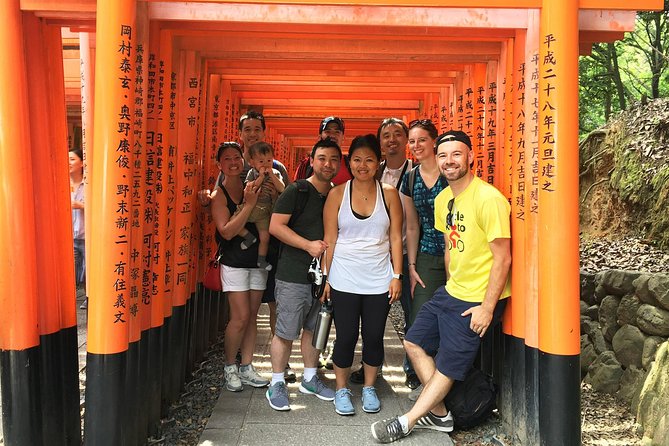
Fushimi Inari-taisha is the final major stop, with around 25 minutes to see the shrine area. Its famous rows of red torii gates draw large crowds, and the guide chooses a practical route through the busy sections.
The advantage of arriving by bike is not that you avoid every crowd. You do not. The advantage is that you arrive with a guide who knows how to make the most of limited time and can point you toward a useful path instead of leaving you to sort out the shrine on your own.
Twenty-five minutes is enough to get a strong first impression, take photographs, and learn why the shrine matters. It is not enough to walk far up the mountain trails. If you want to reach the quieter upper sections of Fushimi Inari, return separately with more time and comfortable walking shoes.
This final stop also gives the tour a memorable finish. After canals, temple buildings, and Gion lanes, the torii gates provide a bold visual change. You leave with a clear sense of South Kyoto’s variety, even though no single location receives a full morning.
What the guide adds to the ride
The guide is the difference between a pleasant bike rental and a useful Kyoto introduction. The strongest feedback focused on guides who explained Japanese culture, religious customs, local history, and everyday life in clear terms.
Jay received repeated praise for his storytelling, humor, and ability to explain Gion and the city’s shrines and temples. He has also helped with a restaurant reservation. Juan was noted for making an extra stop at the original Nintendo card company after learning that a young rider liked Nintendo. Another guide, who was also an ordained Shinto priest, offered a particularly personal explanation of religion and culture.
Those details show the range of the experience. Some guides may focus on history and architecture. Others may add personal stories, language tips, restaurant advice, or small route changes based on the group. One guide even taught basic Japanese counting.
The route can also change slightly to suit crowds and the group’s schedule. That flexibility is useful, though it has a limit. A guide must keep a small group together, and an extended conversation or extra stop can reduce time elsewhere. One less positive experience felt that too much chatting replaced a possible additional stop. That is a fair consideration if you prefer a tightly timed sightseeing program.
Price, pace, and the real value
At $79.59 per person, this is not the cheapest way to get around Kyoto. You are paying for more than the bicycle. The price includes a Cannondale bike, helmet, bottled water, a planned route, a guide, and a small group capped at eight.
The value is strongest if you want an efficient first look at southern Kyoto. You avoid spending hours planning connections between sights, and you can cover more ground than on foot. The guide also gives context that you would miss on a self-guided ride.
The value is weaker if you already know Kyoto well, prefer to stop whenever you like, or want long visits inside temples and shrines. In that case, renting a bike independently may give you more freedom for less money.
Some participants used an e-bike upgrade and found it helpful, especially in hot weather. The standard tour information highlights a Cannondale bicycle but does not promise an e-bike, so confirm availability before booking if assisted cycling matters to you.
The departure is in the morning, and the ride lasts roughly three to four hours. That leaves the afternoon open for a longer temple visit, lunch, shopping, or a return to Gion or Fushimi Inari. For many people, that half-day format is just right.
Who should book this Kyoto bike tour?
I would recommend it to first-time Kyoto visitors who want a broad introduction without spending the day on crowded buses. It also suits active couples, families with children aged 13 or older, and anyone who likes learning while moving.
It is a good choice if you are comfortable on a bicycle and want to see local streets between the major sights. The ride has been described as relaxed rather than punishing, and riders have completed it in hot, chilly, and rainy conditions. Still, the experience depends on good weather, so dress for the forecast and expect the activity to be canceled or moved if conditions are poor.
I would hesitate to recommend it to anyone with limited cycling confidence, anyone seeking a private tour, or anyone who wants a detailed visit inside each temple. The group is small, but it is not private, and the schedule is built around several short stops.
The mobile ticket is convenient, and confirmation is provided when you book. The meeting point is near public transportation. Most people can participate, but the age and cycling requirements matter.
Should you book South Kyoto in a Nutshell?
Book this tour if you want to get your bearings fast, see several important South Kyoto sights, and hear useful cultural background from a personable guide. The best parts are the backstreet riding, the small group, the canal route, and the chance to connect places that are awkward to combine on foot.
Do not book it expecting a slow temple tour. Gion and Tofukuji receive short visits, and Fushimi Inari is only an introduction to a much larger shrine complex. If you accept that tradeoff, the $79.59 price is reasonable for a well-organized half-day that gives you both exercise and a clear sense of the city.
Free cancellation is available up to 24 hours before the 9:00 a.m. start time. Changes or cancellations inside that window are not refunded, and poor weather or an insufficient number of bookings can lead to a rescheduled date or full refund.
FAQ
Where does the bike tour start and finish?
The tour starts at Cycle Kyoto, 7 Higashikujō Nishisannōchō, Minami Ward, Kyoto, 601-8003, Japan. It finishes back at the same meeting point.
What time does the tour begin?
The scheduled start time is 9:00 a.m. The activity lasts approximately three to four hours.
What equipment is included?
A high-quality Cannondale bicycle, helmet, bottled water, and use of the bicycle are included.
What sights does the route visit?
The route includes Nishi Honganji, Takase Canal, Gion, Tofukuji Temple, and Fushimi Inari-taisha Shrine.
How many people can join the tour?
The activity has a maximum of eight participants.
What age and cycling ability are required?
Riders must be at least 13 years old and comfortable riding a bicycle. Most people can participate if they meet those requirements.
Can I cancel for a full refund?
Yes. You can cancel at least 24 hours before the experience start time for a full refund. If bad weather or an insufficient number of bookings causes the provider to cancel, you will be offered another date or a full refund.
Just added around Kyoto
- ONLY YOU in the Bamboo Forest! 4 hours E-bike tour with a local★ 5.0 · 45 reviews
- Pedal Adventure Kyoto’s iconic landmarks on an e-bike tour★ 5.0 · 189 reviews
- Explore Hidden Alleyway with a Local Expert (Afternoon Tour)★ 5.0 · 17 reviews
- The Beauty of Kyoto by Bike: Private Tour★ 5.0 · 47 reviews
- Secret Eastern Kyoto Biking Adventure★ 5.0 · 44 reviews
- Explore Hidden Alleyway with a Local Expert (Morning tour)★ 5.0 · 61 reviews
- Kyoto Bamboo Forest & Golden Pavilion E-Bike Tour★ 5.0 · 50 reviews
- KIYOTO’s Kyoto Private E-Cycling Tour: Highlights & Hidden Gems★ 5.0 · 48 reviews
Kyoto Bike Tours, compared.
Arashiyama Bamboo Forest & Hidden Gems Bike Tour (Early Bird)
Read our review →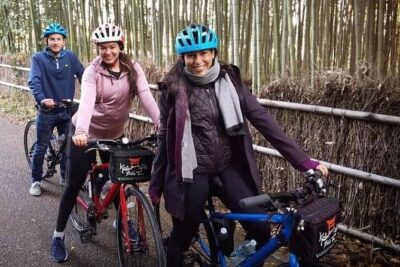
5 Top Highlights of Kyoto Full Day Bike Tour (E-bike option)
Read our review →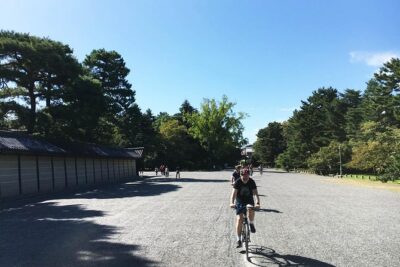
Full Day Biking Tour Exploring the Best of Kyoto
Read our review →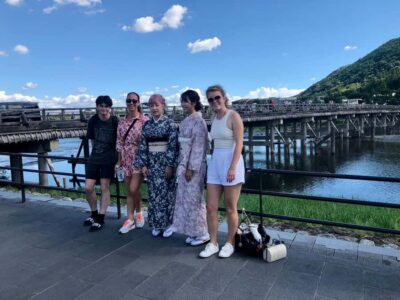
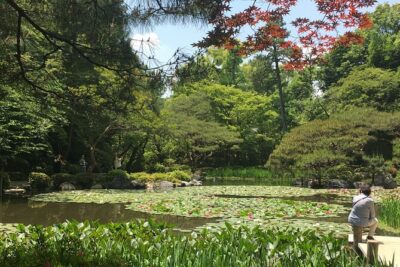
Afternoon Kyoto Bike Tour: Bamboo Forest, Monkeys & Hidden Spots
Read our review →Browse the lists this tour appears in