

REVIEW · KYOTO
Kyoto Shogun Cycling Tour
Kyoto’s Shogun Cycling Tour links three major sights with a pleasant ride through the city. You’ll see the gold-covered Kinkakuji, the quiet gardens of Toji-in, and Nijo Castle, where the Tokugawa Shogunate ruled in Kyoto. The route is described as an easy downhill ride, which makes this a more relaxed way to cover ground than walking all day.
I like the small private-group format, limited to two to six people per guide. I also like the way the tour connects beautiful places with the political story behind them, from Ashikaga power at Kinkakuji and Toji-in to the final Shoguns at Nijo Castle.
The main consideration is price: at $153.50 per person, this is not a cheap bike rental. You are paying for a guide, three admissions, equipment, and a carefully planned route, so it makes the most sense if you want context and company rather than simply a bicycle.
Key points to know before you book

- Three major Kyoto sights: Kinkakuji, Toji-in, and Nijo Castle all have included admission.
- An easy downhill route: The ride is designed to be manageable for most competent cyclists.
- Private groups of two to six: You ride only with your own party and guide.
- Strong guide reports: Guides including Seiya, Makoto, Nozomi, Yutaka Kaneda, and Yasunobu Yagyu are praised for clear English, local insight, and a friendly manner.
- Rain does not automatically cancel the ride: You can continue by bicycle with a free poncho or switch to a walking tour using public transportation.
- The tour ends near Kyoto Station: The start is in the Kinugasa area, while the finish is at the Kyoto Cycling Tour Project terminal.
Why this route works for seeing Kyoto
Kyoto can be tiring to explore. Its famous temples are spread across several districts, and a day on foot can turn into a long series of bus rides and crowded sidewalks. This tour gives you a bicycle, a guide, and a route that links important places without asking you to plan every turn.
The historical thread is useful, too. Kinkakuji is tied to the Ashikaga Shoguns. Toji-in is connected with the Ashikaga family and offers a much quieter setting. Nijo Castle brings the story forward to the Tokugawa Shogunate and the period when the Shogun system began to end.
You are not simply checking off three attractions. You are moving through different expressions of power in Kyoto: a glittering pavilion, a Zen temple with restrained beauty, and a formal castle built for political authority. That gives the morning or afternoon a sense of shape.
The tour lasts about three and a half hours. Each stop is allocated roughly an hour, with the final 90 minutes at Nijo Castle. That timing gives you more than a quick photo stop, though it is still a fairly brisk visit if you like to linger in temple gardens.
A few more bike tours around Kyoto worth a look
- Hidden Kyoto E-Biking tour
★ 5.0 · 1,843 reviews - Bike Tour Exploring North Kyoto plus Lunch
★ 5.0 · 1,087 reviews - Arashiyama Bamboo Forest & Hidden Gems Bike Tour (Early Bird)
★ 5.0 · 613 reviews
Starting in Kinugasa and getting on the road

The meeting point is Wara Tenjin mae in Kinugasa, in Kyoto’s Kita Ward. This is not at Kyoto Station, so check the route carefully before setting out. The tour finishes at the Kyoto Cycling Tour Project terminal near Kyoto Station, making the end convenient if you are continuing by train or heading back toward the station area.
The start and finish being in different parts of Kyoto is useful, but it also means you should plan your arrival rather than simply stepping out of your hotel and joining the ride. The meeting point is near public transportation, according to the supplied tour details.
Your guide provides the bicycle, helmet, and rainwear. The information describes the route as easy and downhill, but you still need to ride safely on the road without help. Children must be at least 10 years old, at least 145 centimeters tall, and able to cycle independently in traffic.
The small-group limit matters here. Two to six people per guide should allow the guide to keep an eye on the group and adjust explanations to your interests. Groups of seven to 12 can be accepted if an extra guide is arranged. A single-person booking is not accepted.
Kinkakuji, Kyoto’s golden opening scene
The first stop is Kinkakuji, usually called the Golden Pavilion. The pavilion is covered in gold leaf and reflected in the pond, making it one of Kyoto’s most recognizable sights. Your admission is included, and the visit includes a walk through the gardens around the building.
The pavilion’s connection to the Ashikaga Shoguns gives the first stop real purpose. It was once linked to the center of government for the Ashikaga rulers, so the gold is not just decoration. It expresses wealth, authority, and the taste of a powerful medieval leader.
You should expect this to be the most visually dramatic stop. The grounds provide several angles on the pavilion, and your guide can explain what you are seeing rather than leaving you to take a picture and move on. The allocated hour is helpful, since you have time for the building, the gardens, and the path through the grounds.
The drawback is that Kinkakuji is one of Kyoto’s most famous attractions, so it can feel more formal and heavily visited than Toji-in. The tour does not promise a quiet visit or a private viewing. Come for the striking architecture and the historical setting, not for solitude.
Toji-in and the quieter side of Zen beauty

Toji-in changes the mood. It is the resting place of the Ashikaga family and is known for its garden and small teahouse. The guide takes you inside the historic temple, giving you a chance to sit with the setting rather than only viewing it from outside.
This is where the idea of wabi-sabi becomes useful. The style values restraint, age, simplicity, and the beauty of things that are not perfectly polished. After Kinkakuji’s bright display, Toji-in offers a gentler lesson in Japanese aesthetics.
The temple hall and garden are central to the visit. Zen masters once contemplated the world in this setting, with the groomed garden and teahouse providing a calm view. I like the contrast between the two temples: one speaks through gold and royal display, the other through quiet lines and controlled space.
The guide’s role is especially valuable here. Gardens can look simple until someone points out how the composition works. The supplied information does not name every feature you will discuss, so you should expect interpretation from the guide rather than a formal gardening class.
Toji-in is also a good reason to choose this tour instead of only visiting Kyoto’s headline sights. Kinkakuji may be the picture you already know, but Toji-in gives the route a more personal and reflective stop.
Same city, a different ride:
- 5 Top Highlights of Kyoto Full Day Bike Tour (E-bike option)
★ 5.0 · 511 reviews - Full Day Biking Tour Exploring the Best of Kyoto
★ 5.0 · 498 reviews - Kyoto: Memory Kyoto E-Bike Tour
★ 4.8 · 297 reviews - E-Bike Tours of the highlights of Kyoto!!!
★ 5.0 · 291 reviews
Nijo Castle and the end of the Shogun era

The final stop is Nijo Castle, with about 90 minutes set aside for the visit. This was the Kyoto residence of the final Shoguns and the setting for major events that helped shape Japan’s political future.
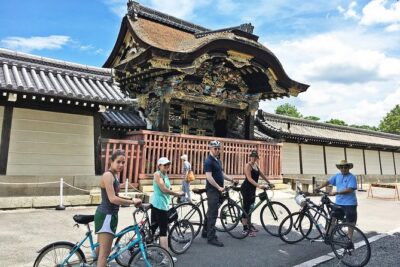
The castle brings a different kind of beauty. Expect ornamental carvings, formal buildings, and broad grounds rather than the quiet garden focus of Toji-in. The place was built to display authority and receive important people, so its design tells you a great deal about how the Shogunate presented itself.
Nijo Castle also gives the tour its historical payoff. At Kinkakuji, you learn about Ashikaga power. At Toji-in, you see the family’s memorial and Zen setting. At Nijo Castle, the story reaches the Tokugawa rulers and the closing chapter of the Shogun system.
The extra half hour here matters. Nijo Castle is larger in scope than a single pavilion or temple hall, and rushing through it would flatten the experience. Your guide leads you through the grounds, pointing out the buildings and decorative work.
If you prefer gardens and quiet rooms to political history, Nijo Castle may be the least intimate stop. Still, it rounds out the day well, and the finish near Kyoto Station makes it easy to continue exploring after the ride.
The guides make or break the experience

The guide names associated with this experience include Seiya, Yanai-san, Makoto, Yutaka Kaneda, Yasunobu Yagyu, Kaz, JJ, and Nozomi. The supplied comments describe clear English, strong local knowledge, humor, and a warm manner.
Seiya is described as especially good at handling a mixed group that included a 12-year-old. That is useful if you are traveling with an older child who may lose interest during long temple explanations. Makoto is noted for being personable and for adding time when a local festival fit the route.
Nozomi is praised for explaining Shinto and Buddhist temples, Gion, and the Imperial Palace on cycling routes. Yasunobu Yagyu is described as offering local insight into Kyoto, its people, and its culture. These details suggest that the company’s guides can add more than directions and dates.
The guides are not interchangeable in personality, of course, and you may not receive a particular person. But the repeated pattern is clear: English communication and a friendly approach are important strengths of the experience. The tour works best when you ask questions, since a private format gives you more room to shape the conversation.
Cycling in heat and rain

Kyoto summers can be hot, and one report specifically describes cycling in very warm conditions. You should take that seriously. Even an easy route can feel demanding when the air is humid and you are riding in the sun.
Rain does not automatically end the tour. You can continue on bicycles with a free rain poncho, or switch to a walking tour that uses buses or the metro. That flexibility is a real advantage for a city where weather can change your plans quickly.
The tour includes rainwear, but it does not include a matcha service. That means you should not book this expecting a tea tasting as part of the temple visit. The focus is cycling, guided sightseeing, and historical explanation.
The supplied details do not specify bicycle models, storage arrangements, or refreshment stops. Bring what you need for several hours outdoors, and wear clothing that works for both riding and temple visits. A helmet is included.
Is $153.50 a fair price?

At $153.50 per person, this costs much more than hiring a bicycle for a few hours. The comparison is not quite fair, though. The price includes the bike, helmet, rainwear, admission to Kinkakuji, Toji-in, and Nijo Castle, plus a private guide for about three and a half hours.
For two people, the total cost is substantial. In return, you get a private experience rather than a large group, and you do not need to work out the route between three major sights. If you value clear explanations and want to ask questions as you go, the price can make sense.
For a larger group, the value improves because one guide can serve up to six people. A group of friends or family members can share the private format while avoiding the cost of separate guides.
I would not choose this tour solely to save money. I would choose it to save planning time, cover several important places, and gain a connected understanding of Kyoto’s Shogun-era story. If you are happy with self-guided visits and public buses, you can explore more cheaply.
Who will enjoy this ride most?
This tour suits you if you want a guided introduction to Kyoto and are comfortable riding a bicycle on the road. It is especially useful for a first visit, when the city’s size and many temple choices can be confusing.
Families with children aged 10 and older may like the movement between sites. The guide reports suggest that an engaging guide can keep a young teenager involved, but your child must meet the height requirement and ride safely without assistance.
It also suits couples and small groups who prefer private touring. You can ask about architecture, Buddhism, Shogun politics, or local customs without trying to be heard in a large crowd.
It is less suitable if you cannot ride independently, want a very slow garden visit, or dislike being outdoors in hot weather. It is also not the right pick if you want a matcha experience, since that service is not included.
Booking, weather, and cancellation details
This is a private activity, with two to six people accepted per guide. Confirmation is sent within 48 hours of booking, subject to availability. The tour can operate in rain, with the choice of bicycles and ponchos or walking with public transportation.
The supplied terms contain a conflict worth clarifying before payment. One section says you can cancel at least three days before the tour, by 18:00 Japan time, for a refund. The stated cancellation policy also says the experience is non-refundable and cannot be changed for any reason. Because those conditions do not match, confirm which rule applies to your booking.
If the minimum number of participants is not met and the operator cancels, you are offered another date or experience, or a full refund.
Should you book the Kyoto Shogun Cycling Tour?
Book it if you want an active, guided route through three important Kyoto sights and like the idea of learning the political story behind the buildings. The private group, included admissions, rain plan, and generally well-regarded guides add real value.
Skip it if your priority is the lowest possible price, a slow and solitary temple visit, or a tea ceremony. For most confident cyclists making a first Kyoto visit, though, this is a smart way to see more of the city without turning the day into a map-reading exercise.
FAQ
How long does the Kyoto Shogun Cycling Tour last?
The tour lasts approximately three hours and 30 minutes.
What sights are included?
The tour visits Kinkakuji Temple, Toji-in Temple, and Nijo Castle.
Are admission tickets included?
Yes. Admission is included for Kinkakuji, Toji-in, and Nijo Castle.
What equipment is provided?
The tour provides a bicycle, helmet, and rainwear.
Is the tour private?
Yes. Only your own group participates. Two to six people can join each guide, and an additional guide can be arranged for groups of seven to 12.
Where does the tour start?
It starts at Wara Tenjin mae in Kinugasa, Kita Ward, Kyoto.
Where does the tour end?
It ends at the Kyoto Cycling Tour Project, Kyoto Station Cycle Terminal.
Can children join?
Children must be at least 10 years old, at least 145 centimeters tall, and able to ride a bicycle safely on the road without assistance.
What happens if it rains?
You can continue by bicycle with a free rain poncho or switch to a walking tour using public transportation.
Just added around Kyoto
- ONLY YOU in the Bamboo Forest! 4 hours E-bike tour with a local★ 5.0 · 45 reviews
- Pedal Adventure Kyoto’s iconic landmarks on an e-bike tour★ 5.0 · 189 reviews
- South Kyoto in a Nutshell: Gentle Backstreet Bike Tour!★ 5.0 · 225 reviews
- The Beauty of Kyoto by Bike: Private Tour★ 5.0 · 47 reviews
- Explore Hidden Alleyway with a Local Expert (Afternoon Tour)★ 5.0 · 17 reviews
- Secret Eastern Kyoto Biking Adventure★ 5.0 · 44 reviews
- Explore Hidden Alleyway with a Local Expert (Morning tour)★ 5.0 · 61 reviews
- Kyoto Bamboo Forest & Golden Pavilion E-Bike Tour★ 5.0 · 50 reviews
Kyoto Bike Tours, compared.
Arashiyama Bamboo Forest & Hidden Gems Bike Tour (Early Bird)
Read our review →
5 Top Highlights of Kyoto Full Day Bike Tour (E-bike option)
Read our review →
Full Day Biking Tour Exploring the Best of Kyoto
Read our review →
Afternoon Kyoto Bike Tour: Bamboo Forest, Monkeys & Hidden Spots
Read our review →Browse the lists this tour appears in