

REVIEW · KYOTO
KIYOTO’s Kyoto Private E-Cycling Tour: Highlights & Hidden Gems
Kyoto’s best feature is also its biggest challenge: the sights are spread across a wide city. This private e-bike tour tackles that problem neatly, linking Fushimi Inari, Tofuku-ji, Gion, Nanzen-ji, the Philosopher’s Walk, Shimogamo Shrine, and more in one long ride. You cover far more ground than on foot, while still slipping through narrow lanes and quiet riverside paths.
I like the private format, which lets your guide adjust the pace and replace places you have already seen. I also like the mix of famous sights and local streets, plus guides such as Yonnie, Yuhey, Yuichi, Mana, and Polina, who bring stories about customs and daily life into the ride. The main caution is simple: you need to be comfortable on a bicycle, and Kyoto traffic, crowds, hills, and a four-to-eight-hour day require moderate fitness.
Key points to know before you book
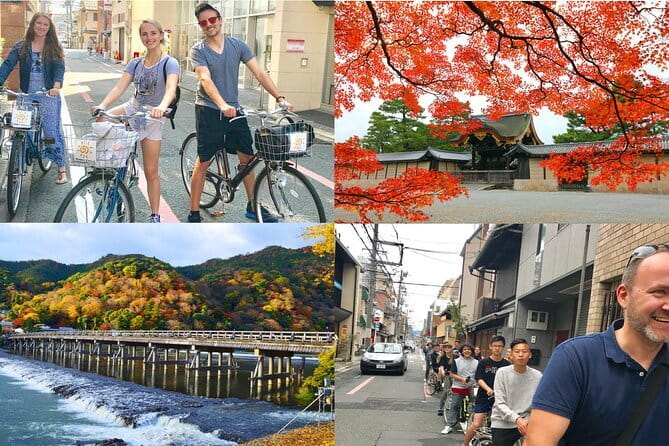
- See a wide sweep of Kyoto: The route can connect Fushimi Inari, Gion, Nanzen-ji, the Philosopher’s Walk, Shimogamo Shrine, and the Kamogawa Delta.
- A private guide controls the day: Your group can slow down, skip a place, or focus on areas you have not visited.
- Electric assistance saves your legs: E-bikes make a long city ride more manageable, while normal bicycles are also available.
- Quiet Kyoto is part of the appeal: Backstreets, canals, temple gardens, and local river spots balance the major landmarks.
- Families have a few options: Kids’ non-electric bikes and child seats are available in limited numbers if requested ahead of time.
- The price reflects a long private outing: At $198.15 per person, value improves when you use the full day or share the cost with a larger group.
Why an e-bike makes sense in Kyoto
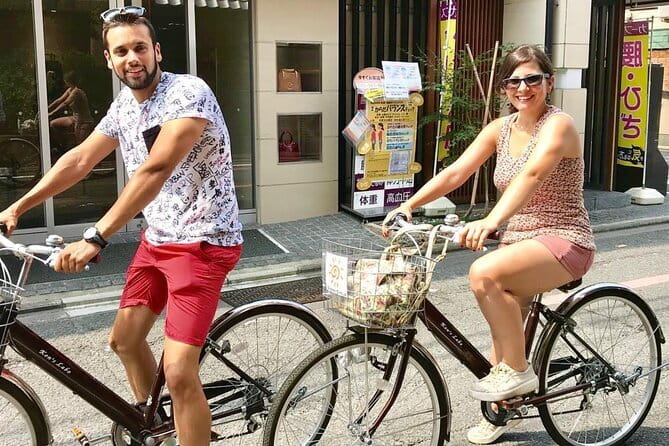
Kyoto is not a compact sightseeing town. Fushimi Inari sits south of the central districts, while Gion, Nanzen-ji, the Philosopher’s Walk, and Shimogamo Shrine stretch east and north. Public transit can connect these areas, but transfers and walking time add up quickly.
An e-bike gives you another option. You can cover the distance between major stops without turning the day into a race between train stations and bus stops. You also get the pleasure of seeing the city at street level, passing canals, residential lanes, shops, and ordinary neighborhoods along the way.
The tour includes the electric bike rental, with a normal cycle available too. The bikes were described as comfortable and well maintained, an important point on an outing that may last several hours. You are still pedaling, but the electric assistance takes the edge off longer stretches.
This is not a bike path through empty countryside. You ride around a busy Japanese city, so you must pay attention and follow your guide’s direction. The experience suits you best if you already ride a bicycle with confidence.
More City Bike Tours in Japan
- 5 Top Highlights of Kyoto Full Day Bike Tour (E-bike option)
★ 5.0 · 511 reviews - E-Bike Tours of the highlights of Kyoto!!!
★ 5.0 · 291 reviews - Kyoto: Full-Day City Highlights Bike Tour with Light Lunch
★ 5.0 · 52 reviews
Starting near Shijo and Higashi Hongan-ji
The meeting point is Sunny CycleJapan at 477-1 Ōhorichō, in Kyoto’s Shimogyo Ward, postal code 600-8419. The shop is near public transportation, and the tour returns there at the end.
The route information includes Higashi Hongan-ji, a major Jodo Shinshu temple in central Kyoto. Its large grounds and Goeido main hall give you an early look at Kyoto’s scale and religious importance. The temple is less about a small, intimate courtyard and more about broad wooden architecture and a powerful central hall.
Because this is a private ride, ask your guide how the day’s route will be shaped at the start. A four-hour outing cannot give every listed stop equal attention, while an eight-hour day can cover much more. Your guide can also steer the plan toward sights you have not yet seen.
Fushimi Inari and the Tofuku-ji area
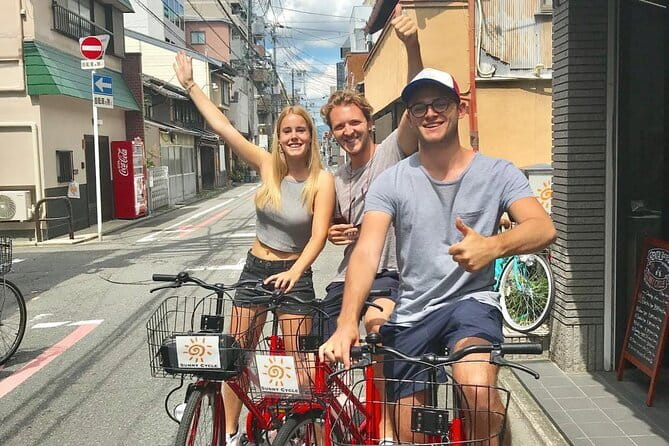
Fushimi Inari-taisha is one of Kyoto’s essential stops. It is the head shrine of more than 30,000 Inari shrines across Japan, and its mountainside paths are lined with thousands of red torii gates.
The scheduled visit is about 40 minutes, with no admission fee. That is enough for a strong first look and some time among the lower torii gates, but not enough to walk the entire mountain route. If you want a long climb through the gates, tell your guide early. The private format may help, but time remains limited.
Next comes Komyo-in, a sub-temple of Tofuku-ji known for its quiet garden. The visit is listed at about 20 minutes, and admission is not included. This is the kind of stop that gives the tour breathing room after Fushimi Inari’s visual punch.
Tofuku-ji follows with a short visit of about 10 minutes. Its Tsutenkyo Bridge is especially famous in autumn, when maple leaves fill the valley below. The bridge and temple grounds can be crowded during the fall color season, so your guide’s timing and route choices matter.
Yasaka Pagoda, Gion, and the Shirakawa waterways
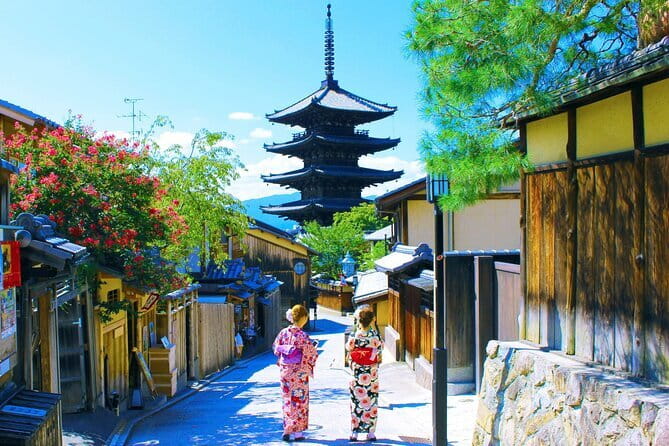
The ride then moves toward eastern Kyoto and the old streets around Hōkan-ji, better known for Yasaka Pagoda. The pagoda’s elegant profile is one of the most recognizable views in the Higashiyama district.
You have about 20 minutes here. That is enough for photographs and a quick look at the historic streets, but the area is not a quiet museum. Pedestrians, shopfronts, and narrow lanes make careful cycling important. You may need to walk the bicycle for parts of this section.
Yasui-Konpiragu offers a different kind of cultural stop. The shrine is known for cutting bad relationships and making good ones. Its stone monument has a hole that people pass through as part of their prayers. The visit takes about 10 minutes and gives your guide a chance to explain a custom you might otherwise pass without understanding.
Hanamikoji Street is another quick stop, listed at about 10 minutes. This traditional lane in Gion is lined with tea houses and restaurants, with a strong connection to geisha culture. Treat it as a place for looking, not gawking. The atmosphere depends on respect, quiet voices, and keeping out of private entrances.
Tatsumi Bridge and the Shirakawa Canal bring you to one of the prettiest parts of the route. The small wooden bridge crosses the Shirakawa River, while the canal area is framed by machiya houses and willow trees. You may occasionally see geisha or maiko moving through the district, but that is not something a responsible tour can promise.
The riverside terrace gives you another 15 minutes near the water. Stone paths and benches make this a pleasant pause, especially after several urban stops. These short breaks are one reason the private format matters. Your guide can spend more time at a place that suits your group rather than following a fixed bus schedule.
More Private Bike Tours in Japan
- The Beauty of Kyoto by Bike: Private Tour
★ 5.0 · 47 reviews - Private eBike Tour Exploring Fushimi with Torii Red Gate Ride
★ 5.0 · 13 reviews - 1-Day Private Rural E-Bike Tour in Hida
★ 5.0 · 188 reviews - 3-Hour Tokyo Private E-Bike Tour Starting from Your Hotel
★ 5.0 · 117 reviews
Heian Shrine, Nanzen-ji, and the old aqueduct
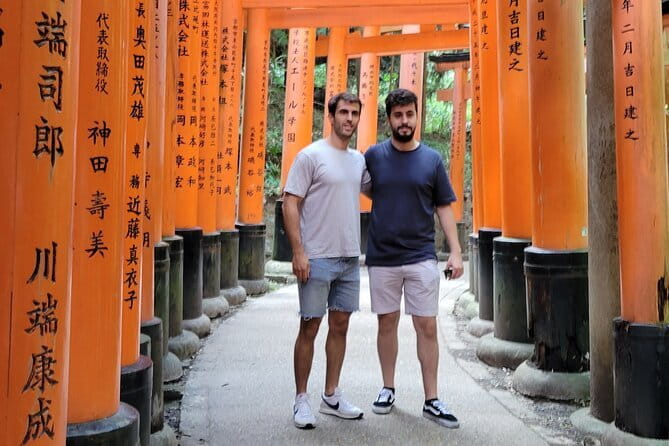
The Great Torii of Heian Jingu is a dramatic landmark, rising 24.2 meters above the road. Built in 1929 to mark Emperor Showa’s enthronement, it is made of reinforced concrete and frames the approach to the shrine district.
The listed stop is about 15 minutes and free. You see the torii rather than receiving a long visit inside the shrine grounds. It is a useful photo stop and a clear marker that the route has moved into northern Higashiyama.
Nanzen-ji is one of Kyoto’s major Rinzai Zen temples. The site was established in 1291 by Emperor Kameyama and is known for its gardens, temple buildings, and broad grounds. The tour allows about 15 minutes here, so you will get an introduction rather than a full temple visit.
Nearby Nanzenji Suirokaku adds an unusual layer to the temple district. This brick aqueduct was completed in 1888 to carry water from Lake Biwa. Its red brick arches look quite different from the surrounding temple architecture, and the contrast makes this one of the more memorable short stops.
Paid temple admission is not included. The tour does include free access at many listed stops, but you should carry money for any temple or shrine entrance you choose to add. Ask your guide which paid sites best fit your available time.
The Philosopher’s Walk and Honen-in
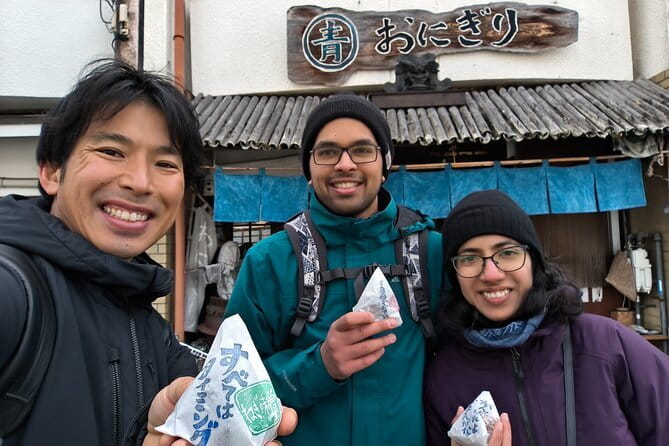
The Philosopher’s Walk follows the Biwa Canal for about two kilometers. The listed time is 30 minutes, which gives you a pleasant section of the route rather than a slow walk along its full length.
This is one place where the bicycle format needs a little care. The path can be shared with pedestrians, and you may find that walking the bike is more sensible in crowded stretches. The reward is a calmer side of Kyoto, with water, trees, and small temple approaches replacing busy roads.
Honen-in is scheduled for about 15 minutes. This quiet temple sits among trees and has a more subdued mood than the large sightseeing centers. It is a good example of how the tour can shift from major landmarks to smaller religious spaces without requiring you to plan every turn yourself.
Shimogamo Shrine and the Kamogawa Delta
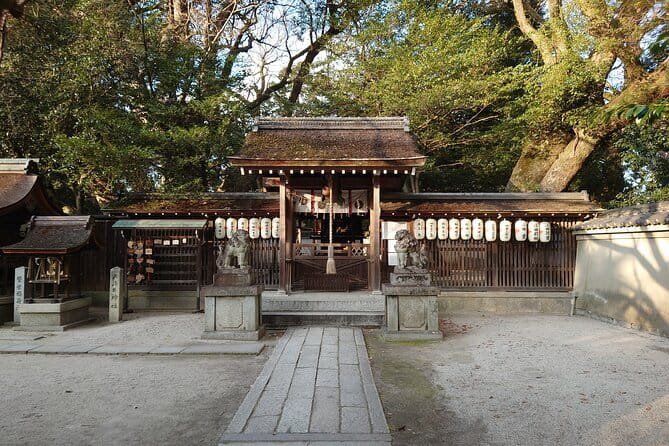
Shimogamo Jinja, officially Kamomioya Shrine, is one of Kyoto’s oldest Shinto shrines, with roots reaching back to around 90 BC. The site is in the Sakyo Ward and offers a strong sense of Kyoto’s long religious tradition.
The tour allows about 30 minutes here. That is enough to walk through part of the grounds and listen to your guide explain the shrine’s role. The setting also helps you see how wooded sacred areas fit into the city rather than existing apart from it.
At the Kamogawa Delta, the Kamo and Takano Rivers meet. Turtles and birds shape the stepping stones across the water, and people use them to cross, pause, and take photographs. The stop lasts about 15 minutes.
This is a particularly nice place to watch everyday Kyoto life. You are not simply checking off a shrine. You are seeing a local meeting place where the rivers, paths, and stones form part of the city’s daily rhythm.
Kyoto Gyoen, Teramachi, and central Kyoto
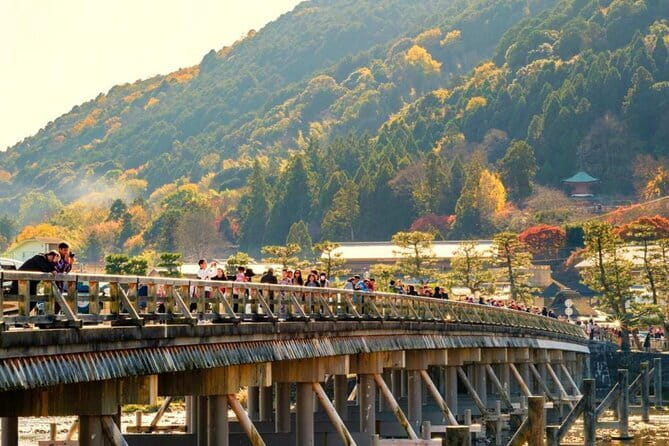
Kyoto Gyoen surrounds the old Imperial Palace and provides a broad green break in the middle of the city. The park is used by local people throughout the year, and historic buildings are scattered among the trees.
The route also includes the stepping stones at Kojin, known as Ebisugawa Tobiishi. These stones cross the Ebisugawa tributary and offer a playful short stop. You can hop across or simply watch the water move around them.
Teramachi-dori brings the ride back into central Kyoto. The long shopping street has traditional goods, cafés, fashion shops, and everyday businesses. It is a useful contrast to the temples, since it shows Kyoto as a living city rather than a collection of preserved sights.
Sanjo Street is another central stop or route point, close to Kawaramachi and the Kamo River. It has restaurants, cafés, and historic buildings, making it a practical place to understand the city’s modern center.
What the guides add to the ride
The strongest part of this experience is not simply the number of stops. It is the guide’s ability to connect them.
Yonnie is described as offering clear explanations of Japanese history, culture, customs, and daily life while handling crowded streets carefully. Yuhey has experience keeping children engaged and adjusting the day around a family’s schedule. Yuichi brings an easy sense of humor alongside his local knowledge.
Mana was helpful before the tour as well as during the ride, offering advice about Kyoto and Kobe. Polina is associated with relaxed cycling through narrow backstreets, quieter shrines, and good anecdotes. Takuma is another guide praised for making the day fun and informative.
Guide availability is not guaranteed, so you should not book solely for one named person. Still, these details show what to expect from the guiding style: conversation, local context, photos, and adjustments based on your group.
Price, timing, and practical value
The price is $198.15 per person, with group discounts available. That is not a budget bicycle rental, but this is more than a rental. You receive an electric bike, a private guide, route planning, cultural explanation, and help moving between distant parts of Kyoto.
The value improves if you use the longer format. On a four-hour ride, you will need to prioritize. On an eight-hour day, you can make better use of the private route and include more pauses. The tour is also a strong choice for a small group that would otherwise pay for several separate taxis or spend much of the day waiting for transport.
Food and drinks are not included. Paid entrance fees are also extra. Confirmation arrives at booking, and free cancellation is available up to 24 hours before the start time. Changes or cancellations inside that window are not accepted for a refund.
Who should book this Kyoto bike tour?
I would choose this tour if you want to see many sides of Kyoto in one day and do not want to spend your visit piecing together bus routes. It is especially useful early in a Kyoto stay, when a guide can help you get oriented and point out areas worth returning to.
Families can benefit from the private pace, especially with a guide such as Yuhey who is comfortable keeping children involved. Kids’ non-electric bicycles and limited child seats are available, but you must request them when booking.
I would think twice if you dislike city cycling, struggle with a moderate physical outing, or want long, unhurried visits inside each temple. The itinerary is broad by design. You see more places, but some stops are brief.
Should you book it?
Book this tour if your priority is coverage with local guidance. You can reach Fushimi Inari, Gion, Nanzen-ji, the Philosopher’s Walk, Shimogamo, the Kamogawa Delta, and central Kyoto without spending the day changing trains and buses.
Skip it if you prefer to settle into one temple district for several hours or if cycling in traffic sounds stressful. For confident riders, the private e-bike format offers a practical and enjoyable way to connect Kyoto’s major sights with its quieter canals, lanes, and neighborhood corners.
FAQ
How long does the Kyoto private e-cycling tour last?
The tour lasts approximately 4 to 8 hours. The length allows the route to be adjusted around the stops your group wants to prioritize.
What is included in the tour price?
An electric bike, or a normal bicycle if preferred, is included. A private guide is also included, with guiding, local stories, and photo help provided during the ride.
Are temple and shrine admission fees included?
No. Paid entrance fees are not included. Many listed outdoor stops have no admission charge, but some temple areas may require separate payment.
Where does the tour begin?
The tour begins at Sunny CycleJapan, 477-1 Ōhorichō, Shimogyo Ward, Kyoto, postal code 600-8419. The tour ends back at the same meeting point.
Do I need to know how to ride a bicycle?
Yes. Participants must be able to ride a bicycle, and a moderate level of physical fitness is required.
Are bicycles available for children?
Kids’ bicycles that are not electric are available in limited numbers. You must request one when booking.
Can children use a child seat?
Limited child seats are available for children who cannot ride independently. Request one when booking because availability is limited.
Is the tour private?
Yes. Only your group participates in the activity, and the route pace can be tailored to your requirements.
More Private Bike Tours in Kyoto
- Party Bike Private Party Up To 14 People in Old Town Scottsdale
★ 5.0 · 3,541 reviews - Barcelona: Private Group Bike Tour
★ 4.8 · 1,420 reviews - Private Self-Guided E-Bike Ride in Tuscany with Vineyard Visit
★ 5.0 · 775 reviews - Bilbao: Guided Highlights Small Group or Private E-Bike Tour
★ 4.8 · 608 reviews
More City Highlights Bike Tours in Kyoto
- Kyoto: Tailored E-Bike Tour to Highlights & Hidden Gems
★ 4.9 · 32 reviews - 4.5-hr Kyoto Historical Highlights Bike Tour with UNESCO
★ 4.7 · 13 reviews - Lion City Bike Tour of Singapore
★ 5.0 · 6,211 reviews - 3-Hour Porto Highlights on a Electric Bike Guided Tour
★ 5.0 · 4,392 reviews
Just added around Kyoto
- ONLY YOU in the Bamboo Forest! 4 hours E-bike tour with a local★ 5.0 · 45 reviews
- Pedal Adventure Kyoto’s iconic landmarks on an e-bike tour★ 5.0 · 189 reviews
- South Kyoto in a Nutshell: Gentle Backstreet Bike Tour!★ 5.0 · 225 reviews
- The Beauty of Kyoto by Bike: Private Tour★ 5.0 · 47 reviews
- Explore Hidden Alleyway with a Local Expert (Afternoon Tour)★ 5.0 · 17 reviews
- Secret Eastern Kyoto Biking Adventure★ 5.0 · 44 reviews
- Explore Hidden Alleyway with a Local Expert (Morning tour)★ 5.0 · 61 reviews
- Kyoto Bamboo Forest & Golden Pavilion E-Bike Tour★ 5.0 · 50 reviews
Kyoto Bike Tours, compared.
Arashiyama Bamboo Forest & Hidden Gems Bike Tour (Early Bird)
Read our review →
5 Top Highlights of Kyoto Full Day Bike Tour (E-bike option)
Read our review →
Full Day Biking Tour Exploring the Best of Kyoto
Read our review →
Afternoon Kyoto Bike Tour: Bamboo Forest, Monkeys & Hidden Spots
Read our review →Browse the lists this tour appears in