
REVIEW · KYOTO
No. 1 E-Bike Tour for Up to 5 Guests in Kyoto with a Local!
Kyoto is much easier to understand from a bicycle seat. This four-hour e-bike ride links major sights with quieter streets, canal paths, riverbanks, and the old Nintendo headquarters. I like the small maximum of five people and the chance to hear local stories while moving at a relaxed pace. I also like that the ride includes both famous places and ordinary Kyoto neighborhoods.
The main consideration is that this is still a cycling tour, not a temple tour with long indoor visits. You need to ride comfortably, follow hand signals, and manage a four-hour outing. The tour also depends on good weather, and children under 10 must be at least 140 centimeters tall and able to ride a bicycle.
Key points at a glance
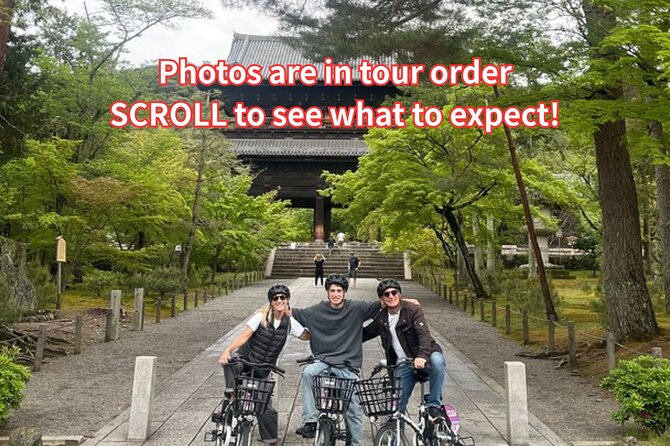
- A five-person maximum: This is a genuinely small outing, so the guide can keep the pace personal and help the group move through Kyoto together.
- A useful mix of famous and local Kyoto: You see Nishi Honganji, Gion, Heian Shrine, Nanzenji, the Kamo River, and a local neighborhood near the old Nintendo headquarters.
- E-bike assistance: The electric bicycle makes a longer route more manageable, though you still need basic cycling ability.
- Waterways shape the route: The Lake Biwa Canal and Kamo River provide some of the most pleasant riding and resting points.
- Guide Yuki may be your host: A highly praised guide named Yuki is associated with the experience, though guide assignment can vary.
- A good afternoon plan: The tour starts at 1:00 p.m. and runs for about four hours, leaving your morning free.
Why an e-bike is a smart way to see Kyoto
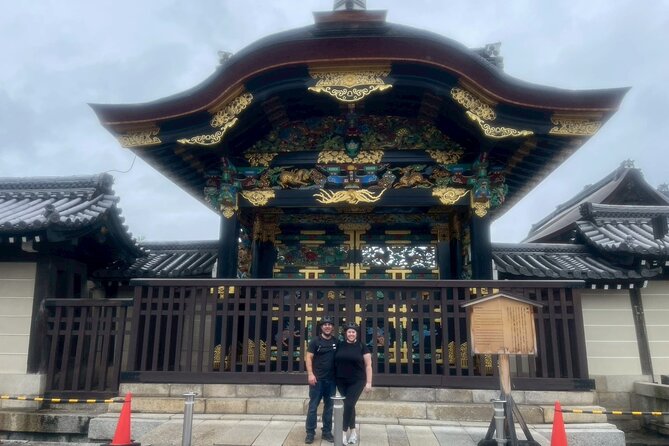
Kyoto’s major sights are spread across a wide area. Walking between Nishi Honganji, Gion, Heian Shrine, Nanzenji, and the Kamo River takes time, while buses can be crowded and slow on busy streets. An e-bike gives you a more direct way to connect these places.
You still pedal, but electric assistance helps make the route less tiring than a standard bicycle. That matters on a four-hour ride, especially when you want enough energy left to stop, listen, take photographs, and explore after the tour.
This is not a race. The guide begins with a short briefing on cycling hand signals, which is important in a city where you share roads and paths with cars, pedestrians, and other bicycles. Pay attention at the start. A safe, coordinated group has a much better day than a group spread across several blocks.
The group limit is five people. That makes the experience more flexible than a large bike excursion, and it gives you a better chance to ask questions. It also suits friends and families who want to stay together without committing to a completely private tour.
More E-Bike Tours in Japan
- Hidden Kyoto E-Biking tour
★ 5.0 · 1,843 reviews - 5 Top Highlights of Kyoto Full Day Bike Tour (E-bike option)
★ 5.0 · 511 reviews - Kyoto: Memory Kyoto E-Bike Tour
★ 4.8 · 297 reviews
Starting near Kyoto Station
The published meeting point is at Times Car Rental, 682 Higashishiokōjichō, in Kyoto’s Shimogyo Ward. The guide meets the group at a Clew share-cycle port in front of Seikouin Wagatazizou, behind the hotel. Because the directions include both the rental office address and the Clew port, read the guide’s message carefully before you leave.
The guide sends a message through Viator before departure. Check it on the day of the ride so you have the latest meeting instructions and any language information. The listed start time is 1:00 p.m., and the tour returns to the same general meeting point.
You receive a bicycle, helmet, and cycling guide. Bring comfortable clothing and shoes suitable for pedaling. The information provided does not mention storage arrangements, so keep personal belongings compact and easy to carry.
The first 15 minutes are for orientation. Expect the guide to explain hand signals and basic riding procedures before the group heads into the city. This is also your best moment to mention your cycling comfort level or language preference.
Some guides can speak German, Dutch, Bangladeshi, Hindu, and Urdu, in addition to the main tour language. If language matters to you, contact the provider before booking rather than waiting until the start.
Nishi Honganji and a glimpse of old Nintendo
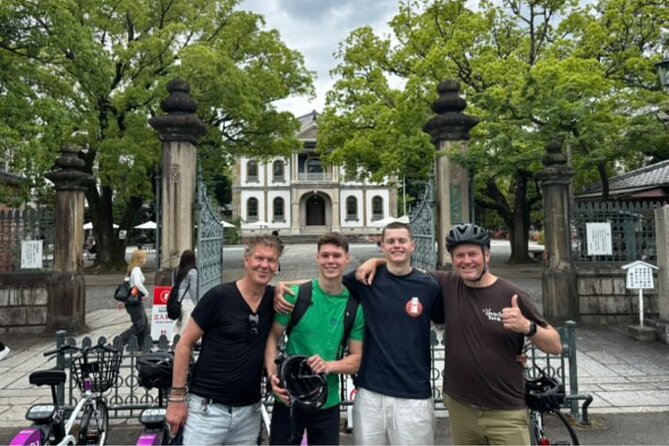
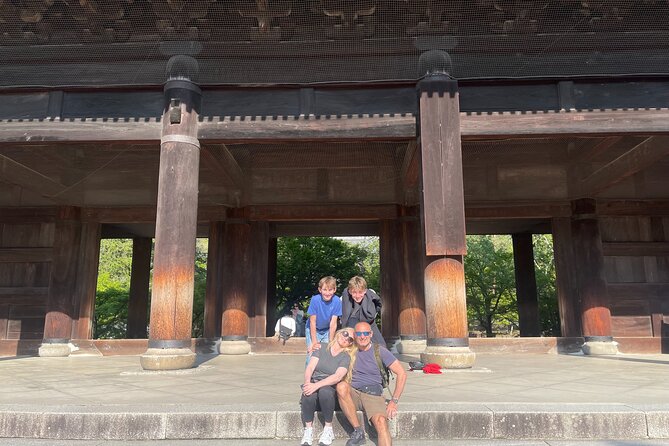
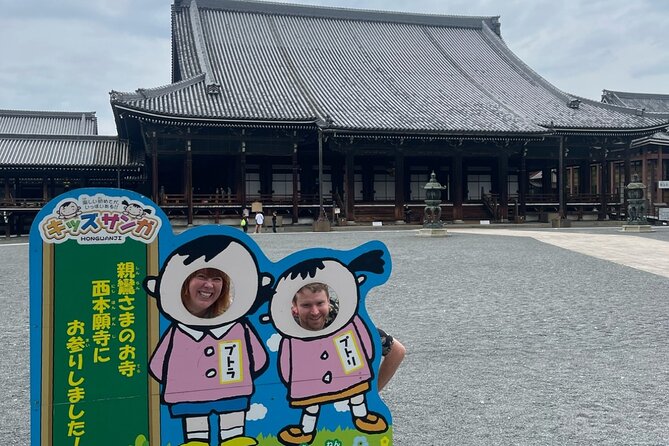
The first major stop is Nishi Honganji, the head temple of the Jodo Shinshu Hongwanji-ha sect. You have about 30 minutes here, enough to see the temple grounds and appreciate its large historic buildings.
This stop gives the ride an early dose of traditional Kyoto. The scale of the temple complex helps explain why religious institutions shaped the city for centuries. You are not simply ticking off another famous site. You are seeing a place that remains part of Kyoto’s religious life.
The tour then passes through Kagiyacho, a more local section of the city. Here, a large building catches the eye: the former headquarters of Nintendo. The contrast is part of the fun. Kyoto is often presented through shrines, gardens, and wooden streets, but its modern cultural reach also began in ordinary city blocks.
You spend about 20 minutes in this area. Do not expect a Nintendo museum or an extended indoor visit. The appeal is the exterior, the setting, and the reminder that one of Japan’s best-known companies has Kyoto roots.
Gion Shirakawa at a slower pace
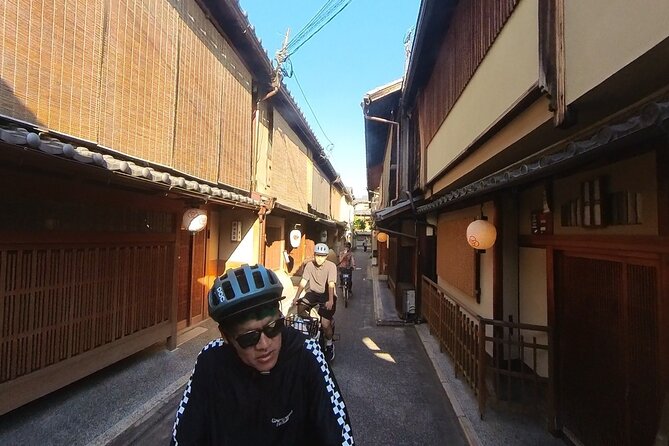
The ride continues to Gion, where you have around 30 minutes. The focus is the Shirakawa area, known for its traditional buildings along the river and its history as a chaya district associated with tea and geisha culture.
This is one of the more scenic parts of the route. The water, old façades, and seasonal plants create a distinctly Kyoto view. Cherry blossoms can make the area especially attractive in spring, though the tour operates in changing weather and seasons.
Gion can feel crowded in popular sections, so arriving by bicycle gives you a different rhythm. You are not forced into a long walking approach from a distant station. At the same time, cycling does not mean you can ride everywhere. Expect to leave the bike in suitable places and walk around the stop.
Treat Gion with care. It is a living neighborhood, not a stage set. The guide’s local explanations are useful here because they can help you see beyond the familiar photographs and understand how the streets function.
More E-Bike Tours in Kyoto:
- E-Bike Tours of the highlights of Kyoto!!!
★ 5.0 · 291 reviews - Kyoto: City Secrets eBike Tour
★ 4.9 · 196 reviews - Pedal Adventure Kyoto’s iconic landmarks on an e-bike tour
★ 5.0 · 189 reviews - Kyoto: Hidden Gems E-Bike Tour with Local Japanese Guide
★ 4.9 · 189 reviews
The Lake Biwa Canal and Nanzenji’s waterworks
The route next turns toward Nanzenji and the Lake Biwa Canal. One stop near Nanzenji lasts about 20 minutes, followed by a longer 50-minute canal section. The canal is not just a pretty waterway. It helped supply Kyoto with water and supported the city’s development by linking Kyoto with Lake Biwa.
This part of the ride shows why a bicycle works so well in Kyoto. The canal offers a change from traffic and temple approaches. You can move beside the water, see the engineering that made the route possible, and hear how the canal helped the city grow.
The 50-minute canal stop is the longest pause on the tour. That suggests the guide has room to explain the water system and allow time for photographs without rushing you straight to the next landmark. If you prefer nonstop sightseeing, the pace may feel slow. I see that as a strength for anyone who wants context rather than a quick list of names.
The canal also gives you a break from the most heavily visited streets. You still see well-known Kyoto, but you experience it through infrastructure, water, and everyday movement instead of only through temple gates.
Heian Shrine and Nanzenji Temple
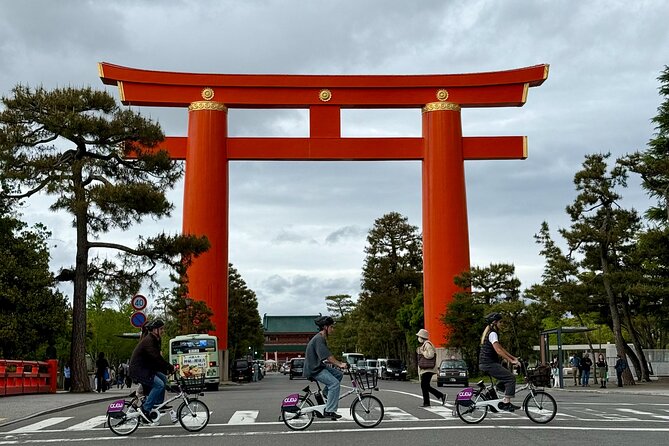
Heian Shrine is included as a sightseeing stop along the route. The shrine commemorates the 1,100th anniversary of Kyoto becoming the capital known as Heian-kyo. Emperor Kanmu, the 50th emperor, is enshrined there, and the large red torii is one of the area’s most recognizable sights.
The supplied schedule does not give a separate duration for Heian Shrine, so do not assume you will have a long interior visit. The main value is seeing the broad approach and the striking torii, along with the guide’s explanation of why the shrine was established.
Nanzenji Temple receives about 20 minutes. It is regarded as one of the most important temples among Kyoto’s Five Mountains, and its gate and main temple buildings give the stop a strong sense of scale.
Twenty minutes is enough for a look and a few photographs, but not for a full examination of every corner. If Nanzenji is a top priority for you, plan to return independently after the ride. The tour gives you an introduction, not an exhaustive temple visit.
That is a useful distinction when deciding how to spend your time. This ride is designed to connect several places and explain their role in Kyoto. It is not designed to replace a full day at any single temple.
A quiet pause beside the Kamo River
Near the end of the route, the group reaches the Kamo River for about 10 minutes. You can cycle along the riverbank, relax on the riverbed, or put your feet in the water to cool down.
This is a simple ending, but it works. After several hours of riding and sightseeing, a short pause beside the river gives the group a chance to slow down before returning the bicycles. It also brings you back to a natural part of Kyoto rather than ending at another formal monument.
The Kamo River is one of the city’s best public spaces. The tour uses it as a place to breathe, not as a major lecture stop. If the weather is warm, the chance to cool your feet may be especially welcome.
After the river stop, you ride back to the starting point and return the bicycle. The activity ends there, leaving you free to continue exploring Kyoto on your own.
What the four-hour schedule really gives you
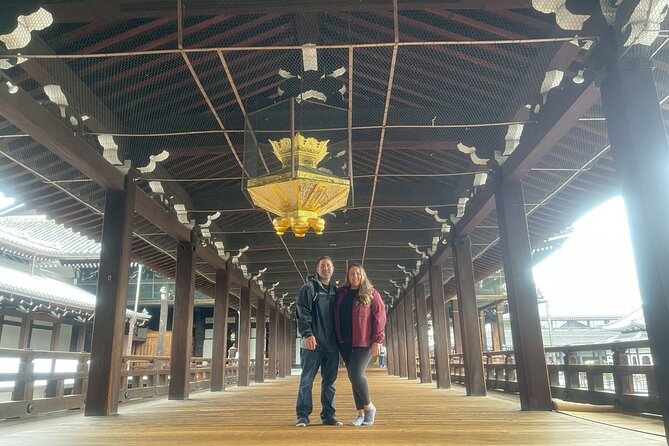
The route includes many stops, but most are short. You are getting a broad introduction to Kyoto, not long, detailed visits at every location.
The approximate timing includes:
- 15 minutes for the cycling briefing
- 30 minutes at Nishi Honganji
- 20 minutes near the old Nintendo headquarters
- 30 minutes in Gion
- 20 minutes along the canal
- 50 minutes for the longer canal section
- Time at Heian Shrine
- 20 minutes at Nanzenji
- 10 minutes at the Kamo River
- 15 minutes to return the bicycle
The actual riding time is spread between those stops. The route is ambitious for one afternoon, but the e-bike and small group make it more practical than trying to cover the same ground on foot.
I like the balance between major sights and connecting spaces. You see what many first-time visitors want to see, yet you also pass through local streets and along waterways. The tradeoff is that each temple or shrine receives only a short visit.
Price, group size, and overall value
At $99.08 per person, this is not the cheapest way to rent a bicycle in Kyoto. A basic rental costs less if you only want to pedal around on your own.
The value comes from the combination of an e-bike, helmet, guide, route planning, and a maximum of five riders. You are paying to have the city connected for you, with explanations along the way and no need to work out the safest or most efficient route yourself.
The small group matters. A large cycling group can feel like a procession, especially on narrow streets. With only five people, the guide can keep an eye on the group and adjust explanations to your interests.
The price is easiest to justify if you have limited time in Kyoto, want local context, or feel unsure about navigating by bicycle. It is less compelling if you already know the city well, prefer long temple visits, or are comfortable planning your own cycling route.
The experience is booked on average about 18 days ahead, so do not leave it until the last moment if your Kyoto schedule is fixed. Free cancellation is available until 24 hours before the start time. Changes or cancellations inside that window are not accepted for a refund.
Who should book this Kyoto ride
I would choose this experience for a first or second visit when you want an efficient overview without spending the day on buses. It is also a good fit for friends and families who can cycle and want a shared activity rather than a standard walking tour.
The ride suits people who enjoy:
- Moving between several districts in one afternoon
- Hearing stories while seeing places in person
- A small group instead of a large tour
- A blend of temples, city streets, waterways, and river scenery
- Electric-bike assistance on a longer route
I would hesitate to book it for anyone who cannot ride confidently, dislikes city cycling, or wants extensive time inside temples and shrines. Children under 10 can take part only if they are at least 140 centimeters tall and able to ride a bicycle, and they pay the adult rate.
Good weather is required. If poor weather forces a cancellation, you are offered another date or a full refund. That policy is helpful, but you should still keep a flexible backup plan for the afternoon.
Should you book it?
Book this ride if you want to cover a lot of Kyoto in four hours while still seeing canals, neighborhoods, and river paths between the headline sights. The strongest reasons are the five-person limit, the useful e-bike assistance, and the guide’s ability to add local color to places such as Gion and the old Nintendo headquarters.
The experience is especially appealing if you value a relaxed pace and personal guidance. Guide Yuki made a particularly strong impression through warm, playful communication, though you should confirm your assigned guide before departure.
Skip it if your priority is a slow, detailed visit to Nanzenji, Heian Shrine, or Nishi Honganji. For most first-time visitors with basic cycling skills, though, this is a practical and enjoyable way to see Kyoto from a more personal angle.
FAQ
How long does the e-bike tour last?
The tour lasts approximately four hours, beginning at 1:00 p.m. and ending back at the meeting point.
Where does the tour start and finish?
The published meeting point is Times Car Rental at 682 Higashishiokōjichō in Kyoto’s Shimogyo Ward. The activity ends back at the meeting point after you return the bicycle.
How many people can join the tour?
The maximum group size is five people.
What equipment is included?
The price includes the bicycle, use of the bicycle, an installed cycling helmet, and a cycling guide.
Which places does the route visit?
The route includes Nishi Honganji, Kagiyacho and the former Nintendo headquarters, Gion, the Lake Biwa Canal, Heian Shrine, Nanzenji Temple, and the Kamo River.
Can children participate?
Children under 10 can participate if they are at least 140 centimeters tall and able to ride a bicycle. They pay the same fee as an adult.
Are different language preferences possible?
Some guides can speak German, Dutch, Bangladeshi, Hindu, and Urdu. You should contact the provider before booking if you have a language preference.
What happens if the weather is bad?
The experience requires good weather. If it is canceled because of poor weather, you are offered a different date or a full refund.
Just added around Kyoto
- ONLY YOU in the Bamboo Forest! 4 hours E-bike tour with a local★ 5.0 · 45 reviews
- Pedal Adventure Kyoto’s iconic landmarks on an e-bike tour★ 5.0 · 189 reviews
- South Kyoto in a Nutshell: Gentle Backstreet Bike Tour!★ 5.0 · 225 reviews
- The Beauty of Kyoto by Bike: Private Tour★ 5.0 · 47 reviews
- Explore Hidden Alleyway with a Local Expert (Afternoon Tour)★ 5.0 · 17 reviews
- Secret Eastern Kyoto Biking Adventure★ 5.0 · 44 reviews
- Kyoto Bamboo Forest & Golden Pavilion E-Bike Tour★ 5.0 · 50 reviews
- Explore Hidden Alleyway with a Local Expert (Morning tour)★ 5.0 · 61 reviews
Kyoto Bike Tours, compared.
Arashiyama Bamboo Forest & Hidden Gems Bike Tour (Early Bird)
Read our review →
5 Top Highlights of Kyoto Full Day Bike Tour (E-bike option)
Read our review →
Full Day Biking Tour Exploring the Best of Kyoto
Read our review →
Afternoon Kyoto Bike Tour: Bamboo Forest, Monkeys & Hidden Spots
Read our review →Browse the lists this tour appears in