
REVIEW · KYOTO
Early Bird E-biking through East Kyoto
East Kyoto is made for a bicycle. This early-start e-bike tour links Fushimi Inari, Tofuku-ji, the Philosopher’s Path, Ginkaku-ji, Nanzen-ji, Gion, and more in one long day, using riverside paths and back streets that are hard to connect on foot.
I like the small group limit of eight, which makes it easier to hear the guide and adjust the pace. I also like the included lunch and cafe stop, plus the e-bike assistance on Kyoto’s longer stretches. The main caution is simple: this is a six to seven hour ride through busy streets, uneven paths, and a few uphill sections, so you need to be comfortable on a bicycle.
Key points to know before booking

- Eight people maximum: The small group keeps the ride more personal and makes questions easier.
- A serious sightseeing day: Nine stops cover major shrines, temples, riverside paths, Gion, and central Kyoto.
- Early departure at 8:00 a.m.: You get moving before the day’s crowds build at the best-known sites.
- Lunch and a cafe stop included: You do not need to spend the day finding food between temples.
- E-bike and helmet provided: The motor assistance helps, but you still need moderate fitness and good bike control.
- Minimum age and height: Participants must be at least 13 years old and 145 centimeters tall.
Why an e-bike works so well in East Kyoto

Kyoto’s famous sights are spread out. Fushimi Inari is in the southeast, Ginkaku-ji is farther north, and Gion sits between the eastern hills and the city center. Walking between them would take too long, while a car can be awkward on narrow streets and near crowded temple areas.
The e-bike gives you a practical middle ground. You cover more ground than you could on foot, but you still pass through quiet lanes, along the Kamogawa River, and beside canals and paths where the city feels more local. The motor helps with distance and hills, but this is still an active tour, not a ride where you simply sit back.
The 8:00 a.m. start matters. Fushimi Inari and the Philosopher’s Path can become very busy later in the day. An early departure gives you a better chance to explore before the heaviest flow of people, though no schedule can guarantee empty temples, especially during cherry blossom season or other peak periods.
Cycle Kyoto limits this tour to eight people. That is a useful size for city cycling. You are less likely to get separated at traffic lights, and a guide can keep an eye on how everyone is handling the route. Guides named in the tour feedback include Indra, Paul, Jay, Juan, Julian, Carl, Sean, Jaime, Shaune, and Mayco. The quality of the day can depend on the individual guide, so it is fair to ask about the guide’s language and approach when booking.
More E-Bike Tours in Japan
- Hidden Kyoto E-Biking tour
★ 5.0 · 1,843 reviews - 5 Top Highlights of Kyoto Full Day Bike Tour (E-bike option)
★ 5.0 · 511 reviews - Kyoto: Memory Kyoto E-Bike Tour
★ 4.8 · 297 reviews
Fushimi Inari starts the morning with torii gates
The first ride takes about 25 minutes along the river to Fushimi Inari-taisha Shrine. Once there, you leave the bikes and spend about 30 minutes exploring on foot.
Fushimi Inari is known for its seemingly endless rows of orange torii gates climbing the wooded hillside. You will not have time to walk the entire mountain trail during this short stop, but the opening shrine area and lower gates provide the essential experience. The first part is also where crowds can build quickly, so the early timing is one of the tour’s strongest practical choices.
Your admission is free, and the guide helps you understand how the shrine fits into Japanese religious life. Keep your expectations realistic: 30 minutes is enough for a look and some photographs, not a full climb to the summit.
Tofuku-ji offers a quieter temple pause

From Fushimi Inari, it is about 15 minutes by bike to Tofuku-ji Temple. The planned stop lasts around 30 minutes and includes time on a picturesque bridge.
Tofuku-ji is a major Zen temple with broad grounds and a strong sense of space. Its seasonal foliage is especially famous, but the temple is worth seeing at other times too. The bridge stop gives you a good view and a brief break from riding before the longer stretch toward northern East Kyoto.
The visit is relatively short. You will see the main character of the temple area rather than explore every building and garden. That tradeoff is typical of this tour: you see many important places, but each one receives a measured amount of time.
The Kamogawa River turns travel into part of the tour

The next section is an extended ride beside the Kamogawa River, listed at about 30 minutes. This is one of the moments when cycling earns its place in the itinerary.
The river corridor gives you a change from temple gates and city traffic. You can watch Kyoto pass at a steady pace while the guide leads the group north. It is also a useful reset between the southeast temples and the Philosopher’s Path area.
Cycling beside the river is not the same as riding on an isolated trail. Conditions can vary, and you still need to follow the guide, watch other people, and control your bike. One useful point from the tour feedback is that some sections use busy areas, roads, uneven ground, and uphill stretches. You should be comfortable managing those conditions before booking.
More E-Bike Tours in Kyoto:
- E-Bike Tours of the highlights of Kyoto!!!
★ 5.0 · 291 reviews - Kyoto: City Secrets eBike Tour
★ 4.9 · 196 reviews - Pedal Adventure Kyoto’s iconic landmarks on an e-bike tour
★ 5.0 · 189 reviews - Kyoto: Hidden Gems E-Bike Tour with Local Japanese Guide
★ 4.9 · 189 reviews
Ginkaku-ji combines a temple visit with lunch
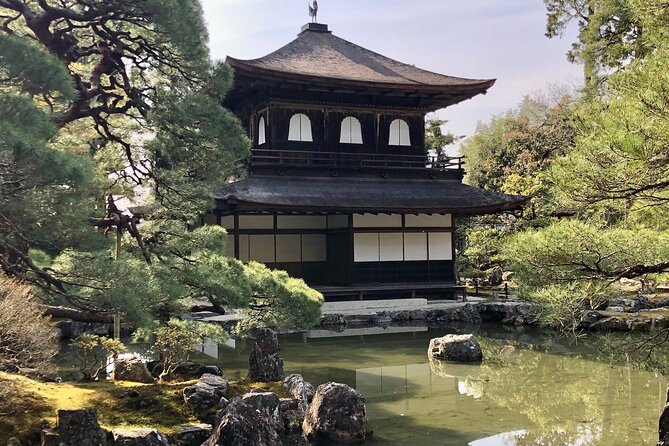
Ginkaku-ji, or the Silver Pavilion, is one of Kyoto’s essential temple stops. The listed time is about 45 minutes, including lunch at a nearby restaurant.
The temple grounds are the main reason to come here. Ginkaku-ji is admired for its carefully arranged gardens, moss, paths, and understated design. The name can suggest a silver-covered building, but the pavilion is not coated in silver. The appeal is its calm proportions and garden setting.
Lunch is a major convenience on a full-day ride. You do not have to pause the tour to search for a restaurant, and the included meal helps keep the day on schedule. The tradeoff is that you have limited choice and limited time. During busy periods, restaurants near the Silver Pavilion can be crowded, and the lunch may feel more practical than special. One past participant found the location too busy and wanted a more local meal, while other tour feedback praised the food and the guide’s ability to get the group seated quickly.
Dietary needs must be given in advance. Do not wait until the morning of the tour to explain allergies or restrictions.
The Philosopher’s Path is best seen at bicycle pace

After Ginkaku-ji, you cycle along the Philosopher’s Path for about 45 minutes. This tree-lined route follows a canal and connects some of Kyoto’s best-known eastern temples.
The path is especially attractive when cherry trees are in bloom, but that is also when it can be crowded. You may need to slow down, give way, or walk the bike in the busiest parts. The guide has to balance photo stops with the agreed schedule, so tell the guide early if seasonal scenery is a major reason you booked.
This is one of the more atmospheric sections of the day, but it is not a fast cycling route. You need to stay alert and keep enough space between bikes. The e-bike helps with the distance, yet it does not remove the need for balance and control.
Nanzen-ji brings scale, gates, and temple history

Nanzen-ji follows the Philosopher’s Path, with around 45 minutes to walk the grounds. The temple is known for its imposing gate, broad approach, and important Zen tradition.
The pace here changes again. You park the bikes and walk, which gives your legs a break and lets you look up from the road. Nanzen-ji feels larger and more formal than some of the smaller temple stops, and its grounds reward a slow look at the architecture and layout.
A guide can add real value here by explaining what you are seeing rather than simply pointing out a gate. Guides such as Indra, Juan, Jay, Sean, and Jaime have been praised for mixing cultural detail, humor, and practical help. Still, the guiding style may vary. One past experience was criticized because the guide offered little explanation and had to check information on a phone. If detailed storytelling is central to your decision, confirm what kind of guiding you can expect.
Heian Shrine adds a wide-open courtyard

The route continues to Heian Jingu Shrine, where you spend around 35 minutes walking through the courtyard. Its large torii and expansive shrine grounds create a different impression from the compact lanes and wooded temple paths earlier in the day.
The broad courtyard is a welcome contrast after cycling through crowded streets. This is a good place to appreciate the scale and color of Shinto shrine design without needing a long hike. Admission to this stop is free according to the tour details.
By this point, you will have spent several hours riding and walking. The short temple visits keep the day varied, but they also mean you should not expect a detailed exploration of every site.
Gion reveals Kyoto’s back streets
The ride through Gion lasts about 45 minutes and focuses on the district’s smaller streets and traditional entertainment-quarter atmosphere. You might catch a glimpse of a Maiko or Geiko, but that is never guaranteed, and you should not treat local performers as photo opportunities.
The value here is the route itself. Instead of stopping only at the most famous street, you ride through back lanes and see how Gion connects with the rest of East Kyoto. The guide also helps you navigate, which matters in a district where lanes can be narrow and pedestrian traffic unpredictable.
Gion is not a place to ride carelessly. Keep your speed low, follow local rules, and be ready to dismount when the guide asks. The tour’s small size helps, but you remain responsible for safe riding.
Higashi Hongan-ji ends the route with a cafe stop
The final sightseeing stop is Higashi Hongan-ji Temple, with about 15 minutes to walk through its large wooden prayer halls. A stop at the company’s favorite cafe is included in this part of the day.
The temple offers a strong final look at Kyoto’s religious architecture. Its wooden interiors and broad halls feel different from the gardens and hill paths earlier in the tour. The cafe stop is a thoughtful way to finish, particularly after a long ride, though the short scheduled time means it is more of a refreshment break than a long coffee visit.
The tour then returns to the Cycle Kyoto meeting point at Higashikujō Nishisannōchō in Minami Ward. The listed start time is 8:00 a.m., and the full experience lasts approximately six to seven hours.
What the $138.74 price really covers
At $138.74 per person, this is not a cheap way to rent a bicycle for the day. It is priced as a guided sightseeing experience, with an e-bike, helmet, temple access where listed, lunch, and a cafe stop included.
The value comes from combining many places that are spread across Kyoto. You get route planning, navigation, local context, and someone managing the pace between stops. The tour also takes you through cycling routes and back streets you might not connect on your own.
The price is harder to justify if you are already comfortable navigating Kyoto by bike, do not need a guide, or prefer spending a full hour or two at each temple. The itinerary favors breadth over long visits. For a first day in Kyoto, that broad view can be useful. For a repeat visit focused on one temple area, a shorter private outing might suit you better.
The fact that the tour is often booked well ahead, around 37 days in advance on average, suggests you should not leave it until the last moment during busy seasons. The recommendation rate is listed at 99 percent, with a 5.0 rating from 114 reviews, but the practical details matter more than the numbers: bike fit, cycling confidence, guide quality, and your appetite for a long day.
Who should book this Kyoto bike tour
I would choose this experience if you want to see a lot of East Kyoto in one day and enjoy moving under your own power. It suits first-time visitors who want an overview, active couples, families with teenagers, and anyone who likes a guide to handle directions and timing.
The minimum age is 13, and the minimum height is 145 centimeters. You should have moderate physical fitness and be comfortable riding for several hours. A small bicycle is available, which helped one shorter rider feel stable, but confirm the bike size at the start. A past participant also reported that two bikes initially seemed too small for taller teenagers, so it is sensible to check the fit before setting off.
I would think twice if you dislike city cycling, have trouble riding in traffic, or want a slow temple study day. You may also find the pace demanding during hot weather, peak blossom season, or any day when crowded paths force frequent stops.
The tour requires good weather. If poor weather cancels it, you can choose another date or receive a full refund. You can also cancel for a full refund up to 24 hours before the start time. The activity may also be canceled if the minimum number of participants is not reached.
Should you book Early Bird E-biking through East Kyoto?
Book it if you want a well-packed introduction to Kyoto’s eastern and southern sights, with the efficiency of an e-bike and the ease of a guide-led route. The strongest parts are the early start, the small group, the riverside cycling, the mix of major temples and back streets, and the chance to cover far more ground than you could on foot.
Do not book it expecting deep time at every temple or a quiet countryside ride. You will cycle near traffic, manage crowds, face some hills, and follow a fairly full schedule. If you can accept that tradeoff, this is a useful and active way to get your bearings in Kyoto, especially at the start of a longer visit.
FAQ
What time and where does the tour start?
The tour starts at 8:00 a.m. at Cycle Kyoto, Higashikujō Nishisannōchō, Minami Ward, Kyoto, 601-8003, Japan.
Where does the tour end?
The activity returns to the Cycle Kyoto meeting point.
How long does the e-bike tour last?
The experience lasts approximately six to seven hours.
What is included in the tour?
An e-bike and helmet are provided. Lunch is included, and the itinerary also includes a stop at a favorite cafe. Admission is included for Ginkaku-ji, while the other listed shrine and temple stops have no admission charge according to the tour details.
How many people can join the group?
The tour has a maximum of eight participants.
What age and height limits apply?
The minimum age is 13 years old, and the minimum height is 145 centimeters.
Can I cancel for a refund?
You can cancel at least 24 hours before the local start time for a full refund. Cancellations or changes made less than 24 hours before the start are not refunded or accepted. If bad weather or insufficient participants cancel the tour, you will be offered another date or a full refund.
Just added around Kyoto
- ONLY YOU in the Bamboo Forest! 4 hours E-bike tour with a local★ 5.0 · 45 reviews
- Pedal Adventure Kyoto’s iconic landmarks on an e-bike tour★ 5.0 · 189 reviews
- South Kyoto in a Nutshell: Gentle Backstreet Bike Tour!★ 5.0 · 225 reviews
- The Beauty of Kyoto by Bike: Private Tour★ 5.0 · 47 reviews
- Explore Hidden Alleyway with a Local Expert (Afternoon Tour)★ 5.0 · 17 reviews
- Secret Eastern Kyoto Biking Adventure★ 5.0 · 44 reviews
- Kyoto Bamboo Forest & Golden Pavilion E-Bike Tour★ 5.0 · 50 reviews
- Explore Hidden Alleyway with a Local Expert (Morning tour)★ 5.0 · 61 reviews
Kyoto Bike Tours, compared.
Arashiyama Bamboo Forest & Hidden Gems Bike Tour (Early Bird)
Read our review →
5 Top Highlights of Kyoto Full Day Bike Tour (E-bike option)
Read our review →
Full Day Biking Tour Exploring the Best of Kyoto
Read our review →
Afternoon Kyoto Bike Tour: Bamboo Forest, Monkeys & Hidden Spots
Read our review →Browse the lists this tour appears in