
REVIEW · MADRID
Madrid: Street Art Bike Tour
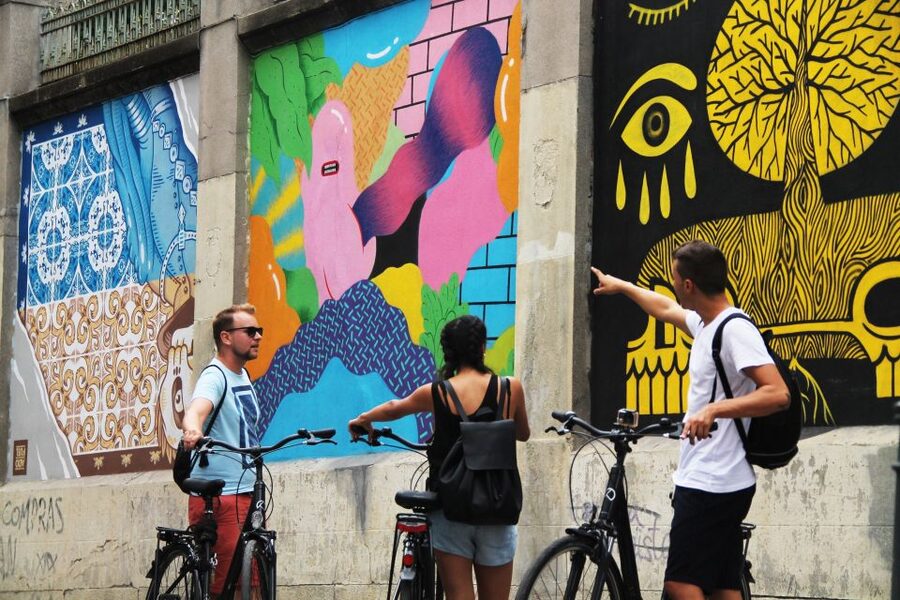
Madrid’s street art is best understood at street level, where a painted shutter, traffic bollard, or old wall can tell you as much about the city as a museum label. This bike tour takes you from Muelle’s preserved 1989 tag to festival work in Malasaña and community art spaces in Lavapiés, with a local graffiti artist explaining the styles and techniques along the way.
I like the local artist guide, who can put the artwork into Madrid’s recent cultural story, and I like the route through Malasaña and Lavapiés, two neighborhoods where the art feels tied to daily life rather than separated behind glass. The main consideration is cycling: this is a medium-level ride through city traffic, with one uphill section, so you should feel comfortable on a bike before booking.
Key points to know
- Muelle’s 1989 tag: See a preserved mark from one of Madrid’s earliest graffiti pioneers.
- Festival art in Malasaña: Visit work connected with the Pinta Malasaña festival around Plaza Dos de Mayo.
- Two community art spaces: Cycle to Solar Antonio Grilo and Esto es una Plaza, former abandoned sites turned into local projects.
- Guidance from a graffiti artist: Learn how artists work on walls, metal shutters, traffic elements, and other city surfaces.
- A moderate city ride: Bikes, helmets, locks, and a Madrid map are included, but traffic and one uphill stretch require basic confidence.
- Family potential with a caveat: A seven-year-old joined one family tour on their own bike, though weaker cyclists may find the route demanding.
Why this bike tour shows Madrid at street level
A street-art tour can easily become a quick parade of colorful walls. This one has more to offer because it connects the artwork to Madrid’s changing neighborhoods and to the people who made the city’s graffiti culture possible.
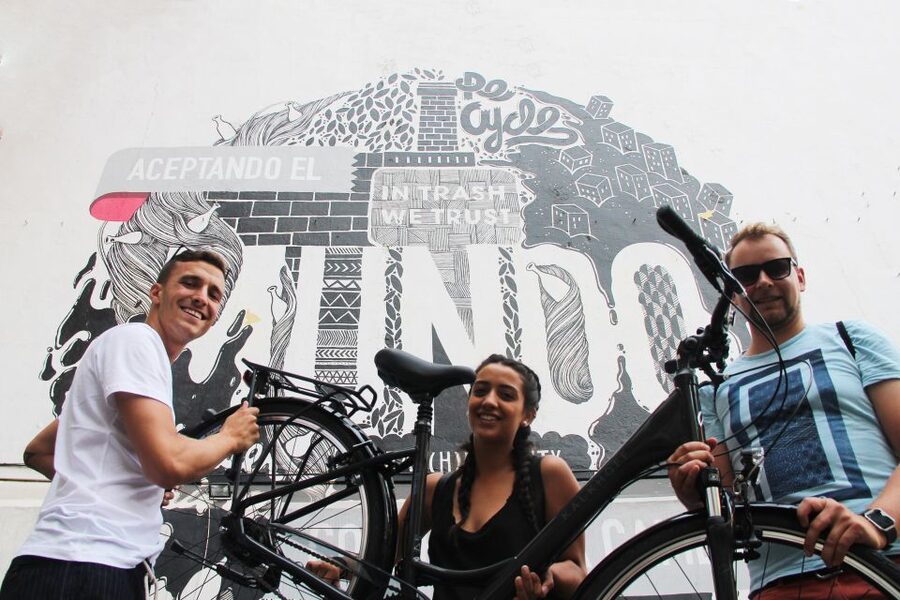
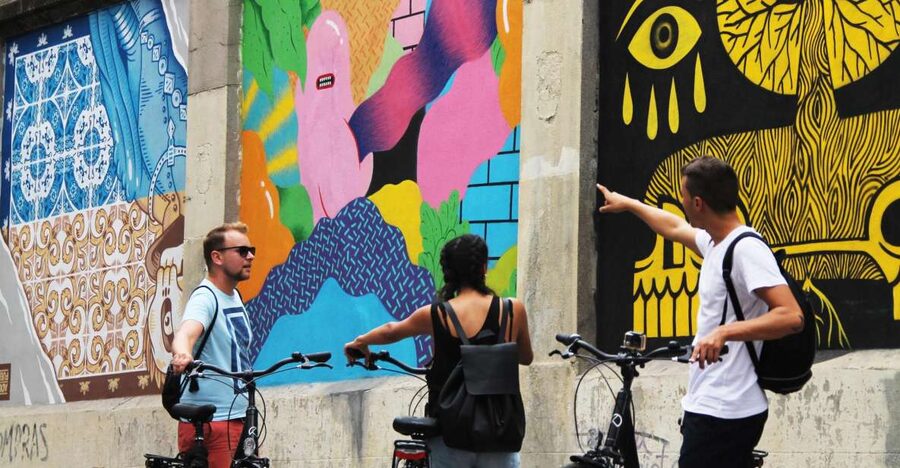
Your guide is a local graffiti artist, not simply someone pointing out painted walls. You’ll learn about the history of street art and the methods artists use on walls, shutters, traffic posts, and other city fixtures. That makes the tour useful even when the artwork is temporary or changes after your visit.
The route also gives you a good look at two different sides of Madrid. Malasaña is known for its stylish, youthful character and festival activity. Lavapiés brings a more community-centered feel, with local spaces that combine gardens, art, and neighborhood projects.
The tour earns its strongest praise for the guide’s ability to make the ride both informative and fun. Javier, named by one family as their guide, was especially good at showing not only the art but also less obvious corners of Madrid’s urban life. Your guide may be someone else, but the format is built around that same personal approach.
More Street Art Bike Tours in Madrid:
- London Bike Tour: Landmarks, Secret Gems, Pub Stop & Street Art
★ 5.0 · 943 reviews - Barcelona Street Art and Graffitti Bicycle Tour
★ 5.0 · 361 reviews - London: Landmarks & Secrets Bike Tour with Pub & Street Art
★ 4.9 · 314 reviews
Starting near Sol and getting ready to ride
The tour begins at the entrance of the small Carrefour Express supermarket at C/Montera 32. The closest metro stations are Gran Vía and Sol, putting you in a central and easy-to-reach part of Madrid.
Allow a little extra time to find the meeting point and get organized. You’ll receive a bicycle, helmet, lock, and Madrid city map. Safety instructions come before the ride, which matters in a city where cycling includes traffic, intersections, and busy central streets.
Wear comfortable shoes and bring your passport or ID card. A restroom break is included, but beverages are not, so bring water or plan to buy a drink before setting off.
The advertised duration is 2.5 hours. The practical information also calls it a three-hour, medium-level activity, so allow closer to three hours in your schedule. Starting times vary, and you’ll need to check availability for the exact departure time.
Muelle and the beginning of Madrid graffiti
One of the most worthwhile early stops is a preserved tag by Muelle, a pioneer of Madrid’s graffiti movement. The mark dates from 1989 and offers a direct link to the city’s early graffiti scene.
Muelle is described as a very young figure who helped establish a new cultural movement in Madrid. That detail gives the artwork a human scale. You are not just looking at an old signature. You are seeing evidence of a young artist helping shape a new form of public expression.
This stop also gives your guide a chance to explain how graffiti differs from later forms of street art. You’ll hear about tags, lettering, composition, and the way artists claim space in a city. Because the guide works as a graffiti artist, you can ask practical questions about technique rather than only receiving dates and names.
The tag is preserved, but much of Madrid’s street art is not permanent. Walls are repainted, shutters are replaced, and public areas change. That temporary quality is part of the point. The tour helps you notice work that you could easily pass without seeing.
Alonso Martínez and Boa Mistura’s early work
After the safety briefing, the group rides toward Alonso Martínez to see the first piece created by Boa Mistura. This Madrid crew began in the city’s outskirts and later worked on street-art projects in many parts of the world.
The stop is useful because it shows how a local crew can grow from neighborhood work into a larger design practice. You’ll see one early piece in the context of Madrid, rather than meeting the group only through polished projects elsewhere.
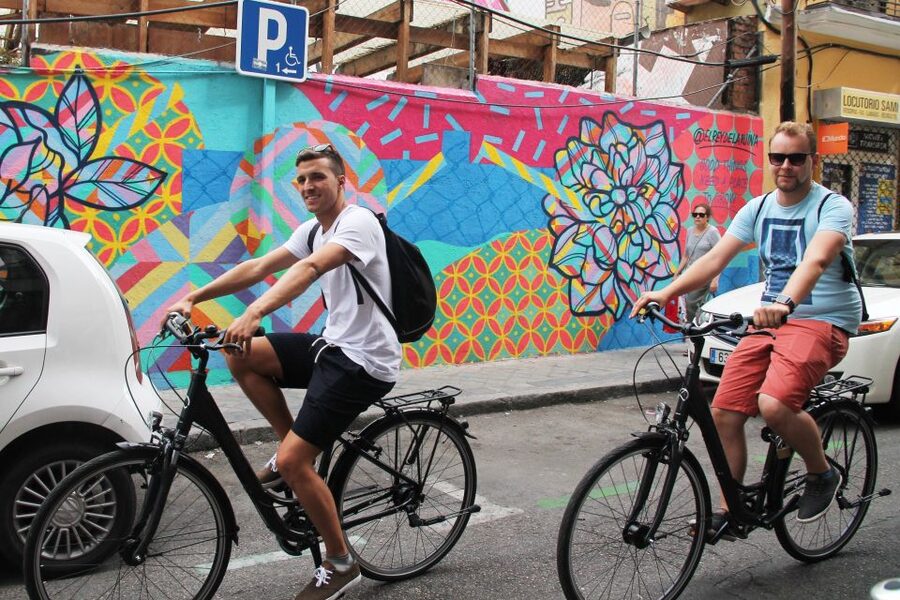
The route between stops is part of the experience. You are moving through the city by bicycle instead of being carried from one wall to the next. That lets you notice how street art appears beside shops, shutters, traffic equipment, and ordinary residential streets.
Keep in mind that a bike tour asks you to divide your attention. You’ll need to watch the road, listen to instructions, and stop safely before studying each work. This is not the right format for someone who wants to stand quietly in front of every mural for a long time.
More Street Art Tours in Madrid:
- Mexico City; ART NACO : Murals & Street Art Bike Tour
★ 5.0 · 284 reviews - Mexico City: Art Naco, murals & street art bike tour
★ 4.7 · 166 reviews - Cologne: Ehrenfeld Street Art Bike Tour
★ 4.9 · 105 reviews - Munich: Street Art Bike Tour
★ 4.6 · 66 reviews
Pinta Malasaña and the art around Plaza Dos de Mayo
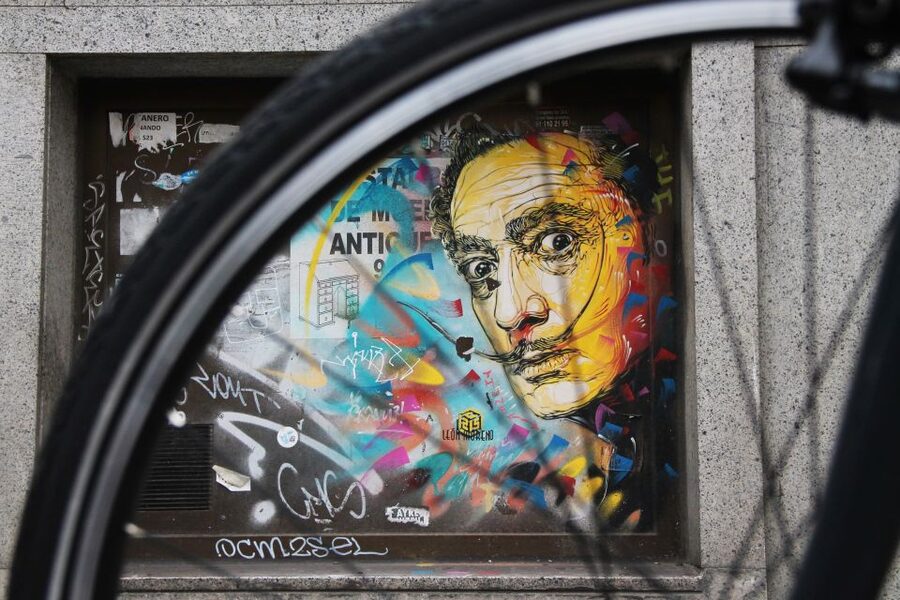
Malasaña is one of the main sections of the ride. The route includes artwork by Spanish artists who took part in the 2017 edition of Pinta Malasaña, a festival that brings new work into the neighborhood during April.
Plaza Dos de Mayo serves as the center of the festival activity. One memorable project is Bolardo Voy, Bolardo Vengo, which turns traffic bollards into colorful pieces of public art. It is a small idea with a large effect: ordinary street objects become part of the neighborhood’s visual character.
This is where the tour feels especially connected to everyday Madrid. You are not only looking at large murals. You are seeing how artists use small, awkward, and practical city features as their materials.
Festival work can change or disappear, so the exact appearance of a wall may not be the same as it was in 2017. That is worth understanding before you book. The value lies partly in learning how the festival works and seeing the areas where it took place, not in expecting every older piece to remain untouched.
Malasaña is also one of the livelier parts of the route. The mix of cyclists, pedestrians, shops, and traffic means you should stay alert. The guide can adjust the pace, but you will get more from this section if city riding feels natural to you.
Solar Antonio Grilo and the community side of street art
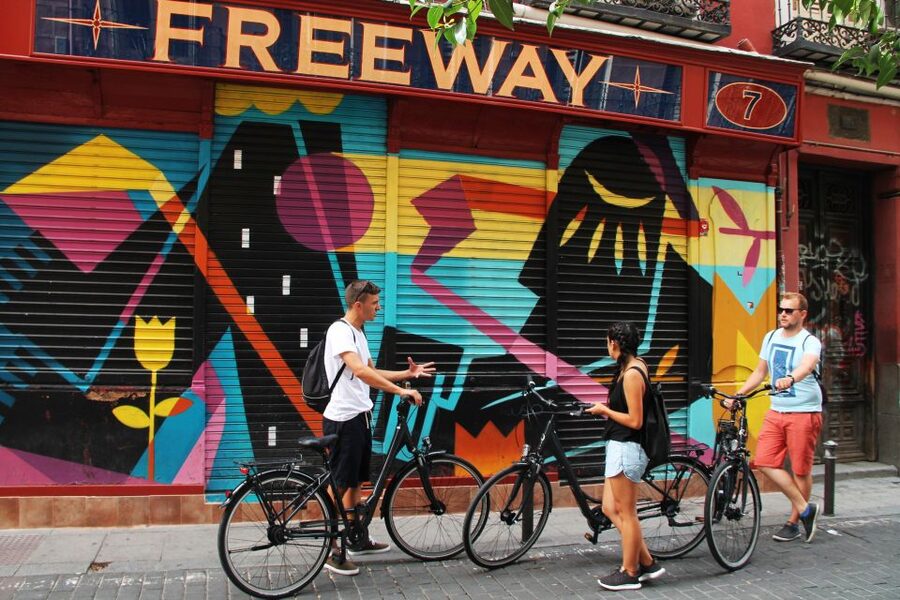
The route then reaches Solar Antonio Grilo, a local project in the Noviciado area. It was once an abandoned site and has been turned into a community space filled with urban gardening and street art.
This stop adds something that a mural-only tour would miss. You get to see how residents can reclaim an unused place and give it a new public purpose. The art is part of a wider project involving gardens, shared space, and local participation.
The site also helps explain the tour’s reference to hybrid economy systems. These spaces combine social use, community effort, and creative work rather than operating only as commercial attractions. You may find the setting more informal than a formal gallery, which is exactly what makes it useful for understanding neighborhood life.
Artists connected with the route include El Rey de la Ruina, Cassassola, Ze Carrión, and Por Favor. The guide introduces their interventions as part of Madrid’s broader street-art scene.
Esto es una Plaza in Lavapiés
The ride continues to Esto es una Plaza, another former abandoned site now used as a community garden and public art space in Lavapiés. Like Solar Antonio Grilo, it shows what can happen when a neglected urban area is placed back into local hands.
Lavapiés is a strong setting for this part of the tour because the neighborhood offers a different feel from Malasaña. Here, the artwork is closely linked to shared space and community use. You may see the gardens and murals less as isolated attractions and more as parts of an ongoing local project.
This is also one of the tour’s best opportunities to think about the difference between commissioned art and neighborhood art. A large festival mural can create a striking public image, while a community garden may matter because people use it every day. The route includes both kinds of work.
The visit is made by bicycle, so the time at each location is designed for a guided overview rather than a long independent visit. If one project especially interests you, make a note of it and consider returning later on foot.
How difficult is the cycling?
The activity is described as medium level, with one uphill section. That sounds manageable for anyone who regularly cycles in a city, but it should not be dismissed as a casual ride through a park.
One person in a group found that less experienced cyclists struggled with Madrid traffic and some uphill riding. The guide adjusted the tour as much as possible, but the basic lesson is clear: you should be comfortable starting, stopping, steering, and riding near traffic.
A family with a seven-year-old completed a private-style tour with the child riding their own bike. That suggests the experience can work for families with confident young cyclists, but age alone does not determine suitability. A child who is nervous in traffic or tiring quickly may have a harder time.
The included helmet and lock are practical additions. The map is useful for orientation, although the guide remains the main source of route information. Comfortable shoes are important, particularly if you are not used to spending several hours on a bicycle.
What the $46 price gets you
At $46 per person, the tour costs more than simply renting a bicycle for a few hours. The value comes from the route design and the specialist guide.
You are paying for access to a local artist’s perspective, a planned route through several art districts, bicycle rental, helmet, lock, a city map, and a restroom stop. You also avoid the work of locating scattered pieces in Malasaña and Lavapiés on your own.
For an independent visitor who already knows Madrid well and enjoys searching for murals, a bicycle rental and self-guided route might cost less. You would also have more time at each location. But you would need to identify the artists, find the festival sites, understand the community projects, and manage the route yourself.
I see the best value here for a first visit to Madrid, for anyone curious about graffiti techniques, and for people who want art tied to current city life rather than a standard museum visit. The tour is less compelling if you dislike cycling in traffic or prefer a slow walking pace.
Free cancellation up to 24 hours before the activity and the option to reserve now and pay later make planning easier. Be sure to check the exact starting time and confirm the duration shown when you book, since the information describes it as both 2.5 and three hours.
Who should book this Madrid street-art ride?
I would recommend it to adults and older children who can manage a medium-level city ride. It suits you especially well if you enjoy learning how art is made and want to connect Madrid’s creative scene with its neighborhoods.
It is also a good choice for anyone who has already seen the main central sights and wants a different view of the city. You’ll spend time in Malasaña, Lavapiés, Noviciado, and the area around Alonso Martínez, with the bike helping you cover more ground than a walking route.
I would think twice if you are not confident cycling in traffic. The guide can make adjustments, but the tour cannot remove the road conditions or the uphill stretch. If you want maximum time to photograph each mural, a private walking route may suit you better.
FAQ
How long does the Madrid Street Art Bike Tour last?
The tour is advertised as 2.5 hours. The activity information also describes it as a three-hour experience, so allow up to three hours and check the confirmed duration when booking.
Where does the tour start and finish?
It starts at the entrance of the Carrefour Express supermarket at C/Montera 32. The closest metro stations are Gran Vía and Sol. The tour returns to the same meeting point.
Which languages are available?
A live guide is available in English or Spanish.
Is bicycle rental included?
Yes. The tour includes a bicycle, helmet, lock, and Madrid city map.
What street-art areas does the route visit?
The route includes Malasaña and Lavapiés, as well as stops near Alonso Martínez, Solar Antonio Grilo, and Esto es una Plaza.
Is the bike ride difficult?
It is described as a medium-level activity with one uphill section. You should be comfortable cycling in city traffic. The guide can adjust the tour when needed, but less confident cyclists may find some sections challenging.
What should I bring?
Bring a passport or ID card and comfortable shoes. Beverages are not included, so you should plan to bring or purchase your own drink.
Should you book it?
Book this tour if you want Madrid’s street art explained by someone from the graffiti scene, and if you are happy seeing the city from a bicycle. The preserved Muelle tag, Boa Mistura’s early work, the Pinta Malasaña pieces, and the two community art spaces give the ride a clear story rather than a random collection of walls.
Skip it if traffic makes you uneasy or if you want a slow, highly detailed art walk. For confident cyclists, though, $46 buys a useful mix of local context, neighborhood exploration, and practical sightseeing that is difficult to arrange on your own in a single afternoon.
Just added around Madrid
- Madrid: Magic Retiro Park Bike Tour★ 4.8 · 58 reviews
- Madrid: Sunset and Night Lights eBike Tour★ 4.9 · 16 reviews
- Madrid: Literary Quarter & Retiro Park Electric Bike Tour★ 4.8 · 31 reviews
- Madrid: 3-Hour Sightseeing Tour by Electric Bike★ 4.6 · 192 reviews
- Madrid: Retiro Park and Literary Quarter by Bike★ 4.9 · 22 reviews
- Madrid: Guided Electric Bike Tour. City center & Retiro Park★ 4.7 · 40 reviews
- Private Madrid Bike Tour | Exclusive Guided Tour | From 30€★ 5.0 · 22 reviews
- Madrid: City Highlights Private Bike Tour★ 4.7 · 27 reviews
Madrid Bike Tours, compared.
Best of Madrid: 3-Hour Guided Bike Tour in Small Groups
Read our review →
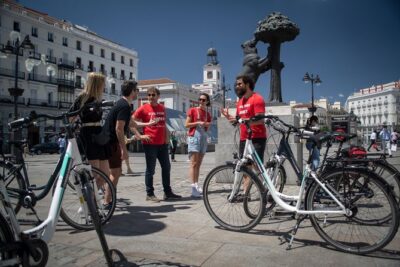
3 hour Guided Highlights Bike Tour with Optional Tapas
Read our review →
Madrid City Guided Bike/E-Bike Tour for Small Groups
Read our review →
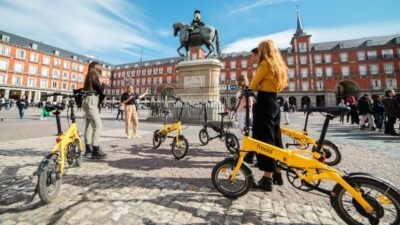
Highlights & Parks with Electric Bike Private Tour
Read our review →Browse the lists this tour appears in