
REVIEW · KYOTO
Kyoto: Half-day Guided Bike Tour with Fushimi Inari
South Kyoto is at its best when you move between the famous sights instead of simply lining up at them. This small-group bike tour links Toji, Gion, Tofukuji, and Fushimi Inari with canals, rivers, and quiet local streets in one well-packed morning or afternoon.
I like the gentle pace and the chance to see Kyoto from street level. I also like the mix of major sights and less showy routes, especially the Takase Canal, Kamo River, and Gion backstreets. The main consideration is distance: one rider reported covering more than 15 kilometers, so this is not a token pedal between attractions.
Key points at a glance
- Four major Kyoto sights in 210 minutes: Toji, Higashi-Honganji, Tofukuji, and Fushimi Inari all fit into one outing.
- A quieter way into Gion: You ride through backstreets rather than sticking only to Kyoto’s busiest visitor corridors.
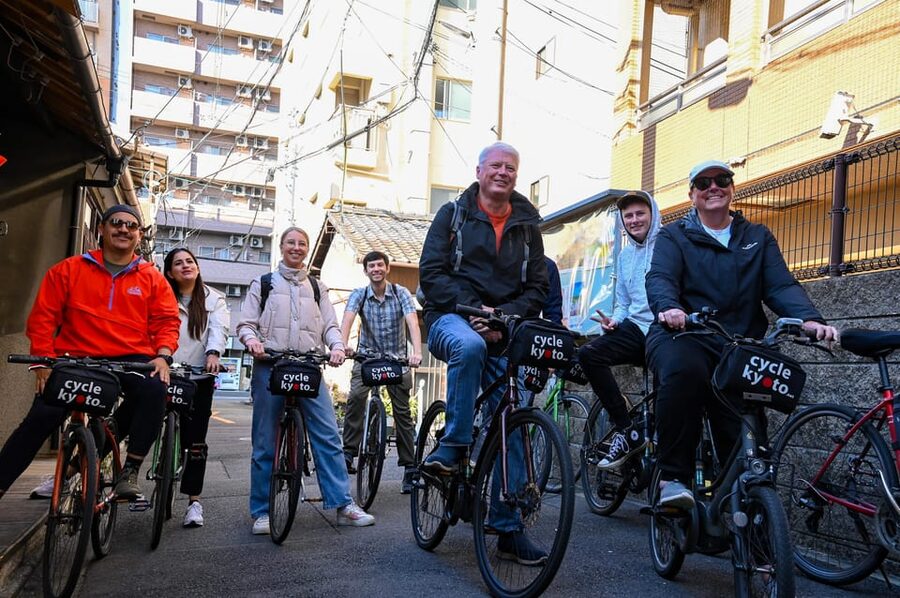
- Small groups capped at eight: The guide can answer questions and adjust time at stops more easily than on a large coach tour.
- A relaxed but real bike ride: Riders have reported covering more than 15 kilometers, with riverside and neighborhood stretches along the way.
- Guides who add local context: Jay, Julian, Indra, Juan, Sean, and Mayco have all led recent departures, with particular praise for their clear explanations and easy manner.
- E-bikes cost extra: An electric bike can be requested for an additional 3,000 yen, which may matter if you are unsure about the distance.
Why this route works so well in South Kyoto
This outing is less about checking off one isolated attraction and more about seeing how Kyoto’s southern districts connect. You begin near Kyoto Station, then pedal through temple grounds, waterways, traditional streets, and residential neighborhoods before reaching Fushimi Inari.
That variety is the strongest reason to book it. A sightseeing bus can move you between the big names, but it cannot give you the same sense of the city’s scale. On a bicycle, you notice the shift from grand temple entrances to small streets and river paths.
The group limit of eight is useful here. Kyoto’s roads can be busy, and a compact group is easier to manage at crossings and narrow lanes. It also gives you a better chance to ask about a temple, a neighborhood, or Japanese customs without waiting for a long line of people to finish with the guide.
You pay $77 per person. That is more than renting a bicycle on your own, but the price includes the bike, helmet, water, and a guide for three and a half hours. I see the value in the route planning alone: you get several well-known sights without having to work out the order, streets, or transfers yourself.
More Half-Day Rides in Kyoto:
- Red Rock Canyon eBike Half-Day Tour
★ 5.0 · 1,870 reviews - Lisbon: 7 Hills Half-Day Electric Bike Tour
★ 4.9 · 1,592 reviews - Ubud: Rice Terraces & Villages Half-Day Fat Tire E-Bike Tour
★ 4.9 · 602 reviews
Getting started near Kyoto Station
The meeting point is Cycle Kyoto, reached from Kyoto JR Station by going past Avanti, crossing one set of traffic lights, passing the Daily Yamazaki convenience store, and taking the next left. Allow enough time to find it. The directions are specific, but this is still a city street rather than a landmark that is impossible to miss.
The first 15 minutes are used for the safety briefing. This is more than a formality. You will be riding through ordinary Kyoto streets, so listen carefully to the guide’s instructions before setting off.
Bicycles, helmets, and water are included. A small pouch on the bicycle holds personal items, but you should keep your luggage light. Wear comfortable clothes and shoes that work well on a pedal, and bring sunscreen, warm clothing, and a camera. Check the weather before you leave, since the ride is outdoors from start to finish.
The standard bikes were described as being in good condition, with different sizes and helmets available. If you want an e-bike, request one in advance if possible and expect an upgrade fee of 3,000 yen.
Toji, Kyoto’s grand opening scene
The first major stop is Toji, with about 35 minutes for a guided visit. It is a UNESCO heritage site and is presented as Kyoto’s oldest temple, giving the tour an impressive start.
Toji is a good place to get a sense of the scale and formality of Kyoto’s temple culture. You are not simply stopping for a quick photograph. The guide gives you time to look around and explains what makes the temple important.
The timing is also sensible. Starting with a major site lets you settle into the rhythm of the day before the ride becomes more varied. You should expect a guided visit rather than an extended, free period to explore every corner. With several more stops ahead, the group needs to keep moving.
Higashi-Honganji and the city’s temple center
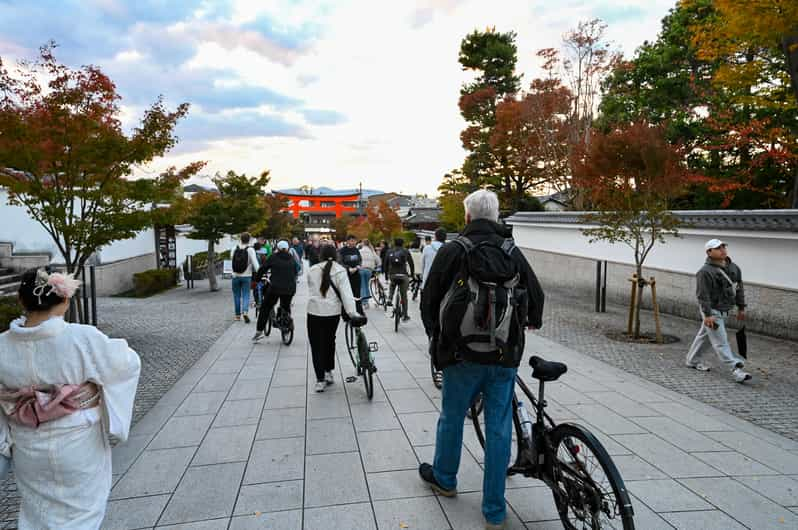
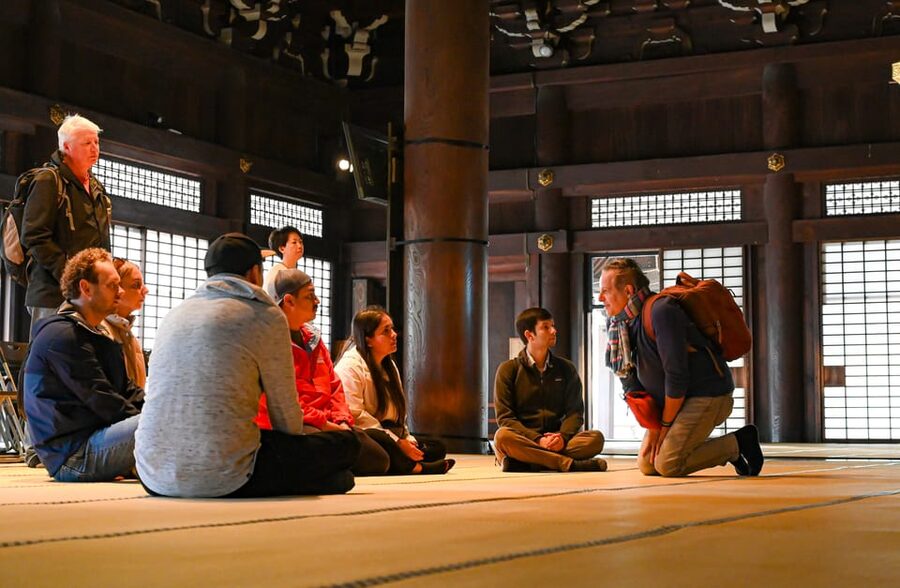
The tour then heads to Higashi-Honganji for another 35-minute guided visit. This is one of Japan’s largest temples, so it provides a different feel from the route’s smaller streets and neighborhood passages.
I like having two substantial temple stops early in the ride. They give you cultural context before you reach Gion and Fushimi Inari, where the visual appeal can easily take over. The guide can help you notice details that might otherwise blur together when several temples appear on the same day.
There is a tradeoff. If your main goal is to spend a long time inside each temple, a half-day cycling route may feel brisk. If you want a broad look at southern Kyoto, the schedule gives you a useful balance.
More Guided Tours in Kyoto:
- Kyoto: Hidden Gems E-Bike Tour with Local Japanese Guide
★ 4.9 · 189 reviews - 3-Hour Porto Highlights on a Electric Bike Guided Tour
★ 5.0 · 4,392 reviews - Small Group Guided Bike Tour of Amsterdam’s Hidden Gems
★ 5.0 · 3,936 reviews - Porto: City Highlights 3-Hour Guided Electric Bike Tour
★ 4.8 · 3,092 reviews
Following the Takase Canal and Kamo River
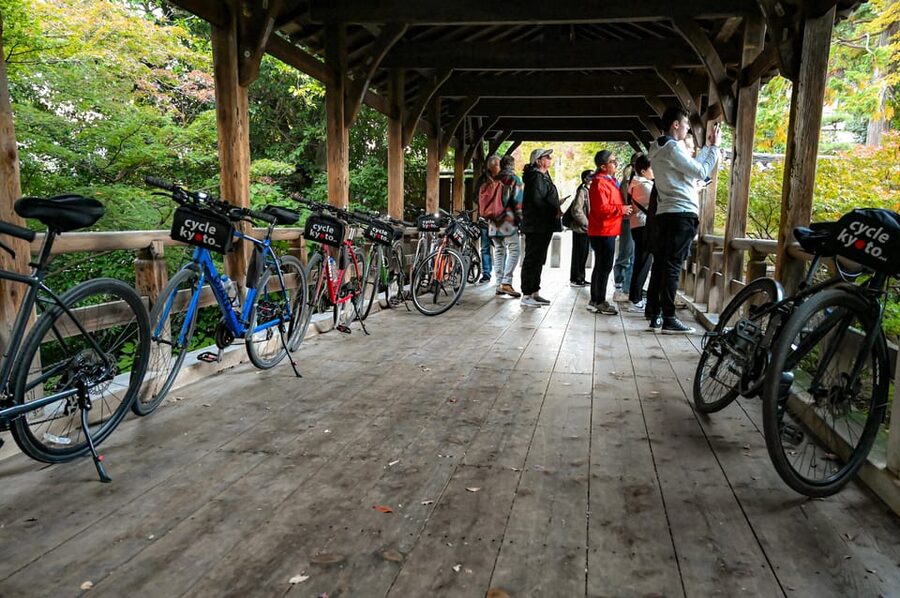
After the central temples, the route follows the Takase Canal for about 10 minutes, then reaches the Kamo River for roughly 15 minutes. These are short sections, but they are important parts of the experience.
The waterways break up the temple visits and give your legs an easier change of pace. They also show a more everyday side of Kyoto. Instead of moving only from gate to gate, you are riding through the city’s physical connections.
The river portion is one of the places where a bicycle really earns its keep. You can cover ground without feeling as if you are being rushed from one ticketed attraction to another. The exact riding conditions depend on weather and street traffic, so do not expect every stretch to feel like a dedicated cycle path.
One rider described the overall outing as more than 15 kilometers, while the published duration is 210 minutes. That is a useful warning for anyone who has not cycled recently. The pace is described as gentle, but gentle does not mean motionless.
Gion from the backstreets
Gion receives about 30 minutes of guided attention. This is Kyoto’s famous geisha and teahouse district, but the appeal here is the way you reach it. Rather than simply arriving at the most photographed lanes, you ride through backstreets and get a broader feel for the area.
The guide’s role matters most in Gion. The district carries a lot of cultural meaning, and a good explanation helps you look beyond the wooden facades and pretty lanes. Guides including Jay, Julian, Indra, Juan, Sean, and Mayco have been praised for an easy manner, clear explanations, and patience with questions.
Please keep your expectations practical. This is a short guided pass through Gion, not a private cultural lecture or a long evening visit. You will have time to see the streets and hear about the district, but the tour still has to reach Tofukuji and Fushimi Inari.
The bicycle also gives you a different view of Gion than a walking-only visit. You cover more ground and see the transition between the better-known streets and nearby local areas. Follow the guide closely and ride with care, since this is a real neighborhood, not a closed attraction.
Tofukuji for a thirty-minute photo stop
Tofukuji is scheduled as a 30-minute photo stop. That label tells you what to expect: this is a chance to admire the temple setting and take pictures, not a full guided tour of every building.
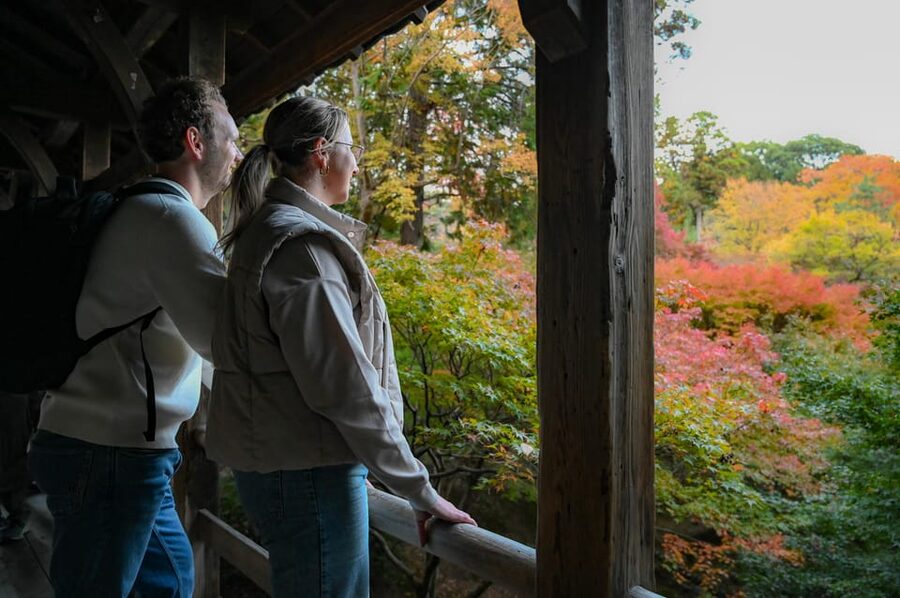
It is a useful pause before the final major attraction. The stop gives you time to get off the bike, stretch, and enjoy one of Kyoto’s most attractive temple settings. Your guide may add background, but the emphasis is on seeing and photographing the site.
If Tofukuji is a personal priority, you may wish you had longer. On the other hand, a dedicated visit could take much of a morning on its own. The tour is designed for variety, and this stop fits that purpose.
Fushimi Inari and the orange torii gates
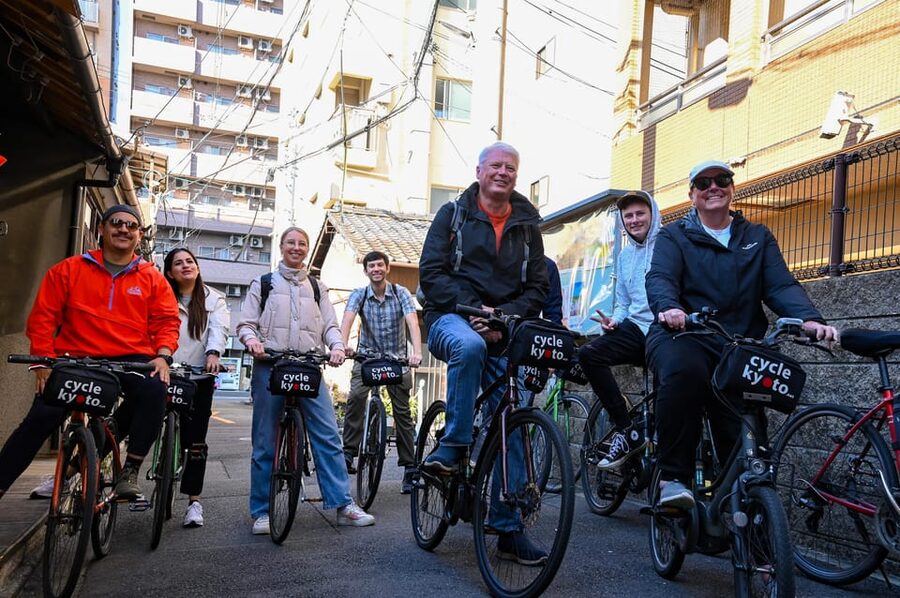
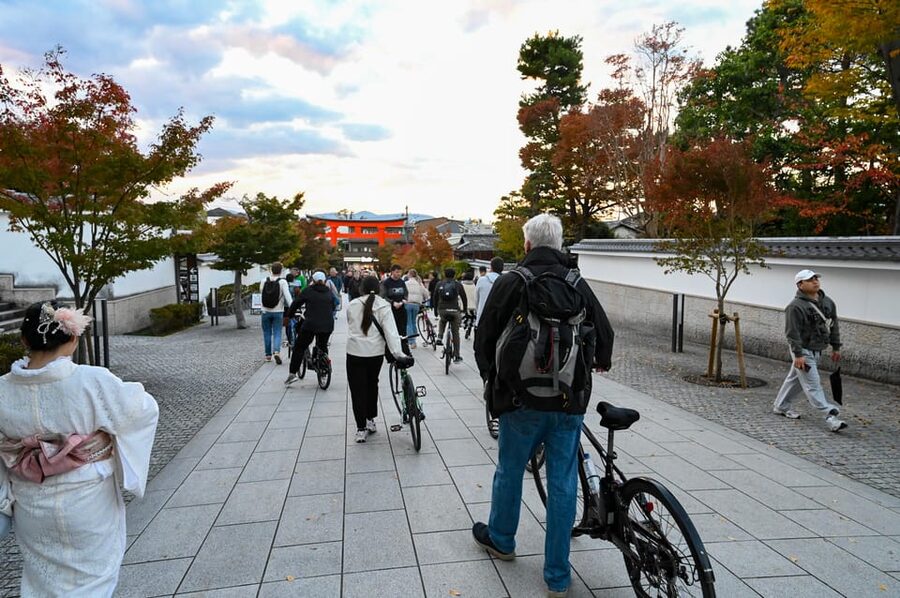
The final major stop is Fushimi Inari Taisha, with about 45 minutes for a guided visit. This is the longest stop on the route and the visual finale: the famous orange torii gates that climb through the shrine grounds.
Fushimi Inari is described as Japan’s most visited attraction, so timing and patience matter. You will not have the entire shrine complex to yourself, and 45 minutes is not enough for a full climb through every torii. The advantage is that you can see the signature gates without giving up the rest of the South Kyoto route.
The guide helps make the stop more than a quick photo opportunity. You get an introduction to the shrine and time to walk among the gates before returning to the bicycles. Wear shoes that are comfortable for both riding and walking.
After Fushimi Inari, you cycle back to Cycle Kyoto. The route therefore ends where it began, which is convenient if you have plans near Kyoto Station afterward.
How the guides shape the experience
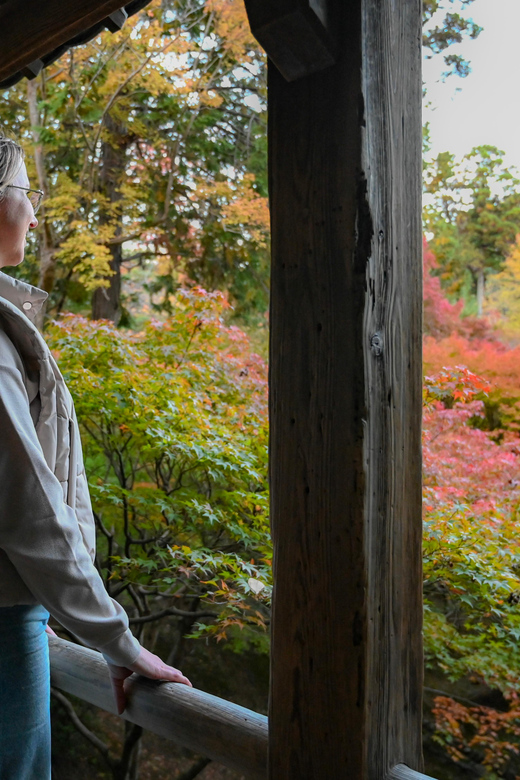
The strongest personal praise has gone to the guides. Jay was described as passionate and good at making people feel comfortable. Julian was praised for keeping the outing enjoyable even in poor weather. Indra was singled out for answering questions and adding useful local information.
Juan was described as patient and easygoing, while Sean adjusted the outing to the group’s preferred timing and helped one rider upgrade to an e-bike. Mayco was also praised as a strong guide for explaining the places along the way.
Guide assignments can change, so you cannot book a particular person unless the provider confirms it. Still, the pattern is encouraging: the guides are not there only to lead the bikes. They explain the history and culture, manage the pace, and help the group feel at ease.
A small group also gives the guide room to respond to the people in front of them. A four-person departure, for example, can be more flexible about how long to spend at a stop than a full group of eight.
Who should book this bike tour?
I would choose this for a first or second visit to Kyoto when I wanted a quick orientation to the southern half of the city. It works especially well if you want temples, a shrine, Gion, and everyday streets in one outing.
It also suits people who enjoy seeing a city through movement. You do not need to be a serious cyclist, but you do need to ride confidently and be comfortable with a possible distance of more than 15 kilometers. People who cannot ride a bike, have back problems, or are under 13 should not book it.
The tour is open to participants aged 13 and older. Families with younger children will need another activity, and anyone looking for a completely effortless sightseeing option may prefer a walking or vehicle-based tour.
An e-bike can make the route more manageable, but it costs 3,000 yen extra. If you have any doubt about your stamina, that upgrade may be worth considering. The standard pace is relaxed, yet the time in the saddle adds up.
Weather, clothing, and practical value
Weather can shape the day. Bring warm clothing when temperatures are low, sunscreen in bright conditions, and comfortable clothing suited to cycling. Rain does not automatically ruin the outing, but wet roads and poor visibility may make the ride less pleasant.
The price includes the essentials needed to ride: bicycle, helmet, water, and guide. Meals are not included, so eat beforehand or plan food for after the tour. The route takes 210 minutes, which leaves part of your day free but still requires a solid block of time.
Cancellation is flexible up to 24 hours before departure for a full refund, and you can reserve now and pay later. Those terms help if your Kyoto schedule is still changing, but you should still check the available starting times before committing.
My verdict: book it if you want Kyoto in motion
Book this tour if you want a compact, active look at South Kyoto with a guide who can connect the sights. The combination of Toji, Higashi-Honganji, Gion, Tofukuji, and Fushimi Inari is strong, and the river and canal sections keep the route from feeling like a string of temple entrances.
Skip it if you dislike cycling, need long visits at each attraction, or want to explore Fushimi Inari’s full mountain route. For everyone else, $77 is a fair price for a small group, a planned route, equipment, and three and a half hours of local explanation.
The key question is simple: do you want to see Kyoto while sitting still, or do you want to connect its temples, rivers, neighborhoods, and shrine gates under your own pedal power? If the second option sounds right, this is a smart way to spend half a day.
FAQ
How long does the Kyoto bike tour last?
The tour lasts 210 minutes, or three and a half hours.
What sights are included?
The route includes Toji, Higashi-Honganji Temple, the Takase Canal, the Kamo River, Gion, Tofukuji Temple, and Fushimi Inari Taisha.
Is the tour conducted in English?
Yes. The tour has a live English-speaking guide.
How many people are in the group?
The public tour is limited to eight participants.
What is included in the price?
The $77 price includes bicycle rental, a helmet, a guide, and water. Meals are not included.
Can I use an e-bike?
Yes. E-bikes are available upon request for an additional fee of 3,000 yen.
What is the minimum age for the tour?
The minimum age for the public tour is 13. The tour is not suitable for children under 13, people who cannot ride a bike, or people with back problems.
Just added around Kyoto
- ONLY YOU in the Bamboo Forest! 4 hours E-bike tour with a local★ 5.0 · 45 reviews
- Pedal Adventure Kyoto’s iconic landmarks on an e-bike tour★ 5.0 · 189 reviews
- South Kyoto in a Nutshell: Gentle Backstreet Bike Tour!★ 5.0 · 225 reviews
- The Beauty of Kyoto by Bike: Private Tour★ 5.0 · 47 reviews
- Explore Hidden Alleyway with a Local Expert (Afternoon Tour)★ 5.0 · 17 reviews
- Secret Eastern Kyoto Biking Adventure★ 5.0 · 44 reviews
- Explore Hidden Alleyway with a Local Expert (Morning tour)★ 5.0 · 61 reviews
- Kyoto Bamboo Forest & Golden Pavilion E-Bike Tour★ 5.0 · 50 reviews
Kyoto Bike Tours, compared.
Arashiyama Bamboo Forest & Hidden Gems Bike Tour (Early Bird)
Read our review →
5 Top Highlights of Kyoto Full Day Bike Tour (E-bike option)
Read our review →
Full Day Biking Tour Exploring the Best of Kyoto
Read our review →
Afternoon Kyoto Bike Tour: Bamboo Forest, Monkeys & Hidden Spots
Read our review →Browse the lists this tour appears in