REVIEW · ROME
Rome E-Bike Highlights Tour & Tasting in Secret Cave
Rome’s most unusual stop comes halfway through this four-hour ride: an archaeological aging cave beneath Monte Testaccio, where regional cheeses and cured meats are served with wine and crisp pizza scrocchiarella. I like the smart route, which links the Tiber, Castel Sant’Angelo, the Jewish Ghetto, Piazza Navona, and other major sights without making you walk between them. I also like the small-group format, with no more than eight people per guide.
The main caution is simple: you must already be comfortable riding a bicycle in an urban setting. Light traffic is sometimes unavoidable, and the guide can refuse participation after a pre-ride ability and health check, with no refund. The tasting is also a generous snack rather than a full meal, and one participant found the number of tasting elements lower than expected.
Key points to know before booking

- The cave is the tour’s signature stop: Taste Lazio products inside Monte Testaccio’s underground Urban Aging Cave.
- You cover a lot of Rome: The route connects the Tiber, Castel Sant’Angelo, Tiber Island, Piazza Venezia, the Jewish Ghetto, Campo de’ Fiori, Circus Maximus, Piazza Navona, Piazza di Spagna, and Piazza del Popolo.
- E-bikes reduce the physical strain: Pedal assist helps you handle a long sightseeing route, but you still need basic cycling skills.
- Guides make a major difference: Giorgio, Alessio, and Alberto have each led especially warm and personal tours, with history, food stories, photos, and local context.
- The tasting is not lunch: Expect shared samples of four cheeses, four cured meats, local wine, and pizza scrocchiarella, subject to the serving arrangement on the day.
- Small groups are the sweet spot: The standard maximum is eight people per guide, with private options also available.
Why the cave makes this Rome bike tour different

Most Rome bike tours focus on speed and sightseeing. This one adds a food stop with a setting you are unlikely to find on a normal city route. The cave is cut into the ancient layers of Monte Testaccio, a hill formed from millions of broken Roman oil jars. In modern use, part of this underground space serves as an Urban Aging Cave for cheese.
That setting gives the tasting real purpose. You are not simply stopping at a restaurant for a plate of snacks. The cheeses are aged inside the cave, and the cool, enclosed room connects food production with Rome’s commercial past. The experience uses the city itself as part of the meal.
The planned tasting includes four cheeses, four types of salumi, a glass of local wine, and pizza scrocchiarella. That is enough to make a satisfying break, but I would not schedule this instead of lunch if you need a full meal. Portions are shared, and the exact presentation may vary. One participant expected five tasting stops and received three, though the final serving was described as generous.
At $80 per person, the price is fair if you value both transport and guiding. You are paying for a quality e-bike, helmet, lock, a certified guide, four hours of route coverage, and the cave tasting. A regular walking tour may cost less, but it will not take you across as much of Rome or provide the same unusual food setting. The value is strongest early in your visit, when you want a broad first look at the city.
More City Bike Tours in Italy
- Rome: Top Highlights & Hidden Gems Tour by Cannondale E-Bike
★ 4.9 · 1,760 reviews - Rome: Standard or E-Bike Highlights Guided Tour
★ 4.7 · 777 reviews - Rome: City Highlights E-Bicycle Tour
★ 4.9 · 740 reviews
Starting along the Tiber
The ride begins at Lungotevere delle Armi, 44, unless your booking option gives another meeting point. After bike fitting and a short safety check, the group heads toward the Tiber River path.
The river route is a good opening because it gives you room to settle onto the bike before dealing with busier streets. The tour uses the Tiber path where possible, though the entire route is not traffic-free. You can expect stretches of light vehicular traffic in the city center, so this is not a protected cycling excursion from start to finish.
The guide provides a helmet and bike lock. The e-bikes use pedal assist, which means the motor helps as you pedal rather than replacing the need to pedal. You will still steer, balance, brake, and watch the road. If you have not ridden for years, this is not the place to relearn.
Castel Sant’Angelo and the riverfront

The first major landmark is Castel Sant’Angelo, the massive cylindrical fortress beside the Tiber. From the outside, it gives you an immediate sense of Rome’s layers: an imperial mausoleum later turned into a fortress and papal refuge.
The stop is brief, around ten minutes of riding time in this part of the route, so do not expect an interior visit. Entrance fees to monuments are not included. The value here is the guide’s explanation and the chance to see the fortress in relation to the river and central Rome.
This is one reason an e-bike helps. Castel Sant’Angelo sits close to several other important sights, but the connections can feel tiring on foot, especially during a hot day. You move on before one monument absorbs the whole morning.
Tiber Island, Piazza Venezia, and the Jewish Ghetto

The route continues to Tiber Island, a small, distinctive island in the river with a long connection to Rome’s civic and religious life. It is a compact stop, but it helps you understand how the river shaped movement through the old city.
From there, the ride reaches Piazza Venezia. The square is one of Rome’s major traffic hubs, with the enormous Vittoriano monument dominating the view. This is a place where the urban riding skills matter. You are in the heart of the city, and roads can be busy.
The Jewish Ghetto follows, with roughly twenty minutes allocated to this stretch of the ride. This is one of the more rewarding areas for a guide-led visit because the neighborhood’s story is not obvious from a quick pass through its streets. You can ask about the district’s Jewish community, food traditions, and changing urban character.
The tour does not promise museum entry, so think of these stops as an outdoor introduction. If the Ghetto interests you, mark it for a longer return visit. The bike tour gives you context and orientation rather than enough time for a detailed architectural study.
More City Bike Tours in Rome
- Rome Highlights by E-Bicycle Small group
★ 5.0 · 486 reviews - Rome: City Highlights Electric Bike Tour
★ 4.9 · 343 reviews - Highlights & Hidden Gems Tour with Top E-bike
★ 5.0 · 300 reviews - Rome’s Best by E-bike: Guided City Tour (Small Group or Private)
★ 5.0 · 207 reviews
Campo de’ Fiori and the food connection

Campo de’ Fiori provides another lively central stop and a natural bridge between sightseeing and the later tasting. Its market tradition and food identity make it a useful place to hear about Roman eating habits, even though the formal tasting comes later at Testaccio.
The route spends about twenty minutes in this section. That is enough for a guide’s explanation and a quick look, but not enough for extended shopping or a slow market breakfast. If you want to browse every stall, plan to return on your own.
This is also where the tour’s main tradeoff becomes clear. You see many famous places, but the time at each one is limited. I prefer this format when I want a first orientation to Rome. If you already know the center well and want long visits inside monuments, a focused walking tour may serve you better.
Monte Testaccio and the underground tasting

Monte Testaccio is the experience’s most distinctive neighborhood stop. The hill is made from discarded Roman amphora fragments, especially vessels once used for transporting oil. Its presence tells you something about the scale of ancient commerce: Rome was not only a city of temples and emperors, but also a huge consumer and distribution center.
The bicycle route brings you into the Testaccio area before the group enters the archaeological market and cave setting. This shift is one of the tour’s strongest features. You begin with famous landmarks, then move into a part of Rome where food, trade, and working-city life take center stage.
Inside the cave, you can expect the food tasting to last about forty minutes. The planned selection includes four aromatic cured meats, four cheeses aged in the cave, a glass of regional wine, and pizza scrocchiarella. The crisp pizza works well as a base for the salty meats and cheeses.
The cave is not simply decorative. Its temperature and old masonry are part of the food story. You get a better sense of why the location matters when the guide explains how the space is used for aging products.
If you do not drink alcohol, the information provided does not promise a replacement beverage. The tour also excludes food and drinks not specifically listed. Vegans should choose another activity, since the central tasting is built around cheese and cured meat. Vegetarian details are not specified, so ask before booking if that matters to you.
Circus Maximus and a wider view of ancient Rome

After the tasting, the ride continues to Circus Maximus. The broad open area once hosted enormous chariot races and public spectacles. Today, the scale is easier to appreciate from the outside, especially from a bicycle, because you can move along its length rather than seeing only one fixed viewpoint.
This is listed as a photo stop and guided visit, with about twenty minutes of cycling time. No entrance to an archaeological site is included. The stop works best as a visual lesson in size and location, not as a replacement for an archaeological tour.
The timing after the food break is sensible. You have a chance to settle after eating before returning to the main sightseeing circuit. The route continues to favor breadth over long stops.
Piazza Navona, Piazza di Spagna, and Piazza del Popolo
Piazza Navona is one of the route’s most rewarding squares. Its long shape follows the footprint of an ancient stadium, and its fountains and surrounding buildings make it easy to see why Rome is best understood through layers of old and new. The guide has about twenty minutes to explain the square and point out its main details.
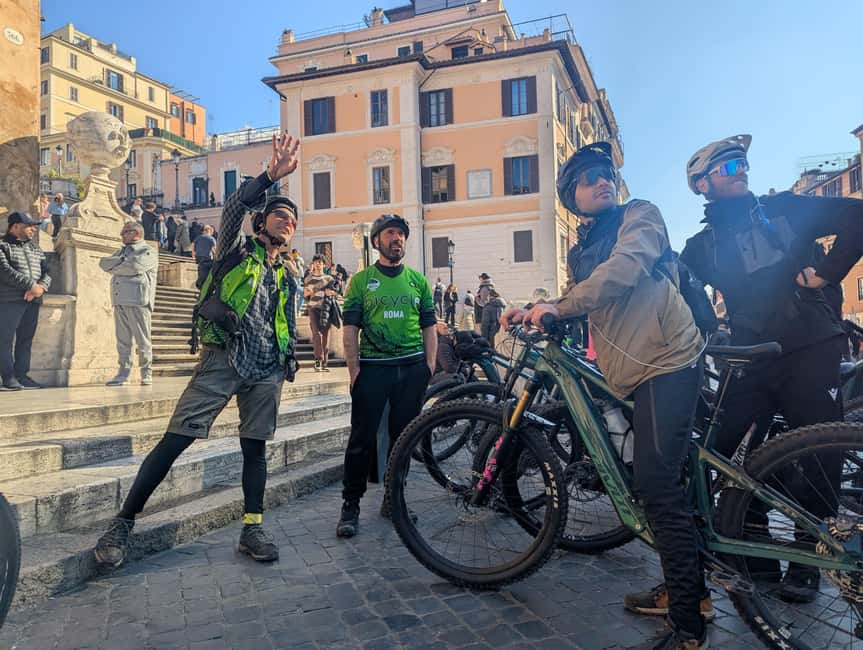
Piazza di Spagna comes next. The Spanish Steps area is one of Rome’s busiest public spaces, so cycling here requires care and patience. You should expect an outdoor stop rather than access to the monuments around the square. The tour gives you the view and the setting, then keeps moving.
The final major stop is Piazza del Popolo, a broad northern gateway to the historic center. It is a fitting end to the city circuit because it connects Rome’s monumental center with the direction of Villa Borghese and the northern approaches.
A particularly good guide can transform these short stops. Giorgio has been singled out for passionate storytelling and a strong sense of civic pride. Alessio has been praised for adjusting the balance between food and sightseeing, taking time for photographs and adding pizza, supplì, and tiramisu on one customized outing. Alberto has been noted for linking street food with food history.
Those details matter because four hours can otherwise become a blur of squares. The personality and judgment of the guide determine how much meaning you take from the route.
The guide and group size

The standard maximum is eight people per guide, with private and small-group choices available. That is a useful size for city cycling. You are more likely to hear instructions, stay together, and ask questions than you would in a large convoy.
The guides operate in English, Spanish, Italian, and French. If you want detailed historical explanation, choose the language in which you can comfortably ask follow-up questions. The tour is guide-led from start to finish, so this is not a route where you simply collect a bike and follow a map.
A pre-departure test is required. The operator reserves the right to deny participation if you are judged unable to ride safely or if health concerns make the activity unsuitable. That rule may feel strict, but it protects the group on streets where conditions can change quickly.
Who should book this four-hour ride
I would choose this tour for a first or second day in Rome, especially if you want to see many central districts before deciding where to return. It suits people who can ride confidently, enjoy outdoor sightseeing, and prefer a guide’s stories to a long series of museum interiors.
It is also a good choice for couples and families with older children. Children under 139 centimeters must use a tag-along extension, children up to 20 kilograms can ride free in a child seat, and the minimum age to operate an e-bike is 12. The information does not specify the number of child seats or extensions, so confirm availability before booking.
I would not choose it if you are pregnant, cannot ride a bike, use a wheelchair, or want a fully protected cycling route. It is also not a good substitute for a full food tour. The tasting is a distinctive interlude, not a sequence of restaurant meals.
Comfortable clothes and shoes are essential. Bring a passport or identification card, as requested for the activity. Alcohol and drugs are not permitted, and pets cannot join.
Is $80 a good value?
For four hours in central Rome, $80 is a reasonable midrange price. The bike rental alone does not explain the cost, but the package also includes a local guide, safety equipment, and a specialty tasting in a historic underground setting.
The strongest value comes from the amount of ground covered. You can link river paths, squares, neighborhoods, and ancient sites without spending the entire day on foot. The e-bike reduces fatigue, though it does not remove the need for attention or physical participation.
The price is less attractive if you mainly want a slow food experience. In that case, the forty-minute cave tasting may feel short. It is best understood as one memorable part of a sightseeing ride.
Should you book the Rome E-Bike Highlights Tour?
Book it if you want a broad, active introduction to Rome and like the idea of tasting cheese in an archaeological cave rather than sitting in a standard restaurant. The route is efficient, the e-bike makes a long circuit manageable, and a warm guide such as Giorgio, Alessio, or Alberto can add much more than a list of monument names.
Skip it if you are uneasy on a bike, need step-free access, want lengthy monument visits, or expect a full lunch. For confident cyclists who want Rome’s famous center plus an unusual food stop, this is a clever four-hour use of your time.
FAQ
Where does the Rome e-bike tour start?
The listed starting point is Lungotevere delle Armi, 44. The exact meeting point may vary depending on the option booked.
How long does the activity last?
The tour lasts four hours.
What languages are available?
The live guide service is available in English, Italian, Spanish, and French.
How many people can join each guide?
The standard maximum is eight participants per guide. Private and small-group options are available.
What food is included?
The planned tasting includes four cheeses aged in the cave, four types of cured meat, a glass of local wine, and pizza scrocchiarella.
Is the tasting a full meal?
No. It is a shared tasting of typical Roman and Lazio products, not a full meal.
Are museum or monument entrances included?
No. Entrance fees to museums and monuments are not included.
Do I need cycling experience?
Yes. A minimum level of riding experience is required, and the guide performs a pre-departure riding and suitability check.
Can children join the tour?
Infants up to 20 kilograms can ride free in a child seat. Children under 139 centimeters must use a tag-along extension, and riders must be at least 12 years old to operate an e-bike.
Can I cancel the booking?
You can cancel up to 24 hours in advance for a full refund. The activity also offers a reserve-now, pay-later option.
More E-Bike Tours in Rome
- Rome by Night – Ebike Small Group Tour – Food and Wine (Option)
★ 5.0 · 1,275 reviews - Rome by Night: E-bike Small Group Tour -Food & Wine (Option)
★ 4.9 · 1,233 reviews - Appian Way, Catacombs and Aqueducts Park Tour with Top E-Bike
★ 5.0 · 735 reviews - Rome: Appian Way E-Bike Tour Catacombs, Aqueducts & Picnic
★ 4.6 · 727 reviews
More E-Bike Tours in Italy
- Rome EBike Tour: Appian Way, Catacombs & Roman Aqueducts
★ 5.0 · 1,766 reviews - Rome: Appian Way & Aqueducts E-Bike Tour (Catacombs & Food)
★ 4.9 · 1,498 reviews - Rome: Appian Way, Catacombs, & Roman Aqueducts E-bike Tour
★ 4.9 · 1,421 reviews - Rome City Small Group Bike Tour with quality Cannondale EBike
★ 5.0 · 1,380 reviews
Just added around Rome
- Rome: Guided eBike Evening Tour with italian Aperitif★ 5.0 · 16 reviews
- Rome: Appian Way, Aqueducts, & Catacombs E-Bike Guided Tour★ 4.9 · 54 reviews
- Sunrise in Rome: Small Group E-Bike Tour & Italian breakfast★ 4.9 · 177 reviews
- Rome: Villa Borghese, Villa Ada, and Coppedè E-Bike Tour★ 4.8 · 78 reviews
- Rome: Top 10 Highlights Guided Tour by Bike or E-Bike★ 4.4 · 15 reviews
- Rome: Taste of Rome by quality Cannondale E-Bike★ 5.0 · 12 reviews
- Rome: Full-Day Guided Tour by E-Bike with Lunch Included★ 4.9 · 36 reviews
- Rome: Villa Borghese E-Bike Tour (Small Group or Private)★ 4.9 · 92 reviews
Rome Bike Tours, compared.
Rome EBike Tour: Appian Way, Catacombs & Roman Aqueducts
Read our review →
Top Highlights & Hidden Gems Tour by Cannondale E-Bike
Read our review →
Appian Way & Aqueducts E-Bike Tour (Catacombs & Food)
Read our review →
Appian Way, Catacombs, & Roman Aqueducts E-bike Tour
Read our review →
Rome City Small Group Bike Tour with quality Cannondale EBike
Read our review →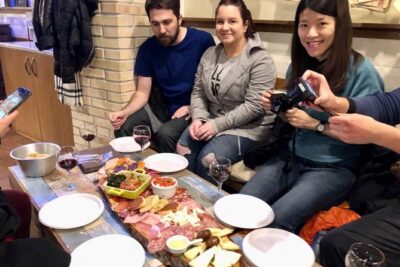
Rome by Night – Ebike Small Group Tour – Food and Wine (Option)
Read our review →
Rome by Night: E-bike Small Group Tour -Food & Wine (Option)
Read our review →