
REVIEW · POLAND
Gdańsk: Highlights Bike Tour
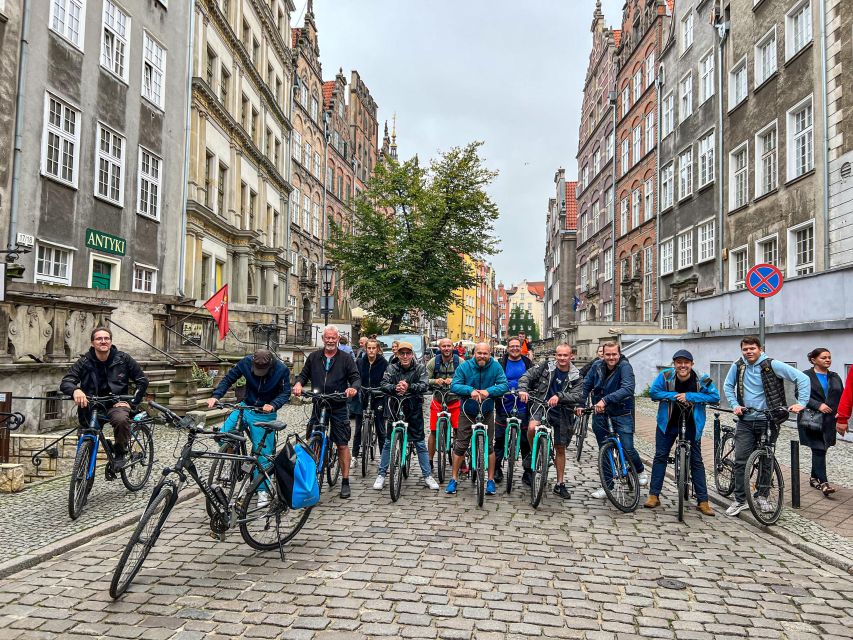
Gdańsk reveals itself quickly by bicycle. In three hours, you move from Neptune’s Fountain and St. Mary’s Church to canals, old forts, Ołowianka, and the Gdańsk Shipyard, covering ground that would take much longer on foot. The route mixes famous sights with less obvious corners, so you get both the postcard city and the working port city.
I especially like the easy pace, with regular stops for stories, photos, and questions. I also like the local feel: guides such as Sebastian, Kasper, David, Lucas, and Alicia have been praised for their warmth, clear storytelling, and personal connection to Gdańsk. The main consideration is simple: this is an active tour, and one visitor felt there was a little too much talking and not enough riding.
Key points to know before you book
- A 10 to 15 km city ride: The route is active but generally comfortable, with one past participant describing it as easy and enjoyable.
- A strong first-day activity: You get your bearings, learn the city’s story, and collect ideas for the rest of your stay.
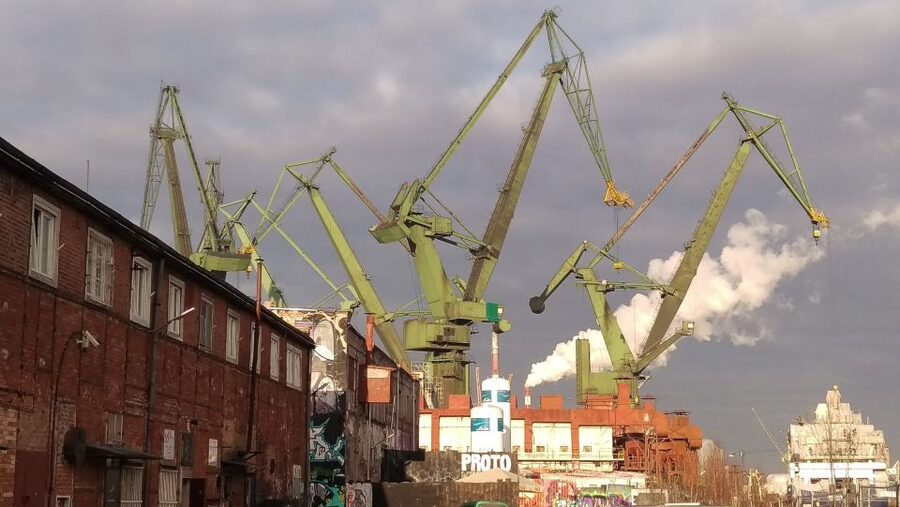
- More than the Main Town: The ride reaches the Low Town, Ołowianka, Przystań Cesarska, the shipyard, and older defensive sites.
- Local guides add personality: Guides including Sebastian, Kasper, David, Lucas, and Alicia have been praised for warmth, humor, and first-hand knowledge.
- Good equipment and water included: The bike and a bottle of water are provided, with many participants finding the bikes comfortable and well maintained.
- Rain can cancel the ride: Heavy rain stops the tour, and the route is not suitable for people with mobility impairments.
Why a bicycle makes sense in Gdańsk
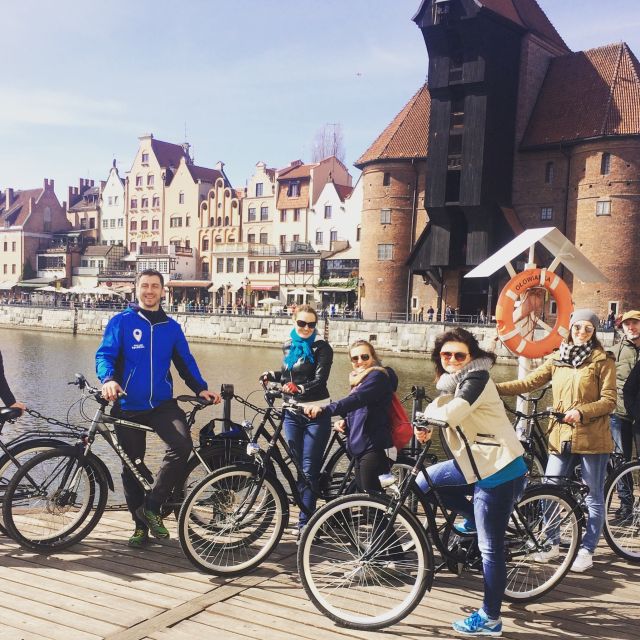
Gdańsk is one of Poland’s more bicycle-friendly cities, and cycling fits the way the city is laid out. The Main Town is compact, but the places that explain Gdańsk best are spread beyond its prettiest streets.
On foot, you can easily see Neptune’s Fountain, the Golden Gate, and St. Mary’s Church. Reaching the canals of the Low Town, the shipyard, Ołowianka, and Gradowa Mountain takes more time and energy. A bicycle ties these areas together without sending you back and forth by taxi or public transport.
You should expect a guided sightseeing ride rather than a strenuous cycling workout. The route has been described as roughly 10 to 15 kilometers, and the guide sets a manageable pace. Stops are built into the ride, so you are not trying to listen while pedaling through traffic.
The three-hour length works well for a first look. You will not tour the interiors of every monument, but you will see the city’s main shape and learn where to return later. I would book it early in a Gdańsk stay, then use the guide’s suggestions to plan your walking, museum, or food stops.
More City Highlights Bike Tours in Poland:
- Highlights of Krakow Bike Tour – Small group
★ 5.0 · 662 reviews - Krakow: Highlights of Krakow Bike Tour – Small Group
★ 4.9 · 421 reviews - Krakow: Complete Bike tour with all the highlights
★ 4.9 · 90 reviews
Starting at Chlebnicka Street
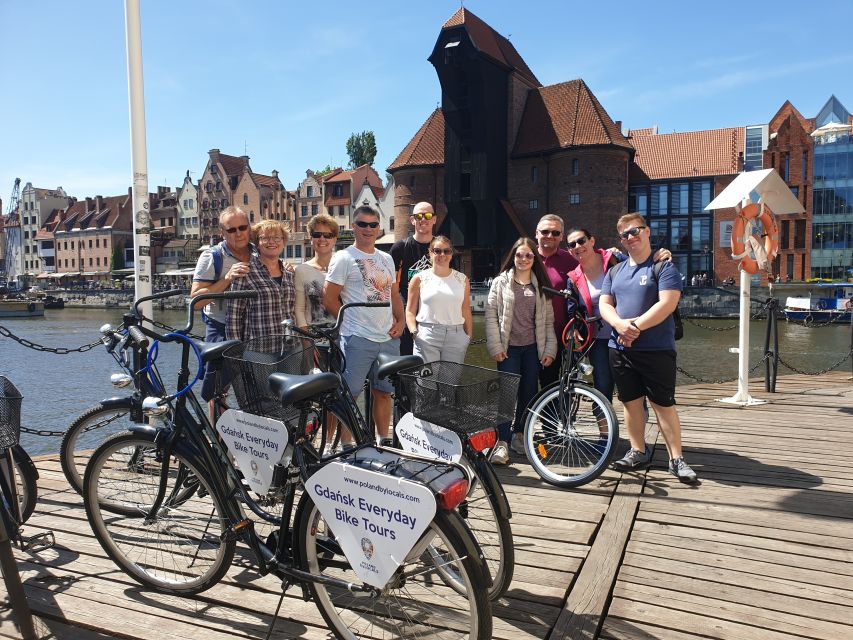
The meeting point is at Chlebnicka Street 19/20 in Gdańsk Main Town, a central place that is easy to reach while exploring the historic center. The bike rental operation, Poland By Locals, takes about five minutes at the start of the experience.
You receive the bicycle and a bottle of water before setting off. Comfortable shoes are the one stated item to bring. Past participants have found the bicycles comfortable and in good condition, which matters more than it may sound when you are riding for several hours.
The tour is offered in English or Polish. Guide quality is a major part of the experience, and the named guides have different personalities. Sebastian has been praised for his humor and clear English. Kasper is known for a friendly manner and interesting stories, while David has been described as especially passionate about the city’s past. Alicia has been valued for her local background and willingness to answer questions.
That personal element is useful in Gdańsk. The city’s story includes medieval trade, wartime destruction, postwar rebuilding, labor activism, and the modern port. A good guide helps connect those subjects instead of presenting a list of dates.
Neptune’s Fountain, the Golden Gate, and St. Mary’s
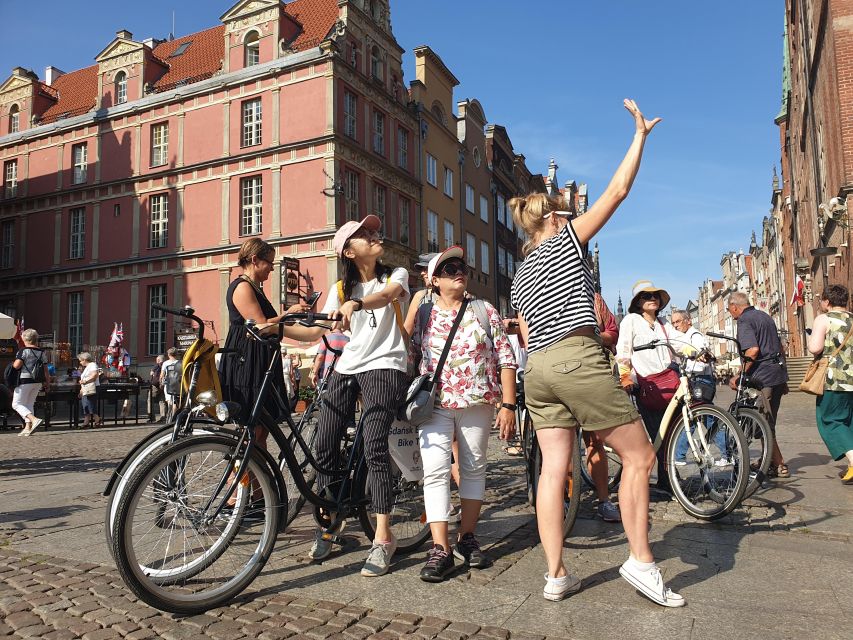
The first sightseeing stops introduce the city’s best-known center. Neptune’s Fountain receives about eight minutes, followed by around five minutes at the Golden Gate and five minutes at St. Mary’s Church.
Neptune’s Fountain is one of Gdańsk’s most familiar symbols. It places you in the middle of the Main Town, surrounded by handsome historic facades and the city’s main pedestrian routes. This is a quick stop, but it gives the guide a natural place to explain how Gdańsk presents its historic core.
At the Golden Gate, you get another compact lesson in the city’s ceremonial architecture. The stop is short, so think of it as orientation and storytelling rather than a full architectural study.
St. Mary’s Church is one of the city’s major landmarks. Five minutes is enough to understand its importance and note details for a later visit. If you want to see the interior carefully, climb the tower, or spend time with the building’s art, you will need to return independently.
This opening section is familiar territory, but it earns its place. The bicycle keeps you from lingering too long at the obvious sights, while the guide gives you a framework for understanding the less familiar areas ahead.
The Polish Post Museum and Gdańsk’s wartime story
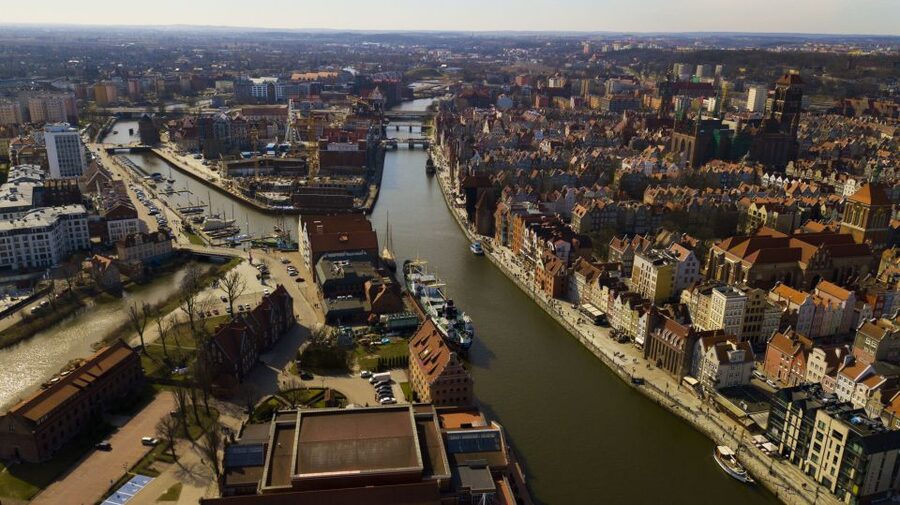
The stop at the Museum of the Polish Post lasts about 10 minutes. The tour does not include a stated museum visit, so you should expect an exterior explanation and a short stop rather than a full indoor museum tour.
The site matters because Gdańsk’s twentieth-century story cannot be reduced to attractive streets and waterfront views. The guide uses this point to add wartime context and show how individual places in the city connect to larger events.
This is one reason the tour suits you if you want more than a photo ride. The schedule gives each site limited time, but the guide’s explanation helps you decide which places deserve a longer visit later. If museums are your priority, note the name and return after the bike ride.
A few more bike tours around Poland worth a look
- Complete Cracow Bike Tour (small group of maximum 15 people!)
★ 5.0 · 1,322 reviews - Krakow: Bike Tour of Old Town, Jewish Quarter and the Ghetto
★ 4.9 · 1,155 reviews - 3-Hour Guided Cycling Tour of Warsaw
★ 4.9 · 624 reviews - Full Bike Tour – the Old Town, Jewish Qtr & the Ghetto NEW BIKES
★ 5.0 · 437 reviews
Przystań Cesarska and the waterfront
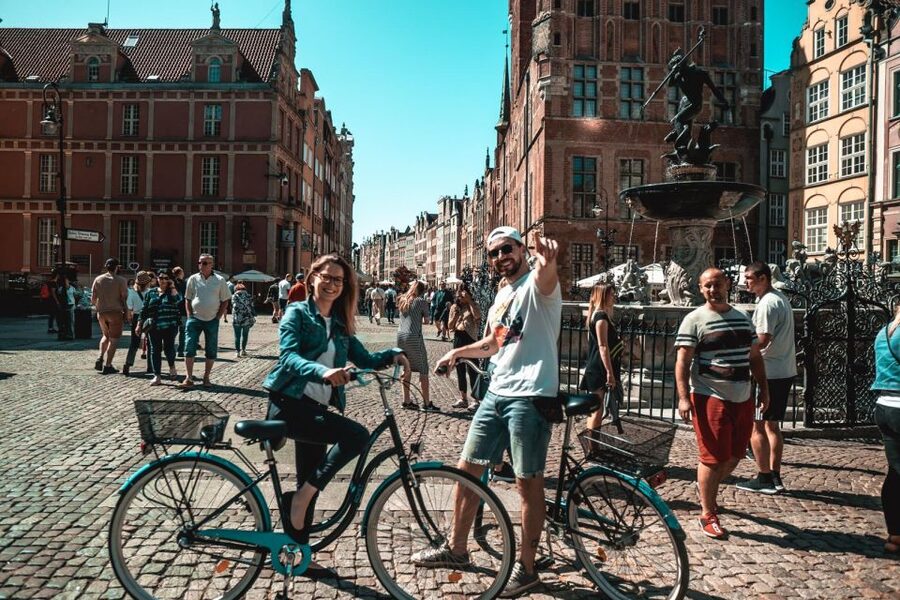
The 20-minute stop at Przystań Cesarska is one of the longer pauses. The route begins to shift from the polished Main Town to the waterfront and port areas that give Gdańsk its working character.
Here, the value is in seeing the city as a port rather than only as a restored historic center. Water, docks, and industrial connections help explain why Gdańsk grew into an important trading city. The stop also gives you time to catch your breath and listen without feeling rushed.
The route along the Motława waterfront includes another short five-minute stop at Nabrzeże Motławy near the end. These waterfront sections balance the architectural sights with open views and a different sense of scale.
You will not spend the whole tour beside the river. That is a good thing. Gdańsk is more than its popular waterfront promenade, and the ride keeps moving into neighborhoods and sites that many walkers skip.
The BHP Hall and the Solidarity story
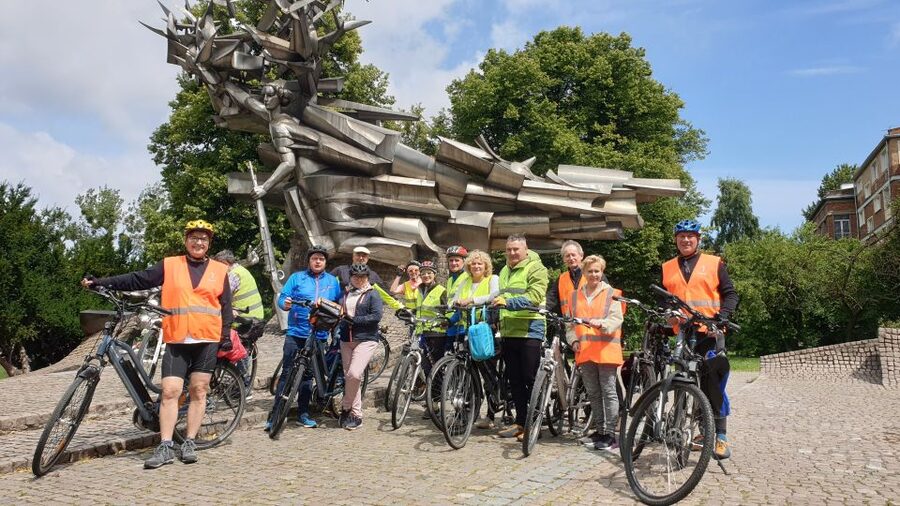
The BHP Hall receives about 15 minutes and is one of the most important stops for understanding modern Poland. From here, the tour continues toward the Gdańsk Shipyard, where you hear about Solidarity and the struggle for a free Poland.
This part gives the ride emotional and political weight. The shipyard is not simply another scenic stop. It is tied to labor activism and the wider movement that challenged communist rule in Poland. Your guide’s delivery matters here, since the subject calls for context rather than a quick slogan.
The route is especially useful if you know little about Solidarity. You can see how the shipyard fits into Gdańsk itself, instead of treating the movement as a distant national event. The tour also lets the guide add local perspective, which is why the presence of a Gdańsk-born guide such as Alicia can make a difference.
The stop is not designed as a long museum visit, and the tour does not promise entry to every attraction. If the political history of Poland is your main reason for coming, use this introduction as a starting point and set aside more time for the dedicated Solidarity sites.
Ołowianka and the quieter side of the city
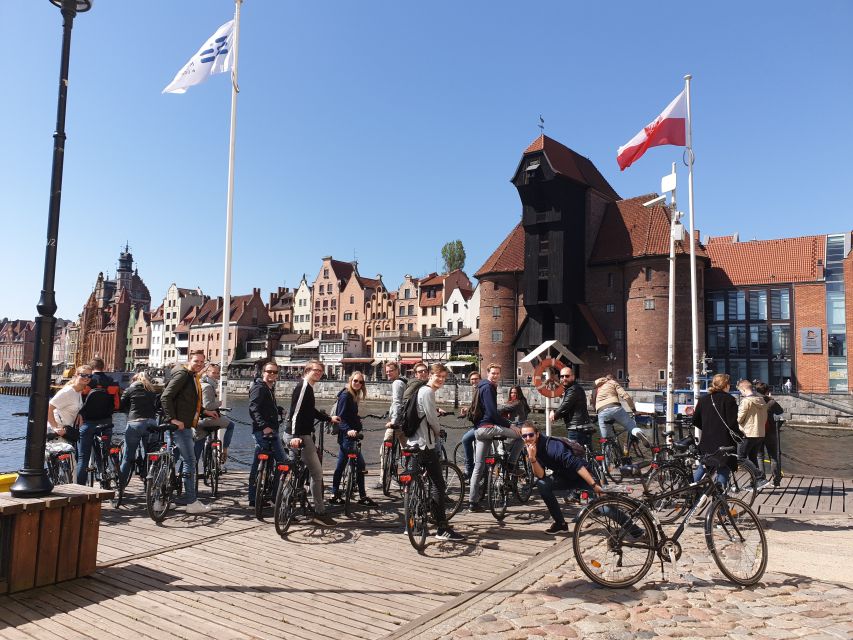
Ołowianka gets about 20 minutes, making it another substantial stop. This island area offers a change of pace from the Main Town, with water views and a chance to see how the city opens out around the Motława.
I like this section because it gives the ride room to breathe. The best city tours are not just a race between monuments. You need a few pauses where you can look around, take pictures, and understand how the waterfront connects the old center to the wider city.
The exact amount of free time depends on the guide and the group, but the schedule allows a proper stop rather than a quick pass. You might find this one of the more relaxing parts of the route, especially after the denser historic center.
Łąkowa, the Low Town, and old defenses
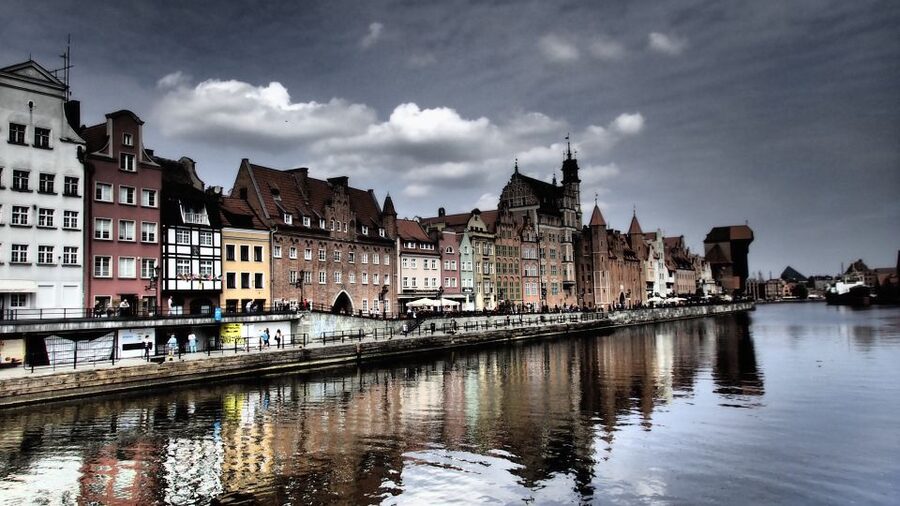
The 10-minute stop at Łąkowa leads into the regenerated Low Town. This area is a useful counterpoint to the Main Town because it shows Gdańsk beyond its most polished streets.
The Low Town combines greenery, canals, and older architecture. The guide also tells stories about the unusual mysteries associated with the area. That wording suggests a more personal, story-led section rather than a formal monument lecture.
The tour also includes old seventeenth-century forts and Gradowa Mountain, which offers a broad panorama of Gdańsk. These sites help explain the city’s defensive past and give you a view that is difficult to get from the central streets.
The information supplied for the stop list does not assign separate times to every fort or to Gradowa Mountain. You should therefore think of them as part of the wider ride rather than guaranteed long visits at each site. Still, reaching them by bicycle is a clear advantage. You cover more ground and see the relationship between the center, the waterways, the fortifications, and the port.
The pace, the stops, and the one real drawback
The tour’s greatest strength is its balance of movement and explanation. Many people have appreciated the regular photo stops, the easy pace, and the chance to reach places they would not have walked to. A toilet stop midway has also been mentioned as a helpful practical touch, although it is not listed as a formal part of the schedule.
You should not expect three hours of constant cycling. The itinerary contains stops lasting five, eight, 10, 15, and 20 minutes, plus guide commentary throughout. One person felt the tour included too much talking and not enough riding. If you want a fast recreational ride, this may feel slow.
For most visitors, that pace is the point. The ride is designed to explain Gdańsk, not simply to burn calories. I would choose it if you want stories, context, and a broad first look. I would choose a self-guided rental instead if your priority is covering distance at your own speed.
The tour is intended for people able to ride a bicycle and is not suitable for people with mobility impairments. Heavy rain cancels the experience, so keep an eye on the forecast. Intoxication is not allowed, which is sensible on a guided city ride.
Is $44 a fair price?
At $44 per person, the value depends on how you use the three hours. You are paying for the bicycle, a guide, water, route planning, and access to a wide sweep of the city. The route reaches several districts and historic areas that would take more effort to connect on foot.
The price is strongest for a first visit. You get an overview of the Main Town, the waterfront, the Low Town, the shipyard, and the defensive sites in one outing. You also save the planning time involved in working out a safe and logical cycling route yourself.
It is less compelling if you only want to see the central monuments. Those are easy to reach on foot, and a self-guided walk costs less. The value rises when you care about local stories, modern Polish history, and seeing beyond the busiest center.
You can cancel up to 24 hours ahead for a full refund, and you can reserve without paying immediately. Those terms help if your weather plans are uncertain, though a heavy-rain cancellation can still affect your schedule.
Who should book this Gdańsk bike tour?
I would book this for an active first day in Gdańsk. It gives you a practical map of the city, introduces the major stories, and shows you where to spend more time afterward.
It suits couples, solo visitors, and friends who enjoy a social activity with a guide. The tour can also work well for families with older children who are comfortable riding, though the available information does not give a minimum age or child-bike details, so check before booking.
You should also consider it if you have already seen the Main Town and want a broader view. The shipyard, Low Town, Ołowianka, canals, forts, and Gradowa Mountain add depth to the usual sightseeing route.
I would skip it if you have mobility limits, dislike cycling, want a private pace, or prefer long indoor visits at each attraction. The route is active, weather dependent, and built around short stops rather than extended museum time.
The 4.9 rating from 173 bookings fits the tour’s strongest qualities: friendly guides, good bicycles, clear local stories, and a route that reaches far more than the central postcard sights. Book it early in your stay, bring comfortable shoes, and leave room afterward to return to the places that catch your interest.
FAQ
Where does the Gdańsk bike tour begin?
The meeting point is Chlebnicka Street 19/20 in Gdańsk Main Town, at Poland By Locals.
How long does the tour last?
The guided bike tour lasts three hours.
What price should I expect?
The listed price is $44 per person.
Which languages are available?
The live guide speaks English or Polish.
Is a bicycle included?
Yes. A bicycle is provided as part of the activity.
Is water included?
Yes. You receive a bottle of water.
What should I bring?
Bring comfortable shoes. Intoxication is not permitted during the tour.
What happens in heavy rain?
The tour is cancelled in the event of heavy rain.
Can I cancel for a refund?
You can cancel up to 24 hours in advance for a full refund. You can also reserve now and pay later.
Just added around Poland
- Private Bike Tour in Krakow★ 5.0 · 152 reviews
- Hidden Krakow Bike Tour★ 5.0 · 275 reviews
- 2 Hours Old Town Guided Bike Tour in Krakow★ 4.5 · 15 reviews
- Discover Kraków by Bike with a Dutch guide★ 5.0 · 16 reviews
- 3-Hour E-Bike Tour In Krakow★ 5.0 · 79 reviews
- Polish Countryside and Tyniec Abbey Bike Tour from Krakow★ 5.0 · 37 reviews
- Gdansk Private Bike Tour★ 5.0 · 36 reviews
- Sopot Private City Walking or Bike Tour with a local architect★ 5.0 · 19 reviews
Poland Bike Tours, compared.
Complete Cracow Bike Tour (small group of maximum 15 people!)
Read our review →
Bike Tour of Old Town, Jewish Quarter and the Ghetto
Read our review →
Full Bike Tour – the Old Town, Jewish Qtr & the Ghetto NEW BIKES
Read our review →


Browse the lists this tour appears in